 Cirius Petpedia
 Cat Taurine Deficiency: Symptoms, Causes & Recovery Guide
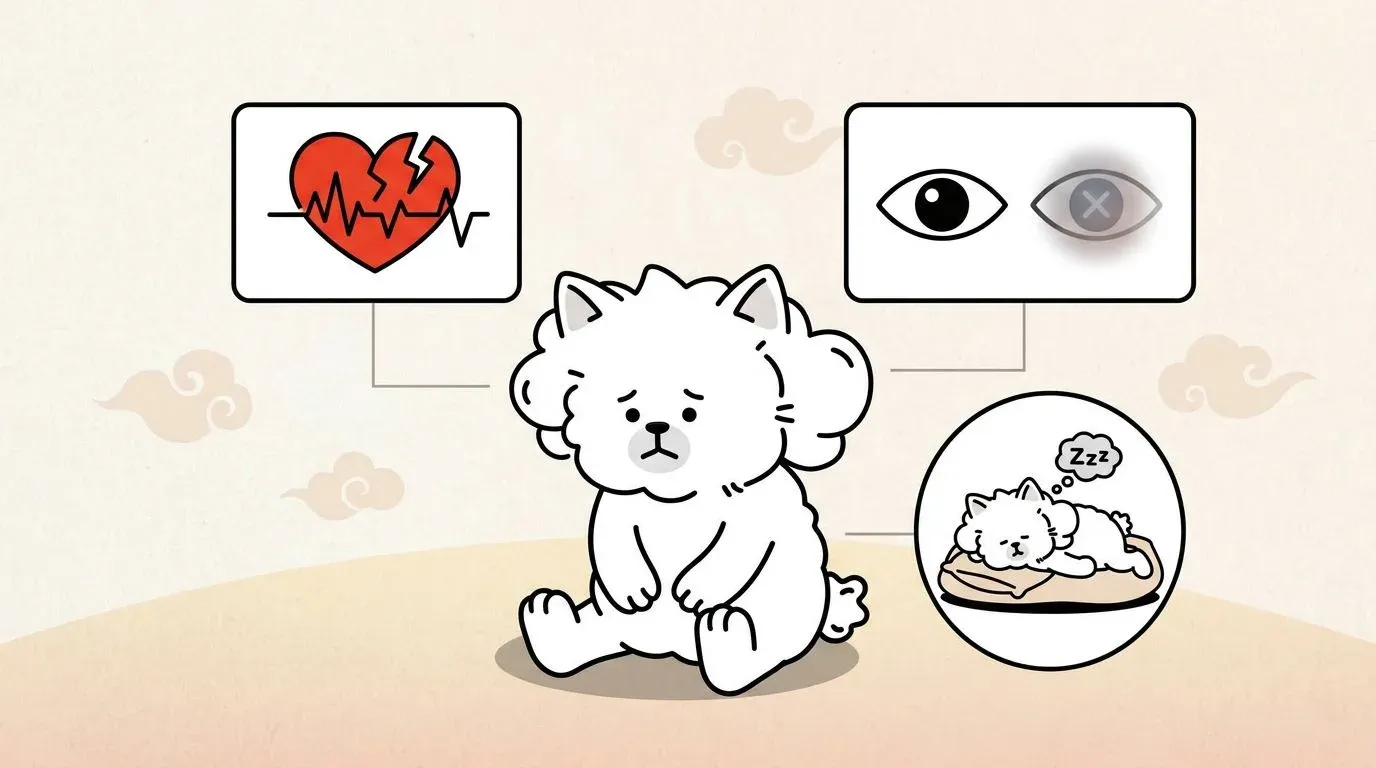
A cat’s retina can begin deteriorating before she shows any sign that something is wrong. By the time dilated cardiomyopathy (an enlarged, weakened heart) produces labored breathing or exercise intolerance, the underlying taurine deficiency may have been progressing for months or years. This is the central challenge with feline taurine deficiency: the visible symptoms arrive late, and the damage that precedes them is often irreversible.
Taurine became a mandatory ingredient in commercial cat food in 1987 — the direct result of a landmark study by Pion and colleagues showing that cats fed taurine-deficient diets developed myocardial failure that could actually be reversed with supplementation. Despite this regulatory fix, taurine deficiency remains clinically relevant because of home-cooked diets, certain commercial diet formulations, and intestinal disease that impairs absorption.
Understanding how taurine works, what depletes it, and how to recognize its absence early gives cat owners a meaningful opportunity to prevent serious disease.
Why Taurine Is Essential for Cats
What Taurine Does in a Cat’s Body
Taurine is a sulfonic acid — often called an amino acid in everyday usage, but technically it lacks the carboxyl group that defines amino acids. That chemical distinction matters because it means taurine cannot be incorporated into proteins the way conventional amino acids are. Instead, taurine functions as a free molecule with wide-ranging regulatory roles throughout the body.
In the heart, taurine is the most abundant free amino acid in cardiac muscle tissue, where it regulates calcium transport across cell membranes and protects against oxidative stress. In the retina, taurine constitutes roughly 50% of all free amino acids in photoreceptor cells and is essential for the development and maintenance of the rod and cone cells that enable vision. In the reproductive system, taurine deficiency in queens produces small litter sizes, stillbirths, and kittens with congenital abnormalities. Taurine also plays a role in immune function (stabilizing neutrophil and lymphocyte activity) and in bile salt conjugation, where it is required to form taurocholate — the primary bile salt cats use to digest fat.
Why Cats Cannot Synthesize Taurine
Most mammals, including dogs and humans, can synthesize adequate taurine from the sulfur-containing amino acids cysteine and methionine, using the enzyme cysteine sulfinic acid decarboxylase (CSAD). Cats have functional CSAD enzyme, but its activity level is so low — approximately one-tenth that seen in dogs — that endogenous synthesis cannot meet their physiological demands. Additionally, cats have a limited capacity to reduce taurine excretion through the kidneys and bile when intake drops, unlike dogs, which can dramatically conserve taurine when dietary sources are restricted.
This metabolic limitation means taurine must be classified as a dietary essential nutrient for cats — one that must be supplied in sufficient quantity at every meal, throughout life.
Causes of Taurine Deficiency in Cats
Home-Cooked and Raw Diets
A home-prepared diet formulated without veterinary nutritional guidance is one of the most common causes of taurine deficiency seen in clinical practice. Owners who cook for their cats often base meals on muscle meat, rice, and vegetables — a combination that provides the building blocks of many nutrients but not enough taurine.
Cooking reduces taurine content. Research has shown that boiling meat can reduce its taurine concentration by 40–80%, depending on cooking temperature and duration, because taurine is water-soluble and leaches into the cooking liquid. If that liquid is discarded — as it typically is in home cooking — the taurine is lost. Raw diets generally preserve taurine content better than cooked diets, but even well-designed raw diets require specific organ meat inclusion (particularly heart) to reliably meet taurine requirements.
The AAFCO taurine minimum of 0.10% dry matter for extruded dry food and 0.20% dry matter for wet food applies to commercially manufactured products, not home recipes. A home-cooked diet that meets protein requirements by mass does not automatically meet taurine requirements.
Grain-Free Diets and the DCM Connection
Between 2018 and 2019, the FDA issued communications investigating a potential link between grain-free diets — particularly those high in peas, lentils, legume seeds, and potatoes as primary ingredients — and dilated cardiomyopathy in dogs. The mechanism is not fully resolved, but evidence points to these ingredients reducing taurine bioavailability, possibly through high dietary fiber content, certain antinutritional factors in legumes, or alterations in gut microbiota affecting taurine recycling.
While the FDA investigation focused on dogs, the same dietary patterns are increasingly present in cat food. Cats fed grain-free kibble formulated with legume-heavy carbohydrate bases may absorb less taurine from dietary sources even when the label shows adequate taurine content. Taurine concentration on a label reflects what was added; it does not reflect how much is bioavailable after the gut interacts with the complete matrix of the diet.
If your cat is eating a grain-free, legume-dense dry food and you have any concern about cardiac health, a whole-blood taurine measurement at your next wellness visit is reasonable.
Intestinal Disease (IBD) and Malabsorption
A 2017 study published in the Journal of Veterinary Internal Medicine (PMC5508316) examined whole-blood taurine concentrations in cats with various intestinal disorders, including inflammatory bowel disease (IBD), intestinal lymphoma, and protein-losing enteropathy. The study found significantly lower taurine concentrations in cats with intestinal disease compared with healthy controls — a finding that had been largely absent from consumer-facing veterinary content.
The mechanism is straightforward: taurine is absorbed in the small intestine, primarily in the ileum. Chronic intestinal inflammation damages absorptive enterocytes and disrupts the brush border enzymes and transporters that facilitate taurine uptake. Additionally, cats with IBD often have altered gut microbial populations that change the enterohepatic circulation of bile taurate — the conjugated form of taurine that would otherwise be reclaimed after fat digestion.
For cats with confirmed IBD, dietary management must account for taurine status. This intersects directly with cat food allergy diet management, since the elimination diets used for food allergy diagnosis often restrict protein sources in ways that may inadvertently reduce taurine intake. Periodic taurine monitoring is worth discussing with your veterinarian if your cat has both gastrointestinal disease and chronic dietary restriction.
Cat Taurine Deficiency Symptoms: A Stage-by-Stage Guide
One of the most significant gaps in existing consumer content is the treatment of taurine deficiency symptoms as a flat list. In clinical reality, deficiency unfolds in stages, and the early stages are far more actionable than the late ones.
Stage 1 — Subclinical: Behavioral Changes
Before any physical signs appear, subtle behavioral changes may indicate declining taurine status. These signs are nonspecific — meaning they overlap with many other conditions — which makes them easy to dismiss or misattribute.
Observable signs:
- Decreased activity level or reduced interest in play
- Slightly reduced appetite without obvious illness
- Subtle changes in grooming frequency
- Mild lethargy that owners often attribute to “just getting older”
Vet visit threshold: These signs alone rarely prompt a taurine test. However, if your cat has a known risk factor (home-cooked diet, IBD, grain-free legume-dense food, Burmese or Siamese breed), discussing a baseline whole-blood taurine level at any wellness appointment is appropriate.
Stage 2 — Early Signs: Vision and Exercise Intolerance
As taurine depletion deepens, organ-specific signs begin to emerge. Vision changes and reduced exercise tolerance are the most diagnostically useful early indicators because they localize the problem to the retina and heart respectively.
Vision-related signs:
- Reluctance to jump or navigate familiar furniture in dim light
- Misjudging distances — landing short when jumping
- Apparent hesitation before movement in low-light conditions
- Ophthalmoscopic examination may reveal early focal hyperreflective lesions near the area centralis
Cardiovascular early signs:
- Reduced willingness to play
- Faster-than-normal breathing after minimal exertion
- Occasional open-mouth breathing that resolves quickly
Vet visit threshold: Any change in vision behavior or unexplained changes in exercise tolerance warrants evaluation. At this stage, an echocardiogram (ultrasound of the heart) can detect early myocardial changes before clinical heart failure develops, and whole-blood taurine confirms the deficiency.
Stage 3 — Advanced: DCM and Retinal Degeneration
At the advanced stage, the structural damage to the retina and heart muscle has progressed to the point where clinical signs are obvious and some changes may be irreversible.
Feline dilated cardiomyopathy (DCM) signs:
- Labored or rapid breathing at rest
- Open-mouth breathing
- Sudden weakness or collapse
- Distended abdomen from pleural or peritoneal fluid accumulation
- Heart murmur detected on auscultation
Feline central retinal degeneration (FCRD) signs:
- Navigating into objects in dim light
- Fixed, non-responsive pupils (in severe cases)
- Ophthalmoscope reveals hyperreflective tapetal fundus, especially in a horizontal band pattern across the area centralis
Prognosis note: DCM from taurine deficiency caught at this stage can still respond to supplementation — cardiac function has been shown to improve in some cats — but retinal degeneration at an advanced stage involves irreversible photoreceptor loss. The distinction between reversible and irreversible outcomes depends heavily on how early intervention begins.
Foods High in Taurine for Cats
Taurine Content by Food Source (mg per 100g)
The following table represents the best available data from published food composition analyses. Values represent raw weight unless otherwise noted and will vary by animal age, feed, and geographic origin.
| Food Source | Taurine (mg/100g raw) | Notes |
|---|---|---|
| Clams | 240–520 | Highest dietary taurine source |
| Mussels | 655 | Cooked values approximately 40% lower |
| Squid / octopus | 355–490 | Seafood generally high |
| Chicken heart | 130–200 | Organ meats concentrated taurine |
| Beef heart | 65–100 | Lower than poultry heart |
| Dark meat turkey | 60–90 | Higher than white breast meat |
| Mackerel | 100–200 | Oily fish, good source |
| Chicken breast | 18–34 | Muscle meat significantly lower |
| Beef liver | 20–40 | Lower than heart |
| Egg | 10–20 | Minimal source |
| Plant foods | ~0 | Negligible taurine content |
Key practical takeaways from these data:
- Heart meat is disproportionately rich in taurine relative to skeletal muscle. Chicken heart in a home-cooked diet is a practical strategy, but it should be incorporated with veterinary nutritional guidance rather than estimated by guesswork.
- Cooking substantially reduces taurine. Boiling shellfish or poultry heart and discarding the liquid can eliminate the majority of the taurine benefit. Steaming or minimal-liquid cooking preserves more.
- White meat muscle is a poor taurine source. A home-cooked diet built around chicken breast cannot meet taurine requirements without supplementation.
AAFCO Requirements and How to Read Pet Food Labels
The Association of American Feed Control Officials (AAFCO) sets the minimum taurine content for complete and balanced cat foods:
- Extruded dry food: 0.10% taurine on a dry matter (DM) basis
- Wet / canned food: 0.20% taurine on a dry matter basis
The higher wet food minimum exists because taurine bioavailability from canned or wet-processed food is generally lower than from extruded kibble due to processing interactions with other diet components.
When reading a cat food label, look for the AAFCO nutritional adequacy statement. A label stating “formulated to meet AAFCO nutrient profiles for all life stages” confirms the diet meets taurine minimums. However, meeting the minimum does not guarantee optimal bioavailability — particularly in diets with high legume, potato, or fiber content. This is also relevant when considering cat hydration and wet food choices, since wet foods tend to have higher taurine content per serving and better overall hydration benefits.
For cats managing a restricted diet due to kidney disease dietary requirements, protein restriction must be carefully balanced against taurine intake, since lower-protein diets inherently provide less taurine substrate.
Does Your Cat Need a Taurine Supplement?
When Commercial Food Is Enough
For the majority of cats eating a complete, AAFCO-certified commercial cat food — whether dry or wet — taurine supplementation is unnecessary. The regulatory requirement and quality control in commercial pet food manufacturing reliably delivers adequate taurine under normal conditions. Adding taurine to an already-sufficient diet does not produce documented benefits in healthy cats and creates an unnecessary expense.
No supplementation needed when:
- Your cat eats AAFCO-certified complete and balanced commercial cat food exclusively
- Routine wellness exams show no cardiovascular or visual abnormalities
- Your cat has no diagnosed gastrointestinal condition affecting absorption
- Your cat is not a high-risk breed
When Supplementation Is Necessary
Supplementation becomes clinically appropriate in several specific situations. Each of these should ideally be confirmed or initiated in consultation with a veterinarian who can establish a baseline taurine level:
- Home-cooked or raw diet without professional formulation: Any cat eating a home-prepared diet should be considered at risk unless the diet was formulated by a board-certified veterinary nutritionist (DACVN) and includes explicit taurine targets.
- Diagnosed taurine deficiency: Low whole-blood taurine below reference range requires active correction, not just dietary modification.
- Early-stage DCM or FCRD: Cardiac and retinal disease with documented low taurine should be treated with supplementation alongside dietary correction.
- Cats with chronic intestinal disease: IBD, lymphoma, or protein-losing enteropathy — the PMC5508316 data support routine taurine monitoring in these patients.
- Grain-free, legume-heavy diet with cardiac concerns: If echocardiogram or clinical signs suggest reduced cardiac function, a trial of taurine supplementation is reasonable.
Senior cats on nutritionally modified diets should also have taurine status considered as part of overall nutritional planning, a point discussed in the senior cat nutrition and joint health guide.
Recommended Dosage and Forms
Dosage: In clinical studies and veterinary practice, supplemental taurine doses for deficient cats typically range from 250 mg to 500 mg daily, given in divided doses with meals. This is far above dietary intake levels but reflects the need for therapeutic repletion rather than maintenance. Maintenance supplementation for at-risk cats (home-cooked diet without deficiency) typically uses 100–250 mg/day. Your veterinarian can titrate the dose against periodic whole-blood taurine measurements.
Forms comparison:
| Form | Pros | Cons |
|---|---|---|
| Powder | Easy to mix into food, precise dosing, economical | Slightly bitter taste may cause food refusal |
| Tablet / capsule | Standardized dose, convenient | Requires pilling or compounding; cats often resist |
| Liquid | Easy administration, fast absorption | Some formulations have lower taurine concentration per ml |
Powder mixed into wet food is the most practical form for most owners. Use unflavored, human-grade taurine powder — the molecule is identical regardless of whether it is marketed for human or animal use, and human-grade products are often more thoroughly quality-tested.
Diagnosis and Treatment
Veterinary Tests: Whole Blood Taurine and Echocardiogram
Whole-blood taurine concentration is the preferred diagnostic test. Plasma taurine, by contrast, reflects recent dietary intake rather than tissue stores and can normalize quickly after a single high-taurine meal — making it a less reliable indicator of true deficiency status. Whole-blood taurine integrates taurine stored within red blood cells and provides a more stable measure of body stores.
Reference ranges vary slightly by laboratory, but most institutions use:
- Normal whole-blood taurine: 200–350 nmol/mL (some labs report slightly different reference intervals)
- Borderline: 150–200 nmol/mL
- Deficient: below 150 nmol/mL
Echocardiogram (cardiac ultrasound) is the standard test for detecting dilated cardiomyopathy. It measures left ventricular internal dimension (LVID) during diastole and systole, fractional shortening (FS%), and ejection fraction — the functional parameters that decline in DCM. An echocardiogram is recommended for any cat with low taurine, unexplained respiratory changes, or a heart murmur detected on physical examination.
Ophthalmoscopic examination for retinal assessment should be performed by your veterinarian or a veterinary ophthalmologist. Early FCRD lesions appear as focal hyperreflective areas near the area centralis (a specialized region of the feline tapetal fundus). Advanced disease produces a classic band-shaped tapetal hyperreflectivity across a horizontal strip.
Recovery Prognosis and Timeline
The degree of reversibility depends entirely on which organ system is affected and how far disease has progressed.
Dilated cardiomyopathy:
- Early-stage DCM (reduced fractional shortening without clinical heart failure) can show echocardiographic improvement within 3–6 months of taurine supplementation
- Published case series report normalization of cardiac dimensions in some cats within 6–12 months
- Cats that have progressed to congestive heart failure have a guarded prognosis; supportive cardiac medication is typically required alongside taurine
Feline central retinal degeneration:
- Early focal lesions may stabilize or show modest functional preservation if taurine is restored promptly
- Advanced or bilateral FCRD with widespread photoreceptor loss does not reverse — those cells do not regenerate
- Timeline for functional assessment: ophthalmoscopic re-examination at 3 and 6 months to assess stability
Subclinical deficiency: Cats treated before organ-specific damage develops have an excellent prognosis. Whole-blood taurine typically normalizes within 4–8 weeks of appropriate supplementation or dietary correction.
High-Risk Cats
Burmese and Siamese: Genetic Predisposition
Burmese cats have documented higher rates of taurine deficiency-related DCM compared with other breeds, suggesting a breed-specific metabolic predisposition — possibly lower CSAD activity or higher taurine excretion rates. A 1994 study in the Journal of Small Animal Practice specifically examined taurine and the Burmese myocardium, identifying this population as higher-risk.
Siamese cats have also been identified in some case series with higher frequency of taurine-related DCM. Owners of these breeds should consider annual whole-blood taurine testing as a standard part of wellness care, regardless of diet.
Cats on Homemade or Raw Diets
As discussed in the causes section, this is the highest-modifiable-risk category. Any cat eating a home-prepared diet without documented veterinary nutritional formulation should have:
- Whole-blood taurine checked within the first 3 months of starting the diet
- Follow-up measurements every 6 months thereafter
- The diet reviewed or formulated by a board-certified veterinary nutritionist (search the DACVN directory at ACVN.org)
Cats with Inflammatory Bowel Disease
The PMC5508316 finding — that cats with intestinal disease have significantly lower whole-blood taurine than healthy controls — should change how veterinarians and owners monitor IBD management. Standard IBD management focuses on anti-inflammatory therapy, protein source selection, and fiber management, but taurine monitoring is rarely incorporated. Given the evidence, it should be.
If your cat has an IBD diagnosis, a baseline taurine measurement and periodic re-checks (every 6–12 months) are a low-cost, low-risk addition to the management plan that can prevent a second serious disease from developing silently.
References
- 1. Pion PD et al. — Myocardial failure in cats associated with low plasma taurine: a reversible cardiomyopathy. Science, 1987
- 2. Ko KS, Fascetti AJ. — Whole-blood taurine concentrations in cats with various intestinal disorders. J Vet Intern Med, 2017. PMC5508316
- 3. AAFCO Dog and Cat Food Nutrient Profiles — Taurine requirements for cats
- 4. FDA Investigation into Potential Link between Certain Diets and Canine Dilated Cardiomyopathy, 2019
- 5. Fascetti AJ et al. — Taurine deficiency in dogs with dilated cardiomyopathy: 12 cases. J Am Vet Med Assoc, 2003
- 6. National Research Council — Nutrient Requirements of Dogs and Cats. 2006. National Academies Press.
- 7. Markwell PJ et al. — Taurine and the feline myocardium. J Small Anim Pract, 1994
FAQ
How much taurine does a cat need per day?
Can cats eat dog food as a regular diet?
Can taurine deficiency blindness in cats be reversed?
Is too much taurine harmful to cats?
Do indoor cats need more taurine than outdoor cats?
Related Articles
Cat Food Allergies: Causes, Symptoms, and Elimination Diet Guide
Learn to recognize cat food allergy symptoms, understand how they differ from food intolerance, and follow a complete 8-12 week elimination diet protocol to identify and manage your cat's allergen.

Cat Kidney Disease Diet: Stage-by-Stage CKD Nutrition Guide
Manage your cat's CKD with an IRIS stage-by-stage guide covering phosphorus restriction, protein balance, hydration strategies, and supplements.
How to Get Your Cat to Drink More Water: 7 Proven Methods + Dehydration Checklist
Cat not drinking enough water? Learn the daily intake formula by weight, a 5-step home dehydration check, and 7 evidence-based methods to increase your cat's hydration.