 Cirius Petpedia
 Dog Poop Color Chart: What Each Color Means and When to See a Vet
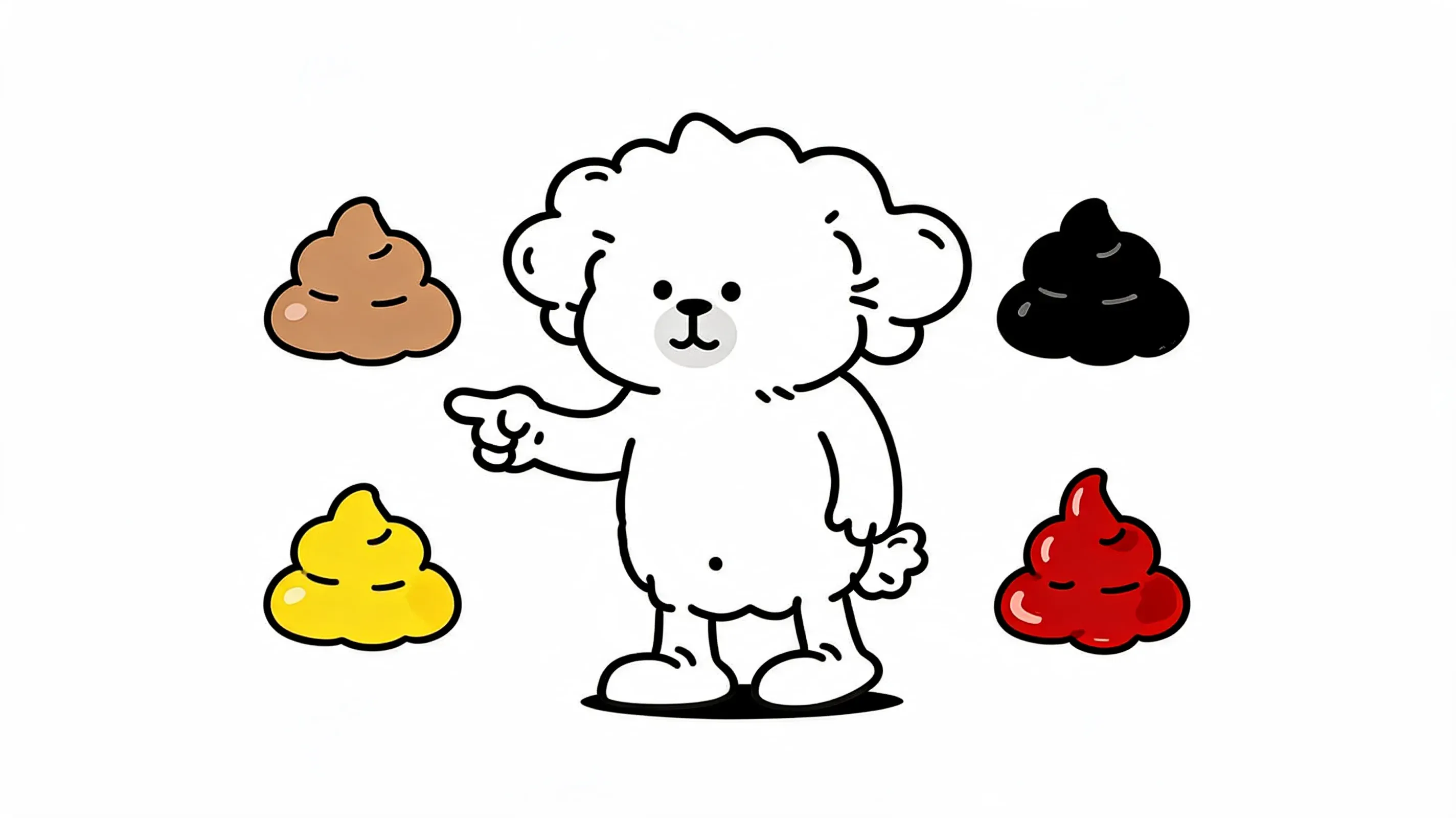
Your dog just produced something that looks nothing like their usual brown stool. Maybe it’s almost black and sticky. Maybe it’s a startling shade of yellow. Maybe there’s a translucent jelly coating around it. Whatever you’re looking at, you’re probably wondering whether to call the vet right now or wait and see.
Most online dog poop color guides answer that question by listing colors. That’s useful—but color alone only tells half the story. Identical symptoms can have very different causes depending on consistency, coating, and how long the change has lasted. This guide walks through a 5-axis diagnostic framework: color, consistency, coating, content, and smell. Together, these five markers give you a far clearer picture of what’s happening in your dog’s gut—and how urgently it needs attention.
What Does Healthy Dog Poop Look Like?
Before any color comparison makes sense, you need a clear baseline. Many owners discover they’ve been tolerating subtly abnormal stools for months simply because they didn’t know what “normal” actually looks like.
The 4 markers of normal stool: color, shape, consistency, and smell
Veterinary guidelines describe healthy dog feces using four observable characteristics:
- Color: Medium to chocolate brown. The brown color comes from stercobilin, a bile pigment produced when red blood cells are broken down. Consistent medium-brown stool indicates that bile production and transit time are both functioning normally.
- Shape: Log-shaped and segmented, holding its form when picked up. It should not crumble into dust or flatten into a pancake.
- Consistency: Firm but moist—roughly a 3–4 on the canine Bristol Stool Scale (adapted from the human Bristol Stool Chart). It should leave minimal residue on the ground when lifted.
- Smell: Noticeable but not overwhelming. A sudden dramatic change in odor—particularly a fishy, sulfurous, or sweet-metallic smell—is as informative as a color change.
A simple field test: if you can pick it up cleanly with one piece of poop bag without it smearing, the consistency is probably normal.
How normal poop differs by age: puppies, adults, and seniors
Age shapes what “normal” looks like, and knowing this prevents unnecessary anxiety—or missed warning signs.
Puppies (under 6 months) produce softer, more frequent stools than adult dogs. Stool in this age group is typically lighter brown and slightly more pungent because puppy digestive systems are still developing the full bacterial flora needed for complete fermentation. During weaning or food transitions, soft orange-brown stool can appear temporarily without indicating disease.
Adult dogs (1–7 years) on a consistent, balanced diet should produce one to three medium-brown, well-formed stools per day. Significant variation from one day to the next—in color, consistency, or frequency—is worth monitoring.
Senior dogs (7+ years) may produce less frequent stools due to reduced intestinal motility. Color should remain brown, but slightly softer consistency is common with age-related changes in gut motility and moisture absorption. Grey or pale stool in a senior dog, however, warrants prompt veterinary evaluation given the higher risk of pancreatic and liver disease in older animals.
Dog Poop Color Chart: Every Color Explained
Color is the most immediately visible stool indicator, and the mechanism behind each color gives you a useful clinical shortcut for understanding what it signals. The table below summarizes each color at a glance; detailed explanations follow.
| Color | Most Likely Cause | Urgency |
|---|---|---|
| Medium brown | Normal | None |
| Dark brown / black | Upper GI bleeding (melena) | Same day |
| Bright red | Lower GI bleeding or anal injury | Same day |
| Yellow / orange | Liver, gallbladder, or rapid transit | Monitor 48 hrs |
| Grey / white / pale | Exocrine pancreatic insufficiency or bile duct obstruction | Same day |
| Green | Excess bile, grass ingestion, or rapid transit | Monitor 24–48 hrs |
Brown (normal): signs of healthy digestion
Medium-brown stool confirms that bile salts are being produced, excreted into the intestine, and properly metabolized by colonic bacteria into stercobilin. No further interpretation needed—this is the color you’re aiming for.
Very dark brown approaching black can be normal if your dog eats a high-meat or raw diet, but watch carefully for the tarry texture and characteristic smell of true melena (see below).
Black or tarry (melena): upper GI bleeding concern
Melena—the clinical term for digested blood in stool—produces stools that are jet black, sticky, and have a distinctive metallic or “off” odor. This appearance happens because blood from the upper gastrointestinal tract (stomach or small intestine) is partially digested during its long transit to the colon, converting hemoglobin to hematin, which is dark.
Common causes include stomach ulcers, intestinal tumors, clotting disorders, ingestion of rodenticides, or non-steroidal anti-inflammatory drug (NSAID) toxicity.
Do not confuse true melena with:
- Dark brown from high-protein diets
- Black staining from activated charcoal (if your vet gave this for poisoning treatment)
- Certain iron supplements or bismuth-containing products
The key distinguishing feature is texture. True melena is tarry and sticky—it smears rather than crumbles. If you notice this alongside lethargy, pale gums, vomiting, or loss of appetite, treat it as an emergency.
For a comprehensive look at dog bloody stool causes and how to distinguish different types of blood in stool, that linked guide covers the full diagnostic picture.
Red or bloody: lower GI bleeding or anal injury
Bright red blood coating the stool or passed alongside it indicates bleeding in the lower gastrointestinal tract—most commonly the colon, rectum, or anal region. The medical term is hematochezia.
Because blood from the lower GI tract has not been digested, it appears fresh and bright red. A small streak of red after straining hard is often from a minor rectal or anal irritation, similar to human hemorrhoids. A single episode with otherwise normal behavior can be monitored briefly.
However, call your vet the same day if:
- Multiple stools contain bright red blood
- Blood volume is more than a small streak
- Your dog is straining repeatedly but producing little stool
- Other symptoms such as vomiting, lethargy, or loss of appetite accompany the bleeding
Causes range from colitis (large intestine inflammation) and rectal polyps to parasites, parvovirus, and in rare cases, colorectal tumors.
Yellow or orange: liver, gallbladder, or pancreas issues
Yellow or orange stool tells you something has disrupted bile pigment processing. Bile, produced in the liver and stored in the gallbladder, turns brown as it passes through the intestine. When transit is too fast—or bile production or delivery is impaired—stool remains yellow or orange.
Two distinct patterns:
-
Rapid transit yellow: Watery or soft yellow stool that appears suddenly, often with other signs of diarrhea. Bile hasn’t had time to convert from its original yellow-green form. This can accompany stress, dietary indiscretion (eating something unusual), or early gastrointestinal infection.
-
Persistent yellow-orange: Formed or semi-formed stool that is consistently yellow or orange over multiple days. This pattern is more concerning and may indicate biliary disease (blocked or impaired bile duct), hepatic (liver) dysfunction, or exocrine pancreatic insufficiency (EPI) in the early stages.
If diarrhea accompanies the color change, rehydration and dietary rest are often the first management steps—but yellow stool that persists more than 48 hours always warrants veterinary evaluation.
Grey or white: exocrine pancreatic insufficiency or bile duct problems
Pale, clay-colored, or white-grey stool is one of the most diagnostically significant colors you can observe. Normal brown pigmentation requires bile. Grey stool means bile is either not reaching the intestine or not being produced adequately.
Two primary causes:
-
Exocrine pancreatic insufficiency (EPI): The pancreas fails to produce enough digestive enzymes. Fat is not properly absorbed, producing pale, greasy, high-volume stools that often have a rancid, foul odor. Dogs with EPI typically lose weight despite eating well. German Shepherds are disproportionately affected.
-
Bile duct obstruction or liver failure: If bile cannot flow from the gallbladder into the small intestine, stool becomes pale clay-colored. This is often accompanied by yellowing of the whites of the eyes or gums (jaundice/icterus), which requires emergency evaluation.
Grey stool in any dog—especially a senior dog—warrants same-day veterinary contact. The link between grey greasy stool and pancreatic issues is covered in detail in the pancreatitis and diet guide.
Green: excess bile, grass ingestion, or rapid transit
Green stool is among the most frequently misinterpreted colors. It almost always comes down to one of three mechanisms:
-
Grass ingestion: Chlorophyll from grass speeds gut motility and imparts green pigment. Single episode, soft green stool after you watched your dog eat grass = generally low concern.
-
Rapid gut transit: When contents move through the intestine faster than bile can be converted to brown stercobilin, stool exits while still carrying green-yellow bile. This often accompanies diarrhea.
-
Dietary pigment: Certain foods—leafy vegetables, green-tinted treats, or food coloring—can temporarily produce green stool without clinical significance.
When to be concerned: green stool that persists more than 24–48 hours with no clear grass-eating history, especially if the dog seems lethargic or has been vomiting.
Beyond Color: 3 Stool Traits You Should Also Check
Color gets most of the attention, but two dogs can produce stools of identical color that require completely different responses. Consistency, coating, and smell fill in the diagnostic gaps that color alone cannot.
Consistency and firmness: from rock-hard to watery
The canine Bristol Stool Scale (adapted from the human chart used in gastroenterology research) provides a useful 1–7 framework:
| Score | Description | Clinical Significance |
|---|---|---|
| 1 | Hard, dry pellets | Likely dehydration or constipation |
| 2 | Firm, segmented log | Normal to slightly dry |
| 3–4 | Moist, well-formed log | Normal |
| 5 | Soft, retains shape but moist | Mild digestive upset |
| 6 | Mushy, no defined shape | Diarrhea; investigate if >24 hrs |
| 7 | Watery, liquid | Acute diarrhea; risk of dehydration |
Hard, pellet-like stool (score 1–2) with straining suggests constipation, which can result from inadequate water intake, insufficient dietary fiber, or—in older dogs—enlarged prostate or intestinal masses compressing the colon. Incorporating fiber-rich foods appropriately can support healthy stool consistency.
Liquid or nearly liquid stool lasting more than 24 hours in an adult dog warrants veterinary guidance, especially if blood or mucus is present.
Mucus coating (jelly-like stool): a sign of large intestine irritation
A clear, slippery, jelly-like coating on otherwise formed stool is called mucoid stool. The large intestine produces mucus to protect its lining; excess mucus production signals irritation or inflammation of the colon.
Common causes:
- Colitis (large bowel inflammation): often from dietary indiscretion, stress, or bacterial imbalance
- Parasitic infections: Giardia and Trichomonas fetus both produce mucus-coated loose stools
- Inflammatory bowel disease (IBD): chronic cases may produce intermittent mucoid stool over weeks or months
Isolated episodes of slightly mucoid stool are not uncommon and often resolve within 1–2 days. Persistent mucoid stool, especially if accompanied by blood or soft consistency, warrants a stool test for parasites.
If stomach gurgling accompanies the change in stool, that combination—known as borborygmi—suggests active fermentation or gas production in the gut, often from rapid bacterial shifts.
Smell changes: what unusually foul odor may indicate
Every dog’s poop has a recognizable smell. What matters clinically is a change from that baseline:
- Sulfurous or rotten-egg smell: Often signals bacterial overgrowth or maldigestion of sulfur-containing amino acids. Can accompany EPI or protein-rich diets.
- Sweet or fermented smell: Excess carbohydrate fermentation in the colon; can occur with sudden dietary changes or small intestinal bacterial overgrowth (SIBO).
- Metallic or bloody smell: Consistent with blood in the stool even before you can visually confirm it.
- No change in smell but extreme volume: Large-volume, pale, foul-smelling stools point toward fat malabsorption (EPI, severe pancreatic disease).
Diet Change or Disease? How to Tell the Difference
One of the most common reasons a vet consultation turns out to be unnecessary—and also one of the most common reasons owners dismiss a serious problem—is failing to correctly attribute stool changes to diet versus disease.
Why food transitions change stool color temporarily
Every ingredient shift changes the pigment load, fiber type, and bacterial substrate reaching the colon. Stool color, texture, and volume can all shift noticeably within 24–48 hours of a diet change. This is normal physiology, not illness.
A proper food transition should take 7–10 days, gradually mixing the new food in increasing proportions. Rushed transitions—switching entirely within 1–2 days—commonly produce loose, discolored stool for several days as gut bacteria adjust to a new fermentation substrate.
Temporary vs persistent changes: the 48-hour rule
Use this decision checklist when you notice a stool change:
Signs pointing to temporary, diet-related change:
- You changed food within the past 72 hours
- The stool is soft or different-colored but not black, red, or grey
- No other symptoms: dog is eating normally, drinking normally, behaving normally
- Only 1–2 episodes, then gradually improving
- No mucus or blood visible
Signs that point away from a dietary cause:
- No diet change in the past week
- Stool change persists beyond 48 hours with no improvement trend
- Black, tarry, grey, or bright red stool regardless of diet history
- Accompanied by vomiting, lethargy, reduced appetite, or abdominal pain
- Weight loss over the past 2–4 weeks
If two or more of the second group apply, contact your vet. Maintaining gut health with probiotics during and after diet transitions can reduce the disruption to the intestinal microbiome, but probiotics are not a substitute for veterinary evaluation when warning signs are present.
5 Warning Signs That Mean an Immediate Vet Visit
Knowing when to observe and when to act is the most practical output of any diagnostic framework. These combinations of signs—not single symptoms in isolation—indicate that same-day veterinary contact is warranted.
Black tarry stool with lethargy or vomiting
This combination is the strongest signal in this guide. Melena alone can be investigated same-day. Melena with vomiting suggests active upper GI bleeding with possible blood loss. Melena with lethargy and pale gums is a potential emergency. Do not wait overnight.
Bright red blood in multiple stools
A single red streak with no other symptoms can often be monitored for a few hours. Multiple stools with visible blood—particularly if the dog is straining repeatedly—indicate lower GI bleeding that needs diagnostic workup. Parvovirus, hemorrhagic gastroenteritis (HGE), and rectal masses all require prompt intervention.
Abnormal color lasting more than 48 hours
Any non-brown stool color that does not begin improving within 48 hours should be investigated, regardless of whether you can explain the cause. The 48-hour window allows for dietary causes to resolve. Beyond that, the probability that an underlying condition is driving the change increases substantially.
Additional emergency indicators:
- Abdomen appears swollen or dog guards belly when touched
- Signs of dehydration: dry gums, skin tenting, sunken eyes
- Dog has not eaten in more than 24 hours
- Vomiting accompanies stool changes
- Puppy with any of the above: evaluate within hours, not days, due to higher risk of rapid deterioration
Regular health checkups provide baseline data—blood panels, fecal tests, and physical exams—that make abnormal deviations easier to identify early, before signs become severe.
A Practical Monitoring Routine
You don’t need to analyze every walk in clinical detail. But building a brief observation habit—30 seconds per bathroom break—catches problems early.
What to note:
- Color: Brown = no action. Any other color = note it.
- Consistency: Formed = no action. Liquid or rock-hard = note it.
- Coating: Clean = no action. Mucus or blood = note it and photograph if possible.
- Content: Anything unusual—grass, hair, white specks, foreign material.
- Smell: Sharp departure from baseline = note it.
If you notice 2 or more abnormal markers across any of these five axes in the same stool sample, that’s when to move from observation to veterinary contact rather than continuing to wait.
Photographing abnormal stools before cleaning them up is more useful than it sounds. Your vet can evaluate color and texture from a clear photo before you arrive, which can help prioritize the urgency of the visit and guide initial testing.
References
- 1. Merck Veterinary Manual – Gastrointestinal Diseases of Small Animals
- 2. American Kennel Club – What Your Dog's Poop Says About Their Health
- 3. Veterinary Partner – Melena in Dogs
- 4. Wynn SG, Fougère BJ. Veterinary Herbal Medicine. Mosby Elsevier, 2007. Gastrointestinal chapter.
- 5. Cornell University College of Veterinary Medicine – Gastrointestinal Parasites of Dogs
FAQ
What do white specks in dog poop mean?
My dog ate grass and now has green poop—should I worry?
Is it normal for poop color to change after switching food?
How long should I wait before calling the vet about abnormal stool color?
Can stress cause stool color changes in dogs?
Related Articles
Dog Bloody Stool: Color Guide and When to See a Vet
Dog bloody stool ranges from minor stress to emergency. Learn hematochezia vs. melena, 8 common causes, and when to rush to the vet vs. monitor at home.
Dog Diarrhea Causes: Color Guide and Day-by-Day Home Care
Dog diarrhea causes explained by stool color, with a day-by-day home care protocol, vet warning signs, and weight-based pumpkin dosages.
Is Your Dog Constipated? Causes, Warning Signs, and Safe Home Remedies
Dog constipation explained: causes, symptoms, weight-based home remedy dosages, MiraLAX safety, and a constipation vs blockage checklist to know when to call the vet.