 Cirius Petpedia
 If Your Cat Dreads the Vet: A Complete Guide to Stress-Free Visits
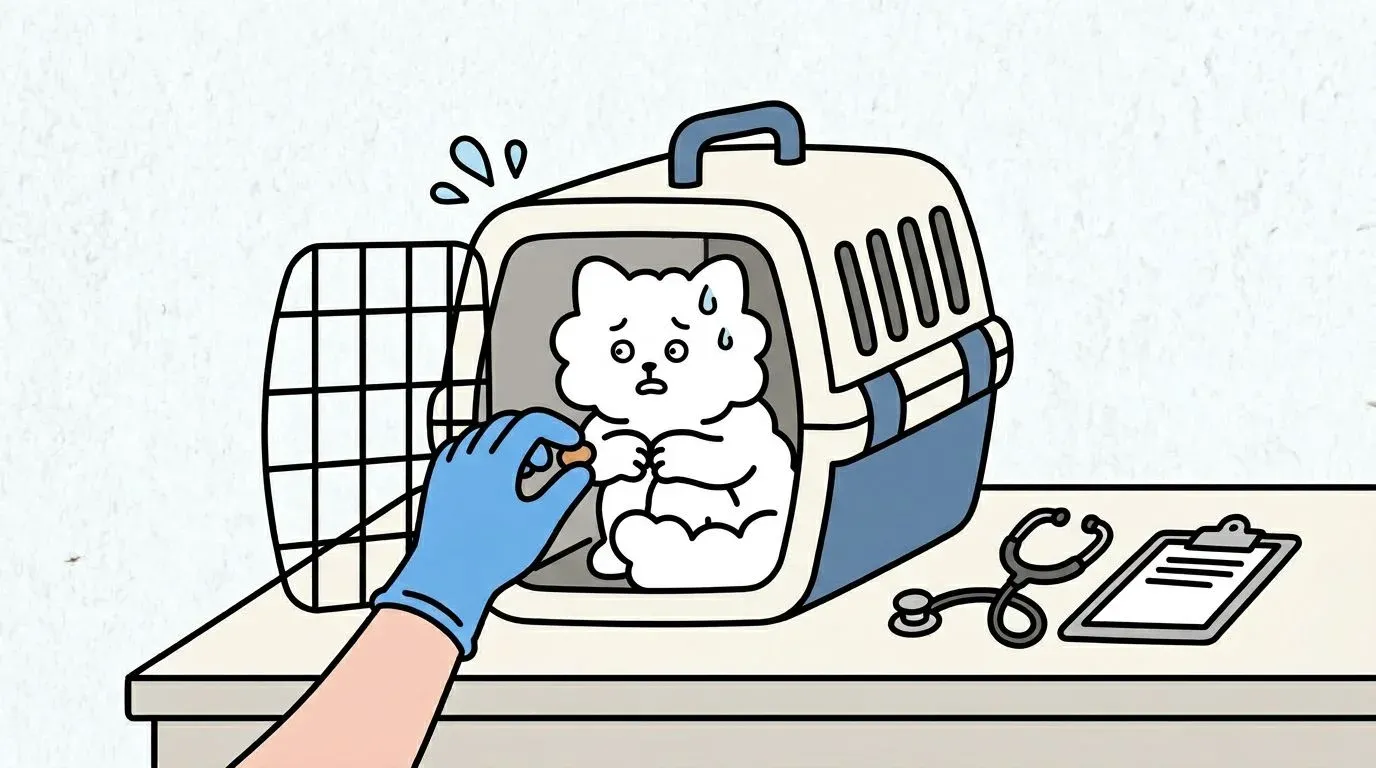
You finally got your cat into the carrier. It took 20 minutes, a towel, and a scratch you will feel for a week. By the time you reached the clinic waiting room — with your cat pressed flat against the carrier door, pupils dilated, breathing fast — you were already wondering whether the appointment was worth it.
This experience is close to universal among cat owners, and it sits at the intersection of a real problem with a real solution. Vet visit stress in cats is not a personality quirk that has to be accepted. It is a predictable physiological response to a specific set of triggers, most of which can be systematically reduced with the right preparation. The strategies that work — carrier desensitization, timing adjustments, pheromone preparation, medication when warranted, and post-visit recovery protocols — are consistently absent from or only partially covered in the resources most owners find.
This guide covers the full lifecycle of a vet visit: why it stresses cats physiologically, how to reduce cat stress at vet visits through structured preparation, what to do during the visit itself, and how to manage recovery at home — including the multi-cat situation that sends many owners back to searching at midnight.
Why Cats Find Vet Visits So Stressful
The Science Behind Feline Stress Response
Cats are not small dogs. Their nervous system is wired around territorial security in a way that makes any forced departure from their known environment physiologically significant — not just unpleasant.
When a cat is placed in a carrier and transported to a clinical environment, several simultaneous threat signals activate the hypothalamic-pituitary-adrenal (HPA) axis: loss of territory control, confinement with no escape route, motion, foreign odors, sounds outside their normal range, and handling by strangers. The result is a cortisol and adrenaline surge that has measurable downstream effects — immune suppression, cardiovascular activation, gastrointestinal disruption, and bladder wall sensitization.
For many cats, this response begins before the carrier door closes. Research published in the Journal of Feline Medicine and Surgery has documented elevated cortisol in cats at home in the hours preceding a scheduled vet visit, triggered by owner behavioral cues (changed routine, carrier appearance) that cats learn to associate with the event. The stress of a vet visit is not confined to the clinic — it starts at home and ends there too.
Territory, Noise, and Unfamiliar Scents: What Makes It Worse
The veterinary clinic environment stacks multiple threat signals simultaneously:
- Olfactory overload: The smell of disinfectants, other animals (particularly dogs), and pheromone signals from stressed animals are all catalogued by a cat’s highly sensitive olfactory system as indicators of danger
- Acoustic stress: Waiting room noise — barking, other animals crying, HVAC systems, door chimes — falls within frequency ranges that activate feline threat-monitoring circuitry
- Tactile restraint: Being held, scruffed, or restrained by unfamiliar hands triggers a hardwired defensive response that has nothing to do with the cat’s “personality”
- Surface instability: Examination tables are typically stainless steel — cold, smooth, and offering no grip — which eliminates the postural stability cats rely on for a sense of control
Understanding that these are physiological responses rather than behavioral misbehavior changes what an effective solution looks like. The goal is systematic reduction of threat signals, not willpower on the cat’s part.
Step 1: Carrier Training — The Foundation
Of all the interventions available for reducing cat vet visit stress, carrier training produces the most durable results for the least ongoing effort. A cat that enters its carrier voluntarily and associates it with safety has fundamentally transformed the vet visit experience before leaving home.
4-Week Carrier Desensitization Protocol
Most owners get out the carrier 10 minutes before they need to leave. This approach guarantees a stressful start, since the carrier becomes a reliable predictor of forced confinement. The fix is making the carrier a permanent, unremarkable part of your cat’s environment.
Week 1: Introduction and Passive Presence
- Place the carrier in a room your cat uses regularly, door open, with familiar bedding or a worn t-shirt inside
- Do not force interaction — simply let your cat investigate at their own pace
- Feed meals within 1 meter of the carrier for the first 3–4 days
Week 2: Approaching and Entering
- Move feeding location to just inside the carrier entrance
- Scatter treats near and then inside the carrier throughout the day
- Allow your cat to fully enter on their own — do not close the door yet
Week 3: Positive Door Closure
- Once your cat enters and eats calmly inside the carrier, begin very brief door closures: 10 seconds, then open immediately
- Gradually extend closed-door duration: 30 seconds, 1 minute, 3 minutes
- Offer a high-value treat through the door grate each time you close it
Week 4: Short Carry Sessions
- Pick up the carrier briefly with your cat inside, set it down, and open the door immediately
- Progress to 1–2 minute carry sessions around the house
- Your cat should remain calm enough to take treats during this phase
The goal by Week 4 is a cat that walks into the carrier without coaxing, settles on the familiar bedding, and remains relaxed during transport. This is achievable for most cats and transforms every future vet visit.
Choosing the Right Carrier: Why Top-Opening Wins
Carrier design matters more than most owners realize. The standard front-loading carrier requires a cat to be pushed or coaxed in, then pulled out — both aversive processes.
Top-opening (or top-and-front opening) carriers offer two critical advantages. First, a cat can be lowered in gently rather than pushed from behind, which eliminates the primary cause of carrier loading struggles. Second, during the veterinary examination, the cat can often remain in the bottom half of the carrier on familiar bedding — a technique favored in low-stress handling protocols that dramatically reduces in-clinic stress. The AAFP Feline Friendly Handling Guidelines specifically recommend carriers that allow examination without full removal.
Hard-sided carriers are preferable for transport safety. Size should allow your cat to stand and turn — too large reduces the sense of security, too small is physically uncomfortable.
Building Positive Associations With the Carrier
Beyond the 4-week protocol, a few ongoing habits maintain the positive association:
- Leave the carrier permanently accessible between vet visits, not stored in a closet
- Periodically place treats or catnip inside unprompted
- Use the carrier for short positive outings (a car trip that ends with a treat at home) so that not every carrier experience means a vet visit
Cat separation anxiety can amplify carrier-related stress, since cats with separation anxiety may associate confinement with the anticipatory distress of owner departure. If your cat shows anxiety symptoms outside of vet visits, addressing that pattern broadly improves carrier acceptance.
Step 2: Pre-Visit Preparation
Scheduling Smart: Quiet Times and Cat-Only Waiting Areas
When you book the appointment matters. Waiting rooms are genuinely stressful for cats, and most of the stress occurs before the examination begins. Ask the clinic directly:
- First appointment of the day: Lowest traffic, quietest environment, staff are fresh
- Mid-week, non-peak slots: Tuesday–Thursday mornings typically have lower throughput than Monday or Friday
- Cat-only waiting time: Many practices designate specific windows for feline patients — ask whether this exists
- Exam room on arrival: Some Cat Friendly and Fear Free practices can take you directly to an exam room on arrival, bypassing the waiting area entirely
These scheduling adjustments cost nothing and can meaningfully reduce waiting room exposure time, which is often the highest-stress portion of the visit.
Pheromone Sprays and Comfort Items
Synthetic feline facial pheromone products (the F3 fraction analog) signal territorial familiarity to cats and have documented anxiolytic effects in clinical settings. The application protocol matters:
- Spray the carrier interior 30 minutes before loading — not immediately before, as the alcohol carrier solvent needs time to evaporate
- Apply to the bedding inside the carrier, not to surfaces your cat will lick
- Do not spray directly on your cat
Bring a piece of worn clothing or your cat’s existing bedding — familiar scent in an unfamiliar environment provides genuine, measurable comfort. Do not wash the carrier bedding before a vet visit.
If your cat goes without food for 2–4 hours before the appointment, nausea from travel motion is reduced and high-value treats become more effective during the examination.
Pre-Visit Medication (Gabapentin): When, How Much, and What to Ask Your Vet
For cats with moderate to severe vet visit anxiety — those who freeze, hypersalivate, vocalize continuously, or become aggressive — behavioral preparation alone may not be sufficient. Pre-visit medication is not a last resort; it is a standard component of feline-friendly veterinary care and is specifically recommended in the AAFP Feline Friendly Handling Guidelines.
Gabapentin is the most widely used option in the United States. A 2017 study in the Journal of Feline Medicine and Surgery (van Haaften et al.) demonstrated that oral gabapentin administered 90 minutes before a veterinary visit produced significantly lower fear, stress, and aggression scores compared to placebo, with no serious adverse effects. Typical doses range from 50 to 100 mg orally, given 1.5–2 hours before departure.
Key points to discuss with your veterinarian:
- Request a trial dose at home 24–48 hours before the actual appointment to assess sedation depth and rule out paradoxical reactions (rare but worth screening for)
- Gabapentin is metabolized renally — cats with chronic kidney disease need dose adjustments
- The sedation is temporary and manageable; most cats are fully recovered within 12–24 hours
- Gabapentin is not appropriate as a long-term anxiolytic substitute for behavioral modification, but it is an excellent bridge while carrier training and clinic protocol changes are implemented
Other medications (trazodone, lorazepam) are used less commonly in cats but may be appropriate in specific situations — ask your vet for a tailored discussion.
Step 3: The Journey and Waiting Room
Securing the Carrier in the Car
Motion instability during transport is a significant stressor. A carrier sliding on a seat surface, tilting on turns, or bouncing on bumps activates the vestibular system and compounds anxiety.
- Secure the carrier with a seatbelt or wedged against the back of the seat
- Place a non-slip mat underneath if the seat surface is slippery
- Cover three sides of the carrier with a lightweight towel or blanket — this reduces visual stimulation without blocking airflow
- Avoid turning on loud music; quiet or no audio is better for anxious cats
- Drive smoothly — accelerate and brake gradually
If your cat vomits regularly during car trips, withhold food for 3–4 hours before travel and consult your vet about whether motion sickness medication is warranted.
Minimizing Stress in the Waiting Area
The waiting room is often where owners lose control of the situation. A dog lunges at the carrier, another cat vocalizes nearby, and your cat goes from mildly anxious to fully activated.
- Keep the carrier elevated on a chair or your lap — being at dog level is significantly more threatening
- Keep the carrier covered with a towel throughout — visual isolation reduces threat signals
- Face the carrier toward you or a wall rather than toward other animals
- Check in immediately upon arrival and ask to be called to an exam room as soon as possible rather than waiting in the general area
- Avoid attempting to comfort your cat by opening the carrier door in the waiting room — this removes the security of the enclosed space and risks escape
If there is a long wait, it is entirely reasonable to ask whether you can wait in your car and be called when a room is ready.
Step 4: In the Exam Room
Finding a Fear Free or Cat Friendly Practice
Not all veterinary practices approach feline patients the same way. The handling philosophy of the clinic — not just the veterinarian’s knowledge — substantially affects how stressful the examination is for your cat.
Two programs set evidence-based standards for low-stress feline handling:
Fear Free Certified (fearfreepets.com): Focuses on reducing fear, anxiety, and stress in both the clinic environment and during examinations. Fear Free Certified professionals are trained in reading animal body language, using minimal restraint, and modifying examination sequences to respect the patient’s stress threshold.
Cat Friendly Practice / Cat Friendly Clinic (AAFP / ISFM): Accreditation programs that require separate cat waiting areas, feline-specific handling training, exam surfaces with grip, and protocols designed around cats’ sensory needs. The ISFM’s Cat Friendly Clinic program is recognized internationally, and the AAFP’s Cat Friendly Practice program is the North American equivalent.
When evaluating a practice, ask:
- Do you use towel wrapping (Burrito technique) instead of scruffing for restraint?
- Is there a separate entrance or waiting area for cats?
- Can the exam be done with my cat on a towel from home rather than directly on the steel table?
- Are you Fear Free certified or AAFP Cat Friendly accredited?
These questions communicate your priorities clearly and help you assess whether the practice’s approach aligns with low-stress principles.
Your Role During the Examination
Many owners underestimate how much their own behavior affects the cat during the exam. Anxious owners transmit anxiety — cats read body language and vocal tone accurately.
- Speak calmly and quietly; avoid phrases like “it’s okay” repeated rapidly, which signals to the cat that the situation warrants concern
- Ask whether you can keep your hand resting lightly on your cat throughout the exam — familiar owner scent is genuinely calming for many cats
- Request that the examination begin at the least sensitive areas and work toward more sensitive regions
- If your cat reaches a visible stress threshold (panting, continuous vocalization, attempting to escape), it is appropriate to request a brief pause — most Fear Free trained vets will accommodate this
- Bring treats and offer them between examination steps when your cat is not actively distressed
Ask your vet to narrate what they are doing and why — understanding the sequence helps you predict and prepare your cat for each step.
Step 5: Post-Visit Recovery
The vet visit does not end when you arrive home. Post-visit recovery is the most neglected phase of cat vet visit stress management, and it is where problems most often develop in multi-cat households.
Creating a Calm Re-Entry at Home
The returning cat carries a complex layer of foreign odors — disinfectant, examination gloves, other animals — and is typically in an elevated sympathetic nervous system state even if they appear calm.
- Keep the carrier in a quiet room and allow your cat to exit at their own pace — do not lift them out
- Provide access to their usual hiding spots, food, and litter without interference
- Avoid other household pets for the first 30–60 minutes (more on this below)
- Do not force attention or comfort — allow your cat to reset at their own pace
- Maintain normal household routine: consistent feeding time, no unusual noise or guests
For cats that had sedation (gabapentin or similar), ensure the recovery space is warm, quiet, and free of hazards — sedated cats can misjudge jumps and falls.
Most cats will return to their baseline behavior within 24–48 hours after a routine visit. Watch for stress-related behaviors like hiding beyond this window, reduced appetite, or litter box changes, which may signal that the experience was more dysregulating than anticipated.
Multi-Cat Households: Preventing Post-Visit Aggression
This situation is extremely common and almost always catches owners off guard the first time. One cat returns from the vet and is immediately attacked or hissed at by their usual housemate — sometimes a bonded companion who has coexisted peacefully for years.
The mechanism is non-recognition aggression. The home cat detects an unfamiliar scent profile on the returning cat and registers it as the arrival of an unknown animal rather than a recognized housemate. This is not aggression toward the cat itself — it is a response to the scent. And it resolves once the returning cat’s odor normalizes.
Immediate protocol:
- Keep the returning cat separated from housemates for at least 30–60 minutes after arrival
- Allow passive scent exchange: place a shared blanket or towel under the returning cat’s carrier or near their temporary space so they deposit their own scent back onto familiar items
- Feed both cats on opposite sides of a closed door to rebuild positive scent association
- Reintroduce when both cats appear calm — no growling, relaxed posture, not fixating on the door
For more persistent cases, the full multi-cat introduction protocol applies — a gradual, scent-led reintroduction sequence that takes 3–7 days. Do not force proximity; let scent normalization do the work.
Signs of Lasting Trauma and How to Help
A single stressful vet visit rarely causes lasting behavioral trauma in a previously well-adjusted cat. However, cats with pre-existing anxiety, those that have had genuinely traumatic experiences (prolonged restraint, pain from procedures), or those who have had repeated difficult visits can develop conditioned fear responses that persist.
Signs that the response has become conditioned rather than transient:
- Hiding that begins days before a scheduled appointment (in response to owner behavioral cues)
- Aggression or extreme avoidance at the sight of the carrier, regardless of context
- Physiological symptoms (vomiting, urination, defecation) during transport that worsen with each visit rather than stabilizing
- Behavioral changes at home that persist beyond 7 days after a routine visit
If you are observing these patterns, discuss them explicitly with your veterinarian. The combination of pre-visit gabapentin, a carrier training reset using the 4-week protocol, and seeking a Cat Friendly or Fear Free practice typically resolves even well-established fear responses over 3–6 visits.
Building a Long-Term Routine
Aligning With Your Annual Wellness Schedule
Cats need annual wellness exams — and more frequently as they age. Senior cats (over 10 years) benefit from twice-yearly examinations, since age-related conditions like hyperthyroidism, kidney disease, and arthritis progress quickly and are far more manageable when caught early.
Understanding what your cat’s vaccination schedule and annual wellness timeline looks like in advance lets you build the preparation protocol into your calendar rather than scrambling each time. If your cat needs bloodwork, dental evaluation, or parasite screening alongside vaccinations, knowing this ahead of time allows you to brief the clinic and request a slower, lower-stress examination sequence.
The physiological principle at work is extinction-resistant conditioning: every positive or neutral vet experience reduces the conditioned fear response, while every traumatic one reinforces it. Building visits into a predictable routine — rather than treating them as emergencies to be survived — is itself a meaningful behavioral intervention over time.
Making Each Visit a Positive Experience
The goal is not a zero-stress visit. Some level of novelty and discomfort is unavoidable. The goal is a visit that stays below your cat’s individual stress threshold — where the cat’s nervous system can process the experience without becoming dysregulated.
Practical habits that shift the balance positively over time:
- Practice handling at home: Regularly touch your cat’s paws, ears, and mouth during low-key moments. Cats that are accustomed to this handling respond dramatically better during examination
- Happy visits: Ask your clinic whether you can bring your cat in for a brief non-examination visit — just sitting in an exam room with treats, handled briefly, then leaving. Fear Free practices typically welcome this
- Rotate the carrier: Use the carrier for occasional positive outings — a car trip that ends with a walk around the block or a treat at home — so the carrier stops being an exclusive vet predictor
- Post-visit reward: A high-value treat or play session immediately upon return home creates a positive association with the post-vet state and helps reset the cortisol response
The desensitization and counter-conditioning principles used for carrier training are the same techniques that underpin cat harness walking training. Cats that have worked through a structured harness program—learning to accept novel equipment through gradual positive exposure—tend to generalize those skills to carrier and vet environments more readily than cats with no such training history.
The cumulative effect of these habits is a cat that tolerates — and eventually accepts — vet visits without a crisis. For owners who have been dreading appointments for years, that outcome is more achievable than it sounds.
The strategies in this guide represent the current consensus from veterinary behavioral science: the AAFP Feline Friendly Handling Guidelines, the ISFM Cat Friendly Clinic program, Fear Free certification standards, and peer-reviewed research on pre-visit medication. If your cat’s stress response has reached the point where visits feel impossible, that is a clinical problem worth raising directly with your veterinarian — it is solvable, and your cat’s wellbeing depends on it.
References
- 1. AAFP Feline Friendly Handling Guidelines
- 2. ISFM Cat Friendly Clinic Programme
- 3. Fear Free Certified Professionals
- 4. Gabapentin as a premedication in cats — van Haaften et al. (2017), JFMS
- 5. Stress and Feline Idiopathic Cystitis — Buffington & Chew (2007)
- 6. Low-stress handling, restraint and behavior modification of dogs and cats — Yin (2009)
FAQ
Can I skip vet visits if my cat gets too stressed?
How do I find a Fear Free or Cat Friendly vet near me?
Is gabapentin safe for cats before a vet visit?
How long does post-vet stress last in cats?
My cat becomes aggressive toward my other cat after vet visits. Why?
Related Articles
7 Proven Ways to Relieve Your Cat's Stress at Home
Learn the signs of stress in cats, what triggers it, and 7 science-backed methods for cat stress relief you can start at home today.
Cat Vaccination Schedule: What Every Cat Owner Needs to Know
AAFP-based cat vaccination schedule by age: kitten series, adult boosters, senior care, titer testing, FISS risks, and rescue cat protocols. With costs.
Does Your Cat Have Separation Anxiety? Signs to Watch and How to Help
Learn the real signs of cat separation anxiety symptoms, how to tell anxiety apart from boredom, and a week-by-week desensitization protocol you can start today.