 Cirius Petpedia
 7 Proven Ways to Relieve Your Cat's Stress at Home
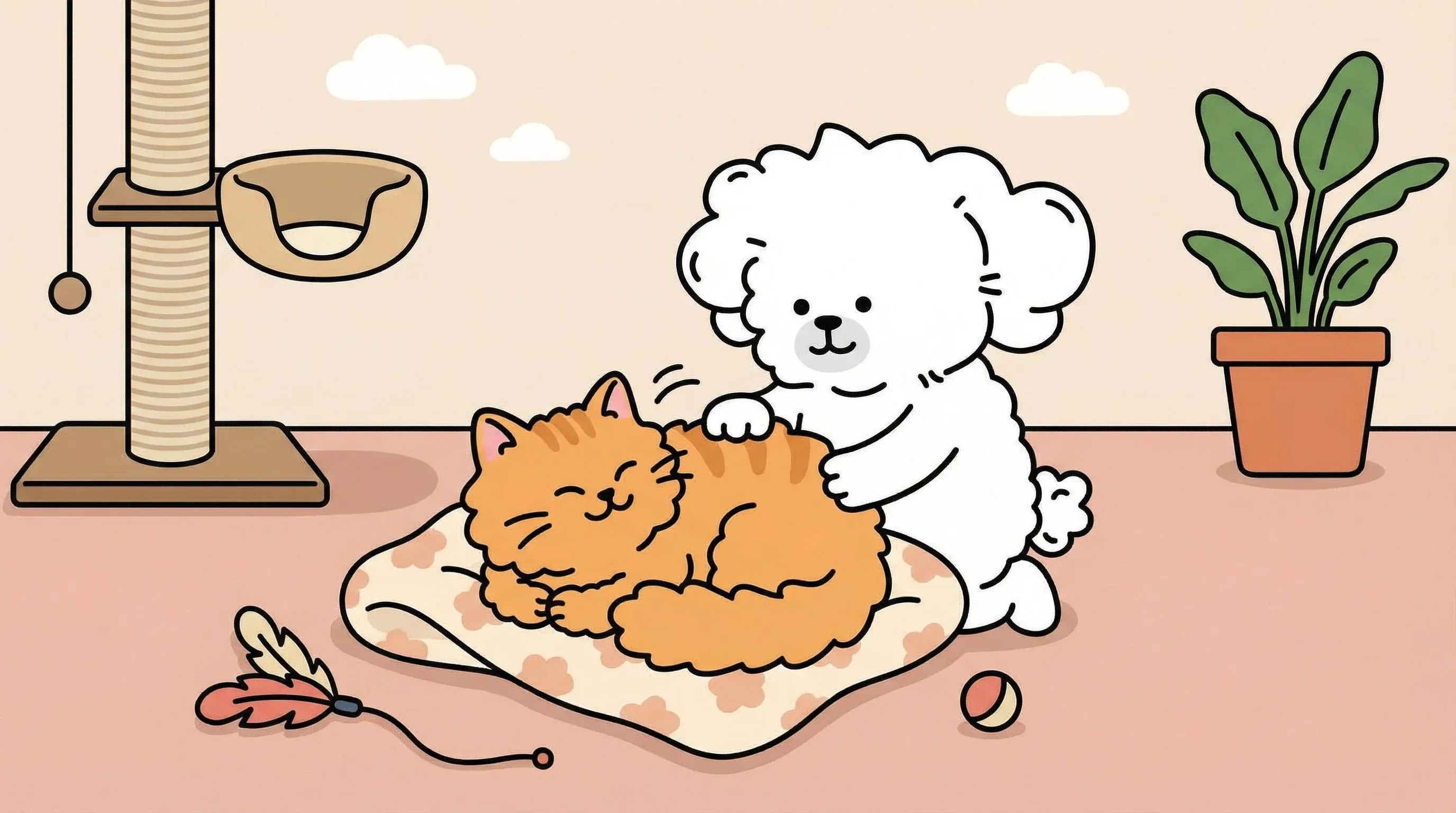
If your cat has suddenly started hiding more, grooming excessively, or avoiding the litter box, stress may be the cause. Cats are far more vulnerable to psychological stress than most owners realize—and indoor cats, despite living in apparently safe environments, can be among the most affected.
This guide covers what stress actually does to a cat’s body, how to recognize it before it becomes serious, and seven specific methods to reduce cat stress at home. Unlike most resources that stop at “keep a routine and see a vet,” we go into the mechanics behind each approach so you understand why it works.
Yes, Cats Get Stressed Too
The Science Behind Feline Stress
When a cat perceives a threat—whether real or imagined—the hypothalamic-pituitary-adrenal (HPA) axis triggers the release of cortisol and adrenaline. This is the same stress-response cascade found in humans. Heart rate increases, digestion slows, and the immune system is temporarily suppressed.
In the wild, this response is short-lived: the threat passes, cortisol drops, and normal function resumes. The problem for domestic cats is that many stressors are persistent—a rival cat visible through the window every morning, a construction site next door, or ongoing tension with another household pet. Chronic cortisol elevation drives real physiological damage, not just behavioral changes. One clinically important consequence: the stress of a veterinary visit alone can temporarily spike blood glucose levels so dramatically that it mimics diabetes on a single blood test — a phenomenon called stress hyperglycemia. This is why feline diabetes diagnosis requires fructosamine testing to confirm genuinely sustained high blood glucose, rather than relying on a single in-clinic reading.
Research published in the Journal of Feline Medicine and Surgery has linked chronic stress to feline idiopathic cystitis (FIC), a painful bladder condition with no bacterial cause. The American Association of Feline Practitioners (AAFP) notes that stress is one of the most significant and underdiagnosed factors affecting indoor cat health. For a complete overview of how stress triggers FLUTD and what you can do about it, see the cat urinary tract disease guide.
Why Indoor Cats Are Especially Vulnerable
An outdoor cat manages stress through territory expansion, predatory activity, and environmental novelty. An indoor cat lives in a fixed, controlled space—often shared with humans and other animals—with limited ability to withdraw, hunt, or establish uncontested territory.
According to iCatCare (International Cat Care), the core needs of a cat include: sufficient space, control over social interactions, multiple safe retreat points, and predictable access to food, water, and litter. When any of these are compromised—by a new roommate, a rearranged apartment, or an unpredictable schedule—stress follows.
Multi-cat households raise the risk further. Cats are not naturally social animals in the way dogs are. Cohabitation is workable but requires deliberate management of space and resources, which many owners don’t realize until problems emerge.
How to Tell If Your Cat Is Stressed: A Symptom Checklist
Behavioral Changes: Hiding, Aggression, Over-Grooming
Behavioral signs are usually the first to appear. The most common include:
- Hiding more than usual, especially in locations the cat doesn’t normally use
- Aggression toward people or other pets that is new or out of character
- Excessive grooming (psychogenic alopecia)—cats lick themselves to self-soothe, and chronic stress can push this into a compulsive pattern that causes fur loss, typically on the belly, inner thighs, or flanks
- Increased vocalization, especially at night — if your cat meows or yowls persistently after dark, the cat meowing at night guide explains the reinforcement mechanics behind stress-driven night crying and a behavioral routine to address it
- Reduced interest in play or interaction with previously enjoyed activities
- Redirected aggression—attacking a person or pet after being startled by an external trigger like a noise or a stray cat at the window
| Behavior | Stress Indicator | Also Check For |
|---|---|---|
| Hiding | Common stress sign | Illness, injury |
| Aggression | Stress, fear, pain | Medical causes, pain |
| Over-grooming | Chronic stress | Allergies, parasites |
| Increased vocalization | Anxiety, cognitive changes | Thyroid issues (older cats) |
| Reduced play | Stress, depression | Pain, illness |
Physical Symptoms: Appetite Changes, Litter Box Issues, Vomiting
Physical symptoms are more serious and warrant faster action:
- Reduced appetite or refusing food — stress suppresses appetite; prolonged refusal can lead to hepatic lipidosis (fatty liver disease) in cats. Conversely, stress-driven overeating can cause gradual weight gain — if your cat is already overweight, the cat obesity diet guide outlines a safe, vet-backed approach to calorie management
- Urinating outside the litter box — the single most common presentation of feline idiopathic cystitis, which the Cornell Feline Health Center identifies as strongly stress-linked
- Diarrhea or vomiting — the GI tract is highly sensitive to cortisol fluctuations. If vomiting recurs, the cat vomiting causes and color guide provides urgency ratings by vomit color and a clear vet-visit decision checklist
- Constipation — stress-induced autonomic nervous system activation slows gut motility. If your cat has not defecated in 48 or more hours alongside stress symptoms, review cat constipation causes and remedies to determine appropriate next steps
- Weight loss without an obvious dietary change
- Coat quality decline — dull, unkempt fur can signal chronic stress as cats reduce grooming or over-groom selectively
When to See a Vet Immediately
Some symptoms require immediate veterinary attention rather than home management:
- Straining to urinate or producing only small amounts (especially in male cats — this can be a urinary blockage, a medical emergency)
- Complete food refusal for more than 24 hours in adult cats, 12 hours in kittens
- Blood in urine or stool
- Sudden severe aggression with no clear trigger
- Trembling, labored breathing, or collapse
If the physical symptoms appeared without any identifiable environmental change, a vet visit should be the first step—not stress management—to rule out underlying illness.
Common Causes of Cat Stress
Understanding what triggered the stress is essential for choosing the right solution. This section maps the most frequent causes to the relief methods that address them directly.
Environmental Changes and Moving
Cats use scent-marking and spatial familiarity to feel secure. A house move strips all of this away at once. Even partial changes—new furniture, a redecorated room, a change in cleaning products—can disrupt a cat’s olfactory map of their territory.
Moving households is one of the highest-stress events a cat can experience. Cornell’s Feline Health Center recommends a “base camp” approach: confining the cat to one room initially, allowing gradual exploration over days to weeks rather than immediate full-home access. For a structured D-21 to D+30 timeline covering everything from carrier training to territory expansion, see our guide on cat moving stress.
Territory Threats and Multi-Cat Conflict
Outdoor cats visible through windows are a major and frequently overlooked stressor. Your indoor cat may stare at, pace in front of, or spray near windows and doors—and you may notice no obvious conflict at all. This is redirected territorial stress: the cat cannot engage or retreat from the perceived threat, so the cortisol stays elevated.
Within multi-cat households, resource competition is the primary driver of chronic stress. A single food bowl shared between three cats, or one litter box for two cats, creates daily low-level conflict that owners rarely recognize as significant. The AAFP’s multi-cat household guidelines recommend one resource station per cat plus one extra—one litter box per cat plus one, multiple feeding locations, and multiple elevated resting spots.
Noise, Scents, and Unfamiliar Stimuli
Cats hear frequencies up to 79,000 Hz (humans top out around 20,000 Hz). Construction noise, fireworks, vacuum cleaners, and even certain high-pitched appliances can be genuinely distressing in ways humans don’t perceive. Strong chemical scents—perfume, paint, certain cleaning products—can be overwhelming for a cat’s highly sensitive olfactory system.
Litter Box Problems
A dirty, poorly located, or inappropriately sized litter box is both a stressor and a symptom of stress. Cats in high-anxiety states may avoid a litter box if another cat has been near it, if it is in a high-traffic area, or if they associate it with a negative experience. Covered litter boxes trap odors and can create an ambush point in multi-cat homes—a setup many cats find threatening.
Lack of Stimulation and Play
Indoor cats receive none of the predatory stimulation that regulates stress in wild or outdoor cats. Insufficient play creates a frustration state that looks behaviorally similar to chronic anxiety: restlessness, attention-seeking, destructive behavior, and over-vocalization. This is sometimes mislabeled as “behavioral problems” when the underlying cause is simple boredom.
Owner Absence and Separation Anxiety
Cats are often assumed to be independent and unbothered by owner absence. This is inaccurate for many cats, particularly those bonded to a single owner or raised without adequate socialization. Signs of feline separation anxiety—excessive vocalization, inappropriate elimination, over-grooming when the owner is absent—are genuinely underdiagnosed.
For a structured approach to diagnosing and treating separation anxiety in cats specifically—including a self-assessment checklist and a week-by-week desensitization protocol—see the guide to cat separation anxiety symptoms and treatment. For a deeper look at how separation anxiety presents across species, the dog separation anxiety guide covers the behavioral science that applies to cats as well.
7 Ways to Relieve Your Cat’s Stress at Home
1. Create Safe Hiding Spots and Vertical Spaces
The single most impactful environmental modification you can make is giving your cat guaranteed access to safe retreat points. A hiding spot is not a luxury; for a stressed cat, it is a basic security requirement.
Hiding spots should be:
- Elevated if possible (cats feel safer off the ground)
- Enclosed on at least three sides
- Located in multiple rooms so the cat is never trapped in one area
- Inaccessible to other pets if relevant
Cat trees, wall-mounted shelves, or even a simple cardboard box with a cut-out entrance all work. The key is that the cat controls access—never remove a cat from its hiding spot to force interaction, as this destroys the sense of security the spot provides.
iCatCare’s indoor cat welfare guidelines specifically list vertical space as a core environmental need. A cat that cannot get off the ground when stressed has no effective escape route, which keeps the stress response active.
2. Schedule 15 Minutes of Daily Interactive Play
Interactive play—with a wand toy, feather lure, or laser pointer followed by a physical “catch”—mimics the hunt-catch-consume cycle that cats are neurologically wired for. This cycle has a measurable stress-reducing effect: cortisol drops after a completed predatory sequence.
Effective play sessions have a structure:
- Start with slow movements to engage interest
- Build to faster, more erratic patterns that trigger the chase response
- Allow the cat to “catch” and “kill” the prey regularly — never end a session without giving the cat a successful catch
- Follow play with a small meal or treat to complete the hunt-eat cycle
Fifteen minutes twice daily is more effective than a single longer session. Consistency matters: if your cat learns to expect play at 8am and 7pm, this predictability itself reduces baseline anxiety. Wand toys and feather lures engage more cats than laser pointers alone, and always end laser sessions with a physical toy to avoid the frustration of an uncatchable “prey.”
3. Environmental Enrichment: Puzzle Feeders and Window Perches
Mental stimulation reduces stress by engaging the brain’s problem-solving circuits—activity that competes with the vigilance state of anxiety. Puzzle feeders and food-dispensing toys are among the most practical forms of enrichment for indoor cats.
A window perch with a bird feeder positioned outside serves two purposes: it provides a safe elevated observation point and gives the cat genuine visual stimulation. Bird feeders attract activity that can occupy a cat for hours with no intervention from the owner.
Other effective enrichment options:
- Rotating a selection of toys rather than leaving all toys available permanently (novelty drives engagement)
- Introducing cat-safe plants like cat grass or catnip
- Providing textured scratching surfaces (cardboard, sisal, wood) in multiple locations
4. Optimize the Litter Box Setup (Number, Location, Substrate)
Litter box problems cause stress and are caused by stress—making optimization one of the most direct interventions available. The AAFP guidelines on feline environmental needs recommend the following setup:
Number: One box per cat, plus one. For a single cat, two boxes in different locations. For two cats, three boxes.
Location: Away from food and water, not in high-traffic areas, not in areas where the cat can be cornered or ambushed. In multi-cat homes, boxes should not be in the same room (a cat can guard access to both at once if they are adjacent).
Size: The box should be at least 1.5 times the length of the cat. Most commercial boxes are too small for large cats.
Substrate: Most cats prefer unscented, fine-grained clumping litter at approximately 2-3 inches depth. Strongly scented litters that appeal to humans often deter cats. If changing litter type, transition gradually.
Cleanliness: Scoop daily, minimum. Cats avoid dirty boxes and often associate box avoidance with health issues when the real cause is inadequate maintenance.
5. Minimize Noise and Sensory Overload
Identify the specific noise and scent triggers in your cat’s environment. The most common overlooked triggers in urban and suburban households:
- Construction or street noise — temporary acoustic panels or white noise machines in the room where the cat spends most time can significantly reduce arousal
- Other animals outside — applying frosted window film to the lower portion of windows that overlook areas where stray cats or dogs pass removes the visual trigger without eliminating natural light
- Household appliances — vacuum cleaners, blenders, and some HVAC systems produce frequencies cats find aversive; where possible, use these when the cat is in a different part of the home
- Scent triggers — avoid strong chemical cleaners, air fresheners, and essential oil diffusers in the cat’s primary areas. Many essential oils (tea tree, eucalyptus, lavender in high concentrations) are also toxic to cats
6. Maintain a Consistent Daily Routine
Predictability is a fundamental need for cats, not a preference. The ASPCA notes that schedule disruptions—including changes to feeding times, the owner’s sleep schedule, or the arrival of new people in the home—are among the most common triggers for acute stress episodes.
A consistent routine reduces baseline cortisol by eliminating anticipatory anxiety. When a cat knows that food arrives at 7am and 6pm, that play happens at 8am, and that the household quiets after 10pm, the brain’s threat-detection circuits operate at a lower baseline.
When routine changes are unavoidable—a new work schedule, a houseguest—introduce changes gradually where possible and provide additional enrichment during transition periods.
7. Territory Management for Multi-Cat Homes
Multi-cat stress management is one of the most poorly addressed areas in standard cat care advice. The core principle from the AAFP’s multi-cat household guidance is this: cats sharing a space need to be able to avoid each other when they choose. Forced proximity is inherently stressful for most cats.
Practical territory management:
- Separate resource stations: feeding stations, water sources, and litter boxes in different locations so no single cat can guard access to all
- Vertical separation: multiple elevated spaces allow cats to maintain distance without leaving the room
- Scent-swapping during introductions: before a new cat meets a resident cat, exchange bedding so each cat’s scent becomes familiar before visual contact
- Time separation if needed: rotating access to different areas of the home so each cat has guaranteed solo time in shared spaces
If one cat consistently bullies another or blocks access to resources, temporary physical separation with gradual re-introduction is more effective than hoping the cats will “work it out” — they rarely do without structured intervention. For a full protocol covering every stage from isolation to free roam, see how to introduce cats step by step.
Calming Tools and Natural Remedies That Actually Work
Pheromone Diffusers: How They Work and How to Use Them
Synthetic feline pheromone products replicate the F3 fraction of the facial pheromone—the scent cats deposit when they rub their face against objects to mark them as safe. When this pheromone is present in the environment, the cat’s nervous system receives a signal of familiarity and security.
A 2019 review in the Journal of Feline Medicine and Surgery found that F3 pheromone diffusers showed statistically significant reductions in urine-marking, hiding, and other stress-related behaviors in several controlled studies. The effect is not universal—approximately 30% of cats in some studies showed no response—but it is well-documented enough that feline behaviorists and veterinarians commonly recommend trialing them.
When selecting and using a pheromone diffuser:
- Place the diffuser in the room where the cat spends the most time, not in a hallway or secondary room
- Allow 7-14 days for measurable effect; most studies assess outcomes at 28 days
- Do not place near air vents, as airflow disperses the pheromone too quickly
- For acute stressors (vet visits, travel), pheromone sprays applied to a carrier or bedding 30 minutes before use are more practical than diffusers
Calming Music and White Noise for Cats
Research from the University of Wisconsin-Madison and subsequent studies by musician David Teie demonstrated that cats respond more positively to music composed specifically for cats—sounds pitched in feline vocal ranges and incorporating tempos similar to purring or bird calls—than to human classical music.
Platforms like Spotify have dedicated cat music playlists based on this research. While this is not a substitute for addressing the underlying stressor, background calming music has been shown to reduce cortisol-related behaviors in shelter environments and can be useful during acute triggers like thunderstorms or fireworks.
White noise machines serve a related but different purpose: they mask sudden external sounds (traffic, construction, neighbors) that startle and arouse cats. A consistent ambient sound level is less stressful than a quiet baseline interrupted by random spikes.
Catnip and Valerian Root: Benefits and Cautions
Catnip (Nepeta cataria): The active compound nepetalactone binds to feline olfactory receptors and induces a euphoric response lasting roughly 5-15 minutes, followed by a refractory period of approximately 30 minutes. About 30-50% of cats are genetically unresponsive (the trait is autosomal dominant—if the gene is absent, there is no response regardless of exposure). In cats that do respond, catnip is a useful short-term stress release tool, particularly useful before anticipated stressors. It is non-addictive and not harmful in normal quantities.
Valerian root: Valerian produces a response in cats similar to catnip but through a different mechanism, and it affects some cats that don’t respond to catnip. The smell is extremely pungent to humans. Use dried valerian root in toys rather than essential oil form—concentrated valerian essential oil can be irritating.
Cautions for both: Neither is appropriate for kittens under six months, pregnant cats, or cats on medication without veterinary clearance. Catnip can occasionally cause mild gastrointestinal upset in sensitive cats. Neither is a treatment for clinical anxiety; they are enrichment tools.
What doesn’t have reliable evidence: Lavender sachets, chamomile diffusers, and many “calming supplements” marketed for cats have limited or no controlled research behind them. Some essential oil-based products are actively harmful. When considering any supplement for cat stress relief, look for products with published research in peer-reviewed veterinary journals and consult your veterinarian before introducing anything new.
When Home Management Isn’t Enough
The seven methods above address the majority of common stress cases in otherwise healthy cats. But some situations require professional support:
- Stress that doesn’t improve after 4 weeks of consistent environmental management
- Compulsive behaviors (non-stop grooming, repetitive pacing) that continue even with triggers removed
- Aggression severe enough to cause injury to people or other pets
- Suspected separation anxiety that doesn’t respond to behavior modification
In these cases, a veterinary behaviorist or a Certified Applied Animal Behaviorist (CAAB) can design a structured behavior modification plan and evaluate whether anti-anxiety medication is appropriate. Fluoxetine, buspirone, and gabapentin are among the medications used for feline anxiety, always alongside—not instead of—behavioral intervention.
If vet visits are themselves a significant stressor for your cat — which is common, given the combination of territorial displacement, unfamiliar scents, and handling — the dedicated cat vet visit stress guide covers the full visit lifecycle: 4-week carrier training, pre-visit medication options (gabapentin), in-clinic handling requests, and post-visit recovery including multi-cat household management.
It’s also worth remembering that physical health and behavioral health are linked. Seasonal coat changes and the mild physical stress they cause can sometimes amplify baseline anxiety in sensitive cats. If your cat’s stress seems to worsen in spring, the cat spring shedding care guide covers how to manage seasonal transitions that can contribute to stress.
References
- 1. Feline Stress and Anxiety - Cornell University College of Veterinary Medicine
- 2. Stress in Cats - iCatCare (International Cat Care)
- 3. Feline Behavioral Health and Welfare - AAFP
- 4. Cat Stress and Anxiety - ASPCA
- 5. Synthetic Pheromone Products for Behavioral Modification in Cats - Journal of Feline Medicine and Surgery
FAQ
How long do cats recover from stress?
Can stress be dangerous to a cat's health?
How do you calm a stressed cat quickly?
Is my cat stressed or sick? How can I tell?
Why is my cat stressed all of a sudden?
Related Articles
Cat Spring Shedding: 5 Vet-Backed Steps to Control the Fur
Cat spring shedding explained: why it happens, how to tell normal from abnormal, and 5 vet-backed steps to manage fur and prevent hairballs.

Dog Separation Anxiety Guide: Symptoms, Training, and Help
Learn how to identify dog separation anxiety symptoms, follow a vet-backed step-by-step training plan, and know when medication or a specialist is needed.

How to Take Your Dog to the Beach Safely: A Complete Trip Guide
Everything dog owners need for a safe beach day: preparation checklist, essential gear, beach hazards like saltwater toxicity and sand ingestion, and post-trip care.