 Cirius Petpedia
 How to Bathe a Dog in 7 Steps: Frequency, Technique & Skin Protection
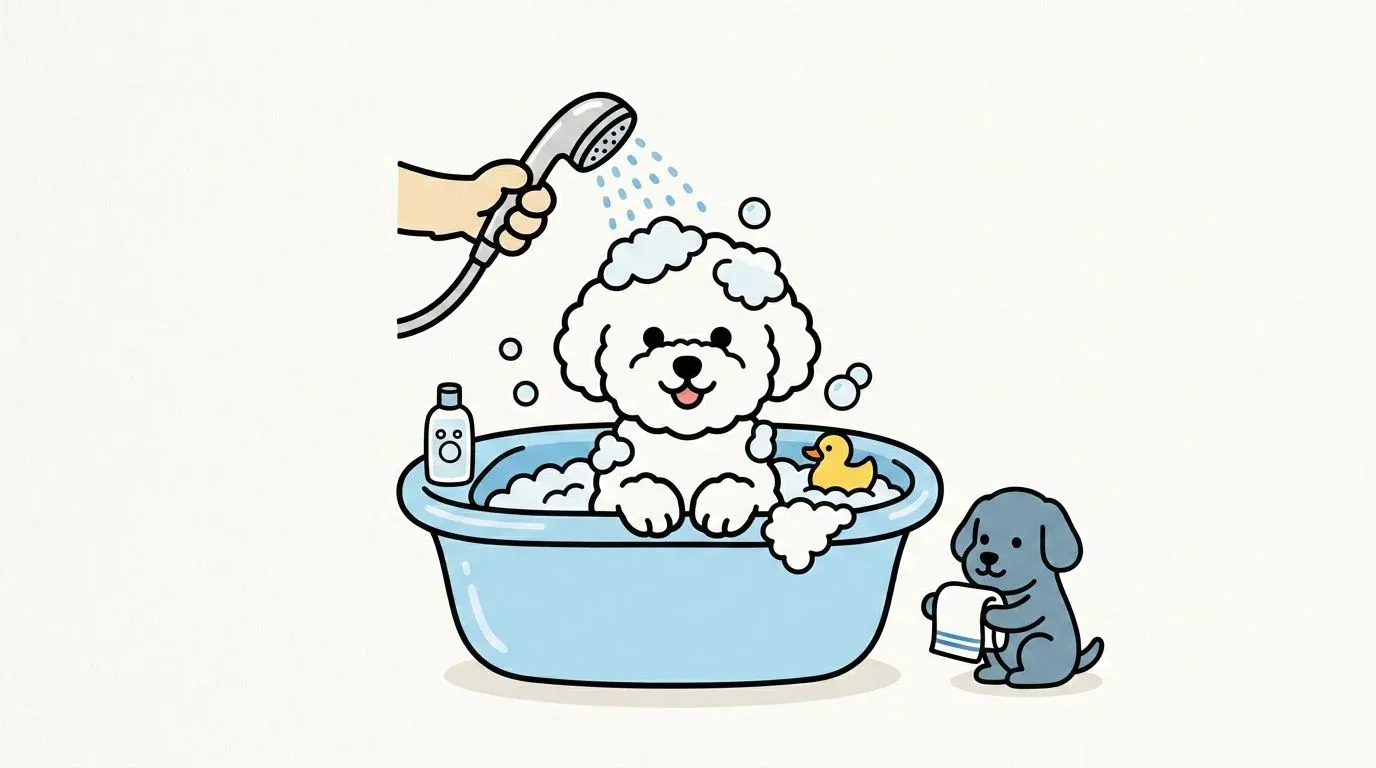
Bathing a dog sounds straightforward until the moment your Golden Retriever decides the bathroom floor is more interesting than the tub, or your arthritic Labrador can barely step over the side. The mechanics of a dog bath are simple. The strategy — choosing the right frequency, water temperature, shampoo, and technique for your specific dog — is where most owners run into trouble.
This guide covers everything from the basic seven-step process to frequency tables by coat type, a dedicated section on bathing senior and arthritic dogs safely, and a post-bath routine that goes further than just towel drying.
Why Regular Baths Matter for Your Dog’s Health
Grooming is often treated as cosmetic. It is not. For dogs, bathing is a primary mechanism for maintaining the skin’s protective function — and skipping it too long, or doing it wrong, carries real health consequences.
Skin pH and the Protective Barrier
Dog skin has a pH of approximately 7.0 to 7.5, which is considerably more alkaline than human skin (roughly 5.5). This alkaline environment supports a microbiome — a community of beneficial bacteria and fungi — that forms the first line of defense against pathogens, allergens, and moisture loss. A paper published in Veterinary Dermatology found that disruptions to the skin barrier, including from inappropriate bathing products or over-bathing, increase transepidermal water loss (TEWL) and create conditions where opportunistic organisms like Malassezia yeast or Staphylococcus pseudintermedius bacteria can proliferate.
Bathing with the right frequency and the right shampoo does the opposite: it removes allergens, sebum buildup, environmental debris, and surface microbes that would otherwise accumulate and challenge that barrier.
What Happens When You Skip Baths Too Long
The visible signs of an overdue bath — greasiness, odor, tangled coat — are the surface indicators of a deeper problem. Sebum, dead skin cells, and environmental debris accumulate in the coat and against the skin. In humid conditions or in dogs with dense undercoats, this creates a warm, moist environment favorable to bacterial and fungal overgrowth. Hot spots (acute moist dermatitis) are more common in dogs whose coats are not kept clean and dry. Matted fur can conceal skin lesions long enough for infections to become serious.
For dogs with allergies specifically, a coat laden with pollen, dust mites, and mold spores keeps the immune system perpetually activated. Regular baths physically remove those triggers, which is why veterinary dermatologists frequently recommend bathing as a first-line management strategy for environmental allergies — sometimes as often as twice weekly during high-pollen seasons.
How Often Should You Bathe Your Dog?
There is no single correct answer, because the right bathing frequency depends on coat type, activity level, skin health, and season. The table below provides a starting framework; adjust based on how your dog looks and smells between baths.
By Coat Type: Short, Long & Double-Coated Breeds
| Coat Type | Examples | Recommended Frequency |
|---|---|---|
| Short, smooth | Beagle, Boxer, Dalmatian | Every 4–6 weeks |
| Long, silky | Yorkshire Terrier, Afghan Hound, Maltese | Every 2–4 weeks |
| Dense double coat | Husky, Golden Retriever, Bernese Mountain Dog | Every 4–6 weeks; more often during shedding season |
| Curly / non-shedding | Poodle, Labradoodle, Portuguese Water Dog | Every 3–4 weeks |
| Wire / rough | Schnauzer, Airedale Terrier, Jack Russell Terrier | Every 4–8 weeks |
| Hairless | Chinese Crested, Xoloitzcuintli | Weekly — skin is directly exposed to environment |
Double-coated breeds present a specific challenge: the undercoat traps debris and moisture against the skin even when the outer coat looks clean. A thorough pre-bath brushing is essential for these breeds.
By Skin Condition: Allergies, Dry Skin & Seborrhea
| Condition | Frequency | Shampoo Type |
|---|---|---|
| Environmental allergies | 1–2x weekly during allergy season | Hypoallergenic, oatmeal-based |
| Dry skin | Every 6–8 weeks | Moisturizing, fragrance-free |
| Seborrhea (oily type) | Every 1–2 weeks | Medicated seborrhea formula |
| Seborrhea (dry type) | Every 4–6 weeks | Hydrating, gentle |
| Recurrent skin infections | Per veterinarian protocol | Medicated (chlorhexidine or miconazole) |
| Healthy skin, no condition | Every 4–6 weeks | General-purpose dog shampoo |
For dogs with dog skin allergies or chronic skin conditions, bathing frequency is best determined with your veterinarian or a veterinary dermatologist, since under-bathing and over-bathing can each worsen the problem depending on the underlying cause.
Seasonal Adjustments
Spring and summer typically call for more frequent baths: increased outdoor activity means more dirt, pollen, and insect exposure. Dogs who swim need rinsing after each water session (pool chlorine and natural water bacteria are both irritating to skin) though a full shampoo bath every week or two is usually sufficient. In winter, indoor heating dries the air and can contribute to dry, flaky skin — extending intervals between baths and adding a moisturizing conditioner can help.
Pre-Bath Preparation Checklist
Gathering everything before your dog enters the bath prevents the scenario where you are dripping and searching cabinets while a wet dog shakes water across the room.
Essential Supplies
- Non-slip bath mat: Arguably the single most important item. A dog that cannot gain footing in the tub will panic, which is the origin of most bath aversion. Rubber suction-cup mats work well; a folded towel at the tub bottom is a serviceable substitute.
- Handheld spray nozzle or gentle shower attachment: Gives you directional control over water flow and allows you to avoid spraying the face and ears.
- Dog shampoo (appropriate to coat/skin type): More detail below.
- Conditioner (optional but recommended for long-coated breeds and dogs with dry skin)
- Multiple absorbent towels: At minimum two; large dogs may require three.
- Blow dryer (optional but recommended for dense or long coats): Set to cool or low-warm — never high heat.
- High-value treats: For distraction, reward, and building positive bath associations.
- Cotton balls: Place loosely in the ear canal opening to help prevent water entering the ear. Remove immediately after the bath. Note: do not pack them deep into the canal.
For large breeds — Labrador Retrievers, German Shepherds, Bernese Mountain Dogs — a walk-in shower or converted laundry tub is often easier than a standard bathtub. Garden hose setups work in warm weather but make temperature control difficult.
Choosing the Right Dog Shampoo by Skin Type
The shampoo market for dogs is flooded with products making vague claims. Here is how to match formula to need:
Oatmeal-based shampoos work well for dogs with mild dryness, environmental allergies, or general itchiness. Colloidal oatmeal has documented skin-barrier-supporting and anti-inflammatory properties.
Medicated chlorhexidine shampoos (typically 2–4% concentration) are the standard veterinary recommendation for bacterial skin infections. They require a contact time of 5–10 minutes to be effective — lathering and rinsing immediately negates the benefit.
Miconazole or ketoconazole shampoos target fungal overgrowth, including Malassezia dermatitis, a common secondary condition in allergic dogs.
Hypoallergenic, fragrance-free formulas are appropriate as everyday maintenance for sensitive-skinned dogs when no active infection is present.
Dog shampoo for sensitive skin: Look for pH-balanced formulas without artificial fragrances, dyes, parabens, or sulfates. The ingredient list should be short and legible.
Never use human shampoo, baby shampoo, dish soap, or hand soap on dogs. All are formulated for human skin pH and will compromise a dog’s skin barrier regardless of how gentle they seem.
How to Bathe a Dog: 7 Steps
Step 1: Brush Out Mats and Tangles
Bathe a dry dog, not a wet one. Water causes mats to tighten and become nearly impossible to brush out without cutting. Work through the entire coat with a slicker brush (or an undercoat rake for double-coated dogs) before placing your dog in the tub. Pay extra attention to behind the ears, under the “armpits,” around the collar, and the base of the tail — high-friction areas where mats form first.
For dogs with dense double coats like Huskies or Bernese Mountain Dogs, this step may take ten to fifteen minutes. That investment prevents a far more difficult grooming situation post-bath.
If you encounter a mat too tight to brush out dry, it is better to carefully cut it out before bathing than to proceed and risk skin irritation or discomfort when the mat tightens in water. For a complete guide to brush selection, technique, and mat removal, see how to brush a dog.
Step 2: Set the Right Water Temperature (98–102°F)
Dogs are most comfortable with water at approximately 98 to 102°F (37–39°C) — close to body temperature. Water that feels “warm but not hot” to the inside of your wrist is in the right range. Cold water causes stress and muscle tension. Water above 105°F risks burns, particularly for dogs with thin skin, hairless breeds, or dogs with compromised circulation.
Check the temperature with your wrist or a thermometer before your dog steps in. This is especially important for senior dogs and dogs with joint conditions, whose pain perception and temperature regulation may be altered.
Step 3: Wet From Paws Up
Begin wetting from the paws and work upward — legs, belly, back, chest, and finally neck. Avoid spraying directly at the face or ears. Hold the nozzle close to the coat (1–2 inches) to reduce noise and spray scatter, which many dogs find alarming.
Wetting from the bottom up gives your dog time to acclimate to the sensation before water reaches more sensitive areas. Save the head for last; dogs instinctively shake when water reaches their head, which signals the end of the bath in their mind.
For the face, use a damp washcloth rather than the spray nozzle. Wipe gently from the inner corner of the eye outward.
Step 4: Lather and Massage With Shampoo
Apply shampoo starting at the neck and working toward the tail, then down each leg. Work the shampoo into the coat with your fingertips using circular motions — this massages the skin as well as distributing product through the coat. Pay attention to skin folds (if present), between the toes, and under the collar.
If using a medicated shampoo, follow the label’s contact time instructions precisely. Set a timer. Most require 5–10 minutes of contact to achieve their intended antimicrobial effect. For standard shampoos, 2–3 minutes of thorough lathering is sufficient.
Keep shampoo away from the eyes and inside of the ears.
Step 5: Rinse Thoroughly
Inadequate rinsing is one of the most common causes of post-bath skin irritation, itchiness, and coat dullness. Residual shampoo disrupts skin pH and can cause contact dermatitis. Rinse until the water runs completely clear and the coat no longer feels slippery.
For thick or double-coated breeds, this typically means significantly longer rinsing than you expect — often two to three minutes of sustained water flow over the entire body. Part the coat with your fingers while rinsing to ensure water reaches the skin, not just the outer coat layer.
Rinse the face last, using the damp cloth technique.
Step 6: Towel Dry Gently
Pat, do not rub. Vigorous rubbing creates friction that opens the hair cuticle, leading to frizz, breakage, and tangling — particularly in long-coated and curly-coated breeds. Press towels firmly against the coat and squeeze.
Start with the body, then move to the legs and paws. Give extra attention to paw pads and the skin between toes, where moisture retention can create conditions for yeast overgrowth if left damp. For post-bath paw care including moisturizing dry pads, a separate routine is worthwhile.
For very large breeds, have a second dry towel ready. A wet Golden Retriever or Saint Bernard will absorb one bath towel almost entirely.
Step 7: Blow-Dry at Safe Distance and Temperature
Leaving a long-coated or double-coated dog to air-dry completely can take hours and leaves the skin under the coat damp for extended periods — a recipe for mildew odor and dermatitis in warm weather. A blow dryer speeds the process and allows you to brush the coat smooth simultaneously.
Use the dryer on the cool or lowest warm setting. Keep it moving — never hold it stationary over one area. Maintain a distance of 6 to 8 inches from the coat. Check the skin surface periodically with the back of your hand to make sure it is not getting hot.
Short-coated breeds typically do not need blow-drying; towel drying followed by a warm room is sufficient.
Bathing a Senior Dog or Dog With Joint Problems
Senior dogs and dogs with arthritis, hip dysplasia, or other mobility challenges require significant modifications to the standard bath process. The goal is to provide the same hygiene benefit while eliminating the physical and emotional stress that can cause real harm to dogs with fragile joints.
For owners new to recognizing signs of joint trouble in older dogs, the guide to dog arthritis symptoms provides a comprehensive overview of what to watch for before assuming your dog’s bath reluctance is purely behavioral.
Non-Slip Setup and Safe Positioning
Slipping in the tub is the single greatest physical risk for an arthritic dog during bathing. A sudden lurch to regain footing can cause acute joint pain, muscle strains, and in severe cases, injury. Mitigate this with:
- Thick rubber bath mat with suction cups: Cover as much of the tub floor as possible.
- Non-slip bath step or ramp: For dogs that can no longer step over the tub edge comfortably, a low step or ramp allows entry without the dog having to lift their hind legs awkwardly high.
- Support during bathing: Keep one hand on the dog throughout. For large breeds, a second person is genuinely useful — one person manages the dog’s position and stability while the other works the shampoo and rinse.
Keep the bath as short as possible. Plan every step in advance so the dog does not have to stand and wait unnecessarily.
Adaptive Tools for Limited Mobility
Several tools designed for human physical rehabilitation translate well to arthritic dog bathing:
- Waterproof dog sling or support harness: Supports the hindquarters of dogs with rear-end weakness without the owner having to bend awkwardly or the dog having to bear full weight.
- Shower chair cushion or yoga mat: If bathing in a walk-in shower, providing soft, non-slip standing support is easier than a slick tile floor.
- Hand-held detachable shower head: Allows precise water control without moving the dog. Essential for dogs who cannot turn comfortably.
- Waterless leave-in conditioner or dry shampoo spray: For between full baths when joint pain is flaring.
Water temperature becomes even more critical for arthritic dogs. Warm water — kept at 98–102°F — relaxes the muscles around painful joints and can actually provide short-term pain relief during the bath itself. This is analogous to the therapeutic warmth used in canine hydrotherapy programs, where controlled warm water immersion is a recognized adjunct to physical rehabilitation.
Dry Bath: The No-Water Alternative
For dogs whose mobility is severely compromised — dogs who can no longer step into a tub, dogs recovering from orthopedic surgery, or dogs for whom any weight-bearing in a confined space causes distress — dry bathing is a legitimate and effective alternative.
Waterless dog shampoo comes in foam, spray, and powder forms. Apply to the coat, work through with fingertips, and towel off without rinsing. While the cleaning efficacy does not fully match a water bath, it is sufficient for odor control and surface debris removal between full baths, and can extend the interval between full baths without sacrificing hygiene.
Grooming wipes designed for dogs are useful for spot-cleaning paws, underbelly, and skin folds — the areas that accumulate the most debris — without requiring a full bath setup.
For dogs using a dry bath approach long-term, more frequent coat and skin supplement support becomes relevant, since the natural skin-cleansing mechanism of a water bath is used less often.
Post-Bath Care Routine
What you do in the thirty minutes after a bath matters nearly as much as the bath itself.
Skin Moisturizing and Hydration
Bathing, even with a gentle shampoo, removes some natural oils from the skin surface. For dogs with dry skin or seborrhea, a leave-in conditioner or a veterinarian-recommended skin moisturizer applied to slightly damp coat (before final blow-drying) helps restore the lipid barrier.
Ceramide-based products and products containing panthenol (pro-vitamin B5) have evidence for improving skin-barrier function and water retention in companion animals. Avoid products containing propylene glycol, which can be irritating to sensitized skin.
Post-bath is also an excellent time to inspect the skin: run your hands over the entire body looking for lumps, tender spots, redness, scaling, or any area the dog reacts to unusually when touched.
Gentle Joint Massage and Warm Therapy
For senior dogs and dogs with arthritis, post-bath is an ideal window for supportive care — the muscles are warm, the dog is calm, and circulation is elevated from the bath’s warmth.
A gentle, slow effleurage (stroking) massage along the major muscle groups — shoulders, back, hindquarters — takes two to three minutes and helps maintain muscle flexibility, reduces guarding behavior around sore areas, and deepens the positive association with post-bath handling. Avoid pressing directly on joint surfaces; focus on the surrounding muscles.
Research published in the Journal of Small Animal Practice and related veterinary rehabilitation literature documents that warm water’s effect on peripheral circulation — vasodilation, reduced joint stiffness, and temporary pain relief — is clinically meaningful in dogs with osteoarthritis, which is part of the rationale behind formal canine hydrotherapy protocols. A post-bath warm-up routine can extend some of those benefits into the at-home environment.
Near-infrared (NIR) light therapy has also emerged as a complementary tool used after physical activity or grooming sessions in arthritic dogs, where it is applied to promote circulation and tissue recovery. If your veterinarian has recommended NIR as part of your dog’s joint management plan, the post-bath window — when muscles are already warm and relaxed — is a physiologically appropriate time to use it.
Keep the dog in a warm room after the bath until fully dry. Damp dogs in drafty or cold environments can experience muscle stiffness that counteracts the warmth benefits of the bath.
5 Common Dog Bathing Mistakes to Avoid
1. Using water that is too cold or too hot. Cold water stresses dogs and increases the chance of bath aversion. Hot water (above 105°F) risks burns. Test temperature every time — water heater settings can fluctuate.
2. Skipping the pre-bath brush. Bathing a matted dog tightens existing mats, makes them painful to remove, and prevents water and shampoo from reaching the skin properly. Always brush before, not after.
3. Not rinsing thoroughly. Residual shampoo is a leading cause of post-bath itching and skin irritation. Rinse until the water runs clear, then rinse again.
4. Getting water and shampoo in the ears. This creates the warm, moist conditions favorable to ear infections (Malassezia and bacterial otitis). Use a damp cloth on the face, place cotton balls loosely at the ear canal opening, and direct the spray away from the ears throughout.
5. Ending the bath badly. If you rush or restrain a dog harshly at the end of the bath, the last emotional impression is negative — and dogs learn from endings. Always end with calm handling, a high-value treat, and praise before releasing. This is the most underrated step in building a dog that tolerates (or even enjoys) baths.
For first-time dog owners, or for those introducing a young dog to bathing for the first time, the puppy first bath guide covers the age-appropriate approach for dogs under four months, including shorter sessions, lower water volume, and a specific desensitization sequence.
If your dog has active skin sores, raw areas, or confirmed hot spots, review the dog hot spot treatment guide before bathing. Submerging or soaking inflamed, open skin lesions can spread bacteria and significantly worsen the condition.
References
- 1. AKC - How to Give Your Dog a Bath
- 2. PetMD - How to Bathe a Dog
- 3. Veterinary Dermatology - Bathing frequency and canine skin pH
- 4. AVMA - Responsible Pet Ownership
- 5. Journal of Small Animal Practice - Hydrotherapy and joint pain in canines
- 6. Clinics in Dermatology - Canine skin barrier and transepidermal water loss
FAQ
How often should I bathe my dog?
Can I use human shampoo on my dog?
What if my dog hates baths?
How do I safely bathe a dog with arthritis?
Is it okay to bathe a dog with a skin condition like hot spots or allergies?
Related Articles

Puppy First Bath: A Stress-Free Step-by-Step Guide
When to give a puppy their first bath, how to bathe them safely, choose the right shampoo, dry properly, and handle bath fear.
Dog Skin Allergies: Types, Symptoms, and Management Guide
Dog skin allergies: 3 types, symptom patterns by location, 8–12 week elimination diet protocol, and treatment options including JAK inhibitors.
How to Treat Dog Hot Spots at Home: A Safe 5-Step Care Guide
Dog hot spot treatment at home: a 5-step guide covering causes, safe vs. dangerous remedies, progression stages, and when to call the vet.