 Cirius Petpedia
 Dog Exercise Guide: How Much Exercise Does Your Dog Need? 7 Essential Rules by Breed & Age

Exercise is one of the most reliable predictors of a dog’s long-term health — yet it’s also one of the most commonly miscalibrated aspects of dog care. Most owners know their dog needs walks, but far fewer know exactly how much activity is appropriate for their dog’s breed, age, and physical condition.
The answer is not one-size-fits-all. A Border Collie and a Basset Hound are both dogs, but their exercise requirements sit at opposite ends of the spectrum. Getting this calibration right protects your dog from the compounding health consequences of both too little and too much exercise.
This guide walks you through daily exercise needs by breed group and life stage, warning signs for both under- and over-exercise, seven effective exercise types, seasonal adjustments, and low-impact options for dogs with joint concerns.
Why Exercise Matters for Your Dog
Before diving into specific amounts, it helps to understand why exercise is so important — and what goes wrong when it is insufficient or excessive.
Physical Health: Weight Management and Muscle Maintenance
According to the Association for Pet Obesity Prevention, an estimated 59% of dogs in the United States were classified as overweight or obese in recent survey data. Excess body weight places direct mechanical load on joints, accelerating the progression of conditions like osteoarthritis and hip dysplasia. Dogs carrying even 10–15% above their ideal weight show measurably increased joint inflammation markers.
Regular physical activity burns calories, preserves lean muscle mass, and keeps connective tissue healthy. Muscle supports joints — dogs with strong hindquarter muscles, for example, are substantially less susceptible to patellar luxation and cruciate ligament injuries. For an in-depth look at the relationship between body weight and joint health, see our guide on dog obesity and joint health.
Mental Health: Stress Relief and Behavior Problem Prevention
Exercise is not purely physical. Physical activity reduces cortisol (the primary stress hormone) and stimulates the release of serotonin and dopamine in dogs, just as it does in humans. A dog that receives insufficient exercise often redirects that unspent energy into undesirable behaviors: destructive chewing, excessive barking, digging, and hyperactivity indoors.
Research published in Applied Animal Behaviour Science found that dogs with structured daily exercise routines showed significantly lower rates of anxiety-related behaviors compared to dogs with irregular or minimal exercise. If your dog struggles with high arousal and restlessness, our article on calming hyperactive dogs provides complementary strategies.
Exercise Needs by Breed
Breed is the single most important starting variable when calculating your dog’s daily exercise requirement. The American Kennel Club (AKC) classifies breeds into energy-level groups that align closely with their historical working purpose: herding dogs, sporting dogs, and working dogs were bred for sustained physical output; toy breeds and companion breeds were not.
Small Breeds (Chihuahua, Maltese, Pomeranian): 30–40 min/day
Small breeds have shorter legs and smaller lung capacity relative to body mass, which means their perceived effort during exercise is higher than it appears. Most toy and small breeds do well with 30–40 minutes of total activity per day, ideally split across two sessions of 15–20 minutes each.
These dogs still need mental stimulation alongside physical exercise. A 15-minute structured walk with sniff breaks provides more total enrichment than a brisk 15-minute march.
Representative breeds and approximate daily targets:
| Breed | Daily Exercise |
|---|---|
| Chihuahua | 30 min |
| Maltese | 30 min |
| Pomeranian | 40 min |
| Shih Tzu* | 20–30 min* |
| Yorkshire Terrier | 30–40 min |
*Shih Tzu is brachycephalic — see brachycephalic section below.
Medium Breeds (Corgi, Beagle, Cocker Spaniel): 60–90 min/day
Medium breeds typically fall into the moderate-to-high energy range. Corgis were herding dogs; Beagles were scent hounds bred for hours-long tracking sessions. Despite their compact size, these breeds require substantially more exercise than their weight might suggest.
Sixty to ninety minutes of combined walking, play, and structured activity is appropriate for most healthy adult dogs in this category. Beagles in particular benefit from nose-work activities that pair physical movement with mental engagement.
Representative breeds and approximate daily targets:
| Breed | Daily Exercise |
|---|---|
| Pembroke Welsh Corgi | 60–80 min |
| Beagle | 60–90 min |
| Cocker Spaniel | 60 min |
| Bulldog* | 20–30 min* |
| Basset Hound | 45–60 min |
*Bulldog is brachycephalic — see brachycephalic section below.
Large/Active Breeds (Labrador, Golden Retriever, Husky): 90–120 min/day
High-energy large breeds are the dogs most commonly under-exercised, simply because meeting their needs requires real commitment. Siberian Huskies were bred to run 100+ miles per day pulling sleds. Labrador and Golden Retrievers were bred as working gun dogs for all-day field sessions. These dogs need 90–120 minutes of vigorous activity daily — and some working-line breeds may need more.
Insufficient exercise in this group is a leading cause of destructive behavior, separation anxiety, and weight-related joint damage. For dogs that enjoy intense outdoor activity, our hiking safety guide covers how to extend and safely structure high-output sessions.
Representative breeds and approximate daily targets:
| Breed | Daily Exercise |
|---|---|
| Labrador Retriever | 90–120 min |
| Golden Retriever | 90–120 min |
| Siberian Husky | 120+ min |
| German Shepherd | 90–120 min |
| Border Collie | 120+ min |
| Australian Shepherd | 90–120 min |
Brachycephalic Breeds (Bulldog, Pug, Shih Tzu): 20–30 min/day + Breathing Precautions
Brachycephalic breeds — those with flattened facial structures — have anatomically compressed airways, which significantly limits their ability to thermoregulate and sustain aerobic effort. These dogs are not built for sustained exercise and can develop serious respiratory distress if pushed too hard.
Exercise for brachycephalic breeds should be limited to 20–30 minutes per day in cool conditions, broken into short segments of 5–10 minutes. Any signs of labored breathing, blue-tinged gums, or extreme fatigue are signals to stop immediately and allow the dog to rest in a cool environment. Avoid exercise in temperatures above 75°F (24°C) for these breeds.
Quick formula for estimating daily exercise time:
Baseline: Start with the breed group target above. Subtract 10–15% for every 5 lbs over ideal body weight. Add 10% for dogs in excellent condition. Confirm with your veterinarian for dogs with any health conditions.
Exercise by Life Stage
Breed gives you the baseline. Life stage tells you how to apply it. The same breed requires very different exercise approaches at 4 months, 4 years, and 11 years.
Puppies (2–12 months): Short and Frequent, Protecting Growth Plates
The most important fact about puppy exercise is one many owners are surprised by: puppies need less structured exercise than adult dogs, not more.
Puppies have open growth plates — the soft cartilage zones at the ends of developing bones — that are vulnerable to injury from repetitive high-impact stress. Damage to growth plates can cause permanent bone deformities and predispose affected dogs to joint problems throughout their lives.
The widely-used veterinary guideline (sometimes called the “5-minute rule”) recommends no more than 5 minutes of structured exercise per month of age, up to twice daily:
| Age | Max Session Length | Sessions/Day |
|---|---|---|
| 2 months | 10 min | 2 |
| 3 months | 15 min | 2 |
| 4 months | 20 min | 2 |
| 6 months | 30 min | 2 |
| 9 months | 45 min | 2 |
Activities to avoid with puppies:
- Long runs on hard surfaces
- Repetitive jumping (fetch with high leaps, frisbee)
- Stair climbing for small breeds under 6 months
- Forced exercise to the point of fatigue
Free play in a yard or soft grass is generally safe, as puppies naturally self-regulate intensity. The risk is in forced, sustained activity. Growth plates typically close between 12 and 18 months depending on breed size — larger breeds close later.
Adult Dogs (1–7 years): Consistent Routine Matching Energy Level
Adult dogs benefit most from a consistent daily routine. The body adapts to regular exercise, building cardiovascular capacity, muscle tone, and joint resilience over time. Irregular bursts of intense exercise after days of inactivity — sometimes called “weekend warrior” syndrome — actually increase injury risk, particularly for muscles and ligaments.
For most adult dogs, the target is daily exercise at the breed-appropriate level, distributed across at least two sessions. Morning and evening walks are ideal for both physical and mental routine-setting.
Adjust upward for dogs showing signs of pent-up energy (destructive behavior, restlessness, inability to settle) and downward during periods of illness, injury recovery, or extreme heat.
Senior Dogs (7+ years): Low-Impact Exercise for Joint Protection
Senior dogs — generally defined as dogs over 7 years, though large breeds age faster and may enter senior status at 5–6 years — still need regular exercise. The common mistake is stopping exercise entirely as dogs slow down. Muscle atrophy accelerates dramatically in inactive senior dogs, which in turn increases joint instability and pain.
The goal shifts from building fitness to maintaining it. Shorter, more frequent sessions replace longer ones. Intensity drops; walking on flat surfaces replaces hiking or running. Warm-up periods become more important — allow 5 minutes of slow movement before any brisker activity to let joints warm and synovial fluid distribute.
Monitor your senior dog closely during and after exercise. Limping, reluctance to rise the next morning, or persistent stiffness are signals that you’ve exceeded current capacity. Work with your veterinarian to find the right level, especially if osteoarthritis or hip dysplasia is present.
Under-Exercise vs. Over-Exercise: Warning Signs Checklist
Owners tend to worry more about doing too little than too much — but both have real health consequences. Knowing the signs of each helps you calibrate quickly.
7 Signs Your Dog Isn’t Getting Enough Exercise
- Destructive behavior at home: Chewing furniture, digging, scratching at doors — classic signs of unspent energy seeking an outlet.
- Hyperactivity and inability to settle: A dog that can’t calm down indoors or constantly demands attention even after meals.
- Excessive barking or whining: Often an expression of frustration and boredom rather than a “behavioral problem” in isolation.
- Weight gain without dietary changes: Decreased activity reduces daily caloric expenditure, leading to gradual weight accumulation.
- Attention-seeking behaviors: Nudging, pawing, bringing toys insistently — the dog is communicating a need.
- Restlessness at night: Dogs that are mentally and physically satisfied sleep soundly. Pacing or nighttime waking often indicates inadequate daytime stimulation.
- Increased anxiety or fearfulness: Chronic under-exercise is associated with heightened baseline stress response in dogs.
5 Signs You’re Over-Exercising Your Dog
- Excessive panting that persists after rest: Normal recovery from exercise takes 5–10 minutes. Continued heavy panting beyond this window suggests overexertion.
- Limping or gait changes during or after activity: Even mild limping signals muscle, tendon, or joint stress. Do not “walk it off” — rest and veterinary assessment are warranted.
- Next-day stiffness or reluctance to move: If your dog is reluctant to rise or stiff the morning after exercise, the previous day’s activity was too much.
- Paw pad injuries: Worn, raw, or bleeding paw pads indicate excessive time on hard surfaces. Check pads after every long walk.
- Loss of enthusiasm for activity: A dog that previously loved walks but now hesitates at the leash is communicating discomfort, not laziness.
7 Effective Exercise Types for Dogs
Exercise doesn’t have to mean walking in circles around the block. Varying the type of activity prevents boredom, challenges different muscle groups, and provides better overall physical and mental enrichment.
Daily Walks: The Foundation
Walking remains the most accessible and beneficial form of exercise for the majority of dogs. A well-structured walk — allowing the dog to sniff, observe, and set a moderate pace — provides cardiovascular activity, mental stimulation through sensory input, and social exposure.
Walk on varied surfaces when possible: grass, gravel, and dirt paths engage different foot muscles compared to pavement. Avoid concrete and asphalt in summer heat, and check paw pads after walks on rough terrain.
Running & Jogging: For High-Energy Breeds
Running with your dog is excellent cardiovascular exercise for both of you. Confirm your dog is physically mature before beginning a running program — growth plates should be closed (typically 12–18 months depending on breed). Start with short jog intervals interspersed with walking, and build distance gradually over weeks.
High-energy breeds such as Huskies, Vizslas, Weimaraners, and Dalmatians thrive on running. Brachycephalic, senior, and joint-compromised dogs are not good candidates for running.
Swimming: Joint-Friendly Full-Body Workout
Swimming is the highest-value exercise for dogs with existing joint conditions, post-surgical recovery needs, or obesity. Water buoyancy reduces joint load by up to 90% compared to land exercise while providing full-body muscular engagement. For detailed guidance on water exercise, see our swimming safety guide for dogs.
A 15-minute swim session delivers cardiovascular and muscular benefits equivalent to approximately 45 minutes of walking — making it exceptionally efficient for dogs that fatigue quickly on land.
Nose Work: Mental Stimulation + Physical Activity
Nose work (also called scent work or tracking) leverages the dog’s primary sensory system. Dogs have up to 300 million olfactory receptors compared to approximately 6 million in humans — sniffing is genuinely cognitively demanding work for them.
Structured nose work activities, from simple hide-and-seek with kibble to formal AKC Scent Work competition, burn mental energy disproportionate to physical effort. A 20-minute nose work session can tire a dog as effectively as a 60-minute walk. Explore the full benefits and training approach in our nose work training guide.
Tug of War: Strength and Bonding
Tug of war is a legitimate strength-building exercise when played with appropriate rules: the dog must release on command (“drop it” or “leave it”), and you control the game’s start and end. Played correctly, tug builds core and jaw muscle strength, practices impulse control, and deepens the dog-owner bond.
Avoid tug with dogs that have cervical spine issues, dental problems, or resource-guarding tendencies until those issues are addressed.
Agility Training: Coordination and Obedience
Agility courses — tunnels, weave poles, jumps, A-frames — develop coordination, body awareness, and response speed while engaging the dog mentally. Even informal backyard agility setups provide excellent exercise for high-drive breeds.
Start with low jump heights and build gradually. Dogs with any history of joint problems should have veterinary clearance before beginning agility.
Indoor Obstacle Course: Rainy Day Alternative
When outdoor exercise isn’t possible, a structured indoor session prevents the day from being a complete write-off. Use household furniture to create simple challenges: weaving around chairs, sitting on raised surfaces, walking over cushions or rolled towels. Pair with training drills (sit, stay, down, heel) for added mental engagement. Our full collection of indoor dog activities offers structured templates for days you can’t get outside.
Seasonal Exercise Adjustments
Dogs exercise year-round, but the approach needs to adapt to seasonal conditions. The two highest-risk periods are summer heat and deep winter cold.
Summer: Early Morning/Evening Walks, Hydration, Heat Safety
Heat is the most serious seasonal risk. Dogs cool themselves primarily through panting, which is far less efficient than human sweating. In hot and humid conditions, a dog can develop heat stroke within minutes of sustained exercise.
Summer exercise guidelines:
- Walk before 8 AM or after 7 PM when pavement temperatures are lower
- Test pavement temperature with the back of your hand — if you can’t hold it there for 7 seconds comfortably, it’s too hot for paw pads
- Carry water and offer it every 15–20 minutes
- Cut session length by 30–50% on days above 85°F (29°C)
- Brachycephalic breeds and dogs carrying excess weight need even stricter heat management
- Know the signs of heat stroke: heavy panting, thick saliva, bright red gums, vomiting, collapse. This is an emergency requiring immediate veterinary care
Winter: Cold Protection, Paw Care, Indoor Exercise Ratio
Most dogs tolerate mild winter cold well, but smaller breeds, short-coated dogs, and senior dogs with reduced circulation are more vulnerable. Frostbite risk rises significantly below 20°F (-7°C), particularly for ears, paws, and tail tips.
Winter exercise guidelines:
- Use a dog coat or sweater for breeds with thin coats, small body mass, or low body fat
- Apply paw wax before walks to protect against road salt and ice-melt chemicals; rinse and dry paws after returning indoors
- Shorten outdoor sessions when temperatures drop below freezing; compensate with indoor exercise
- Watch for ice underfoot — slipping and falling is a real injury risk, particularly for senior dogs and those with joint conditions
Rainy Days: Indoor Exercise Alternatives
A rainy day does not mean a sedentary day. Twenty to thirty minutes of structured indoor activity — training drills, nose work, tug, or an obstacle course — can meet most of a dog’s daily mental and physical needs. A dedicated indoor activity guide with session structures for different breed types and energy levels is a worthwhile resource to keep bookmarked for low-weather days.
Low-Impact Exercise for Dogs with Joint Issues
Dogs diagnosed with osteoarthritis, hip dysplasia, patellar luxation, or recovering from orthopedic surgery require a modified exercise approach. The goal is not to stop exercise — it is to continue movement while minimizing stress on compromised tissue. Extended inactivity causes muscle atrophy, which paradoxically worsens joint instability and pain.
Gentle Flat-Surface Walking
Short walks on flat, even terrain remain the most accessible low-impact exercise. Grass and packed dirt are gentler on joints than concrete or asphalt. Keep pace slow enough that the dog sets the rhythm. A 10-minute gentle walk twice daily is a meaningful starting point for dogs with moderate joint disease.
Avoid hills, stairs, and surfaces that require sudden direction changes. If the dog shows any limping during or after the walk, shorten the next session and consult your veterinarian.
Hydrotherapy
Hydrotherapy — structured exercise in a heated pool or underwater treadmill — is the gold standard for rehabilitation and low-impact conditioning in dogs with joint disease. Buoyancy removes most of the compressive load from arthritic joints while warm water reduces muscle spasm and stiffness. Resistance from water provides effective muscle building without impact.
Many veterinary rehabilitation centers offer underwater treadmill sessions supervised by certified canine rehabilitation practitioners (CCRP or CCRT credentialed professionals). For an overview of what to expect and how to find qualified providers, see our hydrotherapy guide for joint care.
Stretching and Range-of-Motion Exercises
Passive range-of-motion (PROM) exercises — gently moving the dog’s limbs through their natural range of motion without the dog actively working — help maintain joint mobility, prevent contracture, and improve circulation in dogs with limited mobility.
These exercises are best learned directly from a veterinary rehabilitation professional. Common techniques include gentle flexion and extension of hip, stifle (knee), and shoulder joints. Pair with gentle massage to help muscles relax before and after movement.
For dogs with joint conditions, the key principle is consistent, moderate activity over rest. Working with a veterinarian to establish a structured program — potentially including physical therapy, weight management, and appropriate supportive care — produces measurably better long-term outcomes than rest alone.
References
FAQ
How much exercise does a dog need per day?
What happens if a dog doesn't get enough exercise?
Is it possible to over-exercise a dog?
How much exercise does a puppy need?
Can senior dogs still exercise?
Related Articles

The Hidden Link Between Your Dog's Weight and Joint Health
Extra weight does far more than strain your dog's joints — it actively inflames them. Learn the dual-pathway science and a practical roadmap to protect joint health.
8 Indoor Games for Dogs That Actually Tire Them Out
8 indoor games for dogs that actually tire them out. Brain games, body play, and bonding activities with age-specific and joint-safe guidance included.
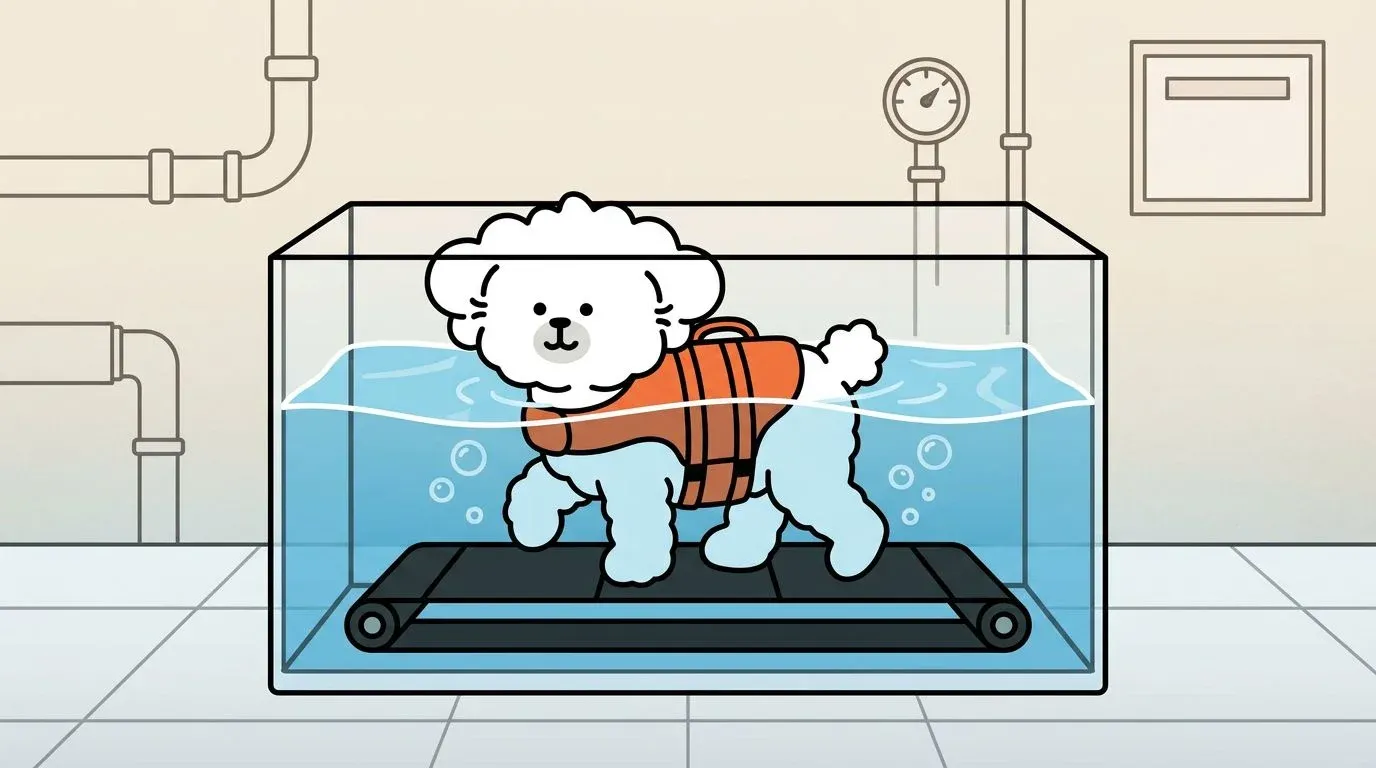
Dog Hydrotherapy: 4 Ways Water Therapy Rebuilds Joint Strength
Discover how dog hydrotherapy uses buoyancy and resistance to rebuild joint strength. Covers underwater treadmill vs pool therapy, who benefits, session expectations, and safe at-home options.