 Cirius Petpedia
 How to Clean Dog Eye Discharge: Color Guide and Care

A small amount of crust in the corner of your dog’s eye in the morning is completely normal—every healthy dog produces some tear film debris overnight. The challenge is knowing when eye discharge is routine and when it signals something that needs attention.
This guide covers dog eye discharge causes and care from the ground up: what each discharge color means, how to clean safely at home, a practical daily routine, and a clear framework for deciding when to call the vet.
Why Dogs Get Eye Discharge
Normal Eye Discharge: How the Tear Film Works
Dogs produce a continuous tear film to lubricate and protect the cornea. This film has three layers—an oily outer layer, a watery middle layer, and a mucus inner layer. As the tear film breaks down and is replaced throughout the day, old mucus and cellular debris accumulate in the medial canthus (the inner corner of the eye). Overnight, when blinking slows, this material dries into the crusty residue most owners know as “eye boogers.”
This normal discharge is typically small in volume, pale gray or beige in color, and easy to remove. Both eyes are usually affected equally, and the dog shows no signs of discomfort.
Abnormal Discharge: Infections, Allergies, and Irritants
When discharge is excessive, discolored, thick, or causes visible discomfort, it usually signals one of several underlying issues:
- Bacterial conjunctivitis: Infection of the conjunctival membrane, often producing yellow or green discharge
- Allergies: Environmental allergens (pollen, dust mites, mold) trigger increased watery discharge and eye redness
- Keratoconjunctivitis sicca (KCS / dry eye): The tear glands produce insufficient aqueous tears, paradoxically causing thick mucus buildup
- Foreign bodies: Grass seeds, dust, or debris stuck under an eyelid cause tearing and irritation
- Entropion or ectropion: Eyelids that roll inward or outward, causing chronic irritation
- Viral infections: Canine distemper and herpesvirus can cause eye discharge as part of a broader illness
Breed Factors: Why Brachycephalic and Long-Haired Dogs Are Prone
Anatomy plays a major role. Flat-faced (brachycephalic) breeds—Bulldogs, Pugs, Shih Tzus, Boston Terriers, Boxers—have shallow orbits and prominent eyes that are harder to blink over completely. Their nasolacrimal ducts (tear drainage channels) are also more likely to be compressed or malformed, causing tears to overflow onto the face rather than drain properly.
Long-haired breeds like Maltese, Yorkshire Terriers, and Shih Tzus face a different problem: facial hair wicks tears away from the eye and deposits them on the surrounding fur, creating a permanent damp environment where bacteria and yeast thrive.
Senior dogs are prone to dry eye (KCS), which becomes more common with age and certain medications, particularly sulfonamide antibiotics and long-term eye drop use.
Eye Discharge Color Guide
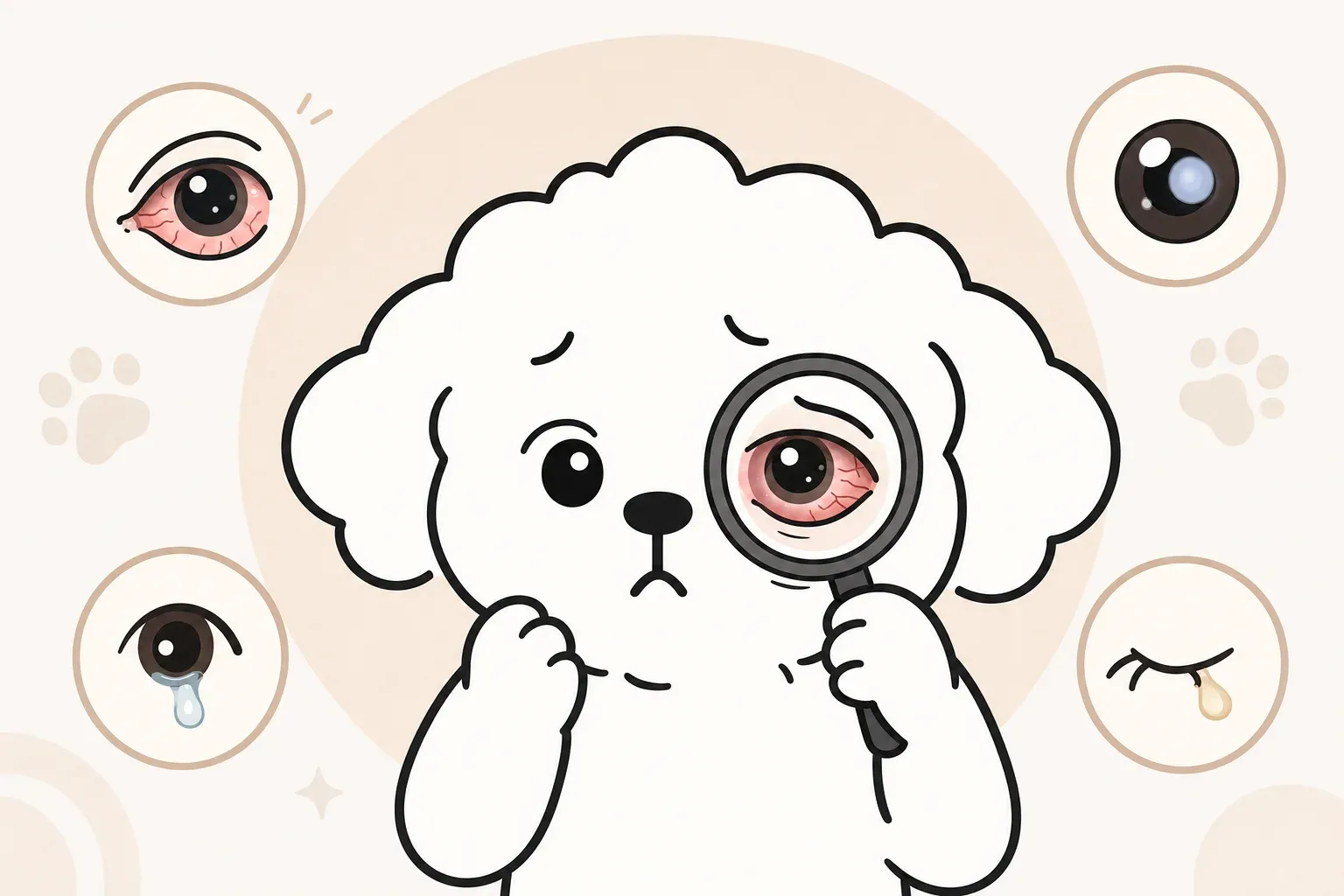
The color and consistency of discharge are the most reliable quick indicators of what is happening. The table below summarizes the main categories.
| Color | Typical Appearance | Likely Cause | Urgency | Recommended Action |
|---|---|---|---|---|
| Clear / watery | Thin, transparent | Normal tearing, allergies, minor irritation | Low | Monitor; check for environmental triggers |
| White / gray | Slightly opaque crust | Normal overnight debris | Low | Routine daily cleaning |
| Yellow | Thick, opaque, sticky | Bacterial infection, KCS (dry eye) | Medium | Vet visit within 24–48 hours |
| Green | Dense, purulent | Bacterial conjunctivitis, keratitis | High | Vet visit same day or next day |
| Brown / rust | Staining below eye | Porphyrin tear staining (epiphora) | Low–Medium | Vet check for root cause |
| Blood-tinged | Red streaks in discharge | Trauma, severe infection, foreign body | Emergency | Emergency vet immediately |
Clear or White: Usually Normal
Watery clear discharge is often a response to mild environmental irritation—wind, dust, smoke, or a small piece of debris that has since been flushed out. If the discharge remains watery without progression and clears within a day or two, no intervention is usually needed beyond cleaning.
White-gray morning crust is the most common presentation in healthy dogs. Volume matters: a pea-sized amount is normal; a tablespoon is not.
Yellow Discharge: Possible Bacterial Infection
Yellow eye discharge in dogs typically indicates mucopurulent (mixed mucus and pus) secretion from the conjunctival tissue. This can develop from untreated bacterial conjunctivitis or, importantly, from dry eye (KCS)—where insufficient aqueous tears allow bacteria to proliferate on the ocular surface.
According to VCA Animal Hospitals, KCS is frequently misidentified as conjunctivitis because both produce yellow to yellowish-green discharge. The distinction matters because the treatments differ significantly: bacterial conjunctivitis responds to antibiotic drops, while KCS requires tear stimulants like cyclosporine or tacrolimus.
Do not apply over-the-counter antibiotic eye drops without a vet diagnosis—using the wrong treatment can delay recovery and allow the condition to worsen.
Green Discharge: Conjunctivitis or Keratitis Risk
Green or greenish-yellow discharge (purulent discharge) signals a more advanced bacterial process. Purulent conjunctivitis involves the entire conjunctival surface and often presents with eyelid swelling, squinting (blepharospasm), and a dog that rubs or paws at the affected eye.
Keratitis (corneal inflammation) can also produce green discharge, particularly when the cornea has become ulcerated. Corneal ulcers are painful and can progress rapidly—a dog with green discharge combined with visible cloudiness of the cornea needs same-day veterinary evaluation.
Brown or Reddish Stains: Porphyrin Tear Staining
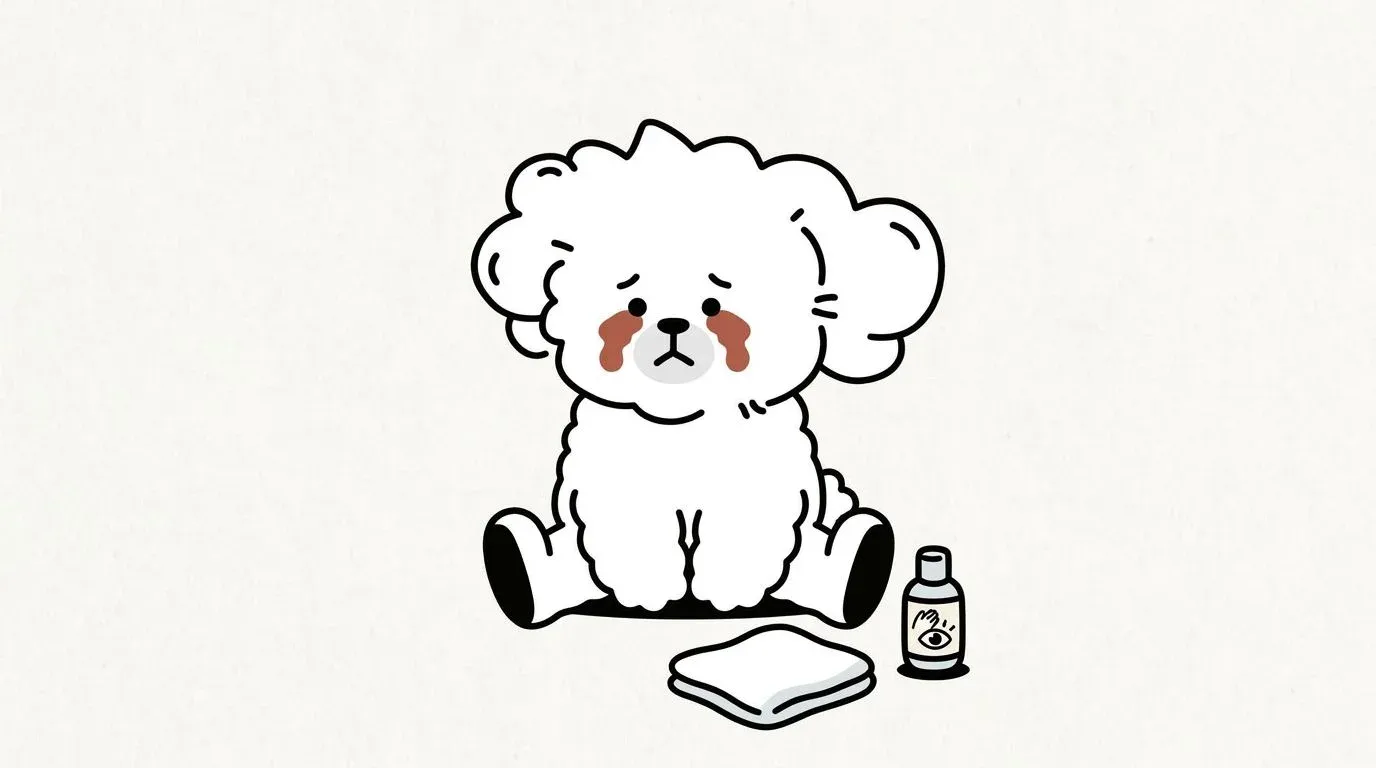
The reddish-brown staining that appears below the eyes, particularly visible on light-coated dogs like Maltese and Bichons, comes from porphyrins. These are iron-containing compounds excreted in tears, saliva, and urine. When tears overflow and sit on facial fur, porphyrins oxidize and stain the coat.
Porphyrin staining is not itself a disease, but it signals excessive tearing (epiphora). For deeper guidance on managing the underlying causes and minimizing staining, see dog tear stain care.
How to Clean Dog Eye Discharge Safely
What You Need: Gauze, Saline, Eye Wipes
Before you start, assemble the right supplies. Using the wrong materials can scratch the cornea or push debris further into the eye.
Recommended:
- Sterile saline solution (0.9% sodium chloride, preservative-free)
- Soft gauze pads or lint-free cotton rounds
- Veterinary-formulated eye wipes or pre-moistened pads
- Clean towel to wrap a nervous dog
Avoid:
- Cotton balls (loose fibers can enter the eye)
- Tissues (too abrasive)
- Human eye drops (wrong pH, preservatives)
- Hydrogen peroxide or any disinfectant
- Baby shampoo diluted in water (commonly recommended online but can cause irritation)
Step-by-Step Cleaning Process
Step 1: Calm your dog first. Sit on the floor with your dog between your knees or have a second person gently hold the dog. A calm, still dog is essential for safe eye cleaning.
Step 2: Soften the crust before touching it. Soak a gauze pad with sterile saline and hold it gently against the crusty discharge for 10–15 seconds. Never try to pull dry, hardened crust away—this can tear delicate skin or eyelid tissue.
Step 3: Wipe from inner corner outward. Using gentle pressure, wipe from the inner corner of the eye (near the nose) toward the outer corner. This follows the natural direction that keeps debris away from the eye surface. Use one wipe per pass; never wipe back toward the eye.
Step 4: Use a fresh gauze pad for each pass. Cross-contamination between eyes can spread infection. Always use a new pad or wipe for each stroke and each eye.
Step 5: Rinse if needed. If debris is stuck on the eye surface rather than the surrounding skin, tilt the dog’s head slightly and let a few drops of saline run across the eye from inner to outer corner. Do not squeeze the bottle forcefully into the eye.
Step 6: Dry the surrounding skin. Moisture left on facial fur promotes yeast and bacterial growth. Pat the area dry with a clean towel.
Common Mistakes to Avoid
- Pulling at hardened crust dry: Always soften first with saline.
- Using the same wipe for both eyes: One wipe, one pass, one eye.
- Applying human eye drops or Visine: Vasoconstrictors and preservatives in human drops are not safe for regular use in dogs.
- Flushing forcefully: A strong stream into an already irritated eye causes pain and may damage the cornea.
- Ignoring increased discharge: Cleaning is maintenance, not treatment. If volume or color worsens over several days, see a vet.
Daily 5-Minute Eye Care Routine
Morning Check: Assessing Discharge
Make eye inspection the first item in your morning dog care routine—before feeding or the walk. In good light, examine both eyes:
- Volume: More or less than yesterday?
- Color: Still within the normal range?
- Consistency: Watery, mucoid, or thick and sticky?
- Symmetry: Both eyes affected equally, or is one eye worse?
- Behavior: Is the dog squinting, pawing at an eye, or holding it partially closed?
A quick 30-second check becomes your baseline. Changes become obvious much sooner when you are looking every day.
Cleaning Frequency and Timing
| Situation | Recommended Frequency |
|---|---|
| Healthy dog, minimal overnight crust | Once daily (morning) |
| Brachycephalic breed | 2–3 times daily |
| Active outdoor dog (dusty, pollen season) | After each outdoor outing |
| Dog with confirmed KCS or chronic discharge | As directed by vet, typically 2–4 times daily |
| Post-surgical or medicated eyes | As directed by vet only |
Morning is the best time because overnight crust has accumulated and the eye surface is undisturbed. Avoid cleaning immediately before applying any prescribed eye drops—clean, wait 5 minutes, then medicate.
Trimming Hair Around the Eyes
Long facial hair that touches the eye surface is a persistent source of mechanical irritation. Hair acts like a fine brush on the cornea, causing chronic low-grade inflammation and excessive tearing.
Trim hair around the eyes every 3–4 weeks using blunt-tipped grooming scissors. If you are not comfortable trimming near the eye yourself, ask your groomer to include periocular trimming in each appointment. For dogs like Shih Tzus and Maltese, many owners use small topknot ties to keep hair away from the eyes between grooming appointments—this is a practical, immediately useful step.
Breed-Specific Eye Care Tips
Brachycephalic Breeds (Pugs, Bulldogs, Shih Tzus)
Flat-faced dogs require more intensive eye maintenance than other breeds because their anatomy creates structural vulnerabilities that cannot be corrected through care alone.
Key priorities for brachycephalic owners:
- Clean 2–3 times daily: The facial folds surrounding the eye trap moisture, debris, and discharge. Morning, midday, and evening cleaning prevents bacterial buildup in the folds.
- Inspect folds as well as eyes: Bacteria and yeast thrive in the moist skin folds directly below the eye. Wipe these areas with the same gauze routine and dry thoroughly.
- Watch for corneal exposure signs: Symptoms include excessive tearing, squinting, and a visible dull or hazy area on the cornea. These breeds are at elevated risk for corneal ulcers due to reduced corneal sensitivity and incomplete blink.
- Annual vet eye exams: Many veterinarians recommend annual ophthalmic screening for brachycephalic breeds regardless of whether problems are apparent.
If allergies are driving increased discharge, addressing the allergy often reduces eye symptom severity significantly in these breeds.
Long-Haired Breeds (Maltese, Yorkies, Golden Retrievers)
The primary challenge for long-coated dogs is hair management and porphyrin staining:
- Trim periocular hair every 3–4 weeks to prevent hair contact with the cornea
- Keep the muzzle area dry: After meals and water, gently pat the area below the eyes dry
- Use tear stain wipes on the fur (not in the eye) to manage porphyrin oxidation on the coat
- Investigate root causes: Persistent heavy staining in young dogs warrants a vet check for nasolacrimal duct abnormalities, which can sometimes be corrected
For Golden Retrievers and other sporting breeds, seasonal pollen allergies are a common driver of increased watery discharge. A vet can recommend antihistamines or short-term anti-inflammatory treatment during peak pollen months.
Senior Dogs: Dry Eye and Increased Discharge
Dogs over 8 years of age have a significantly higher incidence of KCS (dry eye). The lacrimal glands gradually lose function, and tear production can decline substantially. Paradoxically, dry eye often presents as increased discharge—a thick, white-to-yellow mucoid accumulation that looks like infection but isn’t.
A Schirmer Tear Test (a simple in-clinic test using a small paper strip) measures tear production in millimeters per minute. Normal is above 15 mm/min; values below 10 mm/min confirm KCS. Many senior dogs with KCS are managed long-term with cyclosporine ophthalmic solution, which helps restore natural tear production.
Regular health checkups for senior dogs should include a basic eye assessment. If your vet does not routinely check eyes, ask specifically about tear production during annual or biannual exams.
Nutritional support can also play a role in eye health maintenance. Omega-3 fatty acids and antioxidants like lutein have research backing for supporting ocular function in aging dogs—something worth discussing with your vet as part of a senior care plan.
When to See the Vet
Most dog owners struggle with the same question: is this serious enough to call? The framework below removes the guesswork by sorting signs into two urgency levels.
Emergency Signs: Go Now
Do not wait for the next available appointment if your dog shows any of the following:
- Sudden swelling or bulging of the eye (may indicate glaucoma or proptosis)
- Visible injury to the eye surface (cuts, foreign objects visible in the cornea)
- Intense pawing at one eye with signs of pain: whimpering, inability to settle, head-shaking
- Sudden cloudiness or opacity of the cornea: a blue-gray haze that appears quickly
- Third eyelid (nictitating membrane) prominently visible in one or both eyes, combined with discharge
- Blood-tinged discharge or visible blood on the eye surface
- Sudden vision change: bumping into objects, hesitation on stairs, reluctance to move in dim light
Glaucoma in particular can cause permanent vision loss within 24–72 hours if untreated. Any sudden-onset signs affecting one eye require same-day emergency evaluation.
Warning Signs: Schedule Within 48 Hours
The following signs are not immediate emergencies but should be seen promptly:
- Yellow or green discharge persisting for more than 24 hours
- Discharge that has increased significantly in volume over 2–3 days
- One eye consistently producing more discharge than the other
- Visible redness of the whites of the eye (sclera) or inner eyelids (conjunctiva)
- Mild squinting or sensitivity to bright light (photophobia)
- Eyelid swelling without other emergency signs
- Recurring eye discharge that clears temporarily and then returns
When you call the vet, describe the discharge color, how long it has been present, whether one or both eyes are affected, and any other symptoms you have noticed. This helps the clinic triage your call accurately.
References
FAQ
Can I use human eye drops to clean my dog's eye discharge?
How often should I clean my dog's eye discharge?
What is the safest eye wash for dogs at home?
Is brown or reddish eye discharge serious?
When does eye discharge require an emergency vet visit?
Related Articles
Dog Eye Diseases: 8 Common Conditions Every Owner Should Recognize
Learn to identify dog eye diseases symptoms, from conjunctivitis to glaucoma. Includes a 3-tier urgency guide, breed predisposition table, and safe home care tips.
3 Health Warning Signs Hidden in Your Dog's Tear Stains
Dog tear stains signal more than cosmetic issues. Learn to identify root causes—nasolacrimal obstruction, allergies, diet, infection—and apply cause-specific management strategies.

Dog Eye Supplement Guide: What Veterinary Research Says
Which dog eye supplement ingredients are research-backed? Lutein, astaxanthin, and omega-3 explained with dosage guidance and quality verification tips.