 Cirius Petpedia
 Dog Jumping Off Furniture: Why Their Joints Are Paying the Price
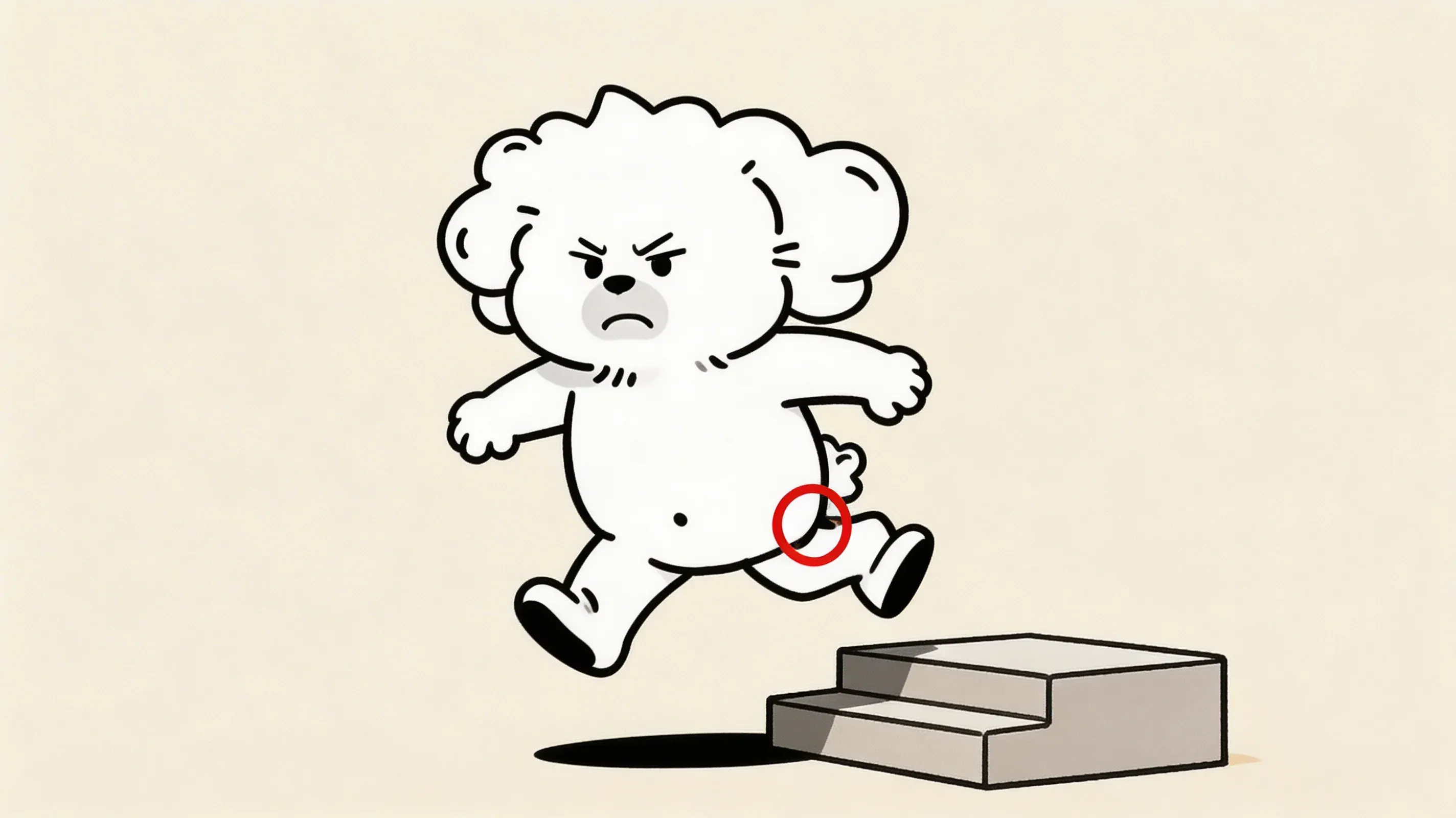
Picture a typical morning: your Cavalier King Charles Spaniel launches off the bed the moment your alarm sounds, then bounds onto the couch, and later hurls itself out the car door. Each landing lasts less than a second. Yet each one transmits a force through your dog’s joints that can reach two to five times their body weight.
Most dogs do this dozens of times a day. Most owners give it no thought at all.
This article explains why that oversight matters, what it does to joints over months and years, and what you can do — starting today — to protect your dog’s mobility without restricting their freedom.
What Happens to Your Dog’s Joints Every Time They Jump Off the Couch
How Landing Impact Travels Through the Joint System
When a dog pushes off furniture and lands, all four limbs hit the ground within a fraction of a second. The front limbs absorb approximately 60% of that ground reaction force (GRF), making the carpus (wrist), elbow, and shoulder the primary shock-absorbers on descent.
Force then travels up through the radius and ulna into the elbow joint, and simultaneously through the stifle (knee) and hip on the rear limbs. The joint cartilage — a thin layer of avascular (lacking blood vessels) tissue covering the ends of bones — is what cushions each impact. Cartilage has no nerve supply of its own and cannot signal pain until damage is already significant. That is why early joint wear is clinically silent.
The synovial fluid (the joint’s natural lubricant) redistributes load during normal walking. But at the peak force of a landing, the cartilage compresses beyond what slow walking produces. Research measuring ground reaction forces in dogs during jump landings consistently records peak vertical forces between 1.8 and 5.2 times body weight, depending on jump height and landing style.
Real Joint Load by Weight and Height
Common furniture heights in American homes put this in practical terms:
| Furniture | Typical Height | Estimated Peak Landing Force (20 lb dog) | Estimated Peak Landing Force (50 lb dog) |
|---|---|---|---|
| Standard couch | 16–20 in | 36–100 lb-force | 90–260 lb-force |
| Platform bed | 20–24 in | 40–104 lb-force | 100–270 lb-force |
| Tall bed / car entry | 24–30 in | 44–108 lb-force | 110–280 lb-force |
These are not catastrophic forces from a single jump. The problem is accumulation. A dog that jumps on and off a couch 10 times a day, 365 days a year, has executed over 3,600 high-impact landings annually — before accounting for car entry and exit, stairs between floors, or leaping to greet people.
The Cumulative Toll: How Repeated Jumping Leads to Joint Disease
Patellar Luxation and Repetitive Impact
Patellar luxation — the condition where the kneecap slips out of its groove — is one of the most common orthopedic conditions in small-breed dogs. While genetics determine groove depth and limb alignment, repetitive impact loading is a recognized environmental factor that accelerates symptom onset and progression.
The patella (kneecap) glides within the trochlear groove of the femur. Landing forces drive the patella downward and medially (inward) with each impact. In dogs with shallow grooves or slight limb deformity, this lateral push repeatedly stresses the medial retinaculum (the connective tissue holding the kneecap in place). Over time, this tissue stretches, the groove wears further, and luxation episodes become more frequent.
The American College of Veterinary Surgeons (ACVS) notes that while Grade 1 luxations are often managed conservatively, progression to Grade 3 or 4 typically requires surgical correction. Prevention through impact reduction is clinically preferable to managing late-stage disease.
The Path from Micro-Damage to Arthritis and Disc Disease
Cartilage damage follows a predictable cascade. Repeated micro-trauma causes chondrocytes (cartilage cells) to release inflammatory mediators — including prostaglandins and matrix metalloproteinases — that break down the cartilage matrix faster than it can repair itself. The subchondral bone beneath gradually thickens in response, and as the cartilage thins, bone-on-bone contact begins. This is the clinical picture of osteoarthritis.
For chondrodystrophic breeds (those with shortened, curved limbs — Dachshunds, Corgis, Basset Hounds, French Bulldogs), the risk extends to intervertebral disc disease (IVDD). The abnormal spinal biomechanics common in these breeds mean that landing impact is transmitted unevenly along the vertebral column. A 2016 study published in Veterinary Evidence identified frequent jumping as a risk factor for IVDD in Dachshunds, noting that household jump height correlated with disc herniation severity.
Understanding the early signs of arthritis in dogs is important context here: by the time a dog shows visible stiffness or limping, cartilage loss is often already significant.
Why Small Breeds Face Higher Risk
A 10-pound Chihuahua jumping from a 20-inch couch experiences roughly the same absolute peak force as a 60-pound Labrador — but that force is concentrated across a skeletal structure a fraction of the size. The cartilage surface area per unit body weight is lower in small breeds, meaning each unit of cartilage absorbs more stress per landing.
Additionally, small-breed dogs have proportionally longer limbs relative to body mass, which changes their center of gravity during descent. They are more likely to land with their weight shifted forward, increasing the load on forelimb joints.
This is not to say large breeds are unaffected. Dogs over 50 pounds experience higher absolute ground reaction forces, making hip joints and cruciate ligaments particularly vulnerable over time.
Is Your Dog Already Showing Signs? A Joint Stress Self-Check
5 Behavioral Changes to Watch After Jumping
Dogs rarely vocalize joint discomfort until it is severe. Instead, watch for these patterns:
- Brief limping immediately after landing that resolves within 30–60 seconds. This “step-off limp” is easy to dismiss as a stumble, but it signals momentary pain from impact.
- Hesitation before jumping — pausing at the couch edge, shifting weight, or taking an unusually long run-up. Dogs naturally reduce activity when movement predicts discomfort.
- Changing landing style — tucking one limb, landing asymmetrically, or favoring one side. This compensatory behavior protects a painful joint at the cost of overloading adjacent structures.
- Reduced engagement with furniture — a dog who used to join you on the couch but now stays on the floor may be avoiding pain, not expressing independence.
- Increased time lying down after activity — longer rest periods following even moderate physical activity can indicate that recovery from impact is taking more effort.
If any of these patterns are consistent over one to two weeks, understanding pain behavior signals in dogs can help you decide how urgently to act.
When to See Your Veterinarian
Schedule a veterinary appointment if you observe: limping that persists beyond a few minutes after landing, visible swelling or heat around a joint, or a pronounced change in gait (such as a bunny-hopping rear stride). For dogs with a known diagnosis of patellar luxation, hip dysplasia, or IVDD, any increase in jump-related hesitation warrants a check-in rather than watchful waiting.
If you are uncertain whether your dog is limping or just moving stiffly, a structured limping cause assessment provides a useful framework for evaluating what you are observing before the appointment.
Dog Stairs vs Ramps: Which Is Better for Joint Protection?
Stairs: Pros, Limits, and Best-Fit Dogs
Dog stairs require the dog to flex and extend each joint through a moderate range of motion on each step. This is biomechanically similar to controlled exercise — it maintains muscle strength and proprioception (body position awareness) while significantly reducing the peak landing force compared to a free jump.
Advantages of stairs:
- Space-efficient; easier to store or reposition
- Natural stepping motion maintains leg muscle engagement
- Generally easier for most dogs to accept initially
Limitations:
- Steeper step heights (over 8 inches) place significant load on the stifle during descent
- Dogs with reduced hip or knee range of motion may find the repeated flexion painful
- Not appropriate for dogs in post-surgical recovery or with severe joint disease
Best fit: Healthy adult dogs, dogs in early-stage joint management, and dogs where preserving muscle mass is a priority.
Ramps: Pros, Limits, and Best-Fit Dogs
A ramp eliminates the vertical loading component of stepping. The dog walks at a constant incline, keeping the limbs in a more neutral joint angle throughout. Peak ground reaction force remains close to normal walking levels, making ramps the preferred option in veterinary rehabilitation settings.
Advantages of ramps:
- Lowest joint stress of any assisted access option
- Suitable for post-surgical recovery and severe joint disease
- Can be used with dogs of any mobility level
Limitations:
- Require more floor space than stairs
- Some dogs take longer to accept a ramp surface, especially if it is slippery
- Long ramps for taller furniture (beds, vehicles) can be cumbersome
Best fit: Senior dogs, dogs recovering from orthopedic surgery, dogs with active joint disease, chondrodystrophic breeds, and dogs over 10 years of age.
The risks of slippery floor surfaces for joint health apply to ramps as well — non-slip tread on both stairs and ramps is non-negotiable.
Selection Guide by Height, Breed, and Condition
| Situation | Recommended Option |
|---|---|
| Healthy dog, couch access (under 20 in) | Stairs (3–4 steps) |
| Healthy dog, tall bed access (over 20 in) | Ramp or 4–5 step stairs |
| Small breed, any height | Ramp preferred; stairs with shallow steps acceptable |
| Senior dog (over 8 years) | Ramp |
| Post-surgical recovery | Ramp only |
| Chondrodystrophic breed (Dachshund, Corgi, Frenchie) | Ramp strongly preferred |
| Car entry/exit (25–30 in) | Ramp with non-slip surface |
Step-by-Step Training to Stop the Jumping Habit
Introducing stairs or a ramp solves nothing unless the dog actually uses them. Most dogs can be trained within one to three weeks using the following protocol. Positive reinforcement is the only recommended approach — punishment or physical correction increases anxiety around the new equipment and prolongs the process.
Phase 1: Building Positive Association with Stairs or Ramps
Duration: Days 1–5
Place the stairs or ramp on the floor, away from any furniture. Do not position it against the couch yet. Your goal at this stage is simply to make the equipment a predictor of good things.
- Drop several high-value treats on and around the stairs or ramp. Let your dog investigate at their own pace.
- Once your dog approaches willingly, use a treat to lure one paw onto the first step or the base of the ramp. Mark the moment (verbal “yes” or clicker) and reward immediately.
- Gradually increase the number of steps or distance traveled before rewarding. End each session within five minutes and always on a successful rep.
- By day 4–5, most dogs will be walking the full length of the ramp or all steps for a single treat.
Phase 2: Managing Furniture Access
Duration: Days 6–10
Now position the stairs or ramp against the furniture. Continue luring, but begin adding a verbal cue — “stairs” or “ramp” — as your dog starts the ascent.
Simultaneously, manage unassisted jumping by:
- Sitting or standing near the furniture to intercept jumps before they happen
- Using a leash or playpen barrier to block direct furniture access when you cannot supervise
- Rewarding any spontaneous use of the stairs or ramp with enthusiastic praise and a treat
This phase is about interruption and redirection, not scolding. If your dog jumps despite your management, simply redirect to the stairs for the next access.
Phase 3: Reinforcing Independent Stair or Ramp Use
Duration: Days 11–21
Fade the treat lure by rewarding only after the dog has used the stairs or ramp independently. Move to a variable reinforcement schedule (rewarding roughly every second or third use) to maintain the behavior without requiring treats every time.
At this stage, the goal is a dog who gravitates to the stairs or ramp automatically, without prompting. Most dogs reach this point within three weeks of consistent practice.
Beyond Furniture: Other Home Environment Checks for Joint Health
Flooring and Furniture Layout
Furniture jump management is one piece of a broader home environment audit. Hard, slippery flooring — hardwood, tile, laminate — removes the traction that dogs need to decelerate safely after any movement, including landing from stairs or ramps. Area rugs with non-slip backing at the base of stairs and ramps are a practical minimum.
Consider the layout of your dog’s daily movement paths. Multi-story homes with frequent stair use between floors present the same cumulative loading concern as furniture. Baby gates to restrict lower-level access during high-energy periods can reduce total daily joint load for vulnerable dogs.
Elevated food and water bowls reduce cervical (neck) joint strain for large breeds, and orthopedic dog beds provide pressure-distributing foam that reduces joint loading during the hours your dog spends resting — typically 12–16 hours per day.
Post-Activity Joint Care Routine
After any high-activity period — a long walk, playtime, a trip involving car loading — a brief joint care routine helps manage inflammation before it accumulates.
A five-minute cool-down walk on a flat, non-slippery surface allows joints to decompress gradually rather than going from high load to complete rest abruptly. Gentle passive range-of-motion exercises (carefully moving each limb through its natural arc) can be learned from a veterinary rehabilitation therapist and performed at home.
For dogs with diagnosed joint conditions, your veterinarian may recommend joint-supportive nutrition or targeted therapies as part of ongoing management. Understanding how to recognize early arthritis signs will help you track whether your dog’s joint health is stable or progressing despite environmental modifications.
The couch jump is such a small thing. It takes less than a second, it happens countless times, and it produces no obvious harm. That is exactly why it is easy to overlook — and why the damage accumulates unnoticed for years.
The solution is not to keep your dog off furniture or limit their enjoyment of home life. It is to change how they access furniture: with a ramp or stairs that cuts the landing force by 60–80%, combined with a few weeks of positive training to make the new route automatic. The investment of time is modest. The potential savings in veterinary costs, pain management, and quality of life are substantial.
If you are unsure where your dog currently stands on the joint health spectrum, a veterinary exam with orthopedic assessment is the most direct way to find out — and to calibrate how urgently the changes in this article need to happen.
FAQ
How many steps should dog stairs have?
What is the ideal angle for a dog ramp?
Can a dog with patellar luxation use stairs?
At what age should I start training my puppy to use a ramp or stairs?
Is jumping off furniture actually bad for all dogs, or only certain breeds?
Related Articles
Dog Tick Prevention on Walks: How to Check, Remove, and Protect Against Tick-Borne Disease
A complete guide to dog tick prevention during walks. Learn how to check for ticks, safely remove them, and protect your dog from dangerous tick-borne diseases like Lyme, Ehrlichiosis, and Babesiosis.
If Your Dog Lives on Hardwood Floors, Here's How to Protect Their Joints
Slippery hardwood, laminate, and tile floors quietly damage your dog's joints over time. Learn the biomechanics, floor risk comparison, and proven solutions.