 Cirius Petpedia
 Complete Guide to Patellar Luxation in Dogs
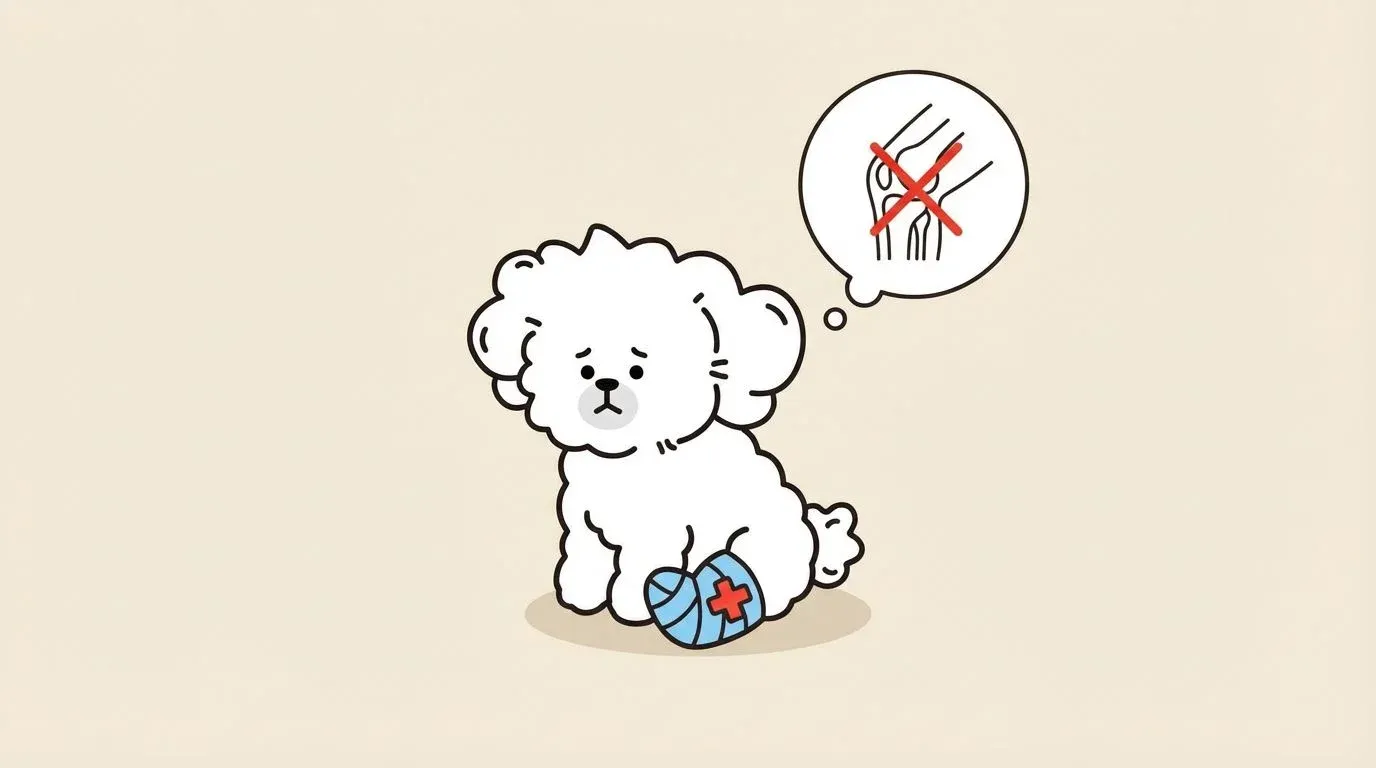
What Is Patellar Luxation?
Patellar luxation is one of the most common orthopedic conditions in dogs, particularly in small and toy breeds. The patella — commonly called the kneecap — sits in a groove at the base of the femur (thigh bone) and normally glides smoothly up and down as the leg bends and straightens. When the patella slips out of this groove, either to the inside (medial luxation) or outside (lateral luxation) of the leg, the condition is called luxation.
Medial patellar luxation, where the kneecap shifts toward the body’s midline, is far more common in small breeds. Lateral luxation is more frequently seen in large breeds and occurs when the kneecap slips to the outer side of the leg.
The condition ranges from mild and intermittent to severe and permanently disabling. Understanding where your dog falls on that spectrum is essential for choosing the right treatment plan.
Causes of Patellar Luxation
Genetic and Structural Causes
The most significant driver of patellar luxation is genetics. Dogs with malformed femoral grooves — grooves that are too shallow to hold the patella securely — are predisposed to this condition from birth. The tibial crest (the bony bump where the knee tendon attaches below the kneecap) may be abnormally positioned in some dogs, pulling the patella off-center during movement.
Skeletal angulation problems throughout the entire limb contribute as well. A dog with bowlegged hindquarters or abnormally rotated femurs places chronic mechanical stress on the knee joint, gradually pulling the patella out of alignment over time.
Environmental and Lifestyle Factors
Even dogs with a genetic predisposition may not develop clinical symptoms until lifestyle factors tip the balance. Obesity is a major contributor: excess body weight increases compressive forces on every joint, accelerating the displacement of an already unstable patella. Slippery flooring in the home forces dogs to splay their limbs repeatedly, straining the knee structures with each step. For a detailed breakdown of floor types by friction coefficient and practical traction solutions, see our guide on dog slippery floor joint damage.
High-impact activities such as jumping from furniture, repeated stair climbing, and sharp pivoting movements on hard surfaces all place sudden, asymmetric loads on the knee. Over months and years, these cumulative stresses cause or worsen patellar instability.
Trauma
A direct blow to the knee — from a fall, an accident, or a collision — can displace the patella acutely, even in a dog with no prior history of joint problems. Traumatic luxation may also damage surrounding ligaments, making the joint unstable and prone to future episodes even after the initial injury heals.
Recognizing the Symptoms
The clinical signs of patellar luxation depend heavily on the grade and on whether one or both legs are affected.
Intermittent limping: The dog suddenly holds up the affected hind leg for a few steps, then places it back down and walks normally. This skipping or hopping gait is the hallmark of lower-grade luxation. The patella slips out momentarily and then pops back into place on its own.
Leg lifting while running: A dog mid-sprint will briefly extend the leg outward or behind before resuming a normal stride. Owners often describe it as the dog “throwing” the leg.
Crouching posture: Dogs with bilateral (both legs) luxation may appear to squat or walk in an unusually low, crouching manner. The hindquarters look tucked under the body.
Stiffness after rest: Difficulty rising after sleeping or sitting for long periods is common. The joint stiffens when not moving, and the first few steps may appear painful until the dog warms up.
Pain response to touch: Palpating the knee may cause the dog to pull away, yelp, or look at the leg. Some dogs are stoic and show no obvious pain response even with significant luxation.
Progressive lameness: In advanced grades, the lameness becomes persistent rather than intermittent. The dog bears little or no weight on the affected leg.
Patellar Luxation Grades
Veterinary classification uses a four-grade system to describe severity:
Grade 1: The patella can be manually pushed out of its groove during examination but returns to normal position immediately when released. The dog rarely shows noticeable symptoms. The groove itself may be slightly shallow but is still functional.
Grade 2: The patella luxates spontaneously during normal activity and may remain out of position until the dog straightens the leg or the owner manually replaces it. Intermittent skipping gait is the typical presentation. The groove is moderately shallow. Most veterinarians recommend surgical consultation at this stage.
Grade 3: The patella sits out of the groove most of the time and can be replaced manually, but it re-luxates immediately. The groove may be absent or severely shallow. Lameness is more consistent, and muscle mass may begin to decrease in the affected leg.
Grade 4: The patella is permanently out of the groove and cannot be replaced manually. The groove is absent entirely. Severe, continuous lameness is present. The leg may be held in a flexed position and the dog avoids weight-bearing. Significant soft tissue and bony remodeling has occurred. Surgery is the only meaningful treatment option.
Diagnosis
A veterinarian diagnoses patellar luxation primarily through physical examination. The dog is observed walking and trotting, then the knee is examined with the dog relaxed and lying down. The examiner gently manipulates the joint to assess how easily the patella moves and whether it returns to the groove on its own.
X-rays (radiographs) are taken to evaluate the bone structure — the depth of the femoral groove, the position of the tibial crest, and the overall alignment of the limb. X-rays also help rule out concurrent conditions such as hip dysplasia or cruciate ligament damage, which frequently co-exist with patellar luxation.
In some cases, a CT scan provides more detailed three-dimensional information about skeletal geometry, particularly when surgical planning requires precise measurements of bone rotation or groove depth.
Treatment Options
Conservative Management
Grade 1 luxation with no or minimal symptoms is often managed without surgery. The goals are to prevent progression and keep the dog comfortable.
Weight management is the cornerstone of conservative care. Reducing body weight decreases mechanical load on the knee and slows cartilage wear. A structured, low-impact exercise routine maintains muscle mass around the joint, which provides dynamic stability to compensate for the shallow groove.
Anti-inflammatory medications (NSAIDs formulated for dogs) are prescribed during flare-ups to control pain and swelling. Joint supplements — particularly glucosamine, chondroitin, and omega-3 fatty acids — are widely used to support cartilage health, though their efficacy varies between individual animals.
Physical rehabilitation therapy, including range-of-motion exercises, hydrotherapy, and therapeutic modalities, helps maintain function and reduce discomfort. Near-infrared light therapy has emerged as a useful adjunct for managing joint inflammation, improving local circulation, and providing pain relief without medication side effects. Learn more about this approach at Near-Infrared Therapy.
A structured home exercise program — grade-matched and progressed carefully — is one of the most practical tools available for Grade I and II dogs. For specific exercises, rep schemes, and safety guidelines, see the luxating patella exercises guide.
Surgical Treatment
Grade 2 with frequent luxation, and all Grade 3 and Grade 4 cases, typically require surgery. The specific techniques depend on the structural problems identified during diagnosis.
Trochleoplasty deepens the femoral groove so the patella sits more securely. The surgeon removes cartilage and bone to create a deeper channel and then replaces the cartilage so the joint surface remains smooth.
Tibial crest transposition corrects abnormal alignment of the attachment point below the knee. The bony prominence is surgically repositioned and secured with pins so that the mechanical force of the quadriceps muscle now pulls the patella in the correct direction.
Soft tissue reconstruction tightens the capsule and ligaments on the side the patella slips toward and releases tension on the opposite side. This is often combined with bony procedures for best results.
Femoral or tibial osteotomy is reserved for dogs with severe angular limb deformity. Sections of bone are cut, realigned, and stabilized with plates to correct the underlying skeletal geometry.
Most dogs undergo multiple techniques in a single procedure. Success rates for surgical correction are high — most studies report that 85 to 95 percent of dogs return to normal or near-normal function.
Post-Surgery Recovery
Recovery is gradual and requires strict activity restriction. For the first four to six weeks, the dog must be confined to a small area and only taken outside on a leash for bathroom breaks. Off-leash running, jumping, and stair climbing are prohibited.
Physical rehabilitation typically begins two to three weeks post-operatively. Gentle passive range-of-motion exercises, short leash walks, and hydrotherapy accelerate muscle recovery and prevent joint stiffness. Near-infrared therapy sessions during this period can support tissue healing and reduce inflammation at the surgical site. For a detailed week-by-week home rehabilitation protocol — including PROM technique, weight-shifting exercises, and hydrotherapy timing — see our complete dog joint surgery recovery guide.
The implants placed during surgery (pins, screws, or plates) are generally permanent and do not need to be removed unless they cause complications. Full recovery — meaning return to normal activity — takes approximately three to four months.
Dogs that undergo surgery for bilateral patellar luxation typically have the more severely affected leg treated first, with the second surgery performed three to four months later.
Prevention
Complete prevention is not possible for genetically predisposed dogs, but risk reduction is achievable. Responsible breeding practices — avoiding breeding affected dogs or dogs from affected lines — are the most effective long-term strategy.
For dogs already at risk, the following measures help:
- Maintain an ideal body weight throughout the dog’s life
- Provide non-slip flooring throughout the home
- Avoid repeated jumping from furniture or heights — see our in-depth guide on how furniture jumping causes joint damage in dogs for the biomechanics and a step-by-step training protocol
- Use ramps instead of stairs where possible
- Choose low-impact exercise (leash walks on flat terrain, swimming) over high-impact activities
- Provide joint-supporting nutrition from puppyhood
Regular veterinary checkups allow early detection. A Grade 1 luxation caught early and managed proactively is far less likely to progress to a Grade 3 or 4 requiring surgery.
Joint Care Products and Ongoing Support
Managing patellar luxation long-term often involves a combination of nutritional support, physical therapy, and therapeutic devices. Orthopedic joint supplements with glucosamine and chondroitin help slow cartilage degradation. Omega-3 fatty acids from fish oil provide anti-inflammatory support.
For dogs managing chronic knee instability or recovering from surgery, near-infrared light therapy devices offer a non-pharmacological option for pain relief and circulation support. These devices can be used at home between veterinary visits, making them a practical addition to a daily joint care routine.
For dogs that develop secondary arthritis — a common outcome of long-standing patellar luxation — a broader management approach is needed. See our complete resource on Dog Arthritis Symptoms and the comprehensive Senior Dog Joint Care guide for dogs entering their later years.
Dogs with patellar luxation resuming activity after a low-activity winter require particular care — the spring dog joint care guide outlines a safe progressive activity protocol for this scenario.
Patellar luxation is a manageable condition, especially when caught early. With the right combination of veterinary care, lifestyle adjustments, and supportive therapies, most affected dogs go on to live comfortable, active lives.
FAQ
Which dog breeds are most prone to patellar luxation?
How much does patellar luxation surgery cost?
Can patellar luxation heal on its own?
What exercises help prevent patellar luxation?
Related Articles
10 Causes of Excessive Dog Drooling and When to See a Vet
The 10 most common dog drooling causes — dental disease, toxins, heatstroke, and more — with a saliva appearance guide and emergency triage checklist.
Dog Gastritis: Causes, Symptoms, and Treatment Guide
Dog gastritis symptoms, causes, diagnosis, and treatment explained. Includes a 3-phase recovery diet protocol, home vs. ER decision tree, and FAQ.
Dog Leptospirosis Prevention: Symptoms, Vaccine & Safety Guide
Leptospirosis in dogs explained — symptoms, vaccine decisions for indoor vs outdoor dogs, side effects, and seasonal prevention checklist.