 Cirius Petpedia
 Why Is My Dog Limping? A Cause-by-Cause Diagnosis Guide
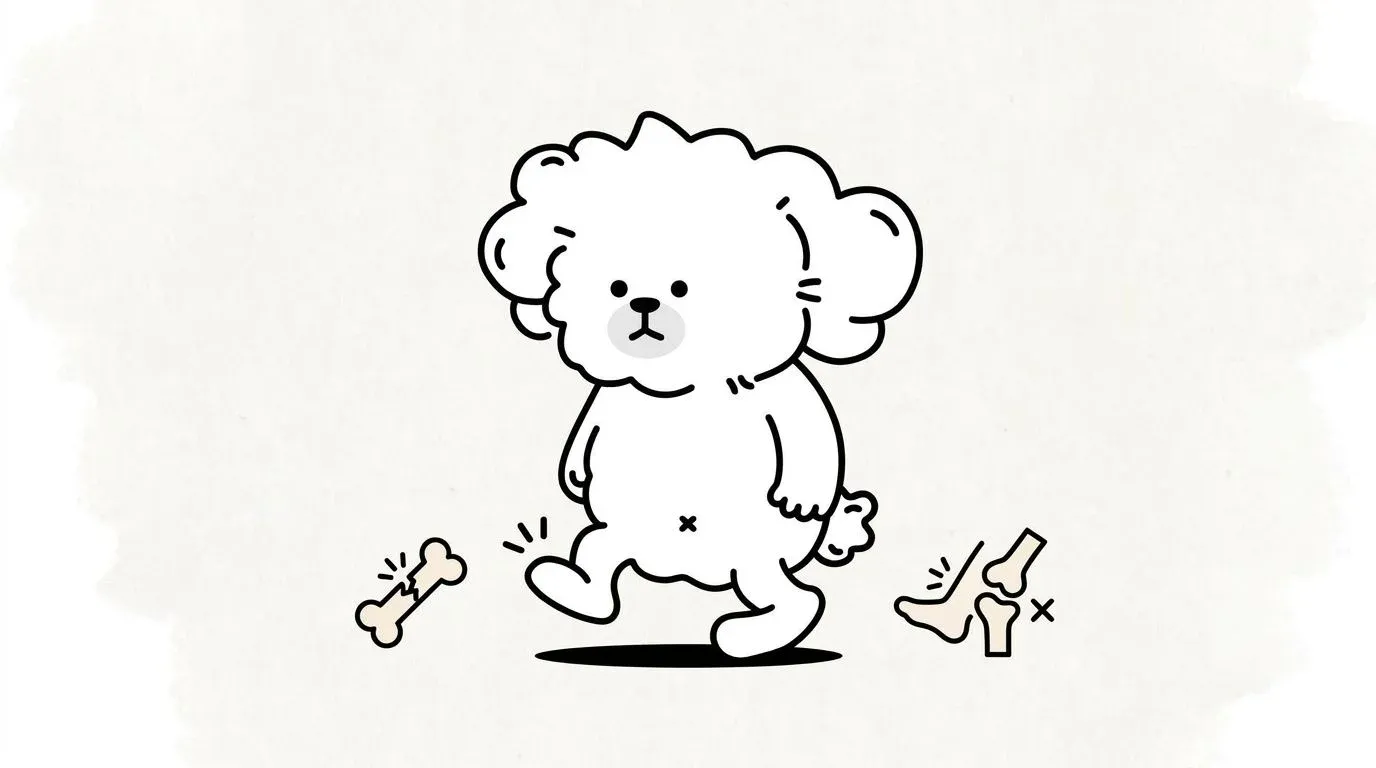
Your dog is holding one leg up, taking careful steps, or refusing to put full weight down. Whatever the exact presentation, a limping dog is one of the most common reasons owners call their veterinarian — and one of the most anxiety-inducing.
The difficulty is that dog limping has a wide range of causes, from a thorn stuck in a paw pad to a ruptured cruciate ligament requiring surgery. Knowing which category you’re dealing with — and what to watch for — saves time, reduces worry, and helps you communicate more effectively with your vet.
This guide builds a systematic framework around why dogs limp: organized by affected leg, cause category, and age group. It also gives you a concrete home observation checklist and a clear three-tier triage system for deciding how urgently your dog needs care.
Understanding Dog Limping (Lameness)
Normal vs Abnormal Gait: What to Look For
Veterinarians define lameness as any alteration in normal gait that results from pain, mechanical dysfunction, or neurological impairment in the limbs. The American College of Veterinary Surgeons (ACVS) uses a five-point lameness scale that runs from grade 1 (barely perceptible, intermittent) through grade 5 (complete non-weight-bearing), though owners don’t need to memorize the scale to make useful observations.
What to watch:
- Weight bearing: Does your dog put any weight on the leg during standing? During movement?
- Stride length: Is the affected leg taking shorter steps than the others?
- Head bob: During a front-leg limp, dogs typically drop their head when the good leg strikes the ground and raise it when the painful leg bears weight.
- Hip hike: With hind-leg lameness, look for the hip on the affected side rising higher than normal during the stride — a compensatory pattern to reduce load.
- Consistency: Does the limp appear every step, or only after the dog has been moving for a few minutes? An intermittent limp that worsens with exercise often points to joint disease rather than acute injury.
Acute vs Chronic Limping
The timeline of your dog’s limp is one of the first questions your vet will ask.
Acute limping appears suddenly — within minutes to hours — often linked to a specific event. A dog that yelps mid-play and immediately holds up a leg, or comes in from the yard with a three-legged gait, is showing acute lameness. Common causes include sprains, paw injuries, fractures, and sudden ligament failures.
Chronic limping develops over weeks to months. The owner often notices the dog is “a little stiff getting up” before an obvious limp appears, and the worsening is gradual rather than event-linked. Arthritis, hip dysplasia, and progressive joint degeneration tend to present this way.
The distinction shapes the diagnostic approach. A dog with acute, severe lameness after known trauma may go straight to X-ray. A dog with a slow-onset limp in middle or senior age is more likely to need a full orthopedic exam with multiple views and potentially blood work to rule out systemic disease.
Front Leg Limping: Common Causes
Front-leg (forelimb) lameness accounts for a meaningful share of orthopedic presentations in general practice, and it carries its own set of probable diagnoses distinct from hind-leg issues.
Shoulder and Elbow Joint Conditions
The shoulder and elbow are the two joints most frequently implicated in forelimb lameness.
Osteochondrosis dissecans (OCD) of the shoulder is a developmental condition in which a flap of cartilage separates from the joint surface, causing pain and joint effusion. It is seen almost exclusively in large- and giant-breed dogs during rapid growth phases (typically 4–9 months), with Labrador Retrievers, Golden Retrievers, and Great Danes among the higher-risk breeds. The affected dog typically bears partial weight and shows a shortened stride on the front leg, with pain on shoulder extension during examination.
Elbow dysplasia is an umbrella term covering fragmented coronoid process (FCP), ununited anconeal process (UAP), and OCD of the medial humeral condyle. It is the leading cause of forelimb lameness in large breeds under two years of age, according to the OFA’s orthopedic disease registry. Affected dogs show an outward rotation of the affected paw at rest and pain on elbow manipulation.
Bicipital tenosynovitis — inflammation of the biceps tendon and its sheath — is seen more in medium to large adult dogs and presents with a subtle, persistent forelimb limp that worsens after exercise. Unlike joint fractures, the dog may appear relatively comfortable at rest.
Paw Pad Injuries and Foreign Objects
These are the most common and most easily missed causes of front-leg limping, particularly because dogs don’t always vocalize when stepping on something painful.
Check between the toes and across the entire pad for:
- Cuts or lacerations — often from glass, sharp rocks, or metal edges
- Foreign bodies — grass awns, thorns, and small stones commonly wedge between the digital pads and are invisible until you part the fur
- Interdigital cysts (interdigital furuncles) — painful, red swellings between the toes that are especially common in Bulldogs, Labrador Retrievers, and German Shepherds
- Burned or abraded pads — from hot pavement in summer or road salt in winter
- Nail injuries — a torn or overgrown nail that catches on carpet or ground can cause acute, sharp-onset lameness
Paw pad injuries are uniquely valuable to identify because they are often treatable at home or with a single vet visit — no imaging required.
Growth Plate Issues in Puppies
The long bones of puppies contain growth plates (physes) — zones of cartilage near the ends of each bone where longitudinal growth occurs. These plates are structurally weaker than mature bone and close at different times depending on the dog’s size class (roughly 6–12 months in small breeds, 18–24 months in giant breeds).
Growth plate fractures (physeal fractures) are disproportionately common in puppies because the physis is softer than the surrounding ligaments. A fall or rough play impact that would strain a ligament in an adult dog may instead fracture a growth plate in a puppy. These require prompt veterinary care — growth plate fractures that are not properly managed can cause permanent limb deformity as the bone finishes developing.
Panosteitis is a self-limiting but painful condition in young large-breed dogs (5–18 months) characterized by shifting lameness — the limp moves unpredictably from one leg to another over days to weeks. German Shepherds, Dobermans, Basset Hounds, and Golden Retrievers are over-represented. The cause is not fully established, but inflammation within the bone marrow is the underlying mechanism. Most dogs recover completely by 18–20 months of age.
Back Leg Limping: Common Causes
Hind-leg (hindlimb) lameness has a distinct set of probable diagnoses, and in American veterinary practice, a few conditions dominate the caseload — particularly in large breeds.
Patellar Luxation
Patellar luxation occurs when the kneecap (patella) slips out of its normal groove in the femur. In small breeds, the kneecap typically luxates medially (toward the body midline); in large breeds, lateral luxation is more common. A characteristic sign is the “skip step” — the dog lifts the affected leg for a stride or two, then resumes normal gait as the patella slides back into place.
Small-breed dogs (Toy Poodles, Chihuahuas, Bichon Frises, and Pomeranians) account for the majority of patellar luxation cases, but the condition is underdiagnosed in medium and large breeds. Untreated grade III–IV luxation leads to progressive arthritis and can contribute to cruciate ligament degeneration.
For a thorough breakdown of grading, surgical criteria, and what to expect at each stage, see the patellar luxation deep dive.
Cruciate Ligament Tear (CCL/ACL)
The cranial cruciate ligament (CCL) — the canine equivalent of the human ACL — is the most commonly injured knee structure in dogs and the single most frequent cause of sudden, non-weight-bearing hind-leg lameness in adult dogs in the United States. According to a study published in the Journal of the American Veterinary Medical Association (JAVMA), an estimated 1.5–2.0 million dogs receive CCL-related diagnoses each year in the US, with annual surgical costs exceeding $1.3 billion.
Unlike sports injuries in humans, canine CCL rupture is usually the endpoint of a gradual degeneration process rather than a single traumatic event. Risk factors include obesity, altered stifle (knee) conformation, neutering before skeletal maturity, and breed predisposition — Labrador Retrievers, Rottweilers, Bully breeds, Golden Retrievers, and Boxers are among the highest-risk populations according to OFA data.
The classic presentation is a dog that was fine during a walk or play session, then comes inside bearing no weight on one hind leg. A “tibial thrust” sign on orthopedic examination, combined with joint effusion (swelling within the stifle), provides strong clinical evidence. Radiographs confirm secondary joint changes and rule out other pathology.
Surgical stabilization — most commonly TPLO (tibial plateau leveling osteotomy) or TTA (tibial tuberosity advancement) — is the recommended treatment for active, medium-to-large-breed dogs. Recovery and rehabilitation typically span 12–16 weeks. For a full overview of symptoms, diagnosis, and treatment options, read the cruciate ligament tear symptoms and treatment guide.
Hip Dysplasia
Hip dysplasia — abnormal laxity in the ball-and-socket hip joint — is one of the most prevalent orthopedic conditions in large and giant breeds and a significant cause of chronic hind-leg lameness. The OFA’s breed statistics show that certain breeds (Bulldogs, Pugs, Saint Bernards, Neapolitan Mastiffs) have radiographic hip dysplasia rates exceeding 70%.
In younger affected dogs (5–12 months), lameness may be intermittent and linked to exercise — the dog plays normally but stiffens after. In older dogs, the chronic arthritis that accumulates around dysplastic hips produces the more familiar presentation of morning stiffness, reluctance to climb stairs, and bunny-hopping gait (both hind legs advancing together rather than alternating).
Diagnostic confirmation uses PennHIP or OFA radiographic protocols. Management ranges from conservative (weight control, physical therapy, NSAIDs) to surgical (total hip replacement or femoral head ostectomy, depending on age and degree of disease). For breed-specific details, the full hip dysplasia detailed guide covers diagnosis protocols and management options in depth.
Arthritis
Canine osteoarthritis — chronic degeneration of joint cartilage with secondary bone remodeling — is the most common cause of chronic hind-leg lameness in adult and senior dogs. It rarely causes sudden-onset limping; instead, the pattern is a slow, progressive reduction in mobility and exercise tolerance.
Arthritis frequently develops secondary to other conditions: after CCL repair, in hips affected by dysplasia, in elbows with a history of OCD, or simply as a function of cumulative mechanical wear in older large-breed dogs. Recognizing the early behavioral signs — hesitation before stairs, reduced enthusiasm for walks, reluctance to jump onto furniture — is key to early intervention, which can substantially slow disease progression.
The article on recognizing arthritis symptoms details how to distinguish primary arthritis from secondary joint disease and what a full management plan typically looks like.
Limping Causes by Age
Different life stages carry different risk profiles. The table below offers a quick reference; the sections that follow expand on each group.
| Age Group | Common Causes | Red Flags |
|---|---|---|
| Puppy (< 1 yr) | Growth plate fracture, OCD, panosteitis, congenital patellar luxation | Non-weight-bearing after a fall; limb deformity |
| Adult (1–7 yr) | CCL tear, trauma, OCD (if undiagnosed), patellar luxation | Sudden severe lameness; swollen joint |
| Senior (7+ yr) | Osteoarthritis, hip dysplasia progression, IVDD, bone tumors | Progressive non-weight-bearing; muscle wasting |
Puppies (Under 1 Year): Growth Plates, Congenital Issues
Puppies are not simply small adult dogs when it comes to orthopedics. The two most important points:
Growth plates close last, break first. Any fall, rough play incident, or suspected trauma in a puppy under 12 months that produces sudden lameness should be evaluated radiographically. Growth plate fractures treated within 12–24 hours carry a much better prognosis than those managed after swelling and displacement have progressed.
Congenital joint issues become apparent during rapid growth. Elbow dysplasia, OCD of the shoulder, and congenital patellar luxation typically become symptomatic between 4 and 10 months — precisely when a puppy is most active. An intermittent or worsening front-leg limp in a large-breed puppy warrants early evaluation, since untreated OCD and elbow dysplasia leave progressively worse cartilage damage with each passing month.
Panosteitis (shifting lameness) is self-resolving but painful; short-term NSAID therapy prescribed by your vet improves quality of life during the active phase.
Adult Dogs (1–7 Years): Trauma, Ligament Injuries
Dogs in their prime working and activity years are at highest risk for:
- Traumatic injuries: sprains, paw lacerations, nail avulsions — typically from outdoor activity
- CCL rupture: the leading cause of acute hind-leg lameness in adult dogs, particularly in medium-to-large breeds with one of the predisposing risk factors described above
- Shoulder or elbow OCD (if not diagnosed in puppyhood): some cases progress silently and only become symptomatic in early adulthood when activity levels are high
- Intervertebral disc disease (IVDD): in chondrodystrophic breeds (Dachshunds, Corgis, Basset Hounds), disc herniations in the mid-thoracic or lumbar spine can produce hind-leg weakness or lameness that resembles a joint problem. The IVDD symptoms comparison article details how to distinguish neurological lameness from orthopedic lameness.
Senior Dogs (7+): Arthritis, IVDD, Degenerative Conditions
In dogs over seven years — or over five in giant breeds — the probability that a limping problem has a degenerative underlying cause increases substantially. Key considerations:
Osteoarthritis should be on the differential for any chronic progressive lameness in this age group. The disease is underdiagnosed because affected dogs adapt their behavior before owners notice an obvious limp — an owner may report that their senior Lab has “slowed down a bit” without connecting the observation to joint pain.
Degenerative myelopathy (DM) is a progressive neurological disease of older dogs (most commonly German Shepherds, Corgis, and Boxers) that produces gradually worsening hind-limb weakness. Unlike orthopedic lameness, DM-affected dogs do not typically show pain on joint manipulation; the deficit is neurological rather than mechanical.
Bone tumors (osteosarcoma): in large breeds over 7 years, a sudden, progressive, severe forelimb lameness — particularly around the distal radius, proximal humerus, or distal femur — should prompt X-ray evaluation to rule out osteosarcoma. This is an area where early diagnosis has meaningful prognostic implications.
Home Observation Checklist Before the Vet Visit
The ten minutes you spend observing your dog carefully before the appointment will make your vet’s job significantly easier and may help them narrow the diagnosis faster. This is not a substitute for professional evaluation — it is preparation for it.
5 Gait Observation Points
Watch your dog walk on a flat, non-slip surface for at least 30 seconds. Note the following:
- Which leg? Front left, front right, rear left, or rear right. Multiple legs? (Shifting lameness in puppies suggests panosteitis; in senior dogs, it may indicate polyarthritis.)
- Weight bearing grade: No weight at all / toe-touching only / partial weight / weight-bearing but limping / barely perceptible
- Head bob (front-leg lameness indicator): Head goes UP when the painful leg hits the ground
- Hip hike (hind-leg lameness indicator): The hip on the painful side rises abnormally high during the stride
- Consistency: Every step, or intermittent? Worse at the start of movement (after rest) or worse after prolonged exercise?
How to Gently Check for Pain
Before touching a dog in pain, read their body language. A dog displaying signs of pain behavior signals — lowered head, pinned ears, tension around the muzzle — may respond defensively to physical examination. Proceed gently or skip this step if the dog seems agitated.
Paw inspection (safest starting point):
- With the dog standing or sitting calmly, pick up each foot in turn
- Part the fur between each toe; look and feel for foreign objects, cuts, swelling, or redness
- Compress each digital pad lightly; check for wincing or paw withdrawal
- Examine nail length and integrity — look for any that appear broken or growing at an abnormal angle
Limb palpation (proceed if dog is calm):
- Run your hands along the entire length of the affected limb from the paw up to the body
- Feel for swelling, heat, or areas that cause the dog to flinch or tense
- Gently flex and extend each joint through its natural range of motion — do not force movement
- Compare the affected limb to the opposite limb; asymmetry in muscle mass (atrophy) suggests chronic disuse
If you find a clear paw pad injury, you may be dealing with a straightforward mechanical cause. If the paw is clean and intact but the dog is still lame, the problem is more likely internal — joint, bone, or neurological — and imaging will be needed.
Recording Your Dog’s Limp (Video Tips for the Vet)
A 30–60 second video of your dog walking is one of the most useful things you can bring to a vet appointment. Lameness is intermittent in many conditions, and a dog that is limping noticeably at home may walk normally after the stress of the clinic environment suppresses their pain response.
Video tips that veterinarians find most useful:
- Film from the side (full body, natural walking pace) and from behind (to capture hip and pelvic movement)
- Use a flat, non-slip surface — carpet or grass is preferable to tile where the dog may compensate differently
- Film before and after activity — some limps are visible only after exercise
- Natural lighting and steady hands; a shaky 10-second clip is less useful than a calm 45-second one
- If you can capture your dog going up and down stairs, include that — it often exaggerates the gait difference and can be diagnostically useful
When to Rush to the Vet: Emergency Warning Signs
Not every limp is an emergency. The three-tier framework below gives you clear criteria for each level of urgency — without defaulting to blanket alarm.
Immediate Emergency (Go Now)
Go to an emergency veterinary clinic right away if you see any of the following:
- Complete non-weight-bearing with obvious distress — crying, screaming, or severe agitation
- Visible bone deformity or a limb at an abnormal angle — signs of a possible fracture
- Open wound or significant bleeding on the limb
- Sudden total collapse or inability to stand on rear limbs — possible spinal cord event (disc herniation, trauma, DM progression)
- Limb is cold, pale, or bluish — possible vascular compromise
- Limp following a traumatic event (hit by car, fall from significant height, attack by another animal) regardless of apparent severity — internal injuries may not be immediately obvious
In emergency situations, minimize handling of the affected limb. If possible, carry the dog to the car rather than allowing them to walk. Muzzle gently if the dog is in pain and may bite reflexively.
See the Vet Within 24 Hours
Schedule a same-day or next-day appointment if:
- Complete non-weight-bearing that is not improving after 1–2 hours and has no obvious cause (no trauma, no foreign body found in the paw)
- Significant swelling around a joint — visible puffiness compared to the same joint on the other leg
- Lameness in a puppy following any kind of fall or collision, even if the puppy appears to recover quickly
- Lameness in a senior dog that is progressing rather than improving over 12–24 hours, especially if accompanied by reduced appetite or behavioral changes
- Muscle trembling or shaking in the affected limb at rest
Safe to Monitor at Home
A limp may be appropriate to monitor at home for 24–48 hours if:
- The dog found a foreign body in the paw (thorn, small stone) that you have safely removed, and the paw appears clean and intact
- The dog sustained a minor, low-impact stumble or awkward landing and is toe-touching but not distressed
- Grade 1 lameness (barely perceptible, bearing weight normally, no swelling, eating and drinking normally)
During home monitoring: strict rest — no running, jumping, or rough play. Short leash walks only for bathroom needs. If the limp is not clearly improving within 48 hours, schedule a vet appointment regardless of whether the dog seems otherwise fine.
A note on anti-inflammatories: Do not give human NSAIDs (ibuprofen, naproxen, aspirin) to dogs. They are toxic to dogs in therapeutic doses. If pain management is needed, contact your vet for appropriate canine NSAIDs before administering anything.
Connecting the Diagnosis to a Management Plan
Once the cause of your dog’s limping is identified, management can vary widely — from a few days of rest for a minor sprain to surgery followed by weeks of rehabilitation for a ruptured CCL or severe patellar luxation.
For conditions requiring surgical intervention, post-surgery rehabilitation info covers what the recovery period typically involves — physical therapy protocols, activity restriction timelines, and how to set up a safe home environment during healing.
For owners managing chronic conditions like arthritis or hip dysplasia long-term, consistent pain monitoring is part of everyday care. Dogs in chronic pain often communicate it through subtle behavioral changes rather than obvious vocalization — understanding how to read those signals is a core skill covered in the reading pain behavior signals guide.
What to tell your vet:
- When the limp first appeared, and whether it came on suddenly or gradually
- Which leg is affected
- Any recent activity or event that might explain a sudden onset
- The video you recorded at home
- Whether the limp is better or worse after rest vs. exercise
- Any medications, supplements, or previous orthopedic history
This information dramatically speeds the diagnostic process — and in many cases, helps the vet narrow the most likely causes before the physical examination even begins.
FAQ
My dog is limping but doesn't seem to be in pain. Should I still see a vet?
Why is my dog suddenly limping on their back leg with no obvious injury?
Can a dog limp get better on its own?
What is the difference between acute and chronic limping in dogs?
How much does it cost to diagnose a dog limping in the US?
Related Articles
Dog Arthritis: Symptoms and Management
Recognize early signs of arthritis in dogs and learn effective management strategies for pain relief and improved mobility.
The Hidden Link Between Your Dog's Weight and Joint Health
Extra weight does far more than strain your dog's joints — it actively inflames them. Learn the dual-pathway science and a practical roadmap to protect joint health.
Complete Guide to Patellar Luxation in Dogs
Learn about the causes, symptoms, grades, treatment options, and prevention of patellar luxation in dogs.
Is Your Dog Showing Signs of IVDD? Symptoms, Stages, and What to Do
Learn to recognize IVDD in dogs symptoms by grade and spinal region, understand treatment options from conservative care to surgery, and manage recovery at home.
Dog Cruciate Ligament Tear: 7 Things Every Owner Must Know
Dog cruciate ligament tear guide: recognize symptoms, compare TPLO vs TTA surgery, follow a phased recovery timeline, and protect the opposite knee.
Dog Hip Dysplasia: 6 Essential Facts Every Owner Should Know
Learn the key facts about dog hip dysplasia — from at-risk breeds and early symptoms to PennHIP vs OFA diagnosis and home care exercises.