 Cirius Petpedia
 Is Your Dog Stressed? Read the Signs and Help Them Cope
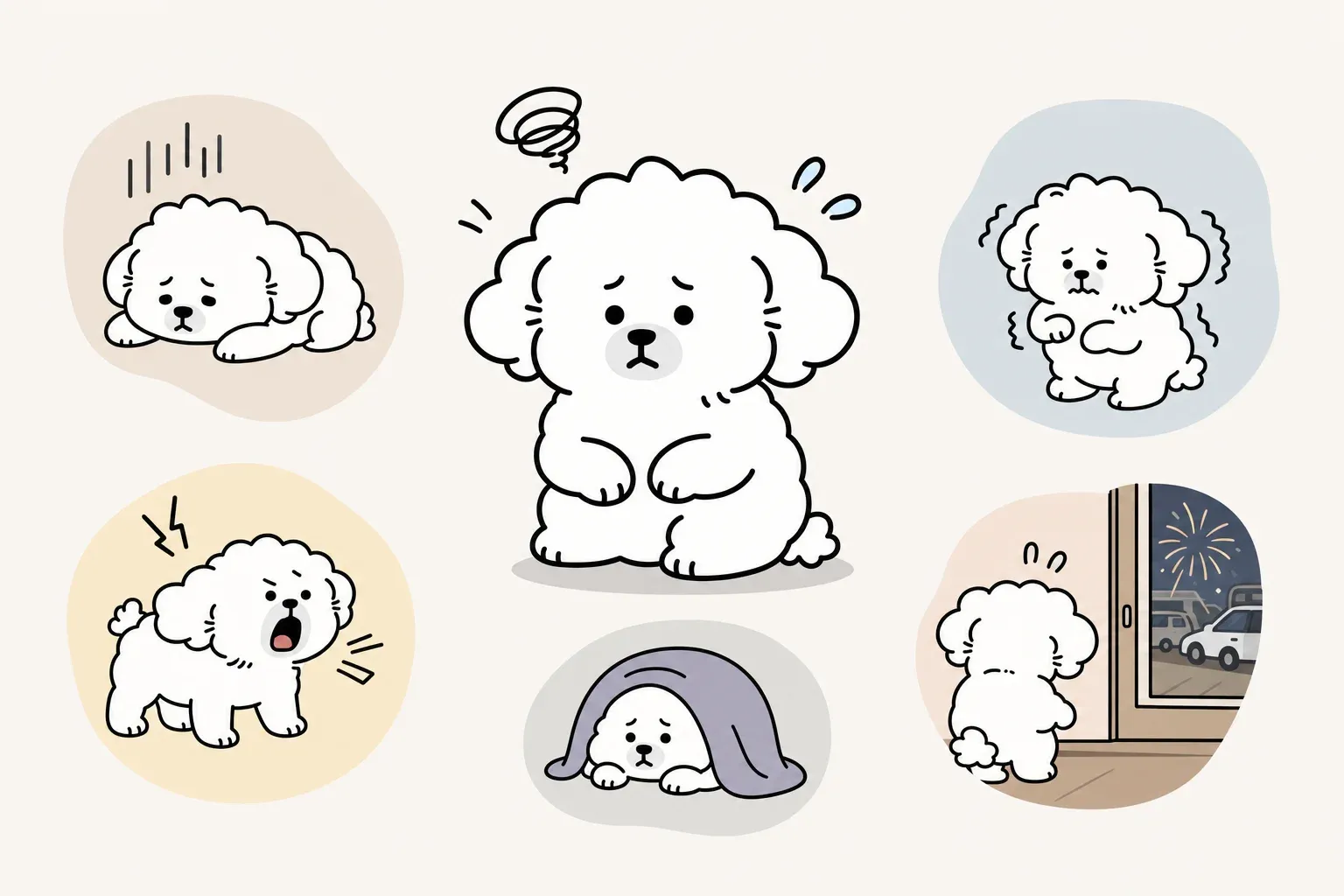
Your dog can’t tell you they’re struggling. But they are telling you — through their body, their behavior, and dozens of subtle signals most owners never learn to read. Recognizing the signs of stress in dogs is one of the most practical skills any owner can develop, because the earlier you catch it, the easier it is to address.
This guide covers the full picture: the science behind acute and chronic stress, how to read calming signals before they escalate, what untreated stress does to your dog’s body, and how to apply situation-specific relief strategies that actually work. It also includes a self-assessment checklist that no other article on this topic provides — so you can quickly gauge your dog’s stress level and decide what to do next.
Can Dogs Really Get Stressed? Acute vs. Chronic Stress Explained
Dog stress is not anthropomorphism. It is a measurable biological process. When a dog encounters a stressor — an unfamiliar dog, a loud noise, a change in routine — the hypothalamic-pituitary-adrenal (HPA) axis activates and cortisol floods the bloodstream. This is the same stress hormone pathway seen in humans, and it produces the same downstream effects on the cardiovascular, immune, and gastrointestinal systems.
The Fear Free Pets organization, which trains veterinary professionals across North America, uses the FAS (Fear, Anxiety, Stress) scale to assess patient arousal during visits. The scale runs from FAS 0 (relaxed) to FAS 5 (panic) and recognizes that stress exists on a continuum — not as a binary on/off state. Understanding this spectrum is the foundation for everything that follows.
Acute Stress: A Normal Response to Temporary Threats
Acute stress is protective. When your dog hears a sudden loud sound or encounters something unfamiliar, cortisol and adrenaline prepare the body to fight, flee, or freeze. Heart rate increases. Pupils dilate. Digestion slows. Once the threat resolves, the stress response dissipates and the body returns to baseline.
This is healthy and adaptive. Dogs need functional stress responses. The problem begins when the response doesn’t resolve — or when stressors accumulate faster than the dog can recover.
Chronic Stress: When Cortisol Stays Elevated Too Long
Chronic stress occurs when a dog is repeatedly or continuously exposed to stressors without adequate recovery time. The HPA axis remains activated, and cortisol stays elevated long after any single event has passed.
| Acute Stress | Chronic Stress | |
|---|---|---|
| Duration | Minutes to hours | Weeks to months |
| Cortisol | Spike, then returns to baseline | Persistently elevated |
| Behavioral signs | Visible during the stressor | Present across situations, without obvious trigger |
| Physical effects | Temporary physiological changes | Digestive disruption, immune suppression, tissue breakdown |
| Recovery | Natural, with time | Requires active intervention |
Some dogs develop chronic stress gradually — through repeated exposure to noise events, unstable household environments, or unresolved social conflict. Others show clear anxiety that builds over time when the underlying cause isn’t addressed. This distinction matters because chronic stress doesn’t just look different from acute stress; it requires a different management approach.
Common Causes of Stress in Dogs
Environmental Triggers: Moving, Loud Noises, Routine Changes
Dogs are highly sensitive to their physical and social environment. Changes that seem minor to humans can be significant stressors for a dog.
Common environmental triggers:
- Moving to a new home — the loss of familiar scent markers, layout, and neighborhood sounds is disorienting. Staging the transition gradually and maintaining familiar routines during the move significantly reduces stress load.
- Loud noises — thunderstorms, fireworks, construction, and traffic are among the most common acute stressors. Dogs with noise sensitivities often escalate to noise phobia over time if the trigger isn’t managed. Dog noise phobia from thunder and fireworks addresses this specifically.
- Routine disruption — dogs anticipate patterns. A shift in feeding time, walk schedule, or the family’s daily rhythm can produce low-grade chronic stress, particularly in dogs with anxious temperaments.
- Unfamiliar environments — vet clinics, boarding facilities, car rides, and crowded public spaces introduce unpredictable stimuli that elevate arousal.
Emotional Triggers: Separation Anxiety, Poor Socialization, Fear
Emotional and social stressors are among the most common chronic stress drivers in companion dogs.
- Separation-related distress — ranging from mild unease to full-blown separation anxiety, being left alone is one of the most studied stress triggers in domestic dogs. Research estimates that 20–40% of dogs referred to behavioral clinics show some form of separation-related behavior.
- Poor early socialization — dogs who missed adequate exposure to people, environments, and other animals during the critical window (typically 3–14 weeks) often show higher anxiety across contexts as adults.
- Fear responses — fear of strangers, other dogs, or specific experiences (grooming, nail trims, vet visits) produces acute stress that can become conditioned over time.
- Conflict with other household pets — resource competition, incompatible social styles, or intimidation from a dominant housemate creates sustained background stress that owners often attribute to other causes.
Physical Triggers: Pain, Illness, Age-Related Sensory Decline
Physical discomfort and stress are tightly linked — a fact that is underrecognized in behavioral conversations.
Pain lowers a dog’s stress tolerance significantly. A dog that previously handled nail trims without issue may begin showing aggression as joint pain makes handling uncomfortable. Before attributing new behavioral stress signals to a psychological cause, a veterinary physical exam to rule out pain is always the right first step.
Senior dogs face a compounding problem: age-related vision and hearing decline removes information the dog previously used to make sense of its environment. What was predictable becomes unpredictable, and chronic low-grade anxiety often follows. Cognitive decline (canine cognitive dysfunction) can amplify this further, producing confusion and disorientation that owners observe as nighttime restlessness or house soiling without apparent cause.
Reading the Signs: From Calming Signals to Red Flags
This is the section that most stress resources get wrong — or skip entirely. The behavioral signs of stress don’t begin with panting and shaking. They begin much earlier, with what Norwegian dog trainer and behaviorist Turid Rugaas termed calming signals.
Rugaas, whose foundational work On Talking Terms with Dogs: Calming Signals is used as a reference by trainers worldwide, documented over 30 distinct body language cues that dogs use to communicate discomfort and to de-escalate tension. These signals often appear well before any obvious stress behavior — and missing them is how owners end up saying their dog “snapped without warning.”
Early Calming Signals: Yawning, Lip Licking, Head Turning
These are the first-tier signals — the ones a stressed dog offers before escalating to more visible behavior.
Calming signals to recognize:
- Yawning — not from tiredness. A yawn in a tense context (at the vet, during a tense greeting, when being stared at) is a classic stress signal.
- Lip licking or tongue flick — a brief, fast lick of the lips without food present. Rugaas identifies this as one of the most common early signals.
- Head turning or body turning away — the dog looks or moves away from the stressor. It is the dog saying “I’m not a threat, please back off.”
- Sniffing the ground — sudden ground sniffing during a charged interaction is rarely about smell. It is a displacement behavior that breaks direct confrontation.
- Squinting or soft eyes — reducing eye contact as a de-escalation gesture.
- Moving in a curve — approaching a person or dog in an arc rather than head-on.
- Freezing — a sudden stillness, often accompanied by body stiffening. This can be a brief pause before a response — pay attention to what follows.
Behavioral Changes: Excessive Licking, Tucked Tail, Destructive Behavior
When calming signals fail to resolve the stressor, the dog escalates to more visible behavioral changes.
- Excessive licking — particularly of paws or legs, can be a repetitive self-soothing behavior under chronic stress. Excessive licking in dogs covers how to determine whether licking is stress-driven versus medical.
- Tail tucked low or between legs — a consistently low tail carriage across situations indicates chronic fear or stress, not just momentary discomfort.
- Ears pinned back or flattened — this reduces as a quick, momentary signal (acute) or becomes a default resting ear position under chronic stress.
- Withdrawal and hiding — avoiding social contact, retreating to isolated spaces, disengaging from activities previously enjoyed.
- Destructive behavior — particularly at exits (doors, windows) when stress is separation-related, or generalized destruction during the owner’s absence.
- Loss of interest in play or food — particularly diagnostic when the dog is in a familiar, otherwise non-threatening environment.
Physical Symptoms: Stress Shedding, GI Issues, Appetite Changes, Trembling
Physical signs indicate that the stress response has reached a significant level.
- Excessive shedding (stress shedding) — dogs can “blow coat” rapidly during acute stress. Many owners notice tufts of hair on the vet’s exam table that weren’t present on the drive over. This is the adrenergic response causing piloerection and hair follicle relaxation.
- Panting without heat or exertion — one of the most diagnostically useful stress signs. If the environment is comfortable and the dog is not exercising, panting can signal stress, pain, or anxiety. Context matters.
- Trembling or shaking — can indicate acute fear, anticipatory anxiety, or cold. In a stress context, it typically appears alongside other behavioral signals.
- GI symptoms — loose stools, vomiting, or reduced appetite during or after a stressful event are direct physiological consequences of cortisol’s effect on gut motility.
- Whale eye — whites of the eye are visible as the dog shows the sclera (the white part). This is a high-arousal stress signal, often appearing just before a snap or bite.
The Ladder of Aggression: From Warning to Bite
Stress escalates in a predictable sequence that veterinary behaviorists sometimes describe as the “ladder of aggression.” Understanding the ladder helps owners intervene before behavior becomes dangerous.
The typical escalation runs:
Yawning / blinking / sniffing → head turn / body turn → walking away → freezing → tense body, flat ears → stiff-legged posture → stare → growl → snap → bite
A critical point: Each rung is a communication attempt. A dog that growls is telling you something important — not behaving badly. Punishing growling removes the warning signal without resolving the underlying stress, which is how dogs who “bite without warning” are inadvertently created.
A detailed visual guide to these signals — including whale eye, piloerection, and the role of tail position — is available in the dog body language guide.
What Happens When Dog Stress Goes Untreated
This is the dimension that most stress articles skip. Untreated chronic stress is not just a behavioral problem. It is a physiological stressor with documented downstream health effects — and understanding this changes how seriously owners take persistent signs of stress in dogs.
GI Disease and Immune Suppression
Cortisol acts directly on the gastrointestinal system. Under chronic elevation, it alters gut motility, disrupts the composition of the gut microbiome, and increases intestinal permeability. The clinical result is often called stress colitis — intermittent loose stools, mucus in stool, and occasional vomiting in a dog that has no apparent dietary cause for the symptoms.
Veterinarians at Cornell and Tufts regularly see dogs with chronic GI symptoms that resolve once the underlying anxiety is managed — not once the diet changes. If your dog has been through multiple food elimination trials without improvement, the underlying cause may be stress physiology rather than food sensitivity.
Beyond digestion, chronic cortisol suppresses immune function. Glucocorticoids directly inhibit T-cell and natural killer cell activity, reducing the dog’s ability to respond effectively to infection and to clear abnormal cells. Dogs under chronic stress may show increased frequency of respiratory infections and slower recovery from minor illness.
Progression to Chronic Behavioral Disorders
Stress that goes unaddressed rarely stays static. Research in veterinary behavioral medicine documents a predictable trajectory: acute stressors that recur without resolution progressively lower the dog’s stress threshold. The dog that was once merely reactive to strangers begins reacting earlier and more intensely. The dog that managed occasional alone time begins showing distress within minutes of departure.
Clinically, this pathway leads to recognized anxiety disorders — generalized anxiety, noise phobia, and compulsive behaviors — that are significantly harder to address than the underlying stress was at an earlier stage. Early intervention is not only kinder; it is more effective.
Skin Conditions and Self-Harm Behaviors
Chronic stress drives repetitive behaviors that often result in physical damage. The most common:
- Acral lick dermatitis (lick granuloma) — repetitive licking of a single location, typically the lower limb, produces a progressively inflamed, thickened wound. The licking itself releases endorphins (self-soothing), which makes the behavior self-reinforcing and difficult to interrupt without addressing the stress source.
- Excessive scratching — stress-related itch responses can produce skin trauma, particularly in dogs with any underlying skin sensitivity.
- Over-grooming — continuous self-directed grooming to the point of hair loss, particularly in anxious individuals.
- Tail chasing — in some dogs, stress-driven repetitive behavior presents as spinning or tail chasing, which can escalate into a compulsive pattern if left unmanaged.
These behaviors are not quirks. They are signals that the dog’s stress level has exceeded what they can self-regulate, and they warrant professional evaluation.
How to Help Your Stressed Dog: Situation-Specific Relief
Effective stress management is not one-size-fits-all. The right approach depends on whether the stress is acute or chronic, what the triggers are, and how severe the dog’s current arousal level is.
Daily Management: Exercise, Nosework, Quality Sleep Environment
The single most consistent finding across canine stress research is that appropriate physical and mental activity reduces baseline cortisol levels. Exercise increases serotonin and reduces HPA axis reactivity — the same biological mechanism observed in human exercise research.
Practical approaches:
- Leash walks in varied environments — sniff time is essential. Dogs process the world primarily through scent, and allowing extended sniffing on walks provides mental engagement that significantly lowers arousal. A walk where the dog is pulled along without sniffing is less restorative than a shorter walk with full sniff access.
- Nosework (scent detection training) — nosework training for dogs is emerging as one of the most effective stress-reduction activities available. A 2019 study published in Applied Animal Behaviour Science found that dogs who participated in nosework showed measurably lower pessimistic judgment bias — a proxy for positive emotional state — compared to controls. Even informal nosework games at home (hiding treats in a muffin tin, scatter feeding in the yard) have measurable calming effects.
- Consistent sleep environment — a predictable, quiet resting space with minimal disturbance during sleep hours allows the cortisol system to genuinely recover. Dogs that are regularly disrupted during rest show elevated arousal baselines.
Environmental Support: Safe Spaces, Music Therapy, Pheromone Diffusers
Environmental modifications support a chronically stressed dog’s ability to regulate between stressors.
Safe spaces: Every dog benefits from having a predictable retreat — a crate, a covered corner, or a bed behind furniture — that is off-limits to children and other pets, and that is never used as a punishment space. Access to a safe space allows the dog to self-regulate by withdrawing when arousal gets too high.
Calming music and white noise: Research from the University of Glasgow and the Scottish SPCA (published in PLOS ONE) found that soft music — particularly classical and soft rock — produced measurably lower stress-related behaviors in kennel dogs compared to silence or heavy metal. Commercially available recordings of calming music for dogs (often featuring slower tempos, simple arrangements, and frequencies matched to dog hearing ranges) are a low-effort support tool for dogs with noise sensitivity or generalized anxiety.
Adaptil (dog-appeasing pheromone): Adaptil is a synthetic version of the pheromone secreted by mother dogs to calm puppies. Available as a diffuser, spray, or collar, it has been evaluated in multiple randomized controlled trials for separation-related behaviors and noise fear. Effect sizes are moderate — it helps some dogs meaningfully and others very little — but it is low-risk and worth trialing for dogs with chronic low-to-moderate anxiety.
ThunderShirt (pressure wrap): Constant, gentle pressure applied to the torso appears to have a calming effect in some dogs, analogous to the calming effect of swaddling in human infants. ThunderShirt has the most supporting evidence among physical intervention products. It works best for acute noise events and travel anxiety. For dogs with severe distress, it is most effective as part of a broader protocol.
Zylkene (alpha-casozepine supplement): Derived from casein (milk protein), Zylkene is a supplement with mild anxiolytic properties. It’s available over the counter and is often recommended as a gentle first option for dogs with situational or mild anxiety before considering pharmaceutical intervention.
Owner Behavior Adjustments: Consistent Routines, Calm Energy
Owners are a major environmental variable — and the one most within your direct control.
What helps:
- Predictable daily structure — feeding, walks, and sleep at consistent times reduce anticipatory anxiety by making the day legible to the dog.
- Low-key departures and arrivals — extended emotional goodbyes and excited reunions signal to the dog that departures are emotionally significant events. Brief, calm departures and low-key greetings reduce the salience of the transition.
- Staying calm during the dog’s distress — not excited, not punishing, not over-reassuring. A calm, matter-of-fact response is more regulating than either extreme. Counter to common belief, comforting a stressed dog does not reinforce fear — it provides social support. But excessive dramatic comfort can increase arousal.
- Avoiding forced interaction — during recovery after a stressful event, let the dog control the pace of re-engagement rather than pushing contact.
For dogs whose stress intersects with hyperactivity and arousal regulation problems, calm training techniques that systematically build impulse control and a lower resting arousal level can complement stress management.
When medication may help:
For moderate to severe anxiety, behavioral modification alone often produces insufficient improvement. Veterinarians and veterinary behaviorists may recommend:
- Trazodone — a serotonin antagonist/reuptake inhibitor often prescribed situationally (vet visits, travel, thunderstorms) or as a daily anxiolytic adjunct. Well-studied in dogs.
- Fluoxetine (Reconcile) — an FDA-approved SSRI for canine separation anxiety. Works over weeks (4–6 weeks to full effect), not acutely. Supports behavioral modification by reducing baseline anxiety.
- Sileo (dexmedetomidine oromucosal gel) — FDA-approved specifically for canine noise aversion. Applied to the gum line, it works within 30–60 minutes and is particularly useful for predictable noise events like fireworks.
Medication decisions always require individual veterinary assessment. These options are tools that support behavioral work — not substitutes for it.
Dog Stress Self-Assessment Checklist
Use this checklist to gauge your dog’s current stress level. Score 1 point for each item that applies within the past two weeks. Higher scores indicate greater urgency for intervention.
Behavioral signs:
- Yawning, lip licking, or head turning in non-stressful contexts
- Ears consistently pinned back or flat during daily interactions
- Tail carried low or tucked frequently (not just during specific events)
- Withdrawing from social contact or hiding more than usual
- Loss of interest in play or activities previously enjoyed
- Excessive licking of paws, legs, or other body parts
- Destructive behavior at exit points (doors, windows)
- Increased vocalization (whining, barking, howling)
Physical signs:
- Panting without heat or exertion
- Trembling or shaking in non-cold environments
- Noticeably increased shedding without seasonal explanation
- Loose stools or vomiting without dietary changes
- Reduced appetite or food refusal in familiar settings
- Difficulty settling or sleeping restlessly
Contextual factors:
- A significant change has occurred in the past 3 months (move, new pet, schedule change, loss of family member)
- The dog shows distress when left alone
- Stress signs appear specifically in one or two recurring situations (noise, strangers, vet visits)
- Signs have been present for more than 4 weeks
Scoring guide:
| Score | Stress Level | Recommended Action |
|---|---|---|
| 1–3 | Mild / Situational | Identify and reduce specific triggers. Review daily enrichment and routine. |
| 4–7 | Moderate | Implement management strategies consistently. Consider calming supplements. Vet visit if no improvement in 4–6 weeks. |
| 8–12 | Significant | Veterinary evaluation recommended. Behavioral modification with possible supplement support. |
| 13+ | Severe / Chronic | Prompt veterinary consultation. Professional behavioral support strongly indicated. Medication assessment warranted. |
This checklist is not a diagnostic tool — it is a structured starting point for observation. A veterinarian or veterinary behaviorist can conduct a formal FAS assessment and help determine whether what you’re observing reflects stress, anxiety, a medical condition, or some combination.
When to See a Vet: Red Flags That Need Professional Help
Many stress management strategies can be initiated at home. But some presentations require professional evaluation — and waiting too long is the most common mistake owners make.
See your vet promptly if:
- Sudden onset without a clear trigger — behavioral changes that appear abruptly in an otherwise settled dog may indicate pain, illness, or a neurological change rather than psychological stress. A full physical exam is essential before a behavioral diagnosis is made.
- Self-injury is occurring — lick granulomas, raw paws, escape-attempt injuries, or any behavior that causes the dog physical harm requires veterinary and potentially behavioral intervention.
- The dog has stopped eating or is losing weight — stress-suppressed appetite lasting more than 24–48 hours warrants veterinary assessment.
- Signs are severe or escalating — if the dog is unable to settle for significant portions of the day, is showing aggression, or is progressing up the ladder of aggression more rapidly than before.
- No improvement after 4–6 weeks of consistent management — if you’ve made meaningful environmental changes and the dog is not responding, a professional evaluation will identify whether the strategy needs adjustment or whether additional support is needed.
- You need help distinguishing stress from medical causes — pain and anxiety can look identical from the outside. A veterinarian can help you determine which is primary.
For dogs where noise is the dominant trigger, noise phobia has its own specific veterinary protocol — including the FDA-approved Sileo gel — that differs from general anxiety management.
For dogs whose primary stressor is being left alone, the full assessment and training protocol for separation anxiety is the appropriate starting point.
The earlier you act on the signs of stress in dogs, the more options you have. A dog offering calming signals — yawning, lip licking, turning away — is showing you something important. Learning to read those signals fluently, and responding before they escalate, is the single highest-leverage thing you can do for your dog’s long-term well-being. The body language, the behavior, the physical symptoms: they are all part of one conversation. Understanding that conversation is the foundation of everything else.
References
- 1. Signs Your Dog is Stressed and How to Relieve It – VCA Hospitals
- 2. Dog Anxiety: Signs, Causes, and Treatment – PetMD
- 3. On Talking Terms with Dogs: Calming Signals – Turid Rugaas
- 4. Stress and the HPA Axis in Dogs – Cornell University College of Veterinary Medicine
- 5. Behavioral Effects of Auditory Stimulation on Kenneled Dogs – PLOS ONE
- 6. Fear, Anxiety, and Stress Scale (FAS) – Fear Free Pets
- 7. Trazodone for Behavioral Disorders in Dogs – Tufts Cummings School of Veterinary Medicine
FAQ
What are the earliest signs of stress in dogs?
Is stress the same as anxiety in dogs?
Can chronic stress make my dog physically sick?
Do ThunderShirts and Adaptil actually work for dog stress?
When should I take my stressed dog to the vet?
Related Articles
Dog Separation Anxiety Guide: Symptoms, Training, and Help
Learn how to identify dog separation anxiety symptoms, follow a vet-backed step-by-step training plan, and know when medication or a specialist is needed.
Dog Noise Phobia Treatment: Thunder and Fireworks Guide
Step-by-step guide to treating dog noise phobia from thunder and fireworks. Desensitization protocol, tool comparisons, and when to see a vet.
Can You Really Read Your Dog? A Complete Guide to Dog Body Language
Master dog body language with a body-part-by-body-part breakdown plus emotion-state cross-reference. Learn calming signals, misread cues, and pain signals.