 Cirius Petpedia
 Can You Really Read Your Dog? A Complete Guide to Dog Body Language
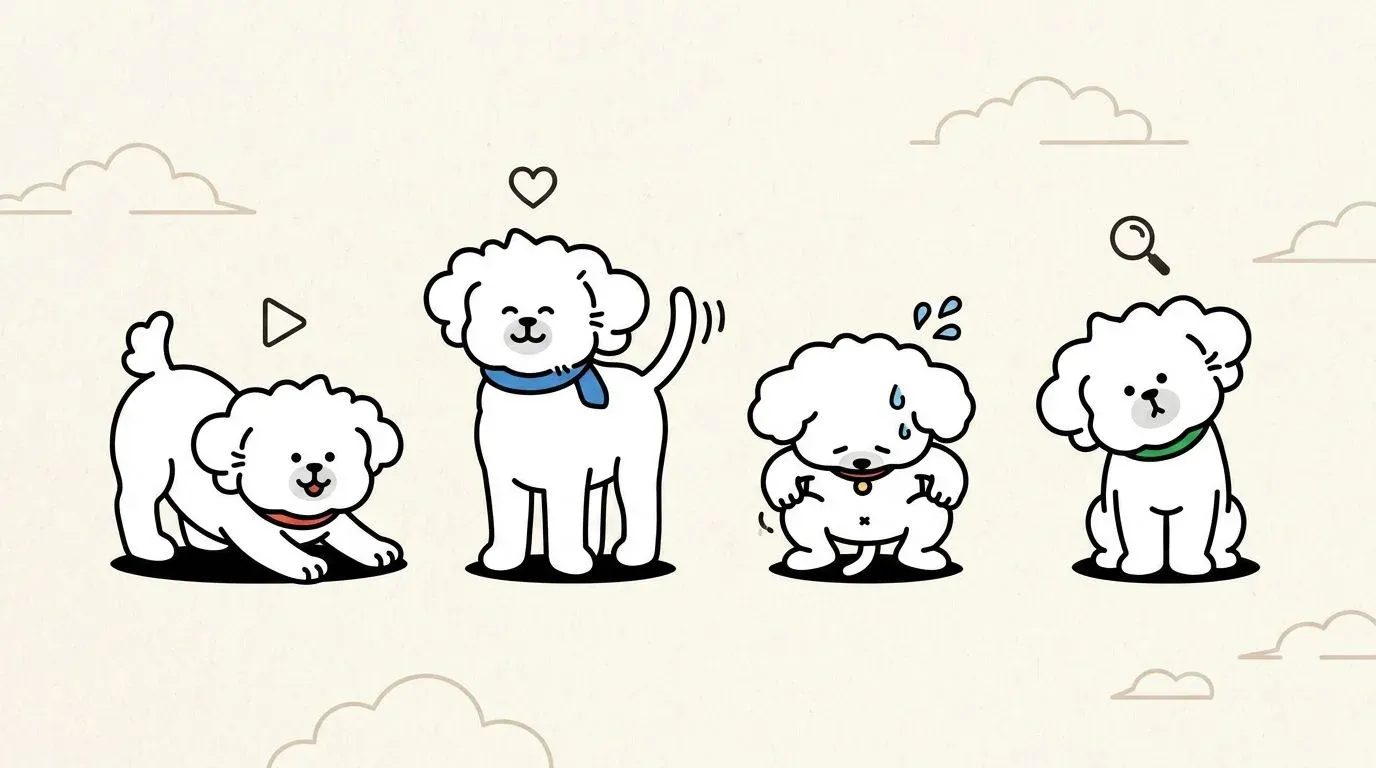
What Is Dog Body Language?
Every dog owner has experienced this: your dog does something — freezes, yawns at an odd moment, suddenly rolls onto its back — and you have no idea what it means. The truth is that dogs are communicating constantly. They simply do not use words.
Dog body language is the full system of postural, facial, and movement signals that dogs use to express their emotional state and intentions. Unlike human communication, which is primarily verbal, dogs rely on the entire body as their primary channel — simultaneously. The position of the tail, the tension in the ears, the softness or hardness of the eyes, and the distribution of body weight all send information at once.
How Dogs Communicate Differently From Humans
Humans are predominantly verbal and use tone, syntax, and explicit statements to convey meaning. Dogs use the whole body as a dynamic, integrated signal system. Norwegian dog trainer and behavioral researcher Turid Rugaas, author of On Talking Terms with Dogs, documented that dogs use over 30 distinct communicative behaviors — what she termed “calming signals” — before, during, and after social interactions.
Critically, the signals are not read in isolation. A wagging tail means one thing on a relaxed dog with a loose, wiggly body and something quite different on a stiff dog with a fixed gaze and raised hackles. Learning to read dog body language means learning to read the whole picture simultaneously.
Why Reading Body Language Matters
There are two practical reasons this skill matters for every dog owner.
The first is safety. Most dog bites do not happen without warning. Research published in Applied Animal Behaviour Science has consistently found that human inability to recognize canine warning signals is a major factor in bite incidents. Dogs that are about to snap typically display a sequence of escalating signals — yawning, lip licking, whale eye, stiffening, growling — before making contact. When humans miss or suppress these warnings, the dog has no option left.
The second reason is welfare. Many behavioral and health problems — anxiety-driven behavioral patterns, stress-related compulsions, and early-stage pain — show up first in body language before they become obvious problems. An owner who can read the signals catches these early, when intervention is most effective.
Dog Body Language by Body Part
The most reliable way to build a reading framework is to understand what each body part communicates, and then combine those readings in context.
Tail: Height, Speed, and Direction
The tail communicates three dimensions of information: height, speed, and direction of movement.
Height reflects arousal and confidence. A high, stiffly held tail signals alertness or dominance assertion. A tail held at or below the horizontal body line signals a relaxed or neutral state. A tail tucked between the hind legs signals fear or severe submission.
Speed reflects intensity of the emotional state — but not necessarily its valence (positive or negative). Fast wagging means high arousal. Slow, deliberate wagging often signals caution or uncertainty.
Direction is a finding from neuroscience research. A 2013 study published in Current Biology by Italian researchers Quaranta, Siniscalchi, and Vallortigara found that dogs wag slightly more to the right when they see a familiar, positive stimulus (their owner), and more to the left when confronted with something they want to approach but feel uncertain about (an unfamiliar dog). This directional asymmetry is subtle but measurable.
The practical takeaway: a wagging tail is not automatically a friendly signal. Always read tail height and body tension alongside wag speed and direction.
| Tail Position | Likely State |
|---|---|
| High and stiff, barely moving | Alert, aroused, assertive |
| High and wagging broadly | Excited, confident |
| Mid-height, relaxed wag | Calm, friendly |
| Low wag, slow | Uncertainty, mild appeasement |
| Tucked against belly | Fear, severe stress |
| Slow helicopter wag | Deep contentment (common in greetings) |
Ears: Forward, Back, and Flat
Ears are one of the quickest-moving signals in a dog’s repertoire. Dogs with mobile ear leather (breeds with upright or semi-erect ears like German Shepherds, Siberian Huskies, and mixed breeds) give the most readable signals. Floppy-eared breeds like Beagles and Basset Hounds still move their ears — the base and direction of the ear shift, even when the fold is prominent.
Ears forward indicate attention, curiosity, and arousal. Combined with a tense body and locked gaze, this becomes alert watchfulness or threat assessment.
Ears rotated back but not flat often signal friendliness, uncertainty, or appeasement — this is the ear position many dogs use in greetings.
Ears pinned flat against the skull indicate fear, submission, or severe stress. In some contexts this is paired with a hard, fixed stare — which is a warning sign that fear may escalate to aggression if the dog feels cornered.
Eyes: Soft Eyes, Hard Stare, and Whale Eye
Eye signals are among the most nuanced and often most important to learn.
Soft eyes — slightly squinting, with no tension in the orbital muscles around the eye, pupils normal — indicate relaxation and comfort. A dog with soft eyes is not worried.
Hard stare — pupils dilated, eyes wide open, gaze locked on a target without blinking — indicates high arousal, threat assessment, or warning. A hard stare directed at another dog or person is often a precursor to escalation and should not be ignored.
Whale eye (also called half-moon eye) occurs when a dog’s head turns while the gaze stays fixed, revealing a visible crescent of white sclera at the edge of the eye. It reliably signals discomfort, anxiety, or a feeling of being trapped. You see it commonly when a dog is being hugged, is guarding a resource, or is positioned between two approaching people or animals. Whale eye is a “take more space or reduce pressure” signal.
Blinking and looking away function as appeasement and de-escalation. A dog that breaks a stare and blinks is signaling it does not want conflict.
Mouth and Tongue: Lip Licking, Yawning, and Teeth Baring
The mouth offers some of the most frequently misread signals.
Lip licking (sometimes called tongue flicking) — a quick, single lick of the nose or lips, not associated with food — is a calming signal. Dogs do it when they are mildly stressed, when they feel social pressure, and sometimes as an appeasement gesture toward an approaching human or dog. It often happens so quickly it goes unnoticed.
Yawning is another calming signal. Dogs yawn when they want to de-escalate a tense moment, when they feel uncertain about what is expected of them, and when they are processing mild stress. A dog yawning repeatedly in a training session is often telling you the session is too long or too pressured.
Panting outside of heat or exercise context indicates stress. The “stress pant” has a slightly different quality from a post-exercise pant — it tends to be tighter at the corners of the mouth and can be accompanied by drooling.
Teeth baring ranges from a warning grimace to a full snarl and should always be taken seriously as a communication of conflict, not dismissed as “he didn’t mean it.” Dogs that show teeth are telling you they have run out of softer signals.
The relaxed open mouth — lips loose, tongue out, no tension in the jaw muscles — is a classic sign of a comfortable dog. Sometimes called the “doggy grin” in a non-aggressive context.
Posture and Weight Shifting: Play Bow, Cowering, and Stiffening
Whole-body posture synthesizes all the other signals and gives you the most reliable read of emotional state.
Play bow — chest lowered, rear elevated, front legs extended forward — is one of the clearest signals in the canine repertoire. It is an explicit invitation to play and resets interaction context. Even a dog that has been acting assertively can follow a play bow with genuine play.
Weight forward on the toes, with a stiff body and high tail, indicates confidence and potential assertiveness or threat. This is the posture of a dog moving toward something with intent and alertness.
Weight shifted backward — rear feet slightly spread, weight on the back legs — signals uncertainty, unease, or preparation to flee. Combined with low tail and averted gaze, this is a clear “I am uncomfortable” posture.
Cowering (body pressed low, head down, tail tucked, avoiding eye contact) signals fear or submission. A dog in this posture is asking for the pressure to stop. Approaching and trying to pet a cowering dog to “reassure” it often increases the discomfort.
Hackles raised (piloerection along the spine and sometimes at the base of the tail) is an involuntary autonomic response, not a voluntary signal. It indicates high arousal — but not necessarily aggression. Dogs can raise their hackles from excitement, fear, or alertness. Read the rest of the body to interpret which.
Reading Your Dog’s Emotional State
Understanding individual body part signals is the foundation. The next layer is combining those signals to read the full emotional state. Below is a cross-reference: for each emotional state, here is what you will typically see across the body.
Relaxed and Happy
A relaxed dog is easy to be around and often described as “loose.” Key signals:
- Tail: at or below body height, slow or medium wag, sometimes a loose helicopter-style wag
- Ears: natural position, slightly back or neutral
- Eyes: soft, slightly squinting, normal pupils, willing to make and break eye contact
- Mouth: open and relaxed, tongue may be loosely out
- Posture: body weight evenly distributed, no muscular tension, movement is fluid and relaxed
Anxious or Nervous
Anxious dogs are often missed because their signals are subtle and easy to attribute to quirks or personality. What to look for:
- Tail: low or tucked, possibly wagging slowly
- Ears: back, rotated down
- Eyes: whale eye possible, some tension in the brow area, blinking more than usual or avoiding gaze
- Mouth: frequent lip licking, some yawning, panting without heat
- Posture: weight shifted slightly back, body low, may be slow to approach
Persistent anxiety signals warrant investigation. Anxiety that shows up consistently in specific contexts (visitors, car trips, being left alone) points toward a specific trigger that may benefit from a training or management approach. Dog separation anxiety often presents this way — as a cluster of subtle signals that owners initially overlook.
Fearful
Fear signals are more intense than anxiety signals and require immediate attention:
- Tail: fully tucked between the legs
- Ears: pinned flat against the skull
- Eyes: whale eye, dilated pupils, hard blinking or eyes squeezed shut
- Mouth: lips pulled back, possible teeth baring, panting, drooling
- Posture: cowering, body pressed to the ground or against a wall, may be trembling
A fearful dog that has no escape route will often escalate. The fear-aggression continuum is real: many dogs that bite do so because they were fearful, cornered, and had no other option. The correct response to a fearful dog is to reduce pressure — give space, avoid direct eye contact, and do not force approach. Dogs with noise-related fear, such as during thunderstorms, often display classic fear postures; fear body language during storms follows this same pattern.
Overexcited or Overstimulated
Overexcitement is often mistaken for happiness, but an overstimulated dog is not fully in control and can become unpredictable:
- Tail: high and moving rapidly, possibly stiff
- Ears: forward and erect
- Eyes: wide open, hard, pupils dilated, may have a frantic quality
- Mouth: open but tense, may be vocalizing
- Posture: weight forward on the toes, possibly jumping, spinning, or unable to settle
Overexcited dogs benefit from calm leadership and structured interaction. Rewarding a dog in this state reinforces the excitement. Calmly removing the stimulus and asking for a known, simple behavior (sit, down) before re-engaging is more effective. When spinning during overexcitement becomes a recurring pattern rather than a momentary burst, it may be transitioning into compulsive tail chasing — a distinction worth monitoring. One common behavior that emerges during overexcitement is mounting — which is driven by arousal far more often than by sex or dominance.
Warning Signs of Aggression
Aggression in dogs is almost always preceded by a sequence of escalating signals. The full escalation ladder, from least to most intense, looks like this:
- Yawning, lip licking, looking away (early appeasement, trying to de-escalate)
- Freezing, stiffening
- Hard stare
- Growling (do not punish this — it is communication)
- Showing teeth (snarl)
- Snapping (without contact)
- Bite (with inhibition — quick, controlled)
- Bite (full, sustained)
Growling is not misbehavior. It is the dog’s most explicit verbal warning before contact. Suppressing growling by punishment removes a warning signal without removing the underlying cause, making future bites more likely to occur without warning.
Calming Signals: Your Dog’s Peace Language
The concept of calming signals was formally developed and described by Turid Rugaas based on decades of observational work with dogs in Scandinavia. The premise is that dogs have a shared language of de-escalation signals — behaviors they use to communicate peaceful intent, reduce tension, and invite others to calm down.
6 Common Calming Signals
1. Yawning. When used as a calming signal, a dog yawns in response to social pressure, confrontation, or tension — not because it is tired. You will see it at the veterinary clinic, at the start of a training session, and in tense greetings.
2. Lip licking / nose licking. A quick, single tongue flick across the nose or lips, not associated with food or hydration. Often happens so quickly it requires attention to notice. Commonly seen when a person leans directly over a dog or makes direct eye contact.
3. Turning the head away. A dog that turns its head to one side during a direct approach or gaze-hold is not being rude or distracted. It is performing a de-escalation. The turned head says, “I am not a threat, and I am not interested in conflict.”
4. Turning the body away or curving approach. Rather than walking in a straight line toward another dog, a socially fluent dog curves. This curve reduces the directness and perceived threat of the approach. Dogs that have not learned this often cause conflict when meeting others.
5. Sniffing the ground. A dog that begins sniffing the ground during a tense greeting or a high-arousal situation (like another dog barking at them) is attempting to insert a neutral, calming behavior into the situation.
6. Moving slowly or freezing briefly. Slowing the pace of movement communicates non-threat. A momentary freeze during greeting is a reset, not a precursor to aggression — though a sustained freeze with hard eye contact and raised hackles is a different matter entirely.
How to Respond When Your Dog Shows Calming Signals
When your dog shows calming signals directed at you, the appropriate response is to reduce the pressure — step back, soften your gaze, avoid looming over the dog, and give it a moment. When your dog shows calming signals in response to another dog, give both dogs space and allow the interaction to proceed at the dog’s chosen pace.
You can also use calming signals back toward your dog. Turning your own head slightly to the side, blinking softly, and squatting to the side rather than crouching directly in front reduces perceived pressure and often helps a nervous dog approach.
5 Commonly Misread Dog Body Language Signals
These are the signals that most often lead to misunderstanding — sometimes with serious consequences.
| Signal | Common misreading | What it actually means |
|---|---|---|
| Tail wagging | Always happy | High arousal — could be anxiety, conflict, or excitement |
| Belly exposure | ”Pet me” invitation | May be active appeasement requesting space |
| Yawning | Tired | Calming signal or mild stress response |
| Freezing | Doing nothing | Active conflict suppression; often precedes escalation |
| Showing teeth | Aggressive | Sometimes a social “grin” in certain contexts, but never ignore it |
A Wagging Tail Doesn’t Always Mean Happy
The wagging tail is the single most misread signal in dog body language. The wag communicates arousal and the desire to interact — not the nature of that interaction. A dog that is about to snap can be wagging its tail. A dog that is terrified can be wagging its tail.
The signals that modify the tail wag’s meaning: tail height (high = aroused/assertive, low = fearful), speed (fast = intense), direction (right-leaning vs left-leaning), and the rest of the body. A stiff, high-held tail vibrating rapidly while the dog has a hard stare and raised hackles is not a happy greeting. The wag is telling you the dog is highly aroused. The rest of the body is telling you the arousal is not friendly.
When Belly Exposure Isn’t an Invitation to Rub
Dogs roll onto their backs in two distinct contexts that look similar but mean different things. The first is active, voluntary role-over — often accompanied by a loose, wiggly body, a soft open mouth, and an inviting expression. This dog is offering its belly and enjoying the interaction.
The second is passive, sudden roll — often triggered by a direct approach, too much petting, or uncomfortable handling. The dog rolls over quickly, body somewhat stiff, tail may be tucked, head turned to the side, paws curled inward. This is not an invitation; it is an appeasement posture asking for the pressure to stop. Reaching in to rub the belly of a dog in this position often increases the dog’s discomfort.
Yawning Isn’t Always About Being Tired
As covered in the calming signals section, a yawn during social or training contexts is communicative, not physiological. The two are distinguishable by timing. A physiological yawn at rest with no social trigger is genuinely about fatigue. A yawn that appears mid-interaction, during a stressful moment, or when a person leans toward the dog is almost certainly a calming signal. Excessive licking as a stress signal often co-occurs with these calming behaviors in chronically stressed dogs.
Body Language That Signals Pain or Illness
This is the area that receives the least attention in mainstream dog body language guides, and it may be the most practically important for dog owners.
Pain changes the way dogs carry and use their bodies. Because dogs suppress pain signals instinctively, these changes are often gradual and attributed to “aging” or “personality.” Attentive observation of body language can catch these changes early, when veterinary intervention is most beneficial.
Behavioral Changes That Indicate Joint Pain
Joint pain — from conditions like osteoarthritis, patellar luxation, or hip dysplasia — typically produces the following body language changes:
- Altered weight distribution: standing or sitting in unusual positions; favoring one side when lying down; reluctance to sit fully (one leg extended to the side)
- Postural compensation: walking with the head lower than normal; hunching the back; narrowing the stance in the rear
- Reduced range of motion: shortened stride on one or more limbs; stiffness in transitions from lying to standing, particularly in the first few steps
- Changes in activity initiation: hesitating before jumping, going up stairs, or getting into the car — where the dog previously showed no hesitation
- Altered greeting posture: reduced enthusiasm in jump-greet behaviors, or switching from a jump greeting to staying on all fours
These changes happen slowly. Comparing current video to video from six or twelve months ago is one of the most useful tools for detecting change. A deeper review of pain-related body language patterns — including how to distinguish behavioral change from structural dysfunction — is covered in the deeper dive into pain-related body language.
Internal vs External Pain Signals
Pain from internal conditions (gastrointestinal, organ, soft tissue) tends to produce different body language from pain with a clear external source (lameness, skin).
Internal pain often shows as: restlessness that cannot be settled; repeatedly lying down and getting up; stretching the front legs forward and lowering the chest to the floor (prayer position, particularly in GI pain); abdominal guarding (tensing the belly, not allowing touch); abnormal breathing patterns at rest.
External or localized pain tends to produce: protective guarding of a specific area; snapping, growling, or fleeing when that area is touched; excessive licking, biting, or scratching of a specific location (not generalized).
Noting which pattern you observe gives you useful information for your veterinarian. Reduced activity can be a health signal in both cases — reduced activity as a health signal can be an early indicator worth tracking.
When to See the Vet: Emergency Signals
Some body language patterns require urgent veterinary evaluation:
- Bloated abdomen with retching or non-productive gagging: possible bloat (gastric dilatation-volvulus), a life-threatening emergency
- Non-weight-bearing on a limb that appeared suddenly: possible fracture, ligament rupture, or severe joint injury
- Sudden collapse or inability to rise
- Rapid, shallow breathing at rest without heat exposure: possible respiratory or cardiac emergency
- Persistent, uncontrollable shaking or trembling
- Sudden behavioral changes — aggression, disorientation, or extreme restlessness in a dog that is normally calm — can be neurological, toxic, or pain-related
If in doubt, contact your veterinarian. Behavioral observation is a powerful tool for monitoring your dog’s health, but it does not replace professional diagnosis.
Putting It All Together: Reading the Full Picture
The goal of studying dog body language is not to memorize a lookup table. It is to build an observational habit that reads the whole dog — tail, ears, eyes, mouth, posture, movement — in context, in real time.
A few practical habits that help:
Observe your dog when nothing is happening. Learn what your dog’s baseline relaxed body language looks like, so deviations are easy to notice.
Watch the whole body, not one part. The tail is not enough. The eyes are not enough. Look for consistency or contradiction across multiple signals.
Notice what happened just before. Body language signals are responses. Knowing the trigger helps you interpret the signal and address the underlying cause rather than just the surface behavior.
Take video when you see something unusual. A 30-second clip from a smartphone at your dog’s eye level gives you something to review in slow motion and something concrete to share with a trainer or veterinarian.
Don’t override signals. When your dog shows discomfort — lip licking when being hugged, pulling away from petting, yawning when a child approaches — trust those signals. Forcing the interaction to continue because “he’s fine” removes the dog’s ability to communicate and increases the likelihood of a behavioral problem over time.
Reading body language during socialization is a practical application of these skills — knowing when your dog is comfortable and when they need more space is the foundation of safe, positive social experiences. Before starting any dog barking control training, reading the body language behind the bark — whether territorial, anxious, or demand-driven — is the most effective first step toward choosing the right approach. Body language literacy is also essential for recognizing the early signals of dog jealousy — the subtle insertion attempts, body stiffening, and low whines that, if left unaddressed, can escalate into more serious behavioral problems. The same observational skills are what let parents tell jealousy signals from danger signals around a newborn — the introducing your dog to a newborn guide maps each signal to a specific response across the baby’s first year.
The more fluent you become in your dog’s body language, the more clearly you will see how much your dog has always been trying to tell you.
References
- 1. On Talking Terms with Dogs: Calming Signals — Turid Rugaas
- 2. Canine Communication: Understanding Dog Body Language — American Kennel Club
- 3. ASPCA: Dog Body Language
- 4. Fear Free Pets: Recognizing Fear, Anxiety, and Stress in Dogs
- 5. Stress signals in dogs — Veterinary Clinics of North America: Small Animal Practice
FAQ
What does it mean when a dog wags its tail low and fast?
What are calming signals in dogs?
How can I tell if my dog is stressed?
Can a dog's body language tell me if it is in pain?
What does whale eye in dogs mean?
Related Articles
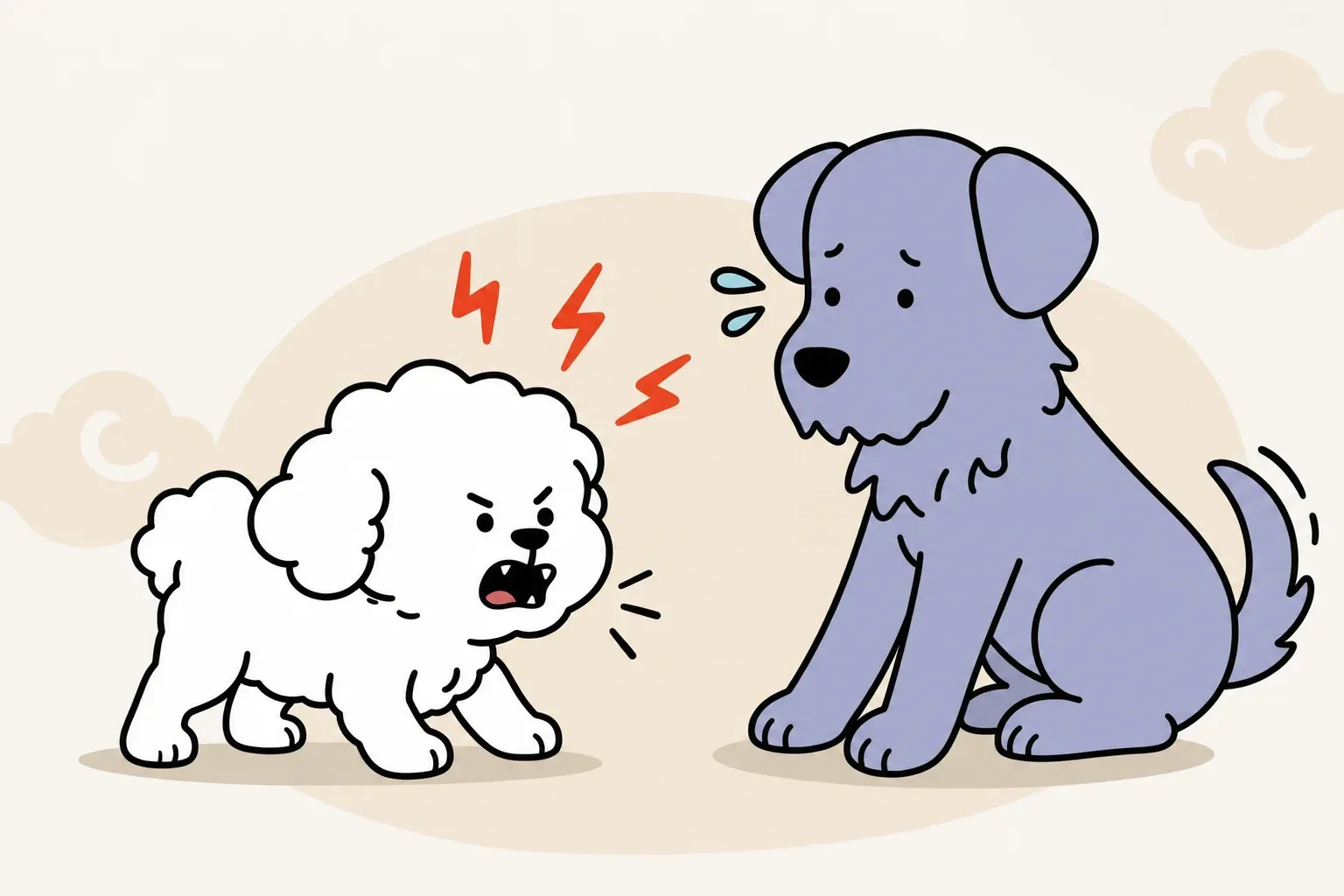
Dog Growling: How to Read Every Type and Respond the Right Way
Learn the dog growling meaning behind every rumble—play, warning, pain, and more. Includes a body language checklist, age-specific guide, and when to call a professional.
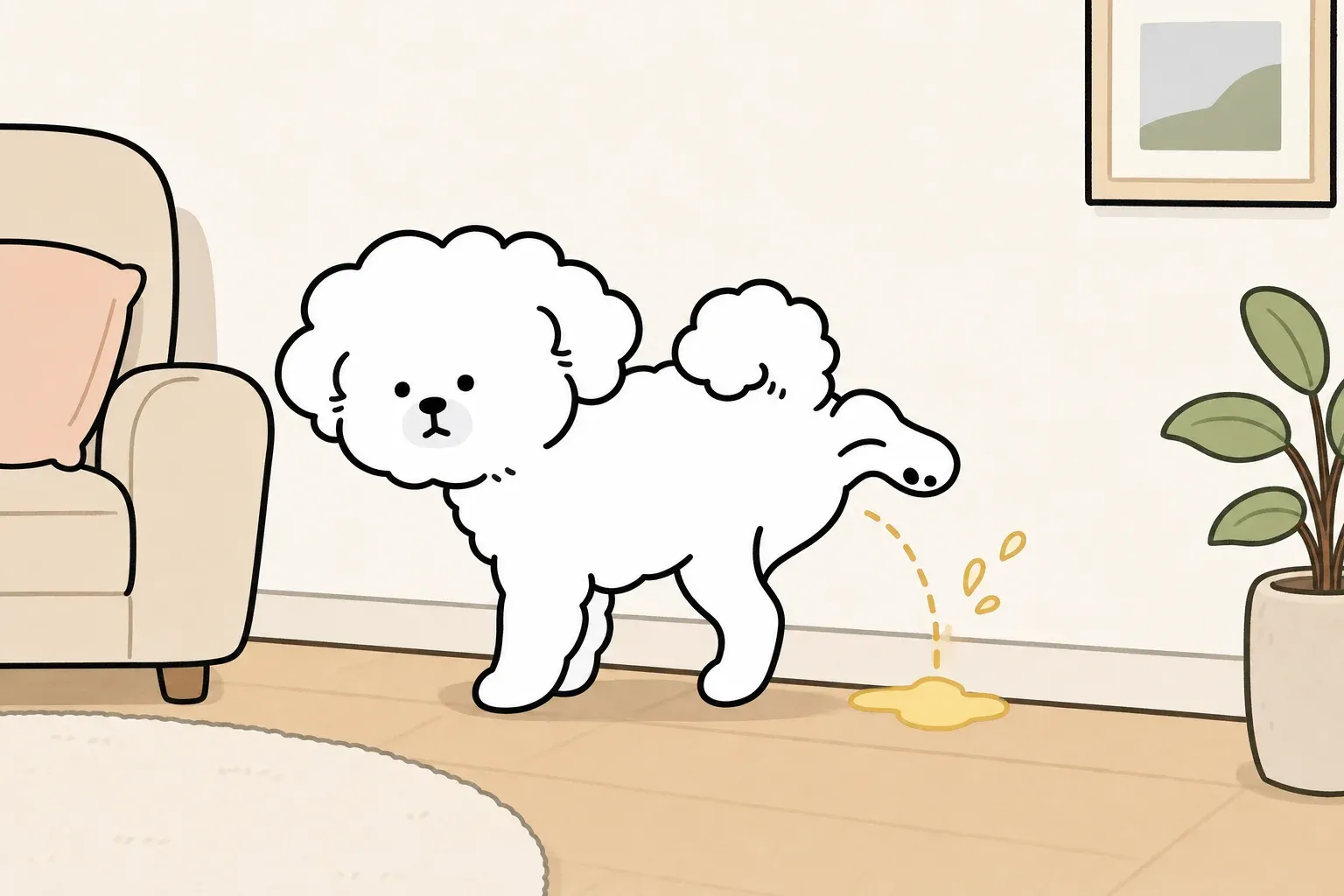
5 Reasons Your Dog Marks Inside and Proven Ways to Stop It
Learn why dogs mark indoors, cause-specific correction strategies, and a 4-week plan to stop marking for good.
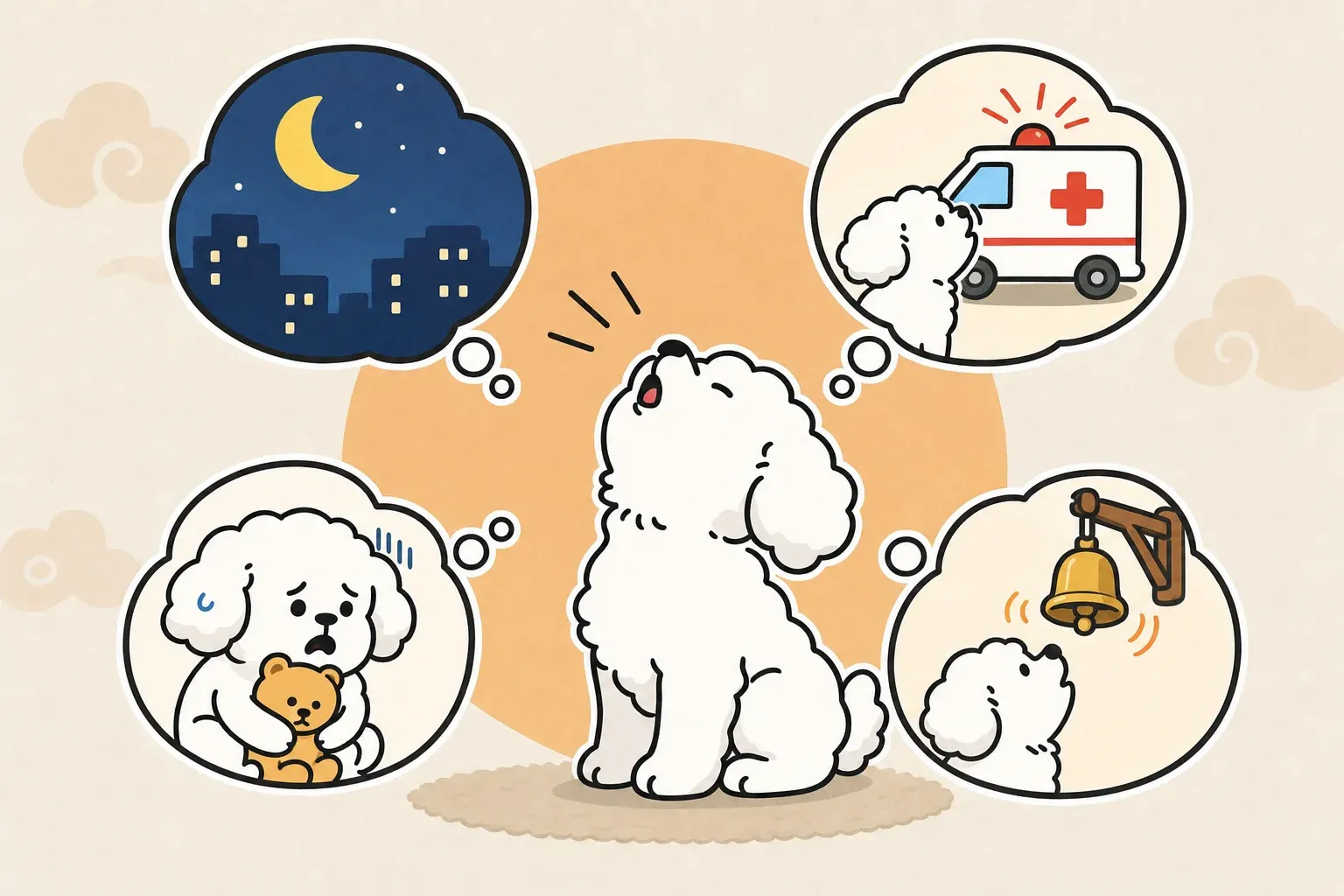
Is Your Dog's Howling Just a Bad Habit? Understanding the Real Causes
Why does my dog howl? Discover 8 evidence-based causes behind dog howling—from separation anxiety and pain to sirens—plus a self-assessment checklist and vet red flags.