 Cirius Petpedia
 Hot Pavement Dog Paw Burns: Signs, First Aid, and Prevention
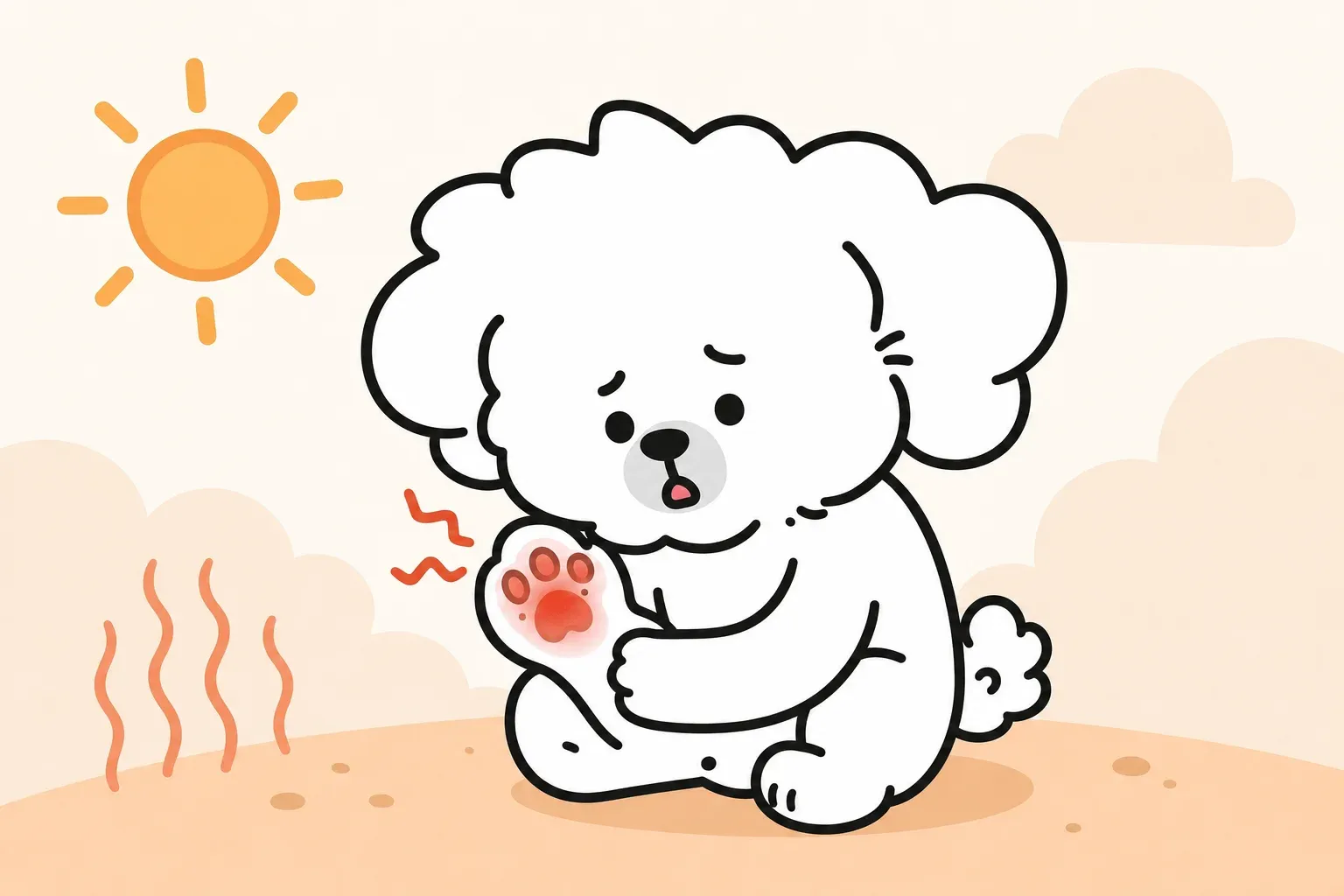
Most dogs love summer walks — but the pavement under their paws can be far more dangerous than it looks. On a bright summer day with air temperatures reaching 87°F (31°C), asphalt can climb to 143°F (62°C) or higher. At those temperatures, permanent damage to your dog’s paw pads can occur in seconds.
Paw pad burns are one of the most underreported warm-weather injuries in dogs. They often go unnoticed until the dog is already limping or refusing to walk. This guide covers exactly what to watch for, how to respond when burns happen, and how to prevent them from occurring in the first place — using evidence-based information and practical protocols used by veterinary professionals.
Why Hot Pavement Is Dangerous for Your Dog’s Paws
Understanding the science behind pavement heat helps explain why this risk is so easy to underestimate — and so easy to prevent once you know what you’re dealing with.
Air Temperature vs. Pavement Temperature
The temperature you feel in the air is not the temperature your dog’s paws are touching. Asphalt and concrete absorb and retain solar radiation far more efficiently than air, causing surface temperatures to climb dramatically above ambient readings.
A widely cited field study showed the following relationships between air temperature and asphalt surface temperature:
| Air Temperature (°F) | Air Temperature (°C) | Asphalt Temperature (°F) | Asphalt Temperature (°C) |
|---|---|---|---|
| 77°F | 25°C | ~125°F | ~52°C |
| 86°F | 30°C | ~135°F | ~57°C |
| 95°F | 35°C | ~149°F | ~65°C |
| 104°F | 40°C | ~160°F | ~71°C |
At 125°F (52°C), tissue damage begins within 60 seconds of skin contact. At 149°F (65°C), burns can occur almost immediately. These are temperatures routinely reached on summer afternoons in most parts of the US.
Surface type matters too. Dark asphalt absorbs the most heat and cools the slowest. Lighter concrete reaches lower peak temperatures but still well above safe thresholds. Brick and paving stones fall in between. Grass, sand in the shade, and wooden boardwalks stay significantly cooler — but sand in direct sunlight can also become dangerous.
How Dog Paw Pads Work — and Why They Burn
A dog’s paw pad is a specialized structure consisting of a tough outer epidermis layered over fatty tissue, which provides cushioning and some insulation. Despite their leathery appearance, paw pads contain a dense network of nerve endings and blood vessels.
While paw pads are more durable than the skin on your hands, they are not heat-resistant. The continuous contact required during walking — unlike a brief glance of a hot surface — transfers sustained thermal energy into the tissue. This is compounded by the fact that pads don’t sweat the way human skin does, which limits the body’s natural cooling response at the point of contact.
Puppies and elderly dogs are especially vulnerable because their pads are thinner and have less developed or degraded structural integrity. But any dog, regardless of breed or age, can sustain burns under the right conditions.
Signs of Burned Paw Pads: 3 Severity Levels
Recognizing burns early is critical. Many owners don’t notice until the dog is already in significant pain. The signs differ depending on burn severity.
Mild Burns: Limping, Licking, Reluctance to Walk
Mild burns affect the outer surface of the pad without deep tissue involvement. Signs include:
- Limping on one or more legs, often appearing suddenly mid-walk
- Repeated licking or chewing at the paws after returning indoors
- Reluctance to continue walking or standing on hot surfaces
- Pads that feel warm to the touch and may appear slightly redder than usual
- No visible open wounds or blistering
Dogs with mild burns often seem fine once they’re back on a cool surface, which leads owners to assume the issue has resolved. In reality, the tissue may still need care to prevent secondary infection.
Moderate Burns: Redness, Blisters, Peeling Pads
Moderate burns penetrate deeper into the pad tissue and produce visible changes:
- Pronounced redness or darkening of the pad surface
- Blistering — fluid-filled pockets visible on or around the pad edges
- Peeling or flaking of the outer pad layer
- Visible cracking that wasn’t there before the walk
- Increased pain response when the paw is touched
- Persistent limping that doesn’t resolve after rest
Moderate burns require veterinary evaluation. Blisters indicate that the injury has reached the dermis, and broken blisters create open wounds vulnerable to infection.
Severe Burns: Raw Flesh, Bleeding, Refusal to Stand
Severe burns are medical emergencies. Signs include:
- Exposed raw tissue beneath the pad surface
- Active bleeding from the paw
- Complete refusal to bear weight on the affected leg(s)
- Visible black or charred discoloration of pad tissue
- Extreme vocalization (whimpering, yelping) when the paw is touched or weight is applied
Seek emergency veterinary care immediately if you observe any of these signs. Severe burns carry a high risk of serious infection (including septicemia) and may require wound debridement, bandaging protocols, and pain management that only a veterinarian can safely provide.
Red flag — go to the vet now if you see: open wounds on the paws, bleeding, black or gray discoloration of pad tissue, or if your dog refuses to stand within 30 minutes of returning from a walk on hot pavement.
How to Check if Pavement Is Too Hot: The 7-Second Test
You don’t need a thermometer to assess pavement safety. A simple test you can do before every summer walk provides a reliable, real-time assessment.
The Hand-Back Test Step by Step
- Find a section of pavement representative of what your dog will walk on (ideally in direct sunlight, not a shaded patch).
- Place the back of your hand — not your palm — flat against the surface.
- Hold it there for 7 full seconds.
- If you cannot maintain contact for the full 7 seconds without discomfort or pain, the surface is too hot for your dog.
The back of your hand is used because it’s more sensitive than the palm, and it more closely approximates skin-on-surface contact. This test is endorsed by veterinary safety guidance and has become a standard field recommendation for dog owners and professional dog walkers.
If the test tells you the surface is too hot, don’t proceed. Your dog’s tolerance is not higher than yours — it’s lower, because sustained pad contact during walking concentrates heat on the same tissue repeatedly.
Safe Walking Times by Hour
Pavement temperature follows solar exposure. On a typical summer day, here is a general hourly guide based on ambient temperature data:
| Time of Day | Pavement Safety (Summer) | Notes |
|---|---|---|
| Before 8:00 AM | Generally safe | Overnight cooling; most days start cool |
| 8:00–10:00 AM | Use caution, test first | Temperature rising; shaded routes preferred |
| 10:00 AM–2:00 PM | Avoid | Peak solar exposure; highest risk window |
| 2:00–5:00 PM | Avoid | Air temperature peaks; pavement retains heat |
| 5:00–7:00 PM | Caution | Slight cooling, but pavement releases stored heat |
| After 7:00 PM | Generally safe | Test first on hot days; evening cooling underway |
These windows shift depending on your location, cloud cover, and the specific heat index for a given day. Always test before walking, regardless of the time.
For safe alternatives during high-heat hours, consider nighttime walking as a lower-risk option — cooler surfaces and reduced UV exposure make evening and early morning walks significantly safer in summer.
Dog Paw Burn First Aid: 5 Emergency Steps
If your dog has been walking on hot pavement and shows any signs of paw injury, move quickly but calmly. Here is the step-by-step protocol:
Step 1: Move to a Cool Surface Immediately
Get your dog off the hot pavement as quickly as possible. Pick up small dogs and carry them. If you can’t carry your dog, move them to the nearest patch of grass, shade, or a cooler indoor surface. Every additional second on hot pavement deepens the injury.
Avoid placing your dog on artificial turf, which can retain heat similarly to asphalt.
Step 2: Cool the Paws With Water
Using cool (not ice-cold) water, flush the affected paws gently for 10–15 minutes. You can use a water bottle you’ve carried with you, a garden hose on low pressure, or a shallow container of water at home.
Do not use ice or ice water. Extreme cold applied directly to burned tissue causes vasoconstriction and can deepen the injury — the same principle that applies to burn first aid in humans. Cool running water is the correct approach.
Step 3: Assess Burn Severity
Once the paws are cooled, examine each pad under good lighting. Use the three-tier classification in the previous section to determine severity:
- Mild: redness, licking, no open wounds
- Moderate: blistering, peeling, significant redness
- Severe: raw tissue, bleeding, refusal to bear weight
Your assessment will determine whether you continue with home care or proceed immediately to a veterinarian.
Step 4: Clean and Protect the Wound
For mild burns:
- Gently pat the paws dry with a clean cloth
- Apply a thin layer of coconut oil or a veterinarian-recommended paw balm to soothe and protect the surface
- Cover loosely with clean gauze if needed to prevent licking
- A dog cone or recovery collar helps prevent licking during healing
A note on home remedies:
- Coconut oil: Generally safe as a surface soother; not toxic if licked
- Neosporin (triple antibiotic ointment): Can be used sparingly on minor wounds on paws if directed by a veterinarian; the main risk is the dog ingesting it by licking
- Aloe vera: Use with caution. While topical aloe vera gel is widely recommended in human first aid, the ASPCA lists aloe vera as potentially toxic to dogs if ingested, and dogs commonly lick their paws. If you choose to use aloe, apply a product labeled specifically safe for dogs and use a cone to prevent licking
- Human pain medications (ibuprofen, acetaminophen, aspirin): Never give these to dogs. All common OTC human pain relievers are toxic to dogs and can cause liver failure, kidney failure, or gastrointestinal bleeding. Consult your veterinarian for appropriate pain management options.
Step 5: Decide — Home Care or Vet Visit
Continue home care if:
- Burns appear mild (no open wounds, no blistering)
- Your dog is bearing weight normally on cool surfaces
- There is no active bleeding
- Your dog is eating and drinking normally
Go to the vet if:
- You observe blistering, peeling, or open wounds
- Your dog refuses to walk on the affected leg(s) for more than 30 minutes after cooling
- Signs of pain (whimpering, flinching, guarding the paw) persist
- The paw appears darkened, gray, or black
- Your dog develops fever, lethargy, or loss of appetite within 24 hours (signs of infection)
For moderate to severe burns, your veterinarian may prescribe topical antibiotics, oral pain management, protective bandaging, and a follow-up wound care protocol. Trying to manage these at home increases infection risk and can result in longer healing times.
Understanding the broader picture of skin irritation and hot spot care can also help you recognize secondary complications if the damaged skin becomes infected after initial healing.
5 Ways to Prevent Dog Paw Burns This Summer
Prevention is far simpler than treatment — and all five strategies below can be implemented immediately.
Time Your Walks (Before 10am, After 7pm)
The most effective single change you can make is shifting walk times away from peak solar hours. Before 10:00 AM and after 7:00 PM, pavement temperatures have had time to cool, and the risk of burn drops substantially.
If your schedule requires midday walks, keep them short, stay in shaded areas, and always test the pavement first. On days when the heat index exceeds 90°F, consider skipping outdoor walks entirely and substituting indoor exercise or play.
For comprehensive outdoor activity planning, review outdoor activity safety guidelines for dogs to understand how heat affects your dog’s entire body — not just their paws.
Choose Grass, Shade, and Lighter Surfaces
Route selection matters as much as timing. Even during peak heat hours, walking on grass, dirt trails, or shaded paths dramatically reduces paw burn risk. Where pavement is unavoidable, lighter-colored concrete surfaces are typically cooler than dark asphalt.
When walking in urban environments, hug building shadows, which create cooler paved strips on the north and east sides of structures in the afternoon. Parks with significant tree cover maintain significantly cooler ground temperatures throughout the day.
Dog Boots: Pros, Cons, and Fitting Tips
Dog boots provide the most reliable physical barrier between paw pads and hot surfaces. High-quality boots rated for heat protection can allow walks during periods that would otherwise be too risky.
Pros of dog boots:
- Complete barrier protection against hot surfaces
- Also protect against salt, chemicals, sharp debris
- Some dogs adapt well and wear them comfortably
Cons of dog boots:
- Many dogs resist wearing them initially
- Require a break-in period (start with 2–3 minutes indoors)
- Poor fit can cause abrasions or slipping
- Not suitable for all dogs, especially those with mobility issues
Fitting tips:
- Measure the widest part of each paw (dogs often have different-sized paws)
- The boot should fit snugly but not restrict circulation — you should be able to slip one finger between the boot closure and the leg
- Choose boots with non-slip soles and breathable fabric
- Practice at home for several short sessions before outdoor use
Paw Wax and Balm Comparison
Paw waxes create a temporary protective film over the pad surface, reducing direct heat transfer and helping maintain pad moisture. They are not a substitute for proper walk timing, but they add a useful layer of protection.
| Product Type | Protection Level | Durability | Application | Notes |
|---|---|---|---|---|
| Musher’s Secret | High | 1–2 weeks per application | Rub into pads | Developed for sled dogs; excellent track record |
| PawTection | Moderate–High | Per walk | Balm stick format | Easy application; water-resistant formula |
| Plain Vaseline | Low | Minutes | Rub in | No real heat protection; primarily a moisture barrier |
| Coconut oil | Low–Moderate | Short | Rub in | Safe if licked; provides basic conditioning |
Apply wax at least 5 minutes before a walk to allow it to absorb. Reapply if your dog walks through water or muddy areas. For a complete routine, include paw balm as part of your regular post-walk paw cleaning routine to remove debris and check pad condition daily.
Daily Paw Pad Conditioning
Healthy, well-conditioned paw pads are more resilient than dry, cracked ones. A simple daily conditioning routine can improve pad integrity over time:
- Check pads daily: Look for dryness, cracking, or early signs of irritation
- Apply moisturizing balm: A veterinarian-approved paw balm or wax applied 3–4 times per week helps maintain pad flexibility
- Avoid overbathing the paws: Excessive washing strips natural oils; rinse and dry is sufficient post-walk
- Introduce outdoor surfaces gradually: New dogs and puppies benefit from slow exposure to varied terrain to help pads toughen naturally
Well-maintained pads are also less likely to crack and split, which creates entry points for bacteria. This links directly to overall paw pad care and maintenance as a year-round priority, not just a summer concern.
Which Dogs Are Most at Risk?
While any dog can sustain paw burns on hot pavement, certain dogs face significantly higher risk and warrant extra attention during summer months.
Puppies have thinner, less developed paw pads than adult dogs. Their tissue is more sensitive and burns faster. Puppies also have limited thermoregulatory capacity overall, making summer walks doubly risky.
Senior dogs often have thinner, more fragile pads due to age-related tissue changes. They may also have reduced sensitivity, meaning they feel discomfort later than a younger dog would — which paradoxically makes injuries more likely because the warning signal comes after damage has begun.
Small and toy breeds sit lower to the ground, which means their entire body is closer to radiated heat coming off the pavement. They also have less body mass to buffer temperature changes. Chihuahuas, Dachshunds, Shih Tzus, and similar breeds need extra precautions.
Brachycephalic (flat-faced) breeds — including French Bulldogs, Pugs, Boston Terriers, and Bulldogs — overheat faster than other breeds due to their compromised airways. They cannot cool themselves effectively by panting, which means the danger of a summer walk extends beyond their paws. These breeds should have significantly shortened summer walks and heightened monitoring.
Thick double-coated breeds such as Huskies, Malamutes, and Samoyeds retain body heat more readily and can reach heat exhaustion faster than single-coated breeds. Protecting their paws from the pavement is one component of a broader heatstroke prevention strategy during summer months.
Dogs with existing paw conditions — allergies, chronic dermatitis, prior injuries — have compromised pad integrity and are more vulnerable than dogs with healthy pads.
If your dog falls into any of these categories, apply the prevention strategies in this guide with an extra margin of caution: test the pavement earlier in the day, shorten walks, and consider protective boots even when ambient temperatures seem moderate.
References
FAQ
How long do burned dog paw pads take to heal?
Can I put Vaseline on burned dog paws?
At what temperature does pavement burn a dog's paws?
Is coconut oil safe for burned dog paws?
What is the 7-second rule for hot pavement?
Related Articles

How to Treat Dog Hot Spots at Home: A Safe 5-Step Care Guide
Dog hot spot treatment at home: a 5-step guide covering causes, safe vs. dangerous remedies, progression stages, and when to call the vet.

7 Essential Dog Paw Care Tips Every Owner Should Know
Your complete dog paw care guide: moisturizing cracked pads, trimming nails, preventing hot pavement burns, winter de-icer hazards, first aid for injuries, and when to call the vet.

Dog Heat Stroke Prevention: Critical Temperature Thresholds and Warning Signs Every Owner Must Know
Learn the 4-tier temperature risk system, breed-specific vulnerabilities, pavement heat dangers, and step-by-step emergency protocol to prevent and treat dog heat stroke this summer.