 Cirius Petpedia
 7 Silent Signs of Cat Arthritis Most Owners Miss
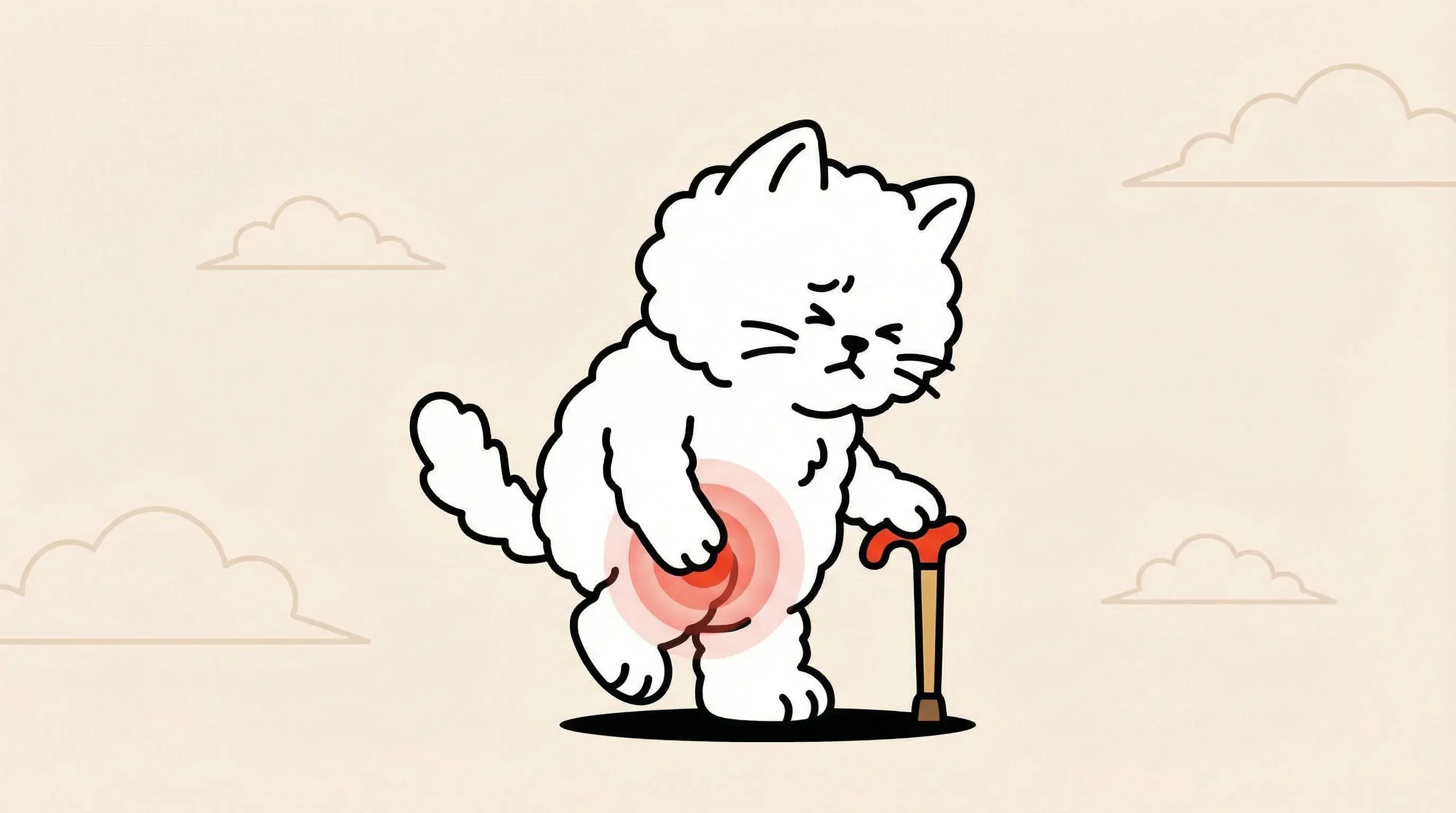
If you have ever watched a senior cat move a little more stiffly in the morning and dismissed it as “just getting older,” you have already seen the subtlest early sign of a condition that affects the majority of cats past middle age.
Cat arthritis symptoms do not announce themselves the way joint pain does in other species. Cats are not limping obviously across the living room floor. They are quietly changing small behaviors — avoiding a shelf they used to leap to, grooming their hips a little less thoroughly, hesitating a fraction of a second before stepping into the litter box. These shifts are easy to miss precisely because they happen gradually and because cats, by instinct, work hard not to show them.
This guide covers the prevalence and biology of feline degenerative joint disease, the seven behavioral signs that reliably indicate joint pain in cats, the veterinary diagnostic pathway, and what you can do at home to manage a cat with arthritis.
How Common Is Arthritis in Cats?
Feline arthritis is significantly more prevalent than most cat owners expect. Understanding the numbers helps explain why regular monitoring matters even before obvious symptoms appear.
What Is Feline Degenerative Joint Disease
Feline arthritis is formally called degenerative joint disease (DJD) or osteoarthritis. It is a progressive condition in which the cartilage cushioning the joint surfaces breaks down over time. As cartilage degrades, bone surfaces come into closer contact, producing inflammation, the formation of new bone tissue (osteophytes), and chronic pain.
In cats, DJD most frequently affects the hips, elbows, stifles (knees), and the joints of the lumbar and lumbosacral spine. Spinal involvement is especially important because it affects posture, gait, and the ability to perform everyday activities like grooming the hindquarters and entering a low-sided litter box. Back leg coordination and strength are often the first things owners notice declining.
Unlike arthritis in dogs, feline DJD is rarely preceded by a single traumatic injury. It develops as a natural consequence of a lifetime of use and aging — meaning that virtually every cat, given enough years, will develop some degree of joint disease.
Prevalence by Age — What Research Shows
The research on feline DJD prevalence is striking. A landmark study by Hardie et al. (2002) found radiographic (X-ray) evidence of degenerative joint disease in 90% of cats over 12 years of age. A cross-sectional study by Slingerland et al. (2011) examining 100 cats across age groups found that 61% of cats aged six years and older had radiographic signs of DJD in at least one joint, with prevalence rising sharply after age ten.
What these numbers mean practically: if your cat is over 10, the statistical likelihood is that some degree of joint disease is already present, whether or not it is yet causing visible signs. The ISFM (International Society of Feline Medicine) has designated DJD one of the most underdiagnosed and undertreated conditions in cats — specifically because the behavioral signs are so easily missed or attributed to normal aging.
Why Cat Arthritis Goes Undetected
Understanding why cat arthritis is consistently underdiagnosed requires understanding something fundamental about cat biology.
Cats Are Hardwired to Hide Pain
Cats evolved as both predators and prey animals. In the wild, showing signs of vulnerability — limping, flinching, favoring a limb — signals weakness to potential predators and competitors. The evolutionary result is a species with a highly effective behavioral suppression of visible pain signals.
This is not the same as tolerating pain without suffering. Cats in chronic joint pain are suffering. They are simply not displaying that suffering in ways humans intuitively recognize. Where a dog in pain might whimper, limp dramatically, or refuse to bear weight on a limb, a cat in equivalent pain will typically continue to move, eat, and behave apparently normally — while quietly withdrawing from activities that cause discomfort, adjusting posture to reduce load on painful joints, and becoming more reactive to handling.
This pain-masking instinct is why the behavioral signs in the next section are so important to understand. Each change represents the cat adapting its behavior to avoid pain, not a personality shift or a consequence of “old age.”
The Gradual Progression Trap
The second reason arthritis goes undetected is that it worsens so slowly. There is no single day when a cat goes from fine to clearly arthritic. The change unfolds over months to years, with each behavioral adaptation happening so gradually that owners accommodate to the new baseline without recognizing it as a symptom.
A cat that stopped jumping to the top of the cat tree eight months ago has not had that behavior on the owner’s mental checklist since — it just became part of how that particular cat lives. Only by knowing what to look for, and actively comparing current behavior to what the cat did a year or two ago, can owners detect the pattern.
7 Silent Signs Your Cat May Have Arthritis
These seven signs are the behavioral signals that feline medicine specialists and veterinary pain management researchers identify as most reliably associated with chronic joint pain in cats. Each one reflects a specific adaptation to joint discomfort.
1. Reluctance to Jump or Climb
A cat with healthy joints moves vertically without hesitation — onto countertops, window sills, cat trees, and furniture. A cat with joint pain begins to calculate before jumping. You may notice a cat that used to leap directly now crouches and hesitates, approaches the edge more carefully, or takes a lower route (chair first, then counter) when it used to go in a single bound.
Coming down can be more revealing than going up. A cat whose stifles (knees) or hips are painful will often jump down awkwardly, landing harder than usual, or will seek out lower surfaces to step off rather than jumping. This is particularly relevant for back leg arthritis, where the hindquarters absorb significant impact on landing.
Track which surfaces your cat uses regularly and notice whether it has gradually stopped using higher spots. This is one of the earliest and most reliable behavioral indicators.
2. Decreased Grooming or Matted Fur
Cats are fastidious groomers. A decline in grooming quality is a meaningful clinical signal. The reason is anatomical: thorough self-grooming requires a cat to reach every part of its body, which means twisting the spine, flexing the hips, turning to reach the lower back and tail base, and extending the rear legs. All of these movements become uncomfortable or impossible when the spine, hips, or stifles are arthritic.
The result is a coat that looks dull, greasy, or increasingly unkempt — particularly at the lower back, around the tail base, and on the hindquarters. In longer-haired cats, this shows up as mats forming in those specific areas. If your cat seems less interested in grooming or the coat quality has noticeably declined during shedding season, it is worth considering joint pain as an underlying cause rather than assuming a behavioral or skin issue.
3. Litter Box Avoidance or Accidents
Changes in litter box behavior that appear in a previously house-trained adult cat are always worth investigating. Arthritis is one of the most common causes in senior cats.
The problem is physical. Standard litter boxes have entry sides that are four to six inches high. For a cat with hip or lumbar pain, stepping over that barrier can be genuinely uncomfortable. The cat may begin eliminating near — but outside — the box, particularly if it is located somewhere that requires climbing stairs or jumping down to access.
A simple environmental modification — switching to a litter box with lower sides or a ramp entry — often resolves this problem immediately if joint pain is the cause. If a cat that previously had no litter box issues starts having accidents, especially if the cat is seven or older, joint pain should be on the short list of differentials.
4. Stiffness After Rest
This sign is the closest feline equivalent to the classic “stiffness that warms up with movement” that characterizes osteoarthritis across species. A cat with joint disease will often rise stiffly from sleep, move carefully for the first few minutes, and then appear more fluid as joints warm up with gentle activity.
Watch your cat’s first steps when it gets up from a long nap. A cat with healthy joints moves fluidly from the start. A cat with arthritis may walk with a shortened stride, hold the back legs closer together than normal, have visible difficulty rounding the lower back as it stretches, or take several steps to reach full stride length.
This stiffness-after-rest pattern is particularly visible in back leg arthritis. The hindquarters may look slightly tucked, the stride short and careful, with the back legs moving in a more parallel track than a healthy cat’s relaxed, swinging gait.
5. Reduced Activity and More Sleeping
All cats sleep a substantial portion of the day, so this sign requires a relative judgment: is your cat sleeping more than its own previous baseline? A cat that used to be active for certain periods of the day and now spends almost all of its time resting may be conserving energy because movement is painful.
This sign also shows up as reduced engagement with play, less patrolling of the home, and less interest in activities that require sustained movement — walking up and down stairs repeatedly, playing with toys that require jumping or sudden acceleration, or following owners around the house.
Reduced activity creates a reinforcing cycle that accelerates arthritis: less movement means less muscle mass around the joints, less muscle mass means less joint support and stability, and reduced stability increases wear on already damaged cartilage. Early intervention to maintain appropriate activity levels can interrupt this cycle.
6. Behavioral Changes — Irritability or Withdrawal
Chronic pain changes personality in cats as it does in people. A cat that has always been social and sought contact may begin to withdraw, spend more time in isolated spots, and show less interest in interactions it previously enjoyed. A cat that was tolerant of handling may begin to react — hissing, swatting, or biting — when touched around the back, hips, or hindquarters.
This is not aggression for its own sake. It is a pain response to touch in sensitive areas. A cat that growls or flinches when you stroke its lower back, or that bites when you try to pick it up (particularly if it was previously tolerant of being held), is giving you direct information about where it hurts.
It is important to distinguish this from behavioral problems. A senior cat that becomes reactive around specific body regions should be evaluated for pain before any behavioral intervention is attempted.
7. Subtle Gait Changes
Feline gait abnormalities from arthritis are generally not the dramatic limping seen in dogs. They are subtle: a shortened stride length in the back legs, a slight asymmetry between left and right steps, a tendency to carry the hindquarters slightly lower, or a stiffness in the spine that reduces the fluid back-and-forth sway of a healthy cat’s walk.
Watching your cat walk away from you on a flat surface gives the clearest view of back leg gait. Healthy cats have an alternating, easy rear limb movement with a natural swing. A cat with stifle or hip arthritis moves the back legs in a stiffer, more parallel pattern. Cats with lumbar spinal DJD may hold the rear end lower than normal and have a visibly reduced range of spinal movement.
Recording short videos of your cat’s gait over time is practically useful — not just for your own monitoring, but as material to share with your veterinarian. A 20-second clip of your cat walking can give a vet far more information than a brief examination of a cat that is tensed from a car trip.
Risk Factors — Which Cats Are Most Vulnerable?
While arthritis can affect any cat given enough time, certain factors significantly increase the likelihood of earlier or more severe joint disease.
Age, Weight, and Breed Predispositions
Age is the single strongest predictor of DJD. The risk increases steeply after age seven and becomes near-universal after twelve. Any cat seven years or older should be monitored using the behavioral checklist above, regardless of whether symptoms are currently apparent.
Excess body weight is the most modifiable risk factor for joint disease in cats. Overweight cats carry disproportionately greater mechanical load through every joint, and fat tissue itself produces pro-inflammatory cytokines that accelerate cartilage breakdown. Unlike skeletal abnormalities or age, body weight is something owners can directly influence — which makes weight management one of the highest-leverage interventions available for senior cat joint health.
Several breeds have known predispositions to joint conditions. Maine Coons and other large-bodied breeds carry more load through their joints and may develop DJD earlier. Scottish Folds have documented cartilage abnormalities that predispose them to severe, multi-joint osteoarthritis at a young age — this is a breed-specific concern that warrants early monitoring and proactive veterinary assessment.
Previous Injuries or Joint Conditions
Fractures that involved joint surfaces, prior ligament injuries, and developmental joint abnormalities are significant risk factors for early-onset arthritis. A joint that experienced trauma or abnormal loading during development will accumulate cartilage damage faster than a structurally normal joint.
Cats that were injured as kittens or young adults — hit by cars, falling from significant heights, sustaining fractures — have a higher lifetime arthritis risk in the affected limbs and joints. Informing your veterinarian about a cat’s injury history is relevant context for arthritis monitoring.
How Veterinarians Diagnose Cat Arthritis
A definitive diagnosis of feline DJD requires professional assessment. Home observation identifies candidates for evaluation, but it cannot confirm the diagnosis or characterize its severity.
Physical Examination and Mobility Assessment
A veterinary arthritis workup begins with a detailed history. What behavioral changes have you noticed? When did they start? Which surfaces has the cat stopped using? How does it move after rest? The observations you have made at home — especially any videos of gait — are genuinely useful clinical data for the veterinarian.
Physical examination includes palpation of each joint for heat, swelling, and pain response; evaluation of range of motion in the hips, stifles, elbows, and spine; and observation of gait if the cat can be safely allowed to walk in the examination room. Many cats are too stressed during a clinic visit to display their normal gait, which is why video documentation from home is so valuable.
Your vet may use a validated pain assessment tool — the Feline Musculoskeletal Pain Index (FMPI) or similar — to score the cat’s functional capacity. These questionnaire-based tools are designed to detect changes in mobility that owners can observe and report systematically.
X-rays and Diagnostic Imaging
Radiographs (X-rays) are the standard imaging tool for confirming DJD. They reveal characteristic changes: narrowing of the joint space, osteophyte (bone spur) formation at joint margins, subchondral bone sclerosis, and changes in joint architecture.
The correlation between radiographic findings and clinical symptoms is imperfect in cats, more so than in dogs or humans. Some cats with severe radiographic changes show minimal behavioral signs; others with moderate X-ray findings display significant pain responses. This is another reason why behavioral history from the owner is central to the diagnosis — imaging confirms the presence of joint disease but does not fully characterize how much it is affecting the cat’s daily life.
In some cases, additional diagnostics are needed. Blood panels help rule out other conditions that cause similar symptoms (hyperthyroidism, kidney disease, dental pain). Joint fluid analysis can rule out infectious or immune-mediated arthritis in younger cats. Advanced imaging (CT or MRI) is used in complex cases or when surgical intervention is being considered.
Managing Cat Arthritis at Home
Arthritis has no cure — the cartilage that has degraded does not regenerate. But effective management can meaningfully reduce pain, maintain mobility, and preserve quality of life. The home environment is where the majority of a cat’s day is lived, which makes home modifications among the most impactful interventions available.
Home Environment Modifications
The goal of environmental modification is to reduce the physical demands arthritis places on a cat’s daily routine.
Litter box access: Switch to a box with low entry sides (two to three inches or lower) or cut an entry notch into one side of a standard box. Place litter boxes on every level of the home so the cat never has to climb stairs to reach one. Avoid covered litter boxes, which require a cat to crouch and navigate a low opening — both movements that are uncomfortable for cats with back or hip pain.
Ramps and steps: Replace vertical jumps to furniture and bedding with ramps or intermediate stepping surfaces. A cat that used to sleep on a bed can continue to do so with a low-angle ramp providing access. The approach angle matters — steep ramps require the same hip extension as jumping; a ramp with a 20-30 degree angle is workable for most arthritic cats. Carpeted or textured ramp surfaces prevent slipping.
Food and water bowl placement: Raise bowls to a comfortable height so the cat does not have to flex the neck and shoulders sharply to eat and drink. Eating from floor level with cervical or thoracic spine involvement can be painful. A slightly elevated position (four to six inches) reduces this stress.
Bedding and resting surfaces: Orthopedic or memory foam cat beds distribute weight more evenly and reduce pressure point discomfort. Heated beds or a low-wattage heating pad under a blanket can provide additional comfort, particularly in cold weather or air-conditioned rooms — arthritis pain is commonly worse in the cold. Ensure the heat source is on a low setting and the cat can move off it freely.
Flooring: Non-slip surfaces on hardwood or tile floors help a cat that has difficulty stabilizing its hindquarters. Area rugs, yoga mats, or rubber-backed runners over slick flooring give arthritic cats traction without requiring them to grip with their claws on every step.
Weight Management and Gentle Activity
If your cat is overweight, weight loss is the single highest-impact intervention available. Reducing mechanical load on damaged joints and decreasing systemic inflammation through weight normalization can produce clinically meaningful improvements in mobility.
Weight loss in cats must be managed carefully. Rapid caloric restriction in cats carries a risk of hepatic lipidosis (fatty liver disease). A veterinarian-guided weight management program using a calorie-controlled diet and regular body condition scoring is the appropriate approach.
Maintaining appropriate activity is also important. Controlled play sessions using low-impact toys — feather wands moved at ground level or slow-moving toys that encourage walking and tracking rather than jumping — keep joints moving, maintain muscle mass, and support joint fluid circulation. The goal is movement without impact or overexertion. Short sessions of 5-10 minutes two to three times daily are more appropriate than one long, intense play session.
Veterinary Treatment Options Overview
Home management addresses the environment and lifestyle component of arthritis care, but pain management typically requires veterinary intervention.
NSAIDs (non-steroidal anti-inflammatory drugs): Meloxicam is the most commonly prescribed NSAID for cats in many countries, used at low doses for long-term pain management. Cats metabolize NSAIDs differently from dogs and humans — hepatotoxicity and renal toxicity risks mean that NSAID use in cats must be veterinarian-supervised with periodic monitoring of kidney and liver function. Never give human or dog NSAIDs (including ibuprofen or aspirin) to cats; these are acutely toxic to cats at any dose.
Monoclonal antibody therapy: Frunevetmab (Solensia) is an anti-NGF (nerve growth factor) monoclonal antibody approved specifically for feline chronic musculoskeletal pain. It is given by monthly injection and works by blocking the pain signaling pathway at its source. This is a significant advance for cats that cannot safely receive long-term NSAIDs due to renal insufficiency or other contraindications.
Gabapentin: An anticonvulsant/analgesic that addresses neuropathic (nerve-related) pain components of arthritis. Often used in combination with other pain management approaches.
Omega-3 fatty acid supplementation: EPA and DHA from fish oil sources have the strongest evidence base among cat joint supplements, reducing joint inflammation through prostaglandin pathways. The ISFM guidelines acknowledge omega-3 supplementation as a reasonable adjunct to other management strategies.
Acupuncture and physiotherapy: Certified practitioners offer acupuncture and targeted physiotherapy for cats with DJD. Both are increasingly available through specialist referral centers. The evidence base for feline acupuncture in pain management is limited but growing.
All treatment decisions — drug type, dose, monitoring frequency — should be made in partnership with a veterinarian who has examined and diagnosed the specific cat.
Medical Disclaimer: The information in this article is for educational purposes and does not constitute veterinary medical advice. If your cat is showing signs of joint pain or behavioral changes consistent with the symptoms described above, consult a licensed veterinarian for diagnosis and treatment.
FAQ
Can I tell if my cat has arthritis without going to the vet?
How long do cats with arthritis live?
Do joint supplements help cats with arthritis?
When should I take my cat to the vet for possible arthritis?
What are the most common cat arthritis symptoms in back legs?
Related Articles
Dog Arthritis: Symptoms and Management
Recognize early signs of arthritis in dogs and learn effective management strategies for pain relief and improved mobility.
Dog Cruciate Ligament Tear: 7 Things Every Owner Must Know
Dog cruciate ligament tear guide: recognize symptoms, compare TPLO vs TTA surgery, follow a phased recovery timeline, and protect the opposite knee.
Is Your Dog Showing Signs of IVDD? Symptoms, Stages, and What to Do
Learn to recognize IVDD in dogs symptoms by grade and spinal region, understand treatment options from conservative care to surgery, and manage recovery at home.
Dog Hip Dysplasia: 6 Essential Facts Every Owner Should Know
Learn the key facts about dog hip dysplasia — from at-risk breeds and early symptoms to PennHIP vs OFA diagnosis and home care exercises.
Why Is My Dog Limping? A Cause-by-Cause Diagnosis Guide
Dog limping on front or back leg? Learn the most common causes by leg and age, a home observation checklist, and when the limp needs emergency care.
The Hidden Link Between Your Dog's Weight and Joint Health
Extra weight does far more than strain your dog's joints — it actively inflames them. Learn the dual-pathway science and a practical roadmap to protect joint health.
If Your Dog's Hind Legs Are Getting Thinner, It Could Be Sarcopenia
Dog muscle atrophy in hind legs is an early warning sign of sarcopenia. Learn the stages, causes, BCS/MCS self-assessment, and evidence-based recovery strategies.
Complete Guide to Patellar Luxation in Dogs
Learn about the causes, symptoms, grades, treatment options, and prevention of patellar luxation in dogs.
Puppy Growth Plate Care: Safe Exercise and Breed Timelines
Learn how to protect puppy growth plates with breed-specific closure timelines, age-based exercise limits, and nutrition guidelines. Evidence-based guide.