 Cirius Petpedia
 Cat Spring Shedding: 5 Vet-Backed Steps to Control the Fur
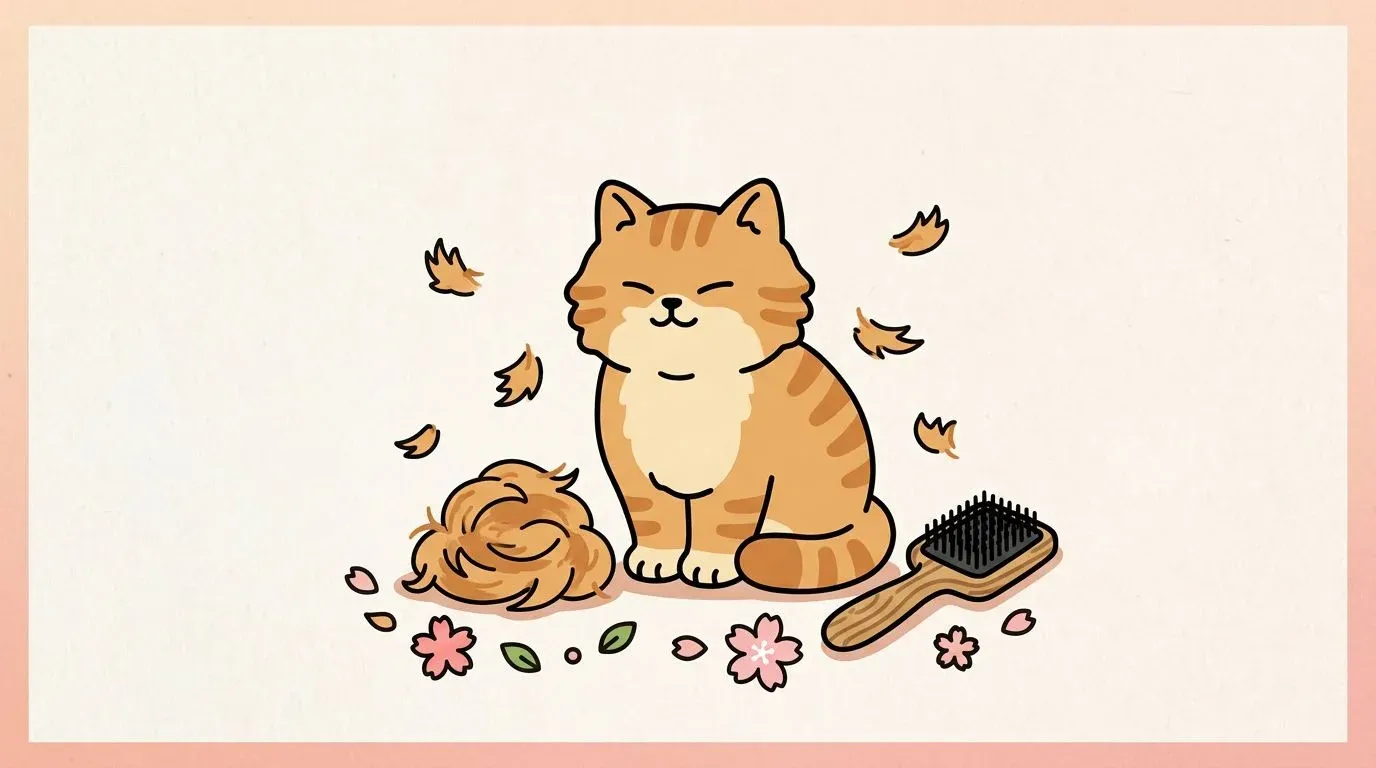
If you have ever pulled on a dark sweater in April only to emerge looking like you rolled through a tumble dryer full of cat fur, you already know what spring shedding season feels like from the human side of things.
Cat spring shedding is not a malfunction — it is a biological process driven by real hormonal changes. But “normal” and “manageable” are two different things. This guide walks through the science behind why shedding spikes in spring, how to tell healthy shedding from a genuine problem, and five concrete steps you can take to keep your cat’s coat healthy and your furniture fur-free.
Why Cats Shed More in Spring
Cat shedding is not primarily driven by temperature, despite the popular assumption. The real trigger is light.
The Photoperiod-Temperature Shedding Cycle
Cats are seasonally responsive animals. As daylight hours increase after the winter solstice, the pineal gland detects the shift and reduces melatonin production. Lower melatonin levels, combined with rising prolactin, signal the hair follicles to enter a synchronized telogen (resting/shedding) phase, releasing the thick winter undercoat that has been insulating the cat since autumn.
This is the coat blow — a dense, concentrated release of dead undercoat that arrives in spring and, to a lesser extent, autumn. For outdoor and mixed-indoor/outdoor cats, this process is regulated by genuine photoperiod changes and produces a fairly predictable 4–6 week peak.
Temperature plays a secondary, supporting role. Warmer ambient temperatures accelerate the follicle transition, which is why cats in warmer climates often shed earlier and more continuously than cats in regions with sharp seasonal contrast.
Why Indoor Cats Shed Year-Round
If your indoor cat seems to shed constantly regardless of season, that is not unusual — and it is worth understanding why. Indoor cats live under artificial lighting that remains relatively stable across all 12 months. This dampens the melatonin fluctuation that would otherwise synchronize the coat cycle to natural seasons.
The practical result: instead of one dramatic spring coat blow, many indoor cats shed at a lower but continuous rate throughout the year, with a modest spring uptick if they receive significant natural light through windows. According to Cornell Feline Health Center guidance on coat care, this diffuse shedding pattern is a normal adaptation to an artificial light environment, not a health concern.
The implication for management is important — indoor cat owners need a consistent year-round brushing routine rather than a single seasonal intervention.
Normal Shedding vs Hair Loss: A Quick Checklist
Not all fur on the floor means the same thing. Distinguishing healthy seasonal shedding from a medical problem is one of the most valuable skills a cat owner can develop.
5 Signs of Healthy Seasonal Shedding
Seasonal shedding that falls within normal parameters typically shows all of the following characteristics:
- Symmetrical distribution — loose fur comes from across the entire coat, not concentrated in one area
- Intact skin underneath — the skin beneath the shed fur is smooth, a uniform color, and without redness, flakiness, or moisture
- Normal coat texture remaining — the fur that stays in place looks glossy and lies flat
- No behavioral changes — your cat is not scratching, biting, or over-grooming the skin
- Gradual onset and resolution — shedding increases over weeks and decreases similarly; it does not switch on overnight
If your cat checks all five boxes, you are dealing with normal cat shedding season variation. Increase brushing frequency and proceed with the care steps below.
Red Flags That Need a Vet Visit
Some patterns of hair loss require veterinary evaluation rather than a grooming solution. Contact your veterinarian if you observe:
- Bald patches or thinning areas: asymmetric, localized hair loss suggests ringworm (dermatophytosis), mange, or an endocrine disorder such as hyperthyroidism
- Skin redness, scaling, or crusting: inflammatory skin disease, bacterial pyoderma, or allergic dermatitis — if itching and crusting persist beyond the shedding period, see the cat skin allergies guide for a full breakdown of allergy types and treatment options
- Excessive self-grooming or barbering: cats that lick, chew, or pull at specific areas are responding to itch, discomfort, or stress — not just seasonal change. See the cat stress relief guide to determine whether a stress component is involved. If the pattern persists despite stress management, the cat overgrooming causes guide covers the full diagnostic approach including allergy and pain-related causes
- Sudden onset of dramatic hair loss: a coat that was normal two weeks ago and is now visibly sparse warrants prompt evaluation
- Weight loss, lethargy, or appetite changes accompanying shedding: systemic illness (hyperthyroidism is common in middle-aged and older cats) can manifest partly through coat deterioration
As a general rule: if the skin looks healthy, the shedding is almost certainly seasonal. If the skin looks abnormal in any way, book a vet appointment. In senior cats aged seven or older, a decline in grooming is also one of the earliest behavioral signs of cat arthritis symptoms — worth ruling out alongside dermatological causes.
Brushing Guide: Long-Hair vs Short-Hair Cats
Brushing is the single highest-impact thing you can do during cat spring grooming season. It removes dead undercoat before it ends up on your sofa, reduces the fur your cat swallows during self-grooming, and gives you a regular opportunity to check the skin.
Long-Hair Cats: Daily Routine and Tool Selection
Breeds like Maine Coons, Persians, Ragdolls, and Norwegian Forest Cats carry a dense undercoat that mats if loose fur is not removed consistently. During spring shedding, daily brushing is not optional — it is the minimum.
Recommended routine for long-hair cats:
- Start with an undercoat rake or wide-tooth comb to break up any tangles and work through the undercoat without pulling. Work in the direction of hair growth, section by section.
- Follow with a slicker brush to remove the loosened dead fur from the surface coat.
- Finish with a fine-tooth comb through sensitive areas (armpits, behind ears, base of tail) where mats form fastest.
A single session for a long-hair cat during peak shedding can remove a surprising volume of fur. Expect 10–15 minutes daily. If mats are already present, do not cut them yourself with scissors — consult a professional groomer or veterinarian to avoid accidental skin cuts.
Tool comparison for long-hair cats:
| Tool | Best For | Avoid |
|---|---|---|
| Undercoat rake | Removing dense undercoat in medium/long coats | Sensitive belly skin |
| Wide-tooth metal comb | Detangling without breakage | Already-matted areas (work up gradually) |
| Slicker brush | Surface smoothing and loose fur collection | Pressing too hard on thin-coated areas |
| Dematting comb | Breaking up minor mats | Deep, tight mats — use professional help |
Short-Hair Cats: 2-3 Times Per Week
Short-hair cats — domestic shorthairs, Siamese, Abyssinians — have a simpler coat structure that requires less daily intervention. Two to three brushing sessions per week during spring shedding season keeps loose fur manageable.
A rubber grooming glove or soft-bristle brush works well on short coats. The grooming glove has an added benefit: many cats perceive it as petting rather than grooming, which reduces resistance. Work in small circular motions against the direction of hair growth first, then smooth back with the direction of growth to collect the loosened fur.
Even for short-hair cats, pay extra attention to the lower back and base of the tail, where cats have difficulty grooming themselves and where loose fur tends to accumulate.
What to Do When Your Cat Hates Brushing
Some cats resist brushing because they were never introduced to it gradually. The ASPCA recommends desensitization: let your cat sniff the brush for a few days without using it, then introduce brief 10-second contact on low-sensitivity areas (back, shoulders) paired immediately with a high-value treat. Extend duration and body coverage one session at a time, always stopping before signs of agitation — ears back, tail flicking, skin twitching.
For cats that remain resistant, a rubber grooming glove is often tolerated where a brush is not, because it mimics petting. Never restrain a cat forcibly during grooming — it creates lasting negative associations that make every future session harder.
Hairball Prevention: A 3-Step Strategy
Hairballs are the downstream consequence of spring shedding. As cats ingest loose fur during self-grooming, the indigestible keratin-rich hair accumulates in the stomach and is eventually regurgitated. During peak shedding season, a higher fur load means a higher hairball frequency.
Step 1: Reduce Ingested Fur Through Brushing
This is the most mechanically direct prevention method. Every gram of dead fur you remove with a brush is fur your cat does not swallow. For cats prone to hairballs, increasing brushing frequency from twice weekly to daily during spring shedding makes a measurable difference in how much fur reaches the stomach.
The connection is straightforward: the Cornell Feline Health Center notes that regular grooming is the primary non-dietary intervention for hairball management.
Step 2: Dietary Fiber and Hairball Remedies
When swallowed fur does reach the stomach and intestinal tract, dietary fiber helps it move through rather than accumulate. There are two practical approaches:
High-fiber diet or hairball-formula food: Foods formulated for hairball control typically contain higher levels of insoluble fiber (often from beet pulp, cellulose, or psyllium). The fiber increases intestinal motility and helps hair pass through in the feces rather than being regurgitated.
Hairball lubricants: Products like Laxatone or similar petroleum-based lubricating gels are designed to coat ingested fur and help it move through the digestive tract. These are generally safe for occasional use. Follow the product directions — most recommend a small amount 2–3 times weekly during heavy shedding periods, not daily as ongoing supplementation.
Pumpkin puree: Plain canned pumpkin (not pie filling) is a source of soluble fiber that some veterinarians recommend as a gentle, food-based alternative. A teaspoon added to wet food a few times per week can support intestinal motility. It is not a substitute for medical hairball remedies in cats with chronic hairball problems, but it is a reasonable supportive measure.
Step 3: When Hairballs Become an Emergency
Normal hairball frequency is one to two per month at most. An occasional hairball regurgitation — the characteristic tube-shaped, wet clump — is unpleasant but not dangerous.
Contact your veterinarian promptly if you observe:
- Repeated retching or gagging without producing a hairball: this pattern, lasting more than 48 hours, can indicate an intestinal obstruction rather than a simple hairball
- Loss of appetite, lethargy, or constipation accompanying hairball attempts
- Vomiting that is yellow or bloody rather than the typical undigested fur clump
- A palpable mass in the abdomen: rare, but complete hairball obstructions can sometimes be felt
Intestinal blockage from a hairball is a surgical emergency. The risk is low in cats that are regularly groomed and on a high-fiber diet, but it is not zero — particularly in long-hair breeds.
Nutrition for a Healthy Coat
A cat’s coat is a direct reflection of nutritional status. During spring shedding, the difference between a cat on an adequate diet and a cat on a genuinely optimal diet shows up clearly in coat condition, shedding volume, and skin health.
Key Nutrients for Skin and Fur Health
Protein (amino acids): Cat fur is approximately 95% keratin — a structural protein. The amino acids cysteine and methionine are particularly critical for keratin synthesis. Cats are obligate carnivores with a high protein requirement; AAFCO nutrient profiles set minimum crude protein at 26% (dry matter basis) for adult cats. A food that merely meets the minimum may not provide optimal coat support during the high-metabolic-demand period of a coat blow.
Essential fatty acids (omega-3 and omega-6): Linoleic acid (omega-6) maintains the skin’s lipid barrier, reducing transepidermal water loss and flakiness. Omega-3 fatty acids (EPA and DHA, primarily from marine sources) modulate inflammatory pathways in the skin. A diet deficient in essential fatty acids produces a dull, dry coat with increased shedding even in the absence of other problems.
Biotin and zinc: Both support hair follicle health and keratin production. Deficiencies are uncommon in cats eating complete commercial diets, but sub-optimal levels can produce dull, thinning coats — particularly relevant for cats on lower-quality or homemade diets.
Omega-3 Supplementation Guide
For cats with dull coats, excessive shedding, or dry, flaky skin, omega-3 supplementation is one of the most evidence-supported dietary interventions available. The NRC recognizes EPA and DHA from fish sources as beneficial for skin and coat health in cats.
Practical guidelines for fish oil supplementation:
- Use fish oil (salmon oil or sardine oil) formulated specifically for pets, or a human-grade product without added flavors or xylitol
- A common starting dose is approximately 20–55 mg of combined EPA+DHA per kg of body weight per day — consult your veterinarian for a specific dose based on your cat’s weight and health status
- Introduce gradually over 1–2 weeks to avoid digestive upset (loose stools are the most common side effect of rapid introduction)
- Results in coat quality take 4–8 weeks to become apparent; do not assess effectiveness in less than a month
- Store fish oil in the refrigerator after opening to prevent oxidation
Omega-3 supplements are not a substitute for a nutritionally complete diet, but for cats already eating a quality commercial food, supplementation can provide noticeable coat improvements during shedding season.
Managing Fur Around Your Home
Even with diligent brushing, cat spring shedding means loose fur in your environment. Efficient home management makes the season significantly less stressful for everyone in the household.
Efficient Cleaning Routines and Tools
Daily: A 2–3 minute lint roller pass over sofas and chairs prevents fur from embedding in fabric fibers. Cover high-use furniture with a washable throw during peak shedding weeks.
Twice weekly: Vacuum upholstered furniture, rugs, and cat sleeping areas. Motorized brush-head vacuum attachments outperform standard suction heads significantly on pet hair. A rubber squeegee dragged across carpet lifts embedded fur that suction alone misses.
Cat bedding: Wash weekly on a cold-water cycle — hot water bakes fur into fabric. Run a full dryer cycle afterward, then clean the lint trap immediately.
HEPA air purifiers: Airborne cat dander (microscopic skin particles that adhere to shed fur) is the primary allergen source in cat homes. A true HEPA purifier (H13 or H14 grade) placed in rooms where your cat spends the most time reduces airborne dander measurably.
Tips for Family Members With Allergies
Cat allergen (Fel d 1) is a protein secreted primarily through saliva and sebaceous glands — it ends up on every piece of shed fur. Shedding season amplifies allergen load in the home environment.
For households with allergic family members, the highest-impact measures are:
- Allergen-reduced zones: keep cats out of bedrooms. A consistently closed bedroom door meaningfully reduces nighttime allergen exposure, when asthma symptoms are often worst.
- Designated grooming spot: brush your cat on a tiled or hardwood floor area so loose fur is contained and easy to clean immediately.
- Anti-static spray on upholstery: prevents fur from adhering electrostatically to fabric, making vacuuming more effective.
- Hand washing after contact: removes allergen before it reaches the eyes, nose, and mouth.
Environmental fur control directly reduces the allergen load that any medical treatment has to address.
Medical Disclaimer: The information in this article is for educational purposes and does not constitute veterinary medical advice. If your cat is showing signs of abnormal hair loss, skin changes, or digestive distress, consult a licensed veterinarian.
References
FAQ
How long does spring shedding last in cats?
How often should I bathe my cat during shedding season?
Should I shave my cat to reduce shedding?
Can changing my cat's diet reduce shedding?
Do indoor cats shed less than outdoor cats in spring?
Related Articles
7 Silent Signs of Cat Arthritis Most Owners Miss
Cat arthritis symptoms are easy to miss because cats hide pain instinctively. Learn the 7 behavioral signs, how vets diagnose feline joint disease, and what you can do at home.
6 Reasons Your Dog Smells Bad and How to Fix Each One
Wondering why does my dog smell bad? Learn the 6 most common causes of dog body odor—from ears to anal glands—and get a practical fix for each one.

Dog Poop Color Chart: What Each Color Means and When to See a Vet
Complete dog poop color chart covering brown, black, red, yellow, grey, and green stool—plus consistency, mucus, and smell to pinpoint what's wrong.