 Cirius Petpedia
 Veterinary Guide to Cat Overgrooming: Causes, Treatment, and When to Worry
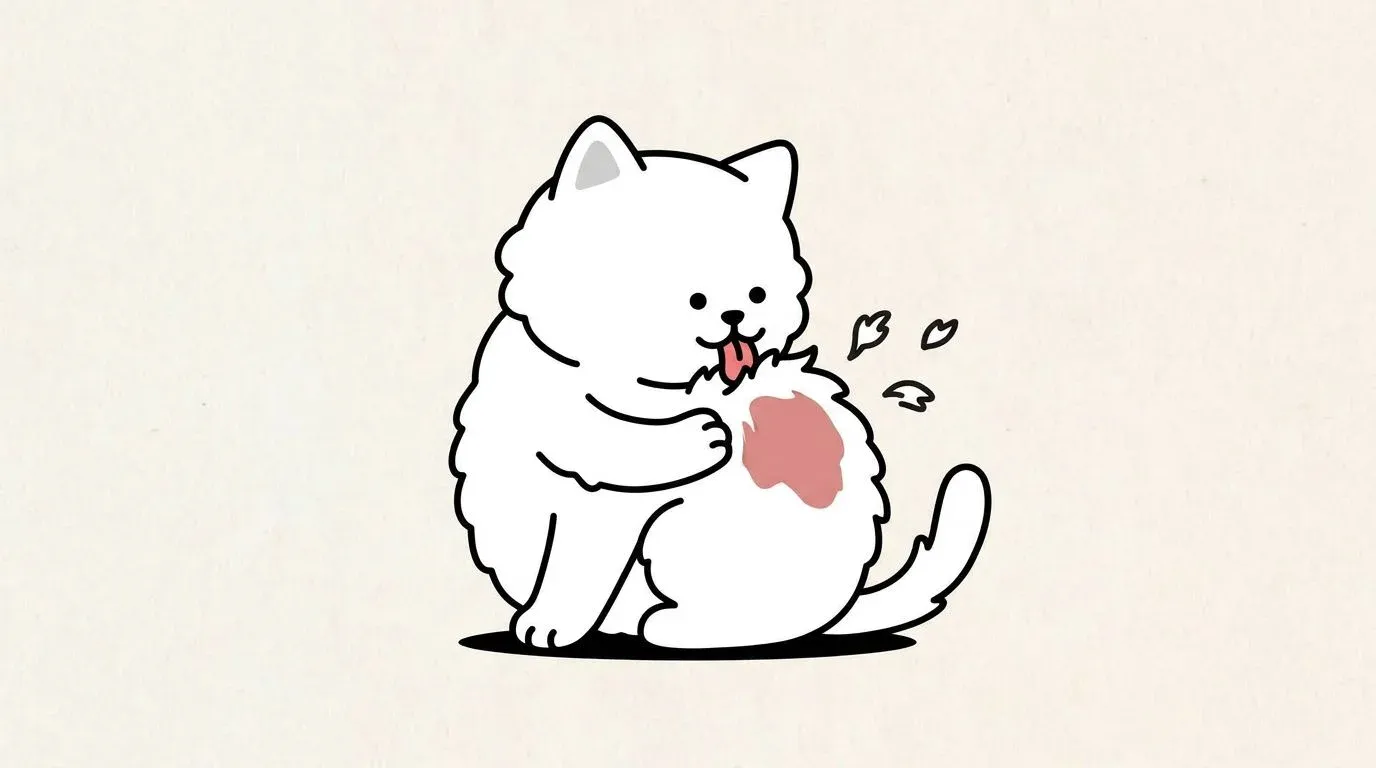
You’ve noticed your cat licking the same spot repeatedly — the belly, the inner thighs, a patch on the flank — until the fur thins or disappears entirely. Maybe the skin underneath looks irritated. Maybe your cat does it at night when you’re not watching, and you only notice when you see the bald patch in the morning.
Cat overgrooming is one of the most frequently misdiagnosed feline health problems. Many owners assume it’s stress or anxiety, wait for it to resolve, and discover weeks later that the underlying cause was a food allergy, a skin infection, or an internal discomfort that needed veterinary attention. Understanding what’s actually driving the behavior — and what to do about it — requires a structured approach.
This guide covers the full picture: how to tell normal grooming from excessive, what the data says about the most likely causes, a body-area-to-cause mapping table, treatment options compared side by side, breed susceptibility, and a relapse prevention protocol.
What Is Cat Overgrooming? Normal Grooming vs. Warning Signs
How Much Grooming Is Normal for Cats
Grooming is a core feline behavior, not a sign of stress in itself. Adult cats spend 30–50% of their waking hours grooming — licking fur, cleaning face and ears with dampened paws, and mutual grooming (allogrooming) with bonded companions. This is normal and serves real functions: temperature regulation, coat waterproofing, wound cleaning, and social bonding.
The line from “normal” to “overgrooming” is crossed when the behavior:
- Occurs with greater frequency or intensity than baseline
- Targets the same anatomical areas compulsively
- Produces visible fur thinning, bald patches, or skin damage
- Continues or escalates despite apparent discomfort
A single extended grooming session after stress is not overgrooming. A pattern of targeting the same spots daily until fur is gone is.
Overgrooming Self-Check: Signs You Shouldn’t Ignore
These signs warrant a veterinary evaluation:
- Symmetric bald patches: particularly on the belly, inner thighs, flanks, or base of tail
- Short, broken fur in a defined area (cats lick fur short before removing it entirely — called “fur mowing”)
- Red, irritated, or thickened skin under thinned areas
- Increased hairballs beyond your cat’s normal frequency
- Visible self-inflicted wounds or scabbing
- A cat you rarely see grooming — some cats overgroom exclusively when unobserved
If your cat’s seasonal fur loss doesn’t align with these patterns, cat spring shedding and normal coat cycling covers the difference between physiological shedding and pathological hair loss in detail.
What Happens If Overgrooming Goes Untreated
Self-Inflicted Skin Damage and Secondary Infections
Overgrooming is not a benign habit. The barbed tongue of a cat is an effective mechanical debridement tool — the same property that makes it efficient at coat cleaning makes it capable of repeatedly abrading skin when applied to one spot over days or weeks.
The progression typically follows this pattern: repetitive licking → surface abrasion → micro-wounds → bacterial colonization → secondary pyoderma (skin infection). Once bacterial infection establishes itself, the itch-scratch-lick cycle intensifies, because the infection itself is pruritic (itch-producing). At this stage, treating only the overgrooming behavior without addressing the infection leaves the root stimulus intact.
Chronic cases can develop into lichenification (skin thickening and hardening) or hyperpigmentation in the affected area — changes that may take months to reverse even after successful treatment.
How Chronic Stress Weakens the Immune System
When overgrooming is driven by psychological distress rather than a primary skin condition, a parallel physiological process occurs. Chronic cortisol elevation — the hormonal signature of prolonged stress — suppresses both cellular and humoral immune function. A cat in a sustained stress state is more vulnerable to opportunistic skin infections, more likely to experience flares of herpesvirus or FIC (feline idiopathic cystitis), and may heal more slowly from any skin wounds created by overgrooming.
This immune suppression can make a stress-driven case look increasingly like a primary dermatological condition over time — which is one reason why ruling out medical causes first is standard veterinary practice before attributing overgrooming to behavioral origins.
The 3 Main Causes of Cat Overgrooming (By the Numbers)
When a cat presents with self-induced alopecia (hair loss from overgrooming), a 2006 study by Waisglass et al. published in Veterinary Clinics of North America: Small Animal Practice is among the most-cited sources on etiology distribution. The findings upended the widely held assumption that stress drives most feline overgrooming.
Allergic Dermatitis — 76% of Cases
Allergic skin disease is the leading cause of cat overgrooming by a significant margin. It presents in three main forms:
Food allergy (cutaneous adverse food reaction): The most common dietary allergens in cats are animal proteins — chicken, beef, and fish account for the majority of confirmed cases. Symptoms are not limited to the GI tract; food allergy routinely presents as pruritus (itching) and subsequent overgrooming, often concentrated on the head, neck, and ventral (belly) region.
Environmental allergy (atopic dermatitis): Airborne allergens — dust mites, mold spores, pollen — can drive a seasonal or year-round itch-lick cycle. Unlike food allergy, environmental triggers may worsen during specific seasons. Cats with atopic dermatitis often show concurrent eye discharge or sneezing.
Flea allergy dermatitis (FAD): A single flea bite can trigger an intense hypersensitivity response in sensitized cats. The base of the tail and lower back are classic FAD overgrooming sites. Importantly, cats with FAD groom so effectively that fleas are often absent at examination — the absence of visible fleas does not rule out FAD.
Pain and Internal Disease — The Location Is the Clue
Cats instinctively lick areas of their body where they perceive discomfort. When the source of discomfort is internal rather than dermatological, the result is overgrooming that does not respond to skin-directed treatment.
Body-area-to-cause mapping:
| Overgrooming Location | Most Likely Internal Cause |
|---|---|
| Lower belly / above pubic area | Feline idiopathic cystitis (FIC), urinary tract infection, or bladder inflammation |
| Flank / lateral abdomen | Gastrointestinal disease, colitis |
| Base of tail / perianal area | Anal gland disease, tapeworm infestation |
| Back / lumbar region | Internal discomfort (this region may also suggest pain along the spine — for context on how musculoskeletal pain manifests in pets, the signs of pain in dogs guide covers cross-species pain recognition) |
| Inner thighs | Allergic dermatitis (ventral distribution) |
This mapping is a starting point, not a diagnosis. A vet examination with urinalysis, fecal testing, or imaging may be needed to confirm an internal cause.
Stress and Compulsive Behavior — Actually Under 9%
Psychogenic alopecia is real, but it is substantially overdiagnosed as a first explanation. According to the Waisglass data, true psychogenic (stress/anxiety-driven) alopecia accounts for under 9% of feline self-induced hair loss cases.
The diagnostic challenge is that psychogenic alopecia produces a physically identical presentation to allergic alopecia: symmetric, smooth-edged bald patches with minimal skin change. The distinction requires ruling out all physical causes first — dermatological, parasitic, infectious, and internal — before attributing overgrooming to behavioral origin.
Cats diagnosed with psychogenic alopecia share several characteristics: they are often indoor-only cats in unchanging environments, they belong to breeds with higher anxiety predisposition (see breed section below), and the onset typically correlates with an identifiable stressor — a new pet, a household move, or a change in the owner’s schedule. If the overgrooming intensifies specifically when the owner is absent, cat separation anxiety may be a concurrent driver worth evaluating alongside the dermatological workup.
The environmental and behavioral contributors to stress-driven overgrooming are covered in detail in the cat stress relief at-home management guide.
Common Myths About Cat Overgrooming
Ringworm vs. Overgrooming: How to Tell the Difference
Ringworm (dermatophytosis) is a fungal infection, not a worm, and it is commonly confused with self-induced alopecia. The distinguishing features:
| Feature | Overgrooming | Ringworm |
|---|---|---|
| Lesion shape | Diffuse, symmetric patches | Circular or irregular patches |
| Skin surface | Smooth or mildly irritated | Scaly, crusty, or inflamed edge |
| Distribution | Belly, thighs, flanks (typical) | Head, ears, face (most common) |
| Owner risk | None | Zoonotic (can transmit to humans) |
| Diagnosis | History + physical exam | Wood’s lamp, fungal culture |
If you observe circular lesions with scaling or broken hairs at the edges, ringworm is a higher priority differential than overgrooming. This is particularly important in households with children or immunocompromised individuals, as dermatophytosis transmits to humans.
Why an E-Collar Is Not a Solution
An Elizabethan collar (cone) physically prevents licking but does nothing to address the cause. In the best case, the collar buys time during treatment for skin to heal. In the worst case — when the underlying trigger is stress — the collar itself becomes an additional stressor, potentially intensifying the anxiety driving the behavior.
Veterinary dermatologists use E-collars as a temporary adjunct during wound healing, not as primary management. If a collar is removed and overgrooming resumes within days, it is a reliable sign that the root cause has not been treated.
Treatment Options Compared: What Works Best
Effective treatment is entirely dependent on the correct diagnosis. The following represents a general comparison — appropriate treatment for your cat’s case requires veterinary guidance.
Elimination Diet Protocol — The 8-Week Challenge
For suspected food allergy, the elimination diet is the diagnostic gold standard. The protocol:
- Switch to a hydrolyzed or novel protein diet — one the cat has never eaten before (rabbit, venison, kangaroo, or hydrolyzed chicken). Commercial “limited ingredient” diets are often insufficient; strict hydrolyzed diets are preferred.
- Maintain the diet exclusively for 8–12 weeks — no treats, table scraps, flavored medications, or flavored supplements. Even small exposures to the allergen can reset the evaluation period.
- Observe for symptom reduction — most food-allergic cats show significant improvement within 8 weeks on a true elimination diet.
- Provocation (food challenge) — reintroduce the original diet to confirm recurrence, which confirms the diagnosis.
The most common reason elimination diets fail is incomplete adherence. Multi-cat households are especially challenging because cats access each other’s food. If a strict trial is not feasible at home, hospitalization for the trial period is an option in severe cases.
Medications — Steroids, Immunosuppressants, and Behavior Drugs
| Medication Class | Examples | Primary Use | Notable Considerations |
|---|---|---|---|
| Corticosteroids | Prednisolone, methylprednisolone | Allergic itch relief (short-term) | Effective quickly; long-term use carries metabolic risks |
| IL-31 inhibitor | Oclacitinib (Apoquel) | Allergic pruritus | Not licensed for cats in all markets; used off-label |
| Modified cyclosporine | Atopica (ciclosporin) | Chronic allergic dermatitis | Effective for atopy; requires monitoring |
| Antibiotics | Amoxicillin-clavulanate, doxycycline | Secondary bacterial skin infection | Targeted to culture results when possible |
| Tricyclic antidepressants | Clomipramine | Psychogenic alopecia | Requires weeks for full effect; used alongside behavior modification |
| SSRIs | Fluoxetine | Psychogenic/compulsive overgrooming | Comparable efficacy to clomipramine; individual response varies |
| Azapirone anxiolytics | Buspirone | Anxiety-driven overgrooming | Lower efficacy as monotherapy; used as adjunct |
For psychogenic alopecia, medication alone is rarely sufficient. Behavior drugs work best as a bridge that reduces the intensity of the compulsion while environmental modification addresses the underlying stressor.
For context on how skin-supportive nutrition can complement dermatological treatment, the dog skin supplement guide covers the evidence on omega-3 fatty acids and other skin nutrients that apply across species.
Environmental and Behavioral Modification
Regardless of the primary cause, environmental modification is almost always part of the treatment plan:
For stress-driven cases:
- Increase vertical space (cat trees, shelving) to provide escape routes and elevated observation points
- Establish predictable feeding times — routine reduces ambient anxiety
- Provide at least two 10–15 minute interactive play sessions daily
- In multi-cat households: implement the +1 resource rule (one litter box per cat plus one extra; same for feeding stations); if you are introducing a new cat, a structured gradual protocol reduces the chronic stress that triggers overgrooming
- Consider synthetic pheromone diffusers (F3 fraction) in areas where overgrooming occurs most
For allergy cases:
- Vacuum and wash bedding regularly to reduce dust mite load
- Run an air purifier with HEPA filtration in rooms where the cat spends most time
- Ensure flea prevention is current and consistent, even in indoor-only cats
- Keep windows screened during peak pollen seasons for environmentally sensitive cats
For a comprehensive breakdown of each allergy type — flea, food, environmental, and contact — including elimination diet protocols, medication options, and seasonal management, see the cat skin allergies guide.
Breed Susceptibility: Why Some Cats Are More Prone
Not all cats carry equal risk of overgrooming. Genetic predisposition to anxiety and compulsive behavior concentrates in specific breeds:
Higher risk for psychogenic alopecia:
- Siamese and Oriental Shorthairs — the most frequently cited breed in psychogenic alopecia literature. Siamese cat overgrooming is often stress-triggered, with higher background arousal than most breeds.
- Burmese — high social dependence on humans; particularly vulnerable to separation-related overgrooming
- Abyssinian — high-energy, high-stimulation requirement; underenrichment is a common trigger
- Himalayan (Colorpoint Persian) — combined anxious temperament with a dense coat that can mask early-stage overgrooming
Higher risk for allergic overgrooming:
- Any breed can develop allergic dermatitis, but no particular breed is entirely protected. Purebreds with genetic homogeneity may have elevated food sensitivity risk.
If you own a Siamese or Burmese and your cat begins overgrooming, stress and compulsive behavior move up the differential list compared to a mixed-breed cat — but a full workup is still required to exclude medical causes.
Preventing Relapse and Long-Term Management
Recovery from overgrooming is not a single event — it is a sustained management process. Cats that have overgroomed once are more likely to do so again under the same conditions.
Home Environment Optimization Checklist
Use this as a baseline for post-treatment maintenance:
Space and resources:
- Litter boxes: at minimum one per cat plus one, cleaned daily
- Multiple elevated resting spots accessible throughout the home
- At least one enclosed hiding spot per cat (a covered bed, a cardboard box, a dedicated shelf)
- Feeding stations separated so cats can eat without competition
Stimulation and routine:
- Two interactive play sessions daily (10–15 min each, using a wand or prey-simulating toy)
- Consistent feeding schedule — same times each day
- Window perches providing outdoor visual stimulation without direct access to outdoor threats
- Puzzle feeders or food-dispensing toys to provide cognitive engagement
Allergen management (for allergy cases):
- Monthly flea prevention applied on schedule
- Weekly vacuuming of fabric surfaces and bedding
- Air purifier running in primary cat spaces
- Allergen-free diet strictly maintained if a dietary trigger was identified
Weekly Monitoring Points
Early detection prevents full relapses. Check these weekly:
- Run your hand along the belly and inner thighs — these are the first areas to show regrowth delays or renewed thinning
- Look at fur length consistency — asymmetric shortening in a defined area warrants attention even before bald patches appear
- Note grooming session frequency — a gradual increase over a week often precedes visible changes
- Track any environmental changes in the prior 1–2 weeks: new people, schedule shifts, new sounds, changes to the cat’s primary space
When monitoring reveals early signs of recurrence, revisiting the cat stress relief management guide and implementing enrichment adjustments immediately — rather than waiting for the situation to escalate — is the most effective strategy.
If monitoring consistently shows regrowth delays or new bald patches despite stable management, a follow-up veterinary evaluation is appropriate. Some cats require long-term, low-dose maintenance therapy for chronic allergic conditions.
The goal is not to eliminate grooming — that would be neither possible nor healthy. The goal is a cat whose grooming behavior stays within the bounds of normal, whose coat stays intact, and whose quality of life reflects that the underlying cause is controlled.
References
- 1. Waisglass SM et al. — Is this cat itchy? Alopecias in cats. Veterinary Clinics of North America: Small Animal Practice, 2006
- 2. Feline Overgrooming — Cornell University College of Veterinary Medicine
- 3. Over-grooming in cats — International Cat Care (iCatCare)
- 4. Psychogenic Alopecia in Cats — Veterinary Partner (VIN)
- 5. Feline Allergic Skin Disease — Clinician's Brief
- 6. Compulsive Behavior in Cats — ASPCA Animal Behavior Center
FAQ
How do I know if my cat is overgrooming or just has a skin condition?
Can stress alone cause a cat to lose fur?
How long does it take for a cat's fur to grow back after overgrooming?
Is cat overgrooming curable?
My cat grooms her belly until it's bald. What causes cat overgrooming on the belly?
Related Articles
7 Proven Ways to Relieve Your Cat's Stress at Home
Learn the signs of stress in cats, what triggers it, and 7 science-backed methods for cat stress relief you can start at home today.
Cat Spring Shedding: 5 Vet-Backed Steps to Control the Fur
Cat spring shedding explained: why it happens, how to tell normal from abnormal, and 5 vet-backed steps to manage fur and prevent hairballs.
7 Silent Signs of Cat Arthritis Most Owners Miss
Cat arthritis symptoms are easy to miss because cats hide pain instinctively. Learn the 7 behavioral signs, how vets diagnose feline joint disease, and what you can do at home.