 Cirius Petpedia
 Flying With a Dog: Airline Rules, Costs, and Prep Checklist
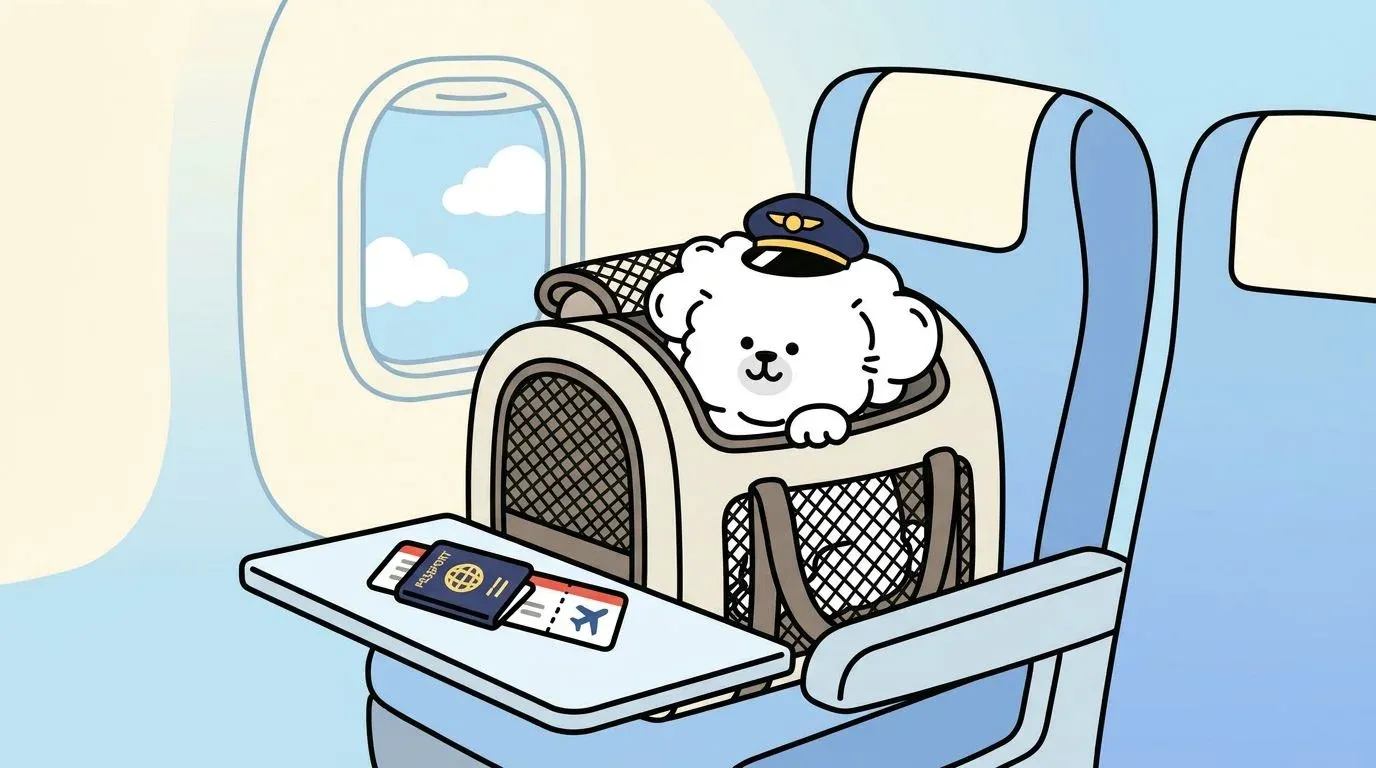
Flying with a dog for the first time feels overwhelming — and the volume of conflicting information online doesn’t help. Airline websites change their policies with little notice, fees vary widely, and health certificate requirements can catch first-timers off guard with a 10-day deadline they didn’t know existed.
This guide covers everything you need for a successful dog airplane trip in 2026: which US airlines to consider and what each one charges, a step-by-step preparation timeline, how to keep your dog calm at altitude, special considerations for large dogs and senior dogs, and a post-flight recovery checklist that most other guides skip entirely.
Can My Dog Fly on an Airplane?
Most dogs can fly, but not all of them can fly in the cabin, not all routes allow pets, and some breeds face outright bans on certain airlines. Knowing your dog’s eligibility before you book is the first step.
In-Cabin vs. Cargo: What’s the Difference?
In-cabin travel means your dog stays with you in a soft-sided carrier that fits under the seat in front of you. Weight and size limits are strict — typically the combined weight of dog plus carrier must not exceed 20 lbs (9 kg) on most US airlines, and the carrier must fit within the under-seat dimensions the airline specifies. Your dog counts as your carry-on item, and the in-cabin pet fee is paid separately.
Cargo hold travel (sometimes called checked baggage pets or PetSafe cargo) means your dog flies in the temperature-controlled, pressurized hold either on the same flight as you (checked baggage) or on a separate cargo booking. This is the only realistic option for dogs who are too large for the cabin. The experience is different: your dog will be loaded and unloaded with baggage, handled by airline staff, and cannot be monitored by you mid-flight.
A few practical distinctions matter here:
- Checked baggage vs. cargo service: Some airlines let you check a pet as baggage (you drop off at the counter, they load on your flight). Others route large dogs through a separate cargo service with dedicated logistics teams. Pricing and timing differ significantly between the two.
- USDA-endorsed health certificates are required for both in-cabin and cargo travel, but the paperwork and inspection requirements for cargo often involve an additional USDA endorsement step that takes time to arrange.
- Seasonal embargoes: Most airlines impose temperature embargoes that suspend cargo pet acceptance when ground temperatures are too hot or cold. Cabin travel is not subject to these restrictions.
Breed and Size Restrictions
Brachycephalic (flat-faced) breeds receive special scrutiny from airlines because their compressed airways make them more vulnerable to respiratory distress under the stress of air travel. Common brachycephalic dog breeds include:
- Bulldogs (English, French, American)
- Pugs
- Boston Terriers
- Boxers
- Shih Tzus
- Cavalier King Charles Spaniels
- Pekingese
Many US airlines have permanently banned brachycephalic breeds from cargo travel, and some restrict them from cabin travel as well. Even if your airline permits cabin travel for these breeds, your veterinarian’s assessment of individual respiratory fitness is essential before booking.
Short-nosed breeds aside, any dog with known respiratory or cardiac issues should be evaluated by a vet before air travel regardless of breed. Altitude-related pressure changes are modest in pressurized cabins (equivalent to roughly 6,000–8,000 feet elevation), but they are enough to stress a compromised cardiovascular or respiratory system. For shorter urban trips where air travel isn’t necessary, the dog public transportation guide covers carrier requirements and policies for buses, subways, and trains.
US Airline Pet Policies Compared
US airline pet policies change frequently. The table below reflects publicly available information as of early 2026, but always confirm current fees and restrictions directly with the airline before booking — policies can change without notice, and fees in particular are updated annually.
American Airlines
American Airlines accepts in-cabin pets (dogs and cats) on most domestic routes. Cargo/checked baggage pets are handled through American Airlines Cargo with separate booking and dedicated temperature monitoring.
- In-cabin fee: $125 each way (domestic)
- In-cabin weight limit: Combined weight of pet + carrier must not exceed 20 lbs (9 kg)
- Carrier dimensions: Soft-sided, max approximately 18” × 11” × 11” (45 × 28 × 28 cm); must fit under seat
- Cargo service: Available through AA Cargo; temperature-monitored; seasonal embargoes apply
- Brachycephalic breeds: Not accepted in cargo; cabin travel assessed case by case
- Booking: Can be added online during booking or by phone; limited spots per flight
United Airlines
United’s PetSafe program is one of the more established cargo pet services in the US, with climate-controlled ground vehicles and dedicated facilities at major hubs.
- In-cabin fee: $125 each way (domestic)
- In-cabin weight limit: Combined weight of pet + carrier ≤ 20 lbs (9 kg)
- Carrier dimensions: Soft-sided, max approximately 17.5” × 12” × 7.5” (44 × 30 × 19 cm)
- Cargo service (PetSafe): Booked separately through United Cargo; includes temperature monitoring and live animal handling expertise
- Brachycephalic breeds: Banned from PetSafe cargo; cabin permitted for dogs meeting size requirements
- International: PetSafe operates on select international routes; destination country requirements apply
Delta Air Lines
Delta no longer operates its own live animal cargo service for pets as checked baggage for most routes. Pet travel options are limited to in-cabin on domestic routes.
- In-cabin fee: $95 each way (domestic) — one of the lower fees among major carriers
- In-cabin weight limit: Combined weight of pet + carrier ≤ 20 lbs (9 kg)
- Carrier dimensions: Soft-sided, must fit under seat; max approximately 18” × 11” × 11” (45 × 28 × 28 cm)
- Cargo service: Delta has reduced cargo pet acceptance significantly; check current availability for your specific route
- Brachycephalic breeds: Not accepted as cargo; cabin travel allowed if within size limits
- Note: Delta’s cargo restrictions make it a less practical option for large dogs
Southwest, JetBlue, Alaska Airlines
Southwest Airlines
Southwest is notable for a flat, lower pet fee and a straightforward policy — but pets are cabin-only, and no cargo option is available.
- In-cabin fee: $99 each way
- In-cabin weight limit: Combined weight of pet + carrier must fit comfortably in a carrier that fits under the seat; no specific published weight limit, but the carrier must fit under the seat
- No cargo or checked baggage pet service
- Brachycephalic breeds: Not explicitly banned for cabin, but comfort is the owner’s responsibility
- Booking: First-come, first-served; limited to one pet per passenger, six pets per flight
JetBlue (JetPaws Program)
JetBlue’s JetPaws program offers in-cabin pet travel with a simple fee structure and no per-route variation on domestic flights.
- In-cabin fee: $125 each way
- In-cabin weight limit: Combined weight of pet + carrier ≤ 20 lbs (9 kg)
- Carrier dimensions: Max approximately 17” × 12.5” × 8.5” (43 × 32 × 22 cm) soft-sided
- No cargo pet service on most routes
- JetPaws perks: Members of TrueBlue loyalty program can earn points on pet fees
Alaska Airlines
Alaska Airlines is notable for accepting pets both in-cabin and as checked baggage on many routes, giving large dog owners more flexibility than Delta.
- In-cabin fee: $100 each way
- In-cabin weight limit: Combined weight of pet + carrier ≤ 20 lbs (9 kg)
- Checked baggage pets fee: $100 each way; available on most Alaska-operated routes
- Carrier dimensions (cargo): Hard or soft-sided crate; specific dimensions vary by dog size
- Brachycephalic breeds: Restricted for checked baggage; consult Alaska directly
- Seasonal restrictions: Temperature embargoes apply to checked baggage pets
| Airline | Cabin Pet Fee | Cargo/Checked Option | Brachycephalic (Cargo) | Max In-Cabin Weight |
|---|---|---|---|---|
| American Airlines | $125/way | Yes (AA Cargo) | Not accepted | 20 lbs w/carrier |
| United Airlines | $125/way | Yes (PetSafe) | Not accepted | 20 lbs w/carrier |
| Delta Air Lines | $95/way | Limited | Not accepted | 20 lbs w/carrier |
| Southwest | $99/way | No | Not explicitly banned | Under-seat fit |
| JetBlue | $125/way | No | Not explicitly banned | 20 lbs w/carrier |
| Alaska Airlines | $100/way | Yes (checked baggage) | Restricted | 20 lbs w/carrier |
Fees and policies as of early 2026. Verify with airline before booking.
Pre-Flight Preparation Checklist
The biggest mistake first-timers make is leaving paperwork and training to the last minute. A successful dog airplane trip starts 30 days out, not 30 hours.
30 Days Out: Vet Visit and Paperwork
Health certificate: US airlines require a USDA-accredited veterinarian to issue a health certificate within 10 days of your departure date. This is a hard deadline — certificates older than 10 days are not accepted. For international travel, you typically need an additional USDA APHIS endorsement, which requires mailing or e-submitting paperwork to your state USDA APHIS Veterinary Services office and can take 3–10 business days.
At the 30-day mark:
- Schedule a vet appointment for roughly 7–9 days before departure (this timing keeps your health certificate valid on the day of the flight)
- Confirm vaccination records are current, especially rabies — many airlines require proof of current rabies vaccination in addition to the health certificate
- Discuss your dog’s fitness for travel with your vet; raise any known cardiac, respiratory, or joint conditions and ask for specific guidance
- Ask about anxiety management options if your dog has a history of travel stress; your vet may suggest pheromone products, supplements, or in some cases situational medication — always test any new product before travel day, not for the first time on the plane
- Purchase or confirm your airline-approved carrier and check exact dimensions against your airline’s current policy
7 Days Out: Carrier Training
A dog that has never been in its airline carrier before should not encounter it for the first time in a crowded airport. Carrier acclimation takes time — even a week of short, positive sessions makes a meaningful difference.
Basics of carrier introduction:
- Place the carrier in a room where your dog spends time, door open, with a familiar blanket inside
- Drop treats at the carrier entrance, then inside, rewarding any voluntary interaction
- Practice feeding meals near or inside the carrier
- Practice short “load” exercises: dog enters, door closes for 30 seconds, dog exits with reward
- Gradually extend closed-door time over several days
- Practice in different rooms, then briefly in the car, so the carrier doesn’t become associated only with stressful contexts
For dogs with a history of confinement anxiety or separation stress, a longer carrier training timeline is needed. Dedicated crate training techniques apply directly to airline carrier acclimation and are worth working through systematically if you have time.
Dogs that show significant separation anxiety in general should have that addressed with your vet and a behaviorist before attempting air travel — the confined carrier environment amplifies existing anxiety.
Day Before: Meals, Exercise, and Packing
- Last substantial meal: 4–6 hours before flight time reduces the chance of vomiting or digestive discomfort during the flight; small dogs and puppies may need a lighter meal rather than full fast — ask your vet
- Water access: Available up until 1–2 hours before departure; a foldable water dish or small water bottle can help at the airport
- Exercise: A good walk or play session the evening before burns off some energy and can help your dog settle more easily in the carrier
- Pack the carrier: Line the bottom with an absorbent puppy pad under a familiar blanket or clothing item that smells like you; attach a small water bottle or travel dish if the carrier has attachment points
Packing checklist:
- Airline-approved carrier (verify current dimensions)
- Health certificate (not older than 10 days on departure date)
- Rabies vaccination certificate
- Leash and collar with current ID tag (phone number that works while traveling)
- Recent photo of your dog on your phone
- Familiar blanket or worn T-shirt for the carrier
- Small bag of treats (for security screening and settling)
- Collapsible water bowl
- Any medication with written veterinary instructions
Day Of: Airport Arrival to Boarding
Arrive earlier than usual. Adding a pet to your travel adds time — at check-in, at security, and during boarding. Budget an additional 30–45 minutes over your normal airport arrival time.
At check-in: Notify the agent you have a pet in the cabin (your pet reservation should already be on file). Pay the pet fee if not pre-paid. Some airlines issue a pet boarding pass or tag for the carrier.
TSA security screening: Dogs are not sent through the X-ray machine. Per TSA procedure:
- Remove your dog from the carrier
- Hold your dog or keep them on a leash during screening (a short leash and collar are more manageable than a harness with multiple attachments here)
- The empty carrier goes through the X-ray belt
- You and your dog walk through the metal detector or body scanner together
- An officer may request additional screening; stay calm, as your dog will read your body language
Keep your dog leashed at all times once outside the carrier in the airport. The volume and activity level of a busy terminal is stressful for many dogs, and the combination of gates, crowds, and PA announcements can trigger flight instincts even in calm dogs.
At the gate: Find a quiet corner if possible. Offer water if your dog hasn’t drunk in a while. A short, calm walk near the gate keeps your dog from arriving at the seat already over-threshold.
Boarding: Board during early boarding or family boarding if offered — settling your dog under the seat before other passengers crowd the aisle is worth the extra time. Once seated, open the carrier top briefly to reassure your dog, then close it. Avoid pulling the dog in and out repeatedly.
Keeping Your Dog Calm During the Flight
A dog that was calm at the gate can still become anxious once the engines spool up and the plane begins to move. Understanding what causes the change helps you manage it.
Comfort Inside the Carrier
The under-seat space is dark, confined, and subject to the vibration of the aircraft structure. For many dogs, this is actually less stimulating than the open terminal, and they settle quickly. For others, the combination of unfamiliar smells, vibration, and engine noise creates sustained arousal.
What works:
- Familiar scent is the single most reliable comfort factor. A worn T-shirt or blanket from home carries your scent and the scent of your living space — both deeply familiar signals. Place it so the dog can press against it.
- Cover the carrier partially or fully with a light blanket once seated. Reducing visual stimulation lowers arousal in most dogs.
- Calm, low-volume reassurance during turbulence or loud sounds helps; avoid excited or anxious vocal tones, which dogs read as confirmation that something is wrong.
- Avoid opening the carrier frequently. Each open-close cycle can reset your dog’s arousal level. Open only to offer water or check on the dog, not for social interaction.
Dealing With Noise and Pressure Changes
Takeoff and landing are the highest-noise, highest-pressure-change points of a flight. The cabin pressure change is equivalent to ascending or descending a few thousand feet in elevation — detectable for dogs with sensitive ears, but not dangerous for healthy animals.
For dogs bothered by noise or pressure changes:
- Offering a small treat or chew during takeoff gives the dog something to focus on and encourages swallowing, which helps equalize ear pressure
- A pheromone spray (DAP/Adaptil) applied to the carrier blanket 15–20 minutes before loading can reduce baseline anxiety in noise-sensitive dogs
- Dogs with severe noise phobia — those who also struggle with car travel stress or storm anxiety — are at higher risk of distress on flights and may need veterinary-guided pharmacological support; discuss this well in advance
Treats and Water Timing
- Small, high-value treats can be offered through the carrier mesh during moments of stress — this maintains a positive association without requiring you to fully open the carrier
- Avoid large water volumes mid-flight; small sips from a travel bottle every 1–2 hours are sufficient for a short domestic flight
- On longer flights (3+ hours), plan a small water break during the quietest part of the flight (cruising altitude, once the seatbelt sign is off)
- Do not offer food mid-flight if your dog tends toward motion sensitivity
Flying With a Senior Dog or a Dog With Joint Issues
Senior dogs can fly safely, but they need more preparation and monitoring than younger dogs. The main risks are not altitude itself but rather the physical demands of the carrier environment, the stress load of travel, and the post-flight recovery period.
Arthritis and Joint Conditions: Special Precautions
The vibration of an aircraft in flight is low-frequency and sustained — different from road travel but present throughout the journey. For dogs with arthritis or diagnosed joint conditions, sustained vibration combined with the limited movement inside a carrier can cause stiffness and increased discomfort.
Practical adjustments for arthritic dogs:
- Carrier padding: Use a thick, orthopedic-style pad or memory foam liner rather than a thin blanket. The goal is to buffer vibration and reduce hard-surface contact.
- Carrier sizing: A carrier that is slightly larger than the airline minimum allows the dog to shift position more easily. Check the airline’s allowed dimensions and consider the largest approved size if your dog’s joints are a concern.
- Mobility before boarding: A calm, short walk (10–15 minutes) before entering the carrier warms the joints and reduces the jarring effect of going from movement to confinement.
- Joint supplement timing: If your dog takes daily joint supplements, do not skip the dose on travel day. Discuss with your vet whether timing should be adjusted.
- Communicate with your vet: If your dog has diagnosed joint disease, your vet may want to know your specific travel plan — flight duration, total travel time including airport layovers — before clearance.
Long-Haul Flight Considerations for Older Dogs
For flights over 4–5 hours, senior dogs face an extended period of confinement that younger dogs handle more easily. Key considerations:
- Layover planning: A layover of 2–3 hours can be an asset for older dogs — it provides an opportunity to exit the carrier, walk, drink water, and relieve themselves before the next segment. Avoid extremely tight connections that eliminate this window.
- Temperature sensitivity: Older dogs often regulate body temperature less efficiently. Check that the carrier is neither too warm (dark, enclosed, poor airflow) nor too cold (AC vents blowing directly, cold cabin floors).
- Mental fatigue: Travel is cognitively tiring even for young dogs. Older dogs may be more disoriented after a long flight, particularly if it involves significant time zone changes or disruption to their routine. Budget an extra recovery day on the far end of a long trip.
- Consult your vet on comprehensive senior care for the travel period — the senior dog joint care guide has more detail on maintaining mobility and comfort through periods of reduced activity.
International Travel With Your Dog
Flying internationally with a dog involves an additional layer of regulatory requirements that vary significantly by destination. Failing to complete the right paperwork means your dog can be refused entry, quarantined at your expense, or returned to the US.
Key Destination Requirements at a Glance
| Destination | Advance Notice | Microchip Required | Rabies Titer Test | Quarantine |
|---|---|---|---|---|
| European Union | 10 days minimum | Yes (ISO 11784/11785) | Not for US dogs | No (with EU Pet Passport equivalent) |
| United Kingdom | Minimum 4 months+ (tapeworm treatment timing) | Yes | Yes (for non-approved country routes) | No (if requirements met) |
| Japan | 180 days minimum | Yes | Yes (2 tests, specific intervals) | Up to 180 days |
| Australia | Several months | Yes | Yes (specific lab-to-lab requirements) | 10 days minimum |
| Hawaii (US state) | 5-day or rabies-free program | Yes | Yes (for 5-day program) | 5 days or 120 days |
Hawaii is a US state but has its own strict quarantine program because it is rabies-free. Flying your dog to Hawaii is not the same as a standard domestic flight. Dogs that do not meet the state’s “5-Day-Or-Less Program” requirements face up to 120 days of quarantine at the owner’s expense. The 5-Day program requires: ISO-compatible microchip, two rabies vaccinations after microchipping, a passing rabies titer test from an approved lab (OIE-certified), and pre-arrival documentation submitted to the Hawaii Department of Agriculture. Planning for a Hawaii trip requires starting paperwork at least 4–6 months before departure.
Microchip and Rabies Titer Test
For most international destinations, a microchip is the first prerequisite — without it, no other documentation is linked to your specific dog. ISO standard microchips (ISO 11784/11785, 15-digit) are universally readable internationally. Older 10-digit microchips used in the US are not readable by all international scanners. If your dog has a 10-digit chip and you plan international travel, discuss re-chipping or carrying a compatible reader with your vet.
The rabies antibody titer test (FAVN test or RFFIT) is required by Japan, Hawaii’s 5-day program, Australia, and many others. The test confirms that your dog’s immune response to the rabies vaccine meets the required threshold. Results take 2–4 weeks and must be conducted at a USDA-approved laboratory. The test cannot be completed until your dog has received at least two rabies vaccinations (the second at least 30 days after the first), so planning windows are long.
USDA APHIS Health Certificate Process
For international travel, the standard vet-issued health certificate must receive an additional USDA APHIS endorsement — the federal government’s confirmation that the vet is USDA-accredited and the certificate is legitimate.
The process:
- Have your USDA-accredited vet issue the health certificate on the official USDA form (not just a clinic letterhead)
- Submit the certificate to your state’s USDA APHIS Veterinary Services (VS) office for endorsement — this can be done in person, by mail, or via the USDA’s electronic endorsement (eEndorsement) system
- Processing times vary: e-Endorsement can take 1–3 business days; mail can take 5–10 business days
- Your destination country may require the USDA APHIS form to be translated or accompanied by additional country-specific documentation
The USDA APHIS Pet Travel website maintains country-specific requirement worksheets that are updated regularly. Given how frequently these requirements change, always verify current requirements no earlier than 30–60 days before your trip.
CDC dog importation rules (updated 2024): Dogs returning to the US from certain countries (specifically those classified as high-risk for canine rabies) must meet CDC import requirements, which may include proof of US-issued rabies vaccination, microchip documentation, and in some cases a CDC Dog Import Permit. Dogs vaccinated against rabies in the US and traveling internationally generally have a simpler re-entry process than dogs vaccinated abroad.
Post-Flight Care: Helping Your Dog Recover
Most airline guides end at the gate. The 24–48 hours after landing matter as much as the preparation before — particularly for dogs who were stressed, senior dogs, and dogs that traveled cargo.
Immediate After-Landing Checklist
Within the first hour after arriving:
- Water first. Offer fresh water before anything else. Air travel, even in-cabin, is dehydrating. Don’t rush food.
- Quiet outdoor space. Find a calm area away from airport traffic for your dog to urinate, stretch, and decompress. Even 10–15 minutes of slow walking helps reset the nervous system after confinement.
- Hands-on check. Run your hands over the dog’s body: check for any new lumps, heat in joints, sensitivity to touch, or limping. Compare to your pre-flight baseline.
- Carrier inspection. Check the carrier for signs of vomiting, diarrhea, or excessive drooling — these indicate the flight was more stressful than the dog appeared.
- Temperature check. Dogs can arrive from cargo slightly chilled or, if it was warm on the tarmac, overheated. A quick check of body temperature (normal is 101–102.5°F / 38.3–39.2°C) using a rectal thermometer rules out temperature-related issues.
- Hold food for 1–2 hours. Let the digestive system settle before offering a meal, especially if the dog vomited or appeared nauseous in flight.
What to Watch for in the First 48 Hours
Joint stiffness is one of the most common post-flight issues, particularly in senior dogs and those with arthritis. The combination of sustained vibration, confined posture, and reduced movement during the flight often results in stiffness that is visible in the first steps after landing. Short, gentle walks every few hours in the first 24 hours help work through this. Monitor for limping that persists beyond 24 hours.
Digestive upset — loose stool, loss of appetite, or occasional vomiting — is common in the first 24 hours after travel stress. A bland diet (plain cooked chicken and rice, or your vet’s recommendation) for 24–48 hours is usually sufficient. Contact your vet if vomiting is repeated or if diarrhea persists beyond 48 hours.
Behavioral changes after travel are normal and usually temporary. Your dog may be quieter than usual, less interested in play, or more clingy. This is stress recovery. Maintain your dog’s normal routine as closely as possible — consistent feeding times, familiar sleep location, normal walk schedule — and most dogs return to baseline within 24–48 hours.
Signs that need veterinary attention:
- Difficulty breathing or persistent coughing
- Lethargy that does not improve after 24 hours of rest and normal eating
- Limping that persists or worsens after 24 hours
- Repeated vomiting or bloody diarrhea
- Significant disorientation or confusion (especially in senior dogs after long flights)
If your trip also involves an extended stay at a vacation rental or dog-friendly accommodation, the dog-friendly accommodation guide covers how to help your dog settle into unfamiliar spaces quickly — building on the arrival routine that starts at the airport.
References
- 1. American Airlines - Traveling With Pets
- 2. United Airlines - Traveling With Pets
- 3. Delta Air Lines - Traveling With Pets
- 4. Southwest Airlines - Pet Policy
- 5. JetBlue - JetPaws Program
- 6. Alaska Airlines - Pet Travel
- 7. USDA APHIS - Traveling by Air With Your Pet
- 8. CDC - Dog Importation Requirements
- 9. TSA - Traveling With Pets
- 10. Hawaii Department of Agriculture - Animal Quarantine
- 11. VCA Animal Hospitals - Flying With Your Dog in the Airplane Cabin
- 12. AKC - Best Airlines for Dogs and Airline Pet Policies
FAQ
Can I sedate my dog for a flight?
How hot does the cargo hold get?
What is the difference between an emotional support animal (ESA) and a service dog on a plane?
Which US airlines allow large dogs in the cabin?
Does flying affect a dog's joints or arthritis?
Related Articles

Planning a Car Trip With Your Dog? Essential Safety Rules You Need to Know
Complete guide to dog car travel safety: crash-tested restraint options, desensitization training, motion sickness solutions, hot car laws, and emergency protocols.

Dog-Friendly Cabin Trip: 10-Point Checklist
Dog-friendly cabin trip checklist: booking, packing, road trip, arrival, checkout, and post-trip health. Vet-informed 6-stage guide for vacation rentals.

Dog Separation Anxiety Guide: Symptoms, Training, and Help
Learn how to identify dog separation anxiety symptoms, follow a vet-backed step-by-step training plan, and know when medication or a specialist is needed.