 Cirius Petpedia
 Dog Diarrhea Causes: Color Guide and Day-by-Day Home Care
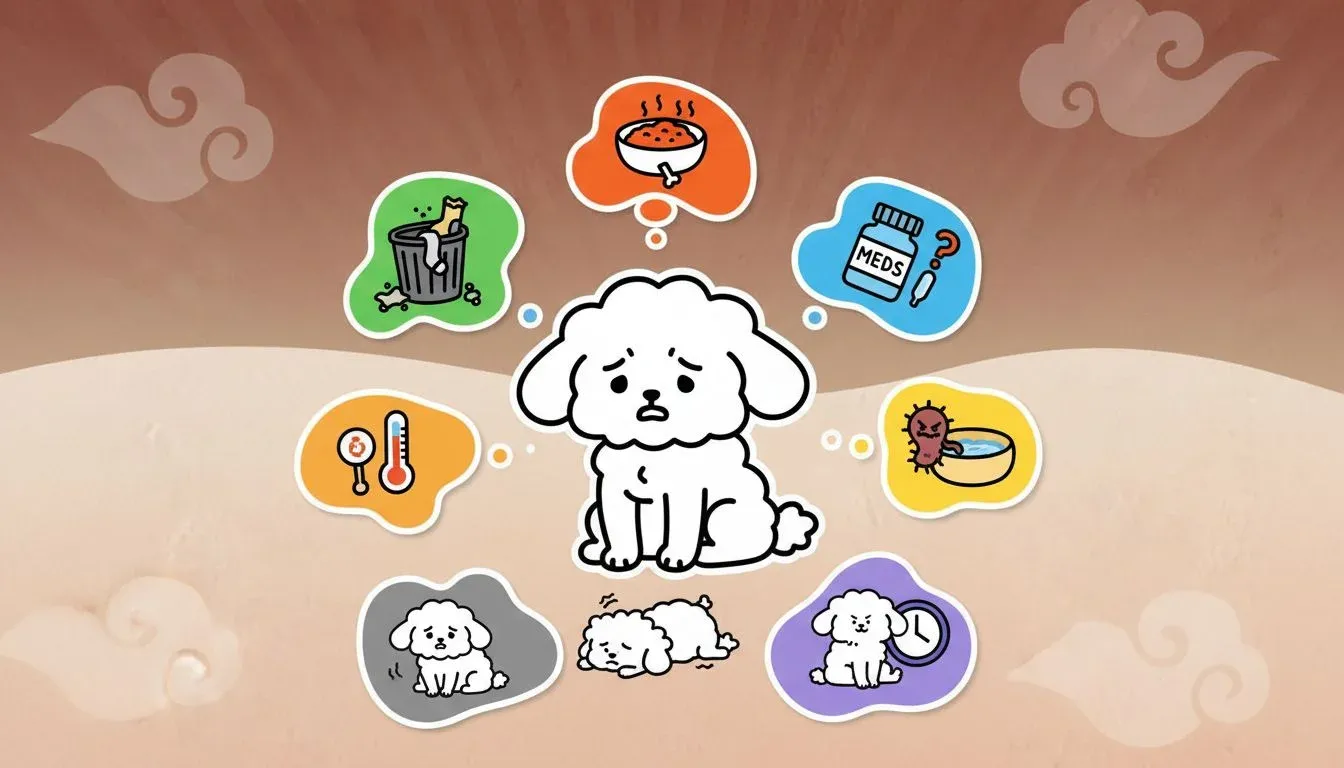
Your dog just had a loose stool — maybe two. Now you’re searching for answers at 11 p.m., wondering if this is a wait-and-see situation or something that needs a vet visit tonight. This guide addresses dog diarrhea causes in a practical order: what the stool itself is telling you, the most common triggers, age-specific risks, clear warning signs, and a day-by-day home care protocol with specific dosages — the kind of detail most sites leave out.
Small Bowel vs. Large Bowel Diarrhea: Identifying the Source
Before interpreting stool color or frequency, it helps to know which section of the digestive tract is involved. The distinction directs both your home care and your conversation with the vet.
Small bowel diarrhea: large volume, less frequent
Small bowel diarrhea originates in the small intestine, where nutrients and a large volume of fluid are normally absorbed. When something disrupts that process, the result is typically:
- Large, watery stools (sometimes explosive)
- 2–4 episodes per day rather than many small ones
- No obvious straining
- Weight loss if chronic
- Possible presence of undigested food particles
Conditions such as dietary indiscretion, viral infections, and food intolerance most commonly cause small bowel involvement.
Large bowel diarrhea: small amounts, frequent, mucus or blood
Large bowel (colonic) diarrhea looks and behaves differently:
- Small volumes of soft stool passed frequently — often 5 or more times per day
- Visible mucus coating the stool
- Occasional fresh red blood (hematochezia)
- Obvious straining or urgency (tenesmus)
- Little to no weight loss unless the condition is chronic
Colitis from parasites, stress, or dietary fiber imbalance is a frequent culprit here.
Quick checklist: which type does your dog have?
| Feature | Small Bowel | Large Bowel |
|---|---|---|
| Volume per episode | Large | Small |
| Frequency | Lower (2–4x/day) | Higher (5+/day) |
| Straining | Rare | Common |
| Mucus | Uncommon | Common |
| Fresh blood | Uncommon | More common |
| Weight loss | Possible if chronic | Rare |
Knowing the type doesn’t replace a vet diagnosis, but it helps you describe the problem accurately and prioritize how quickly you act.
What Your Dog’s Stool Color Tells You
Stool color is one of the fastest clues to what’s happening. The table below pairs appearance with likely cause and the action it warrants.
| Color / Appearance | Most Likely Cause | Recommended Action |
|---|---|---|
| Yellow or yellow-orange | Rapid transit, bile not fully processed; liver or gallbladder issues | Monitor 24 hrs; vet if persists |
| Brown watery | Dietary indiscretion, stress, minor infection | Bland diet; vet if >48 hrs |
| Green | Grass ingestion; less commonly gallbladder | Monitor; vet if persistent |
| Black or tarry (melena) | Upper GI bleeding (stomach/small intestine) | Vet same day — urgent |
| Red or bloody (hematochezia) | Colitis, rectal irritation, parvovirus | Vet same day if severe or puppy |
| Gray or greasy | Exocrine pancreatic insufficiency (EPI) | Vet soon — diagnostic workup |
| Mucus-coated | Large bowel irritation, parasites, IBD | Monitor; vet if recurrent |
Yellow diarrhea — bile and digestive issues
Yellow stool results when food passes through the intestine too fast for bile pigments to fully convert to brown bilirubin. A single yellow episode after a late or missed meal is usually benign. Persistent yellow diarrhea alongside vomiting or lethargy warrants checking liver enzyme levels.
Brown watery stool — the most common acute diarrhea
The classic smelly watery diarrhea in dogs: loose, brown, often accompanied by urgency. Dietary indiscretion — counter-surfing, garbage raiding, or eating a neighbor’s dropped treat — accounts for a large share of acute cases. Most resolve within 24–48 hours with supportive care.
Green diarrhea — grass ingestion or gallbladder
Dogs that graze heavily on grass often pass green-tinted stool. Chlorophyll from plant material gives it the color. If your dog hasn’t been eating grass, green stool can suggest a bile production or flow problem; schedule a vet appointment.
Black or tarry stool — upper GI bleeding
This is the stool color that warrants same-day attention. Melena (digested blood) signals bleeding from the esophagus, stomach, or upper small intestine. It can follow NSAID use, ulcers, ingested toxins, or more serious conditions. Do not wait to see if it resolves.
Red or bloody stool — colitis or parvovirus
Bright red blood mixed with or coating the stool indicates lower GI bleeding. A small streak of blood on otherwise normal stool in an adult dog after straining is less alarming than large amounts mixed throughout. In an unvaccinated puppy, bloody diarrhea should be treated as suspected parvovirus until proven otherwise — get to a vet immediately.
Gray or greasy stool — pancreatic insufficiency
Pale, greasy, foul-smelling stool (often described as “cow patty” consistency) is a hallmark of exocrine pancreatic insufficiency (EPI), where the pancreas fails to produce enough digestive enzymes. Dogs with EPI typically lose weight despite eating well. Diagnosis requires a blood test (canine TLI), and treatment involves enzyme supplementation.
Mucus-coated stool — large bowel irritation
A thin mucus layer is normal in small amounts. Heavy mucus coating, especially with frequent small-volume stools, points to colonic inflammation. Parasites (especially Giardia), dietary fiber shifts, and stress are common culprits.
7 Common Causes of Diarrhea in Dogs
Understanding what causes diarrhea in dogs helps you narrow down likely triggers based on your dog’s recent history.
Sudden diet change
The canine gut microbiome needs 7–10 days to adapt to a new protein source or carbohydrate profile. Switching foods abruptly disrupts bacterial populations, producing gas, soft stools, and diarrhea. This is one of the most preventable causes of dog diarrhea.
Spoiled food or foreign object ingestion
Dogs are indiscriminate eaters. Spoiled meat, rotting fruit, dead animals, and garbage are common triggers. Some dogs also ingest non-food items — fabric, toys, corn cobs — that cause mechanical irritation or partial obstruction alongside diarrhea. If you suspect object ingestion with vomiting and abdominal pain, this is an emergency.
Toxic foods that can cause acute diarrhea (and systemic illness) include:
- Grapes and raisins
- Xylitol (artificial sweetener in some peanut butters, gum)
- Chocolate and caffeine
- Onions and garlic (large amounts)
- Macadamia nuts
Stress and environmental changes
Stress is an underappreciated but well-documented cause of what causes sudden diarrhea in dogs. The gut-brain axis is highly sensitive in canines. Boarding, moving, a new baby or pet, fireworks, thunderstorms, or even a change in the owner’s work schedule can trigger colitis-type diarrhea within hours. It typically resolves once the stressor passes but can persist in anxious dogs. For dogs prone to stress diarrhea, a veterinary behaviorist evaluation may be worthwhile.
Parasites (roundworms, Giardia, coccidia)
Intestinal parasites are a leading cause in puppies but affect adult dogs too, particularly those with outdoor exposure or contact with other animals. Key parasites:
- Roundworms (Toxocara canis): Especially common in puppies; can cause bloating and diarrhea
- Giardia: Microscopic protozoan causing foul-smelling, greasy stools; spreads through contaminated water
- Coccidia: Protozoan causing watery diarrhea, especially in young or immunocompromised dogs
- Whipworms and hookworms: Associated with blood in stool
Parasite diagnosis requires fecal testing. If your dog has recurrent or chronic soft stools, ask your vet about a PCR fecal panel (more sensitive than standard flotation).
Viral infections (parvovirus, coronavirus)
Canine parvovirus (CPV-2) is the most serious viral cause. According to the AVMA, parvovirus attacks rapidly dividing cells in the gut lining, causing severe hemorrhagic diarrhea, vomiting, and a dangerously compromised immune system. Unvaccinated puppies and young dogs are at highest risk; mortality without treatment can reach 91%. Canine coronavirus causes milder, self-limiting diarrhea but is less commonly seen in vaccinated populations.
Food allergies and intolerances
Food allergies (immune-mediated) and intolerances (non-immune) both produce GI signs including diarrhea, vomiting, and excessive gas. Common protein sources implicated include beef, chicken, wheat, dairy, and lamb. Unlike dietary indiscretion, allergy-related diarrhea is chronic or recurrent and often accompanied by skin signs such as itching and ear infections. A strict hydrolyzed or novel-protein elimination diet trial (8–12 weeks) is the gold standard for diagnosis. For more on this connection, see our guide on food allergies and skin conditions in dogs.
Underlying conditions (pancreatitis, IBD, liver disease)
Recurrent or chronic diarrhea that doesn’t respond to standard home care often points to a systemic condition:
- Pancreatitis: Inflammation of the pancreas; acute episodes cause sudden vomiting, diarrhea, and abdominal pain. High-fat foods are a classic trigger. Management involves dietary changes, sometimes for life — see our detailed pancreatitis and diet guide.
- Inflammatory bowel disease (IBD): Chronic immune-mediated inflammation of the GI tract; requires biopsy for definitive diagnosis
- Liver or kidney disease: Organ dysfunction alters bile production and toxin clearance, affecting stool consistency
- Addison’s disease (hypoadrenocorticism): Often called “the great pretender” — can present as recurrent GI episodes
Puppies, Adults, and Seniors: Age-Specific Risks
The same loose stool carries very different implications depending on your dog’s age. If your dog has diarrhea but is acting fine, age is a key factor in how urgently to respond.
Puppies — parvovirus urgency and rapid dehydration
Puppies are at a physiological disadvantage during GI illness:
- Their immune systems are immature and still relying on maternal antibodies that wane after 6–16 weeks
- Their body surface-area-to-volume ratio means they lose proportionally more fluid faster
- Unvaccinated or partially vaccinated puppies have meaningful parvovirus risk
Rule of thumb: Any puppy under 6 months with diarrhea and vomiting, bloody stool, lethargy, or loss of appetite should be seen by a vet the same day. Do not fast puppies with diarrhea without veterinary guidance — hypoglycemia (low blood sugar) can develop within hours.
Adult dogs — dietary and stress causes most common
Healthy adult dogs (1–7 years) have more physiological reserve and typically tolerate a short bout of diarrhea without escalating danger. The most common triggers are dietary indiscretion, stress, and minor infections. A dog that has diarrhea for 3 days but is acting normal with no blood in stool and normal energy can often be managed at home, but 72 hours without improvement is the threshold for a vet call regardless.
Senior dogs — chronic disease risk and faster dehydration
Dogs over 8–10 years (breed-dependent) face compounding risks:
- Higher baseline prevalence of kidney disease, liver disease, IBD, and cancer
- Reduced ability to compensate for fluid losses
- Concurrent medications (e.g., NSAIDs for arthritis) can cause GI side effects
Senior dogs with diarrhea lasting more than 24 hours, or with any concurrent signs like weight loss or increased thirst, warrant prompt veterinary evaluation. Supporting a senior dog’s nutritional needs during recovery requires extra attention — our senior dog diet and nutrition guide has practical feeding advice.
When to Worry: Signs That Need a Vet Visit
Dog diarrhea when to worry is one of the most searched questions for good reason. Use this checklist.
Go to the vet today (same day) if your dog has:
- Black, tarry stool (melena) — sign of upper GI bleeding
- Large amounts of bright red blood in stool
- Concurrent vomiting that prevents keeping water down — this combination, addressed in our dog vomiting guide, can cause rapid dehydration
- Signs of dehydration: dry/tacky gums, skin that doesn’t spring back when gently pinched (skin tent test), sunken eyes
- Lethargy, weakness, or inability to stand
- Suspected toxin or foreign object ingestion
- Unvaccinated or partially vaccinated puppy with any diarrhea
Call your vet within 24 hours if:
- Diarrhea has lasted more than 48 hours without improvement
- Your dog is a puppy under 6 months or a senior over 8 years
- Diarrhea is recurrent (this is the third episode in a month)
- Abdominal bloating or signs of pain (hunched posture, guarding abdomen)
- Your dog has a known condition like diabetes or Addison’s disease
Monitor at home if:
- Single episode in an otherwise healthy adult dog
- Dog is alert, eating, drinking
- No blood, no vomiting, no lethargy
- You can identify a likely benign cause (table scrap, diet indiscretion)
Day-by-Day Home Care Protocol
This is the section most guides skip. When the vet has cleared your dog for home management, or you’ve determined the situation doesn’t require a same-day visit, here is a structured protocol.
Day 0: Fasting and small sips of water
Goal: Rest the GI tract; prevent dehydration.
- Fasting duration: 12 hours for small breeds; up to 24 hours for medium and large breeds
- Do not fast: Puppies under 4 months, toy breeds prone to hypoglycemia, diabetic dogs, dogs with Addison’s disease, or dogs that appear unwell. These animals need veterinary guidance.
- Hydration: Offer small amounts of water every 30–60 minutes rather than a full bowl at once. A dog that gulps a large volume may vomit and further deplete fluids. Electrolyte solutions formulated for dogs (not Gatorade — too much sodium) can help, but plain water is appropriate for most mild cases.
- Monitoring: Note stool frequency, volume, color, and presence of blood or mucus. This log is invaluable for your vet.
Day 1: Bland diet introduction (chicken and rice ratios)
Goal: Introduce easily digestible food that doesn’t stress the gut.
Bland diet recipe:
| Dog Weight | Cooked White Rice | Boiled Plain Chicken Breast | Total per Meal | Meals per Day |
|---|---|---|---|---|
| Under 10 lb | ¼ cup | 1–2 tbsp | ~⅓ cup | 3–4 small |
| 10–25 lb | ½ cup | 3–4 tbsp | ~¾ cup | 3 |
| 25–50 lb | 1 cup | ⅓ cup | ~1⅓ cups | 2–3 |
| 50–90 lb | 1½ cups | ½ cup | ~2 cups | 2 |
| Over 90 lb | 2 cups | ¾ cup | ~2¾ cups | 2 |
Preparation notes:
- Boil chicken breast with no salt, oil, onion, or garlic
- Use plain white rice (more easily digested than brown rice’s extra fiber)
- Ratios are approximately 3 parts rice to 1 part chicken by volume
- Avoid adding broth, butter, or seasoning
If your dog refuses the bland diet or vomits after eating, stop feeding and contact your vet.
Day 2–3: Gradual food transition back to regular diet
Goal: Restore the normal microbiome without triggering a setback.
- Continue bland diet through Day 2 if stools remain very loose
- On Day 2 (or Day 3 if needed), start mixing 75% bland diet with 25% regular food
- By Day 3–4, shift to 50/50
- By Day 5–6, shift to 25% bland / 75% regular
- By Day 7, back to full regular diet
This gradual transition mirrors the 7–10 day rule used for all new food introductions and dramatically reduces relapse risk. If stools firm up but then loosen again when you increase regular food, slow the transition by one more day.
Safe Home Remedies and What to Avoid
Pumpkin puree: dosage by weight
Plain canned pumpkin puree is one of the most evidence-consistent home remedies for mild diarrhea. Its soluble fiber (primarily pectin) absorbs excess water in the colon and adds bulk. It also adds some insoluble fiber that feeds beneficial gut bacteria.
Important: Use plain 100% pumpkin puree, not pumpkin pie filling (which contains xylitol, nutmeg, and sugar).
| Dog Weight | Pumpkin Dose per Meal |
|---|---|
| Under 20 lb | 1–2 teaspoons |
| 20–50 lb | 1–2 tablespoons |
| Over 50 lb | 2–4 tablespoons |
Start at the lower end; increase only if tolerated. Pumpkin is generally well-received, but overfeeding can cause additional gas or, paradoxically, loose stools from excess fiber. Add it directly to the bland diet.
Probiotics: what to look for
Probiotic supplementation during and after a diarrhea episode supports faster microbiome recovery. The evidence base is strongest for strains specifically studied in dogs. When choosing a probiotic:
- Look for products listing CFU (colony-forming units) counts — at least 1 billion CFU per dose
- Strains with veterinary research backing include Lactobacillus acidophilus, Bifidobacterium animalis, and Enterococcus faecium (the latter found in FortiFlora, a common vet-recommended brand)
- Species-specific products formulated for dogs are preferred over human probiotics
- Administer at least 2 hours apart from any antibiotics if your dog is on a course
For a broader overview of gut health and probiotic selection for dogs, including when to use them long-term, see our dedicated guide.
Dangerous: Pepto Bismol, Imodium, and other human medications
This is where many well-intentioned owners cause harm. The “2 dangerous remedies” VCA has warned about deserve full explanation:
Pepto Bismol (bismuth subsalicylate):
- Contains salicylate, chemically related to aspirin
- Can cause salicylate toxicity in dogs, especially when combined with NSAIDs (meloxicam, carprofen) used for arthritis
- May turn stools dark black, mimicking melena and masking a real warning sign
- Not recommended without direct veterinary guidance
Imodium (loperamide):
- Slows gut motility — which sounds helpful, but trapping bacteria and toxins in the GI tract can worsen infection-related diarrhea
- Certain breeds with the MDR1/ABCB1 gene mutation (Collies, Australian Shepherds, Shelties, and related herding breeds) can experience neurological toxicity from loperamide even at small doses
- Not appropriate for use without vet confirmation that the diarrhea isn’t caused by an infection requiring the pathogen to exit
Coconut oil: A trending home remedy with no reliable clinical evidence for diarrhea. Its high fat content can actually trigger pancreatitis in susceptible dogs, making it counterproductive.
Human electrolyte drinks (Gatorade, Pedialyte): These are designed for human physiology. Some flavors contain xylitol. Unflavored Pedialyte diluted 50/50 with water is sometimes used by vets in mild cases, but always confirm with your vet before use.
The guiding principle: If you wouldn’t use a medication in your dog without your vet’s recommendation in any other situation, diarrhea is not the exception.
Preventing Diarrhea: Daily Habits That Matter
Most cases of acute dog diarrhea are preventable with consistent habits.
The 7–10 day food transition rule
Whether you’re switching proteins, moving from puppy to adult food, or trying a new brand, transition gradually. Start with 90% old food / 10% new food, adding 10–15% new food every 2 days. Slower is always safer for dogs with sensitive stomachs.
Regular deworming and vaccination schedule
- Keep puppies on the deworming schedule recommended by your vet (typically monthly until 6 months, then every 3 months depending on lifestyle and geographic risk)
- Annual or semi-annual fecal testing catches asymptomatic parasite loads before they cause illness
- Core vaccinations (including parvovirus) are essential — keep them current
Keeping garbage and toxic foods out of reach
A dog who cannot access garbage, compost, table scraps, or toxic foods cannot be sickened by them. Use locking trash cans. Brief visitors on foods that are dangerous for dogs. Be especially careful during holidays when rich, fatty, or novel foods are around in higher quantities.
Probiotic supplementation
Daily probiotic use during high-stress periods — boarding, travel, after antibiotic courses — helps maintain microbiome diversity and resilience. A stable gut microbiome is less vulnerable to opportunistic bacteria after a food indiscretion. Discuss strain selection and dosage with your vet to choose a product appropriate for your dog’s age and health status.
FAQ
Is one episode of diarrhea cause for concern?
Can I give my dog Pepto Bismol for diarrhea?
How long should I fast my dog with diarrhea?
Is pumpkin good for dog diarrhea?
My dog has diarrhea but is eating and acting normal — should I worry?
Can stress cause diarrhea in dogs?
Related Articles
7 Silent Signs of Cat Arthritis Most Owners Miss
Cat arthritis symptoms are easy to miss because cats hide pain instinctively. Learn the 7 behavioral signs, how vets diagnose feline joint disease, and what you can do at home.
Dog Skin Allergies: Types, Symptoms, and Management Guide
Dog skin allergies: 3 types, symptom patterns by location, 8–12 week elimination diet protocol, and treatment options including JAK inhibitors.
Dog Arthritis: Symptoms and Management
Recognize early signs of arthritis in dogs and learn effective management strategies for pain relief and improved mobility.
Dog Cruciate Ligament Tear: 7 Things Every Owner Must Know
Dog cruciate ligament tear guide: recognize symptoms, compare TPLO vs TTA surgery, follow a phased recovery timeline, and protect the opposite knee.
Dog Ear Infections: Causes, Symptoms, Treatment & Prevention
Dog ear infection causes, symptoms, and treatment: bacterial vs yeast differences, high-risk breeds, step-by-step ear cleaning, and when to see a vet.
Is Your Dog Showing Signs of IVDD? Symptoms, Stages, and What to Do
Learn to recognize IVDD in dogs symptoms by grade and spinal region, understand treatment options from conservative care to surgery, and manage recovery at home.
Dog Hip Dysplasia: 6 Essential Facts Every Owner Should Know
Learn the key facts about dog hip dysplasia — from at-risk breeds and early symptoms to PennHIP vs OFA diagnosis and home care exercises.
Why Is My Dog Limping? A Cause-by-Cause Diagnosis Guide
Dog limping on front or back leg? Learn the most common causes by leg and age, a home observation checklist, and when the limp needs emergency care.
If Your Dog's Hind Legs Are Getting Thinner, It Could Be Sarcopenia
Dog muscle atrophy in hind legs is an early warning sign of sarcopenia. Learn the stages, causes, BCS/MCS self-assessment, and evidence-based recovery strategies.
The Hidden Link Between Your Dog's Weight and Joint Health
Extra weight does far more than strain your dog's joints — it actively inflames them. Learn the dual-pathway science and a practical roadmap to protect joint health.
Dog Periodontal Disease: Symptoms, Stages, and What Every Owner Should Know
Learn the 4 stages of dog periodontal disease symptoms, warning signs, treatment options, and daily home care steps to protect your dog's teeth and overall health.
Puppy Growth Plate Care: Safe Exercise and Breed Timelines
Learn how to protect puppy growth plates with breed-specific closure timelines, age-based exercise limits, and nutrition guidelines. Evidence-based guide.
Complete Guide to Patellar Luxation in Dogs
Learn about the causes, symptoms, grades, treatment options, and prevention of patellar luxation in dogs.
Cat FLUTD: Symptoms, Causes, Treatment, and Prevention Guide
Comprehensive guide to cat FLUTD — covering feline lower urinary tract disease symptoms, causes, treatment options, cost expectations, and home prevention strategies.
A Veterinary Guide to Cat Dental Health: From Home Care to Professional Treatment
Protect your cat's dental health with vet-backed guidance on periodontal disease, FORL, stomatitis, a 4-week toothbrushing protocol, and cleaning criteria.
Kennel Cough in Dogs: Symptoms, Treatment, and Prevention Explained
Recognize kennel cough symptoms, distinguish it from tracheal collapse and heart disease, and learn which vaccines offer the best protection for your dog.
Why Is My Dog Reverse Sneezing? Causes, Remedies, and When to See a Vet
Learn what causes reverse sneezing in dogs, how to distinguish it from tracheal collapse or kennel cough, and when the symptom warrants a vet visit.
Cat Vomiting: 7 Common Causes, Color Guide, and When to See a Vet
Understand cat vomiting causes — from hairballs to serious illness. Includes a full vomit color chart with urgency ratings and a step-by-step home care guide.
Cat Constipation: More Water Won't Always Fix It — Causes, Remedies, and When to See a Vet
Cat constipation causes and remedies: 7 causes, 3-stage severity guide, home care with belly massage and pumpkin, Miralax dosing, and vet visit thresholds.
Why Does My Cat Have Diarrhea? Causes, Stool Color Guide, and When to Act
Discover the 7 most common cat diarrhea causes, decode stool colors with our risk chart, learn safe home remedies, and know exactly when to call your vet.
Cat Diabetes Symptoms, Treatment, and Remission: A Complete Guide
Recognize cat diabetes symptoms early, understand insulin and SGLT2 treatment, get a realistic cost breakdown, and learn what remission really means.