 Cirius Petpedia
 Why Is My Dog Throwing Up? Causes by Vomit Color and When to See the Vet
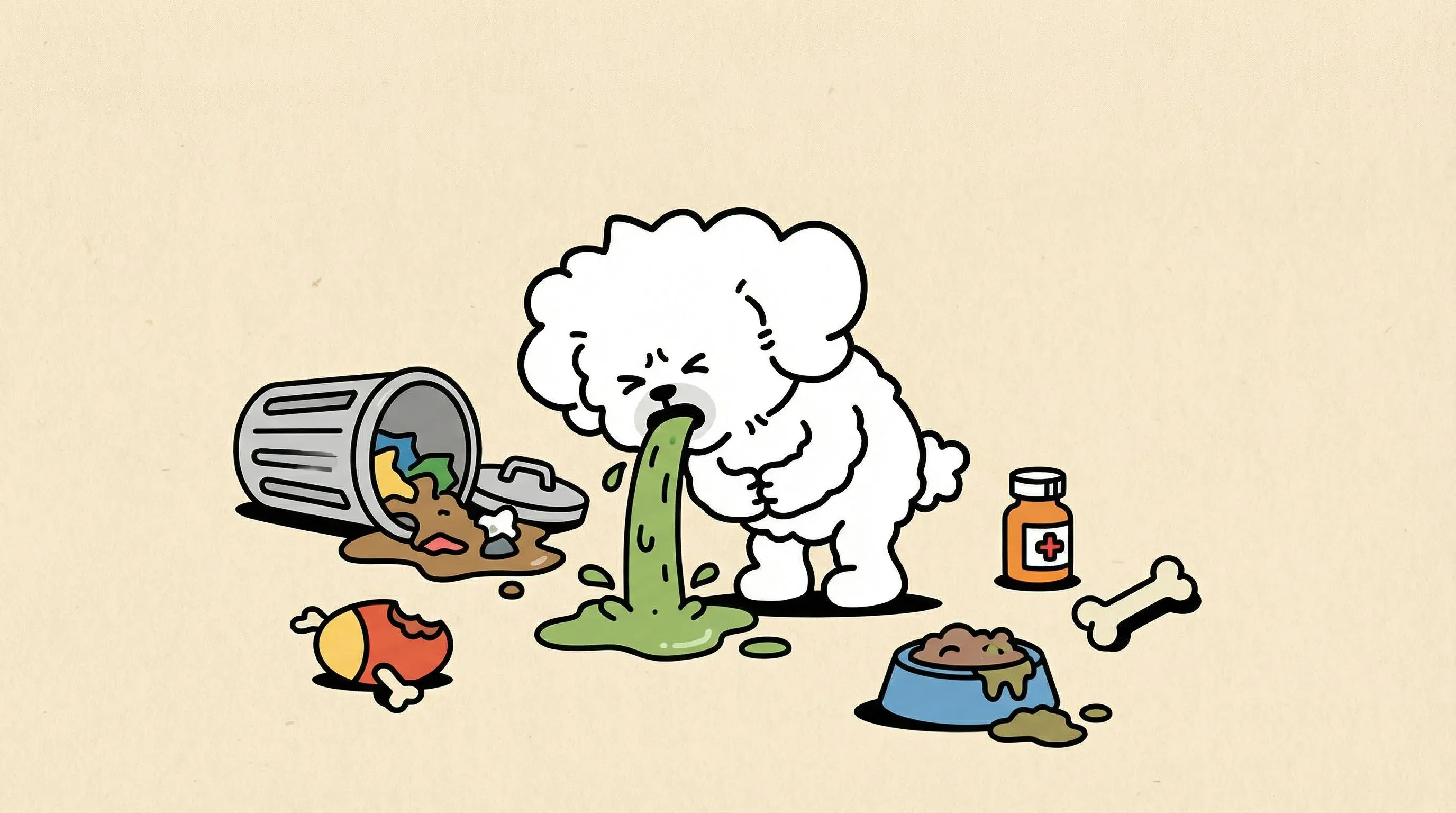
Your dog just vomited on the kitchen floor. Are you overreacting if you rush to the vet, or underreacting if you don’t? The honest answer depends on several factors — what the vomit looks like, how many times it happened, and what your dog is doing right now.
This guide breaks down dog vomiting causes by vomit color, explains which breeds and life stages carry higher risk, and gives you a concrete triage framework so you can make a confident call.
Vomiting vs. Regurgitation: Know the Difference First
Before diving into causes, it’s worth clarifying that not all “throwing up” is the same. Veterinarians treat vomiting and regurgitation as separate clinical problems with different root causes — and the distinction changes how you respond.
What Vomiting Looks Like
Vomiting is an active, effortful process. You will typically see your dog showing signs of nausea first: excessive drooling, lip-licking, restlessness, or repeatedly swallowing. When it happens, the abdominal muscles visibly contract, and the material expelled has usually been in the stomach or upper small intestine. It may contain partially digested food, bile, or foam.
What Regurgitation Looks Like
Regurgitation is passive. Food or fluid slides back up the esophagus without abdominal effort — often immediately or shortly after eating, before proper digestion has begun. The expelled material tends to be tubular in shape and undigested, sometimes still smelling like fresh food. There is no retching or nausea beforehand.
Why This Distinction Matters for Treatment
If your dog is regurgitating, the problem likely lies in the esophagus or a swallowing disorder rather than the stomach. Conditions like megaesophagus (an enlarged, weakened esophagus) or persistent right aortic arch require very different management than typical gastric vomiting. Describing the episode accurately to your veterinarian — including whether you saw abdominal heaving — helps them narrow down the diagnosis faster.
What Your Dog’s Vomit Color Tells You
Vomit color is one of the fastest ways to assess urgency. The table below summarizes what each color typically signals and how seriously to treat it.
| Color | Most Likely Cause | Urgency Level |
|---|---|---|
| Yellow or orange | Bile, empty stomach (BVS) | Monitor |
| White or clear foam | Gastric acid and air | Monitor |
| Green | Grass, bile, or intestinal contents | Caution |
| Brown | Partially digested food — or, if coffee-ground-like, GI bleeding | Caution to Emergency |
| Red streaks or bright red | Active upper GI bleeding | Emergency |
| Coffee grounds (dark brown–black flecks) | Digested blood, possible ulcer | Emergency |
Yellow Vomit — Bile and Empty Stomach
Yellow or orange vomit almost always contains bile, the digestive fluid produced by the liver and stored in the gallbladder. When a dog’s stomach has been empty for too long, bile irritates the stomach lining and triggers vomiting. This pattern — especially yellow bile in the morning before the first meal — is the hallmark of Bilious Vomiting Syndrome (BVS), a benign but recurring condition. A small bedtime snack often resolves it. That said, persistent daily bile vomiting warrants a vet visit to rule out liver or gallbladder disease.
White Foam — Gastric Acid and Air
White or off-white foam means the stomach is producing excess acid, and air is mixing in. It is common when a dog has gone without food for an extended period, eaten grass, or experienced mild GI irritation. On its own, a single episode of foamy vomiting is rarely alarming. The exception: if white foam is accompanied by a distended (visibly swollen) abdomen and unproductive retching, suspect GDV/bloat — a life-threatening emergency described in detail below.
Brown or Coffee-Ground Vomit — Possible GI Bleeding
Brown vomit that looks like partially digested food is normal enough. But if the color resembles coffee grounds or contains dark flecks, this points to digested blood — a sign of bleeding somewhere in the upper GI tract. Causes include gastric ulcers, foreign body injury, or, in severe cases, toxin ingestion. This warrants same-day veterinary evaluation.
Red Vomit — Active Bleeding
Bright red blood indicates fresh, active bleeding. Small streaks of red can result from the physical strain of forceful vomiting (esophageal irritation). Larger volumes of red vomit, however, are a veterinary emergency. Do not wait.
Green Vomit — Grass or Bile
Green vomit typically means your dog ate grass, or the vomit contains bile mixed with a small amount of plant material. Occasional grass-eating is normal canine behavior. Repeated green vomiting can also indicate intestinal contents are being brought up, which may point to a blockage — particularly if accompanied by lethargy or loss of appetite. For a full breakdown of why dogs eat grass in the first place — including when it signals a digestive issue versus instinctive behavior — see the dog eating grass causes guide.
Clear Vomit — Water and Gastric Fluid
Clear, watery vomit often happens when a dog drinks a large amount of water quickly and then vomits it back up. It can also be an early sign of stomach irritation. Monitor for accompanying symptoms before deciding whether a vet visit is needed.
7 Common Causes of Dog Vomiting
Understanding the underlying cause helps you determine whether home monitoring is safe or whether your dog needs professional care.
Empty Stomach Too Long (Bilious Vomiting Syndrome)
As described above, BVS occurs when the stomach has been empty long enough for bile to accumulate and irritate the gastric mucosa (stomach lining). It typically resolves with more frequent, smaller meals or a small snack before bedtime. If dietary changes don’t fix it within a week or two, a vet can confirm whether there’s an underlying motility (gastric emptying) issue.
Eating Too Fast or Too Much
Dogs that eat quickly swallow significant amounts of air alongside their food, causing stomach distension and discomfort. The stomach ejects the contents before proper digestion begins. This type of vomiting usually occurs within 30 minutes of eating and contains recognizable, minimally digested food. Slow-feeder bowls and puzzle feeders can dramatically reduce this problem.
Swallowing Foreign Objects
Dogs explore the world with their mouths, and pieces of toys, bones, fabric, or rocks can end up in the GI tract. A foreign body (FB) in the stomach or intestine causes persistent vomiting that doesn’t resolve with food withholding — the obstruction physically prevents food from moving forward. Signs include repeated vomiting, refusal to eat, and abdominal pain on palpation. This is a surgical or endoscopic emergency. For a full breakdown of object types, risk levels, and what to do immediately, see our guide on what to do when your dog swallows a foreign object.
Toxic Food Ingestion (Grapes, Xylitol, Chocolate, Onions)
Several common human foods are toxic to dogs:
- Grapes and raisins — can cause acute kidney failure even in small amounts
- Xylitol (found in sugar-free gum, some peanut butters, baked goods) — causes a rapid, dangerous drop in blood sugar
- Chocolate — contains theobromine; dark and baking chocolate are most dangerous
- Onions, garlic, and chives — damage red blood cells, causing hemolytic anemia
- Macadamia nuts — cause weakness, hyperthermia, and vomiting
If you suspect your dog consumed any of these, contact your vet or the ASPCA Animal Poison Control Center (888-426-4435) immediately. Do not wait for symptoms to worsen. For a complete breakdown of toxic foods with weight-based thresholds and emergency steps, see the guide to foods toxic to dogs.
Motion Sickness and Stress
Just as humans can feel queasy in a car, many dogs — particularly younger ones — develop motion sickness during travel. The inner ear sends conflicting signals, leading to drooling, yawning, and eventually vomiting. Anxiety can also trigger vomiting through the vagus nerve and gut-brain axis. If car trips consistently cause vomiting, our dog car sickness prevention guide — covering the 4-phase desensitization protocol, optimal car positioning, and a full medication comparison table — provides a structured approach to resolving both the physical and psychological components.
Infections and Parasites (Including Parvovirus)
Bacterial infections (Salmonella, Campylobacter), viral infections, and intestinal parasites (roundworms, hookworms, Giardia) all cause vomiting. If you suspect a parasitic cause, our dog deworming guide covers identification, treatment options, and a life-stage deworming schedule. Parvovirus deserves special attention in the US context: it is highly contagious, potentially fatal, and disproportionately affects unvaccinated puppies. Parvo vomiting is typically severe, bloody, and accompanied by profuse hemorrhagic diarrhea and rapid deterioration. Vaccination per the AVMA-recommended puppy schedule (starting at 6–8 weeks, boosters every 3–4 weeks until 16 weeks) is the most effective prevention. Any unvaccinated puppy vomiting with bloody stool needs emergency veterinary care. If you are also seeing blood in the stool, our dog bloody stool color guide covers how to distinguish hematochezia from melena and when each requires immediate action.
If your dog also has respiratory symptoms alongside GI upset, it may be worth reviewing kennel cough and related infectious causes, since some infections affect multiple systems.
Underlying Disease (Gastritis, Pancreatitis, Kidney Disease, GDV/Bloat)
Chronic or recurrent vomiting is often a symptom of a systemic disease:
- Gastritis (stomach inflammation): often from dietary indiscretion (eating garbage or rich food), but can become chronic — see the complete dog gastritis guide for causes, recovery diet, and when to seek veterinary care
- Pancreatitis: inflammation of the pancreas, strongly associated with high-fat meals. More on managing pancreatitis through diet in our dedicated guide.
- Chronic kidney disease (CKD): accumulation of uremic toxins irritates the stomach lining, causing nausea and vomiting — especially in senior dogs
- GDV/Bloat: covered in its own emergency section below
- Liver disease, Addison’s disease, hypothyroidism: all can present with vomiting as a prominent sign
Breed and Age Matter: Know Your Dog’s Risk
Not all dogs face equal vomiting risk. Certain breed characteristics and life stages create predispositions worth knowing.
Small Breeds (Schnauzers, Yorkies) — Pancreatitis Risk
Miniature Schnauzers are genetically predisposed to hypertriglyceridemia (elevated blood triglycerides), a direct risk factor for pancreatitis. Yorkshire Terriers and other small breeds also show above-average pancreatitis rates. For these dogs, a consistently low-fat diet is more than a dietary preference — it’s a medical necessity. Vomiting after a fatty treat (table scraps, bacon) in a Schnauzer or Yorkie should be treated as probable pancreatitis until proven otherwise.
Large and Deep-Chested Breeds — GDV/Bloat Emergency
Gastric Dilatation-Volvulus (GDV), commonly called bloat, is among the most acute life-threatening emergencies in veterinary medicine. The stomach fills with gas and rotates on its axis, cutting off blood supply to the stomach wall and trapping gas inside. Without surgery within hours, GDV is fatal.
Breeds at highest risk include:
- Great Danes (highest incidence of any breed)
- German Shepherds
- Standard Poodles
- Weimaraners
- Irish Setters
- Doberman Pinschers
- Rottweilers
Emergency GDV warning signs:
- Unproductive retching (trying to vomit but nothing comes up)
- Visibly distended, hard abdomen
- Restlessness, inability to get comfortable
- Excessive drooling
- Pale or white gums
- Collapse
If your large or deep-chested dog shows these signs, go to an emergency veterinary clinic immediately — do not wait to see if it resolves. Every minute matters. For a complete breakdown of GDV symptoms, treatment stages, and preventive gastropexy, see our dog bloat (GDV) emergency guide.
Brachycephalic Breeds — Regurgitation Tendencies
Bulldogs, French Bulldogs, Pugs, Boston Terriers, and other flat-faced (brachycephalic) breeds have structural airway and esophageal abnormalities that predispose them to regurgitation and gastroesophageal reflux. What looks like vomiting in a brachycephalic dog is often passive regurgitation. These dogs can benefit from elevated feeding stations, small frequent meals, and veterinary evaluation for Brachycephalic Obstructive Airway Syndrome (BOAS) if symptoms are frequent.
Puppies — Parvovirus and Vaccination Timeline
Puppies have immature immune systems and incomplete vaccination coverage, making them vulnerable to several causes of serious vomiting: parvovirus, coronavirus, intestinal parasites, and foreign body ingestion (puppies put everything in their mouths). Any puppy under 16 weeks that is vomiting should be evaluated by a vet, particularly if vaccinations are not up to date. The AVMA-recommended parvovirus vaccination timeline:
| Age | Vaccination |
|---|---|
| 6–8 weeks | First DHPP (includes parvo) |
| 10–12 weeks | Second DHPP booster |
| 14–16 weeks | Third DHPP booster |
| 12–16 months | First adult booster |
Senior Dogs — Chronic Disease-Related Vomiting
In dogs over 7–8 years old, recurring vomiting is more likely to reflect systemic disease — kidney disease, liver disease, Cushing’s syndrome, or cancer — than simple dietary upset. A senior dog that begins vomiting regularly needs bloodwork and urinalysis, not just a bland diet trial. Nutritional management plays a key role in managing many of these conditions; our guide to senior dog diet and nutrition covers the dietary adjustments that can reduce GI symptoms in aging dogs.
Emergency Signs: When to Rush to the Vet
Some situations require immediate veterinary care rather than home monitoring. Use this checklist to decide.
Go to the emergency vet now if your dog has:
- Unproductive retching with abdominal distension (bloat/GDV signs — do not wait)
- Vomited more than 3–4 times in 24 hours
- Blood in vomit (bright red or coffee-ground appearance)
- Concurrent bloody diarrhea (see our dog diarrhea causes and home care guide for a full stool color reference)
- Pale, white, blue, or yellow-tinged gums
- Signs of severe pain: hunched posture, whimpering, refusal to move
- Known or suspected toxin ingestion
- Complete lethargy — cannot stand or walk normally
- Signs of dehydration: skin tenting, sunken eyes, dry sticky gums
- Vomiting in an unvaccinated puppy
- No improvement after 24 hours of home monitoring
Contact your vet within 24 hours if:
- Your dog has vomited 2–3 times but is alert and drinking water
- Vomiting is accompanied by mild lethargy or reduced appetite
- Your senior dog has started vomiting regularly
- There is yellow or foamy vomit for more than 2–3 days in a row
When in doubt, call your vet. A brief phone triage is always appropriate.
Step-by-Step Home Care After Vomiting
For mild, isolated vomiting without the emergency signs above, a structured home care protocol gives the stomach time to settle. The goal is not to starve your dog unnecessarily, but to reduce gastric workload while monitoring for deterioration.
Hours 0–12: Withhold Food and Monitor
Remove food for 4–6 hours after the vomiting episode. This gives the stomach lining a chance to calm down without triggering more contractions. Continue to offer small amounts of water — about a tablespoon every 20–30 minutes — to prevent dehydration without overloading the stomach. Do not offer food, treats, or chews during this window.
Monitor your dog closely: watch for additional vomiting episodes, changes in energy level, and stool consistency.
Hours 12–24: Small Sips of Water, Then a Bland Test Meal
If no vomiting has occurred for 6–8 hours and your dog is alert and interested in food, offer a very small amount of bland food (2–3 tablespoons for a medium-sized dog). If this stays down for 1–2 hours with no vomiting, continue small bland meals every 4–6 hours. If vomiting resumes, return to the fasting window and call your vet.
Day 2 and Beyond: Gradual Return to Normal Food
Once your dog has kept down bland food for 24 hours without vomiting, begin transitioning back to their regular diet. Mix 75% bland food with 25% regular food for one day, then 50/50, then 25/75, before returning fully to normal by day 4–5. This gradual transition helps prevent relapse. If you plan to switch to a completely different food after the recovery, follow the full dog food switching guide to avoid restarting GI upset.
Best Foods After Vomiting (and What to Avoid)
The classic veterinary bland diet remains the most reliable post-vomiting meal option because it is easily digestible and low in fat and fiber.
Recommended bland diet options:
- Boiled chicken breast (skinless, boneless, no seasoning) + plain white rice — the standard 1:3 ratio (1 part chicken, 3 parts rice) works well
- Plain canned pumpkin (not pumpkin pie filling — pure pumpkin) — the soluble fiber helps normalize GI motility and stool consistency
- Boiled sweet potato (plain, no butter or sugar)
- Plain scrambled eggs (no butter or oil)
- Low-sodium chicken broth as a water enhancer to encourage hydration
Avoid after vomiting:
- Fatty foods (beef fat, pork, skin-on poultry)
- Dairy products (milk, cheese, yogurt — most adult dogs are lactose-intolerant to some degree)
- Treats and chews of any kind
- Table scraps
- Raw food diets during recovery (higher bacterial load on an already-irritated GI tract)
Maintaining good digestive health long-term — including gut microbiome balance — can reduce the frequency of vomiting episodes. Our guide on dog gut health and probiotics covers which probiotic strains have the most evidence for GI support in dogs.
For dogs that are already selective about eating and become even more reluctant after a vomiting episode, managing picky eating after illness offers practical strategies for transitioning back to regular meals.
My Dog Keeps Throwing Up but Seems Fine — What Now?
This is one of the most common concerns dog owners search for: the dog is vomiting repeatedly, but is still playful, eating, drinking, and acting like itself. What does this mean?
In many cases, this pattern points to one of three conditions:
Bilious Vomiting Syndrome (BVS): As discussed, BVS causes recurring yellow or foamy vomiting — typically in the morning or when the stomach has been empty too long. The dog is otherwise well. Solution: feed smaller, more frequent meals, including a small snack before bedtime.
Food Intolerance or Dietary Sensitivity: Some dogs develop intolerance to a specific protein or ingredient in their regular food. The vomiting is low-grade and recurring rather than acute. An elimination diet trial (typically 8–12 weeks on a novel protein) is the standard approach to identify the trigger.
Inflammatory Bowel Disease (IBD): IBD involves chronic inflammation of the GI tract. Vomiting, intermittent diarrhea, and gradual weight loss despite a normal appetite are the classic signs. Diagnosis requires endoscopy and biopsy. IBD is managed (not cured) with dietary changes, immunosuppressive medications, and sometimes cobalamin (vitamin B12) supplementation.
The key distinction: if a dog is vomiting repeatedly but otherwise healthy, monitor the pattern. If it happens more than once or twice a week, keep a log (frequency, time of day, vomit appearance, what the dog ate beforehand) and share it with your vet. Pattern data is valuable for diagnosis.
Preventing Vomiting: Daily Habits That Help
Most common dog vomiting causes are preventable with consistent daily management.
Meal Size and Frequency
Feeding two smaller meals per day rather than one large meal reduces the risk of bilious vomiting, reduces bloat risk in large breeds, and generally improves gastric emptying. For GDV-prone breeds (Great Danes, German Shepherds, etc.), many veterinarians recommend three smaller meals and enforced rest after eating.
Slow Feeders and Puzzle Bowls
For dogs that inhale food and vomit shortly afterward, a slow-feeder bowl or food puzzle is one of the most effective interventions. These tools extend meal duration from under 60 seconds to 5–10 minutes, dramatically reducing the amount of swallowed air and preventing post-meal vomiting. They also provide mental stimulation.
Keeping Hazards Out of Reach
Prevention is easier than treatment when it comes to foreign body and toxin ingestion:
- Keep trash cans secured with locking lids
- Store xylitol-containing products (gum, candy, protein bars) in closed cabinets
- Remove small toys, socks, and household items that your dog treats as chews
- Be aware of seasonal hazards: compost piles, fertilizers, and certain garden plants (sago palms, azaleas, tulip bulbs) are toxic
Regular Vet Checkups
Annual wellness exams (twice yearly for seniors) allow your veterinarian to detect early GI disease, kidney changes, or endocrine disorders before they progress to symptomatic vomiting. Bloodwork and urinalysis are especially valuable in dogs over 7 years old.
When vomiting coincides with straining to defecate or no bowel movement for 48+ hours, the combination warrants urgent evaluation — it can signal a functional obstruction or severe colonic impaction. For a detailed breakdown of constipation warning signs and a constipation vs. intestinal blockage comparison table, see the dog constipation causes and home remedies guide.
This article is for informational purposes only and does not constitute veterinary medical advice. If your dog is vomiting and you are uncertain about severity, contact your veterinarian or a 24-hour emergency animal hospital.
References
FAQ
Should I take my dog to the vet after one vomiting episode?
Why is my dog throwing up yellow bile in the morning?
Why is my dog throwing up white foam?
What is the difference between vomiting and regurgitation in dogs?
Why does my dog eat grass and then throw up?
Related Articles
What Should You Feed a Dog with Pancreatitis? A Diet Management Guide
A phase-by-phase guide to pancreatitis diet for dogs: acute fasting protocols, low-fat food selection criteria, safe vs. unsafe ingredient tables, treat alternatives, and long-term management.
7 Science-Backed Benefits of Probiotics for Dogs
Science-backed benefits of probiotics for dogs, weight-based dosage chart, natural food sources, and supplement selection criteria — all in one guide.
Picky Dog? These Common Mistakes Are Making It Worse
Is your dog a picky eater? Discover why common owner responses backfire, 8 real reasons behind food refusal, and a vet-backed 7-day correction protocol.