 Cirius Petpedia
 Dog-Friendly Restaurant Etiquette: Complete Owner's Guide
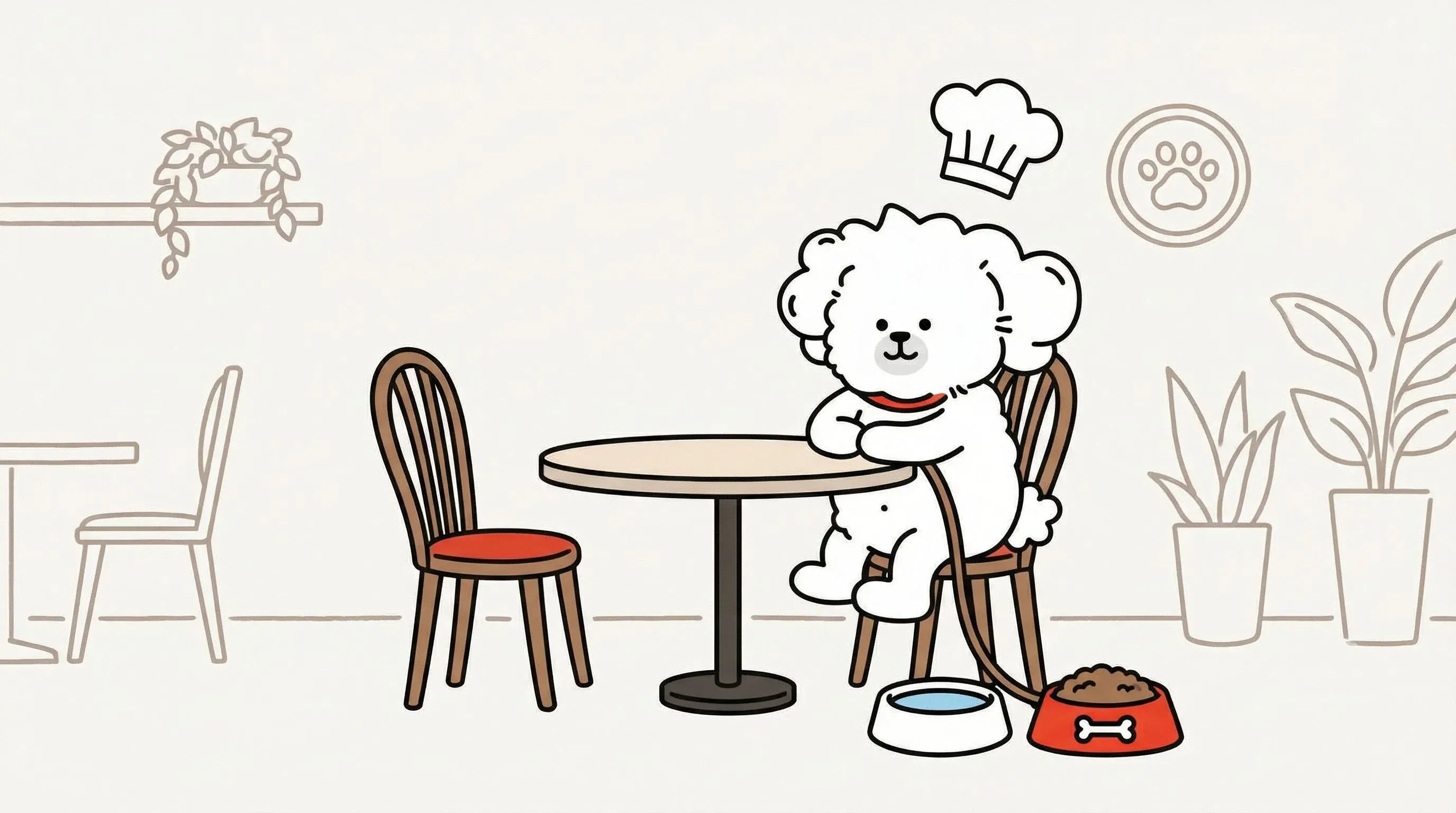
Dining out with your dog sounds idyllic — a sunny patio, a good meal, and your dog settled calmly at your feet. For many owners, it genuinely is that way. For others, the first outing turns into a tense scramble of barking, tangled leashes, and apologetic glances at neighboring tables.
The difference almost always comes down to preparation. Dog-friendly restaurant etiquette is not just a list of rules to memorize on the way there — it’s a skill set you and your dog build together before you ever walk through the gate. This guide takes you through that entire journey: from honestly assessing whether your dog is ready, through a structured training plan, to the specific behaviors that make you a welcome guest at any dog-friendly venue.
Is Your Dog Ready for a Restaurant?
Before you book a patio table, it’s worth asking a straightforward question: is your dog actually ready for this? A dog-friendly venue is not the same as a dog-forgiving one. Other guests have paid for a meal, and the staff are managing a full service environment. Your dog’s behavior directly affects their experience.
Temperament Check: Signs Your Dog Is (or Isn’t) Ready
A dog that’s genuinely ready for a restaurant outing tends to display a consistent set of behaviors in everyday life. According to the American Kennel Club’s Canine Good Citizen (CGC) program — the most widely recognized benchmark for public manners — a restaurant-ready dog should be able to:
- Walk on a loose leash without constant pulling or lunging
- Sit and hold position while a stranger approaches
- Remain calm when other dogs pass within a few feet
- Settle quietly in a down position for at least 10–15 minutes
- Ignore food on the ground or table level
Signs that your dog is not yet ready include persistent whining or barking when left in a stay, fixating on other dogs to the point of losing focus, resource guarding behavior around food or their mat, and extreme startle responses to sudden sounds. These are not character flaws — they’re signals that more training groundwork is needed first.
Stress signals are also worth knowing. A dog that’s over-threshold at a restaurant will show panting without heat, repetitive yawning, lip licking, whale eye (whites of the eyes visible), and attempts to hide behind your legs. If you see these during practice runs, the environment is currently too much.
Essential Commands for Restaurant Visits
Four commands form the practical core of dining out with dog rules. All four should be reliable before your first outing — meaning your dog responds on the first cue, in the presence of mild distractions, at least 80% of the time.
| Command | Why It Matters at a Restaurant |
|---|---|
| Sit-stay | Greeting staff or other guests without jumping |
| Down-stay | Settling under the table for the duration of the meal |
| Leave it | Ignoring food scraps, dropped items, nearby dog food bowls |
| Quiet | Interrupting barking or whining on cue |
If any of these are shaky under distraction, work on them at home and in low-stimulus outdoor spaces before attempting a cafe. Solid leash walking skills are also foundational — a dog that pulls erratically is difficult to manage in a crowded patio with chairs, bags, and strollers in every direction.
Pre-Restaurant Training Plan
The biggest gap in most advice about taking dog to restaurant tips is this: they tell you what to do there, but not how to prepare your dog to do it. The training below follows a graduated exposure approach, moving from the controlled home environment to progressively busier public spaces.
Building a Solid “Place” Command
The “place” command — sometimes called “mat training” or “go to your spot” — is the single most useful skill for restaurant outings. It gives your dog a clearly defined job: go to this mat and stay there until released.
Start at home with a portable mat or blanket that will travel with you to the restaurant. The mat becomes a consistent cue that tells your dog what calm behavior looks like in any environment.
Basic mat training progression:
- Lure your dog onto the mat with a treat, then mark and reward for four paws on the mat.
- Add a verbal cue (“place” or “mat”) once your dog is moving to the mat reliably.
- Build duration: wait 5 seconds before treating, then 15 seconds, then 30 seconds, then several minutes.
- Add mild distractions: practice while the TV is on, while family members walk past, while you move around the room.
- Introduce the down position on the mat, then build duration in the down.
A dog that holds a 15-minute down-stay on their mat at home, with distractions, is building the exact skill they’ll use under a restaurant table.
Graduated Exposure: From Home to Patio
Once the place command is solid at home, begin exposing your dog to environments that progressively resemble a restaurant patio. This is the same desensitization logic used in formal dog socialization training — controlled exposure at a level where your dog can succeed, gradually increasing the challenge.
Stage 1 — Outdoor space with moderate foot traffic: A park bench or a quiet street-side spot. Bring the mat. Ask for a 10-minute down-stay while people walk past.
Stage 2 — A quiet outdoor cafe, off-peak hours: Choose a time when the venue is nearly empty. Order something simple. Practice the down-stay for 15–20 minutes. Leave before your dog gets restless.
Stage 3 — A busier outdoor venue during moderate service: Now you’re approaching restaurant conditions. Other dogs may be present. Stay for a full meal.
One practical note from professional trainers: give your dog a 20–30 minute moderate walk before any outing. A dog with stored-up energy will find it significantly harder to settle. Arriving tired but not exhausted is the target state.
Practice Runs at Quiet Cafes
Dog-friendly cafes are ideal training grounds before a full restaurant visit. The atmosphere is typically more relaxed, meals are shorter, and staff are generally more accustomed to dogs. Treat these early visits as training sessions with a real-world reward — not just outings.
Set a specific goal for each visit: “Today we’ll hold a down-stay for the full 20 minutes without prompting.” Bring high-value treats (small, soft, your dog’s absolute favorites) and use them generously in the first few minutes to help your dog associate the new environment with calm, rewarding behavior.
After two or three successful cafe visits, most dogs are genuinely ready for a restaurant patio.
What to Pack: The Dog Dining Checklist
Showing up prepared is part of what makes you a considerate guest. The right gear keeps your dog comfortable and reduces the chance of an incident.
Must-Have Items
- Short leash (4–5 ft): A standard fixed-length leash gives you control without creating a trip hazard. Retractable leashes are not suitable for restaurant settings — they allow too much range and can tangle around chairs, table legs, and other guests.
- Portable water bowl: Collapsible silicone bowls are lightweight and pack flat. Restaurants may offer water, but having your own means you’re not depending on it.
- High-value training treats: Soft, small, and odor-contained. Stiff or crumbly treats create mess on someone else’s patio floor.
- Mat or blanket: The same mat from your training sessions. Familiar scent helps your dog settle faster in a new space.
- Waste bags: Non-negotiable. Carry more than you think you’ll need.
Nice-to-Have Extras
- Vaccination records or digital proof: Some venues ask for them. Having them on your phone is enough.
- Calming chew or long-lasting treat: A bully stick or a filled Kong can occupy your dog during a longer meal once they’re settled. Use it only after they’ve demonstrated calm behavior — not as a distraction tool to suppress active stress.
- A lightweight carabiner: Useful for looping your leash through a chair leg to free your hands without tethering your dog too rigidly.
- Small towel: For wiping paws after rain, or for an impromptu cleanup.
On-Site Etiquette: Rules Every Owner Should Follow
Arriving at the restaurant is where preparation meets execution. Dining out with dog rules can be summarized in a single underlying principle: your dog’s presence should not diminish anyone else’s experience.
Choosing the Right Table
Not every table on a dog-friendly patio is equally suitable. When you arrive, look for:
- Corner or perimeter seating: These positions give your dog a wall or railing on at least one side, which reduces the number of directions from which people, dogs, and distractions can approach. Dogs feel more settled with a clear “back” to retreat to.
- Away from high-traffic paths: Tables near the entrance, the server station, or a side gate see constant foot traffic. The extra stimulation makes holding a calm down-stay harder.
- Ground clearance under the table: Your dog needs to lie flat without being stepped on by other guests or bumped by chairs. Check before you sit.
If you’re not sure which table works best, it’s fine to ask staff — they often know which spots have worked well for dogs before.
Leash Management and Settling In
Once seated, loop your leash under a chair leg or around the base of a table leg to create a short anchor point. Keep the working length to about 2–3 feet from where your dog will settle — enough for them to shift position, not enough to wander under neighboring tables.
Ask for your dog’s place command and reward them for going to their mat immediately. In the first few minutes, a few check-in treats (offered calmly, not urgently) help reinforce that lying still at a restaurant is just the same as lying still at home.
The under-the-table rule: Your dog should remain under the table or directly beside your chair, not in the aisle, not at the edge of another table, and not in any position where they might be stepped on or trip a passing server. This protects your dog and prevents accidents.
Respecting Other Diners
Even the friendliest dog can make a nearby diner uncomfortable — not every person at a dog-friendly patio is a dog person themselves; they may just prefer the outdoor space. A few behaviors define a considerate dog-owning guest:
- Do not approach other diners’ dogs without explicit permission from their owner. “Can I pet your dog?” also applies in reverse — ask if someone wants your dog to say hello before you let your dog initiate contact.
- Do not feed your dog from your plate. Table scraps reinforce food-seeking behavior and can cause digestive issues. If your dog is going to have food during the meal, use their own treats.
- Keep greetings with strangers brief. Allowing your dog to jump up on or linger with passing strangers is disruptive. A brief sit-for-greeting, then back to the mat, is the target behavior.
- Do not place your dog on a chair or lap at the table. This is standard etiquette at virtually every dog-friendly venue.
Troubleshooting Common Issues
Even a well-prepared dog can hit an unexpected challenge at a restaurant. Knowing what to do in the moment keeps the outing recoverable.
What to Do If Your Dog Barks or Whines
The first step is to avoid the most common mistake: trying to soothe a barking dog with a soft, reassuring voice. To a dog, this often reads as reinforcement — you’re responding to the barking, which is exactly what they were trying to achieve.
Instead:
- Do not react emotionally. Keep your body language calm and neutral.
- Interrupt with a simple cue your dog knows well — “sit,” “look,” or their name — then immediately reward silence.
- If that doesn’t work, create physical distance from the trigger. Move your dog slightly further from whatever’s causing the barking and try again.
- Use a high-value treat to re-orient their attention to you, then reward sustained quiet.
For dogs who have a more persistent barking pattern, a deeper dive into dog barking control training before the next outing will address the root cause more effectively than in-the-moment management alone.
Handling Encounters With Other Dogs
Another dog approaching the table — or a dog on a nearby leash — is one of the most common disruptions at dog-friendly restaurants. The key is to manage this before your dog is already reacting, not after.
Watch for early arousal signals: ears forward, body stiffening, tail raising. These appear before a bark or lunge. As soon as you see them, calmly redirect your dog’s attention toward you with a treat or their name. If another dog is approaching and you’re not sure how either dog will react, it’s fine to politely tell the other owner: “He’s still working on his manners — can we give them a bit of space?”
Strategic positioning matters too. Choosing a corner table with your dog’s back to the patio — rather than facing the door where every new arrival walks in — significantly reduces the frequency of dog-on-dog sightlines.
When It’s Time to Leave Early
One of the most important skills in dining out with dog rules is knowing when to end the outing before it deteriorates. If your dog is displaying sustained stress signals (panting, repeated attempts to pull away, inability to settle after a calm intervention), the environment is currently beyond their threshold.
Leaving early is not a failure. It’s useful information: the venue was too stimulating for where your dog is right now. Make note of what the trigger seemed to be, scale back to an earlier training stage for a few sessions, and try again with a quieter venue or a shorter visit.
Dogs who are anxious in general public settings — not just restaurants — may be experiencing a broader pattern related to separation anxiety or environmental stress. A certified professional dog trainer (CPDT-KA) or veterinary behaviorist can help design a more targeted approach.
Finding Dog-Friendly Restaurants
Not all restaurant patios welcome dogs, and “outdoor seating” does not automatically mean “dog-friendly.” Verifying before you arrive saves everyone an awkward situation at the door.
How to Search and Verify
Several platforms aggregate dog-friendly dining venues:
- BringFido.com — one of the most comprehensive databases, searchable by city and updated with user reviews
- Google Maps — search “dog-friendly restaurants near me” and filter by reviews mentioning dogs; many listings explicitly note pet policies
- Yelp — the “Dogs Allowed” filter under Ambience on individual venue pages
- Local Facebook groups for dog owners — often the fastest source for recent, firsthand reports about specific venues
For venues found through these platforms, always verify directly. Policies change seasonally, after ownership changes, or due to health code reviews in some jurisdictions.
Questions to Ask Before You Go
When you call or message ahead, these questions cover the essentials:
- “Do you allow dogs on the patio?” (Confirm explicitly — don’t assume.)
- “Are there any size or breed restrictions?”
- “Is there a specific section of the patio designated for dogs?”
- “What are your busiest hours?” (Plan to arrive during off-peak times for your first visit.)
- “Do you provide water bowls, or should I bring my own?”
Calling ahead also signals to staff that you’re a prepared, considerate guest — which often results in a warmer reception when you arrive.
The first time you sit down at a patio table with your dog settled calmly at your feet, meal in hand and no incident to manage, it’s a genuinely satisfying experience. It’s also one that’s earned through the unglamorous work of mat training in the living room, practice runs at quiet cafes, and a few early exits when things weren’t quite there yet.
Most dogs get there. The timeline depends on temperament, training history, and how consistently you work through the graduated steps. Start where your dog actually is — not where you wish they were — and the restaurant outing becomes a realistic goal rather than a stressful gamble.
For owners who want to cover the complete spectrum of public behavior before their first outing, the dog car travel safety guide covers the journey to the restaurant with the same level of preparation detail applied here.
FAQ
Can I bring a puppy to a dog-friendly restaurant?
Are all outdoor patios automatically dog-friendly?
What should I do if my dog is reactive around other dogs?
Should I tip extra when I bring my dog?
What is the CGC test, and does my dog need to pass it before going to a restaurant?
Related Articles
7 Proven Ways to Relieve Your Cat's Stress at Home
Learn the signs of stress in cats, what triggers it, and 7 science-backed methods for cat stress relief you can start at home today.
Dog Jumping Off Furniture: Why Their Joints Are Paying the Price
Every couch jump sends 2–5x body weight through your dog's joints. Learn how repeated landings cause joint damage and what to do about it.
What Your Dog's Sleeping Position Reveals About Their Joint Health
Dog sleeping position joint pain connection explained — learn which postures signal discomfort, how to observe changes, and how to build a joint-friendly sleep setup.
If Your Dog Lives on Hardwood Floors, Here's How to Protect Their Joints
Slippery hardwood, laminate, and tile floors quietly damage your dog's joints over time. Learn the biomechanics, floor risk comparison, and proven solutions.
Dog Tick Prevention on Walks: How to Check, Remove, and Protect Against Tick-Borne Disease
A complete guide to dog tick prevention during walks. Learn how to check for ticks, safely remove them, and protect your dog from dangerous tick-borne diseases like Lyme, Ehrlichiosis, and Babesiosis.
Dog Heat Stroke Prevention: Critical Temperature Thresholds and Warning Signs Every Owner Must Know
Learn the 4-tier temperature risk system, breed-specific vulnerabilities, pavement heat dangers, and step-by-step emergency protocol to prevent and treat dog heat stroke this summer.
If Your Dog Is Prone to Skin Issues in Wet Weather: A Seasonal Care Guide
Learn how humid and wet weather triggers yeast infections, bacterial pyoderma, and hot spots in dogs — plus a complete post-walk routine, indoor humidity management, and nutrition tips.
Planning a Car Trip With Your Dog? Essential Safety Rules You Need to Know
Complete guide to dog car travel safety: crash-tested restraint options, desensitization training, motion sickness solutions, hot car laws, and emergency protocols.
Dog Spring Outing Checklist: Safety, Hazards, and Gear
Complete dog spring outing checklist: health checks, tick and Lyme prevention, toxic plants, lawn chemicals, gear by activity, and post-outing care.
Dog Spring Shedding Care: Brushing, Skin, and Joint Health
Science-backed dog spring shedding care: brushing routines, breed guides, skin nutrition, and the skin-to-joint inflammation link grooming guides miss.
Dog Hiking Safety Tips: Joint Care and Post-Hike Recovery
Dog hiking safety tips for joint protection, trail pacing, and post-hike recovery — backed by veterinary rehab principles.
Dog-Friendly Cabin Trip: 10-Point Checklist
Dog-friendly cabin trip checklist: booking, packing, road trip, arrival, checkout, and post-trip health. Vet-informed 6-stage guide for vacation rentals.
Dog Stroller Guide: Choose the Right One for Joint Health
Dog stroller guide: who benefits medically, how to choose by joint condition and size, stroller types compared, and how to train your dog.
7 Essential Things to Check Before Choosing a Dog Daycare
Learn how to choose dog daycare confidently with this 7-point checklist covering staff ratios, safety protocols, costs, red flags, and when daycare isn't the right fit.
Moving With a Cat? 5 Common Mistakes That Make Stress Worse
Cat moving stress can trigger serious illness — from feline cystitis to hepatic lipidosis. Avoid the 5 key mistakes with our D-21 to D+30 timeline guide.