 Cirius Petpedia
 If Your Dog Is Prone to Skin Issues in Wet Weather: A Seasonal Care Guide
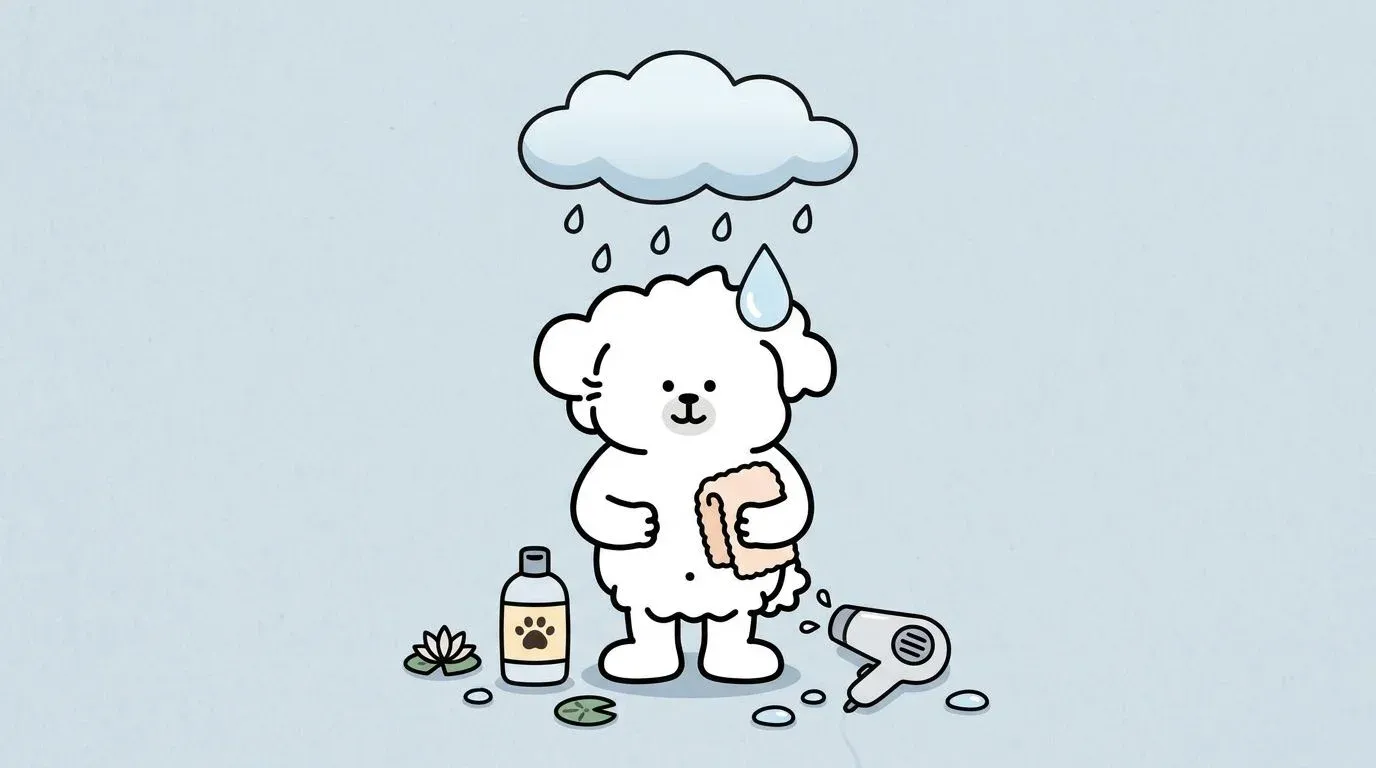
Veterinary dermatologists consistently see a spike in skin cases during humid and wet seasons. Skin conditions rank among the top reasons dogs visit the vet, and data from dermatology clinics suggest the incidence rises noticeably when outdoor humidity stays high for extended periods. The frustrating part: many owners don’t connect the wet weather to the skin problem until it has already progressed.
Double-coated breeds are especially vulnerable to this seasonal pattern. Dogs that enter the rainy season with residual undercoat still in place — common when spring grooming was inconsistent — are more prone to moisture trapping and hot spots. If you’re reading this in early summer, a complete spring shedding grooming routine may still help clear the undercoat and reduce your dog’s risk going into the wet season.
The link between humidity and canine skin disease is more direct than most people realize. This guide covers the full picture — from the biological mechanism that makes humid weather dangerous for your dog’s skin, to telling fungal and bacterial infections apart, to a practical post-walk routine and indoor environment management tips you can start today.
What Happens to Your Dog’s Skin in Humid Weather
How High Humidity Weakens the Skin Barrier
A dog’s skin is protected by several layers of keratinized cells (the stratum corneum) filled with lipids — ceramides, cholesterol, and fatty acids — that lock in moisture and block pathogens. When this system functions normally, we say the skin barrier is intact.
The problem begins when ambient relative humidity consistently exceeds 70%. At that level, two interconnected processes undermine the barrier:
Microbial overgrowth. Even healthy skin hosts resident bacteria (Staphylococcus pseudintermedius) and yeast (Malassezia pachydermatis) in controlled numbers. Under normal conditions, the skin’s slightly acidic pH and immune defenses keep them in check. High humidity disrupts that pH balance, tipping the environment in favor of rapid microbial proliferation.
Maceration. When wet fur stays pressed against the skin for more than a few minutes, the outer keratin cells absorb water and swell. This process — maceration — widens the gaps between skin cells, giving bacteria and irritants easier access to the deeper layers. It is the same reason prolonged contact with moisture causes human skin to wrinkle and soften in a bath.
3 Common Skin Conditions During Wet Seasons
Malassezia dermatitis (fungal skin infection) This yeast thrives in sebaceous areas: the ear canals, between the toes, in the groin, and in any skin fold. The hallmark sign is a distinctly musty or “corn chip” odor. Affected skin often develops a reddish-brown discoloration over time, along with greasy scaling. Breeds with heavy ear flaps — Cocker Spaniels, Basset Hounds — are at especially high risk.
Superficial bacterial pyoderma Staphylococcus overgrowth causes pustules (small pus-filled bumps), circular reddened lesions with scaly edges, and patchy hair loss sometimes described as a “moth-eaten” pattern. It tends to appear on the abdomen, armpits, groin, and areas where fur is dense. Unlike yeast infections, the odor is milder.
Hot spots (acute moist dermatitis) These inflamed, raw patches develop when a dog repeatedly licks or chews one area — often triggered by an itch from an insect bite, allergy, or minor irritation. Bacteria colonize the damaged skin and the lesion can expand from a penny-sized spot to the size of a hand within hours. Humid conditions accelerate this process significantly.
Yeast vs Bacterial Skin Infections: How to Tell the Difference
Two conditions, similar appearance, very different treatments. Antifungal agents do not resolve bacterial pyoderma, and antibiotics won’t clear a yeast infection. Understanding which one you’re dealing with helps you communicate clearly with your vet and avoid delays in effective treatment.
Key Symptoms of Each Condition
Malassezia dermatitis (fungal)
- Distinctive musty or fermented odor — the most reliable distinguishing feature
- Greasy, yellowish skin scaling
- Brown to tan pigmentation of affected skin over time
- Redness and mild thickening of the skin
- Primary locations: ears, between toes, groin, armpits, neck folds
- Common in: Cocker Spaniels, Bulldogs, West Highland White Terriers, Poodles
Superficial bacterial pyoderma
- Mild to moderate unpleasant odor, less pungent than fungal
- Small pustules or papules, circular lesions with reddened centers and crusty margins
- Patchy hair loss in a “target” or circular pattern
- Warmth and tenderness at the lesion site
- Primary locations: abdomen, armpits, groin, back, around skin folds
- Common in: Labrador Retrievers, Golden Retrievers, Bulldogs, Shar-Peis
Self-Assessment Checklist
Use this comparison before your vet appointment to describe what you’re seeing:
| Observation | Fungal (Malassezia) | Bacterial (Pyoderma) |
|---|---|---|
| Odor | Musty / fermented (strong) | Mildly unpleasant |
| Lesion type | Red patches, greasy scaling | Pustules, circular crusty lesions |
| Hair loss pattern | Patchy, irregular | Circular “bull’s-eye” pattern |
| Primary locations | Ears, toes, groin, folds | Abdomen, armpits, back |
| Skin color change | Brown / tan discoloration | Red to pink |
| Heat at site | Mild | Often noticeable |
Important: Mixed infections — yeast and bacteria occurring together — are common in dogs that have been scratching for a while. Choosing a shampoo or topical without a confirmed diagnosis can delay recovery. A vet visit with a skin cytology (a quick, inexpensive in-clinic test) removes all guesswork.
If you suspect your dog’s issues are driven partly by immune or allergic responses, managing dog skin allergies year-round provides a useful framework alongside this seasonal guide.
Post-Walk Care Routine for Rainy Days
Of all the things you can do to protect your dog’s skin during wet weather, a consistent post-walk drying routine delivers the highest return. It takes about 10 minutes and prevents the majority of maceration-related skin problems.
How to Properly Dry a Wet Dog
Step 1: Towel first, blow-dryer second. Before reaching for the dryer, press a dry towel firmly against the coat to absorb surface moisture. Avoid rubbing vigorously — friction irritates skin and can break hair shafts. A blotting and squeezing motion is more effective and gentler. Microfiber towels absorb significantly more water than standard terry cloth and reduce dryer time.
Step 2: Use your hand as a heat gauge. Hold your hand six to eight inches in front of the blow-dryer nozzle. If it feels uncomfortably warm within a few seconds, it’s too hot for your dog’s skin. Use the lowest heat setting that still produces airflow, or the “cool” setting for breeds with thin skin.
Blow-dryer guidelines:
| Parameter | Recommended setting |
|---|---|
| Heat level | Warm or cool (never high/hot) |
| Distance from skin | 6–8 inches (15–20 cm) minimum |
| Movement | Constant — follow the direction of fur growth |
| Dwell time per spot | No more than 5 seconds in one location |
Step 3: Check for complete dryness. Push your fingers through the coat to the skin at the neck, chest, and base of the tail. If the skin still feels damp, continue drying. Double-coated breeds (Labradors, Golden Retrievers, Huskies) commonly feel dry on the outside while the undercoat is still wet.
Caring for Paw Pads, Skin Folds, and Ears
These three areas deserve individual attention after every wet walk.
Between the toes (interdigital spaces) Wet debris and moisture trapped between the toes quickly causes interdigital dermatitis. Signs of early irritation: redness, slight swelling, or your dog licking their paws more than usual. After toweling, spread the toes apart and direct low-heat airflow between them until completely dry.
Skin folds Bulldogs, Shar-Peis, Pugs, and Mastiffs have facial, neck, and tail fold skin that creates ideal conditions for bacterial and yeast growth. After the main drying session, fold the skin back and dab with a dry cloth or gauze. Make sure no moisture is sealed inside. Some owners with wrinkly breeds use a pet-safe antiseptic wipe in the folds during particularly humid periods — discuss this routine with your vet.
Ears Floppy-eared breeds are susceptible to ear canal moisture buildup that escalates into otitis externa. After a walk in rain, gently lift each ear flap and allow airflow. Do not insert cotton swabs into the canal. If you see your dog shaking their head frequently, pawing at an ear, or notice an odor, check the section on humid weather and ear infections for a closer look at what to watch for.
Adjusting Walk Frequency and Duration
Canceling walks entirely during rainy seasons is not necessary or advisable — physical activity and mental stimulation remain important. For a full before-during-after framework on rainy walks, see the complete guide to walking your dog in the rain. Strategic adjustments help:
- Schedule walks during breaks in rain, not right after it stops. The first 30 to 60 minutes post-rain often have peak humidity as ground moisture evaporates.
- Keep rainy-day walks to 10–15 minutes focused on exercise rather than sniffing exploration, to minimize prolonged skin exposure to wet surfaces.
- Replace some outdoor time with indoor enrichment: nosework games, puzzle feeders, tug, or structured training sessions.
- Inspect paw pads after every walk on wet pavement. Road runoff can carry chemicals and microorganisms that irritate the soft skin between the pads. For a complete paw cleaning and drying method comparison suited to rainy conditions, see how to clean dog paws after a walk.
Managing Indoor Humidity for Your Dog
Your dog spends the majority of each day indoors. Managing the humidity in that environment may have a greater impact on skin health than any single product or supplement.
Optimal Humidity Range for Dogs
The recommended indoor relative humidity for households with dogs is 40–60%. Within this range, the skin barrier remains stable and the conditions for bacterial and fungal proliferation are suppressed.
| Indoor Humidity | Status | Effect on Skin |
|---|---|---|
| Below 40% | Too dry | Dryness, flaking, cracked paw pads |
| 40–60% | Optimal | Skin barrier stable |
| 60–70% | Caution | Fungal growth possible |
| Above 70% | High risk | Barrier disruption, microbial overgrowth |
A hygrometer (humidity meter) placed at your dog’s resting height gives you an accurate reading for their microenvironment. These devices are inexpensive and widely available.
Practical Dehumidifying and Ventilation Tips
Running a dehumidifier Dehumidifiers are safe to use around pets. Place the unit in the room where your dog spends the most time. Empty the water reservoir daily and wipe the interior weekly — a neglected reservoir becomes a source of mold and bacteria rather than a solution to them. Running both air conditioning and a dehumidifier is energy-efficient because the AC removes some moisture and reduces the load on the dehumidifier.
Ventilation timing This is where many owners inadvertently make things worse. Opening windows immediately after rain stops feels like the right move, but outdoor humidity is typically at its highest in the 30–90 minutes following rainfall. Wait two to three hours after rain ends before ventilating. Early morning and late evening tend to have relatively lower humidity even during wet seasons — those windows are better for airing out the home.
Bedding and fabric management Damp bedding is one of the most overlooked contributors to skin problems. During humid seasons:
- Wash your dog’s bed cover or blankets one to two times per week.
- Dry bedding completely — line-drying in cloudy, humid weather leaves residual moisture. Use a clothes dryer or a portable fan heater until bedding is fully dry.
- Replace foam pet beds that have absorbed water, as the interior rarely dries fully and mold colonizes it quickly.
Bathing and Grooming During Wet Seasons
How Often Should You Bathe Your Dog?
A common assumption is that a dog who gets wet frequently also needs more baths. The opposite is closer to the truth. Excessive bathing dissolves the sebum (natural oil) that anchors the lipid barrier, leaving the skin more susceptible to the very pathogens you’re trying to avoid.
The general guideline for most breeds is a full bath every two weeks. Wet weather does not change this interval. When your dog comes in from a rainy walk, a targeted rinse of the paws, belly, and legs — followed by thorough drying — is sufficient for the vast majority of outings.
One important caution: leaving a dog only partially dry after a bath is worse than skipping the bath entirely. Moisture sealed under the coat creates ideal conditions for maceration and hot spots. After every wash, confirm dryness by pressing your fingers to the skin, not just running them through the outer fur. If you want a comprehensive breakdown of water temperature, shampoo selection by coat and skin type, and step-by-step drying technique, the complete dog bathing guide covers the full routine — including adaptations for senior dogs and dogs with skin conditions. For introducing a young dog to baths for the first time, our step-by-step puppy first bath guide focuses on that specific scenario.
Dogs with double coats (Bernese Mountain Dogs, Samoyeds, Akitas) require particular attention. Their dense undercoat can remain wet for hours after the outer coat appears dry. A high-velocity blow-dryer designed for dogs moves air through both coat layers more effectively than a standard household dryer.
Using Medicated Shampoos Safely
Medicated shampoos formulated for dogs fall into two primary categories:
Antifungal — typically contain ketoconazole, miconazole, or chlorhexidine in combination. Used for Malassezia dermatitis and seborrhea.
Antibacterial — typically contain chlorhexidine, benzoyl peroxide, or ethyl lactate. Used for bacterial pyoderma.
Key points for safe, effective use:
- Obtain veterinary guidance before starting. Using antifungal shampoo on a dog with a purely bacterial infection delays appropriate treatment. A cytology or culture result takes minutes and directs the right product.
- Respect contact time. Most medicated shampoos require 5–10 minutes of contact with the skin to achieve the stated antimicrobial effect. Lathering and immediately rinsing is essentially equivalent to not using the product.
- Do not use preventively without advice. Applying medicated shampoo to healthy skin disrupts the normal resident flora and can paradoxically increase susceptibility to opportunistic pathogens.
- Follow frequency instructions. For active infections, twice weekly is common. For maintenance, once weekly. Frequency varies by product and severity — defer to the label or your vet’s instructions.
Nutrition for Skin Health in Humid Conditions
External care alone is not enough when your dog’s skin barrier is under sustained humidity stress. Nutritional support works from the inside to strengthen the same lipid layer you’re protecting on the outside.
Omega-3 Fatty Acids and Skin Barrier Support
Omega-3 fatty acids — specifically EPA (eicosapentaenoic acid) and DHA (docosahexaenoic acid) — are structural components of cell membranes throughout the body, including skin cells. In veterinary dermatology research, omega-3 supplementation has been shown to reduce transepidermal water loss (TEWL), a measure of how much moisture escapes through the skin, and to attenuate inflammation associated with atopic dermatitis.
In practical terms, a dog with adequate EPA and DHA in the diet maintains a more resilient skin barrier even when ambient humidity is high. Fish-derived sources — salmon oil, anchovy oil, menhaden oil — are well-absorbed and broadly used in veterinary practice. Dosing is weight-based; the combined EPA+DHA amount that benefits skin health differs from what is used for cardiovascular or joint support, so consult your vet for the appropriate range for your dog.
For a comprehensive look at how supplements support coat and skin integrity beyond omega-3s, the guide to skin health supplements for barrier support covers additional options including zinc, biotin, and ceramide-containing products.
Dietary Adjustments for the Wet Season
Kibble storage is a genuine risk factor. High ambient humidity accelerates the degradation of dry dog food. Once moisture infiltrates a bag of kibble, mold — including aflatoxin-producing Aspergillus species — can proliferate within days. Aflatoxins are hepatotoxic at high levels and have been linked to skin abnormalities at lower chronic exposures.
Practical storage rules during humid months:
- Transfer kibble from its original bag into an airtight container immediately after opening.
- Use within two to four weeks of opening, even from a sealed container.
- Discard any kibble that smells off, appears discolored, or has visible clumping.
Key nutrients for skin barrier maintenance:
| Nutrient | Role | Primary sources |
|---|---|---|
| EPA / DHA (omega-3) | Barrier lipid support, anti-inflammatory | Fish oil (salmon, anchovy, menhaden) |
| Vitamin E | Antioxidant, protects skin cell membranes | Vegetable oils, fortified foods |
| Zinc | Keratinocyte formation, immune function | Red meat, whole grains |
| Biotin (vitamin B7) | Coat and skin metabolism | Eggs, liver |
| Ceramides | Lipid barrier structural component | Specialty functional foods/supplements |
If your dog experiences recurring skin problems despite seasonal management, reviewing the nutritional profile of the current diet with a veterinarian or board-certified veterinary nutritionist is a logical next step.
When to See the Vet
Most minor post-walk redness resolves within six to twelve hours with proper drying. The following signs indicate that home management is insufficient and a veterinary appointment is needed within 48 hours — or sooner if the condition is progressing rapidly.
Seek veterinary care if you observe:
- Itching or scratching that has persisted for more than 48 hours, or that is severe enough to interrupt sleep or eating
- Hair loss that is spreading or new lesions appearing in multiple locations
- Pus, discharge, or oozing at any skin lesion
- Strong or foul odor coming from the skin or coat
- Rapid enlargement of a moist, red, raw patch (consistent with an acute hot spot)
- Lethargy, reduced appetite, or fever alongside skin symptoms
You can safely monitor at home if:
- Mild redness on the paws or belly clears within hours of drying
- Slight dandruff increase appears during a humidity spike and resolves as humidity drops
- No secondary signs (odor, discharge, spreading, behavioral change) are present
The cost of a same-day vet visit for a hot spot is almost always lower than treatment for an infection that has spread over several days. Prompt action shortens recovery time and reduces your dog’s discomfort.
Managing your dog’s skin during humid or wet seasons does not require complicated protocols. A thorough post-walk drying routine that includes the skin folds, toes, and ears; indoor humidity maintained between 40–60%; bedding laundered and dried completely once or twice a week; and nutritional support with adequate omega-3s — these four practices account for the vast majority of prevention. When symptoms do appear, knowing the difference between a yeast infection and bacterial pyoderma helps you seek the right treatment faster. When in doubt, your vet is the fastest path to relief.
References
- 1. Mauldin EA, Peters-Kennedy J. Integumentary System. In: Maxie MG, ed. Jubb, Kennedy, and Palmer's Pathology of Domestic Animals, 6th ed. Elsevier, 2016
- 2. Gross TL, et al. Skin Diseases of the Dog and Cat: Clinical and Histopathologic Diagnosis, 2nd ed. Blackwell, 2005
- 3. Noli C, Toma S. Three cases of dermatitis in dogs and cats caused by Malassezia pachydermatis. Vet Dermatol. 2006
- 4. Bensignor E, Germain PA. Survey of Malassezia pachydermatis-associated skin disease in dogs. Vet Dermatol. 2005
- 5. American College of Veterinary Dermatology (ACVD) - Superficial Pyoderma in Dogs
- 6. AKC Canine Health Foundation - Hot Spots on Dogs
- 7. Merchant SR. Medicated shampoos and their use in veterinary dermatology. Vet Med. 2004
FAQ
Can I bathe my dog every day during rainy or humid seasons?
Are dog yeast infections contagious to humans?
Which dog breeds are most susceptible to skin problems in humid weather?
What can I do to lower indoor humidity if I don't have a dehumidifier?
Why do hot spots appear more often in wet or humid weather?
Related Articles

Dog Skin Allergies: Types, Symptoms, and Management Guide
Dog skin allergies: 3 types, symptom patterns by location, 8–12 week elimination diet protocol, and treatment options including JAK inhibitors.

Dog Skin Supplements: Why Most Ingredients Don't Actually Work
A veterinary-grade breakdown of dog skin and coat supplement ingredients — what the research supports, how to read a label, and how to match nutrients to your dog's specific skin condition.

Dog Ear Infections: Causes, Symptoms, Treatment & Prevention
Dog ear infection causes, symptoms, and treatment: bacterial vs yeast differences, high-risk breeds, step-by-step ear cleaning, and when to see a vet.