 Cirius Petpedia
 Dog Excessive Licking Causes: Normal vs. Concerning Signs
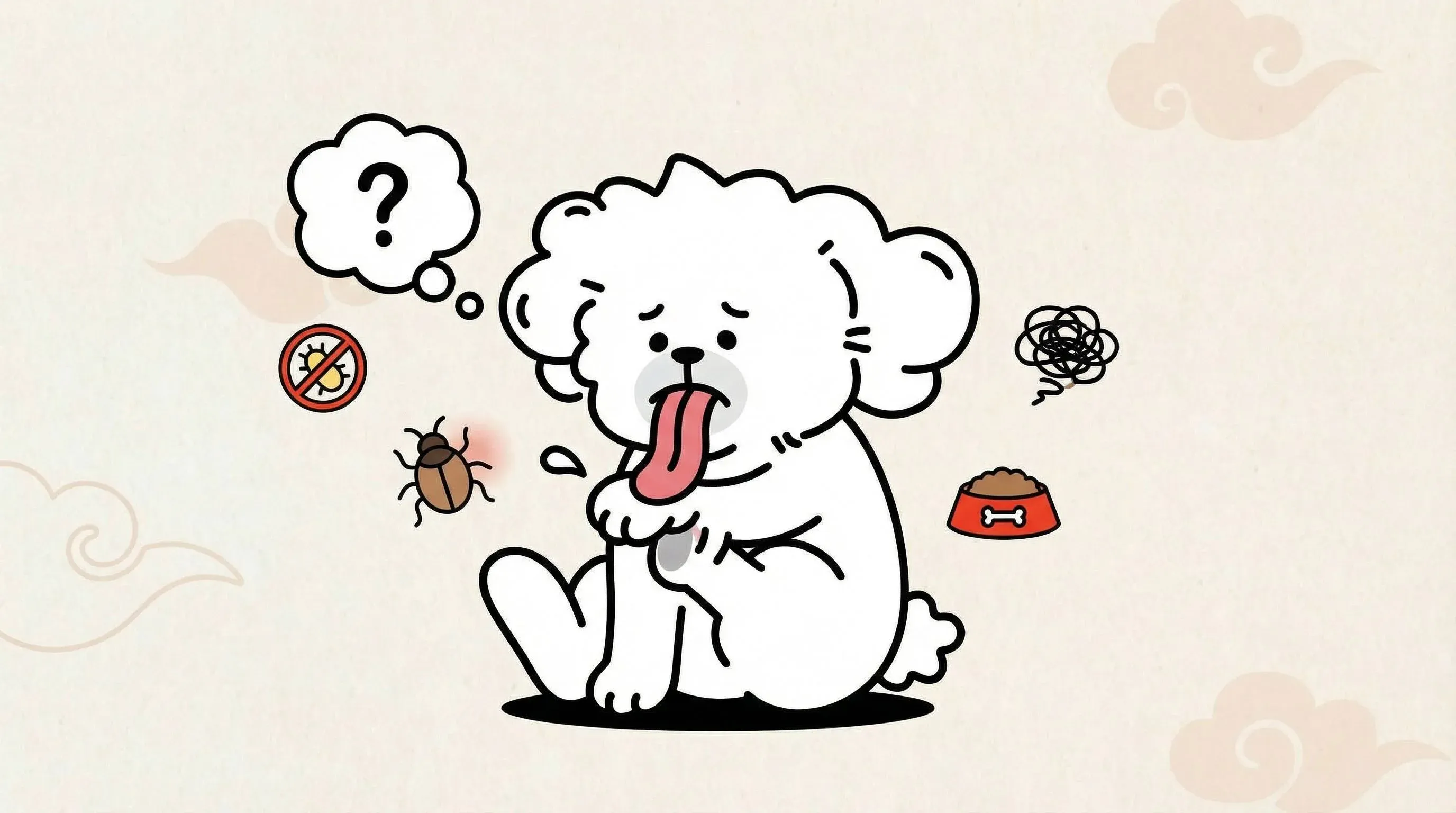
Every dog licks — it is as natural as sniffing or wagging. But there is a meaningful difference between a dog who briefly grooms after a walk and one who spends twenty minutes methodically working over the same patch of paw, or who lies awake licking the carpet at 2 a.m. Understanding that difference, and reading the clues that licking location and pattern provide, can tell you a great deal about what your dog is actually experiencing.
Normal Licking vs. Excessive Licking: Where to Draw the Line
The Biological Purpose of Licking
Licking is hard-wired into dogs for several overlapping reasons. It is a primary grooming mechanism, a social bonding signal (licking the muzzle of a pack member is an appeasement gesture), and a wound-cleaning reflex inherited from wild ancestors. From a neurochemical standpoint, the act of licking stimulates the release of beta-endorphins — the same opioid-like compounds released during exercise — which creates a mild, natural calming effect. This endorphin loop is why licking is so easily recruited as a self-soothing behavior under stress.
Some licking is unambiguously normal: brief post-meal face cleaning, social grooming between household dogs, cleaning a minor abrasion. Problems arise when licking crosses from purposeful behavior into something driven by physical discomfort, psychological distress, or habituated compulsion.
Red Flags: Frequency, Duration, and Fixation
There is no universally agreed clinical threshold for “excessive,” but in practice, veterinarians treat licking as pathological when it meets one or more of the following criteria:
- Duration: Single episodes lasting more than 3–5 minutes, multiple times per day
- Fixation: Concentrated on one specific area (a paw, a joint, the belly, a spot on the floor)
- Disruption: Interfering with sleep, eating, play, or normal social interaction
- Consequences: Causing visible skin changes — redness, hair thinning, moisture, open sores
- Compulsion: Continuing even when the dog is redirected or distracted
If your dog’s licking meets any of these criteria, the next step is to ask why — and the best starting point is distinguishing between physical and behavioral causes.
Medical Causes: Physical Discomfort Behind the Licking
Skin Allergies and Atopic Dermatitis
Allergic skin disease (atopic dermatitis) is the single most common medical cause of excessive licking in dogs, and it is significantly more prevalent in certain breeds: Labrador and Golden Retrievers, Bulldogs, French Bulldogs, West Highland Terriers, and Boxers are disproportionately represented in dermatology caseloads.
Allergens — whether environmental (pollen, dust mites, mold spores) or dietary — trigger an immune response in the skin that results in pruritus (intense itching). Because dogs cannot scratch the way humans do, licking and chewing become the primary itch-relief strategies. The areas affected tend to follow a predictable pattern: paws, ear canals, groin, armpits, and around the eyes.
A specific but serious complication of chronic paw licking from allergies is acral lick dermatitis (also called a lick granuloma). Repeated trauma from the tongue creates a thick, raised, often ulcerated plaque — most commonly on the front of a front leg above the wrist. At this stage, even if the original allergy is treated, the lesion itself can become self-perpetuating because repeated licking has established a neural itch-scratch loop at the site. For dogs already managing atopic skin disease, this is addressed in more detail in the guide to dog allergy and skin care.
Joint Pain and Musculoskeletal Issues
This cause is frequently overlooked, yet it is one of the most important to rule out. Dogs experiencing chronic pain from arthritis, hip dysplasia, patellar luxation, or a soft tissue injury will often lick persistently over the affected area. This is not a grooming behavior — it is a self-directed attempt to soothe discomfort, in the same way humans unconsciously rub a sore knee.
The mechanism is straightforward: licking stimulates mechanoreceptors in the skin above the painful joint, creating a competing sensory input that temporarily overrides pain signals through a process similar to the gate control theory of pain. The result is short-term relief, but it produces no healing and can gradually damage the overlying skin.
Orthopedic licking has a distinctive signature: it is location-specific and consistent, always centered on the same joint, and often worsens after exercise or rest from exercise. If you notice your dog licking the same knee, hip, or shoulder day after day, this warrants a full orthopedic examination rather than a behavioral consultation. Understanding the broader picture of pain signals in dogs helps owners recognize when licking is part of a larger pain response pattern.
Gastrointestinal Distress: Nausea, Reflux, and ELS
One of the most clinically important and least publicly understood causes of excessive licking is ELS — Excessive Licking of Surfaces. ELS describes dogs that compulsively lick floors, carpets, couches, walls, or other surfaces, typically in prolonged episodes.
In a landmark 2012 study published in the Journal of Veterinary Behavior, Bécuwe-Bonnet and colleagues evaluated 19 dogs with ELS alongside a control group of 10 non-licking dogs. The results were striking: 14 of the 19 ELS dogs (74%) had identifiable gastrointestinal disorders, compared to just 1 in the control group. Conditions found included giardia, delayed gastric emptying, irritable bowel syndrome, chronic pancreatitis, and gastric reflux. Crucially, when those GI conditions were treated, ELS behavior resolved or significantly improved in 12 of the 14 affected dogs.
This matters because ELS is commonly misclassified as a behavioral or anxiety problem, leading to treatments (training, anti-anxiety medication) that fail to address the underlying cause. If your dog is a persistent surface licker — particularly around mealtimes, at night, or first thing in the morning — a gastrointestinal workup should precede any behavioral intervention.
Infections, Wounds, and Parasites
Dogs lick wounds and irritated skin reflexively. Common triggers include:
- Bacterial pyoderma: Superficial skin infections that cause hot spots, particularly after flea bites, skin folds, or moisture trapping
- Yeast (Malassezia) overgrowth: Produces a distinctive musty smell and tends to concentrate in paw webbing, ear canals, and skin folds; often secondary to allergies
- Flea allergy dermatitis: A single flea bite can trigger intense pruritus in sensitized dogs; biting and licking concentrate at the base of the tail and hindquarters
- Mange (Demodex or Sarcoptic): Mite infestations cause localized or generalized itching that drives persistent licking and scratching
- Foreign bodies: Grass awns embedded between toes are a common and underappreciated cause of sudden-onset paw licking, particularly in dogs walked in tall grass
Behavioral Causes: Emotional Signals in Licking
Anxiety and Separation Anxiety
Because licking reliably produces an endorphin release, it becomes a natural coping response for dogs under psychological stress. Dogs experiencing separation anxiety may lick their paws, legs, or nearby objects when left alone — the behavior is self-soothing, and it often escalates over time as the dog learns that licking works to dampen the distress response.
Anxiety-linked licking has a contextual signature: it tends to occur specifically in the triggering situation (owner departure, thunderstorm, car journey, veterinary visit) rather than throughout the day. Owners will often observe accompanying behaviors — panting, pacing, whining, or destructive activity — that help confirm anxiety as the driver. Dogs with separation anxiety benefit from a structured behavioral intervention plan alongside any licking-focused treatment.
Canine Compulsive Disorder (CCD)
Canine compulsive disorder is the veterinary equivalent of obsessive-compulsive disorder in humans. Repetitive, seemingly purposeless behaviors — licking, tail chasing, flank sucking, shadow chasing — occur out of context, resist interruption, and escalate over time.
CCD licking is distinct from anxiety licking in several ways. It is not reliably triggered by a specific situation, occurs across multiple contexts, and persists even when the dog appears otherwise calm. The endorphin feedback loop that starts as occasional stress relief becomes self-reinforcing, eventually requiring less and less triggering stimulus to activate.
Certain breeds show elevated CCD prevalence — Dobermans (flank sucking), Bull Terriers (tail chasing), and German Shepherds (checking behaviors) are well-documented. Treatment typically requires veterinary behavioral consultation and may include selective serotonin reuptake inhibitors (SSRIs) combined with environmental modification.
Boredom and Understimulation
A dog whose physical and cognitive needs are consistently unmet will often develop repetitive, self-directed behaviors — licking is among the most common. Unlike CCD, boredom-driven licking typically responds readily to increased enrichment: longer or more varied exercise, puzzle feeders, nose work, or social interaction.
The practical test: does the licking stop when you engage your dog with an activity or new stimulus? If yes, boredom is likely a significant factor. If the licking continues with minimal response to distraction, a medical or compulsive cause deserves more investigation. Structured nose work games are one of the most effective enrichment tools, as detailed in this dog nosework training guide.
What the Licking Location Tells You
Location is one of the most diagnostically useful pieces of information an owner can provide to a veterinarian. The following table maps common licking sites to their most probable causes:
| Licking Location | Most Likely Causes | Key Distinguishing Features |
|---|---|---|
| Paws and toe webbing | Atopic dermatitis, contact allergy, yeast infection, foreign body | Rust-brown staining of fur, odor, inter-digital swelling |
| Single leg (above wrist/hock) | Acral lick granuloma (often secondary to allergy or pain) | Raised, thickened plaque; may be ulcerated |
| Over a specific joint | Arthritis, luxation, soft tissue injury | Same joint each time; worsens after exercise |
| Groin and inner thighs | Atopic dermatitis, contact allergy, yeast | Often bilateral; skin darkening over time |
| Belly and flanks | GI discomfort, urinary tract irritation, spinal pain | May be accompanied by scooting, nausea signs |
| Floor, carpet, furniture | GI distress (ELS), reflux, nausea | Occurs after meals or at night; not body-directed |
| Base of tail and hindquarters | Flea allergy dermatitis, anal gland issues | Check for flea dirt; scooting |
Paws and Pads: Allergies, Contact Irritation, Pain
Paw licking is the most common presentation owners bring to veterinary attention. Three distinct mechanisms can produce it: allergic inflammation that makes the paw tissue itch from within, contact irritants (road salt in winter, lawn chemicals, cleaning products) that trigger surface pruritus, and pain from underlying bone or soft tissue injury that the dog is attempting to self-manage.
Distinguishing between these requires examining both the pattern (all four feet equally suggests allergy; one specific foot or toe suggests injury or foreign body) and the timing (seasonal correlation points to environmental allergen; year-round suggests food allergy or structural problem).
Over Joints: Arthritis, Luxation, Muscle Strain
A dog who consistently licks the same knee, elbow, hip, or shoulder should be evaluated for musculoskeletal pathology before receiving a behavioral label. In geriatric dogs, this is almost always pain-related — arthritis affecting the stifle (knee) or coxofemoral (hip) joint is among the most prevalent conditions in dogs over seven years of age. For a full overview of how arthritis develops and what joint changes to look for, the dog arthritis symptoms guide provides a thorough clinical picture.
In younger dogs, licking over the medial aspect of the stifle may indicate patellar luxation; licking over the hip may signal hip dysplasia in large breed dogs (Labradors, German Shepherds, Golden Retrievers) who are genetically predisposed.
Belly and Flanks: GI Issues, Internal Discomfort
Licking the abdomen or flanks — particularly without visible skin irritation — is a less obvious but important signal of internal discomfort. Nausea from gastric or intestinal disease, bladder irritation from urinary tract infection, or referred pain from spinal disc disease can all manifest as belly-directed licking. These cases almost always require imaging (X-ray or ultrasound) to reach a diagnosis.
Floors and Surfaces: GI Distress, Compulsive Behavior (ELS)
As outlined earlier, surface licking that is repetitive and prolonged should prompt a GI investigation before behavioral modification is attempted. The behavioral differential for ELS is CCD, which requires a different treatment approach entirely. A working rule: if ELS began abruptly in a previously non-licking dog, medical causes (GI) are more likely. If ELS has been present since puppyhood and gradually intensified, CCD warrants evaluation.
What You Can Do at Home and When to See a Vet
5 Things to Track in a Licking Journal
Before your veterinary appointment, recording the following information for 5–7 days will substantially improve diagnostic efficiency:
- Location: Which body part? Single site or multiple? Same location every episode?
- Timing: Time of day, relation to meals, exercise, your presence or absence
- Duration: How many minutes per episode? How many episodes per day?
- Triggers: Environmental changes, diet changes, recent travel, stress events
- Accompanying signs: Limping, appetite changes, digestive symptoms (vomiting, loose stools), behavioral changes
This information converts a vague complaint (“my dog licks a lot”) into actionable clinical data. Many owners discover clear patterns — post-meal surface licking, or paw licking that spikes after outdoor walks — that narrow the diagnostic list considerably.
Environmental Enrichment and Stress Reduction
For dogs where behavioral causes are suspected or confirmed, environmental enrichment is both a diagnostic tool and a first-line intervention:
- Structured exercise: Two walks daily rather than one; include off-leash sniffing time
- Nose work: Scent-based games engage the brain disproportionately to their physical intensity and are particularly valuable for dogs with joint conditions limiting vigorous exercise
- Puzzle feeders: Feeding meals through Kongs or lick mats (counterintuitively, controlled licking redirected to appropriate objects can reduce compulsive licking elsewhere)
- Consistent routine: Predictability reduces ambient anxiety, particularly for dogs prone to separation distress
- Reduced alone time: Gradual desensitization to departures for dogs with separation anxiety
These interventions require 2–4 weeks of consistent implementation before meaningful change can be assessed.
When Veterinary Attention Is Non-Negotiable
Some presentations warrant professional evaluation without a waiting period:
- Skin is broken, bleeding, or producing discharge at the licking site
- The licking area has developed a raised, thickened, or ulcerated lesion (possible lick granuloma)
- Licking is accompanied by limping, stiffness, or reluctance to use a limb
- Your dog wakes at night to lick — this level of disruption is rarely behavioral in origin
- Licking began suddenly in a previously unaffected adult dog
- Enrichment and routine adjustment have produced no improvement after 3–4 weeks
- You notice nausea signs alongside surface licking (grass eating, lip-licking, swallowing repeatedly)
Excessive licking is a symptom, not a diagnosis. The range of underlying causes spans dermatology, internal medicine, orthopedics, and behavioral medicine — which is why identifying the pattern accurately matters before beginning treatment. A clear account of when, where, and how your dog licks, combined with a systematic physical examination, is almost always enough to establish the most probable cause and an appropriate treatment path.
FAQ
Why does my dog lick their paws constantly?
Is it normal for a dog to lick the floor or furniture?
When should I worry about my dog's licking?
Can anxiety cause a dog to lick excessively?
Related Articles
Dog Lethargy Causes: When Slowing Down Signals More Than Just Aging
Learn how to distinguish normal dog tiredness from true lethargy, identify dog lethargy causes by age, and know which signs need emergency vet care.
Veterinary Guide to Cat Overgrooming: Causes, Treatment, and When to Worry
Cat overgrooming causes range from allergies to anxiety. This vet-backed guide covers diagnosis, body-area mapping, treatment options, and when to see a doctor.
Does Your Senior Dog Have Dementia? A Veterinary Guide to Canine Cognitive Dysfunction
Learn the 7 DISHAAL domains to assess dog dementia symptoms at home, understand evidence-based treatment options, and know when to call your vet.
Dog Noise Phobia Treatment: Thunder and Fireworks Guide
Step-by-step guide to treating dog noise phobia from thunder and fireworks. Desensitization protocol, tool comparisons, and when to see a vet.
Is Your Dog in Pain? 7 Subtle Signs Most Owners Miss
Learn the 7 behavioral signs your dog is in pain that are easy to overlook, how to tell acute from chronic pain, and what to do before your vet visit.
Dog Separation Anxiety Guide: Symptoms, Training, and Help
Learn how to identify dog separation anxiety symptoms, follow a vet-backed step-by-step training plan, and know when medication or a specialist is needed.
Dog Walk Refusal: Is It Behavior or Hidden Joint Pain?
Dog walk refusal may signal arthritis, hip dysplasia, or IVDD. Use our 10-point checklist to tell behavioral causes from joint pain—and what to do next.
If Your Dog Won't Stop Barking: Type-by-Type Training Guide
Stop dog barking by identifying the type. 5 types, targeted training protocols, and realistic timelines — evidence-based guide for dog owners.
Transform Your Indoor Cat's Behavior and Health by Redesigning Their Play Environment
Use the AAFP/ISFM Five Pillars framework to build a science-backed indoor cat enrichment plan—from hunting sequence play design to sensory stimulation and behavior monitoring.
How to Start Nose Work with Your Dog: A Step-by-Step Beginner's Guide
Learn how to start nose work with your dog using a 5-stage progressive protocol. From palm treat finds to outdoor scent detection — start today with no special equipment.
How to Introduce Cats: A Step-by-Step Guide From Isolation to Harmony
Learn how to introduce cats using a proven 5-step protocol with clear timeline ranges, age and sex strategies, and a failed-introduction recovery plan.
Dog Coprophagia: Why Dogs Eat Poop and How to Stop It
Dog coprophagia affects 1 in 6 dogs. Learn the three types, their distinct causes, evidence-based correction protocols, and why most deterrents don't work.
How to Crate Train Your Dog: A Step-by-Step Guide from First Introduction to Calm Alone Time
Learn how to crate train a dog with a 5-step protocol, age-based time limits, and troubleshooting for crying, crate aversion, and accidents.
Loose Leash Walking Training: 5 Steps to Stop Dog Pulling
Stop your dog pulling on walks with this 5-stage loose leash walking training guide — from indoor introduction to real-world heel, with troubleshooting.
Is Your Dog Guarding More Than Just the Food Bowl? Types of Resource Guarding and How to Fix Them
Dog resource guarding goes beyond food bowls. Learn the 4 types, a severity assessment framework, and type-specific training protocols to stop guarding safely.
Bringing Home a New Puppy? The Complete Socialization Training Guide You Need
Learn the science behind puppy socialization windows, get a week-by-week timeline, and discover safe pre-vaccination methods with a practical category-based checklist.
Cat Meowing at Night: 3 Common Responses That Make It Worse
Cat meowing at night is disrupting your sleep—and your usual fixes may be making it worse. Learn the behavioral science behind night crying and a 4-step evening routine that actually works.
How to Potty Train a Puppy: The Complete Guide for First-Time Dog Owners
Learn how to potty train a puppy with crate training, bell training, nighttime protocols, regression fixes, and tips for apartment living and rescue dogs.
How to Stop Puppy Biting: Age-by-Age Training Guide
Learn how to stop puppy biting with science-backed methods, age-specific protocols from 8 weeks to adulthood, and a step-by-step training system.
Does Your Cat Have Separation Anxiety? Signs to Watch and How to Help
Learn the real signs of cat separation anxiety symptoms, how to tell anxiety apart from boredom, and a week-by-week desensitization protocol you can start today.