 Cirius Petpedia
 Dog Walk Refusal: Is It Behavior or Hidden Joint Pain?
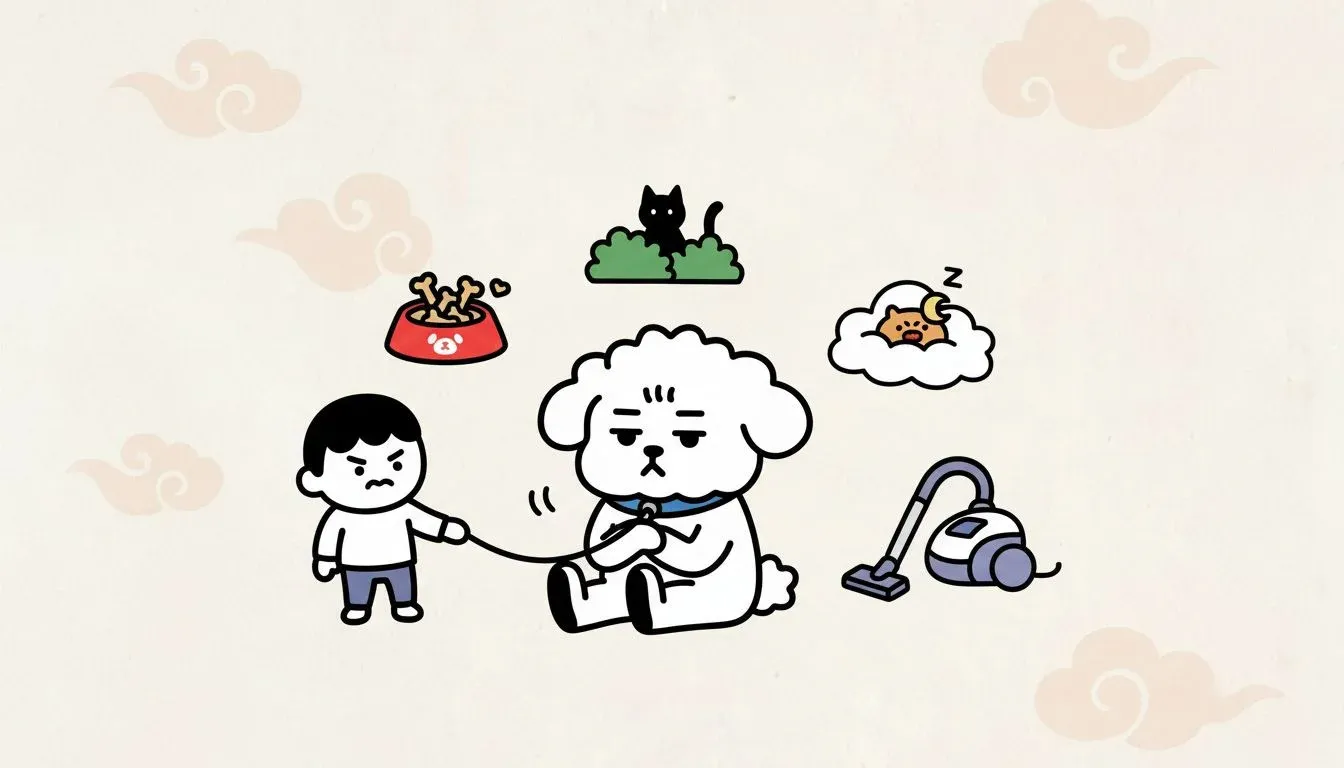
Your dog has always loved the morning walk. Then one day, he plants his feet at the end of the driveway and refuses to move. Or he walks three houses down, then sits and won’t get back up. You coax, encourage, offer a treat—nothing.
Most owners’ first instinct is a training problem. The second is stubbornness. Joint pain is rarely the first thought, which is exactly why so many dogs with early arthritis, hip dysplasia, or spinal disease go undiagnosed for months.
Walk refusal that stems from joint pain follows predictable patterns. Knowing what to look for—and knowing when a behavioral explanation doesn’t fit—can get your dog the right care months sooner.
When Walk Refusal Is More Than Stubbornness
Pain-Related Walk Refusal Behaviors Owners Miss
Dogs do not show pain the way humans do. They don’t limp dramatically from the first moment discomfort begins, and they rarely cry out unless pain is severe. Instead, the early signals are behavioral shifts that look almost identical to bad manners.
The most commonly missed signs:
- Mid-walk sitting that escalates. Your dog sits down partway through a route that used to be no problem. At first it happens once; over weeks, it happens earlier and more often.
- Route avoidance. Your dog eagerly heads toward the park but steers away from terrain with inclines, stairs, or curbs. He may redirect toward grass and avoid pavement.
- Morning reluctance. Your dog is slow to stand up, stretches repeatedly, and needs coaxing to go outside. Once he moves for 10–15 minutes, he seems almost normal.
- Post-rest stiffness. After a nap or a car ride, your dog stands up stiffly and takes several steps to work out the soreness.
- Shorter distance tolerance. Walks that used to last 45 minutes now end at 20. Your dog seems willing but fades.
- Stair avoidance. Stairs that posed no problem six months ago are now approached with hesitation or refused outright.
The critical insight: dogs experiencing signs of joint pain will often compensate for months before the limitation becomes obvious. By the time walk refusal is the presenting problem, joint degeneration may already be significant.
What Joint Pain Looks Like on a Walk
On a walk, joint pain manifests as a combination of movement quality changes and behavioral responses. Watch for:
- A shortened stride on one or both hindlimbs
- A subtle head bob when a forelimb bears weight (the head drops on the sound leg, rises on the painful one)
- Bunny-hopping—both hindlimbs moving together rather than alternating—which is a hallmark of bilateral hip pain
- Weight shifting during standing, favoring one side
- Reluctance to turn in one direction
- Panting or yawning during or after walks of previously manageable length (stress signals in response to pain)
These signs are often visible during normal walking but become much more apparent after exercise, in cold or damp weather, and first thing in the morning.
Behavioral Refusal vs. Joint Pain: A Diagnostic Checklist
Behavioral Patterns: Fear, Leash Issues, and Training Gaps
Behavioral walk refusal is real and common—especially in dogs that have had limited early socialization, a negative experience on a walk (a dog fight, a loud noise), or have never been properly leash-trained. It is also common in puppies encountering new environments.
Characteristics of behavioral refusal:
- Appears suddenly after a specific event (a scare, a new neighborhood, a new harness)
- Is inconsistent—your dog refuses in some contexts but walks fine in others
- Is associated with triggers: other dogs, traffic noise, specific surfaces (grates, wet pavement)
- Improves with familiar routes, familiar time of day, or specific companions
- Does not worsen progressively over weeks to months
- Is not associated with physical stiffness, difficulty rising, or changes in gait
Pain Patterns: Morning Stiffness, Weather Sensitivity, and Post-Rest Lameness
Joint pain follows physiological rules that create recognizable patterns. The synovial fluid lubricating joints becomes less effective after rest. Inflammation accumulates overnight. Cold, damp weather increases joint stiffness. These are not random—they are predictable if you know what to look for.
Characteristics of pain-based refusal:
- Worst in the morning or after prolonged rest; improves after 10–20 minutes of gentle movement
- Worsens in cold, wet, or rapidly changing weather
- Progressively involves shorter distances or earlier stopping points over weeks to months
- Associated with increased sleep, reluctance to play, irritability when touched on certain areas
- Present even on familiar, easy terrain—not context-dependent
- May be accompanied by limping on one or more legs
A dog with behavioral walk refusal does not wake up stiff. A dog in joint pain usually does.
10-Point Checklist to Identify the Cause
Use this checklist to assess whether your dog’s walk refusal pattern fits a pain or behavioral profile. No single item is diagnostic, but a cluster of pain items warrants veterinary evaluation.
| # | Observation | Behavioral | Pain |
|---|---|---|---|
| 1 | Worst in the morning, improves after 10–20 min movement | X | |
| 2 | Occurs in specific contexts (loud areas, new routes, specific surfaces) | X | |
| 3 | Progressively getting worse over weeks/months | X | |
| 4 | Associated with stiffness when rising from rest | X | |
| 5 | Consistent across all environments and times of day | X | |
| 6 | Started after a known negative experience | X | |
| 7 | Worsens in cold or wet weather | X | |
| 8 | Your dog walks willingly off-leash in familiar areas | X | |
| 9 | Accompanied by shortened stride, bunny-hopping, or head bob | X | |
| 10 | Your dog is over 6 years old, overweight, or a large breed | X |
If you checked 4 or more pain items: Schedule a veterinary orthopedic evaluation. Do not wait to see if it resolves on its own.
Joint Conditions That Cause Walk Refusal in Dogs
Hip Dysplasia: The Large Breed Silent Struggle
Hip dysplasia is a developmental condition in which the ball and socket of the hip joint do not fit together properly. Over time, the abnormal fit causes cartilage erosion and painful inflammation. According to the Orthopedic Foundation for Animals (OFA), hip dysplasia affects approximately 19% of Labrador Retrievers, 20% of Golden Retrievers, and over 50% of certain large and giant breeds.
Walk refusal pattern in hip dysplasia:
- Reluctance to rise from rest, especially after exercise
- Bunny-hopping gait (both hind legs moving together)
- Progressive shortening of walks
- Hindlimb weakness; dog sits or lies down earlier than before
- Worse after strenuous play or in cold weather
At-risk breeds: Labrador Retriever, Golden Retriever, German Shepherd, Rottweiler, Great Dane, Saint Bernard, Bulldog, Mastiff.
Hip dysplasia is a lifelong condition. Early detection allows for management strategies—including weight control, controlled exercise, and joint support therapies—that can significantly delay the progression to severe arthritis. A detailed overview of diagnosis and management is covered in our hip dysplasia guide.
Osteoarthritis: Gradually Shorter Walks Over Time
Canine osteoarthritis (OA) is the most common joint disease in dogs, estimated to affect 1 in 5 adult dogs and more than 80% of dogs over 8 years of age. It is a progressive condition in which articular cartilage breaks down, leading to bone-on-bone contact, inflammation, and pain.
Walk refusal pattern in osteoarthritis:
- Classic morning stiffness that improves with movement
- Walk distance decreases gradually over months
- Dog sits down during walks as distance tolerance drops
- Weather sensitivity: noticeably worse in cold or wet conditions
- Reluctance to jump into cars or climb stairs
- Behavioral changes at home: less play, more sleep, irritability
Unlike hip dysplasia, which has a strong breed predisposition, OA can affect any dog—particularly those with prior joint injuries, overweight dogs, or those with small-breed patellar luxation history. The full progression of arthritis symptoms in dogs is worth reviewing if your dog is showing multiple signs.
Intervertebral Disc Disease (IVDD): Sudden Walk Refusal
IVDD occurs when the cushioning discs between vertebrae bulge or rupture, compressing the spinal cord or nerve roots. Unlike the gradual onset of arthritis, IVDD can cause sudden, severe walk refusal—sometimes appearing overnight.
Walk refusal pattern in IVDD:
- Sudden onset, not gradual
- Dog may cry out when touched along the back or neck
- Reluctance to climb stairs, jump, or lower the head
- Hind limb weakness, stumbling, or knuckling (tops of paws touching ground instead of pads)
- In severe cases: paralysis of hindlimbs
At-risk breeds for Hansen Type I (acute disc rupture): Dachshund, Beagle, Basset Hound, Shih Tzu, Lhasa Apso, Cocker Spaniel. Large breeds are more prone to Hansen Type II (gradual disc degeneration): Labrador, German Shepherd, Doberman Pinscher.
IVDD is a neurological emergency when it causes limb weakness or incontinence. If your dog’s walk refusal appeared suddenly and is accompanied by any neurological signs, go to a veterinary emergency clinic immediately. For a full clinical overview, see our disc disease guide.
Elbow Dysplasia and Other Orthopedic Causes
Elbow dysplasia is the leading cause of forelimb lameness in large-breed dogs. Like hip dysplasia, it is a developmental condition—the elbow joint components don’t form properly, leading to fragmented cartilage, loose bone fragments, and early osteoarthritis. OFA data shows elbow dysplasia affects approximately 12% of Labrador Retrievers and 17% of Golden Retrievers.
Walk refusal pattern in elbow dysplasia:
- Intermittent forelimb lameness, often affecting one leg more than the other
- Dog sits down or pulls toward home early in a walk
- Worse after exercise; may improve briefly then worsen again
Other orthopedic causes of walk refusal include:
- Cruciate ligament (CCL/ACL) tears: Sudden onset, typically non-weight-bearing on the affected hind leg after a play session or jump
- Lumbosacral stenosis: Hindlimb pain and weakness, difficulty squatting to defecate, tail held low
- Patellar luxation (small breeds): Intermittent skipping gait, sudden leg-lifting mid-stride
Any unexplained walk refusal in a dog under 2 years old from a large breed warrants an orthopedic screening exam for developmental conditions, even before obvious lameness appears.
What to Do When Your Dog Won’t Walk
If It’s Behavioral: Positive Reinforcement Training Steps
If veterinary evaluation has ruled out pain and the cause is confirmed behavioral, the approach is gradual desensitization combined with positive reinforcement:
- Identify the trigger. Is it a specific location, surface, sound, or situation? Keep a log.
- Start below threshold. Begin walks in environments your dog already accepts, at a distance from the trigger.
- Pair the trigger with high-value rewards. As the trigger appears at a distance, immediately offer a treat. The goal is to change the emotional association.
- Increase exposure gradually. Over sessions, move closer to the trigger only if your dog remains relaxed and engaged.
- Never force or drag. Forced exposure increases fear and makes the problem worse.
For dogs with leash-specific resistance, consult a certified professional dog trainer (CPDT-KA) or a veterinary behaviorist.
If It’s Pain: Veterinary Diagnosis and Treatment Options
A veterinarian evaluating walk refusal for joint pain will typically:
- Perform a full orthopedic examination: joint range of motion, palpation for swelling or crepitus, gait analysis
- Recommend radiographs (X-rays) of the affected joints under sedation if necessary
- In some cases, refer to a veterinary orthopedic specialist for advanced imaging (CT, MRI) or force plate gait analysis
Medical treatment options depend on the underlying condition:
- NSAIDs (non-steroidal anti-inflammatory drugs): The first-line medical treatment for most orthopedic pain in dogs. Meloxicam, carprofen, grapiprant, and others. Require baseline bloodwork and monitoring.
- Joint injections: Corticosteroids or hyaluronic acid for targeted relief in specific joints.
- Gabapentin or amantadine: Neuropathic pain management, often used alongside NSAIDs for chronic arthritis.
- Surgical intervention: For structural conditions like severe hip dysplasia (femoral head ostectomy, total hip replacement), CCL tears (TPLO, TTA), or IVDD with neurological compromise.
At-Home Joint Pain Management Between Vet Visits
Veterinary treatment is essential, but the hours between appointments matter too. A consistent at-home management routine can meaningfully reduce pain and slow functional decline.
Weight management. Every kilogram of excess weight increases the load on already-compromised joints. A 2016 study published in the Journal of Veterinary Internal Medicine found that weight loss alone significantly improved lameness scores in dogs with hip osteoarthritis. If your dog is overweight, work with your vet on a caloric reduction plan.
Non-slip surfaces. Hardwood and tile floors are treacherous for arthritic dogs—the effort of stabilizing on slick surfaces increases pain and muscle fatigue. Rubber-backed runners, yoga mats, and carpet squares at key areas (food bowl, sleeping areas, doorways) reduce this burden significantly.
Orthopedic bedding. Memory foam or orthopedic dog beds reduce pressure on painful joints during the long rest periods that arthritic dogs need.
Morning warm-up routine. Because joint pain is worst after rest, resist the urge to start with a brisk walk. A 5–10 minute slow leash walk or gentle indoor movement session before the main walk allows joint fluid to warm and lubricate, reducing early-morning pain.
Low-impact exercise. Controlled leash walking on flat, even terrain—shorter but more frequent sessions—is better than one long walk with unpredictable terrain. Swimming and hydrotherapy (underwater treadmill) provide excellent cardiovascular and muscular conditioning with minimal joint stress.
Therapeutic massage. Gentle joint and muscle massage improves circulation, reduces muscle tension compensating for joint pain, and can be integrated into a daily routine. Avoid applying pressure directly over inflamed joints.
Complementary therapies. Near-infrared (NIR) light therapy is a photobiomodulation approach with a growing veterinary evidence base. A 2021 review in Frontiers in Veterinary Science summarized research showing photobiomodulation reduces inflammation, supports cellular repair in connective tissue, and decreases pain scores in dogs with osteoarthritis. It is positioned as a complementary tool alongside—not instead of—veterinary medical care.
Joint supplements. Glucosamine, chondroitin, and omega-3 fatty acids are the most studied supplements for canine joint health. Effects are modest and cumulative, typically requiring 4–8 weeks before improvement is measurable. They work best as part of a multi-modal management approach, not as stand-alone treatments.
Red Flags: When to See a Vet Immediately
The following situations require emergency or urgent veterinary attention—do not wait for a scheduled appointment:
- Sudden inability to walk or stand on hindlimbs. This is a neurological emergency until proven otherwise.
- Dragging one or both rear legs. Loss of proprioception (awareness of limb position) indicates spinal cord involvement.
- Crying or yelping when touched along the spine or neck. Acute disc herniation or fracture possible.
- Swelling, heat, or rapid deformity of a limb or joint. May indicate fracture, infection, or immune-mediated joint disease.
- Walk refusal combined with lethargy, loss of appetite, or fever. Joint infection (septic arthritis) or immune-mediated polyarthritis requires urgent diagnosis.
- Loss of bladder or bowel control alongside limb weakness. Indicates severe spinal cord compression.
Any of these signs supersede the guidance in this article. Get to an emergency clinic.
Walk refusal is your dog’s clearest available signal that something is wrong. The instinct to chalk it up to behavior is understandable—but the cost of a missed joint diagnosis, measured in months of untreated pain and irreversible cartilage loss, is significant. If the checklist above points toward pain, trust that signal and schedule an orthopedic evaluation. The earlier the diagnosis, the more management options remain available.
References
- 1. Osteoarthritis in Dogs - Veterinary Partner (VIN)
- 2. Canine Hip Dysplasia - OFA (Orthopedic Foundation for Animals)
- 3. Intervertebral Disc Disease in Dogs - Merck Veterinary Manual
- 4. Canine Elbow Dysplasia - OFA
- 5. Colorado State University Acute Pain Scale for Dogs
- 6. Photobiomodulation Therapy in Veterinary Medicine - Frontiers in Veterinary Science
FAQ
Should I force my dog to walk if they refuse?
Can I replace walks with other exercise while my dog recovers?
Will joint supplements help my dog walk again?
How do I know if my dog needs surgery versus conservative management?
Is morning walk refusal different from refusing walks later in the day?
Related Articles
Dog Hip Dysplasia: 6 Essential Facts Every Owner Should Know
Learn the key facts about dog hip dysplasia — from at-risk breeds and early symptoms to PennHIP vs OFA diagnosis and home care exercises.
Dog Arthritis: Symptoms and Management
Recognize early signs of arthritis in dogs and learn effective management strategies for pain relief and improved mobility.
Is Your Dog Showing Signs of IVDD? Symptoms, Stages, and What to Do
Learn to recognize IVDD in dogs symptoms by grade and spinal region, understand treatment options from conservative care to surgery, and manage recovery at home.