 Cirius Petpedia
 Dog Fear of Strangers: Causes and Desensitization Training
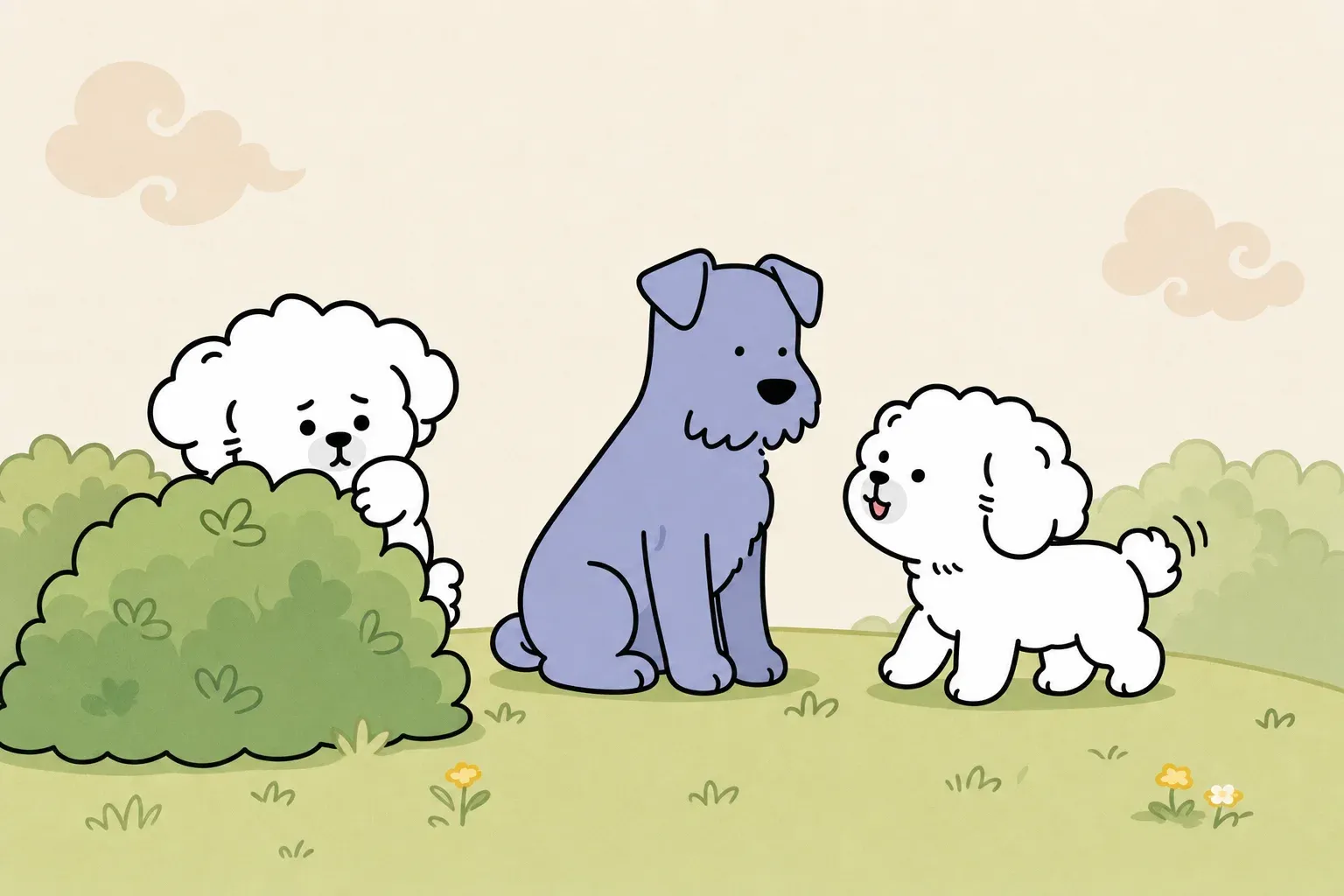
A dog who barks explosively at the mail carrier, freezes on the sidewalk when someone approaches, or hides behind your legs at every new encounter is more than a social inconvenience. That dog is genuinely frightened — and without structured help, that fear tends to worsen over time, not resolve on its own.
Dog fear of strangers is one of the most common behavioral concerns veterinary behaviorists see in practice. It exists on a wide spectrum: from mild wariness that resolves with a biscuit to severe fear aggression that puts both dog and people at risk. Understanding where your dog falls on that spectrum — and what to do about it — is the starting point for everything else.
This guide covers the causes, a practical severity self-assessment, a quantified desensitization protocol, scenario-specific strategies, and guidance on when to bring in professional support.
What Is Dog Fear of Strangers?
Fear of strangers in dogs is a stress response triggered by unfamiliar people. At its core, the dog’s nervous system interprets a stranger as a potential threat and activates the fight-or-flight response: stress hormones spike, heart rate increases, and the dog prepares to flee or defend itself.
Normal Caution vs. Pathological Fear
Not all wariness is a problem. A dog who sniffs a new person briefly, retreats a step, then warms up within a few minutes is displaying normal, adaptive caution. This is healthy. The dog is gathering information and making a reasonable judgment.
Pathological fear looks different. Key indicators include:
- Fear response begins at significant distance (20+ feet) before any contact
- The dog cannot recover and return to baseline even after the stranger leaves
- Fear response is disproportionate to the actual trigger (e.g., a calm person walking past causes full-body trembling)
- Fear interferes with daily life — the dog cannot go on walks, visitors are impossible, vet visits require sedation
- Fear behavior has escalated over time rather than stayed stable
Understanding dog body language is the foundation for reading where your dog is on this spectrum. Subtle early signals — lip licking, yawning out of context, a tucked tail, whale eye (showing the whites of the eyes), flattened ears — all precede the more obvious reactions most owners recognize.
Fear Severity Levels: Mild, Moderate, and Severe
| Level | Trigger Distance | Physical Signs | Recovery Time | Behavior |
|---|---|---|---|---|
| Mild | < 6 feet, or direct approach | Ears back, tail low, avoidance | < 5 minutes | Freezes briefly, may take treats |
| Moderate | 10–20 feet | Trembling, panting, won’t eat | 10–30 minutes | Barks, lunges, or bolts; refuses food near stranger |
| Severe | > 20 feet or out of sight | Panic, self-injury attempts, won’t eat for hours | Hours or won’t fully reset | Snaps, bites, or total shutdown |
Severe cases warrant professional behavioral consultation before attempting DIY training protocols.
Why Dogs Develop Fear of Strangers: 6 Common Causes
Fear of strangers rarely has a single cause. Most dogs develop it through a combination of genetic predisposition and experience — or the absence of key experiences at critical developmental moments.
Insufficient Socialization During the Critical Window (3–16 Weeks)
The socialization window in puppies closes between 12 and 16 weeks of age. During this period, the developing brain is primed to accept new stimuli as normal. A puppy who encounters diverse people — men with beards, children, people in hats, people of different ages and body types — during this window builds a neural template for “strangers are not dangerous.”
Puppies who spend this window in limited environments (a single home, a breeder with low traffic, a poorly run shelter) may never fully update that template. Research published in Veterinary Clinics of North America: Small Animal Practice found that the quality of early socialization is one of the strongest predictors of adult fearfulness. This is not about blame — it is biology. And critically, it is also not a life sentence.
Trauma and Negative Experiences
A single significant frightening event involving a stranger can create a lasting fear association, particularly if it occurred when the dog was already physiologically stressed or during a developmental fear period. The amygdala — the brain’s threat-detection center — encodes high-emotion events with particular efficiency. This is why a dog who was once cornered by a well-meaning stranger may generalize that fear to all strangers.
Genetic Predisposition and Breed Tendencies
Fearfulness has a heritable component. Some individual dogs are simply neurologically more reactive to novel stimuli regardless of socialization history. At the breed level, certain types are statistically overrepresented in fearful-stranger presentations:
- Herding breeds (Border Collie, Australian Shepherd, Collie): heightened environmental sensitivity, strong territorial instincts
- Guardian breeds (Great Pyrenees, Kangal, Anatolian Shepherd): bred to distrust unfamiliar people by design
- Primitive breeds (Shiba Inu, Basenji, Chow Chow): lower social selectivity, slower to trust
- Toy breeds (Chihuahua, Miniature Pinscher): combination of small stature and occasionally limited early socialization
Knowing your dog’s breed background calibrates your expectations without lowering them — herding and guardian dogs can absolutely become more comfortable around strangers; they often just need more time and structure.
Fear Periods in Puppies (8–11 Weeks and 6–14 Months)
Dogs pass through two well-documented developmental fear periods. The first occurs around 8–11 weeks — often coinciding with when puppies go to new homes. The second, less predictable period spans roughly 6–14 months.
During these windows, experiences that cause significant fright can have outsized effects. A puppy who had a bad encounter with a stranger at 9 weeks is far more likely to carry that wariness forward than one who had the same encounter at 14 weeks. Owners who notice sudden fearfulness emerging during the adolescent period (6–14 months) in a previously confident puppy should not panic — this can be a developmental phase — but it does warrant gentle, proactive management rather than forced exposure.
Owner Anxiety Transfer
Dogs are exceptionally sensitive to human physiological and behavioral cues. When an owner tenses the leash, holds their breath, or audibly braces when a stranger approaches, the dog reads this as confirmation that something threatening is present. This is not a myth or a pop-science claim — research on human-dog emotional contagion published in multiple peer-reviewed journals has documented cortisol synchrony between owners and dogs.
This does not mean you caused your dog’s fear through worry. It means that your calm, practiced behavior during training is a genuine training tool, not a nice-to-have.
Pain or Medical Conditions
A dog who was previously comfortable around strangers and has become suddenly or progressively fearful should receive a full veterinary examination before any behavior modification begins. Pain lowers the threshold for defensive behavior. Conditions including hypothyroidism, hearing loss, and neurological changes associated with aging can all manifest as apparent fear or reactivity. This is especially relevant in dogs over 7 years old.
Self-Assessment: How Severe Is Your Dog’s Stranger Fear?
Before designing a training plan, you need an honest picture of your dog’s baseline. Use this structured assessment.
Trigger Identification Checklist
Answer yes or no for each scenario:
Stranger type and context:
- Reacts to all unfamiliar people, regardless of gender, age, or appearance
- Reacts more strongly to men, people with beards or hats, or people moving erratically
- Reacts to strangers in the home more than strangers on walks
- Reacts to strangers on walks more than at home
- Reacts even when the stranger is not making eye contact or approaching
Distance and threshold:
- Reaction begins at more than 20 feet away
- Reaction begins at 10–20 feet away
- Reaction begins only when someone approaches within 6 feet
- Reaction begins only on direct contact attempt
Behavior during exposure:
- Barks, lunges, or growls
- Snaps or has made contact (bitten)
- Freezes completely and becomes unresponsive
- Attempts to flee and cannot be redirected
- Will accept high-value treats near a stranger
Recovery:
- Returns to baseline (calm, willing to eat, normal behavior) within 5 minutes
- Takes 10–30 minutes to recover
- Does not fully recover until the person leaves the environment
- Still shows stress signs hours later
Scoring Guide: Mild, Moderate, or Severe
Mild: Reacts only within 6 feet, recovers within 5 minutes, accepts treats near strangers, no aggressive behavior. DIY desensitization is appropriate.
Moderate: Reacts at 10–20 feet, takes 10–30 minutes to recover, may refuse treats, barks or lunges but has not bitten. DIY desensitization with careful management; consider consulting a CPDT-KA certified trainer.
Severe: Reacts at more than 20 feet, snaps or has bitten, takes hours to recover, complete shutdown, or self-injurious escape attempts. Consult a board-certified veterinary behaviorist (DACVB) or Certified Applied Animal Behaviorist (CAAB) before proceeding. Medication assessment is warranted.
Step-by-Step Desensitization and Counter-Conditioning Protocol
Desensitization and counter-conditioning (DS/CC) is the evidence-based treatment of choice for stranger fear, endorsed by the American College of Veterinary Behaviorists. The principle is straightforward: systematic, graduated exposure to strangers at a distance where the dog notices but does not react, paired immediately with a high-value reward, repeated until the stranger predicts good things rather than threat.
Before You Start: Setting Up for Success
Select the right reward. Your dog must be hungry enough that the reward is motivating. Use food your dog considers extraordinary — small pieces of real chicken, beef, or commercial high-value training treats. Test: if your dog won’t take the treat near a stranger, you are either too close or the treat isn’t good enough.
Choose a training location. Start somewhere with predictable, low-density stranger traffic. A park bench near a walking path — where people pass at a predictable distance — is better than a farmer’s market. You need control over distance.
Commit to session parameters: 5–10 minutes per session, once or twice daily. Longer sessions fatigue both dog and handler and increase the risk of over-threshold experiences.
Establish your dog’s threshold distance. This is the distance at which your dog notices the stranger but does not react — ears perk up, body remains loose, can take treats. Start every session 30–50% beyond this distance.
Leash and equipment. Use a well-fitted flat collar or front-clip harness. Avoid retractable leashes — they prevent the distance control that makes this protocol work. Avoid aversive tools (prong collars, shock collars) during fear work; pain-based interventions during fear response reliably worsen fear aggression.
Phase 1: Distance Observation and Reward (Weeks 1–2)
Goal: Dog sees stranger at a distance, receives high-value reward, stranger disappears. Stranger predicts food.
Protocol:
- Position yourself at working distance (beyond threshold).
- When dog notices a stranger (“mark” with a calm “yes”), immediately deliver 3–5 small treats in rapid succession.
- Feed until the stranger is out of sight or has passed.
- Return to neutral; withhold treats when no stranger is visible.
What you are looking for: The dog begins to orient toward you and look for treats when they see a stranger, rather than stiffening and staring. This is the first sign the association is shifting. It may take 5–10 sessions.
Do not: Move closer because it seems to be going well mid-session. End on a success at the established distance.
Phase 2: Closing Distance with Indirect Exposure (Weeks 3–4)
Goal: Decrease working distance by 20–30% from Phase 1 baseline. Introduce exposure where the stranger is oriented away from the dog or ignoring the dog.
Protocol:
- Move the working position 20–30% closer to the pedestrian area than Phase 1.
- Ask a known person (friend or family member) to walk at a fixed distance parallel to your dog, ignoring the dog completely.
- Mark and reward as in Phase 1.
- Have the helper make a single, brief glance at the dog, then look away. Reward calm response.
- Gradually introduce variability: different helper height, gender presentation, clothing, stride.
Key adjustment for adult dogs: Adult dogs with established fear associations learn new associations more slowly than puppies. Expect Phase 2 to extend to 3–4 weeks rather than rushing the timeline.
Key adjustment for puppies: Puppies in a fear period should be allowed to explore the environment, approach on their own terms, and retreat at will. Never hold a puppy in place during a fear response.
Phase 3: Controlled Direct Interaction (Weeks 5–6+)
Goal: Dog tolerates a cooperative stranger at close distance. Stranger may initiate brief, low-pressure interaction if dog consents.
Protocol:
- Brief cooperative stranger holds a treat at their side without making eye contact or reaching toward the dog.
- Allow the dog to approach at their own pace. The stranger does not bend over, reach out, or make sustained eye contact.
- If the dog approaches and takes the treat: jackpot reward from you as well.
- If the dog retreats: no correction. Retreat is information. Reduce distance at next session.
The “no petting until the dog offers it” rule: Instruct helpers never to initiate touch. If the dog sniffs a stranger’s hand and then nudges for more contact, that is consent. If the dog takes a treat and steps back, that is the limit for that session.
Note on fear generalization: Dogs with stranger fear sometimes develop parallel sensitivities to other unpredictable stimuli. If your dog also reacts intensely to sudden sounds or thunderstorms, it is worth addressing both simultaneously — the underlying anxiety management strategies overlap significantly. See the dog noise phobia and thunder guide for the sound-specific desensitization approach.
What successful Phase 3 looks like: Dog approaches a cooperative stranger, takes a treat, may tolerate brief head or body scratch, then walks away — without the explosive reaction that characterized baseline.
When to Step Back: Recognizing Over-Threshold Signs
If you see any of the following during a session, the dog has gone over threshold. End the session immediately by moving away from the trigger — not by waiting it out:
- Hard stare with a stiff body
- Hackles raised along the spine
- Growling or teeth visible
- Whale eye (whites showing at the corner)
- Dog stops taking treats despite previous motivation
Over-threshold experiences do not erase previous progress, but they do nothing to advance it and may temporarily sensitize the dog. The correct response is to increase your working distance at the next session, not to push through.
Scenario-Based Training: Walks, Visitors, and Public Spaces
Desensitization sessions build the neural foundation. But real life requires specific management strategies for the situations your dog encounters every day.
Encountering Strangers on Walks
Dog leash reactivity training is closely related to stranger fear management but has additional on-leash components worth addressing separately.
Distance management: Cross the street, turn around, or step behind a parked car before your dog hits threshold. This is not avoidance — it is management that prevents rehearsal of the fear response. Every time your dog barks and lunges on leash at a stranger, that behavior is being practiced and reinforced.
The “find it” cue: Train a scatter-feed cue at home (“find it!” followed by scattering small treats on the ground). This is a pattern interrupt that redirects attention downward and engages sniffing behavior, which is physiologically calming. Deploy it when you spot a stranger approaching before your dog reacts.
Script for approaching strangers: “My dog is in training. Please don’t approach or make eye contact — just walk normally past us. Thank you.” Most people respond well to a direct, friendly request. Avoid: “She’s friendly, she’s just shy” — this often results in people trying harder to engage.
Stranger-directed barking on walks: If your dog’s primary reaction is explosive barking at passing strangers, distance management and the “find it” cue are your first tools, but you may also benefit from the additional techniques in the dog barking control training guide.
Muzzle training: For dogs with a bite history or high-severity reactive profiles, a basket muzzle worn on walks reduces risk to the public while you complete training. A well-fitted Baskerville Ultra or similar basket muzzle allows the dog to pant, drink, and take treats normally. Muzzle conditioning is a separate training step that should precede outdoor use.
Managing Visitors at Home
Home visitors are often more difficult than street encounters because the dog cannot flee and the space feels violated. Before visitors arrive:
- Provide a safe retreat: a crate with a covered top, a bedroom with a baby gate, or a dedicated “safe room.” Make this space available before the visitor arrives so the dog can choose it without pressure.
- Exercise before the visit: a 30-minute walk or enrichment activity 1–2 hours before reduces arousal baseline.
- Brief visitors in advance: no reaching out, no leaning over, no direct eye contact. Sit sideways and ignore the dog. If the dog approaches, drop a treat on the ground without reaching.
- Tether management: if the dog cannot be given a choice to retreat, a 4–6 foot tether attached to a secure anchor (not the owner) gives the visitor a clear boundary and the dog a defined range.
Vet Visits and Grooming Appointments
Veterinary and grooming settings combine strangers, unfamiliar smells, handling, and potential discomfort — a convergence of stressors that can overwhelm a dog who manages elsewhere.
Strategies that improve veterinary visits:
- Happy visits: Ask your veterinarian’s practice if you can schedule brief “no-exam” appointments — arrive, get weighed, receive treats from staff, leave. This builds a positive association with the building and the people before aversive procedures.
- Fear Free certification: Look for practices with Fear Free certified staff (fearfreepets.com). These practitioners are trained in low-stress handling techniques.
- Pre-visit medication: For dogs with moderate to severe stranger fear, a single dose of trazodone or gabapentin 2 hours before the appointment, prescribed by your veterinarian, can meaningfully reduce anxiety without heavy sedation. Discuss this at your next routine appointment.
- Carrier or crate: Cats are not alone in benefiting from arriving in a covered carrier. Some small dogs tolerate vet visits better when carried rather than walked through the lobby.
Rescue Dog Recovery: The 3-3-3 Rule for Fearful Dogs
Adopted dogs navigating stranger fear face a compounded challenge: not only are strangers frightening, but their entire environment is unfamiliar, including you. The 3-3-3 rule, widely used in shelter behavior programs, provides a realistic framework for rescue dog integration.
First 3 Days: Decompression
In the first 72 hours, the dog is processing an enormous amount of new sensory information while likely running on a stress-hormone deficit from the shelter environment. The appropriate response is almost nothing.
- Limit visitors to immediate household members only
- Provide a quiet space the dog can retreat to and be left alone
- Do not take the dog to busy public spaces, dog parks, or social gatherings
- Let the dog eat, drink, sleep, and explore at their own pace
- Avoid well-meaning relatives or neighbors who want to meet the new dog
This is counterintuitive. The impulse is to begin bonding activities. But for a stressed dog, the greatest gift in the first three days is being left alone to decompress.
First 3 Weeks: Building Trust
Weeks two through three are when the dog begins to map the new environment and its rhythms. They are learning who you are, what predictability exists, and whether this place is safe.
- Establish consistent daily routines: meals at the same time, walks at the same times and routes
- Begin basic training with high-value rewards — sit, name recognition, leash following — not because obedience is urgent, but because training sessions build a communication channel and positive associations with interaction
- Introduce one new mild stranger exposure per week at most, using Phase 1 desensitization protocol
- Note behavioral changes: is the dog sleeping more? Eating consistently? These are signs of settling
First 3 Months: Gradual Confidence Building
By the third month, most dogs begin to reveal their baseline personality underneath the fear. This is also when problems that were masked by shutdown behavior may surface — resource guarding, separation-related distress, reactivity that was not visible initially.
- Continue systematic desensitization with strangers, advancing phase by phase
- Expand the circle of trusted people gradually: first a single consistent friend, then a small group
- Document your progress — behavioral journals help you see changes that are hard to perceive day to day
- Consult a CPDT-KA trainer if you have not yet made progress on the fear by the 3-month mark
The timeline for rescue dogs varies enormously. Some dogs shed their stranger fear within a month. Others carry it as a permanent trait that requires ongoing management. Both outcomes are compatible with a full, happy life.
3 Owner Mistakes That Make Stranger Fear Worse
Owners of fearful dogs almost universally make at least one of these mistakes, not from negligence but from the reasonable impulse to help. Understanding why each one backfires prevents months of inadvertently worsening the problem.
Forcing Interactions (“Just Let Them Sniff!”)
This is flooding: exposing the dog to the feared stimulus at full intensity with no option to escape. The logic seems sound — if the dog meets enough strangers, they’ll realize strangers are not dangerous. In practice, the outcome is the opposite.
When a dog is forced into an interaction they are trying to escape, the fight-or-flight system escalates. The dog does not learn “strangers are safe.” The dog learns “I must try harder to make the threat leave.” The threshold for reactivity lowers. Owners often report that after a period of forced socialization, their dog’s fear became significantly worse.
This extends to well-meaning strangers who approach despite visible fear signals. The polite but firm “please don’t approach my dog, she’s in training” is one of your most effective training tools.
Comforting Fear with Soothing (The Reinforcement Debate)
Conventional dog training lore once held that soothing a frightened dog reinforces fear. Current behavioral science has revised this substantially. You cannot reinforce a fear response — emotions are not operant behaviors subject to positive and negative reinforcement in the same way actions are.
What this means in practice: comforting a frightened dog is neither the cause of fear nor a cure for it. Holding a trembling dog, speaking calmly, or providing physical contact does not make the fear worse.
The nuance: if your “comforting” behavior is paired with a high-pitched, worried voice and frantic petting, you may be communicating that the situation is indeed dangerous. Calm, matter-of-fact reassurance — paired with moving away from the trigger — is appropriate. Emotional escalation is not helpful.
The most productive thing you can do when your dog is frightened is increase distance until they’re below threshold, then resume counter-conditioning.
Punishing Fear-Based Behavior
Punishing a dog for growling, barking, or lunging at strangers has one reliable outcome: the warning signals disappear and the dog bites without warning.
Growling is communication. A dog who growls at a stranger is telling you they are over threshold and need help. Punishing the growl removes the signal without removing the fear. Research by Meghan Herron and colleagues at the University of Pennsylvania School of Veterinary Medicine found that aversive training methods — including punishment for aggression — significantly increased aggressive behavior in dogs.
If your dog is growling, take it seriously as useful information, not a behavioral failure to correct.
When to Seek Professional Help
Some cases of dog fear of strangers respond well to owner-led desensitization. Others require professional support, and recognizing the line between them prevents both wasted effort and safety incidents.
Signs of Fear Aggression
Fear aggression is reactive, defensive aggression directed at a perceived threat — strangers in this case. It does not mean the dog is dominant or dangerous by nature. It means the dog has learned that offense is the best defense. Signs include:
- Lunging with hackles raised and snapping at strangers on leash
- Biting that has broken skin, even once
- Escalating proximity of trigger needed to elicit reaction (threshold keeps shrinking)
- Growling and teeth-showing at strangers without prior warning steps
- Bite behavior directed at strangers without obvious provoking physical contact
Fear aggression is manageable but requires professional guidance. It should not be addressed through standard socialization approaches or positive punishment.
Finding a Qualified Behaviorist (CAAB, DACVB, CPDT-KA)
Certification matters in dog behavior work. The following credentials indicate meaningful, verified training:
| Credential | Full Title | What It Means |
|---|---|---|
| DACVB | Diplomate, American College of Veterinary Behaviorists | Veterinarian with board-certified specialization in animal behavior. Highest credential for complex fear and aggression cases. Can prescribe medication. |
| CAAB | Certified Applied Animal Behaviorist | PhD or master’s-level professional with expertise in animal behavior science. Recognized by the Animal Behavior Society. |
| CPDT-KA | Certified Professional Dog Trainer – Knowledge Assessed | Professional trainer with demonstrated knowledge and supervised training hours, certified by the Certification Council for Professional Dog Trainers. Appropriate for mild to moderate cases. |
The Association of Professional Dog Trainers (APDT) and the International Association of Animal Behavior Consultants (IAABC) maintain searchable directories. Be cautious of trainers who use dominance-based language or promise quick fixes for fear-based behavior — fear does not respond to dominance hierarchies.
Medication as an Adjunct to Behavior Modification
Behavioral medication is not a last resort. For dogs with moderate to severe stranger fear, medication lowers the baseline arousal state enough that desensitization can work. Without medication, some dogs’ fear systems are running so hot that they cannot register food rewards in the presence of strangers — making classical conditioning ineffective.
Commonly used medications in fear cases (always under veterinary supervision):
- Trazodone: Situational. Used for specific high-stress events (vet visits, thunderstorms, home visitors). Onset 1–2 hours. Not long-term behavior modification.
- Fluoxetine (Prozac): Daily medication. Takes 4–6 weeks to reach therapeutic effect. Reduces baseline anxiety and increases the window in which the dog can learn. Combined with behavior modification, significantly improves outcomes compared to training alone.
- Gabapentin: Situational. Mild anti-anxiety and mild sedation effect. Often used for veterinary visits in fearful dogs.
- Clonidine: Situational. Alpha-2 agonist; reduces arousal and heart rate during stressful events.
Medication does not “fix” fear. It creates the neurological conditions under which behavior modification can succeed. Withdrawal from medication, if used, should be gradual and coordinated with ongoing training progress.
If your dog’s quality of life is substantially compromised by stranger fear — they cannot walk outside, visitors cannot enter your home, basic veterinary care requires sedation — a conversation with your veterinarian about adjunct medication is a reasonable next step, not an admission of training failure.
Living with a fearful dog asks more of you as an owner: more patience, more structure, more willingness to advocate for your dog in social situations. It also asks you to let go of the expectation that your dog will become something they are not. The goal is a dog who feels safe — and that is entirely achievable with consistent, evidence-based work.
For dogs whose fear extends beyond strangers to sounds, environments, or separation, the underlying anxiety often responds to the same framework. You may find it useful to review dog stress symptoms and relief strategies, and, if separation distress is also present, dog separation anxiety resources as parallel areas to address.
References
- 1. Socialization of Puppies: Behavioral Considerations for Practitioners - Veterinary Clinics of North America
- 2. Fear and Anxiety in Dogs - Merck Veterinary Manual
- 3. Behavioral Wellness: A Guide for Practitioners - American Veterinary Medical Association
- 4. Behavior Adjustment Training 2.0 - Grisha Stewart, MA, CPDT-KA
- 5. 2-Minute Behavior: Desensitization and Counter-Conditioning - American College of Veterinary Behaviorists
FAQ
Can you socialize a fearful adult dog?
Should I force my dog to interact with strangers to overcome their fear?
How long does desensitization training take for a dog afraid of strangers?
Will my fearful dog ever be completely normal around strangers?
Is it too late to help my dog if they are already several years old?
Related Articles
Bringing Home a New Puppy? The Complete Socialization Training Guide You Need
Learn the science behind puppy socialization windows, get a week-by-week timeline, and discover safe pre-vaccination methods with a practical category-based checklist.

Dog Separation Anxiety Guide: Symptoms, Training, and Help
Learn how to identify dog separation anxiety symptoms, follow a vet-backed step-by-step training plan, and know when medication or a specialist is needed.
Can You Really Read Your Dog? A Complete Guide to Dog Body Language
Master dog body language with a body-part-by-body-part breakdown plus emotion-state cross-reference. Learn calming signals, misread cues, and pain signals.