 Cirius Petpedia
 Dog Hiking Safety Tips: Joint Care and Post-Hike Recovery
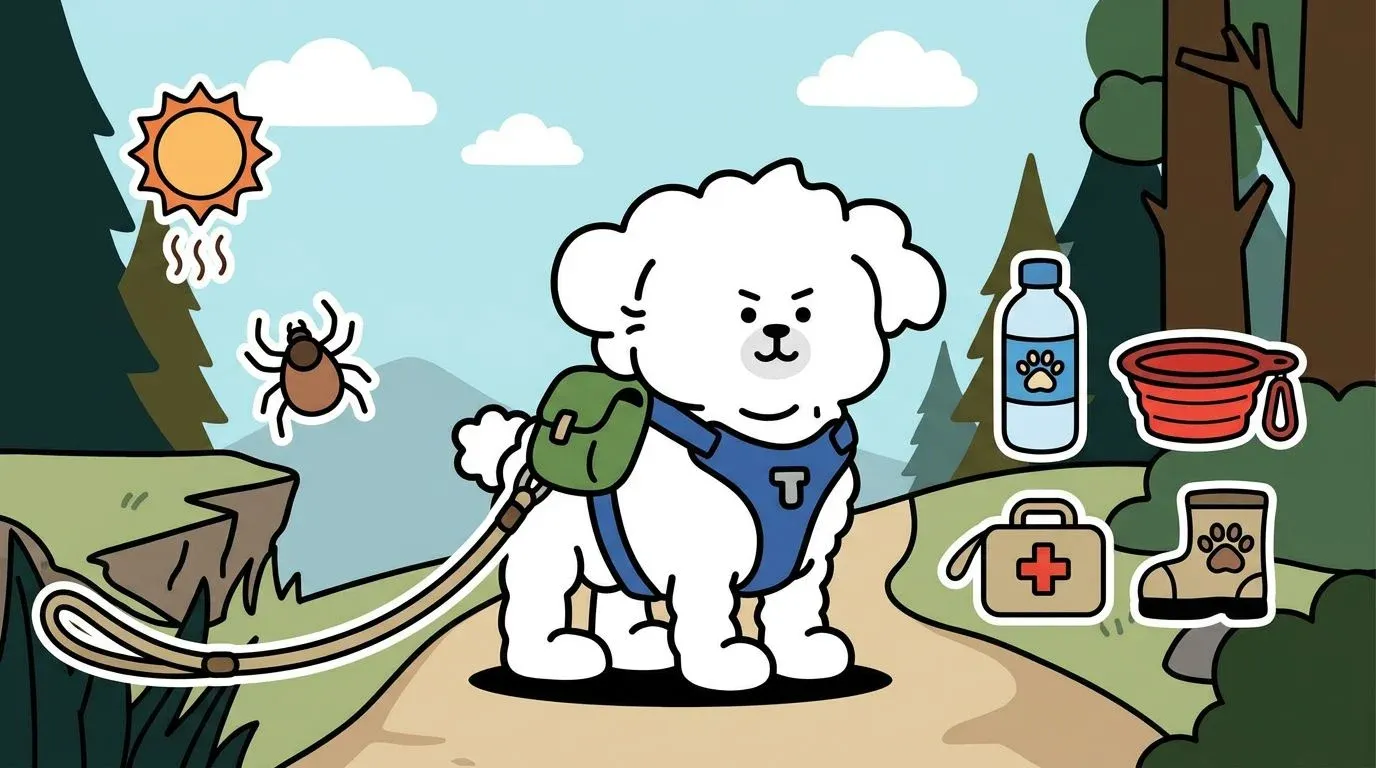
Spring is peak hiking season, and the urge to bring your dog along is entirely understandable. Trails look different through a dog’s eyes — every scent, sound, and stretch of open ground is an invitation. But what feels like an easygoing adventure to you can place significant mechanical stress on your dog’s joints, tendons, and paw pads, especially on terrain that shifts between steep inclines and rocky descents.
This guide approaches dog hiking safety from a joint-health perspective, covering how trails affect your dog’s musculoskeletal system, how to condition them for hiking, and how to structure a post-hike recovery routine that actually works.
Can Your Dog Handle the Trail?
Before packing the gear, it helps to understand what physically happens to a dog’s body on a hike. Hiking is not just extended walking — the combination of varied terrain, inclines, uneven footing, and sustained duration creates a very different load pattern than a neighborhood walk.
How Hiking Affects Your Dog’s Joints
Every step on uneven ground requires micro-adjustments throughout the limb. The stifle (knee), hip, and shoulder joints absorb repeated impact forces while also working to maintain balance on shifting surfaces. Over a 5-mile hike, these cumulative forces add up substantially.
Research in veterinary biomechanics shows that dogs distribute approximately 60% of their body weight through the forelimbs during normal locomotion. On inclines and rough terrain, that distribution shifts further, increasing load on specific joint surfaces. For dogs with existing cartilage wear, these forces translate directly into inflammation and post-activity soreness.
Uphill vs. Downhill: Understanding Joint Stress
One of the most counterintuitive findings in canine orthopedic research is that downhill movement stresses joints more than uphill. Going uphill demands more muscular effort (cardiopulmonary demand), but descending inclines compresses joint surfaces and strains ligaments — particularly the cruciate ligament and the joints of the hindlimb — under the braking forces each paw must absorb with every step.
Loose rocky descents are especially problematic because dogs cannot predict the surface beneath each foot. The result is repeated micro-corrections that fatigue stabilizing muscles faster than a consistent surface would.
For dogs with any joint history — even mild ones — a trail’s downhill sections require the most caution.
Pre-Hike Joint Health Assessment
Knowing whether your dog is physically ready for trail hiking is not about breed or age alone. Fitness level and joint health matter just as much.
Self-Check: Is Your Dog Trail-Ready?
Run through this assessment before booking a trail:
- Weight: Is your dog at an appropriate body condition score (4–5 on a 9-point scale)? Every pound of excess weight multiplies joint load on descents.
- Recent activity level: Has your dog been regularly active (daily walks of 30+ minutes), or mostly sedentary? A sedentary dog is not ready for a 6-mile trail without conditioning first.
- Gait observation: Watch your dog walk and trot on flat ground. Any subtle asymmetry, shortened stride, or hesitation to put full weight on a limb is worth investigating before adding trail stress.
- Post-activity recovery: After a normal-length walk, does your dog appear stiff for more than 10–15 minutes? Trail hiking will amplify any underlying stiffness.
- Veterinary clearance: If your dog has a known joint condition, or is over 7 years old for a large breed (10+ for small breeds), a brief vet check before the hiking season begins is worth the visit.
Breed and Age Considerations
Not all dogs face the same risks on a trail. The table below summarizes key considerations by category:
| Category | Primary Risk | Key Considerations |
|---|---|---|
| Large breeds (Labs, Goldens, German Shepherds) | Hip dysplasia, cruciate ligament tears | Limit descents, watch weight, condition gradually |
| Small breeds (Dachshunds, Corgis, Pomeranians) | Patellar luxation, spinal disc issues | Avoid boulder fields, limit jump-downs from rocks |
| Brachycephalic breeds (Bulldogs, Pugs) | Overheating, respiratory fatigue | Shorter distances, cool temps only, frequent rest |
| Senior dogs (7+ for large, 10+ for small) | Reduced muscle mass, arthritis, reduced balance | Soft terrain, shorter routes, more rest breaks |
| Puppies (under 12–18 months) | Open growth plates susceptible to stress injury | Limit high-impact terrain until skeletal maturity |
For large breeds, the early signs of arthritis in dogs can be subtle — a slight reluctance to rise, occasional rear-end stiffness — and are easy to overlook until a demanding hike makes the problem apparent. A proactive joint assessment before hiking season is far easier than managing a flare-up afterward.
Choosing the Right Trail and Gear
Trail selection is as important as physical preparation. Not every trail is suitable for dogs, and not every dog-friendly trail is appropriate for every dog.
Trail Selection Criteria for Joint Safety
Terrain surface: Soft surfaces (dirt, pine needle paths, grass) absorb impact and are far gentler on joints than compacted gravel, rocky slabs, or paved trails. If you have a choice, favor forest paths over exposed ridge routes.
Grade: Moderate trails with gradual inclines are preferable to steep switchbacks or sustained descents. Avoid trails that require scrambling or where your dog would need to jump between boulders.
Distance and elevation gain: For a dog’s first hikes of the season, prioritize modest elevation gain (under 500 feet) and keep total distance under 4 miles. Build from there as fitness improves.
US national park access: Many national parks restrict dogs to paved areas and developed campgrounds, prohibiting them from backcountry trails. Before planning any national park hike, check the NPS pet policy for that specific park — restrictions vary significantly. National forests and state parks often have more permissive dog policies. Always verify leash requirements regardless of the trail system.
Weather: Avoid midday summer hikes on exposed trails. Asphalt and dark rock surfaces can reach temperatures that damage paw pads quickly. The 5-second rule applies: if you cannot hold the back of your hand against the surface for 5 seconds comfortably, the surface is too hot.
Essential Hiking Gear Checklist
| Item | Purpose |
|---|---|
| Water + collapsible bowl | Dehydration compounds fatigue; dogs cannot sweat efficiently |
| Dog-specific harness | Distributes force across the chest rather than neck; better control on terrain |
| Paw boots or paw wax | Protects pads on rocky or hot surfaces |
| Dog-specific first aid kit | Covers paw cuts, minor lacerations, tick removal |
| Waste bags | Required on all trails; leave no trace |
| Identification + leash | Legal requirement on most trails; safety baseline |
| Trail snacks | Sustain energy for longer hikes; useful for motivation on difficult sections |
A well-fitted harness is particularly valuable on trails. If your dog slips or you need to assist them over an obstacle, a harness allows you to support them without placing stress on the neck or spine.
On-Trail Joint Protection
Preparation sets the foundation, but what you do on the trail determines how your dog’s joints hold up over the course of the day.
Pacing and Rest Intervals
The most common hiking mistake dog owners make is matching the dog’s pace to their enthusiasm at the start of the trail. Dogs, especially younger ones, will push hard early and then fade — sometimes dramatically — in the second half.
A more effective approach:
- Start slow for the first 10–15 minutes, regardless of the dog’s energy level. This warms up muscles and lubricates joints with synovial fluid before adding trail-specific demands.
- Rest every 20–30 minutes on active hiking sections. Rest means actually stopping, ideally in a shaded area, with water offered. A dog that lies down during a rest break is telling you something important — let them rest fully before continuing.
- Gauge pace by breathing: A dog working at a sustainable aerobic pace should be able to breathe at a steady rhythm without constant gasping. Excessive panting on a mild day and moderate terrain is a sign of overexertion.
- Descents deserve deliberate pacing: Slow your pace significantly on downhill sections. Allow the dog to pick their path rather than rushing ahead.
Warning Signs: When to Turn Back
Recognizing the early indicators of joint or physical distress is more useful than waiting for an obvious injury. Watch for:
- Sudden or persistent limping: Even a brief limp that resolves quickly warrants attention. If it recurs on the next descent or uphill stretch, stop.
- Sitting or lying down mid-trail unprompted: A dog that sits down and doesn’t want to get up is communicating that continuing is not comfortable.
- Reluctance on terrain they handled fine earlier: If a dog suddenly hesitates at a grade they crossed easily before, fatigue or pain is likely the cause.
- Unusual stillness or behavioral shift: Agitation, anxiety, or a marked change in the dog’s typical trail behavior can signal physical discomfort before visible lameness appears.
If you observe any of these, turn back. A shortened hike is never a failure. Recognizing changes in your dog’s behavior on the trail — an early skill worth developing — is covered in detail in the guide to reading pain-related behavior in dogs.
Wildlife and Trail Hazards
On US trails, the outdoor hazard profile differs from urban walking:
Ticks: Late spring through early fall, tick exposure is significant on forested and grassy trails. Keep your dog on preventative tick medication (discuss options with your vet), check the dog thoroughly after each hike — including between toes, under the collar, around the ears, and the groin area — and remove any attached ticks promptly. For a full protocol, the guide to tick prevention during walks and outdoor activities covers identification, removal, and disease risk.
Snakes: On warm spring days, snakes are active and often resting in sun-exposed areas on rocks or trail edges. Keep your dog on-leash and on the trail. If your dog is bitten, keep them calm and still, carry them if possible (avoid letting them walk and pump venom faster), and seek emergency veterinary care immediately.
Water sources: Natural water sources (streams, lakes) may carry Giardia or other waterborne pathogens. Carry sufficient clean water for the hike and discourage drinking from standing water sources.
Hot surfaces: Rocky and dark-surface trails absorb heat. In spring and summer, always check surface temperature before letting your dog stand on exposed rock for extended periods.
Post-Hike Recovery Protocol
This section addresses the gap in most hiking guides: what happens to your dog’s joints in the hours after the trail matters just as much as what happens during it.
Immediate Post-Hike Care
The first 30 minutes after returning to the trailhead or home set the tone for recovery:
-
Allow a gradual cool-down: Don’t stop activity abruptly. Walk slowly for 5–10 minutes at the end of the hike — a lower-intensity movement period lets heart rate and circulation stabilize, and muscles flush waste products more effectively than an immediate stop.
-
Inspect the paws: Examine all four paw pads systematically. Look for cuts, abrasions, embedded stones or thorns, cracking, or redness between the toes. Post-hike is also when paw care matters most — applying a protective balm to pads after cleaning helps maintain pad integrity. For detailed guidance on routine paw maintenance, the dog paw care guide covers pad health across different seasons and surfaces.
-
Offer water steadily, not all at once: Dogs that are highly thirsty after physical activity may gulp water rapidly. Offer water in moderate amounts and allow them to rest between drinks to avoid bloat risk, particularly in deep-chested breeds.
-
Observe gait before rest: Watch your dog walk a short distance on flat ground before they settle. A gait that looks normal immediately post-hike is a good sign. Note any deviation from their normal walking pattern.
-
Provide a comfortable, flat resting surface: Avoid letting a tired dog climb onto high furniture after a demanding hike. A firm, flat surface (dog bed at floor level) is easier on fatigued joints than a soft couch that requires effort to get into or out of.
24–48 Hour Monitoring Guide
The recovery window extends beyond the first evening. Joint inflammation from physical exertion often peaks 12–24 hours after activity — similar to the delayed onset muscle soreness humans experience.
Check the following over the day and a half after a hike:
- Morning stiffness: Does your dog take longer than usual to get up after sleeping? Brief morning stiffness (under 5–10 minutes) after a demanding hike is normal. Stiffness that persists throughout the morning suggests significant joint load from the previous day.
- Appetite and drinking: Normal appetite and regular thirst are good recovery indicators. Refusal to eat or drink warrants veterinary attention.
- Limping emergence: Limping that appears the morning after a hike (rather than during it) is a reliable sign of soft tissue or joint involvement. Rest is the first response; if limping persists past 24 hours, consult your veterinarian. The guide to diagnosing limping in dogs helps identify likely causes based on which leg is affected and when limping occurs.
- Behavioral changes: Unusual irritability, reluctance to be touched on limbs or the back, or withdrawal from normal interaction can indicate pain that isn’t visible as lameness.
Heat Therapy and Joint Recovery
Thermal therapy has an established role in canine rehabilitation medicine. For post-exercise recovery specifically, gentle heat application increases local circulation, promotes muscle relaxation, and supports the removal of inflammatory byproducts from joint tissue.
Appropriate timing: Heat is most appropriate 24–48 hours after exercise, once the acute inflammation phase has settled. In the first few hours after a very demanding hike, cold (not ice) application to a noticeably swollen joint is more appropriate. For routine post-hike recovery without visible swelling, gentle heat starting the evening after the hike is well-tolerated by most dogs.
Practical approaches: A warm (not hot) damp towel applied to the major joint areas — hips, shoulders, and stifles — for 10–15 minutes is simple and effective. The temperature should feel comfortably warm on your inner wrist; never hot. Near-infrared (NIR) therapy, used in veterinary rehabilitation settings, works by delivering photonic energy that penetrates deeper into soft tissue and joint capsule than surface heat methods — supporting circulation and cellular recovery without the heat-conduction limitations of topical application. This modality is increasingly available for at-home use.
Consult your veterinarian before starting any thermal therapy protocol if your dog has a diagnosed joint condition.
Breed-Specific Hiking Guidelines
Practical trail planning benefits from understanding how different dog categories should approach hiking distance and duration.
Small Breeds: Why Extra Caution Matters
Small breeds are not simply smaller versions of large dogs when it comes to trail demands. Proportionally, small dogs take more steps per mile, expending more energy relative to body size. Their shorter limbs mean more contact moments with uneven terrain, and their lower center of gravity — while useful for balance in some contexts — puts them at greater risk for spinal stress when navigating rocky or vertical terrain.
Breeds like Dachshunds and French Bulldogs face additional risk: Dachshunds are highly vulnerable to intervertebral disc disease, and any activity involving jumping down from heights (rocks, logs) should be avoided entirely. French Bulldogs and other brachycephalic breeds overheat quickly and are poor candidates for warm-weather or strenuous hikes.
For most small breeds, flat trails of 2–4 miles with good shade and water access represent an appropriate ceiling until conditioning is well-established.
Large Breeds: Managing Weight and Joint Load
Larger dogs (over 50 lbs) have greater absolute joint load on every step. Labs and Golden Retrievers — among the most popular trail companions in the US — are genetically predisposed to hip dysplasia and cruciate ligament injury, both of which trail hiking can exacerbate if the dog is overweight or deconditioned.
Weight management is the single highest-leverage intervention for large-breed joint protection. Research consistently shows that maintaining a lean body condition reduces osteoarthritis progression and improves quality of life in at-risk breeds. On the trail, this means monitoring your large dog’s body condition closely through the year — not just before hiking season.
A conditioning program that builds trail fitness over 4–6 weeks (progressively longer walks with some incline, gradually increasing to trail distances) significantly reduces injury risk for large breeds compared to an abrupt start to the hiking season.
Senior Dogs: How to Decide If Hiking Is Still Okay
Age alone is not a disqualifier for hiking. Many 9- or 10-year-old dogs continue to enjoy trails with appropriate modifications. The better question is: what does this specific dog’s joint and cardiovascular health look like?
A senior dog that walks 30–45 minutes daily without stiffness, maintains lean body weight, and has received veterinary clearance is a different candidate than one who is sedentary, arthritic, or overweight.
For dogs who do continue hiking into their senior years, the key modifications are:
- Distance: Cap at 2–4 miles for dogs without significant fitness history; 4–6 miles for those who have remained consistently active
- Elevation: Avoid sustained steep descents; flat or gently rolling terrain is ideal
- Rest frequency: Increase rest intervals to every 15–20 minutes rather than 30
- Post-hike monitoring: Be more attentive to the 24-hour recovery window
| Category | Recommended Distance | Terrain | Rest Intervals | Special Notes |
|---|---|---|---|---|
| Small breed adult | 2–5 miles | Soft, flat-moderate | Every 25–30 min | Avoid jump-downs, check pad temp |
| Large breed adult | 4–10 miles | Moderate with gradual grades | Every 25–30 min | Weight management critical |
| Senior dog (small) | 1–3 miles | Flat, soft surfaces | Every 15–20 min | Morning stiffness = rest day |
| Senior dog (large) | 2–4 miles | Flat, soft surfaces | Every 15–20 min | Vet clearance recommended |
| Puppy | 1–2 miles | Flat only | Every 20 min | Avoid impact terrain until mature |
Spring is a good time to start a conditioning program that prepares your dog for summer trail activities. If you’re building toward a more active outdoor season, the spring outdoor preparation checklist for dogs covers a broader range of seasonal readiness considerations beyond trail hiking alone.
Hiking with your dog, done well, is one of the better investments in their physical and mental wellbeing. The dogs that hold up best over a long hiking life are those whose owners understood that the trail is just one part of the picture — preparation, pacing, and recovery do more to protect joint health than any single piece of gear.
FAQ
How far can my dog hike in a day?
What should I do if my dog limps after a hike?
Can senior dogs still go hiking?
How do I protect my dog's paw pads on rocky trails?
What are the signs of overexertion in dogs on the trail?
Related Articles
7 Proven Ways to Relieve Your Cat's Stress at Home
Learn the signs of stress in cats, what triggers it, and 7 science-backed methods for cat stress relief you can start at home today.
Dog Jumping Off Furniture: Why Their Joints Are Paying the Price
Every couch jump sends 2–5x body weight through your dog's joints. Learn how repeated landings cause joint damage and what to do about it.
What Your Dog's Sleeping Position Reveals About Their Joint Health
Dog sleeping position joint pain connection explained — learn which postures signal discomfort, how to observe changes, and how to build a joint-friendly sleep setup.
If Your Dog Lives on Hardwood Floors, Here's How to Protect Their Joints
Slippery hardwood, laminate, and tile floors quietly damage your dog's joints over time. Learn the biomechanics, floor risk comparison, and proven solutions.
Dog Tick Prevention on Walks: How to Check, Remove, and Protect Against Tick-Borne Disease
A complete guide to dog tick prevention during walks. Learn how to check for ticks, safely remove them, and protect your dog from dangerous tick-borne diseases like Lyme, Ehrlichiosis, and Babesiosis.
Dog Heat Stroke Prevention: Critical Temperature Thresholds and Warning Signs Every Owner Must Know
Learn the 4-tier temperature risk system, breed-specific vulnerabilities, pavement heat dangers, and step-by-step emergency protocol to prevent and treat dog heat stroke this summer.
If Your Dog Is Prone to Skin Issues in Wet Weather: A Seasonal Care Guide
Learn how humid and wet weather triggers yeast infections, bacterial pyoderma, and hot spots in dogs — plus a complete post-walk routine, indoor humidity management, and nutrition tips.
Planning a Car Trip With Your Dog? Essential Safety Rules You Need to Know
Complete guide to dog car travel safety: crash-tested restraint options, desensitization training, motion sickness solutions, hot car laws, and emergency protocols.
Dog Spring Outing Checklist: Safety, Hazards, and Gear
Complete dog spring outing checklist: health checks, tick and Lyme prevention, toxic plants, lawn chemicals, gear by activity, and post-outing care.
Dog Spring Shedding Care: Brushing, Skin, and Joint Health
Science-backed dog spring shedding care: brushing routines, breed guides, skin nutrition, and the skin-to-joint inflammation link grooming guides miss.