 Cirius Petpedia
 How to Introduce Your Dog to a Newborn: A Week-by-Week Safety Guide
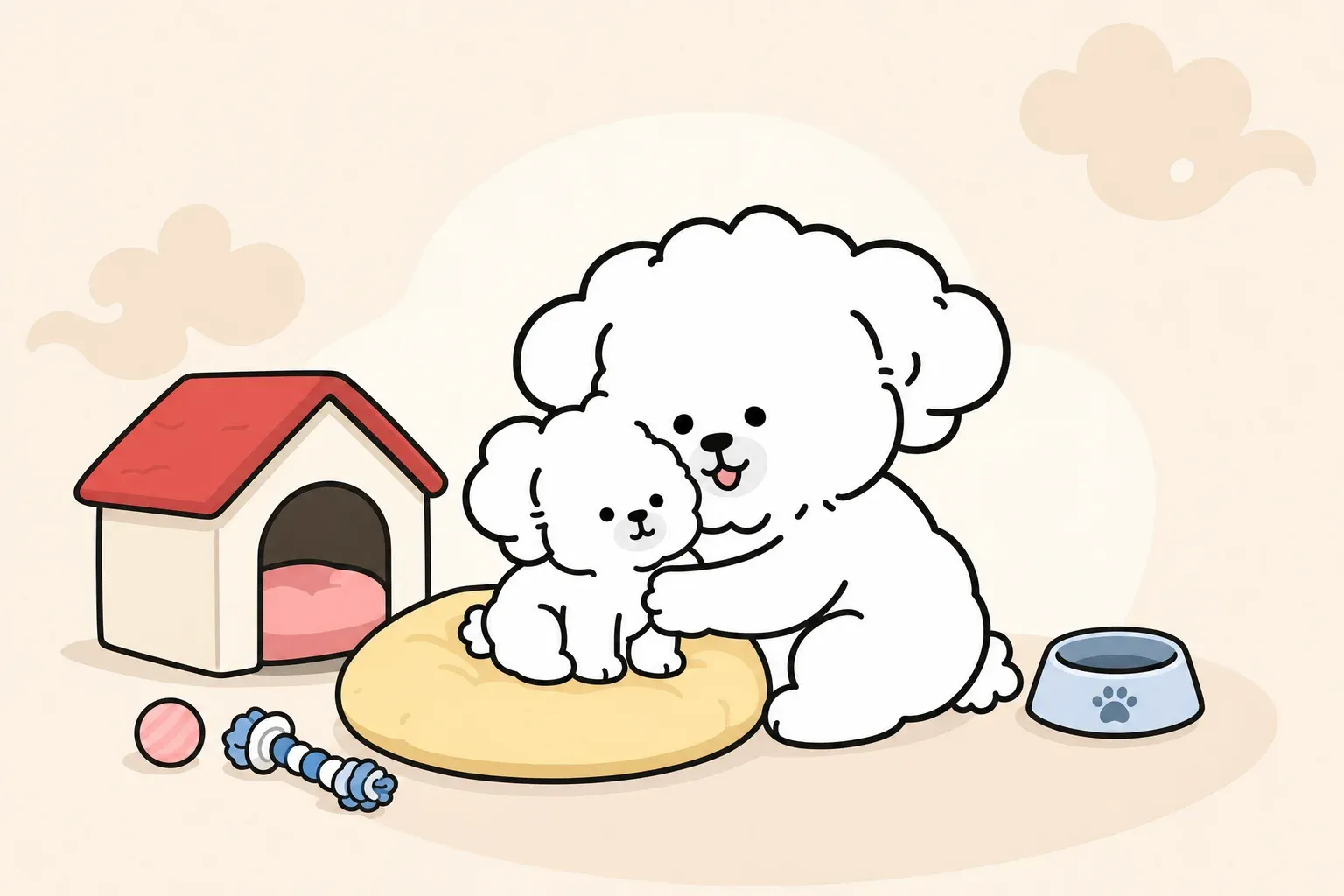
The first months with a newborn and a dog at home test even well-prepared families. The question every expecting parent asks — “will my dog accept the baby?” — has a reassuring answer: with structured preparation and a stage-by-stage protocol, the overwhelming majority of dogs adapt successfully and many form lasting bonds with the child.
This guide walks through the full timeline for introducing dog to new baby, from the pregnancy preparation window through the first year of your baby’s life. It draws on AVMA and ASPCA guidance, peer-reviewed research on early pet exposure, and certified-trainer protocols — not generic tips.
Can Dogs and Newborns Safely Live Together?
This is the first question to settle, often well before the baby arrives. The short answer: yes, when the dog’s behavior is managed and interactions are introduced gradually. The longer answer is worth understanding because it reframes the entire preparation effort.
What the Research Says About Pet Exposure and Infant Immunity
A landmark 2002 study by Ownby and colleagues, published in JAMA, followed children who lived with dogs or cats during their first year and found that early multi-pet exposure was associated with a significantly lower risk of allergic sensitization at ages 6 to 7. Children exposed to two or more dogs or cats had roughly half the rate of sensitization compared with no-pet households.
Gern and colleagues, writing in the Journal of Allergy and Clinical Immunology in 2004, replicated and extended these findings: dog ownership during infancy was associated with reduced atopy and shifts in immune development consistent with the hygiene hypothesis. The environmental microbes a dog tracks indoors appear to nudge the developing infant immune system toward tolerance rather than reactivity.
This evidence does not mean every household should add a dog before a baby arrives. Families with a strong allergy history or an immunocompromised infant should consult a pediatrician before relying on these findings. But for households that already have a dog, the research is reason to plan integration carefully — not to rehome the dog.
Emotional and Developmental Benefits for Children
Beyond immunity, longitudinal studies on children raised with dogs consistently report gains in empathy, emotional regulation, and a sense of responsibility as the child matures. Dogs offer young children a steady, non-judgmental social presence — something pediatric researchers describe as a form of secure attachment outside the human caregiver.
These benefits depend entirely on the interaction being safe and positive. A dog that is anxious, under-managed, or routinely overwhelmed by the baby will not produce these outcomes; instead, the household becomes a daily stressor. That is why the protocol below leans heavily on protecting the dog’s wellbeing alongside the baby’s.
Before Baby Arrives: Preparing Your Dog During Pregnancy
The success of any baby-dog introduction is decided months before the baby comes home. Aim to begin structured preparation around the start of the third trimester, giving roughly 8 to 12 weeks of gradual conditioning.
Audit and Refresh Basic Obedience Cues
Five cues matter most in a household with a newborn:
| Cue | Why it matters with a baby |
|---|---|
| Sit / Stay | Prevents jumping or rushing during diaper changes and feedings |
| Down | Holds a calm position during long stretches near the baby |
| Come | Reliably calls the dog away from the baby’s space |
| Leave it | Stops the dog from grabbing baby toys, blankets, or pacifiers |
| Place / Go to bed | Sends the dog to a designated spot when you need hands free |
If any of these cues are unreliable under mild distraction, this is the time to retrain — not after the baby arrives. Pair this work with foundational socialization if your dog has limited exposure to children, strollers, or unfamiliar baby equipment.
Gradually Shift Daily Routines Toward the Post-Baby Schedule
A newborn upends adult routines: feeding times, walk times, sleep windows, and the amount of one-on-one attention a dog receives all change overnight. Sudden change is the single largest stressor for most dogs, so shift the schedule gradually:
- Walk timing: Move walks to whatever times will be realistic after the baby arrives.
- Solo time: Practice closed-door alone time in increments, ending each session before the dog becomes anxious.
- Attention rhythm: Stop responding to every demand bark or nudge; reward calm, independent behavior instead.
If your dog already shows signs of distress when left alone, address separation anxiety now — it tends to intensify when the household reorganizes around a baby.
Desensitize Your Dog to Baby Sounds, Smells, and Equipment
What unsettles dogs most about a newborn is rarely the baby itself; it is the unfamiliar sensory load. Build tolerance proactively:
- Sound desensitization: Play recordings of newborn crying, fussing, and laughing at very low volume while feeding the dog or offering a long-lasting chew. Increase the volume over 2 to 3 weeks only as the dog stays relaxed.
- Equipment familiarization: Set up the crib, stroller, bouncer, and changing table well in advance. Let the dog investigate calmly, then teach a clear boundary that this furniture is not for the dog.
- Scent priming: Apply baby lotion, powder, or detergent to your hands and pair the new smell with calm praise and treats.
Establish Baby-Free Zones with Gates and Crates
Plan the household map before the baby arrives. Decide which rooms will be off-limits, where the dog’s safe resting spot will live, and how you will move between zones with both arms full. Practice the layout:
- Install a baby gate at the nursery doorway and reward the dog for settling outside it.
- Position the dog’s bed or crate away from high-traffic baby zones to give the dog a true retreat.
- If your dog is not already crate-conditioned, start now — see the crate training guide for a low-stress protocol.
Pre-arrival checklist:
- Five core cues reliable under mild distraction
- Sound desensitization underway, 2+ weeks in
- Daily routine already shifted to post-baby schedule
- Baby equipment in place, dog calm around it
- Baby gate installed, dog conditioned to settle outside the nursery
- Veterinary visit complete: vaccines current, deworming up to date, general health check
- Dog has a clearly defined retreat space
Homecoming Day: From Hospital to First Hello
The hours around homecoming set the tone for the next several weeks. Slow it down and stage it deliberately.
Send Home a Baby Blanket for Scent Introduction
Within the first day or two after birth, send a partner or family member home with a blanket, hat, or onesie the baby has worn. Lay it where the dog can investigate at their own pace without being directed to it. This is the dog’s first introduction to your baby’s scent, made calmly and without the baby present.
Watch the dog’s body language. A relaxed sniff and disengagement is the ideal response. If the dog becomes highly aroused — fixated, whining, pacing — remove the item, give a few minutes of decompression, and try again later at a greater distance.
Greet Your Dog First (Without the Baby)
When you arrive home from the hospital, the parent who is not carrying the baby should go inside first and greet the dog calmly. After weeks apart from one of their primary humans, most dogs are intensely excited; let that energy run its course before introducing a fragile newborn into the picture.
Only when the dog has settled — sitting, all four feet on the floor, attentive but not frantic — should the parent carrying the baby enter. If the dog ramps back up at this point, have a third adult take the baby into another room for a few minutes while the dog re-settles.
The Controlled First Meeting: Leash, Distance, and Calm Cues
The first time your dog meets your newborn, the interaction should be calm and constrained.
- Put the dog on a loose leash held by a calm adult.
- Sit on a couch or chair while holding the baby securely.
- Allow the dog to approach and sniff — focus on the baby’s feet or a blanket-covered area first, not the face.
- Reward calm sniffing with a quiet “good” and a small treat.
- Keep the entire first meeting under 2 to 3 minutes, then redirect the dog to a settle cue or a long-lasting chew.
If the dog whines, paces, or actively turns away, end the session immediately. Avoidance is communication — the dog is telling you they need more time. Try again in a few hours with a shorter approach and more distance.
Weeks 1-4: The Critical Adjustment Window
The real test begins after the first meeting. New parents are exhausted; the dog is recalibrating to an upended household. Most behavior problems that emerge in this window are predictable, and most are manageable with structure.
Spotting Jealousy Signs vs. Warning Signs
Not all unusual behavior is dangerous, and not all of it is benign. Use this distinction:
| Category | What you might see | What to do |
|---|---|---|
| Jealousy signals (common) | Pushing in for attention, whining, increased clinginess, house-soiling, decreased appetite | Protect one-on-one time, maintain the dog’s routine, reinforce calm behavior near the baby |
| Caution signals | Destroying baby items, increased unprovoked barking, refusing walks, hiding | Identify the stressor, increase enrichment and exercise, consult a trainer if it persists 2+ weeks |
| Danger signals | Low growling at the baby, stiff body and hard stare, lip lifting, snapping | Separate immediately, do not punish, contact a veterinary behaviorist before any further interaction |
The dog jealousy behavior guide covers each pattern in depth, including the science behind why dogs experience something resembling jealousy in triadic social settings.
Build Positive Associations With Baby’s Presence
The goal is for your dog to perceive the baby as a predictor of good things, not a competitor for resources. A few practical mechanics:
- Reserve a high-value treat for baby moments only: a stuffed Kong, a frozen lick mat, or a special chew that only appears when the baby is in the room.
- Reward calm proximity: when the dog settles quietly during a feeding or diaper change, mark it with quiet praise.
- Engineer good associations: time a short, easy training session or a stuffed Kong to coincide with baby fussing or noisy diaper changes, so the dog learns “baby noise = my best stuff.”
Protect Your Dog’s Walks, Play, and One-on-One Time
Exhausted new parents often skip the dog’s walk first. Resist that pattern. A baseline to aim for, even in the hardest weeks:
- Two daily walks, even if short — consistency matters more than length.
- 10 to 15 minutes of one-on-one time with the dog away from the baby every day.
- Indoor enrichment (snuffle mats, food puzzles, scatter feeding) to burn mental energy when outdoor time is limited.
If you cannot personally provide this in the first month, recruit a family member, neighbor, or paid dog walker. A dog whose physical and emotional needs are met behaves predictably; a dog whose needs are chronically unmet does not.
Safety Rules You Must Never Break
These rules are non-negotiable. They apply regardless of how well-behaved, well-trained, or “good with kids” your dog is.
Never Leave Dog and Baby Alone, Even for a Moment
Both the AVMA and the American Academy of Pediatrics state this without qualification: a dog and a baby should never share unsupervised space. This is not a statement about your dog’s character. It is a statement about how quickly an unsupervised interaction can go wrong with an animal that cannot predict an infant’s movement and an infant that cannot read an animal’s warnings.
When you need to step away — even for the length of a phone call — use one of these structures:
- Move the dog to another room with a closed door.
- Place the dog in their crate or behind a baby gate.
- Have another adult take over direct supervision before you leave the room.
Hygiene: Vaccination, Deworming, and Hand-Washing Habits
Sound newborn baby and dog hygiene keeps both safe:
- Heartworm and intestinal parasite prevention every month
- Flea and tick prevention every month, year-round in most climates
- Annual veterinary exam with vaccine updates as needed
- Paw wipes after walks, especially before any room the baby uses
- Hand-washing after handling the dog and before handling the baby
Once the baby starts moving (5 to 6 months), revisit the floor map. Dog bowls, water dishes, chews, and toys all need to be out of reach of crawling hands.
Reading Your Dog’s Stress Signals Early
Dogs do not announce distress; they signal it through subtle body language well before they escalate. Learning these signs — covered in detail in our dog body language guide — is the single most effective safety skill new parents can develop.
Common early stress signals:
- Ears pinned flat against the head
- Tail tucked between the legs
- Repeated lip licking or yawning out of context
- Whale eye (whites of the eye showing as the dog glances sideways)
- Crouched body, slow attempts to leave the area
When you see these signals, give the dog space immediately and remove whatever is causing the discomfort. Persistent stress signaling across days warrants a consultation with a certified professional.
Growing Together: Stage-by-Stage Interaction Plan
A common mistake is treating “baby adaptation” as a single milestone — first meeting, then done. In reality, your dog has to readjust at each major developmental stage of the baby’s first year. The dog’s experience of a sleeping newborn, a grabbing six-month-old, and a crawling ten-month-old are essentially three different animals.
0-3 Months: Observation and Scent Familiarization
At this stage the baby is largely stationary and predictable. The dog’s job is simply to coexist calmly in the same space without direct contact.
- Keep physical distance between dog and baby during feedings, diaper changes, and tummy time.
- Reward the dog for choosing to settle nearby rather than approach.
- Allow the dog to observe routine baby care from a respectful distance; this is how familiarity builds.
4-8 Months: Supervised Touch and Gentle Interaction
Once the baby is reaching, grabbing, and rolling, the dog encounters new sensory input. Many dogs find this stage harder than the newborn phase.
- Introduce “guided touch”: with your hand under the baby’s, briefly stroke the dog’s back or side. Two or three seconds, then disengage.
- Intercept any pulling, ear-grabbing, or fur-grabbing immediately — every time, without exception.
- Add a soft cue like “gentle” to mark calm interaction, and reward both baby and dog for short, controlled contact.
- Reorganize the floor map so the baby cannot reach the dog’s food, water, or favorite toys.
If your dog actively withdraws from the baby at this stage, respect it. Withdrawal is appropriate self-regulation, not rejection. Forced interaction at this stage is one of the most common causes of later reactivity.
9-12 Months: Managing a Mobile, Grabbing Baby
Crawling and pulling-to-stand transform the household. The baby moves unpredictably, fast, and toward whatever is interesting — which often means the dog. This is the highest-risk stage of the first year.
- Position the dog’s crate or bed in a place the baby physically cannot reach without an adult’s help.
- Maintain visual supervision any time the baby and dog share floor space — this includes phone-down attention, not glances from across the room.
- Begin teaching the baby gentle interaction: a flat-hand stroke down the dog’s back, never on the face or near the food bowl. “Don’t touch the dog” is harder to enforce than “this is how we touch the dog.”
- Always leave the dog an exit route. A dog cornered by a baby is a dog that has run out of options.
9-12 month safety checklist:
- Dog food and water bowls moved to a baby-inaccessible location
- Dog toys and chews stored when not actively supervised
- Crate door cannot be opened by baby’s hands
- Dog’s preferred resting spots have a clear exit path
- Daily stress-signal check on the dog
When to Call a Certified Behavior Professional
Most baby integrations succeed with the protocols above. Some do not, and the difference between a frustrating few months and a serious incident is often whether parents recognize the limits of DIY training in time.
Red Flags That Warrant Professional Help
Stop home-based work and get a professional involved if you see any of the following:
- Growling, snapping, or snarling directed at the baby
- A bite or attempted bite of any kind, even one that did not break skin
- Resource guarding of food, toys, sleeping spots, or a specific person around the baby
- Stress signals that persist or intensify across multiple weeks despite preparation
- A history of bites, reactivity, or aggression toward children outside the home
Do not wait to “see if it gets better.” Dogs that escalate against an infant follow predictable warning patterns, and a credentialed professional can read those patterns far faster than even an attentive owner.
Choosing the Right Credential: CPDT-KA, IAABC, AVSAB
Not every “dog trainer” is qualified for cases involving an infant. The hierarchy of credentials worth knowing:
- CPDT-KA (Certified Professional Dog Trainer — Knowledge Assessed): general training credential issued by the CCPDT. Appropriate for obedience refreshers and basic socialization work with a dog that has no aggression history.
- CBCC-KA / CDBC: behavior consultant credentials from CCPDT and IAABC respectively. Trained in behavior modification for fear, anxiety, and mild reactivity cases.
- DACVB (Diplomate of the American College of Veterinary Behaviorists): a veterinarian with specialized residency training in behavior medicine. The right call for any case involving growling at the baby, a bite, or suspected fear-based aggression.
When you call, mention specifically that the case involves a newborn. Reputable professionals triage these cases as urgent.
Bringing a dog and a newborn into one household is not a single event but a year-long process of gradual integration. The families who navigate it best are not the ones with the calmest dogs; they are the ones who prepare early, respect their dog’s signals, and refuse to leave safety to chance.
If the first weeks feel harder than expected, that is normal. Your dog is adjusting to a complete reorganization of their world at the same time you are. Move slowly, protect both your dog’s wellbeing and your baby’s safety with equal seriousness, and bring in a credentialed professional the moment you see a red flag. The reward — a child growing up with a calm, trusted dog in the family — is worth every week of structured work.
References
- 1. Ownby DR et al. Exposure to dogs and cats in the first year of life and risk of allergic sensitization at 6 to 7 years of age. JAMA. 2002
- 2. Gern JE et al. Effects of dog ownership and genotype on immune development and atopy in infancy. Journal of Allergy and Clinical Immunology. 2004
- 3. American Veterinary Medical Association - Bringing Baby Home: Preparing Your Pet
- 4. ASPCA - Dogs and Babies
- 5. American Academy of Pediatrics - Pets and Babies
- 6. American Veterinary Society of Animal Behavior (AVSAB) - Position Statements
FAQ
How long does it take a dog to adjust to a new baby?
What is the 3-3-3 rule and does it apply to introducing a baby?
Is it safe for my dog to lick my baby?
When can my dog sleep in the same room as the baby?
What should I do if my dog growls at the baby?
Related Articles

Do Dogs Really Get Jealous? Signs, Causes, and Step-by-Step Solutions
Do dogs get jealous? Yes — and it escalates if ignored. Learn the 7 warning signs, scenario-specific fixes, and a 5-step DSCC correction protocol.
Dog Separation Anxiety Guide: Symptoms, Training, and Help
Learn how to identify dog separation anxiety symptoms, follow a vet-backed step-by-step training plan, and know when medication or a specialist is needed.

How to Crate Train Your Dog: A Step-by-Step Guide from First Introduction to Calm Alone Time
Learn how to crate train a dog with a 5-step protocol, age-based time limits, and troubleshooting for crying, crate aversion, and accidents.