 Cirius Petpedia
 Do Dogs Really Get Jealous? Signs, Causes, and Step-by-Step Solutions
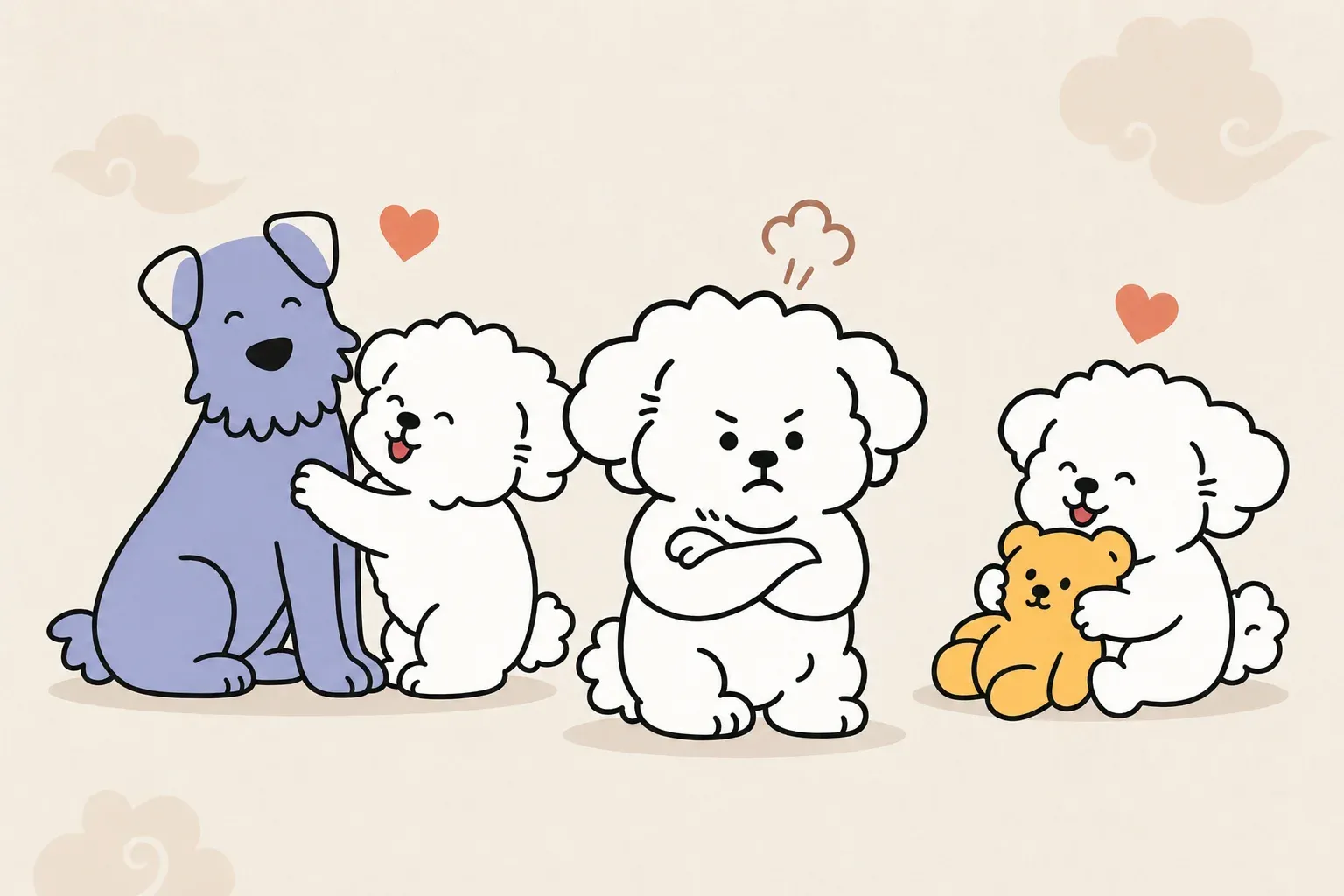
Your dog pushes between you and your partner the moment they embrace. Your resident dog sulks in the corner the day you bring home a new puppy. Your dog starts eliminating indoors the week after you come home with a newborn. These behaviors frustrate and confuse owners — and they all point toward the same underlying dynamic: dog jealousy.
The question “do dogs get jealous?” was once dismissed as anthropomorphism. Behavioral science has since caught up. This guide covers the research, the warning signs, what happens when jealousy goes unaddressed, and — most importantly — a concrete, scenario-specific protocol for resolving it.
What Is Dog Jealousy — Emotion or Behavior?
For years, attributing jealousy to dogs was considered scientifically irresponsible. Dogs were thought to lack the cognitive self-awareness required for a social emotion that complex. That position has changed substantially.
The Science Behind Dog Jealousy: What the 2014 UCSD Study Proved
In 2014, Christine Harris and Caroline Prouvost at the University of California San Diego published a landmark study in PLOS ONE titled “Jealousy in Dogs.” Their experiment exposed 36 dogs to three conditions while their owners were instructed to ignore them and interact instead with: (1) a lifelike stuffed dog, (2) a jack-o’-lantern bucket, and (3) a book.
The results were clear. Dogs exhibited significantly more jealousy-associated behaviors — pushing the owner, snapping at the object, and physically inserting themselves — when their owner interacted with the stuffed dog compared to the other two objects. Notably, 78% of the dogs attempted to push between the owner and the stuffed dog, and 42% snapped at it.
Harris and Prouvost concluded that dogs display behaviors that are functionally analogous to jealousy observed in human infants — a response to a perceived social threat to an attachment relationship. They define this as a triadic emotion: it requires a self (the dog), a valued other (the owner), and a rival (whoever or whatever is receiving the attention).
A 2018 study by Cook, Prichard, Spivak, and Berns extended this work using fMRI brain imaging. They found that regions associated with social-emotional processing showed distinct activation patterns in jealousy-triggering scenarios, providing neurological corroboration for the behavioral observations. The brain, not just the behavior, responds to perceived social displacement.
This matters for owners not as a philosophical point, but as a practical one: if dog jealousy has a real emotional substrate, correcting it requires addressing that substrate — not just suppressing the surface behavior.
Jealousy vs. Separation Anxiety: How to Tell the Difference
Dog jealousy and dog separation anxiety are frequently confused, but they are fundamentally different emotional states with different triggers and different correction pathways.
Jealousy is triggered by the presence of a rival receiving attention. The owner is present; the dog’s distress is directed toward the rival or toward positioning itself between the owner and the rival. The behavior stops, or reduces, when the rival leaves or when the owner redirects attention to the dog.
Separation anxiety is triggered by the absence of the owner. The dog’s distress escalates as the owner leaves and typically peaks within the first 30–60 minutes of solitude. Signs include destructive behavior at exit points, excessive drooling, and vocalizing specifically correlated with the owner’s departure.
Key diagnostic distinction: if your dog’s problematic behavior occurs while you are present and seems directed at a person, pet, or object receiving your attention, jealousy is the more likely mechanism. If the behavior occurs reliably when you leave and is absent when you are home, separation anxiety is the more probable cause.
Some dogs present with both. A dog with an existing separation anxiety history may develop heightened jealousy responses when a new pet introduces additional competition for the owner’s time and focus.
7 Signs Your Dog Might Be Jealous
Jealous dog behavior signs exist on a spectrum. Recognizing the early signals prevents escalation to more serious forms.
Mild Jealousy: Pushing In, Whining, Attention-Seeking
These signs of jealousy in dogs are easy to dismiss as “being affectionate,” but context distinguishes them. They occur specifically when another person or animal receives your focus:
- Physical insertion — Your dog wedges themselves between you and another person, or between you and another pet, whenever physical affection is being exchanged.
- Pawing or nudging — Persistent pawing at your arm or leg while you are engaged with someone else. This escalates in frequency and force when the behavior goes unreinforced.
- Excessive vocalization — Whining, yapping, or barking directed not at a doorbell or external stimulus but at your interaction with the rival.
- Exaggerated performance of trained behaviors — Some dogs will compulsively sit, shake, or perform other trained cues in an attempt to redirect your attention. This looks cute but signals anxiety about social positioning.
- Following and shadowing — Unusually close physical following specifically when the rival (new baby, new partner, new dog) is present and nearby.
Severe Jealousy: Aggression, House Soiling, Destructive Behavior
When mild signals go unaddressed — or are inadvertently reinforced by the owner giving attention in response to them — jealous dog behavior can escalate:
- Growling, snapping, or lunging — Directed at the rival or, in some cases, at the owner if the owner attempts to manage the dog during a jealousy episode. This is jealous dog aggression and requires structured intervention.
- Resource guarding shifts — A dog with no previous guarding history begins guarding the owner’s lap, sleeping spot, or proximity as a social resource rather than a food resource. This overlaps with resource guarding behavior but has a distinct social trigger.
- House soiling — Elimination in the home specifically following the arrival of a new person or pet, even in a house-trained dog. This is stress-mediated and represents a significant welfare signal.
- Destructive behavior during rival’s presence — Chewing, scratching, or destroying objects in proximity to the rival. Distinct from separation anxiety in that the owner is typically present.
What Happens When You Ignore Dog Jealousy
Dog jealousy does not typically resolve on its own. Without structured intervention, mild jealous behaviors either stabilize at a low level — creating ongoing tension in the household — or follow a predictable escalation pattern.
Aggression Escalation: From Nudging to Biting
Behavioral science documents a consistent escalation ladder for unaddressed social competition in dogs. The pathway generally runs: attention-seeking behavior (pawing, whining) → body-blocking and interposing → threat signals (stiffening, whale eye, low growl) → contact aggression (snapping, biting).
Each step of this ladder is preceded by a window in which intervention is far more effective. Once a dog has learned that escalating intensity achieves the desired result (owner attention redirects to them), the behavior pattern becomes reinforced and harder to modify.
The risk is not hypothetical. A 2019 survey-based study on dog bites in multi-dog and multi-person households found that jealousy-related triggers — specifically competition for owner attention — accounted for a disproportionate share of intra-household bite incidents compared to food-related triggers.
Multi-Dog Household Conflicts and Instability
In households with multiple dogs, one dog’s jealousy toward a new arrival creates ripple effects on the entire social structure. The resident dog’s anxiety transmits to the new dog through body language and stress-signaling. The new dog may respond with appeasement behaviors that are misread by the resident dog as challenges. Owners who attempt to manage this by giving equal attention often unintentionally reinforce the competition by making attention itself the prize.
Dog socialization training between resident and new dogs requires a stable emotional baseline in both animals. Active jealousy in one dog prevents that baseline from establishing.
Damage to the Human-Dog Bond and Stress-Related Health Issues
Chronic jealousy-driven arousal is physiologically costly. Sustained cortisol elevation in dogs is associated with suppressed immune function, gastrointestinal disruption, and changes in sleep quality. Owners who find their dog’s jealous behavior unmanageable often inadvertently reduce their overall engagement with the dog — creating a self-reinforcing cycle in which the dog’s attachment anxiety increases while the quality of the relationship declines.
Addressing jealousy early is not just a behavioral intervention. It is a welfare intervention.
Scenario-Specific Jealousy Triggers and Solutions
The “how to stop dog jealousy” question has different answers depending on the specific trigger. The underlying mechanism — a perceived threat to a valued attachment relationship — is the same, but the practical approach must fit the situation.
New Puppy or Dog Joining the Family
A dog jealous of a new puppy is the most commonly reported jealousy scenario. The resident dog’s entire social context changes overnight: shared resources, owner attention, sleeping space, and daily routine all face disruption simultaneously. For a complete environment setup and step-by-step introduction process, the dog adoption preparation guide covers the full transition protocol before and after the new dog arrives. The actual dog-to-dog introduction — scent exchange, the first meeting on neutral ground, and the crate-gate-rotate protocol at home — is covered step by step in the second dog introduction guide.
Preparation phase (before the puppy arrives):
- Establish a gated “puppy zone” and allow the resident dog to investigate it without the puppy present. Familiarity with the physical changes before the social change reduces arousal.
- If possible, do a scent introduction: bring home a blanket that smells of the puppy before the first in-person meeting. Feed the resident dog high-value treats in the presence of that scent.
Introduction protocol:
- First meeting in a neutral outdoor location where neither dog has established territorial markers.
- Both dogs on leash, handlers walking parallel at enough distance that both dogs remain calm (below arousal threshold). Watch for stiffening, direct staring, or tail position changes in the resident dog.
- Gradually reduce walking distance over multiple sessions — not a single session.
- Reward all calm, relaxed body posture in the resident dog with high-value treats. The puppy’s presence should reliably predict good things.
Ongoing management:
- The resident dog’s routine (feeding time, morning walk, one-on-one play session) should remain as consistent as possible. Disrupted routine signals to the resident dog that the puppy’s arrival caused a loss of status.
- Feed dogs separately, especially in early weeks. Competition at the food bowl compounds jealousy triggers.
- Give the resident dog a dedicated daily period of owner-only attention with the puppy fully out of sight.
This approach follows the DSCC (desensitization and counterconditioning) framework endorsed by CPDT-KA certified trainers: systematically reduce the emotional weight of the trigger stimulus (the puppy’s presence) while conditioning a new positive association.
New Baby or Family Member
Dog jealousy toward a new baby has a different risk profile. The combination of unpredictable movement, unfamiliar sounds, and dramatically altered owner routine creates a high-arousal environment for many dogs.
Pre-arrival preparation:
- Play recordings of infant sounds (available on YouTube and behavioral training platforms) at low volume during positive activities like feeding and play. Gradually increase volume over several weeks.
- Practice the new routine in advance: simulate reduced attention periods, adjust exercise schedules, introduce the nursery space early.
- Bring home a worn piece of the baby’s clothing from the hospital before the first in-person introduction. Reward calm sniffing.
First introduction:
- Bring the baby home while another adult manages the dog.
- Allow the dog to sniff from a comfortable distance with the dog on leash. No forced physical closeness.
- Reward all calm behavior. End the session while the dog is still calm, before arousal escalates.
Ongoing:
- Create a physical baby zone where the dog is excluded during feeding and sleep — but ensure the dog has enriched spaces of their own (puzzle toys, chews) in the adjacent area.
- When possible, include the dog in baby-adjacent activities: sitting near the dog while nursing, rewarding calm presence during diaper changes. The goal is to associate the baby with calm positive experiences rather than the dog learning that the baby reliably predicts exclusion.
For the full timeline — from third-trimester desensitization through homecoming and the developmental stages of the baby’s first year — see the step-by-step guide to introducing your dog to a newborn, which extends the jealousy-prevention work above into a complete adaptation protocol.
Learning to read your dog’s body language is particularly valuable here. Early stress signals (yawning, lip-licking, ear position) allow intervention before the dog’s arousal reaches a level that requires removal.
Jealousy Toward a Spouse or Partner
A dog possessive of owner — specifically in relation to a romantic partner — is a pattern that many owners find both amusing and mildly concerning. It becomes a real problem when the dog’s behavior creates friction in the relationship or when behaviors include growling or blocking access to the owner.
The behavioral dynamic is straightforward: the dog has established the owner as a primary attachment figure and experiences the partner as a rival for physical proximity and attention.
Correction approach:
- The partner, not the primary owner, should become the source of the dog’s highest-value rewards: feeding, walk initiation, and high-value treat delivery.
- Avoid reinforcing positioning behavior. If the dog inserts between the owner and partner, neither person should pet or interact with the dog. The dog learns that insertion does not produce attention.
- Practice structured parallel engagement: both people sit together while the dog is rewarded for lying calmly at a distance. Gradually reduce that distance over multiple sessions.
- When the dog exhibits excessive barking during partner interactions, redirect with a trained “place” or “mat” cue rather than attempting to manage arousal mid-episode.
5-Step Jealousy Correction Protocol
Across all scenarios, jealous dog training follows the same corrective framework. This protocol is aligned with CPDT-KA standards and the desensitization-counterconditioning (DSCC) approach recommended by veterinary behaviorists.
Step 1: Identify Jealousy Triggers
Before modifying behavior, map its triggers precisely. Keep a simple behavior log for 5–7 days:
- What specifically triggers the jealous behavior? (Specific person? Specific interaction type? Physical contact between others?)
- At what intensity does it start? (First nudge vs. immediate growling?)
- What does the dog do, and in what sequence?
- What happens immediately before, during, and after the behavior?
Precise trigger identification allows you to set training starting points below the dog’s arousal threshold — the fundamental requirement for effective desensitization.
Step 2: Use Positive Reinforcement-Based Responses
Counterconditioning requires that the trigger stimulus (the rival receiving attention) consistently predicts something excellent for the dog. The mechanics:
- Begin at exposure level zero: the trigger stimulus is present but far enough away or at low enough intensity that the dog is calm.
- Deliver high-value rewards (cooked chicken, cheese, freeze-dried meat — whatever ranks highest for your specific dog) immediately upon exposure to the trigger, before any jealous behavior occurs.
- Duration: short sessions of 2–3 minutes maximum. Arousal is cumulative; end before the dog hits threshold.
- Progression: increase trigger intensity only when the dog is consistently showing relaxed body language at the current level. Never rush the gradient.
Do not reward the dog after jealous behavior occurs. This is not punishment — simply no reward, and redirect to an incompatible behavior (a trained “sit” or “down”). Consistency is more important than any individual response.
Step 3: Ensure Fair Resource Distribution
“Fair” in multi-dog households does not mean identical. It means each dog’s core needs — food, rest space, exercise, and owner attention — are reliably met without requiring competition.
- Feed dogs separately, in separate locations, simultaneously.
- Provide individual rest spaces (crates, beds) that are physically separated and where each dog can rest without monitoring the other.
- Deliver owner attention in structured, individual sessions rather than trying to divide simultaneous attention. One-on-one time is more valuable to the dog than fractional shared time.
- If one dog consistently displaces the other from proximity to the owner, use physical management (tethers, gates, crates) during early training stages rather than relying on the dogs to self-regulate.
Step 4: Create Safe Personal Spaces
Jealousy is partially a spatial and resource phenomenon. Dogs who lack a secure personal territory experience higher baseline arousal in competitive social environments.
Each dog should have a space — a crate, a designated mat, a gated room — that functions as a safe zone: no other dog or person enters uninvited, and being in that space reliably predicts positive outcomes (a chew, a food puzzle).
Build positive associations with the personal space before you need it as a management tool. A dog who values their crate as a retreat is far less likely to need to compete for proximity to the owner.
Calm training approaches — specifically “go to your place” training — are directly applicable here. A dog who has a trained default behavior for “when I’m aroused, go to my mat” has a skill that preempts jealous behavior rather than correcting it after the fact.
Step 5: When to Seek a Certified Trainer (CPDT-KA)
The five steps above are effective for most presentations of dog jealousy. Escalate to professional support when:
- Any jealous behavior involves contact aggression (snapping, biting) directed at a person, another dog, or a child.
- The dog’s arousal does not reduce with consistent DSCC training over 4–6 weeks.
- The jealousy is complicating a complex household transition (new baby with safety implications, multi-dog conflict with injury history).
- You observe signs consistent with both jealousy and separation anxiety — these can co-occur and require differentiated treatment plans.
When seeking professional help, look specifically for the CPDT-KA credential (Certified Professional Dog Trainer – Knowledge Assessed), which is administered by the Certification Council for Professional Dog Trainers and requires documented training hours alongside written examination. For cases involving aggression, a Veterinary Behaviorist (DACVB — Diplomate of the American College of Veterinary Behaviorists) is the highest level of specialist available.
Jealousy vs. Similar Problem Behaviors: Comparison Guide
Misidentifying jealousy as separation anxiety or resource guarding leads to the wrong training approach. The following table separates the three:
Jealousy vs. Separation Anxiety vs. Resource Guarding: Quick Comparison Table
| Dog Jealousy | Separation Anxiety | Resource Guarding | |
|---|---|---|---|
| Trigger context | Owner present, attention directed at rival | Owner absent or preparing to leave | Dog near high-value item (food, toy, space) |
| Owner required? | Yes — behavior disappears when owner is absent | No — behavior occurs specifically in owner’s absence | No — behavior can occur with any person/dog approaching |
| Core emotion | Social displacement threat | Attachment disruption panic | Possession defense |
| Key behaviors | Interposing, pawing, vocalization, redirected attention-seeking | Pacing, destructive behavior at exits, house soiling, drooling | Freeze, hard stare, growl, snap when approached |
| Rival focus | Yes — behavior targets person/pet receiving attention | No — behavior is not rival-directed | No — behavior targets whoever approaches the resource |
| Correction approach | DSCC with rival as conditioned stimulus; resource equity | Systematic independence training; departure desensitization | DSCC with approach as conditioned stimulus; “trade” protocols |
| Professional threshold | Aggression involved, or no improvement in 4–6 weeks | Moderate-severe: medication evaluation warranted | Any growl or snap directed at a person |
The overlap zone worth noting: a dog can exhibit jealousy and resource guarding simultaneously, particularly when the “resource” being guarded is owner proximity. If your dog growls when others approach you specifically (rather than approaching a food bowl or toy), this may represent a hybrid presentation. Resource guarding protocols and jealousy DSCC training can be run in parallel, but the trigger specificity matters for designing the training gradient.
Similarly, some dogs present with anxiety-amplified jealousy: separation anxiety creates a heightened dependency on the primary owner, and any perceived threat to that attachment relationship triggers intense jealous responses. Treating the separation anxiety first typically reduces the jealousy severity.
If you are uncertain whether your dog’s behavior is primarily jealousy, anxiety, or guarding, tracking trigger context — specifically whether the owner is present, and what the dog is focused on — provides the clearest diagnostic signal.
Applying the DSCC protocol consistently across 3–6 weeks produces measurable behavior change in the majority of dogs with mild to moderate jealousy. If you are managing a multi-dog household transition, preparing for a new baby, or noticing escalating jealous dog aggression, early structured intervention significantly improves outcomes for both dogs and the people who care for them.
References
FAQ
Do dogs really get jealous, or is it just attention-seeking?
Should I ignore my dog's jealous behavior?
How do I stop my dog from being jealous of the new puppy?
Can dog jealousy lead to aggression?
How long does it take for a jealous dog to adjust to a new family member?
Related Articles
Dog Separation Anxiety Guide: Symptoms, Training, and Help
Learn how to identify dog separation anxiety symptoms, follow a vet-backed step-by-step training plan, and know when medication or a specialist is needed.

Is Your Dog Guarding More Than Just the Food Bowl? Types of Resource Guarding and How to Fix Them
Dog resource guarding goes beyond food bowls. Learn the 4 types, a severity assessment framework, and type-specific training protocols to stop guarding safely.
Can You Really Read Your Dog? A Complete Guide to Dog Body Language
Master dog body language with a body-part-by-body-part breakdown plus emotion-state cross-reference. Learn calming signals, misread cues, and pain signals.