 Cirius Petpedia
 How to Start Nose Work with Your Dog: A Step-by-Step Beginner's Guide
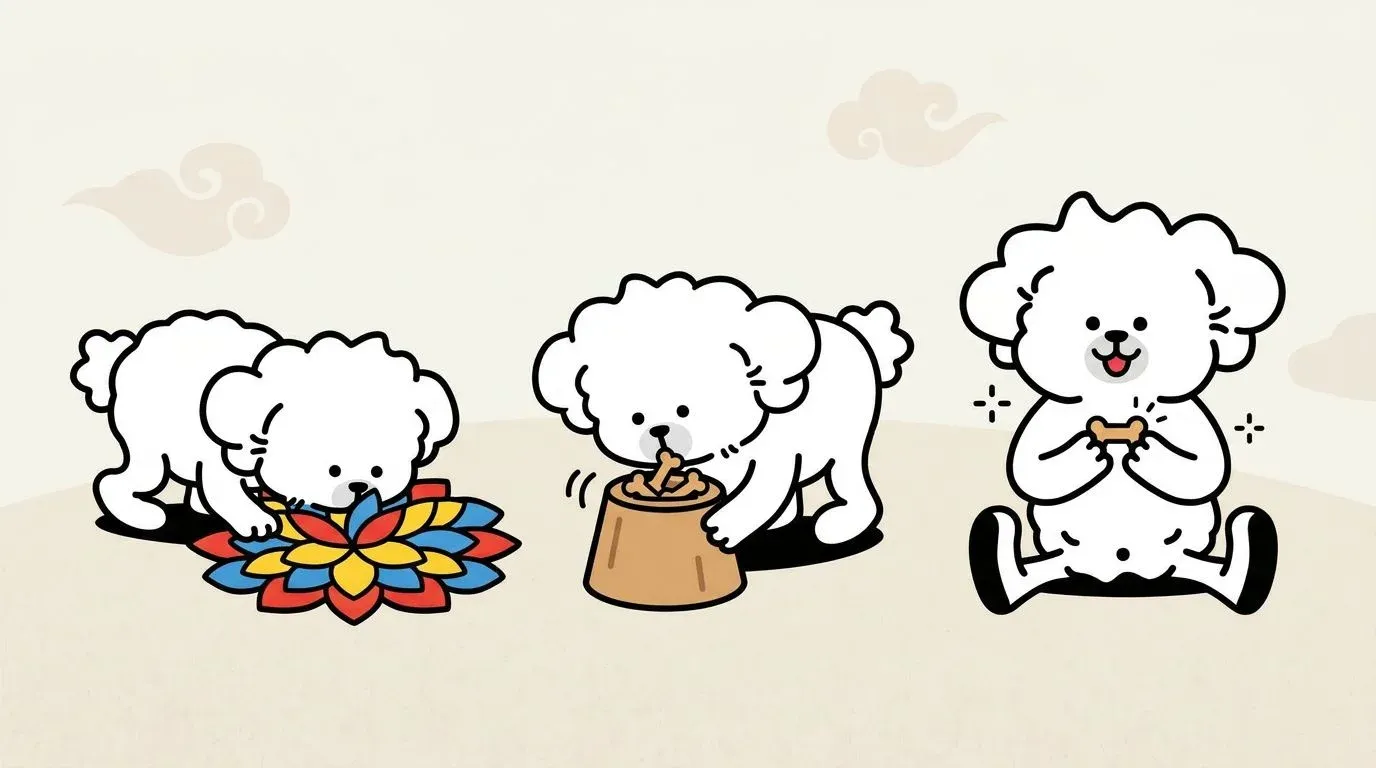
If you have ever taken your dog on a long walk only to find them bouncing off the walls the moment you get home, the missing piece is probably mental — not physical. A dog’s brain is wired for its nose. Dogs have roughly 300 million olfactory receptors compared to about 6 million in humans, and the part of the brain devoted to analyzing smells is proportionally 40 times larger. Tracking and decoding scent is one of the most demanding cognitive tasks a dog can do.
Nose work is a structured way to put that instinct to work. It starts as simply as hiding a treat in your closed fist and scales all the way to outdoor scent detection across open terrain. This guide walks you through a 5-stage progressive difficulty protocol, grounded in canine behavioral science, that you can begin today with items already in your home.
What Is Nose Work?
Tapping Into Your Dog’s Natural Scenting Instinct
K9 Nose Work was developed by professional detection-dog trainers who recognized that the same scent-discrimination skills used in search-and-rescue and law enforcement could be channeled into a rewarding civilian activity. The National Association of Canine Scent Work (NACSW) formalized the sport in 2009, the same year the American Kennel Club introduced its AKC Scent Work program. Since then, it has expanded well beyond competition into everyday enrichment for dogs of all ages, breeds, and temperaments.
The underlying mechanic is simple: the dog uses its nose — not its eyes or its owner’s body language — to locate a hidden odor source and communicate the find. At the beginner level, the target odor is just a high-value treat. At the advanced competition level, dogs detect specific essential oils like birch, anise, clove, and cypress. What makes the activity powerful at every level is that the dog controls the search. Nose work is one of the few training activities where the human’s job is largely to stay out of the way and let the dog work.
The Proven Benefits of Nose Work for Dogs
Cognitive fatigue and stress reduction
Research published in Applied Animal Behaviour Science and similar peer-reviewed journals consistently shows that active scent work lowers cortisol levels in dogs. The cognitive load of parsing competing odors and mapping a three-dimensional scent picture is genuinely tiring. A 15-minute nose work session produces mental fatigue comparable to an hour or more of physical exercise — which is why dogs that finish a session tend to settle and rest rather than demand more activity.
Confidence building across all temperaments
Nose work is one of the few enrichment activities recommended by behavior consultants specifically for fearful, reactive, and socially anxious dogs. Because the dog solves the problem independently — without needing to follow a handler’s cues or interact with other dogs — each successful find is a purely self-generated victory. That pattern of autonomous success has been shown to reduce anxiety responses in unfamiliar environments over time.
Accessibility across age and physical condition
Unlike fetch, agility, or running games, nose work requires no explosive movement. A dog recovering from surgery, a senior dog with reduced stamina, and a high-energy adolescent can all participate. The adjustable difficulty means the activity scales with the dog rather than demanding a fixed physical output.
What You Need Before Getting Started
Basic Supplies
Nothing needs to be purchased before Stage 1. Everything required for the first two stages is already in your kitchen or junk drawer.
- High-value treats: Scent strength matters more than size. Small pieces of cooked chicken, string cheese, plain freeze-dried liver, or a tiny amount of canned tuna all work well. Cut them to pea-size or smaller so the dog can eat quickly and keep searching.
- Opaque cups or containers: Three to five paper or plastic cups are all you need for Stage 2. They must be opaque — the whole point is that the dog uses its nose, not its eyes.
- A blanket, bath towel, or hand towels: These substitute for a snuffle mat in Stage 3 and cost nothing.
- A cue word: Decide on a consistent verbal marker before you start — “find it,” “search,” or “go sniff” are all common choices. The specific word does not matter; using the same word every time does.
Setting Up the Right Training Environment
For the first two or three stages, choose a quiet room with the television off and minimal foot traffic. An overstimulating environment splits the dog’s attention and makes early-stage wins harder to achieve. A calm starting environment also signals to the dog that a focused activity is beginning.
One habit to build from the very first session: do not give hints. Do not point toward the treat, glance at the hiding spot, or move toward it. The moment you start coaching, the dog shifts from using its nose to reading your body language — which defeats the purpose and creates a dependent searching style that is difficult to undo later.
Choosing the Right Treats
For the initial stages, use the highest-value treat your dog knows. The scent needs to be strong enough that the dog can detect it through a fist, a cup, and eventually a folded towel. Plain dry kibble rarely has enough aroma for early nose work. Save lower-value treats for obedience maintenance; reserve the chicken and cheese for nose work sessions.
If your dog has food allergies or dietary restrictions, consult your veterinarian and then choose the most pungent safe option from the approved list.
Step 1: Find the Treat in the Palm
Setting Ground Rules
The goal of Stage 1 is a single conditioned association: nose contact with the scent source equals reward. Everything else — cups, mats, rooms — builds on this foundation.
How to run Stage 1:
- Place a treat in one hand and close both fists. Hold both fists at nose height in front of the dog.
- The moment the dog presses its nose to the hand holding the treat, open your fist and deliver the reward.
- If the dog nudges the empty hand, say “nope” quietly and withdraw both hands briefly, then re-present.
- Do not reward pawing, barking, or jumping — only nose contact. Ignore those behaviors completely without scolding.
- Run 8 to 10 repetitions per session. Keep each session under 5 minutes.
The first session usually feels chaotic. Many dogs paw, sniff randomly, or stare at you waiting for direction. Hold your position. Within a few repetitions, most dogs make the nose-to-hand connection and the behavior becomes deliberate.
Building a Foundation of Success
Run Stage 1 twice daily for two to three days. Short, successful sessions outperform long ones in both retention and motivation. You are ready to move to Stage 2 when the dog consistently goes directly to the correct fist with its nose — without pawing, circling, or looking at your face first. For most dogs, this happens within three to five days.
Step 2: Find the Treat Under the Cup
First Difficulty Increase
The treat is now out of direct reach. The dog must track the scent through a barrier for the first time.
How to run Stage 2:
- Place three cups upside down on the floor, evenly spaced.
- Let the dog watch as you load one cup by placing a treat underneath. (During the first few repetitions, watching the load is fine — it builds the concept before the nose work challenge begins.)
- Give your cue word and let the dog investigate.
- The moment the dog puts its nose on the correct cup — or paws at it — lift the cup and let the dog take the treat.
- Once the dog is finding loaded cups consistently, begin loading cups when the dog is not watching. This is the actual nose work task.
- Gradually increase the number of cups from 3 to 5, then to 7. Use identical cups so visual cues cannot be used.
Use the same cue word you established in Stage 1. Consistency in language helps the dog understand that all nose work activities belong to the same category of task.
How to Handle Frustration
If the dog repeatedly goes to the wrong cup and cannot self-correct, do not redirect or point. Instead, pause the session for 30 seconds, then restart with a fresh load in a more obvious position. Returning to an easier version of the task is not a setback — it is good training mechanics. Frustration kills motivation, and motivation is the only engine that drives nose work forward.
Step 3: Snuffle Mat and Blanket Searches
How to Use a Snuffle Mat
A snuffle mat has layers of fabric strips attached to a rubber base, creating dozens of pockets and folds where treats can be hidden at varying depths. If you already own one, introduce it slowly: let the dog sniff the mat freely for a minute or two without any treats first. Once the dog is comfortable approaching it, begin by pressing treats into the shallowest surface folds. Over multiple sessions, work treats progressively deeper into the mat’s pockets.
A useful benchmark: if the dog is finding everything within 60 seconds, the treats are too easy to reach. Aim for a search that lasts 2 to 4 minutes before the dog finishes.
DIY Alternatives
A snuffle mat is not required. The following DIY options produce the same training effect and cost nothing:
| Method | How to Set It Up | Difficulty |
|---|---|---|
| Towel roll | Loosely roll a bath towel, tucking treats into the folds as you go | Medium |
| Muffin tin + tennis balls | Drop a treat in each cup of a muffin tin, cover every cup with a tennis ball | Medium–High |
| Paper bag crinkle | Place treats inside a paper lunch bag, fold or crumple the opening | Low–Medium |
| Egg carton | Nestle treats in the egg cups, fold the lid closed | Low |
Rotating between methods keeps each session novel. A dog that has already mapped the snuffle mat’s hiding spots is not really searching — varying the surface resets the challenge.
Step 4: Room Search Games
Expanding the Search Area
The search space now extends from a single object to an entire room. You are hiding treats on and around furniture rather than in a container the dog can see.
How to run Stage 4:
- While the dog waits in another room (or holds a sit-stay), place three to five treats in different locations: under the edge of a sofa cushion, beside a table leg, in the corner behind a door.
- Start with floor-level hides. As the dog succeeds, progress to ankle-height hides, then knee-height.
- Release the dog with your cue word and follow along without directing.
- When the dog finds each treat, mark the find with a verbal “yes” and let the dog eat the reward in place.
- When all treats are found, give a clear end cue — “all done” — and end the session.
Watching a dog work a room-search for the first time is instructive: within a few sessions, most dogs develop a systematic sweep pattern on their own. This self-organized search strategy is one of the more impressive cognitive behaviors nose work naturally develops.
Adjusting Search Duration
If the dog abandons the search after two or three minutes without finding everything, the hides are too difficult. Simplify the locations and, if there are still unfound treats, guide the dog gently to the area (not the exact spot) to prevent the session from ending on a miss.
Conversely, if the dog clears the room in under 90 seconds, increase the challenge: hide treats at a higher elevation, behind an object the dog must go around, or in a room with more furniture. Rearranging the same room creates a meaningfully different search even in a familiar space.
Step 5: Outdoor Scent Detection
Adapting to Outdoor Environments
The outdoor environment introduces variables that indoor searches cannot simulate: shifting wind patterns, competing environmental odors, surface texture changes, and the general increase in ambient distraction. Even dogs that perform confidently at Stage 4 indoors will need to rebuild their focus when taken outside for the first time.
Choose a low-traffic outdoor space for the first outdoor sessions — a quiet corner of a park or a backyard. Avoid areas with heavy dog traffic, which leave competing scent layers that overwhelm beginners.
How to run Stage 5:
- Start on leash. Outdoor scent detection requires a controlled environment until the dog is reliably orienting to the target scent rather than chasing distractions.
- Place treats in low-complexity hides: at the base of a tree, in the grass beside a path, or under a large leaf. Keep the hides visible to you so you can monitor progress.
- Give the cue word and allow the leash to go slack. Avoid creating tension that might pull the dog off a scent trail.
- When the dog finds each treat, reward immediately and enthusiastically.
- Keep early outdoor sessions to 10 minutes maximum. The cognitive load of outdoor searching is significantly higher than indoor work.
Safety Considerations
- Keep the dog on leash until outdoor search behaviors are reliable. An excited dog following a scent can move faster and more unpredictably than owners anticipate.
- In areas with known toxic plants or pesticide use, place treats on a small cloth square rather than directly on the ground.
- Wind is your friend as a trainer once you understand it: observe which direction the breeze is moving and use it to make hides harder (downwind) or easier (upwind of the hide) as needed.
- In summer, avoid midday sessions on asphalt or gravel. Early morning or evening sessions on grass preserve both paw safety and scent quality.
- If another dog has recently worked the same area and your dog becomes distracted by their scent trail, move to a fresh patch of ground rather than pushing through the distraction.
Behavior Problems That Nose Work Can Help Improve
Nose work is frequently positioned as a fun game, which it is. But the behavioral mechanism behind it — self-directed cognitive engagement — makes it a genuinely useful tool for dogs with specific problem behaviors.
Boredom barking
Dogs that bark excessively when left alone or under-stimulated are often signaling an unmet need for mental activity, not just physical exercise. A short nose work session before a departure gives the dog a focused cognitive task to finish and then recover from, which reduces the likelihood of boredom-driven vocalization during alone time. For a full breakdown of barking types and how to address each, see how to stop dog barking with training.
Separation anxiety
Nose work builds the habit of independent problem-solving — engaging with a task without relying on the handler’s presence or approval. Dogs that are consistently successful at working alone, even within the same room as their owner, begin to develop a framework for self-directed focus that transfers to being alone more broadly. Research into separation anxiety interventions increasingly lists cognitive enrichment alongside desensitization protocols. For a structured approach to managing dog separation anxiety, nose work is one of the recommended daily enrichment activities.
Overexcitement and hyperarousal
Dogs that spin, jump, or vocalize when owners return home or when routines shift are often dogs with surplus mental energy rather than surplus physical energy. Providing two or three short nose work sessions daily creates a consistent outlet that levels out arousal baselines over time, typically within two to three weeks of regular practice.
Cognitive decline in senior dogs
Scent work is among the activities most commonly recommended by veterinary behaviorists for dogs showing early signs of cognitive dysfunction. The task of tracking an odor, mapping a search space, and remembering which locations have already been cleared engages the prefrontal cortex in ways that passive enrichment — chew toys, petting — cannot. Supporting dogs with canine cognitive dysfunction benefits significantly from structured activities like nose work that provide repeated, low-intensity cognitive challenges.
| Behavior Problem | How Nose Work Helps | Typical Timeline |
|---|---|---|
| Boredom barking | Provides cognitive outlet, reduces under-stimulation | 1–2 weeks |
| Separation anxiety | Builds independent focus and self-directed engagement | 3–4 weeks with consistent practice |
| Overexcitement / hyperarousal | Lowers general arousal baseline through regular mental fatigue | 2–3 weeks |
| Senior cognitive decline | Activates prefrontal cortex, maintains scent-mapping skills | Long-term; ongoing practice required |
Nose work does not require a training facility, expensive equipment, or a naturally talented dog. The only prerequisite is a dog with a functioning nose — which covers every dog you have ever met. Start with Stage 1 this evening: close a treat in your fist, hold it out, and wait. What happens next, when your dog makes that first deliberate nose-to-hand contact and looks up at you, is exactly why trainers have been recommending this activity for decades. The rest of the stages will follow.
FAQ
What age can dogs start nose work?
Do I need a snuffle mat to start nose work?
My dog shows no interest in nose work. What should I do?
How long and how often should nose work sessions be?
How is nose work different from regular obedience training with treats?
Related Articles
Dog Lethargy Causes: When Slowing Down Signals More Than Just Aging
Learn how to distinguish normal dog tiredness from true lethargy, identify dog lethargy causes by age, and know which signs need emergency vet care.
Veterinary Guide to Cat Overgrooming: Causes, Treatment, and When to Worry
Cat overgrooming causes range from allergies to anxiety. This vet-backed guide covers diagnosis, body-area mapping, treatment options, and when to see a doctor.
Does Your Senior Dog Have Dementia? A Veterinary Guide to Canine Cognitive Dysfunction
Learn the 7 DISHAAL domains to assess dog dementia symptoms at home, understand evidence-based treatment options, and know when to call your vet.
Dog Noise Phobia Treatment: Thunder and Fireworks Guide
Step-by-step guide to treating dog noise phobia from thunder and fireworks. Desensitization protocol, tool comparisons, and when to see a vet.
Is Your Dog in Pain? 7 Subtle Signs Most Owners Miss
Learn the 7 behavioral signs your dog is in pain that are easy to overlook, how to tell acute from chronic pain, and what to do before your vet visit.
Dog Separation Anxiety Guide: Symptoms, Training, and Help
Learn how to identify dog separation anxiety symptoms, follow a vet-backed step-by-step training plan, and know when medication or a specialist is needed.
Dog Walk Refusal: Is It Behavior or Hidden Joint Pain?
Dog walk refusal may signal arthritis, hip dysplasia, or IVDD. Use our 10-point checklist to tell behavioral causes from joint pain—and what to do next.
If Your Dog Won't Stop Barking: Type-by-Type Training Guide
Stop dog barking by identifying the type. 5 types, targeted training protocols, and realistic timelines — evidence-based guide for dog owners.
Transform Your Indoor Cat's Behavior and Health by Redesigning Their Play Environment
Use the AAFP/ISFM Five Pillars framework to build a science-backed indoor cat enrichment plan—from hunting sequence play design to sensory stimulation and behavior monitoring.