 Cirius Petpedia
 7 Dog Park Safety Rules That Prevent Injuries and Conflicts
Dog parks offer something almost no other environment provides: off-leash freedom, natural social interaction with other dogs, and genuine physical and mental stimulation all at once. For the right dog, a well-managed park visit is one of the most enriching experiences in their weekly routine.
But dog parks are also where a significant share of dog bites, fight injuries, and stress-related behavior problems originate. The difference between a park that builds confidence and one that traumatizes — or physically injures — your dog almost always comes down to owner preparation and awareness.
This dog park safety guide covers everything you need: park structure, a pre-visit checklist, the seven rules that prevent most injuries and conflicts, guidance for small and joint-compromised dogs, seasonal adjustments, and a step-by-step first-visit approach.
What Makes a Dog Park Different from a Regular Park
Understanding the physical design of a modern dog park directly determines how you enter, where you position yourself, and how to read what’s happening around you.
Off-Leash Zones and Fenced Areas
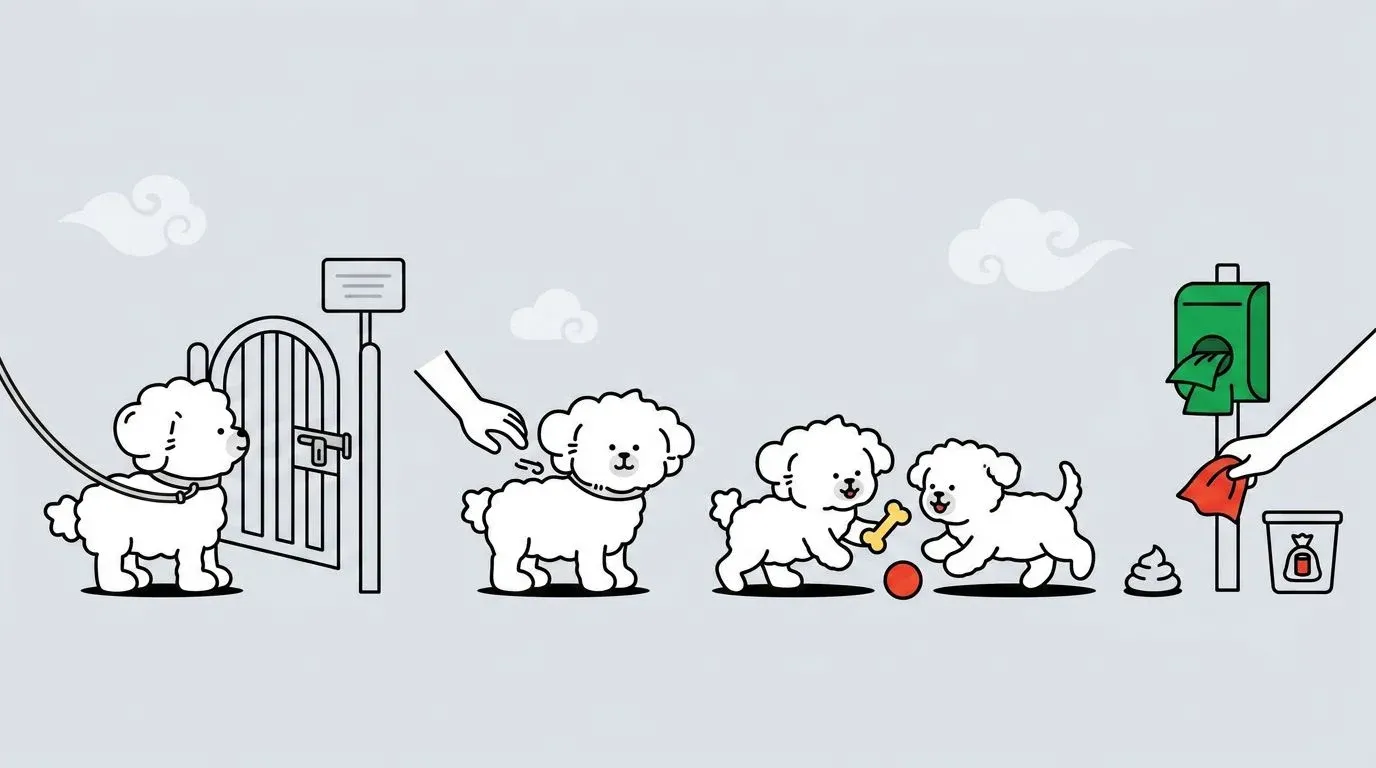
The defining feature of a dedicated dog park is the double-gate entry system. Instead of walking directly onto the off-leash surface from the sidewalk, you pass through a small fenced airlock — typically 8 to 12 feet square — remove your dog’s leash, confirm the outer gate is latched, then open the inner gate.
This design prevents bolt-outs. Without the buffer, a high-arousal dog entering at a sprint could reach the street before you reach the gate. In practice, many owners rush this step — opening the inner gate while the outer is still swinging, or moving multiple dogs through simultaneously. Entry-zone pile-ons from rushing are a disproportionate source of dog park conflicts.
Size-Separated Sections and Why They Matter
Most modern public dog parks in the United States and United Kingdom include at least two fenced sections: one for large dogs (typically above 25 lbs) and one for small dogs. Some parks add a third section for puppies.
The separation is injury prevention, not courtesy. A 60-pound dog playing at normal intensity can injure a 10-pound dog through body-checking or paw strikes alone, with no aggressive intent. Small dogs repeatedly overwhelmed by large dogs in mixed areas often develop fear-based reactivity that outlasts the park visits.
For dogs in the 20 to 28-pound gray zone, choose based on energy level and play style rather than weight alone.
Before You Go: Pre-Visit Checklist
The most consequential dog park safety investment happens before you leave the house.
Vaccination and Licensing Requirements
The baseline expectation at any responsible US or UK dog park:
- Core vaccines current: Rabies, DHPP (distemper-parvovirus-adenovirus), and Bordetella at minimum. Bordetella spreads through airborne droplets at parks and is often overlooked. Confirm your vaccination schedules and booster timing with your vet.
- Current license or registration: Most US municipalities require a county or city dog license; tags are commonly required at the gate.
- Flea and tick prevention: Grass-surface parks are high-exposure tick environments. Year-round prevention is preferable to seasonal-only coverage.
- Negative fecal exam: Not universally required, but strongly advised — intestinal parasites spread easily in dog park environments.
Dogs that are sick, post-surgical, or within 48 to 72 hours of vaccination should not visit until a veterinarian clears them.
Health Check: Joint Condition and Overall Fitness
Dog parks involve explosive movement: sudden sprints, sharp pivots, jumping, and rough-and-tumble collisions. These place high-impact stress on joints, particularly on hard ground. Dogs requiring modified approaches include:
- Patellar luxation: Running and abrupt stops can worsen kneecap dislocation. Grass surfaces and limited duration reduce risk.
- Canine osteoarthritis: Moderate low-impact exercise benefits arthritic dogs, but uncontrolled high-intensity play does not. Adrenaline and social excitement mask pain signals in the moment — your dog may overdo it without showing signs until the next morning.
- Post-surgical recovery: Dogs recovering from orthopedic surgery (TPLO, patellar repair, hip replacement) should not be in uncontrolled play environments until surgically cleared.
- Senior dogs: Reduced muscle mass and joint flexibility increase injury risk from sudden impacts.
If your dog has any of these conditions, modify the visit rather than avoid the park entirely. See the joint safety section below for specifics.
Basic Recall and Obedience Assessment
A dog park is not where training begins. Your dog should reliably respond to a recall in a distraction-rich environment before entering. A dog that ignores “come” while engaged with another dog cannot be removed from an escalating situation.
Minimum benchmarks:
- Responds to name and recall cue with other animals visible
- Does not bolt through gates without permission
- Can be touched, leashed, and redirected while excited
If recall is unreliable, follow a structured dog recall training program in a controlled environment first before attempting the dog park. For foundational social confidence, dog socialization training builds the composure that makes recall reliable around other dogs. If your dog lunges or fixates on other dogs before the leash comes off, dog leash reactivity training is worth addressing before a park visit.
7 Essential Dog Park Safety Rules
These are not rules about being polite. Each one maps to a specific mechanism of injury, conflict, or disease transmission.
Rule 1: Master the Double-Gate Entry System
Enter the airlock. Wait. Confirm the outer gate is fully latched. Remove the leash. Let your dog settle for 5 to 10 seconds. Then open the inner gate.
This sequence sounds obvious until you’re managing a 70-pound dog at high excitement and another owner is waiting behind you. The temptation to rush is constant. The consequence of rushing is an unsecured outer gate and a loose dog near a road — or an entry-zone pile-on where multiple high-arousal dogs meet in a 10-square-foot space.
When exiting, reverse the process with the same diligence.
Rule 2: Inspect the Ground Surface Before Unleashing
Before you enter the inner gate, look at the ground surface in front of you.
Surface type directly determines joint impact loading. Research on canine locomotion shows that hard, uneven surfaces significantly increase the concussive force transmitted through the joints during running and abrupt stops — a relevant concern not just for dogs with diagnosed joint problems, but for any dog engaged in high-speed play.
| Surface | Joint Impact | Footing Safety | Notes |
|---|---|---|---|
| Dense grass (maintained) | Low | High | Best overall surface |
| Packed dirt | Low-medium | Medium | Acceptable, watch for ruts |
| Wood chips / rubber mulch | Low | Medium | Good impact absorption, can harbor moisture/bacteria |
| Gravel / crushed stone | High | Low | Paw pad abrasion risk, significant joint impact |
| Asphalt or concrete | High | Medium | Dangerous in heat; hardest surface |
| Wet or muddy turf | Medium | Low | Slip injury risk, especially for small dogs |
If the surface is primarily gravel or asphalt, consider limiting your visit or keeping play intensity low. If the park only offers hard surfaces, wet grass is significantly safer than dry pavement for joint-vulnerable dogs.
Also scan for: broken glass, discarded food wrappers, standing water (potential leptospirosis source), and animal feces that have not been cleaned up.
Rule 3: Read Your Dog’s Body Language
Most dog park conflicts do not appear suddenly. They follow a visible escalation sequence that owners who are watching their phones will miss entirely.
Early stress signals (dog is uncomfortable but coping):
- Lip licking, yawning, or whale eye (whites visible at edge of eye) when not tired
- Frequent turning away from another dog
- Tail tucked lower than baseline
- Shaking off (as if wet) after a close interaction
- Moving to stay close to the owner or seeking physical contact
Escalation signals (intervention needed now):
- Hard stare at another dog sustained for more than 2 to 3 seconds
- Stiff body posture with raised hackles and slow, deliberate movement
- Low growling, teeth showing without play bow preceding
- Snapping at air without contact
- One dog repeatedly chasing or cornering another
Appropriate rough play (not a problem):
- Play bows (front end down, rear up) before or during interaction
- Chase that alternates direction — both dogs take turns being the chaser
- Mouth play where both dogs are loose and wiggly
- Loud but loose barking with relaxed ears and wagging tails
The key distinction: mutual consent and loose body movement. A dog play-chasing and a dog being chased with no opportunity to reverse look very similar to a casual observer but are functionally different events.
Rule 4: Manage Multi-Dog Interactions
In groups of three or more dogs, dynamics shift. Two dogs that play well together can form a coalition that becomes predatory when a third dog joins — even if neither individual dog has ever shown aggression. This is called pack arousal, and it underlies many dog park pile-on incidents.
Warning signs in group play:
- Two or more dogs pursuing a single dog with its tail tucked and ears back, with no reciprocal chase
- Dogs piling on a dog that is not voluntarily offering a submissive posture
- Play vocalizations escalating in pitch or urgency
- A dog retreating to hide behind a bench or owner
Intervene early: call your dog out, move between groups, or create distance. Do not wait for the targeted dog’s owner to notice. Act when the tail tucks, not when the first bite lands.
Rule 5: Leave Food and Toys at Home
Food in a dog park creates resource guarding — even in dogs that have never shown food aggression at home. The mechanism is simple: food in a high-arousal environment around unfamiliar dogs activates guarding instincts that don’t activate in a predictable domestic setting.
Toys create similar problems. One dog’s ball becomes a contested resource the moment another dog wants it, especially if the dog carrying it is smaller than the dog pursuing it.
The only exception: High-value treats used discreetly in your hand to practice recall or reward calm behavior, provided you can consume or pocket them quickly. Do not use treats openly near other dogs, and never set a treat bag on a bench.
Rule 6: Clean Up Immediately
Pick up feces before it is stepped on, tracked through the park, or approached by another dog. This is the single most effective disease-prevention action available to dog park visitors.
Canine parvovirus can survive on contaminated soil for up to a year in the right conditions. Intestinal parasites including roundworm, hookworm, and Giardia spread through fecal contact. Many parks provide waste bags and bins — but if bags are not available, carry your own.
The standard is immediate cleanup, not cleanup when you’re ready to leave.
Rule 7: Know When It’s Time to Leave
Most dog park incidents happen in the final 20 to 30 minutes of a visit, when fatigue lowers inhibition and arousal has been accumulating.
Leave when you observe:
- Any stress signals from Rule 3
- Play intensity escalating without natural recovery breaks
- Your dog repeatedly targeted by unwanted attention
- More than 8 to 10 unfamiliar dogs in the enclosure
- Play has continued for 45 to 60 consecutive minutes
Leaving while your dog is still engaged but not stressed ends the visit on a positive note — which makes the next visit start calmly. Always leash in the airlock, not in the open park. Calling your dog and immediately leashing in an off-leash zone can trigger chase from other dogs who read it as a game-ending signal.
Special Safety Tips for Small Dogs and Dogs with Joint Issues
This section applies directly to toy and small breeds, senior dogs, and dogs with diagnosed joint conditions including patellar luxation, early arthritis, and hip dysplasia.
Using the Small Dog Area Effectively
The small dog zone is a structurally safer environment, not a second-class option. Default to it if your dog is under 15 pounds or has any anxiety history with large dogs. Some small dogs socialized primarily with large breeds may feel more at ease in the large zone — use judgment.
Apply all the same monitoring rules inside the small zone. Small dogs fight each other. A Yorkshire Terrier can injure a Chihuahua. Relative size differences within the “small” category still matter.
Adjusting Play Intensity for Joint-Compromised Dogs
For dogs managing patellar luxation, arthritis, or post-orthopedic surgery recovery, the goal is not eliminating the park visit — it is curating the experience.
Practical adjustments:
- Time of day: Morning or early evening visits when the park is less crowded reduce high-speed collision risk and allow for more deliberate movement
- Duration: 20 to 30 minutes maximum for joint-compromised dogs, versus 45 to 60 for healthy adults
- Surfaces: Grass and packed dirt only; avoid gravel, asphalt, or wet/slippery surfaces
- Activity monitoring: Sustained running, jumping, sharp pivoting, and rough body play are the highest-risk activities. Allow sniffing, slow-paced social contact, and walking with other dogs freely — these are lower-impact and equally enriching
- Post-play window: Watch for subtle signs of discomfort in the 12 to 24 hours after a visit: reluctance to climb stairs, stiffness rising from rest, or favoring one leg. These are the indicators that activity was too intense, not behavior during the visit
For patellar luxation exercise guidance that extends beyond the park, our dedicated resource covers joint-safe movement protocols for affected dogs.
Post-Park Joint Care Routine
A brief post-visit routine benefits all dogs, and is especially important for joint-vulnerable ones.
Post-park checklist:
- Check all paw pads for cuts, embedded debris, or heat
- Check between toes for foxtails, burrs, or grass seeds
- Rinse paws to remove surface contaminants or chemical residue
- Allow 10 to 15 minutes of low-activity cool-down before free water access (reduces bloat risk in deep-chested breeds)
- Note any behavioral changes: quietness, reluctance to weight-bear, or sensitivity to touch in specific areas
If lameness or stiffness appears 12 to 24 hours post-visit, the activity intensity was too high. Reduce duration on the next visit and consult a veterinarian if symptoms persist.
Seasonal Dog Park Safety Tips
Each season introduces at least one park-specific hazard that most owners are not fully prepared for.
Spring and Fall: Ticks, Allergies, and Muddy Surfaces
Spring and fall are peak tick seasons across most of North America and the UK. The environments dog parks occupy — grass edges, leaf litter, and wooded borders — are precisely where black-legged (deer) ticks and sheep ticks concentrate.
- Verify tick prevention is current before the first warm-weather visit
- Perform a full-body tick check within one to two hours of returning: groin, armpits, between toes, collar line, inner ear flap, and tail base
- Dogs with environmental allergies may react to fall leaf mold with sneezing, eye discharge, or skin irritation after park visits
Muddy conditions deserve specific note for joint-vulnerable dogs: slipping on wet grass creates the same acute joint stress as a collision. Limit visits the day after heavy rain until the surface drains.
Our dog spring outing checklist covers tick prevention timing, allergy management, and full seasonal preparation. If you’re planning a longer outdoor outing beyond the park — with a picnic spread and extended stay — the dog picnic guide covers everything from gear and safe snacks to post-outing health checks.
Summer: Heat Stroke and Hot Ground Surfaces
Dogs dissipate heat primarily through panting, which becomes inefficient quickly as temperature and humidity rise. In an active dog park setting, dangerous core temperatures can build within 10 to 15 minutes on a hot day.
Heat stroke warning signs: excessive labored panting, dark red or pale gums, stumbling, unresponsiveness.
- Avoid parks when temperatures exceed 85°F (29°C) without shade and water access
- Test asphalt: press the back of your hand for 7 seconds — if you can’t hold it there, it’s too hot for paw pads
- Bring fresh water; communal park bowls are disease transmission points
- Visit only within the first two hours after sunrise or the hour before sunset in peak summer
- Brachycephalic breeds (Bulldogs, Pugs, French Bulldogs) are at dramatically elevated risk and should restrict visits to early morning in warm weather
Winter: Icy Surfaces and Hypothermia Risk
Muscle strains, cruciate ligament tears, and acute joint injuries from slipping on ice are among the most common winter park injuries — and often affect dogs that have used the same park for years, because the surface changed but the behavior did not.
- Inspect the surface before entry; grass that looks clear may have a hidden ice layer under shade from fences or trees
- Fit small dogs or short-coated breeds with a dog coat below freezing temperatures
- Rinse paws immediately after winter visits to remove salt and ice-melt chemicals, which can cause pad burns
- Allow a longer on-leash warm-up walk before entering in winter to reduce cold-muscle injury risk
Shivering during a visit is an exit signal — it means your dog’s body has shifted priority to heat generation.
First-Time Visit: A Step-by-Step Approach
A first park experience shapes your dog’s association with the environment for all future visits. A bad first visit can create lasting fear of the setting that takes months to work through.
Assess Your Dog’s Socialization Level
Dog parks are not where socialization begins. They expose dogs to multiple unfamiliar animals simultaneously — many of whom have poor social manners — in an uncontrolled environment. For an under-socialized dog, the outcome is not “learning through exposure” but an overwhelming event that triggers fear.
A park-ready dog:
- Has played well with multiple dogs of different sizes
- Does not freeze, growl, or snap when approached by an unfamiliar dog
- Can disengage from play and return to you on a recall cue
- Has no history of dog-directed aggression in greeting situations
If your dog doesn’t yet meet these benchmarks, structured playgroups, training classes, or supervised playdates are better entry points. See our dog socialization training guide for a structured protocol.
Start with Short, Off-Peak Visits
Choose a time with minimal park occupancy for the first visit — weekday mornings between 9 AM and 11 AM are typically lowest-traffic at most public parks. Avoid weekend afternoons.
First visit structure:
- Observe from outside the fence for 5 minutes: How many dogs? Any visible tension or fixation?
- Enter only if fewer than 4 to 5 dogs are present and the environment looks calm
- Stay near the edge, not the center — the center concentrates the highest-arousal play
- Keep the visit to 15 to 20 minutes maximum
- Exit while your dog is still engaged but not stressed
Skip treats on the first visit unless you’re alone in the park. Managing treat visibility around unfamiliar dogs adds a complication that first-time visitors don’t need.
Recognizing Stress Signals and When to Leave
The most common first-timer mistake is staying too long. First-visit dogs are processing enormous novel input. What looks like “settling in” is often a dog that has exceeded its processing threshold.
Exit immediately if:
- Your dog repeatedly presses against your legs or jumps up seeking contact
- Your dog moves toward the gate or attempts to leave
- Your dog stops engaging with other dogs entirely and freezes or lies down
- Any stress signal from Rule 3 is sustained for more than 30 seconds
Progression plan:
- Visit 1: 15 to 20 minutes, off-peak, observe and exit successfully
- Visit 2: Same duration; allow your dog to approach one calm, size-matched dog
- Visit 3: Extend to 25 to 30 minutes only if the first two visits ended positively
By visit 4 to 5, you will know whether your dog is park-compatible or would benefit more from a different social environment. Neither answer is a failure.
For on-leash etiquette that complements park visits, our dog walking etiquette guide covers approach behaviors and managing encounters before you reach the park gate.
References
- 1. Dog Park Safety Tips - AKC
- 2. Dog Park Etiquette - ASPCA
- 3. Canine Body Language - American Veterinary Society of Animal Behavior
- 4. Osteoarthritis in Dogs - VCA Animal Hospitals
- 5. Heat Stroke in Dogs - Merck Veterinary Manual
- 6. Parvovirus and Dog Park Risks - Cornell University College of Veterinary Medicine
FAQ
How old does a dog need to be before visiting a dog park?
Do dogs need to be spayed or neutered to use a dog park?
What should I do if my dog gets into a fight at a dog park?
My dog is shy. Is a dog park a good idea?
How do I know if my dog with arthritis or joint issues can visit a dog park?
Related Articles
Bringing Home a New Puppy? The Complete Socialization Training Guide You Need
Learn the science behind puppy socialization windows, get a week-by-week timeline, and discover safe pre-vaccination methods with a practical category-based checklist.
10 Dog Walking Etiquette Rules Every Responsible Owner Should Know
Master dog walking etiquette with 10 essential rules covering leash laws, waste disposal, dog greetings, location-specific manners, and emergency handling.
Puppy Vaccination Schedule: Shots, Costs & Side Effects
Complete puppy vaccination schedule by age, 2026 US cost ranges, side effect warning signs, missed dose protocol, and titer testing explained.