 Cirius Petpedia
 Dog Recall Training in 5 Steps: How to Get Your Dog to Come Every Time
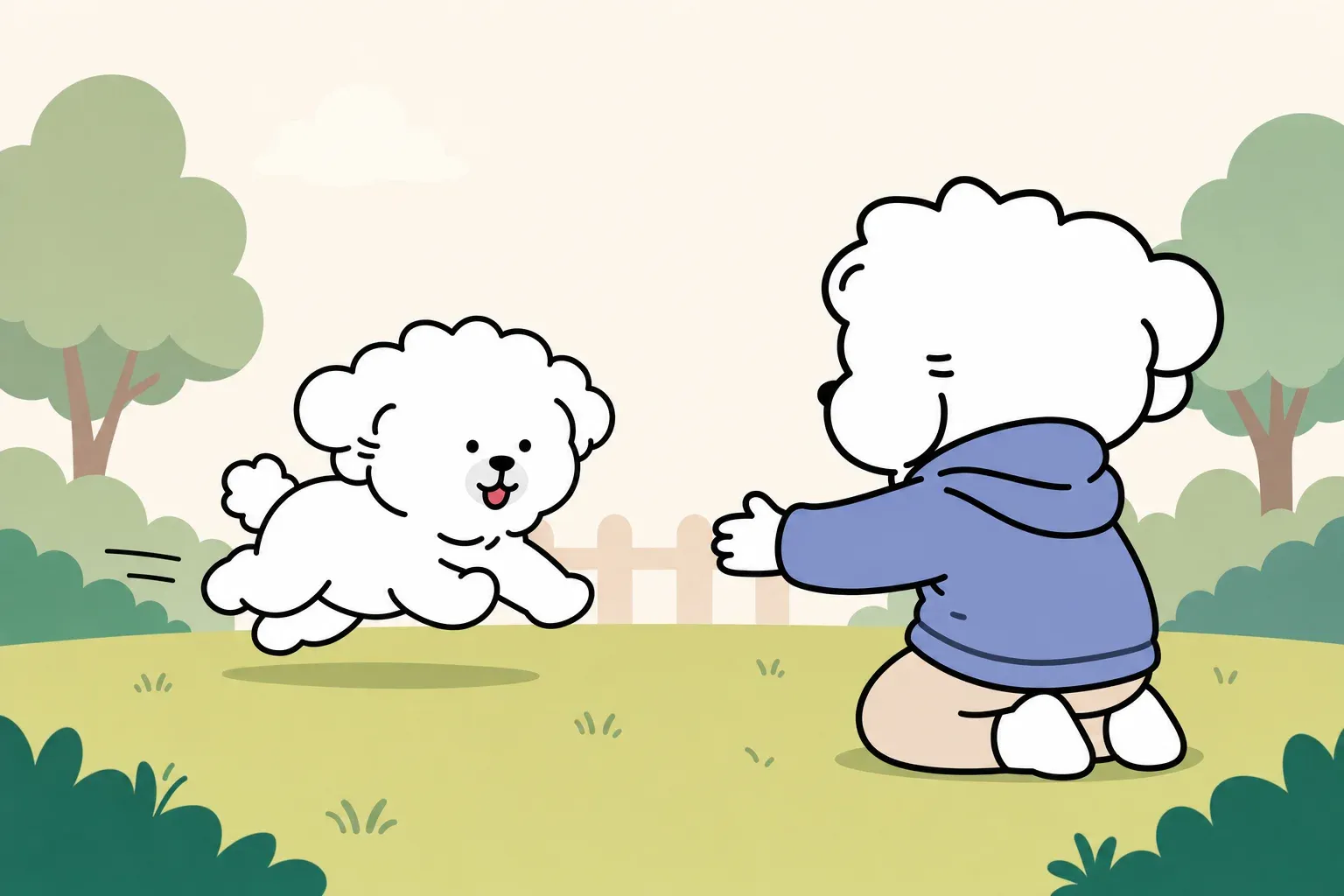
A recall failure in the wrong moment — a gate left open, a leash that slips, a startled dog bolting toward a road — can be life-threatening. Yet for many dog owners, calling their dog’s name outdoors produces nothing more than a brief ear twitch before the dog resumes sniffing the grass.
The frustrating truth: a dog that ignores the recall is not being stubborn or dominant. The recall simply has not been trained to compete with the environment. This guide lays out a five-step dog recall training system built around a single principle — each level must be reliable before advancing to the next. It is the structure most top results miss: not a list of tips, not general encouragement, but a progressive framework with explicit criteria for when you are ready to move on.
What Is Recall Training and Why It Can Save Your Dog’s Life
Recall training is the process of teaching a dog to return to you immediately and reliably when called — regardless of what the dog was doing, where it is, or what distractions are present. A well-trained recall does not require the dog to be in a good mood, close to you, or already paying attention. It works.
Defining Recall: More Than Just Obedience
Every trained behavior exists on a spectrum of reliability. A dog that sits when asked in the kitchen, with no competing interests and a treat visible, has a conditioned response. A dog that comes when called at a dog park, mid-chase with three other dogs, has a reliable recall — and that distinction is everything.
The American Kennel Club describes recall as one of the most essential safety skills a dog can have. Veterinary behaviorists categorize it similarly: not as a convenience command, but as a foundation skill with direct safety implications. A dog without a reliable recall can only be exercised safely on a leash — a meaningful reduction in both quality of life and physical conditioning.
Real-Life Scenarios Where Recall Prevents Danger
The practical value of a reliable recall becomes clear in scenarios that happen regularly:
- Open gates and slipped collars. A dog that bolts out an open gate is one good recall away from being retrieved safely. Without it, the outcome depends entirely on luck and proximity to traffic.
- Wildlife encounters. Dogs that lock onto a rabbit, deer, or coyote can cover remarkable distance in seconds. A recall trained above the distraction level of wildlife interrupts this before a chase becomes a dangerous sprint toward a road or a wildlife confrontation.
- Dog park exits. The moment of calling a dog away from play — especially when other dogs are nearby — is one of the most common recall failures. Dogs that learn “come” means the fun ends will begin avoiding the cue in these contexts.
- Encounters with fearful or reactive dogs. Quickly calling your dog back when another dog is showing stress signals prevents escalation. This requires a recall that works under the social excitement of an approaching encounter.
5 Reasons Your Dog Ignores You When Called
Before building the training system, it helps to diagnose what is breaking your current recall. Most recall failures fall into one of five categories.
Recall Has Become Associated with Negative Outcomes
The single most destructive pattern in recall training: the dog comes, and something bad happens. Bath time. Nail trim. End of the park visit. Leash attachment before leaving. Over many repetitions, the dog learns that coming when called predicts an unpleasant outcome — and begins to avoid it.
This is not spite. It is straightforward associative learning. The dog has simply tracked the consequences more accurately than the owner has.
Self-check: For the past month, what percentage of the time has your recall cue been followed by something the dog values? If the honest answer is “mostly negative things,” the cue has been poisoned. You may need a fresh cue word to start clean.
Low-Value Rewards Versus High-Value Distractions
Recall training is a competition. On one side: what you are offering. On the other: everything the dog was doing. If you are offering a single piece of kibble to a dog that was chasing a squirrel, you are losing that competition by a wide margin.
The value of the reward must match the difficulty of what you are asking. A recall in the living room during a commercial break might earn a small treat. A recall from a full sprint toward another dog at the dog park should earn the best thing your dog has ever tasted — real meat, a piece of cheese, an immediate tug session — delivered with genuine enthusiasm.
Environmental Stimuli Outcompete You
A dog’s nose contains roughly 300 million olfactory receptors compared to approximately 6 million in humans. The outdoor environment — even a quiet suburban backyard — is genuinely overwhelming in a way that is difficult for people to conceptualize. A dog deep in a scent investigation is not ignoring you out of disrespect; its attention system is engaged at near-capacity.
This is not something you can train away. It is something you train around, by building a recall response strong enough to interrupt it. That requires systematic exposure: practicing recall while distractions are present at manageable intensity, gradually raising the level as the behavior becomes reliable.
Jumped Too Far Too Fast in Training Progression
Many owners practice recall in the house, see the dog doing well, and immediately try it in the yard — or at a dog park. The dog fails. The owner repeats the cue. The dog ignores it again. The owner follows the dog. The recall cue has now been practiced failing at high-distraction levels, which erodes its value.
Every distraction increase — moving from indoors to outdoors, from yard to park, from no dogs present to dogs present — is a significant jump in difficulty. Skipping steps or moving up before the current level is reliable produces exactly this pattern.
Overuse and Dilution of the Recall Cue
A cue loses value through repeated pairing with no consequence. If you say “come, come, come, COME” and the dog eventually arrives, or you say “come” and then chase the dog when it does not respond, the word has been diluted to near meaninglessness.
The recall cue should be used sparingly and should always predict that something happens when it is called. Only say it once. If the dog does not respond, take two steps backward to prompt movement, use a happy voice or a brief squeaky noise — but do not repeat the cue. Repeating a cue the dog is ignoring teaches the dog that the first several repetitions do not require a response.
What You Need Before Starting Recall Training
High-Value Treats and Reward Hierarchy
Build a three-tier reward hierarchy before beginning:
| Tier | Examples | Used when |
|---|---|---|
| High | Real chicken, beef, soft cheese, freeze-dried liver | Outdoor practice, distractions present, first successful recalls |
| Medium | Commercial training treats (soft, strong-smelling) | Indoor practice, low-distraction environments |
| Low | Kibble, dry biscuits | Maintenance behaviors in easy contexts only |
Recall training — especially in outdoor and distracted environments — should primarily use Tier 1 rewards until the behavior is highly reliable. Downgrading too early is a common reason recall fades after initial success.
Long Line (15 to 30 ft) Setup
A long line is a non-retractable training leash, typically 15 to 30 feet, used to practice recall at distance while maintaining physical safety. It is not a retractable leash — those teach the opposite of what recall training requires, because constant tension in the line normalizes pulling toward the end.
The long line allows you to:
- Practice realistic recall distances without losing control
- Prevent the dog from being rewarded by successfully ignoring you and running away
- Gently apply light pressure to prompt movement if the dog hesitates
Use a flat harness attachment for the long line, not a collar, to avoid pressure on the neck during the learning phase.
Choosing the Right Training Environment
For each step of this system, the environment matters more than most owners realize. The training environment should be challenging enough to be realistic but not so distracting that the dog cannot succeed. A dog failing more than 20% of the time in a given environment is in the wrong environment for their current level.
Start indoors, in a room the dog knows well. Move to the yard only after indoor recall is solid. Move to public outdoor spaces only after yard recall is reliable. The structure is not arbitrary — it is what prevents the training from stalling.
The 5-Step Recall Training System
The system below treats recall as a skill built in layers. Each step has explicit success criteria. Do not advance until those criteria are met — that discipline is what separates a trained recall from a sometimes-comes-when-called.
Step 1: Name Recognition and Engagement (Indoors, Zero Distractions)
Goal: Dog reliably looks at you when their name is called in a distraction-free environment.
Success criteria: Dog turns and makes direct eye contact within 1 to 2 seconds of hearing their name, 9 out of 10 times, in the home environment.
How to practice:
Say your dog’s name once in a calm, happy tone. The moment the dog turns and looks at you, mark the response with “yes” (or a clicker if you use one) and deliver a high-value treat. Do not add “come” yet — the name is simply a signal meaning “look at me, something good is about to happen.”
Practice in short sessions of 10 to 15 repetitions, two or three times per day. Vary your position in the room. Practice when the dog is not already looking at you.
This step is often skipped because it feels too easy. Do not skip it. A dog that does not reliably respond to its name indoors will not respond to it outdoors.
Timeline: Most dogs reach success criteria in 3 to 5 days.
Step 2: Short-Distance Recall (5 to 10 ft, Indoors)
Goal: Dog comes directly to you when called from a short distance, making body contact, in a low-distraction environment.
Success criteria: Dog comes to within touching distance every time the recall cue is used, from up to 10 feet, across five consecutive sessions with no failures, indoors.
How to practice:
Choose a recall cue word — “come,” “here,” or any other word you will use consistently. Once chosen, do not change it. Say the dog’s name, pause one second (this is the “attention” signal from Step 1), then say the recall cue in a bright, warm tone. Crouch down if you can — lowering your body makes you more inviting. Back away two to three steps as you call, which creates forward momentum in the dog.
When the dog arrives, do not just give one treat and walk away. Praise enthusiastically, deliver three to five small treats in rapid succession, and make the moment genuinely rewarding. The return to you should be the most rewarding thing in the dog’s environment.
Practice across different rooms. Call from around corners. Vary the time of day. Never call the dog to do anything unpleasant at this stage — this is purely a positive association building phase.
Timeline: 3 to 7 days to meet success criteria for most dogs.
Step 3: Adding Distance and Mild Distractions (Yard or Garden)
Goal: Dog comes reliably when called from up to 25 feet in a mildly distracting outdoor environment.
Success criteria: Dog completes a successful recall from 20 to 25 feet, in the yard or a quiet outdoor space, with minor environmental distractions present, 8 out of 10 times across multiple sessions.
How to practice:
Move training to the yard or garden. Attach the long line as a safety backup — it should hang loosely, not be held taut. Begin at short distances (10 feet) and work the same protocol as Step 2, gradually increasing distance as success is consistent.
At this stage, mild distractions — wind, birds, familiar smells — are present but manageable. When the dog hesitates or looks away, do not repeat the cue. Instead, take a few quick steps backward and use a cheerful, inviting voice (“puppy puppy puppy!” or a squeaky sound) to prompt movement. If the dog still does not come after 3 to 5 seconds, apply gentle forward pressure on the long line.
Introduce the concept of “calling away from something interesting.” Practice recall when the dog is sniffing a patch of grass, or investigating something at the edge of the yard — not just when the dog is looking at you. This is a fundamentally different skill than recall from an attentive sit.
Timeline: 1 to 2 weeks of consistent daily practice.
Step 4: Long-Line Recall Outdoors (Parks, Trails)
Goal: Dog comes when called in genuinely distracting outdoor environments — other people, wildlife scents, new locations — while on a long line.
Success criteria: Dog completes a successful recall, on the first cue, 8 out of 10 times, in a public outdoor space with significant distractions present.
How to practice:
Move to locations with real-world distractions: a quiet park, a hiking trail, an open field. Keep the long line attached. Position yourself so you can see what is capturing the dog’s attention before calling.
Practice the recall when the dog is engaged with something moderately interesting — not during a peak-arousal moment like sprinting toward another dog. Build successful recall history at moderate distraction levels before attempting recall from high-distraction situations.
After each successful recall in a high-distraction environment, reward at the highest tier and do not immediately put the leash on or leave. Let the dog return to some free exploration, then call again, reward, and repeat. This breaks the pattern of recall = end of fun.
Vary your recall dramatically across sessions: different distances, different times of day, different environments, different distractions. Recall reliability is only real if it transfers across contexts — a dog that reliably recalls in one park may be a beginner again in a different park. This is normal, not regression.
Timeline: 2 to 4 weeks, potentially longer for high-drive breeds or dogs with poor recall history.
Step 5: Off-Leash Reliable Recall (Safe Open Spaces)
Goal: Dog comes immediately and directly when called, off-leash, across a range of distracting environments.
Success criteria: Dog completes reliable recalls across five different outdoor locations, with at least moderate distractions present, at least 9 out of 10 times, off-leash, before this step is considered complete.
How to practice:
Remove the long line only in genuinely safe, enclosed spaces — fenced fields, empty fenced parks, secured dog parks before other dogs arrive. Do not attempt off-leash recall near roads or in open unfenced areas until this step is well-established.
Maintain a high rate of reinforcement for recalls even after the long line is gone. Many owners stop rewarding recalls once the behavior seems established — this is exactly when behavior fades. Random, variable reinforcement (rewarding some recalls with exceptional treats, some with praise) produces the most durable behavior.
Build in a “recall and release” habit: call the dog, reward generously, then immediately release with “go play” or “free.” The dog learns that coming to you briefly is not the end of everything fun — it is a quick check-in with a great outcome, followed by freedom. This single habit prevents the majority of recall avoidance patterns in dogs that frequent dog parks and off-leash areas.
Introducing solid socialization foundations early in a dog’s life genuinely simplifies this step — dogs that are comfortable with varied environments, people, and other dogs have lower baseline arousal outdoors, which makes reliable recall more achievable.
Timeline: Ongoing maintenance. Off-leash recall reliability is maintained through consistent reinforcement, not achieved once and held forever without effort.
Troubleshooting Common Recall Failures
The following failure patterns appear consistently across the population of dogs with unreliable recalls. Each requires a specific correction strategy.
Dog Stops Halfway or Turns Back
What it looks like: The dog begins to come, gets halfway, then veers off, slows down, or turns back to investigate something.
Why it happens: The reward at your location has not been established as high enough to complete the entire journey. The dog’s cost-benefit analysis is reassessing mid-route: “I started coming, but that smell over there is compelling, and I’m not sure arriving is worth passing it.”
What to do: First, increase the value of what happens when the dog arrives. Are you delivering multiple treats immediately on arrival, with genuine praise? Or one treat and a quick departure? Make the arrival experience unmistakably great. Second, run backward when calling — movement away from the dog dramatically increases the likelihood of completion. Third, drop down to shorter distances and rebuild a stronger success history before attempting longer recalls again.
Dog Runs Toward Other Dogs or People Instead
What it looks like: You call your dog, your dog acknowledges the cue, then turns and runs toward a nearby person or dog instead of returning to you.
Why it happens: The social reward at the alternative destination is currently worth more than the reward you are offering. Additionally, the recall has not yet been specifically trained in the presence of high-value social distractions.
What to do: This is an environment management problem first. Do not practice recall in situations where the dog has access to competing social rewards until the recall is reliable at much lower distraction levels. When you do introduce social distractions, do it systematically: other dogs visible at 50 feet, then 30 feet, then closer — rewarding every recall that succeeds with exceptional reinforcement. Never call the dog and then immediately leave the park — this trains dogs to avoid coming to you near other dogs because they have learned the consequence.
Building the connection between focus exercises and outdoor performance is where nose work and scent-based training plays an unexpected supporting role — dogs that have been trained to orient toward their handler in exchange for engagement games have a stronger default attentional pattern that supports recall.
Dog Only Comes When Treats Are Visible
What it looks like: The dog reliably comes when you are holding the treat bag or have your hand in your pocket, but ignores the recall cue when your hands are empty.
Why it happens: The dog has learned to respond to the treat being visible (a discriminative stimulus) rather than to the verbal cue itself. This is a training execution error — treats were produced predictably before the behavior, rather than after it.
What to do: Stop showing or producing treats before the recall. Call the dog with empty, natural-looking hands. When the dog arrives, produce the reward from a pocket or treat bag. Make the production of the treat unpredictable — sometimes it is a single piece, sometimes it is a jackpot of five pieces, sometimes it is an enthusiastic play session. The dog must begin responding to the verbal cue rather than the visible reward signal. It also helps to practice recall after play sessions when the dog is less food-motivated — this extends the range of conditions under which recall works.
Critical Mistakes That Ruin Your Dog’s Recall
Three errors are responsible for the majority of recall training failures. All are common, all are preventable.
Punishing After the Dog Finally Comes
If a dog takes three minutes to come, eventually arrives, and receives a scolding — verbal or physical — for taking so long, the dog learns one thing: coming to you is dangerous. Next time, the delay will be longer.
Whatever frustration the delay caused, it must be completely invisible at the moment the dog arrives. The dog can only connect your response to the last behavior it performed — arriving at your side. If that behavior is met with negativity, it will happen less. Every single time. Without exception.
When a dog finally comes after a long delay, treat the arrival as a success. This is not rewarding “bad behavior” — the bad behavior (ignoring the cue) ended when the dog started moving toward you. What you are rewarding is the arrival. Protect that association at all costs.
Only Calling When Fun Is Ending
A recall that exclusively predicts the end of enjoyable activities — leaving the park, ending a play session, coming inside from the yard — will progressively weaken. Dogs track consequences reliably, and if “come” reliably predicts the end of fun, they will begin avoiding the response.
The fix is deliberate recall variety. Call the dog, reward generously, and let them return to what they were doing. Practice this 80% of the time. Only 20% of recalls should actually end the activity. Over time, the cue loses its predictive value as “fun-ender” and becomes simply “come here for something good.”
For dogs with underlying separation anxiety, recall during park departures can be particularly fraught — the dog may associate the handler’s presence with an imminent return to confinement. Understanding whether anxiety is a factor changes how recall training should be structured.
Repeating the Cue Multiple Times
“Come. Come here. Come! COME HERE, MAX!” This is one of the most common patterns in dog recall — and one of the most damaging.
Every time the cue is repeated without a response, the dog is learning that the first several repetitions are optional. The cue has no urgency because there has never been any consequence for ignoring the first one.
Say the recall cue once. If the dog does not respond within 3 to 5 seconds, use motion — run backward, crouch, use a different sound — to prompt movement. Then reward if the dog comes. Do not say the cue again until the dog is looking at you. If the dog does not come despite prompting, the environment is too difficult for the current training level — take note, reduce the distraction next session, and practice succeeding more before trying again at this level.
Pairing recall training with the leash walking basics that develop handler focus creates a feedback loop: dogs that learn to pay attention to their handler on leash carry that attentiveness into off-leash contexts over time.
Advancing with Confidence
Dog recall training is not a single lesson — it is a behavioral skill built systematically over weeks and maintained throughout the dog’s life. The five-step framework works because each level is deliberately easier than the one above it, and advancement only happens when the lower level is genuinely solid.
The most reliable recalls in the world belong to dogs whose owners:
- Protected the cue from negative associations
- Made the return to the owner the most rewarding thing in the dog’s environment
- Advanced through difficulty levels deliberately rather than impatiently
- Maintained reinforcement even after the behavior appeared reliable
- Practiced recall variety so the cue never exclusively meant “the fun is over”
None of this requires special equipment, special talent, or a particularly compliant breed. It requires patience, consistency, and a systematic approach. Start indoors today, follow the progression, and build the skill your dog needs to stay safe wherever life takes you both.
References
FAQ
What is the best age to start recall training?
How long does it take to get a reliable recall?
Do different breeds respond differently to recall training?
Should I use a separate word for emergency recall?
What do I do if my dog runs to other dogs or people instead of coming to me?
Related Articles
Bringing Home a New Puppy? The Complete Socialization Training Guide You Need
Learn the science behind puppy socialization windows, get a week-by-week timeline, and discover safe pre-vaccination methods with a practical category-based checklist.

Loose Leash Walking Training: 5 Steps to Stop Dog Pulling
Stop your dog pulling on walks with this 5-stage loose leash walking training guide — from indoor introduction to real-world heel, with troubleshooting.
Dog Separation Anxiety Guide: Symptoms, Training, and Help
Learn how to identify dog separation anxiety symptoms, follow a vet-backed step-by-step training plan, and know when medication or a specialist is needed.