 Cirius Petpedia
 How to Stop Puppy Biting: Age-by-Age Training Guide
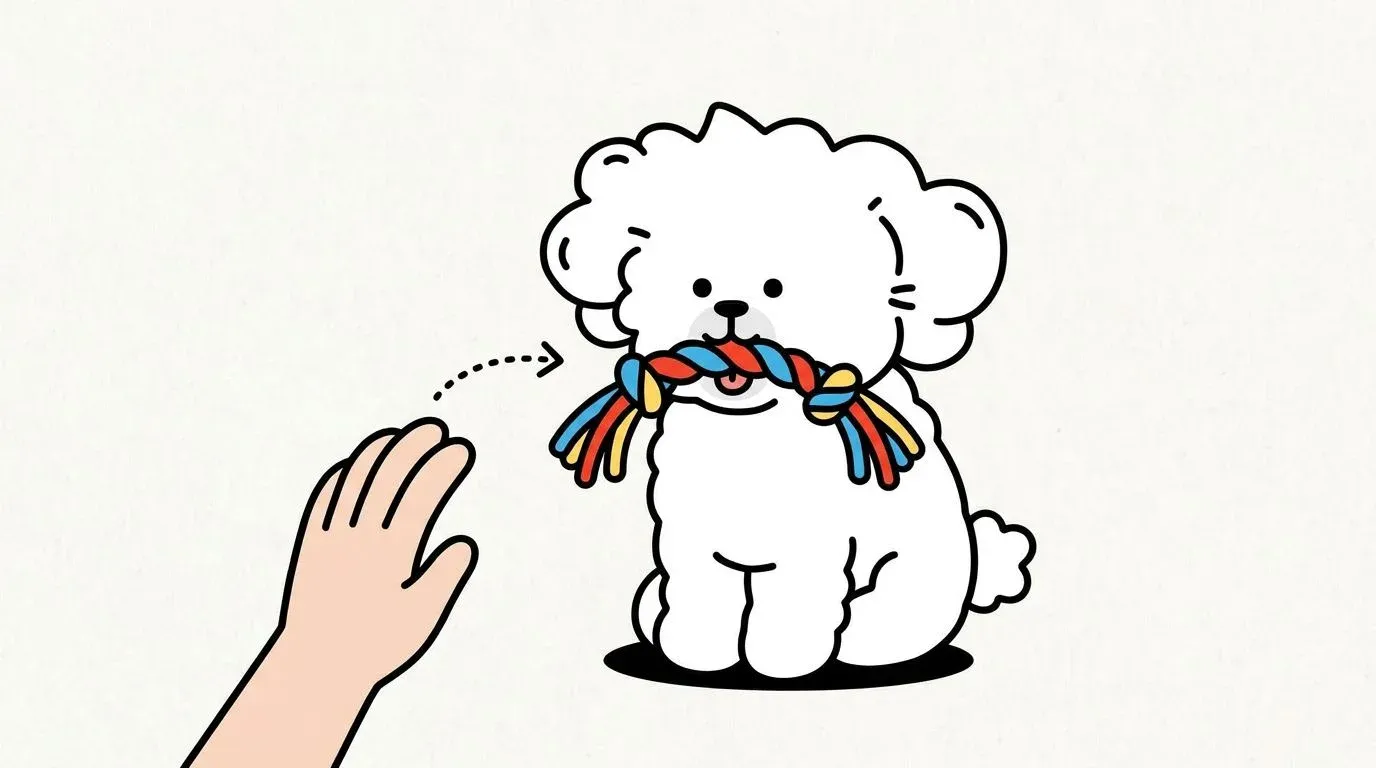
Every new puppy owner has had the same moment: you reach down to pet a fluffy, irresistible face and receive a sharp little bite on the hand. You wonder whether this is normal, what you did wrong, and how soon this is going to stop.
The good news is that puppy biting is entirely normal, biologically driven behavior. The less reassuring news is that it will not fix itself — and the training window where it is easiest to address is shorter than most people realize.
This guide covers the science behind why puppies bite, what to do at each age stage, a five-step training method you can start today, and the mistakes that accidentally make biting worse. Whether your puppy is eight weeks old or your adult dog never learned proper bite manners, there is a practical path forward.
Why Do Puppies Bite? Understanding the Root Causes
Before you can stop a behavior effectively, you need to understand what is driving it. Puppy biting is not one behavior — it is several, each with different triggers and different appropriate responses.
Teething Biting: A Natural Phase (3–7 Months)
Between approximately three and seven months of age, puppies lose their 28 baby teeth and grow 42 adult teeth. This process is uncomfortable, and chewing and mouthing provide physical relief by stimulating the gums and helping teeth release. Teething biting is distinguished by its indiscriminate, persistent nature — your puppy will chew anything available, not just you, and the behavior is most intense when the dog is bored or unsupervised.
This phase has a natural end point. Once the adult teeth are fully in, the physical drive to chew reduces significantly, provided appropriate outlets have been established throughout the process.
Play Biting: Excitement and Exploration
Before puppies develop fine motor skills and object manipulation, the mouth is their primary tool for interacting with the world. Play biting is how puppies learn about textures, test object responses, and engage socially. In the litter, puppies use mouth pressure constantly — and crucially, their littermates communicate pain and displeasure, teaching them how hard is too hard.
Play biting tends to intensify during excited states: when greetings happen, during chase games, when hands are moving quickly. Body language during play biting is generally loose and bouncy — very different from the stiff, hard-eyed look of a dog biting from fear or frustration.
Fear-Based Biting: Defensive Reactions
Puppies that bite when they feel cornered, overstimulated, or unable to escape are showing defensive behavior rather than play behavior. This type of biting is often preceded by warning signals owners miss: looking away, lip licking, yawning in inappropriate contexts, tucking the tail, or trying to move away. When those signals are ignored, biting is the next communication attempt.
Fear-based biting requires a different response than play biting — primarily, removing the pressure that triggered the response rather than simply redirecting attention. Puppies with a pattern of fear-based biting benefit from working with a trainer who specializes in positive reinforcement and desensitization, since punishment approaches can significantly worsen defensive behavior. This overlaps with broader dog noise phobia and fear-based issues, where similar desensitization principles apply.
Demand Biting: Attention-Seeking Behavior
Some puppies discover early that biting gets a response — any response. When biting produces eye contact, a hand reaching toward them, a verbal reaction, or even being picked up, the behavior has been rewarded. Demand biting is often the most frustrating pattern for owners because it feels deliberately provocative and escalates when ignored.
The table below summarizes how to distinguish between biting types based on body language:
| Biting Type | Body Language | Trigger | Response to Redirection |
|---|---|---|---|
| Teething | Relaxed, exploratory | Boredom, discomfort | Usually accepts chew toy |
| Play | Bouncy, loose, tail up | Excitement, movement | May briefly redirect, then return |
| Fear-Based | Stiff, whale eye, tries to retreat | Feeling cornered or overstimulated | May escalate if pressure continues |
| Demand | Intense eye contact, may circle | Wanting attention or play | Escalates if any attention is given |
The Puppy Biting Golden Window: Why Early Training Matters
Understanding when learning happens most easily is what separates effective early training from frustrating uphill work later.
The Socialization Period (8–16 Weeks) and Bite Inhibition
Behavioral science identifies a developmental window in puppies roughly between 8 and 16 weeks of age during which learning about social relationships, fear responses, and appropriate interaction patterns is most efficient. The brain during this period is forming the neural pathways that govern social behavior for the rest of the dog’s life.
This is also the primary window for teaching bite inhibition — the ability to control the pressure of a bite. The AKC and most professional trainers emphasize that this period, while it cannot be extended, can be maximized with deliberate management of what the puppy learns during these weeks.
Paired with proper puppy socialization training, early bite training produces puppies that are not only manageable in the home but genuinely equipped for a lifetime of safe interaction with people and other dogs.
What Is Bite Inhibition and How Dogs Learn It Naturally
Bite inhibition (BI) is the canine ability to modulate bite pressure based on context — biting hard enough to grip a toy, but softly enough not to hurt a human hand. It is a learned skill, not an innate one.
Veterinary behaviorist and trainer Dr. Ian Dunbar — whose bite inhibition research has been foundational in modern puppy training — describes a four-level hierarchy: first, teach the puppy not to bite hard; then teach it to bite less frequently; finally, redirect the mouth to appropriate objects. Skipping levels, particularly trying to eliminate all mouthing before pressure control is established, produces adult dogs that have no practice modulating bites and therefore cause greater harm when they do bite, which all dogs eventually do.
In the litter, puppies learn naturally: biting a littermate too hard results in a yelp, the play partner leaves, and play stops. Humans need to replicate this feedback loop deliberately, because most puppies arrive in homes before this process is complete.
What Happens If You Miss the Window
Missing the socialization window does not mean a dog cannot learn bite inhibition — it means the learning is slower and requires more consistency. Dogs that never received bite pressure feedback as puppies have no motor memory of modulating jaw force, making them genuinely riskier if they bite as adults, even if the bite was not intended to injure.
This is why rushing to eliminate all mouthing at 10 weeks, rather than first teaching pressure control, can produce a dog with a reliable suppression of mouthing that breaks down under stress — and when it does break down, there is no established softness to fall back on.
Age-by-Age Puppy Biting Training Guide
Expectations and methods should match the developmental stage your puppy is actually in.
8–12 Weeks: Gentle Redirection and Socialization
At this age, the priority is establishing early bite pressure feedback — not eliminating mouthing entirely. The puppy is too young to have reliable impulse control, and the goal is simply to begin teaching that hard biting ends the interaction.
What to do:
- Allow gentle mouthing on hands with light pressure
- When pressure increases, let out a calm, brief vocal marker (“ouch” or “too bad”) and withdraw your hand immediately
- Pause play for 30 seconds, then resume
- Introduce one or two appropriate chew toys early; offer them freely when the puppy mouths your hands
What to expect: Progress will be inconsistent at this age. The puppy does not have the impulse control to reliably stop biting, but the feedback is accumulating. You are building the foundation for what comes next.
Timeline: Most puppies begin showing reduced pressure — softer mouthing — within 2 to 4 weeks of consistent practice.
3–6 Months: Teething Management and Play Rules
This is the most intense phase of both teething and biting behavior. The pain of tooth eruption peaks, and the puppy is simultaneously growing fast enough to cause real discomfort with bites.
What to do:
- Prioritize access to appropriate chew objects constantly (see the teething management section below)
- Begin enforcing consistent timeouts: any bite that exceeds an acceptable threshold ends the session with a calm 1-2 minute separation
- Introduce structured play rules — games end when biting happens, full stop
- Practice crate training as a neutral cool-down space, not a punishment, so the puppy can settle when overstimulated
What to expect: Biting will likely worsen temporarily when new teeth are coming in. This is normal and will pass. Consistency during this period is what separates dogs that are manageable at 7 months from dogs that are not.
Timeline: With consistent management, biting frequency should begin noticeably declining by 5 to 6 months.
6–12 Months: Consistency and Boundary Setting
The teething drive has largely resolved, and any remaining biting is behavioral rather than pain-driven. This is the age at which patterns either stabilize into good habits or calcify into problematic ones.
What to do:
- Enforce timeouts consistently every single time — there is no “it’s okay this once” at this stage
- Practice impulse control exercises: ask the puppy to sit before greetings, before play begins, and before meals
- Increase mental and physical enrichment to address excess energy that may be expressing itself through biting
- Redirect puppy biting toward interactive play that has clear start and stop signals
What to expect: A puppy that has received consistent training since 8 weeks should be showing significant improvement. Occasional nipping during high excitement is normal; frequent hard biting is not.
Timeline: With consistency, most puppies this age settle into very rare, very soft mouthing within 4 to 8 weeks.
Adult Dogs: Retraining Established Biting Habits
Adult dog biting correction follows the same principles as puppy training but requires more patience — behavior that has been practiced for years is more deeply wired than behavior from puppies. The good news is that adult dogs have superior impulse control to puppies and can often make faster progress once they understand the rules.
What to do:
- Start fresh with the five-step method below as though training a new puppy
- Identify and minimize triggers — does the biting happen mostly during greetings, during play, or randomly? Triggers inform the response
- If biting is associated with resource guarding (biting when approached during meals or around toys), address the guarding behavior directly through counter-conditioning; this is a distinct pattern covered in resource guarding management
- Consult a CPDT-KA certified trainer if biting has broken skin or involves growling and snapping
Timeline: Adults typically show observable improvement within 2 to 4 weeks of consistent retraining when the cause is behavioral rather than fear- or anxiety-based.
5-Step Method to Stop Puppy Biting
This five-step method reflects the bite inhibition framework used by certified professional dog trainers and endorsed by organizations including the AKC and ASPCA. The steps work sequentially — do not skip ahead.
Step 1: Freeze and Withdraw Attention Immediately
The moment your puppy’s teeth make contact with skin and the pressure exceeds what you consider acceptable, stop all movement. Do not pull away sharply — this mimics prey behavior and typically increases bite intensity. Simply go still, remove your hand calmly, and turn your back or step away.
The message this communicates is precise: biting stops the interaction. No movement, no reaction, no attention.
This response must be consistent. A single enthusiastic reaction — even laughter — on one occurrence can reset days of progress.
Step 2: Redirect to Appropriate Chew Toys
Within 5 to 10 seconds of withdrawing attention, offer a chew toy. This is not a reward for biting — the interaction has already been interrupted. The toy provides an appropriate outlet for the oral drive that triggered the biting and teaches the puppy what they are allowed to chew.
Effective redirection requires the toy to be more appealing than your hand in that moment. Experiment with different textures, temperatures (frozen toys are often preferred during teething), and sizes to find what your puppy finds genuinely engaging.
To redirect puppy biting effectively, the toy must be immediately available — keep one on your person during high-biting periods rather than sending the puppy to find it themselves.
Step 3: Use the “Ouch” Response for Bite Pressure Feedback
For puppies in the early stages of bite inhibition training (roughly under 16 weeks), a brief, matter-of-fact verbal marker can serve as a pain signal equivalent to what a littermate would provide. A calm, single “ouch” or “too bad” — not a dramatic yelp — communicates that the pressure was too high.
The critical detail: after the verbal marker, follow with Step 1. The word alone means nothing unless it is paired with the withdrawal of attention. If you yelp dramatically and then keep playing, the puppy may interpret the noise as part of an exciting game.
For older puppies and adult dogs, this step is largely unnecessary — the attention withdrawal alone provides sufficient feedback.
Step 4: Implement Timeouts and Cool-Down Periods
When biting continues after multiple redirection attempts — or when the puppy is clearly over-aroused and unable to settle — a brief timeout is appropriate. A timeout is not punishment; it is a calm interruption that communicates the session is over until the puppy can regulate.
A properly used crate serves as a natural timeout space when introduced through crate training as a positive association rather than confinement used punitively. Alternatively, a baby-gated room or exercise pen works equally well.
Timeout duration: 1 to 2 minutes is sufficient for puppies. The point is not duration but immediate consequence and the opportunity to settle.
What not to do during timeouts: Do not scruff, physically drag, or forcefully place the puppy in the timeout space. The goal is calm interruption, not confrontation.
Step 5: Reward Gentle Mouth Behavior Consistently
This step is the most underused — and arguably the most important. Stopping biting requires teaching the puppy what you want instead, not just what you do not want.
When your puppy licks rather than bites, mouths with very soft pressure, or chooses a chew toy over your hand, mark that behavior immediately with a calm verbal marker (“yes” or a clicker) and offer a small food reward or brief praise. You are building a reinforcement history for soft mouth behavior that competes with and eventually replaces the biting pattern.
Train this proactively during calm interactions — do not wait for the bite to happen before you engage. Puppies learn faster through positive reinforcement of correct behavior than through correction of incorrect behavior alone.
3 Common Mistakes That Make Puppy Biting Worse
Many puppy owners inadvertently sustain or escalate biting through well-intentioned but counterproductive responses.
Physical Punishment: Creating Fear Aggression
Hitting, flicking the puppy’s nose, alpha-rolling, or physically restraining a biting puppy are approaches still found in some older training resources and online videos. The American Veterinary Society of Animal Behavior (AVSAB) has issued clear position statements that aversive training methods — particularly those involving pain or intimidation — increase fear, anxiety, and aggression in dogs and undermine the human-animal bond.
In practice, physical punishment during biting often produces one of two outcomes: a puppy that escalates to harder biting in self-defense (fear-based response), or a puppy that shuts down and stops warning before biting — which makes future biting less predictable and more dangerous, not less.
Yelling or Overreacting: Escalating Excitement
Screaming, high-pitched yelping, animated reactions, or chasing the puppy away in exasperation are all forms of attention. For a puppy in an excited state, any strong reaction registers as engagement. Many puppies learn that biting produces the most animated response from their people — which makes it the highest-value option in their behavioral toolkit.
The quieter and more consistent your response, the faster the biting pattern extinguishes.
Pushing Away: Accidentally Reinforcing the Behavior
Instinctively pushing a biting puppy away with your hand triggers a chase-and-grab response — the movement and resistance mimic prey behavior and invite precisely the grasping, pulling biting you are trying to stop. Most puppies who have been pushed away repeatedly become faster and more persistent biters at your hands, not less.
The correct physical response is always stillness, followed by withdrawal. No pushing, no pulling back, no waving the hand away.
Managing Teething Discomfort to Reduce Biting
Reducing the physical discomfort driving teething biting directly reduces the frequency of biting during the 3-to-7-month window.
Choosing the Right Chew Toys by Material and Size
Match toys to the puppy’s developmental stage and jaw size. During active teething, the goal is gum stimulation with appropriate resistance — not maximum durability.
Useful criteria:
- The thumbnail test: Press your thumbnail firmly into the toy. If it does not yield at all, the toy is likely too hard for a teething puppy and may cause tooth fractures on baby teeth or newly erupted adult teeth
- Size: The toy should be large enough that the puppy cannot get it fully into their mouth, but small enough to carry and manipulate
- Material: Rubber toys of moderate firmness, braided rope toys (when supervised), and dense rubber Kongs are broadly recommended; hard nylon, antler, and real bone products carry higher risk of tooth fracture
- Novelty: Rotate 4 to 6 toys in and out of circulation; a toy that has been available for two weeks will have less redirectional pull than a novel one
Frozen Treats and Teething Relief Tips
Cold reduces gum inflammation and provides direct relief. Practical options include:
- Freezing rubber toys after soaking them in dilute low-sodium broth
- Frozen carrots (appropriate for puppies over 3 months in moderate quantities)
- Frozen wet food stuffed into a rubber feeder toy
Supervise all frozen treat sessions. Even low-risk items can become choking hazards if the puppy breaks off a large piece and swallows it whole.
Puppy-Proofing Your Home Checklist
A teething puppy with access to inappropriate chew targets will use them — and the habit can persist after teething is done. Reducing access to off-limits objects also reduces the rehearsal of unsanctioned chewing behavior.
- Electrical cords secured or routed out of reach
- Shoes, clothing, and personal items stored in closed rooms or elevated
- Chair and table legs protected with bitter spray or physical guards during peak teething
- Children’s toys stored out of reach when the puppy is unsupervised
- Valuable or fragile items removed from floor level
Pairing puppy-proofing with consistent potty training routines and management of the household during the early months builds reliable habits across all areas of puppy life — not just biting.
Safety with Children and Other Dogs
Managing Puppy Biting Around Children
Children are at higher risk during the puppy biting phase for several reasons: they move unpredictably, make high-pitched sounds that elevate excitement, and are less consistent in responses — sometimes treating biting as a game. Even a puppy with normal, non-aggressive biting behavior can cause injury to a small child.
Practical guidelines:
- Never leave a puppy unsupervised with children under 10
- Teach children to “be a tree” — stand still with arms crossed if the puppy starts nipping, rather than running or screaming
- Keep the puppy on a leash or behind a baby gate during high-activity household moments (mealtimes, after school, during play)
- Practice the five-step method during calm adult-puppy interactions; children should be involved in feeding and reward-based training, but not in bite correction
Multi-Dog Households
If you have an older dog in the home, they will often self-correct puppy mouthing through appropriate communication — a growl or sharp withdrawal that does not escalate to injury. Allow this communication. Intervening every time the older dog corrects the puppy removes a natural teaching tool.
Monitor for corrections that are disproportionate (sustained aggression, pinning, or repeated hard bites) and separate the dogs if those occur. Most adult dogs calibrate their corrections well. This also relates to dog barking control and frustration behavior — puppies that are frequently over-aroused tend to bite and bark more in multi-dog environments until structure is established.
Puppy biting is one of the most universal challenges of early dog ownership — and one of the most solvable, given consistent, well-timed responses. The principles here are not complicated: clear feedback when biting is too hard, appropriate redirection, and reinforcement of the behavior you want instead.
What makes the difference is not the sophistication of the method but the consistency of its application. Three to four weeks of truly consistent training during the socialization window produces more change than six months of inconsistent effort. Start now, stay consistent, and expect the behavior to improve in steps rather than all at once.
If biting is accompanied by growling, snapping, or signs of fear aggression — or if the puppy has broken skin multiple times — do not delay in contacting a certified professional dog trainer or veterinary behaviorist. Early professional intervention for complex biting cases is far more effective than allowing the pattern to deepen.
FAQ
When do puppies stop biting?
Why does my puppy only bite me and not others?
At what age should I start bite training?
How do I tell teething biting from aggressive biting?
What should I do if my puppy bites too hard?
Can you fix biting in an adult dog?
How do I manage puppy biting around children?
When should I call a professional trainer?
What are the best toys for a biting puppy?
How do I stop my puppy from biting other dogs?
Related Articles
Dog Lethargy Causes: When Slowing Down Signals More Than Just Aging
Learn how to distinguish normal dog tiredness from true lethargy, identify dog lethargy causes by age, and know which signs need emergency vet care.
Veterinary Guide to Cat Overgrooming: Causes, Treatment, and When to Worry
Cat overgrooming causes range from allergies to anxiety. This vet-backed guide covers diagnosis, body-area mapping, treatment options, and when to see a doctor.
Does Your Senior Dog Have Dementia? A Veterinary Guide to Canine Cognitive Dysfunction
Learn the 7 DISHAAL domains to assess dog dementia symptoms at home, understand evidence-based treatment options, and know when to call your vet.
Dog Noise Phobia Treatment: Thunder and Fireworks Guide
Step-by-step guide to treating dog noise phobia from thunder and fireworks. Desensitization protocol, tool comparisons, and when to see a vet.
Is Your Dog in Pain? 7 Subtle Signs Most Owners Miss
Learn the 7 behavioral signs your dog is in pain that are easy to overlook, how to tell acute from chronic pain, and what to do before your vet visit.
Dog Separation Anxiety Guide: Symptoms, Training, and Help
Learn how to identify dog separation anxiety symptoms, follow a vet-backed step-by-step training plan, and know when medication or a specialist is needed.
Dog Walk Refusal: Is It Behavior or Hidden Joint Pain?
Dog walk refusal may signal arthritis, hip dysplasia, or IVDD. Use our 10-point checklist to tell behavioral causes from joint pain—and what to do next.
If Your Dog Won't Stop Barking: Type-by-Type Training Guide
Stop dog barking by identifying the type. 5 types, targeted training protocols, and realistic timelines — evidence-based guide for dog owners.
Transform Your Indoor Cat's Behavior and Health by Redesigning Their Play Environment
Use the AAFP/ISFM Five Pillars framework to build a science-backed indoor cat enrichment plan—from hunting sequence play design to sensory stimulation and behavior monitoring.
How to Start Nose Work with Your Dog: A Step-by-Step Beginner's Guide
Learn how to start nose work with your dog using a 5-stage progressive protocol. From palm treat finds to outdoor scent detection — start today with no special equipment.
How to Introduce Cats: A Step-by-Step Guide From Isolation to Harmony
Learn how to introduce cats using a proven 5-step protocol with clear timeline ranges, age and sex strategies, and a failed-introduction recovery plan.
Dog Coprophagia: Why Dogs Eat Poop and How to Stop It
Dog coprophagia affects 1 in 6 dogs. Learn the three types, their distinct causes, evidence-based correction protocols, and why most deterrents don't work.
How to Crate Train Your Dog: A Step-by-Step Guide from First Introduction to Calm Alone Time
Learn how to crate train a dog with a 5-step protocol, age-based time limits, and troubleshooting for crying, crate aversion, and accidents.
Loose Leash Walking Training: 5 Steps to Stop Dog Pulling
Stop your dog pulling on walks with this 5-stage loose leash walking training guide — from indoor introduction to real-world heel, with troubleshooting.
Is Your Dog Guarding More Than Just the Food Bowl? Types of Resource Guarding and How to Fix Them
Dog resource guarding goes beyond food bowls. Learn the 4 types, a severity assessment framework, and type-specific training protocols to stop guarding safely.
Bringing Home a New Puppy? The Complete Socialization Training Guide You Need
Learn the science behind puppy socialization windows, get a week-by-week timeline, and discover safe pre-vaccination methods with a practical category-based checklist.
Cat Meowing at Night: 3 Common Responses That Make It Worse
Cat meowing at night is disrupting your sleep—and your usual fixes may be making it worse. Learn the behavioral science behind night crying and a 4-step evening routine that actually works.
How to Potty Train a Puppy: The Complete Guide for First-Time Dog Owners
Learn how to potty train a puppy with crate training, bell training, nighttime protocols, regression fixes, and tips for apartment living and rescue dogs.