 Cirius Petpedia
 What Your Dog's Sleeping Position Reveals About Their Joint Health
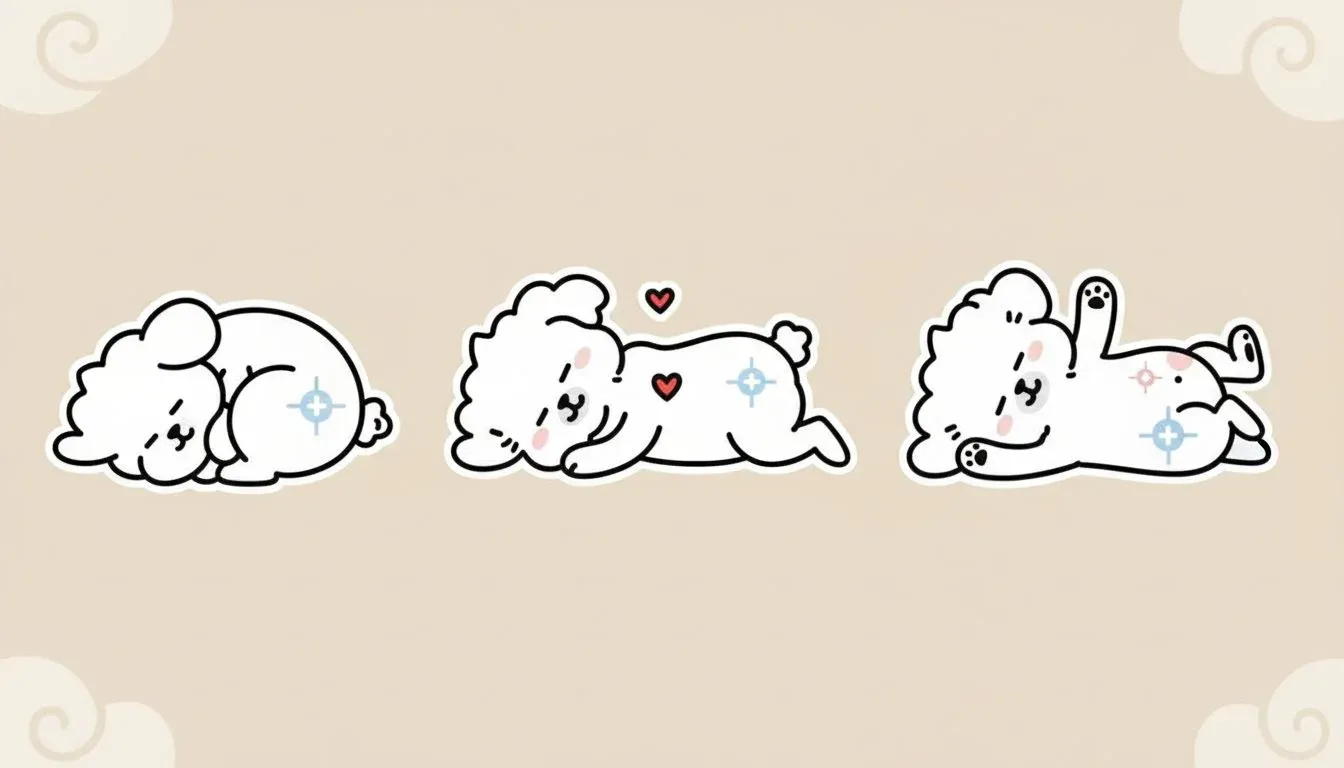
Most articles on dog sleeping positions frame the topic entirely around personality: the curled-up dog is “cautious,” the sprawled dog is “relaxed,” the back-sleeper is “trusting.” That framework makes for enjoyable reading, but it misses something clinically important. For veterinary rehabilitation specialists, how a dog positions their body during rest is also a functional observation — a window into which joints are under stress and which the dog is actively protecting.
This article approaches sleeping posture through a joint health lens. If your dog’s sleeping habits have shifted recently, or if you want to understand what to watch for as your dog ages, the information below gives you a practical framework grounded in veterinary orthopedics.
Your Dog’s Sleeping Position Is More Than a Personality Quirk
When Posture Changes Signal Physical Discomfort
Dogs, like humans, adopt body positions that minimize pain. This compensation happens automatically and is not a conscious decision. A dog experiencing hip discomfort will shift weight away from that hip during rest, altering where they place their legs, how tightly they curl, and which side they favor.
The clinical significance of this is underappreciated by most owners because the behavior looks ordinary. A dog sleeping with their legs tucked more tightly than usual appears merely comfortable. A dog changing positions every few minutes appears restless but not obviously injured. The challenge is that these patterns are normal-looking deviations from what is normal for that particular dog.
This is why baseline observation matters. Knowing how your dog typically sleeps gives you a reference point. When that pattern changes — and the change persists over days and weeks rather than one isolated night — it becomes a meaningful data point worth investigating.
How Joint Pain Alters the Way Dogs Sleep
Research in veterinary rehabilitation medicine describes a consistent pattern: dogs with painful joint conditions spend more time in positions that offload the affected area, take longer to settle into sleep (visible as repeated lying down and standing back up), and wake more frequently during rest periods.
A 2019 review published in Frontiers in Veterinary Science noted that spontaneous pain behaviors during rest, including changes in resting posture and sleep fragmentation, are recognized as reliable indicators of chronic musculoskeletal pain in dogs. Unlike acute injuries that prompt obvious limping, joint conditions such as osteoarthritis develop gradually, making posture the earlier visible signal.
The practical implication: postural changes during sleep often precede visible lameness by weeks or months. Owners who recognize them early can pursue veterinary evaluation before the condition advances.
Sleeping Positions That May Indicate Joint Problems
The four positions below are each common and individually unremarkable. What matters diagnostically is when these positions appear as a departure from your dog’s previous pattern, when they are accompanied by other subtle pain signs, and how consistently they occur.
Side Sleeping With Legs Extended: Avoiding Hip and Knee Pressure
Full lateral position — lying on one side with legs stretched out — distributes body weight broadly across the ribcage and shoulder. This reduces pressure on the hip and knee joints. Many dogs with hip dysplasia or early osteoarthritis shift toward this position because the alternative (lying in a more curled or sternally recumbent position) places direct load on the hip socket or stifle.
Large-breed dogs in particular — Labrador Retrievers, Golden Retrievers, and German Shepherds — are predisposed to hip dysplasia. If you notice a previously position-variable dog almost always gravitating toward full lateral rest, and especially if they favor the same side repeatedly, this is worth noting.
One important nuance: lateral position with the hindlimbs fully extended can also indicate spinal discomfort in some dogs, as it reduces compression on lumbar vertebrae. Dogs with intervertebral disc disease sometimes adopt this posture for the same unloading reason.
Tight Curl Position: Protecting Painful Joints
The tight curl — where a dog tucks their hindlimbs close to the body and brings their nose toward their tail — is often described as a thermal regulation or security posture. Behaviorally, that interpretation is correct. But from an orthopedic standpoint, the tight curl also reduces the range of motion the limbs need to maintain. For a dog with joint pain, holding joints near mid-range flexion (rather than full extension or full flexion) is generally less painful.
If a small-breed dog that previously slept stretched out begins sleeping in a consistently tight curl, and especially if they are stiff or slow to extend their legs when waking, this pattern is consistent with joint discomfort. Toy Poodles, Chihuahuas, and French Bulldogs — breeds with higher rates of patellar luxation — may begin showing this pattern from middle age onward.
The tight curl can also indicate thoracic or lumbar pain. Dogs with disc problems will sometimes curl to reduce spinal extension during rest.
Frequent Position Changes: No Comfortable Resting Posture
A dog that lies down, stands back up within a few minutes, circles, lies down again, and repeats this cycle is not necessarily anxious or overstimulated. This pattern — called repositioning or postural restlessness — is a recognized behavioral sign of pain in veterinary pain assessment scales, including the Glasgow Composite Pain Scale.
The mechanism is straightforward: when a joint is painful, maintaining any single position eventually increases local pressure and discomfort. The dog shifts to relieve that pressure, but the new position creates its own discomfort, triggering another cycle. This is distinct from a dog that simply cannot settle due to anxiety, which typically accompanies other behavioral signs like panting, pacing, and seeking contact.
If your dog struggles to settle for more than 10–15 minutes before repositioning, and this is new behavior, document it alongside other observations. Combined with stiffness after waking and reduced interest in activity, it forms a pattern that warrants veterinary evaluation.
Favoring One Side: Possible Pain on the Opposite Side
Dogs that consistently lie on the same side are not simply creatures of habit. Persistent unilateral preference often reflects that lying on the other side is uncomfortable. The affected joint — whether a hip, shoulder, or knee — is protected by keeping it uppermost during rest, which reduces the compression and weight-bearing it would otherwise experience.
This is particularly relevant for dogs recovering from orthopedic procedures or for senior dogs with known unilateral hip changes. If your dog abruptly stops lying on a side they previously used, a new or worsening asymmetrical joint issue is a plausible explanation.
How to Spot Joint Issues Through Sleep Observation
A Weekly Sleep Posture Observation Checklist
The goal of regular observation is not to diagnose your dog but to detect change. Use the following checklist once weekly for two to three minutes of quiet observation while your dog is resting.
Position pattern:
- Does your dog use multiple positions throughout a rest period, or is it always the same one?
- Are they consistently favoring one side?
- Has the position they typically use changed from past weeks?
Settling behavior:
- Does your dog lie down and stay, or do they repeatedly stand and reposition?
- Do they take multiple attempts or circles before lying down successfully?
- Do they vocalize (groan, sigh, whimper) when lowering themselves to the floor?
Waking behavior:
- Is there visible stiffness when your dog first stands after rest?
- Do they stretch or shift weight from one side to the other before walking?
- Does the stiffness resolve within a few minutes, or does it persist into movement?
If you check three or more boxes consistently over two weeks, bring these observations to your veterinarian. Written notes and, if possible, a short video clip of your dog settling and rising will be more useful than a verbal description.
Behavioral Signals to Watch Alongside Posture Changes
Posture alone is a partial signal. The picture becomes clearer when it appears alongside other behavioral shifts. Dogs with developing joint pain commonly show:
- Reluctance to climb stairs or jump onto surfaces they previously used without hesitation
- Reduced activity and lethargy that does not improve with rest — unlike normal tiredness, joint-related fatigue tends to persist
- Subtle changes in gait, such as shortening the stride on one side or carrying the hindquarters lower than usual
- Irritability or avoidance when touched on the back, hips, or legs
- Licking, chewing, or rubbing at a specific joint without visible skin irritation
For a comprehensive look at how dogs communicate pain through behavior, the signs your dog is in pain covers the full range of behavioral indicators beyond posture alone.
When to Schedule a Vet Visit
Schedule an appointment — not an emergency visit, but a timely one — if:
- Postural changes have been consistent for two weeks or longer
- Your dog shows visible stiffness that lasts more than five minutes after waking
- Three or more behavioral pain indicators are present simultaneously
- Your dog is a large breed over age 5 or any breed over age 7
An orthopedic examination, possibly combined with radiographs, will identify whether joint changes are present and at what stage. Early-stage findings are manageable and progression can be slowed significantly with appropriate intervention.
Creating a Joint-Friendly Sleep Environment
Surface Firmness and Bedding Selection: What Joints Actually Need
The primary function of a therapeutic dog bed is pressure distribution — spreading body weight across as broad a surface area as possible rather than allowing it to concentrate on bony prominences like hips, elbows, and shoulders. Standard polyester fill beds compress to near-flat within seconds under a dog’s weight and provide almost no pressure relief. Memory foam and high-density orthopaedic foam maintain their structure under load, which is what makes them mechanically effective.
What to look for when selecting bedding:
- Foam depth: At least 3–4 inches of solid foam. Thinner layers bottom out under larger dogs.
- Foam density: High-density memory foam (typically 4–5 lb/ft³ for larger dogs) resists early collapse and lasts longer.
- Compression test: Press your fist firmly into the surface. High-quality foam should resist and return slowly. Foam that collapses completely will not support a dog’s body effectively.
- Cover material: Non-slip bottom to prevent shifting on hard floors; removable, washable cover for hygiene.
For dogs already showing joint-related signs of arthritis, veterinary rehabilitation specialists typically recommend transitioning to orthopedic bedding before lameness becomes obvious, not after.
Temperature Management: Cold and Joint Stiffness
Low ambient temperature directly affects joint comfort in dogs with osteoarthritis. Cold slows synovial fluid circulation and increases muscle tension around affected joints, which many owners describe as “morning stiffness” — the pronounced difficulty their dog shows in the first minutes after waking from overnight sleep.
Practical measures:
- Place bedding away from drafts, exterior walls, and air conditioning vents.
- In colder months, consider a light fleece blanket that the dog can burrow under or push aside.
- Low-wattage pet-safe heating pads used on the lowest setting provide gentle warmth to the contact area. Ensure the dog can move off the pad if needed.
- Tile and hardwood floors are significantly colder than raised surfaces, which is an additional reason to encourage use of elevated bedding (at appropriate heights — see below).
Bed Height and Placement: Reducing Entry and Exit Strain
Every time a dog steps onto or off their bed, they must absorb the transition force through their joints. For dogs with hip dysplasia, patellar luxation, or spinal disc disease, this repetitive stress adds up. A bed that requires any degree of jumping should be replaced or made accessible with a low-gradient ramp.
Floor-level mattresses are generally the safest option for dogs with joint conditions. The transition from standing to lying involves a controlled lowering movement rather than a jump, and the same applies in reverse.
Placement also matters. Beds positioned in corners or against walls limit the approach angles a dog can use to lie down. Dogs in pain benefit from the ability to approach from multiple directions and choose the angle that requires least strain. A bed placed in an open area of the room addresses this.
For homes where the dog also uses furniture, the impact of jumping off furniture on joints is worth understanding before deciding whether to provide access steps or limit access entirely.
Condition-Specific Sleep Setup Guide
Dogs With Patellar Luxation
Patellar luxation is most common in toy and small breeds — Chihuahuas, Pomeranians, Yorkshire Terriers, Miniature Poodles, and Maltese among them. The kneecap slips out of the trochlear groove and back in, causing intermittent pain and progressive cartilage wear at the joint.
For these dogs:
- Firmness: Medium-firm foam is appropriate. Excessively soft surfaces cause the hindlimbs to sink unevenly, which can create a forced rotation at the stifle.
- Height: Floor-level mattress. Avoid any surface that requires stepping over an edge higher than 3–4 cm.
- Temperature: Warmth is helpful; cool surfaces can trigger muscle tension that increases the likelihood of patellar displacement.
- Floor transition: Place a non-slip mat between the bed and adjacent flooring to prevent slipping when the dog steps off. Slippery floors compound joint stress for these dogs beyond the sleeping surface itself.
Senior Dogs With Arthritis
Arthritis in senior dogs — most commonly affecting the hips, elbows, and spine in large breeds, and the stifle in smaller breeds — involves cartilage loss and secondary bone remodeling. Both heat-sensitivity and cold-sensitivity can occur depending on the stage.
For senior dogs with confirmed or suspected arthritis:
- Firmness: High-density memory foam, 4 inches minimum. Large breeds (Labs, German Shepherds, Golden Retrievers) require deeper foam to prevent bottoming out.
- Height: Floor-level or extremely low-profile. Steps or a ramp may be provided for dogs that prefer elevated sleeping but should never require a jump.
- Temperature: Warmth typically helps. Morning stiffness is usually worst in cool environments. A heated pad used safely overnight can reduce the severity of post-sleep stiffness.
- Multiple sleep spots: Senior dogs often move between resting spots. Providing two or three orthopedic surfaces in frequently used rooms reduces the likelihood of your dog settling on bare floor due to distance.
For a full overview of managing the joint health of aging dogs, senior dog joint care covers the medical, nutritional, and environmental dimensions together.
Dogs With Disc Disease
Intervertebral disc disease (IVDD) primarily affects the cervical and thoracolumbar spine. Breeds such as Dachshunds, French Bulldogs, Beagles, and Cocker Spaniels are predisposed due to chondrodystrophic conformation. Large breeds can develop IVDD as well, particularly in later life.
For dogs with disc disease:
- Firmness: Medium to medium-firm, with an emphasis on even support across the spine. The bed should not allow the spine to sag in the middle when the dog is lying laterally.
- Bolsters and edges: Some dogs with neck or back pain find raised edge bolsters useful for resting their head and neck without muscular effort. Others find the raised edges create awkward spinal angles. Observe which your dog prefers.
- Temperature: Warmth helps relax paraspinal muscles that often tighten protectively around affected disc segments.
- Entry and exit: Especially important for IVDD dogs. The impact of a jump landing sends vibration force through the entire spinal column. Floor-level beds are strongly preferred, and all jumping onto furniture or from heights should be avoided.
For dogs where pain management is part of the treatment plan, near-infrared therapy for dogs is one approach within veterinary rehabilitation that targets soft tissue and joint inflammation.
Sleeping position is one of the most observable windows into your dog’s physical comfort — and one of the most consistently overlooked. The changes that matter are not dramatic. They are a dog that now always sleeps on one side. A dog that stands and circles three times before settling. A dog that rises stiffly in the morning when they did not six months ago. These patterns, observed consistently and documented clearly, are the kind of information that helps a veterinarian identify joint problems earlier, when management is most effective.
FAQ
My dog insists on sleeping on the hard floor — is that bad for their joints?
What should I look for in an orthopedic dog bed for joint health?
Is it safe to use a heated pad overnight for a dog with joint pain?
Should dogs with joint issues avoid elevated beds?
At what age do dogs typically begin showing sleep posture changes due to joint pain?
Related Articles
Dog Jumping Off Furniture: Why Their Joints Are Paying the Price
Every couch jump sends 2–5x body weight through your dog's joints. Learn how repeated landings cause joint damage and what to do about it.
If Your Dog Lives on Hardwood Floors, Here's How to Protect Their Joints
Slippery hardwood, laminate, and tile floors quietly damage your dog's joints over time. Learn the biomechanics, floor risk comparison, and proven solutions.
Dog Tick Prevention on Walks: How to Check, Remove, and Protect Against Tick-Borne Disease
A complete guide to dog tick prevention during walks. Learn how to check for ticks, safely remove them, and protect your dog from dangerous tick-borne diseases like Lyme, Ehrlichiosis, and Babesiosis.