 Cirius Petpedia
 If Your Dog Lives on Hardwood Floors, Here's How to Protect Their Joints
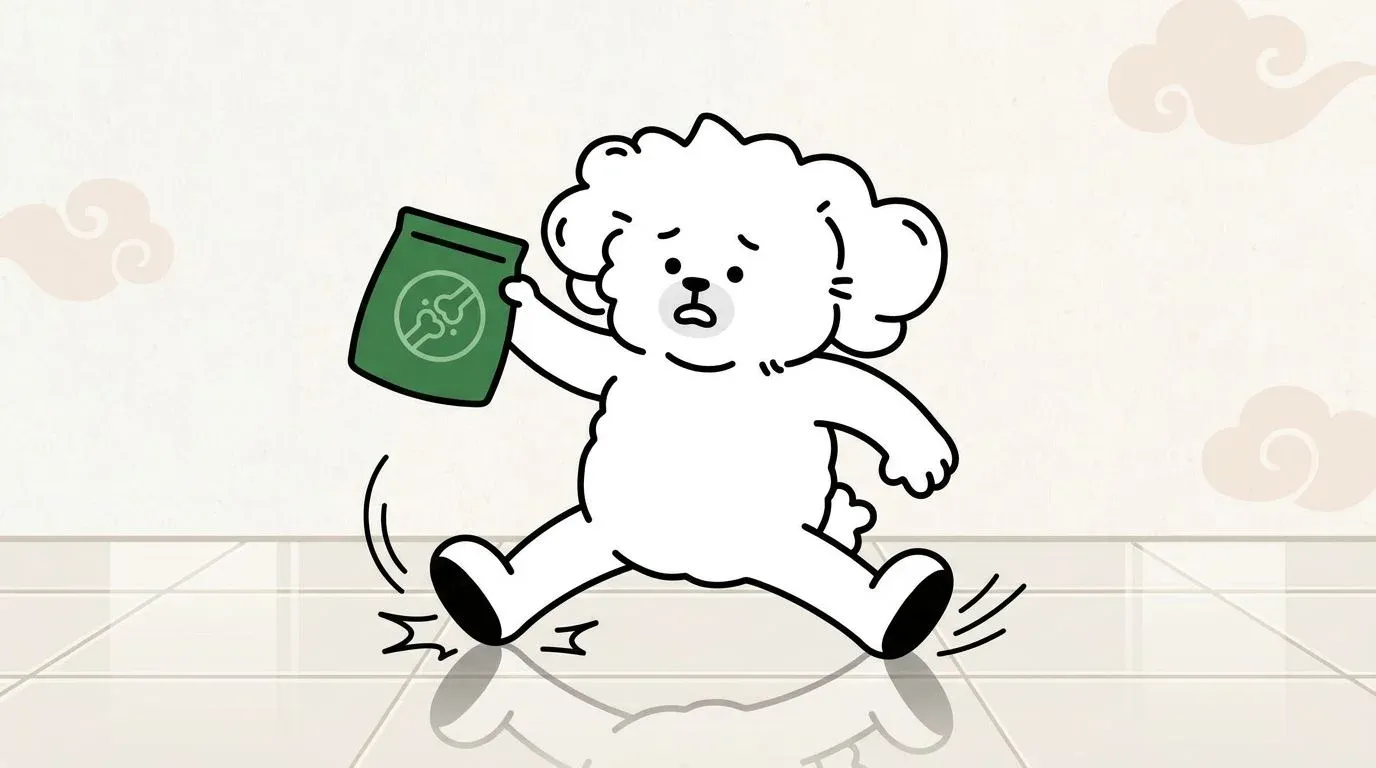
Most dog owners think slippery floors are a nuisance — something that makes their dog look funny skidding around the kitchen. Few recognize that the same slipping, bracing, and splaying happening underfoot is quietly loading their dog’s joints in ways those joints were never designed to handle.
This guide explains the actual biomechanics of what happens when a dog walks on a low-traction surface, which floors carry the highest risk, and how to build a practical home environment that keeps your dog’s joints safe regardless of their age or breed.
How Slippery Floors Damage Your Dog’s Joints
The core problem isn’t slipping itself — it’s what the body does to prevent a fall.
The Biomechanics of Slipping: Abnormal Joint Loading
When a dog’s paw makes contact with a slippery floor, proprioceptors (nerve receptors in the paw pads that sense position and pressure) send a warning signal: the surface isn’t stable. The dog’s muscular and skeletal system responds in milliseconds with a compensatory posture — legs splay outward, the body lowers, and muscles throughout the limbs tense to try to stabilize the frame.
This response is effective for preventing a dramatic fall. But it creates a problem: it positions the joints in angles they aren’t designed to bear load under. A study published in Veterinary and Comparative Orthopaedics and Traumatology found that dogs walking on low-friction surfaces showed significantly altered ground reaction forces compared to dogs on high-friction surfaces, with peak vertical forces redistributed in ways that increase stress on hip and stifle (knee) joints.
The key issue is the coefficient of friction (CoF). A surface CoF above 0.5 is generally considered safe for human walking; dogs have similar threshold requirements. Common flooring types fall below this:
- Polished hardwood (polyurethane finish): CoF 0.2–0.3
- Standard laminate: CoF 0.2–0.4
- Glazed ceramic tile: CoF 0.2–0.35
- Vinyl plank flooring: CoF 0.3–0.5 (varies by texture)
- Concrete (smooth): CoF 0.3–0.4
The repeated small compensations — not just dramatic slips — accumulate into chronic joint stress over weeks and months.
Three Joint Conditions Linked to Slippery Surfaces
Patellar luxation occurs when the kneecap (patella) slips out of its groove in the femur. The condition has a genetic component, but environmental loading is a known exacerbating factor. When a dog constantly braces on a slippery surface, the quadriceps pull unevenly on the patella, gradually worsening an already unstable alignment. You can read more about the progression and grading in our comprehensive patellar luxation guide.
Hip dysplasia progression involves the femoral head fitting loosely in the acetabulum (hip socket). Slippery floors force dogs to adopt a wide-legged compensatory stance that increases rotational stress on an already-lax joint. The Orthopedic Foundation for Animals (OFA) recognizes early environmental loading as a contributing factor alongside genetics — making floor surface a modifiable risk variable even for genetically predisposed breeds.
Cranial cruciate ligament (CCL) strain is the canine equivalent of an ACL tear. The CCL is under continuous loading during weight-bearing, and the twisting forces generated when a dog scrambles for footing on a slippery floor are exactly the type of shear stress that leads to ligament fatigue and eventual rupture. According to the American College of Veterinary Surgeons (ACVS), CCL disease is the most common cause of rear limb lameness in dogs — and many cases are preceded by a history of slipping incidents.
What Happens When You Don’t Address the Problem
A single slipping episode is rarely the crisis. The real damage comes from ignoring the pattern.
The Cycle of Micro-Damage and Muscle Weakness
Here’s what the progression looks like over months on a slippery floor:
- Altered gait — The dog learns to walk more cautiously, shortening stride length and shifting weight forward to reduce rear limb exposure.
- Muscle disuse — Hip extensors and rear quadriceps begin to weaken from underuse. Muscles that aren’t loaded don’t maintain strength.
- Increased joint laxity — Without adequate muscle support, the joint capsule bears more stress with each step.
- Micro-cartilage damage — Low-grade, repetitive abnormal loading chips away at articular cartilage. Unlike bone, cartilage has no blood supply and cannot repair itself.
- Osteoarthritis onset — The cumulative cartilage damage triggers the inflammatory cascade of arthritis. By the time a dog shows visible signs of arthritis, the underlying structural damage has usually been accumulating for months.
This cycle is particularly insidious in senior dogs because their proprioception naturally declines with age. A dog that once corrected instinctively may now genuinely struggle to stabilize.
Behavioral Red Flags Your Dog Is Struggling
Dogs rarely vocalize pain until it’s severe. Behavioral changes are often the first readable signal. Watch for:
- Floor avoidance — Refusing to enter rooms with tile or hardwood, choosing to walk along walls where friction is better, or preferring carpet paths
- Reluctance to play — A previously energetic dog that stops initiating play indoors may be self-managing pain
- The “slide and freeze” posture — A dog that slips and then stands motionless for several seconds before moving again is recalibrating proprioceptively; it suggests genuine instability
- Changes in posture while standing — A tucked pelvis, wide rear stance, or weight shifted toward the front legs
- Hesitation at transitions — Pausing before stepping from carpet onto tile, or at the base of stairs
These behavioral signs overlap significantly with pain signals from other causes. Our article on reading your dog’s pain behavior signs covers the full spectrum of what to look for.
Is Your Floor Safe? A Quick Assessment Checklist
Not all hard floors carry the same risk. The type of material, its finish, and how your home is arranged all factor into your dog’s actual daily exposure.
Floor Type Risk Comparison Chart
| Floor Type | Typical CoF (dry) | Joint Risk Level | Notes |
|---|---|---|---|
| Matte/textured hardwood | 0.45–0.6 | Low–Medium | Natural grain texture helps; older finishes safer |
| Polished hardwood (poly finish) | 0.2–0.35 | High | Glossy finish eliminates texture traction |
| Standard laminate | 0.2–0.4 | High | Smooth core layer; no grain variation |
| Textured vinyl plank (LVP) | 0.35–0.55 | Medium | Embossed surface texture reduces slip; quality varies |
| Smooth vinyl sheet | 0.25–0.4 | High | Institutional-grade smooth surface |
| Glazed ceramic/porcelain tile | 0.2–0.35 | Very High | Worst for dogs when dry; dangerous when wet |
| Unglazed or matte tile | 0.45–0.65 | Low–Medium | Porous surface provides natural grip |
| Smooth concrete | 0.3–0.45 | Medium | Bare concrete safer than polished; sealer increases risk |
| Carpet | 0.6–0.8 | Low | Ideal traction; the baseline to aim for |
CoF values are approximate ranges based on industry friction testing. Actual values vary by brand, finish age, and moisture.
5-Point Home Safety Assessment
Walk through your home and score each item:
- Entry and exit zones — Where does your dog first land after jumping off furniture or coming inside? Is there a rug or mat at every landing point?
- High-traffic corridors — Map the routes your dog travels most: water bowl to sleeping area, couch to door, staircase landing. Are bare floor stretches longer than 6–8 feet without traction coverage?
- Wet zones — Kitchen and bathroom floors get damp regularly. Does your dog access these areas unsupervised?
- Furniture jump zones — Where does your dog jump off the sofa or bed? Is there a landing mat directly below?
- Staircase transition points — The top and bottom of stairs are where slipping injuries most often occur. Are both transition zones covered?
If you answered “no” to two or more of these, your home has meaningful traction gaps.
Breed and Age-Specific Risks
Not all dogs face the same consequences from slippery floors. Breed conformation and life stage determine which specific joints are most at risk.
Small Breeds vs Large Breeds: Different Vulnerabilities
Small and toy breeds (Chihuahuas, Pomeranians, Yorkshire Terriers, Shih Tzus, Bichon Frises) have anatomically shallow patellar grooves as a breed trait. This predisposes them to patellar luxation even without environmental stress. Slippery floors accelerate the problem dramatically — particularly in puppies whose muscular development hasn’t yet caught up with skeletal growth. For small breed owners, floor safety isn’t a convenience issue; it’s a primary prevention strategy for one of their most common surgical conditions.
Medium to large breeds (Labrador Retrievers, Golden Retrievers, German Shepherds, Rottweilers) carry different vulnerabilities. Their body weight magnifies joint forces with every step. Hip dysplasia and CCL rupture are the primary concerns. A 70-pound Labrador compensating for a slippery floor generates substantially more abnormal joint loading per step than a 10-pound Maltese — the structural consequences accumulate faster.
Giant breeds (Great Danes, Saint Bernards, Mastiffs) are often less agile and have reduced ability to correct mid-stride. Their sheer mass means that a single slip-and-scramble incident can cause acute injury, not just chronic micro-damage.
Puppies, Adults, and Seniors: Age-Appropriate Care
Puppies (under 12 months) are at unique risk because their growth plates — the cartilaginous zones at the ends of long bones where growth occurs — are not yet ossified (hardened into bone). These plates are softer and more vulnerable to compressive or shear forces than mature bone. A puppy that regularly slips and splays on a hard floor is loading its growth plates abnormally during the most critical developmental window. Orthopedic veterinarians increasingly recognize indoor floor surface as a puppy-proofing priority alongside toxic plant removal and electrical cord management.
Adult dogs (1–7 years) have mature skeletal structure but are not immune. The risk is cumulative injury — particularly CCL fatigue in active dogs and early-onset arthritis in genetically predisposed breeds. Adults are often the most overlooked group because they don’t show obvious signs of difficulty on slippery floors the way seniors do.
Senior dogs (7+ years, varies by breed) face a compounding set of challenges: declining proprioception, reduced muscle mass (sarcopenia), and often pre-existing arthritis that makes every abnormal joint loading event more painful. A senior dog that was fine on hardwood floors at age 4 may genuinely struggle by age 9. Our senior dog joint care guide covers age-related joint changes in detail.
Traction Solutions Compared: Rugs, Paw Wax, Toe Grips, and More
The good news: most traction problems in the home are solvable without renovation. The following options each have genuine utility — the right combination depends on your floor type, dog size, and household logistics.
Solution Comparison Table
| Solution | Cost | Effectiveness | Convenience | Best For |
|---|---|---|---|---|
| Area rugs / runners | $20–$200+ | High (on covered area) | High | Corridors, main living spaces |
| Non-slip rug pads | $15–$40 | Medium (rug stability) | High | Under existing rugs |
| Paw wax | $10–$20 | Medium | Medium | Short-term, outdoor use too |
| Rubber toe grips | $20–$40 | High | Medium | Senior dogs, small breeds |
| Non-slip dog socks/booties | $10–$30 | Medium | Low–Medium | Short sessions; often removed |
| Anti-slip floor spray/mat coating | $15–$50 | Medium (varies) | High | Targeted slippery zones |
| Yoga/exercise mat sections | $10–$30 | High | High | Under food/water bowls, landing spots |
| Floor refinishing (matte finish) | $300–$1500 | High (permanent) | N/A – one-time | Households committed to long-term solution |
Cost ranges are approximate US market estimates (2025).
Best Combinations for Your Situation
For apartment or open-plan living with mostly hardwood: Runner rugs along main corridors + rubber-backed mat at furniture jump points + toe grips or paw wax for the dog during active periods. This covers 80% of exposure without limiting mobility.
For tile-heavy kitchens and bathrooms: Non-slip mat at the food/water station + yoga mat sections at transition points between tile and other flooring. Keep the dog off wet tile whenever possible — wet glazed tile can approach CoF 0.1, genuinely dangerous.
For senior dogs or those with diagnosed joint conditions: Maximize area coverage — runners, mats, and rugs should create near-continuous traction paths between the dog’s essential destinations (bed, food, door, outdoor access). Combine with toe grips for any unavoidable bare floor exposure. Consult your vet about targeted exercise to rebuild hind limb muscle strength, which directly reduces the joint strain caused by unstable surfaces.
For puppies: Prioritize the areas where they most frequently run and play. Puppies are less trainable about floor avoidance than adult dogs, so environmental modification matters more. Foam play mats over hard floors in play zones are effective and inexpensive.
Beyond Flooring: Lifestyle Habits That Protect Joints
Traction solutions address the floor, but a few complementary habits significantly increase joint protection.
Nail Trimming and Paw Pad Care
Overgrown nails are a significant, frequently overlooked traction problem. When nails are too long, the paw cannot make full contact with the floor — the nails take the load first, forcing the toes upward and reducing the pad’s friction surface area. This effectively makes any floor more slippery. Veterinarians typically recommend trimming every 3–4 weeks for indoor dogs on hard floors; the nail tip should not touch the floor when the dog is standing.
Paw pad condition matters too. Excessively dry or cracked pads lose the soft, grippy texture that contributes to traction. Regular moisturizing with dog-specific paw balm (not human lotion, which can be too oily) keeps pads supple. Pads that are overly moisturized, however, can become slippery — balance is the goal.
Managing Jumping, Stairs, and Furniture Access
The highest-impact moments for joint loading aren’t steady walking — they’re the explosive landing forces from jumping. When a dog jumps off a couch or bed onto a hard floor, the impact force can reach 2–3 times the dog’s body weight concentrated over a split second, entirely onto the landing joints.
Practical strategies:
- Pet ramps and stairs: Ramps with grip-tape or carpet surfaces allow dogs to self-navigate furniture at a lower angle of incidence. Dogs with diagnosed patellar luxation or hip dysplasia benefit particularly from ramps over steps, as steps still require brief single-leg loading at awkward angles.
- “Off” training for slippery landing zones: If your couch faces a hardwood floor rather than a rug, training your dog to use a ramp or a specific landing mat (rather than jumping freely) is worth the investment of a few weeks of training.
- Stair management: For dogs with joint issues, stair use should be supervised or limited. Non-slip stair treads (carpet runners, rubberized pads) reduce the risk at each step transition. Going down stairs is harder on joints than going up — the front legs absorb most of the descent impact.
Weight management is the single most powerful modifiable joint-protection factor that doesn’t involve floor surface at all. Each pound of excess body weight adds roughly 4 pounds of force to a dog’s joints during movement. This compounds dramatically with slippery floor stress. If your dog is overweight, addressing that has a larger impact on long-term joint health than any floor modification.