 Cirius Petpedia
 Bringing Home a New Puppy? The Complete Socialization Training Guide You Need
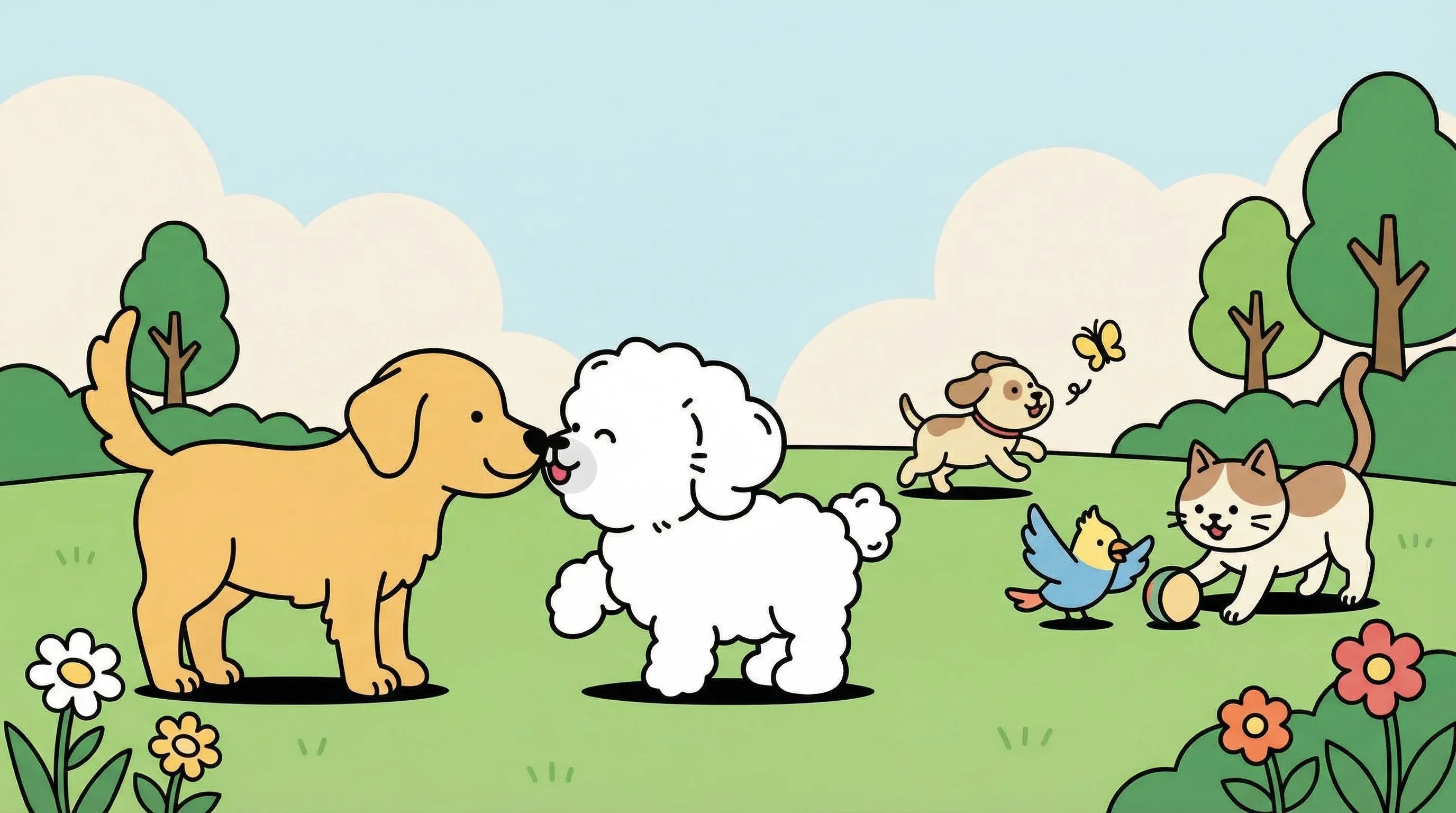
The first weeks you spend with a new puppy shape the dog they will be for the rest of their life. That’s not an exaggeration—it’s neuroscience. During a narrow developmental window, a puppy’s brain is primed to absorb experiences with minimal fear. Once that window closes, learning is still possible, but it requires significantly more effort and time.
This guide walks you through the science behind socialization, a week-by-week timeline, safe methods for pre-vaccination exposure, a practical category-based checklist, and what to do if you’ve adopted an older dog who missed that early window.
What Is Puppy Socialization and Why Does It Matter?
Puppy socialization training is the deliberate process of exposing a young dog to a wide variety of people, animals, environments, sounds, and surfaces—paired with positive experiences—so they learn that the world is safe and predictable. It is not simply “meeting other dogs.” It encompasses everything a dog might encounter in a human world.
The Science Behind Socialization Windows
Developmental neuroscience has identified discrete sensitive periods during which the canine brain shows heightened plasticity. During these windows, neural circuits that govern fear and social responses are being established. Experiences during these periods leave stronger imprints than the same experiences encountered later in life.
Research published in Veterinary Clinics of North America: Small Animal Practice identifies the primary socialization period as roughly 3 to 12–14 weeks of age. After this point, neophobia—fear of novel stimuli—increases as a natural protective adaptation. A dog that has encountered traffic noise, children, umbrellas, and strangers during this window encodes those stimuli as “normal.” A dog that hasn’t encountered them is more likely to react with fear or defensiveness when first exposed as an adult.
The American Veterinary Society of Animal Behavior (AVSAB) has issued a formal position statement emphasizing that puppy socialization should begin before the completion of the vaccination series, because the behavioral risk of under-socialization exceeds the medical risk of carefully managed early exposure.
What Happens When Socialization Is Missed
Inadequate early socialization is one of the most common root causes of adult behavior problems. Dogs who were not adequately socialized are significantly more likely to develop:
- Generalized anxiety and hypervigilance
- Fear-based aggression toward strangers or other animals
- Separation anxiety when left alone
- Noise phobias triggered by thunder, fireworks, or traffic
- Excessive barking as a fear or alarm response
- Resource guarding behaviors such as growling over food or possessions
These are not personality quirks a dog will “grow out of.” They are learned associations that become increasingly entrenched over time. Early investment in socialization prevents the need for far more intensive behavior modification later.
The Critical Socialization Timeline: Week by Week
Understanding the puppy socialization timeline allows you to prioritize what matters most at each stage. Here is a summary of the key developmental periods.
| Age | Period | Primary Focus |
|---|---|---|
| 0–3 weeks | Neonatal | Sensory awakening; handled by breeder |
| 3–7 weeks | Primary socialization | Learning from littermates and mother |
| 8–12 weeks | Peak socialization window | Broadest, fastest learning; your responsibility begins |
| 12–16 weeks | Late socialization / fear period | Continue exposures; watch for fear responses |
| 16+ weeks | Juvenile period | Continued reinforcement; closing window |
Neonatal Period (0–3 Weeks): Sensory Foundations
During the neonatal period, puppies are blind and deaf. Their world is warmth, touch, and smell. Responsible breeders begin “early neurological stimulation” (ENS) exercises during this phase—brief, gentle handling in specific positions—which research suggests produces dogs with improved cardiovascular performance, stronger adrenal glands, and greater tolerance of stress in later life.
As a new owner, you have no direct role here, but asking your breeder or rescue about their early handling practices gives you meaningful information about your puppy’s developmental start.
Primary Socialization (3–7 Weeks): Learning From Littermates
Between three and seven weeks, puppies begin to interact with the world and with each other. Play with littermates teaches bite inhibition, the canine communication system, and social hierarchy basics. Separation from the litter before seven weeks is associated with increased aggression and poor social behavior with other dogs in adulthood—which is why responsible breeders and shelters do not place puppies before eight weeks.
At this stage, reputable breeders expose puppies to mild household sounds, different surfaces, and gentle human handling. These experiences build a baseline comfort with novelty.
Peak Socialization Window (8–12 Weeks): The Golden Period
This is the period that new owners most directly control, and it is the most consequential. At eight weeks, when most puppies arrive in their new homes, the brain is at its peak readiness to form positive associations. Fear responses exist but are relatively easy to override with positive experiences.
Every new person, surface, sound, and situation your puppy encounters during this window—and responds to calmly—builds a “mental library” of safe experiences that will inform their behavior for years. Missing this period cannot be fully compensated for later; it can only be partially remediated.
Prioritize breadth over depth. Meeting twenty different types of people matters more than meeting the same five people twenty times.
Late Socialization (12–16 Weeks): Navigating Fear Periods
Between 12 and 16 weeks, the socialization window begins to narrow and a first fear period often emerges. Puppies that were happy-go-lucky a week ago may suddenly startle at things they previously ignored. This is a normal developmental phase, not regression.
During this period:
- Continue exposures, but at slightly lower intensity
- Do not force approach to anything that frightens your puppy
- Use distance and high-value treats to build positive associations from a comfortable range
- A brief negative experience during a fear period can create lasting aversions—manage situations carefully
Safe Socialization Before Full Vaccination
The concern about socializing before full vaccination is legitimate but often overstated. The AVSAB’s position is clear: waiting until the vaccine series is complete (typically 16 weeks) means missing the most important socialization period entirely. The solution is risk-managed early socialization, not avoidance.
Carry-and-Observe Walks
Before your puppy’s paws touch unknown ground, you can carry them through the world. A puppy riding in your arms outside a coffee shop, observing street traffic, hearing buses, and watching strangers walk by is socializing—safely. The key stimuli are visual and auditory, not contact-based.
A structured carrier or puppy sling makes this practical. Aim for three to five short carry-and-observe outings per week. Pair each new stimulus with a small, soft treat given calmly, not in an excited voice.
Indoor Sound and Texture Training
Your home is a socialization environment. Intentional indoor exposure to sounds and surfaces is low-risk and high-yield:
- Play recordings of thunderstorms, fireworks, city noise, and babies crying at low volume during meals
- Introduce surfaces: crinkly aluminum foil, rubber bath mats, carpet runners, wooden boards
- Open and close umbrellas across the room
- Wear hats, sunglasses, and large coats when interacting with your puppy
- Have visitors come through frequently, including children, men with beards, people using canes or wheelchairs
For dogs who develop significant noise sensitivity, early desensitization to recorded sounds at low volume is one of the most effective prevention strategies available.
Controlled Puppy Playdates
Playdates with vaccinated adult dogs owned by people you know are generally safe and valuable. Calm, tolerant adult dogs are ideal social tutors—they communicate clearly and give puppies appropriate feedback without excessive force.
Many veterinary clinics and certified trainers offer “puppy kindergarten” classes that begin as early as 7–8 weeks (one week after the first vaccine dose). The AVSAB endorses this practice, noting that the benefit of early socialization in a controlled, disinfected class environment outweighs disease risk.
Socialization Checklist by Category
Socialization is most effective when it is systematic. Use this checklist to track progress across major experience categories. The goal is not just exposure but positive exposure—pair each new item with a treat, praise, or calm play.
People: Ages, Appearances, and Behaviors
Your puppy should encounter people who look, move, and sound different from you. Check off each category as your puppy has a calm, positive interaction:
- Infants and toddlers
- Children running and playing
- Teenagers with loud voices
- Men with beards or facial hair
- People wearing hats, hoods, or helmets
- People wearing sunglasses
- People in high-visibility vests or uniforms (mail carriers, construction workers)
- People using umbrellas
- People in wheelchairs, with crutches, or using walkers
- People with large bags or backpacks
- Elderly individuals who move slowly
- People from diverse ethnic backgrounds
- People who speak loudly or gesture expressively
- People who approach quickly or crouch suddenly
Sounds: Household Noises to Fireworks
Introduce sounds gradually, starting at low volume. Never expose a puppy to a startling sound at full intensity without prior conditioning.
- Vacuum cleaner
- Hair dryer and blow dryer
- Blender and food processor
- Washing machine and dryer (especially spin cycle)
- Television and radio at varying volumes
- Doorbells and door knocking
- Smoke detector beep (brief, low volume version)
- Thunderstorm recordings
- Fireworks recordings
- Traffic noise (cars, buses, motorcycles)
- Sirens at a distance
- Children playing and shouting
- Skateboard and bicycle sounds
- Construction noise (drilling, hammering)
- Crowd noise
Surfaces and Environments: Grass, Tile, Stairs, Elevators
A dog that is comfortable on many surfaces moves through the world with less anxiety.
- Hardwood and laminate flooring
- Tile and linoleum
- Carpet (various textures)
- Grass (wet and dry)
- Gravel and concrete
- Grates (storm drains, metal bridge walkways)
- Rubber mats
- Sand
- Stairs (up and down)
- Ramps
- Elevators (sound, motion, doors)
- Moving vehicles (riding calmly in a car)
- Narrow passages and doorways
- Slippery surfaces
- Outdoor stairs with open risers
Other Animals: Dogs, Cats, and Small Pets
Social exposure to other animals prevents reactivity and fear-based responses in multi-pet households and public settings.
- Calm, vaccinated adult dogs of various sizes
- Puppies of similar age (in supervised play)
- Dogs on leash at a distance (look and disengage)
- Dogs of different body types (sighthounds, brachycephalic breeds, giant breeds)
- Cats who are dog-tolerant
- Small animals like guinea pigs or rabbits (through a barrier, calmly observed)
- Birds
- Horses or livestock (if applicable to your environment)
5 Core Principles of Effective Socialization
Having a checklist is useful. Understanding the principles behind it makes the difference between socialization that builds confidence and exposure that accidentally reinforces fear.
Positive Reinforcement: Building Good Associations
Every socialization experience should end with your puppy associating the new stimulus with something good. High-value treats (soft, small, easy to eat quickly), calm praise, and brief play all work. The pairing needs to happen at the moment of exposure—not minutes later.
Classical conditioning is the mechanism: stimulus (stranger) + reward (treat) = positive association. Over enough repetitions, the stimulus alone predicts something good. This is why force-based “flooding” methods—forcing a fearful dog to stay in a situation until they “get over it”—are both ineffective and damaging. The fear does not extinguish; it intensifies.
Gradual Exposure: Slowly Increasing Intensity
Begin each new exposure at a distance or intensity level where your puppy is curious but not frightened. This is called working under threshold. Move closer or increase intensity only when your puppy is relaxed, not when they are merely tolerating the situation.
A puppy that is overwhelmed cannot learn. Cortisol released during a fear response actually impairs memory consolidation—meaning the lesson being “learned” is one of threat, not safety.
Respect Your Puppy’s Choice to Opt Out
If your puppy sniffs at a stranger and then backs away, that communication should be respected. Forcing a puppy forward by pushing, pulling, or holding them in place undermines trust and can sensitize them to the very stimulus you were trying to desensitize.
Allow approach and retreat to be puppy-initiated whenever possible. A stranger who crouches sideways and waits rather than reaching overhead will get a curious puppy much faster than one who initiates physical contact.
Short and Frequent: 5–10 Minutes Per Session
Young puppies have short attention spans and limited stress capacity. A 5–10 minute focused socialization session, done consistently, is more effective than an exhausting 45-minute marathon. Multiple brief sessions distributed through the day make the most of the critical window.
Leash walking practice can be integrated into socialization sessions, but keep the primary goal in mind: calm, positive exposure—not obedience drills.
Never Use Punishment or Force
Punishment during socialization—including leash corrections, loud “no,” or physical restraint—poisons the experience. It teaches the puppy that new situations lead to unpleasant consequences from the owner, which compounds rather than resolves anxiety.
If your puppy reacts fearfully, your response should be: move away to a comfortable distance, wait for calm, reward calm, try again at lower intensity. That sequence is the entire protocol.
Socializing an Adult Dog: It’s Not Too Late
Adopting an older dog, or discovering that your adult dog missed the socialization window, is more common than many people realize. Shelter dogs, import rescues, and dogs raised in limited environments often fall into this category.
Why Adult Socialization Is Still Possible
The brain retains significant neuroplasticity throughout life. Adult dogs absolutely can form new positive associations—it simply takes more time and more consistent management than it would have during the critical window. The goal with adult dogs is not to replicate what should have happened at 8 weeks, but to build a specific bank of positive associations around the stimuli that currently trigger anxiety or reactivity.
Counterconditioning and desensitization (CC+DS) is the evidence-based approach. It involves systematic exposure to feared stimuli at intensities far below the dog’s reactivity threshold, paired with high-value rewards, and gradually increasing intensity over weeks to months.
Threshold Distance and Desensitization Training
“Threshold” refers to the distance or intensity at which a dog first notices a stimulus without reacting. A reactive dog may have a threshold of 30 meters for unfamiliar dogs. Working at 40 meters—where the dog can see another dog and eat treats without barking or lunging—is working under threshold.
The protocol:
- Identify the dog’s current threshold distance for the trigger stimulus
- Begin exposure at 20–30% beyond that distance (further away = lower intensity)
- Pair every appearance of the stimulus with a high-value treat
- Gradually decrease distance over multiple sessions, only when the dog remains relaxed
- If the dog reacts, you moved too fast—increase distance and slow down
Progress with adult dogs is measured in weeks and months, not sessions. Managing the environment to prevent over-threshold exposures in daily life is equally important, because every reactive episode reinforces the fear pattern.
When to Seek Professional Help
Some adult dogs have fear histories that benefit from professional support. Consider consulting a certified professional dog trainer (CPDT-KA), a certified applied animal behaviorist (CAAB), or a veterinary behaviorist (DACVB) if:
- Your dog’s fear or reactivity prevents normal daily activities (walks, vet visits, having guests)
- The dog has made physical contact in a bite or near-bite incident
- Home desensitization work shows no progress after 4–6 weeks
- The dog’s anxiety appears severe or generalized across many contexts
- You are unsure how to structure a desensitization program safely
In some cases, anti-anxiety medication prescribed by a veterinarian can lower the dog’s baseline stress level enough to make behavior modification work more effectively. Medication is a tool that supports training—not a substitute for it.
FAQ
When should I start socializing my puppy?
Is it safe to socialize a puppy before all vaccinations are done?
What if I missed the socialization window? Can I still socialize my adult dog?
How long should each socialization session be?
What are signs that my puppy is overwhelmed during socialization?
Related Articles
Dog Lethargy Causes: When Slowing Down Signals More Than Just Aging
Learn how to distinguish normal dog tiredness from true lethargy, identify dog lethargy causes by age, and know which signs need emergency vet care.
Veterinary Guide to Cat Overgrooming: Causes, Treatment, and When to Worry
Cat overgrooming causes range from allergies to anxiety. This vet-backed guide covers diagnosis, body-area mapping, treatment options, and when to see a doctor.
Does Your Senior Dog Have Dementia? A Veterinary Guide to Canine Cognitive Dysfunction
Learn the 7 DISHAAL domains to assess dog dementia symptoms at home, understand evidence-based treatment options, and know when to call your vet.
Dog Noise Phobia Treatment: Thunder and Fireworks Guide
Step-by-step guide to treating dog noise phobia from thunder and fireworks. Desensitization protocol, tool comparisons, and when to see a vet.
Is Your Dog in Pain? 7 Subtle Signs Most Owners Miss
Learn the 7 behavioral signs your dog is in pain that are easy to overlook, how to tell acute from chronic pain, and what to do before your vet visit.
Dog Separation Anxiety Guide: Symptoms, Training, and Help
Learn how to identify dog separation anxiety symptoms, follow a vet-backed step-by-step training plan, and know when medication or a specialist is needed.
Dog Walk Refusal: Is It Behavior or Hidden Joint Pain?
Dog walk refusal may signal arthritis, hip dysplasia, or IVDD. Use our 10-point checklist to tell behavioral causes from joint pain—and what to do next.
If Your Dog Won't Stop Barking: Type-by-Type Training Guide
Stop dog barking by identifying the type. 5 types, targeted training protocols, and realistic timelines — evidence-based guide for dog owners.
Transform Your Indoor Cat's Behavior and Health by Redesigning Their Play Environment
Use the AAFP/ISFM Five Pillars framework to build a science-backed indoor cat enrichment plan—from hunting sequence play design to sensory stimulation and behavior monitoring.
How to Start Nose Work with Your Dog: A Step-by-Step Beginner's Guide
Learn how to start nose work with your dog using a 5-stage progressive protocol. From palm treat finds to outdoor scent detection — start today with no special equipment.
How to Introduce Cats: A Step-by-Step Guide From Isolation to Harmony
Learn how to introduce cats using a proven 5-step protocol with clear timeline ranges, age and sex strategies, and a failed-introduction recovery plan.
Dog Coprophagia: Why Dogs Eat Poop and How to Stop It
Dog coprophagia affects 1 in 6 dogs. Learn the three types, their distinct causes, evidence-based correction protocols, and why most deterrents don't work.
How to Crate Train Your Dog: A Step-by-Step Guide from First Introduction to Calm Alone Time
Learn how to crate train a dog with a 5-step protocol, age-based time limits, and troubleshooting for crying, crate aversion, and accidents.
Loose Leash Walking Training: 5 Steps to Stop Dog Pulling
Stop your dog pulling on walks with this 5-stage loose leash walking training guide — from indoor introduction to real-world heel, with troubleshooting.
Is Your Dog Guarding More Than Just the Food Bowl? Types of Resource Guarding and How to Fix Them
Dog resource guarding goes beyond food bowls. Learn the 4 types, a severity assessment framework, and type-specific training protocols to stop guarding safely.