 Cirius Petpedia
 10 Dog Walking Etiquette Rules Every Responsible Owner Should Know
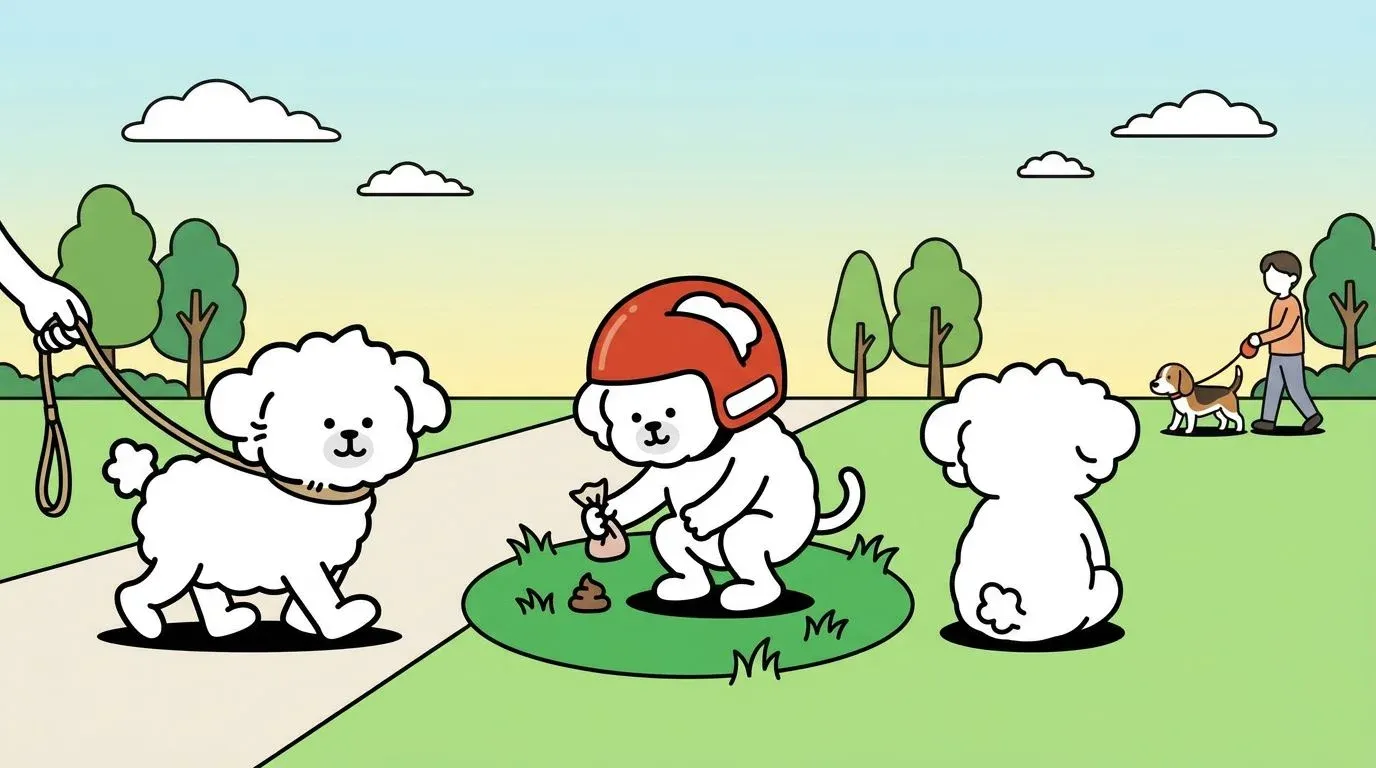
Walking your dog should be one of the most enjoyable parts of pet ownership — fresh air, daily movement, and time together. But a single off-leash dog running uninvited toward a stranger, a pile of waste left on a neighbor’s lawn, or an out-of-control greeting gone wrong can sour the experience for everyone involved.
Dog walking etiquette isn’t about following rules for rules’ sake. It’s about making public spaces work better for dogs, their owners, and the people who share those spaces. Here are 10 rules that every responsible dog owner should have on their mental checklist before clipping the leash.
Rule 1: Always Use a Leash — Know Your Local Law
Leash laws in the United States are municipal or county-level, meaning the rules vary by location. But the general principle is remarkably consistent: in any public space that isn’t designated as an off-leash area, your dog must be on a leash. Most jurisdictions define this as a leash no longer than 6 feet, held by a person capable of controlling the dog.
Local Leash Laws and What They Mean
Violating leash laws typically results in a fine ranging from $50 to $300 for a first offense in most cities, with escalating penalties for repeat incidents. Beyond the legal risk, an off-leash dog — however friendly — poses a genuine safety hazard. A loose dog can trigger a chase response in another dog, cause a cyclist to swerve, or approach a child who’s afraid of dogs before anyone can intervene.
Many cities, including New York, Los Angeles, and Chicago, have specific ordinances that not only require leashes but also specify maximum length and require the handler to be physically capable of restraining the dog. It’s worth spending five minutes checking your city or county’s animal control ordinance page before assuming your neighborhood’s norms match the law.
Choosing the Right Leash Length for Each Situation
A 4- to 6-foot fixed-length leash is the standard for sidewalk walking. It keeps your dog close enough to prevent sudden lane changes across the path of cyclists or pedestrians, while giving enough slack for normal movement.
On uncrowded nature trails, a longer 10-foot lead can give your dog more range to sniff and explore — still on-leash, but with more freedom. The key is matching leash length to the density of the environment.
Retractable Leashes: When to Use and When to Avoid
The retractable leash controversy among trainers and animal behaviorists comes down to control. In a burst, a dog on a 16-foot retractable leash can be nearly impossible to stop from reaching another dog or person before you even process what’s happening. The thin cord can also cause lacerations when it wraps around a leg.
Reserve retractable leashes for open, uncrowded spaces where no other people or dogs are nearby. They’re not appropriate for sidewalks, urban parks, or anywhere with moderate foot traffic. Solid leash walking skills — with a standard fixed leash — are the foundation everything else is built on.
Rule 2: Pick Up Every Time, Without Exception
The social contract of dog ownership in shared public spaces is simple: if your dog deposits waste somewhere, you remove it. Every time. Even when no one is watching. Even when the location seems remote. Even when you’ve already picked up twice on the same walk.
Proper Waste Disposal Methods
Most municipalities legally require dog waste pickup in public areas, with fines ranging from $50 to several hundred dollars. Beyond legality, dog waste contains pathogens — including Giardia, Campylobacter, and roundworm eggs — that can contaminate soil and water and persist for weeks.
Always carry more bags than you expect to need. Biodegradable bags are widely available and a meaningful choice for environmental impact. Disposal stations with receptacles are available in many parks — use them when they’re present, rather than tying bags to a fence or leaving them on a trail to “pick up on the way back.”
What About Pee? The Water Bottle Trick
There’s no legal obligation to address urine in most jurisdictions, but urine on sidewalks, building walls, and lampposts builds up into a persistent odor problem in densely populated neighborhoods. Carrying a small squeeze bottle of water and diluting urine on hard surfaces is a simple, increasingly common practice. It takes two seconds and makes a noticeable difference in urban areas.
Rule 3: Ask Before Any Dog-to-Dog Greeting
“He’s friendly!” is one of the most common phrases heard at dog parks and on sidewalks — and one of the most misleading. Friendly toward humans, friendly in certain contexts, or friendly on previous walks doesn’t mean every dog-to-dog greeting will go smoothly.
Always Ask the Other Owner First
The protocol is straightforward: before any dogs make nose-to-nose contact, ask the other owner. A simple “Is it okay if they say hi?” takes two seconds and gives the other owner the chance to say “Actually, he’s working on his manners” or “She’s reactive with big dogs.”
Some dogs are reactive on leash because of frustration or prior negative experiences — not character flaws, just something their owner is actively managing. An unannounced approach from your dog, however friendly, can trigger a response that sets back weeks of training work.
Reading Body Language Before Approaching
Even with the other owner’s permission, watch both dogs before allowing contact. Signs that a greeting is likely to go well: loose, wiggly body posture, relaxed ears, a wagging tail held at mid-height. Signs to pause: stiff body, raised hackles, a high rigid tail, hard stare, or a dog turning away (which often signals “I’d rather not”).
The American Kennel Club’s body language guidelines describe the “play bow” — front legs extended, hindquarters up — as one of the clearest positive invitations. A dog holding completely still and stiff is the opposite signal.
Parallel walking is an effective technique for introducing two dogs that haven’t met. Walk them in the same direction at a slight distance, gradually closing the gap over a few minutes rather than allowing a head-on approach.
When to Walk Away
If the other dog is barking, lunging, or showing sustained stress signals, respect that. If your dog is over-stimulated and pulling hard, that’s also a signal to create distance first. A greeting between two dogs in high arousal states rarely ends well, even if both are “normally friendly.” Walk away, and neither dog loses anything. For deeper context on how to support socialization training for dogs that struggle with greetings, structured exposure work makes a measurable difference over time.
Rule 4: Give Space to Non-Dog People
Not everyone on a public sidewalk wants to interact with your dog. This includes people who are genuinely fearful of dogs, people carrying young children, elderly walkers with balance concerns, and people who simply don’t want dog hair on their clothing. None of these responses are wrong.
Giving Space to Children, Seniors, and Fearful Individuals
Children under 5 are statistically at higher risk of dog bites than any other age group, largely due to unpredictable body movements and the tendency to approach at face level. When a child approaches your dog, it’s appropriate to ask the parent’s permission before allowing contact — and to watch your dog’s body language carefully even if the greeting proceeds.
For people who look uncertain or who pull back when your dog approaches, shorten your leash immediately and guide your dog away. You don’t need to explain or apologize at length. Just create distance.
Sidewalk Sharing: Move Over and Shorten the Leash
The practical rule for passing pedestrians: shorten your leash to 2–3 feet and move to one side to create a clear path. If your dog is sniffing along the edge of the sidewalk, bring them back to heel before someone has to navigate around them.
This is especially relevant for owners of larger breeds. A 70-pound dog doing nothing more than standing still in the middle of a sidewalk is an obstacle that many pedestrians — particularly those with mobility aids or strollers — will find genuinely difficult to pass.
Rule 5: Follow Location-Specific Etiquette
The expectations for dog walking behavior change significantly depending on where you are. A quiet residential sidewalk, a shared trail in a city park, and an off-leash dog park each have their own norms — and in the case of dog parks, explicit rules.
Neighborhood Sidewalks and Trails
On residential sidewalks, keep your dog on the sidewalk rather than crossing onto private lawns without permission. Even if there’s no fence, a front lawn is private property, and many homeowners understandably object to dogs urinating on their gardens or landscaping.
On multi-use trails, yield to cyclists and runners — they’re moving faster, and a dog that drifts into the trail can cause a collision. When passing in either direction, keep your dog tight to your side and acknowledge other trail users. Dog-friendly trail maps are increasingly available in city parks departments.
Public Parks and Shared Green Spaces
Most public parks designate areas as leash-required or off-leash. Respecting these zones matters: leash-free dogs in leash-required areas create genuine hazards for leashed dogs, young children, and people with dog allergies. The designation exists because not all areas of a park are equally suitable for off-leash activity.
If the park has organized sports fields, keep your dog off the playing surface. Maintain extra distance near playground equipment.
Dog Parks and Off-Leash Areas
Dog parks have their own detailed protocol, and it matters more here than anywhere because multiple dogs are interacting simultaneously without leashes.
Dog park entry: Use the double-gate airlock — enter the first gate, close it, then open the second. This prevents escape attempts by other dogs. Remove prong collars, choke chains, and head halters before your dog enters off-leash play; these can become hazard points if another dog’s jaw or paw catches on them.
Food policy: Do not bring food, dog treats, or food-scented items into the dog park. Food creates competition in a group setting and can trigger resource guarding behavior even in dogs that don’t display it elsewhere.
Active supervision: Stay off your phone. Your job at a dog park is to watch your dog continuously — not just glance over occasionally. Incidents in dog parks escalate in seconds. Early intervention when you see stiffening, prolonged staring, or a dog being persistently cornered prevents most fights.
When to leave: If a fight breaks out involving your dog, remove your dog immediately, even if yours wasn’t the initiator. Staying to establish “fault” serves no purpose and keeps everyone in a tense situation. Similarly, if your dog is clearly over-stimulated — racing in tight circles, ignoring recall, engaging in obsessive chasing — it’s time to go. The goal of a dog park visit is calm, enjoyable social interaction, not maximum playtime.
Rule 6: Seasonal Walking Etiquette
The specific considerations for responsible dog walking shift with the seasons. Here are the most relevant adjustments by time of year.
Spring: Mud, Allergies, and Garden Boundaries
Spring trail etiquette means staying on the path when trails are muddy — cutting across soft ground widens trails permanently and damages vegetation. Spring is also peak season for fertilizer and pesticide application on lawns and public green spaces; keep your dog from walking across or grazing on freshly treated grass. Many municipalities post flags when treatments have been applied, but it’s safer to assume any heavily manicured lawn has been treated.
For owners planning more frequent outdoor outings as the weather warms, a spring outing preparation checklist covers vaccination updates, tick prevention, and gear review in detail.
Summer: Hot Pavement and Hydration
The pavement test: place the back of your hand on the sidewalk for seven seconds. If it’s uncomfortable for you, it’s damaging to your dog’s paw pads. Asphalt can reach 125°F (52°C) on a 77°F (25°C) day. Walk during the early morning or after sunset in summer, and keep walks shorter on extremely hot days.
Carry water for both of you on any summer walk exceeding 20 minutes. Dogs don’t sweat the way humans do — panting is their primary heat-release mechanism, and they can become dangerously overheated faster than many owners realize. For a complete breakdown of how to identify and prevent heat emergencies outdoors, the summer heat stroke prevention guide covers the specifics by breed and activity level.
Fall/Winter: Visibility Gear and De-Icing Salt
Daylight shrinks significantly in fall and winter. If you’re walking in low-light conditions — before sunrise or after sunset — reflective gear on both you and your dog is not optional. Clip-on LED lights and reflective vest strips are inexpensive and dramatically increase your visibility to drivers. Many dog owners underestimate how invisible a dark-colored dog is in early morning fog or twilight.
De-icing salts and chemical melting agents used on sidewalks cause significant paw pad irritation and are toxic if licked. After every winter walk, wipe your dog’s paws with a damp cloth before they have a chance to lick them. This also happens to be the right time to check paw pad condition — cracking, redness, and tenderness are early signs of irritation that are easy to address. Comprehensive post-walk paw care guidance covers cleaning, moisturizing, and identifying when veterinary attention is warranted.
Rule 7: Communicate Your Dog’s Needs — Especially for Joint Conditions
Dogs with joint conditions — including patellar luxation, osteoarthritis, hip dysplasia, or recovering from orthopedic surgery — require thoughtful modifications to the walk itself, and they require their owners to communicate those needs clearly to other people on the path.
Communicating Your Dog’s Limitations
A dog that walks slowly, frequently stops, or refuses to engage with an approaching dog may not be antisocial or poorly trained. They may be in pain, managing a mobility limitation, or simply doing better at their own pace.
If your dog wears a bandana, vest, or tag that signals “I need space” or “recovering from surgery,” other dog owners will generally respect it. A brief verbal heads-up — “She’s working through a knee issue, so let’s not let them wrestle” — accomplishes the same thing. Most dog owners understand immediately.
Pace and Distance Adjustments
For dogs managing joint issues, shorter and more frequent walks are generally preferable to a single long daily outing. Veterinary rehabilitation specialists and board-certified veterinary orthopedic surgeons typically recommend this approach because it maintains joint mobility and muscle tone without the cumulative strain that follows a long session.
Avoid high-impact surfaces — hard asphalt, concrete stairs, slick surfaces — and favor grass or packed dirt when possible. Keep the pace conversational: if your dog is struggling to keep up without effort, slow down. Watch for signs of compensatory gait change (a subtle head bob, preferring one side, reluctance to use stairs after a walk) that can indicate worsening discomfort.
Rule 8: Handle Walk Emergencies Calmly and Effectively
Every dog owner who walks regularly will eventually face an unexpected situation — a charging dog, a sudden lunge, a dog-on-dog altercation. Knowing a basic response in advance is far more useful than trying to improvise in the moment.
Dog-on-Dog Altercations
If two dogs become involved in a fight, the reflex is to reach in and separate them — resist this. Bites during dog fights are almost always accidental redirections toward the nearest hand.
The safest technique used by animal control professionals is the “wheelbarrow method”: if you can do so safely, each handler grabs their own dog’s rear legs and walks backward, pulling the dogs apart simultaneously. This removes the dogs’ leverage without putting hands near the heads.
Other options when you’re alone: a loud sudden noise (horn, air spray, clapping), throwing water on the dogs, or using a physical barrier like a jacket between the dogs’ faces to block visual contact. Once separated, keep the dogs facing away from each other and do not allow them to circle back.
After any altercation, check your dog thoroughly for bite wounds — puncture wounds can be small on the surface and deeper than they appear. Any puncture wound should be evaluated by a veterinarian.
Sudden Lunging or Reactive Behavior
Leash reactivity — barking, lunging, straining toward another dog or person — is one of the most common behavioral challenges in pet dogs. On a walk, the immediate management strategy is the same every time: increase distance before your dog reaches threshold (the point where they can no longer focus on you), redirect attention, and reward calm.
“Threshold” is the key concept. If you can catch your dog at the first moment of arousal — ears forward, body stiffening — you have a window to redirect before the behavior escalates. If your dog is already barking, you’re past threshold, and increasing distance is the only practical option.
For dogs that show consistent reactivity toward specific triggers (other dogs, skateboards, joggers, loud noises), a structured counter-conditioning protocol with a certified professional dog trainer produces reliable results over time. Barking control during walks covers the specific mechanics of desensitization in detail.
Dogs that respond intensely to loud or sudden environmental stimuli — fireworks, thunderstorms, construction noises — may be dealing with a broader sensitivity pattern. Noise phobia management addresses the distinction between trained reactivity and anxiety-based responses, and when veterinary support may be warranted.
Rule 9: Maintain Consistent Recall Before Off-Leash Time
Off-leash privileges — whether in a designated area or a safe private space — are earned, not assumed. A dog that doesn’t come reliably on recall should not be off-leash in any area where they can reach another dog or person before you can physically intervene.
The AKC’s Canine Good Citizen (CGC) test uses recall as one of its ten core evaluation criteria, specifically because an owner who can reliably call their dog back from any distance has meaningful control. If your dog’s recall is inconsistent — they come when the environment is low-stimulation but ignore you at the park — that’s the real benchmark to address before the next off-leash outing.
Practice recall in progressively more distracting environments, use your highest-value reward for a fast, reliable response, and never punish a dog that comes to you after a delay. Punishment after the fact is associated with the act of coming, not the delay — it teaches the dog that coming to you leads to something unpleasant.
Rule 10: Leave Trails and Parks Better Than You Found Them
The last rule is simple, and it extends the etiquette logic beyond your dog to the shared space itself.
Pick up waste even when it’s not yours — one bag picked up that you didn’t create builds genuine goodwill in the communities where you walk. Report damaged fencing or gates at dog parks to the parks department. Don’t let your dog dig up landscaping or damage trail markers. Stay on designated paths.
Dog ownership comes with an implicit social license: the more responsibly the dog-owning community behaves in public spaces, the more those spaces remain available and welcoming for dogs. Dog-friendly ordinances in parks, trails, and public areas are frequently reviewed, and documented complaint patterns about off-leash dogs, uncollected waste, or owner inattention have directly led to restrictions in several cities.
Good manners from individual owners accumulate into the community reputation that determines what access future dog owners will have.
Quick-Reference Summary
| Rule | Core Action |
|---|---|
| 1. Leash law | Use a 6-ft fixed leash in all non-designated spaces |
| 2. Waste | Carry bags, pick up every time, use provided receptacles |
| 3. Greetings | Ask first, read body language, parallel-walk new introductions |
| 4. Non-dog people | Shorten leash, move aside, create distance proactively |
| 5. Location | Follow rules for sidewalks, parks, and dog parks specifically |
| 6. Seasons | Adjust for pavement heat, visibility, and salt in winter |
| 7. Joint conditions | Communicate your dog’s limits, adjust pace and distance |
| 8. Emergencies | Wheelbarrow method for fights; increase distance for reactivity |
| 9. Recall | Off-leash only when recall is reliable under distraction |
| 10. Shared spaces | Leave every space better than you found it |
Walking a dog well is a skill that develops over time — you’ll get better at reading body language, predicting your dog’s triggers, and making split-second calls about when to cross the street to avoid an encounter. The ten rules above give you a working framework. The experience of showing up consistently, paying attention, and adjusting as you go is what fills it in.
For owners who are working through foundational skills before tackling more complex public environments, the restaurant and cafe etiquette with dogs guide covers an equally demanding public-space context with the same level of preparation detail applied here.
FAQ
Are retractable leashes bad for dog walking etiquette?
Can I let my friendly dog greet everyone off-leash?
What should I do if another dog charges at my dog?
How do I handle my dog barking at other dogs on walks?
Does dog urine need to be cleaned up on public sidewalks?
What are the rules for bringing a dog to a dog park?
Related Articles
7 Proven Ways to Relieve Your Cat's Stress at Home
Learn the signs of stress in cats, what triggers it, and 7 science-backed methods for cat stress relief you can start at home today.
Dog Jumping Off Furniture: Why Their Joints Are Paying the Price
Every couch jump sends 2–5x body weight through your dog's joints. Learn how repeated landings cause joint damage and what to do about it.
What Your Dog's Sleeping Position Reveals About Their Joint Health
Dog sleeping position joint pain connection explained — learn which postures signal discomfort, how to observe changes, and how to build a joint-friendly sleep setup.
If Your Dog Lives on Hardwood Floors, Here's How to Protect Their Joints
Slippery hardwood, laminate, and tile floors quietly damage your dog's joints over time. Learn the biomechanics, floor risk comparison, and proven solutions.
Dog Tick Prevention on Walks: How to Check, Remove, and Protect Against Tick-Borne Disease
A complete guide to dog tick prevention during walks. Learn how to check for ticks, safely remove them, and protect your dog from dangerous tick-borne diseases like Lyme, Ehrlichiosis, and Babesiosis.
Dog Heat Stroke Prevention: Critical Temperature Thresholds and Warning Signs Every Owner Must Know
Learn the 4-tier temperature risk system, breed-specific vulnerabilities, pavement heat dangers, and step-by-step emergency protocol to prevent and treat dog heat stroke this summer.
If Your Dog Is Prone to Skin Issues in Wet Weather: A Seasonal Care Guide
Learn how humid and wet weather triggers yeast infections, bacterial pyoderma, and hot spots in dogs — plus a complete post-walk routine, indoor humidity management, and nutrition tips.
Planning a Car Trip With Your Dog? Essential Safety Rules You Need to Know
Complete guide to dog car travel safety: crash-tested restraint options, desensitization training, motion sickness solutions, hot car laws, and emergency protocols.
Dog Spring Outing Checklist: Safety, Hazards, and Gear
Complete dog spring outing checklist: health checks, tick and Lyme prevention, toxic plants, lawn chemicals, gear by activity, and post-outing care.
Dog Spring Shedding Care: Brushing, Skin, and Joint Health
Science-backed dog spring shedding care: brushing routines, breed guides, skin nutrition, and the skin-to-joint inflammation link grooming guides miss.
Dog Hiking Safety Tips: Joint Care and Post-Hike Recovery
Dog hiking safety tips for joint protection, trail pacing, and post-hike recovery — backed by veterinary rehab principles.
Dog-Friendly Cabin Trip: 10-Point Checklist
Dog-friendly cabin trip checklist: booking, packing, road trip, arrival, checkout, and post-trip health. Vet-informed 6-stage guide for vacation rentals.
Dog Stroller Guide: Choose the Right One for Joint Health
Dog stroller guide: who benefits medically, how to choose by joint condition and size, stroller types compared, and how to train your dog.
7 Essential Things to Check Before Choosing a Dog Daycare
Learn how to choose dog daycare confidently with this 7-point checklist covering staff ratios, safety protocols, costs, red flags, and when daycare isn't the right fit.
Moving With a Cat? 5 Common Mistakes That Make Stress Worse
Cat moving stress can trigger serious illness — from feline cystitis to hepatic lipidosis. Avoid the 5 key mistakes with our D-21 to D+30 timeline guide.
Dog-Friendly Restaurant Etiquette: Complete Owner's Guide
Dog friendly restaurant etiquette from prep to table. Training plan, packing checklist, on-site rules, and troubleshooting for owners.
8 Indoor Games for Dogs That Actually Tire Them Out
8 indoor games for dogs that actually tire them out. Brain games, body play, and bonding activities with age-specific and joint-safe guidance included.
Dog Swimming Safety: 7 Essential Rules for Every Environment
Complete dog swimming safety guide covering breed swim ability, water introduction, environment-specific risks, water intoxication, and post-swim care.
Dog Camping Safety Guide: Packing List and Emergency Tips
Dog camping safety guide: packing checklist, toxic plant ID, wildlife protocols, heat management, and emergency response. Vet-sourced, comprehensive.