 Cirius Petpedia
 Dog Water Intoxication: Symptoms, Treatment & Prevention
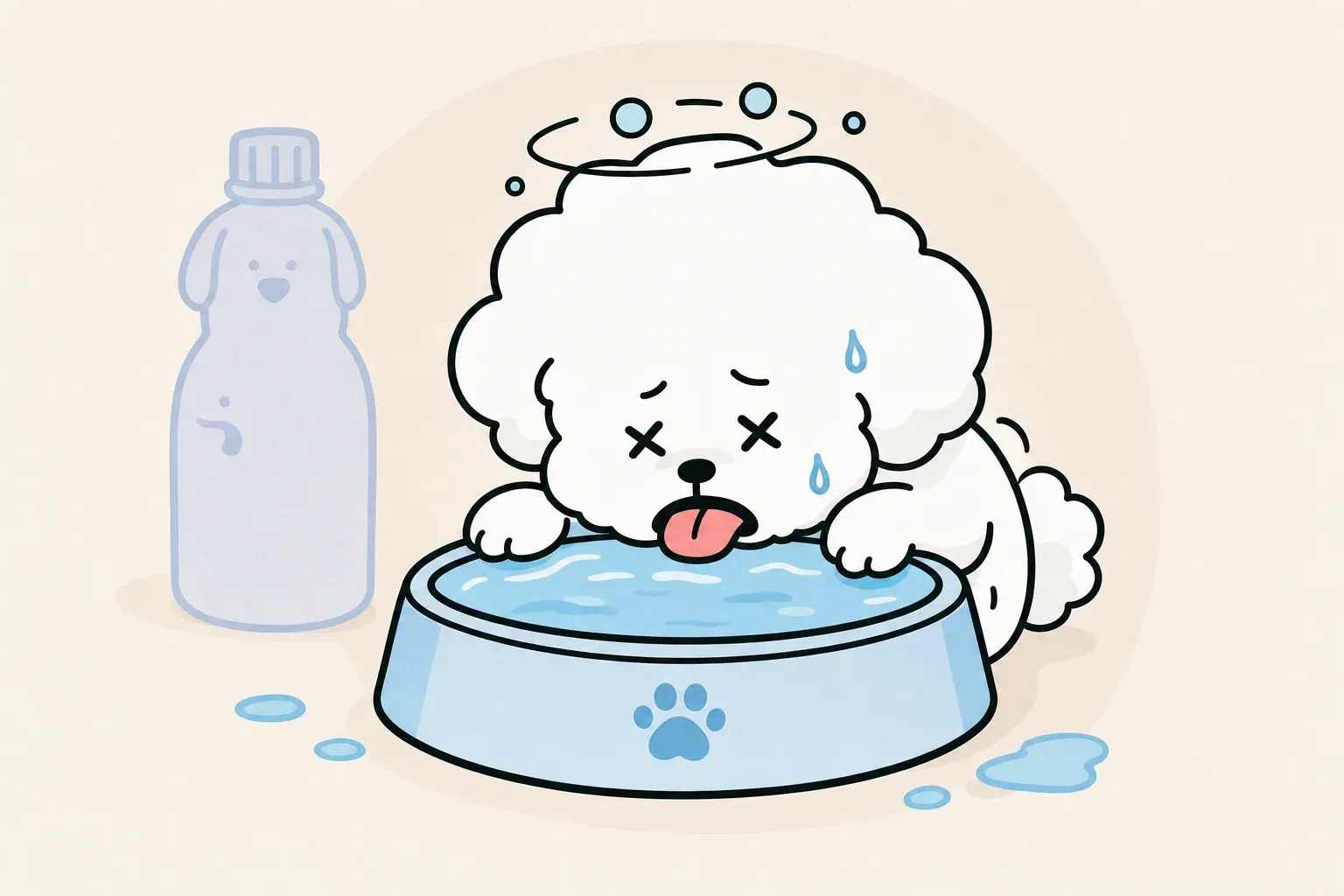
A dog that seems fine after an hour of pool fetch can be having seizures two hours later. Water intoxication — the potentially fatal dilution of blood sodium caused by ingesting too much water too quickly — is one of the most misunderstood emergencies in veterinary medicine. It is not rare. It is not obvious until it is serious. And it is almost entirely preventable with the right knowledge.
This guide covers the full picture: the physiological mechanism, which dogs are most at risk and why, a symptom-by-symptom timeline, emergency response steps, how water intoxication differs from salt water poisoning and dry drowning, and a concrete prevention checklist for every water play situation.
What Is Water Intoxication in Dogs?
Water intoxication is a life-threatening condition caused by the rapid ingestion of more water than the kidneys can process. The clinical term is hyponatremia (low blood sodium), and it is the same condition that has been documented in human marathon runners and endurance athletes who drink excessive amounts of water during competition.
In dogs, it most commonly occurs during water play — swimming, hose games, water fetch — where the dog is simultaneously exercising, panting, and repeatedly swallowing water without any intention to drink.
How Water Intoxication Happens
Dogs do not develop water intoxication from normal thirst-driven drinking. The condition requires a combination of three factors: rapid intake, large volume relative to body weight, and inadequate time for the kidneys to compensate.
During water fetch games, a dog retrieving a ball must open its mouth under water with every dive. Each retrieve can involve swallowing several ounces of water without the dog choosing to drink at all. Over a 30–45 minute session, this adds up quickly. Hose play is similar — dogs snapping at a hose stream may ingest water faster than any deliberate drinking would produce.
The kidneys have a maximum excretion capacity of roughly 0.25–0.5 liters per hour in dogs, depending on size. When water ingestion rate exceeds this threshold, water begins to accumulate in the bloodstream faster than it can be eliminated.
The Science Behind Hyponatremia
Sodium (Na⁺) is the primary electrolyte controlling water movement between cells and the bloodstream. When the bloodstream becomes flooded with excess water, blood sodium concentration falls — sometimes dramatically, from a normal level of 135–145 mEq/L to dangerously low values below 125 mEq/L.
At low sodium concentrations, two critical processes go wrong. First, cells throughout the body begin to swell as water moves into them by osmosis (water moving from areas of low solute concentration to high). Second, and most dangerously, brain cells swell inside the rigid skull — the intracranial space cannot expand, so swelling translates directly to increased pressure on the brain (cerebral edema).
It is this cerebral pressure that causes the neurological signs that make water intoxication so serious: confusion, loss of coordination, seizures, and in severe cases, brainstem herniation and death.
High-Risk Situations for Water Intoxication
Understanding when water intoxication is most likely to occur lets you intervene before it develops rather than react after.
Swimming and Water Fetch Games
Fetch games in pools, lakes, and rivers are the highest-risk scenario for dog water intoxication. A retrieving dog repeatedly submerges its mouth to grab a toy, ingesting water involuntarily with each dive. Unlike running or walking near water, retrieve games create a continuous, uncontrolled ingestion cycle that is hard for the owner to observe or quantify.
The risk compounds with session duration and with how far the dog dives to retrieve an object. Toys that sink or float just below the surface prompt the most water ingestion per retrieve. Swimming safety during water games involves both drowning risk and water intoxication risk — both require the same foundational intervention: session limits and regular dry-land breaks.
Hose and Sprinkler Play
Garden hose games appear safer than pool swimming, but they carry significant water intoxication risk. Dogs chasing a hose stream often snap rhythmically at the water, ingesting it with every bite at a rate that can far exceed voluntary drinking. Sprinkler play creates similar patterns. Because the dog is on dry land and moving freely, owners often underestimate how much water is being consumed.
In hose and sprinkler play, there are also fewer natural cues to stop — no fatigue from swimming, no obvious exertion — so sessions can extend well beyond the 15–20 minute safe window without the owner realizing the cumulative intake.
Post-Exercise Gulping
A dog that has just completed intense exercise — running, agility, a long hike — arrives at the water bowl in a state of genuine thirst and potential mild dehydration. The combination of rapid gulping and reduced kidney perfusion during the recovery period creates a specific vulnerability. While this scenario is less likely to produce classic water intoxication than active swimming, it is a recognized risk factor, particularly in hot weather when dogs are also at risk for heat stroke and fluid management complications.
The guidance here is simple: offer water in controlled amounts post-exercise rather than allowing unrestricted access to a full bowl immediately after stopping.
Why Small Dogs Are More Vulnerable
A Chihuahua and a Labrador Retriever swimming in the same pool for the same amount of time may ingest similar absolute volumes of water. The physiological effect, however, is entirely different.
Water intoxication risk scales with the ratio of ingested water to total body water. A small dog has less total blood volume and body fluid, so the same amount of excess water creates a proportionally larger drop in blood sodium concentration.
Weight-Based Water Intoxication Risk Reference
| Body Weight | Risk Category | Signs of Concern After | Recommended Session Limit |
|---|---|---|---|
| Under 10 lbs (< 4.5 kg) | Very High | 15–20 minutes of active water play | 10 min play / 10 min rest |
| 10–25 lbs (4.5–11 kg) | High | 20–30 minutes of active water play | 15 min play / 10 min rest |
| 25–50 lbs (11–23 kg) | Moderate | 30–45 minutes of active water play | 20 min play / 10 min rest |
| 50+ lbs (23+ kg) | Lower (not zero) | 45–60 minutes of active water play | 20 min play / 10 min rest |
These are conservative thresholds based on clinical veterinary guidance. Individual variation exists — a highly excitable dog that swallows more water per retrieve will reach the danger zone faster than these numbers suggest.
Beyond weight, certain breeds are disproportionately represented in reported water intoxication cases:
- Labrador Retrievers and Golden Retrievers — Natural water dogs with the stamina and enthusiasm to play fetch for extended periods. Their retrieve style involves scooping large amounts of water per dive.
- Spaniels (Cocker, Springer, Boykin) — Water-working heritage, similar mouth-open retrieval patterns.
- Toy breeds (Chihuahua, Toy Poodle, Maltese, Yorkshire Terrier) — Physiologically vulnerable due to low body mass; even brief intense water play creates high risk.
- Dock-diving dogs — High-volume water ingestion is nearly unavoidable in competitive dock diving; handlers of these dogs should treat water intoxication prevention as a standard training protocol component.
Symptoms Timeline: What to Watch For
Water intoxication produces a recognizable progression of symptoms. Knowing this timeline helps you distinguish normal post-swim tiredness from a genuine emergency.
Early Signs (0–1 Hour): Lethargy, Nausea, Bloating
The first signs typically appear within 30–60 minutes of the end of a water play session that involved significant water ingestion. At this stage, blood sodium has fallen enough to affect cell function, but the degree of cerebral swelling is still mild.
What you may observe:
- Lethargy or unusual quietness after playing (not just normal tiredness — look for unusual dullness)
- Abdominal bloating or distension — the gut fills with water absorbed from the excess intake
- Nausea: lip-licking, drooling, reluctance to eat or drink
- Vomiting, sometimes repetitive
- Pale or slightly greyish gum color
- Restlessness alternating with unusual stillness
At this stage, some owners interpret these signs as post-exercise fatigue. The critical differentiator: a dog that is simply tired after a swim will look sleepy but normal. A dog developing water intoxication will look unwell — dull, nauseated, uncomfortable in a way that doesn’t resolve with rest.
Progressing Signs (1–3 Hours): Staggering, Dilated Pupils
As sodium levels fall further, neurological signs emerge. Brain swelling is now significant, and the dog’s nervous system is impaired.
What you may observe:
- Staggering or loss of coordination (ataxia) — the dog may walk into walls or fall when turning
- Dilated pupils that respond sluggishly to light
- Glassy or unfocused eyes
- Increasing weakness — may be reluctant to stand or unable to maintain position
- Muscle tremors or twitching
- Disorientation and apparent confusion about surroundings
- Worsening vomiting
At this point, this is a veterinary emergency. Do not wait to see if your dog improves. The window between the progressing stage and the emergency stage can be very short.
Emergency Signs (3+ Hours): Seizures, Loss of Consciousness
Severe hyponatremia causes the brain to lose its ability to maintain normal electrical activity. This stage represents a life-threatening crisis.
Emergency signs:
- Seizures — may be partial (twitching of one limb, facial movements) or generalized (full-body convulsions)
- Loss of consciousness or inability to be roused
- Collapse
- Irregular or labored breathing
- Cyanosis (blue-tinged gums or tongue, indicating inadequate oxygen)
Dogs in this stage require immediate emergency veterinary intervention. Brain damage and death are possible outcomes without prompt treatment. For dogs with a known seizure history or epilepsy, the intersection of water intoxication and seizure activity requires additional caution — the comprehensive guide to dog seizure recognition and management provides relevant context on seizure first aid steps.
Emergency Response: What to Do Right Now
Speed and composure are the two most important factors in a water intoxication emergency. The following steps apply if you suspect your dog has ingested excessive water and is showing symptoms.
Immediate Steps at Home
1. Stop all activity immediately. Remove your dog from the water and end any play. Move them to a calm, cool indoor area.
2. Do not induce vomiting. This is a critical point that cannot be overstated. By the time symptoms appear, excess water has already been absorbed into the bloodstream — vomiting will not remove it. In a neurologically impaired dog, inducing vomiting creates an aspiration risk (inhaling vomit into the airways). This is a different situation from toxin ingestion; the standard “induce vomiting” reflex does not apply.
3. Do not give more water or food. The kidneys are already struggling to manage fluid load.
4. Note the time and circumstances. When did water play start and end? What were the activities? How long approximately? What is the dog’s weight? This information is essential for the veterinarian.
5. Monitor and document symptoms. Note when each symptom appeared and whether it is progressing. Video the dog if possible — this helps the vet assess severity rapidly.
6. Call ahead. Phone your emergency veterinary clinic before departing so they can prepare for your arrival.
When to Rush to the Emergency Vet
Go to an emergency veterinary clinic immediately if your dog shows any of the following after water play, even if you are not certain water intoxication is the cause:
- Any neurological signs (staggering, dilated pupils, disorientation, tremors)
- Bloating that is not resolving
- Vomiting that continues or worsens
- Unusually profound lethargy (cannot be roused normally)
- Seizures of any type
- Pale, grey, or blue-tinged gums
Do not wait until morning. Water intoxication can progress from the early stage to the emergency stage in as little as 2–3 hours. After-hours emergency clinics exist for exactly this situation. The dog emergency first aid guide covers how to assess gum color, breathing, and consciousness in an emergency, as well as how to locate 24-hour emergency veterinary services.
What Veterinary Treatment Looks Like
Veterinary treatment for water intoxication focuses on carefully raising blood sodium back to normal levels — but the rate of correction is as important as the correction itself. Correcting hyponatremia too quickly can cause a dangerous neurological complication called osmotic demyelination syndrome (previously called central pontine myelinolysis), where nerve sheaths break down as a result of rapid osmotic changes.
Standard treatment protocol includes:
- IV access: Immediate placement of an intravenous catheter for fluid administration and drug delivery
- Serum electrolyte measurement: Blood sodium is measured to confirm the diagnosis and determine severity (mild: 130–135 mEq/L; moderate: 120–130 mEq/L; severe: below 120 mEq/L)
- Hypertonic saline (3% NaCl): Carefully calculated infusion rate to raise sodium gradually — typically targeting a correction rate of no more than 8–12 mEq/L per 24 hours
- Diuretics (furosemide): To assist fluid elimination and reduce the water burden on the bloodstream
- Mannitol: An osmotic agent used if cerebral edema (brain swelling) is significant — helps draw fluid out of brain tissue
- Seizure management: IV benzodiazepines (diazepam, midazolam) if seizures are present
- Continuous monitoring: Serial electrolyte checks every 2–4 hours to guide treatment adjustments
Mild cases may resolve with IV diuretic support and careful monitoring within 12–24 hours. Severe cases with neurological involvement may require 24–48 hours of intensive care. The prognosis is generally good when treatment begins before severe neurological deterioration occurs.
Prevention Checklist for Water Play Season
Prevention is straightforward once you understand the mechanism. The core principle is simple: control session duration, enforce rest breaks on dry land, and remove toys that maximize water ingestion during retrieval.
Before, During, and After Water Play
Before water play:
- Assess your dog’s weight and adjust session limits using the risk table above
- Choose floating toys that sit on the water surface rather than toys that sink — surface floats require less submersion to retrieve
- Identify the nearest emergency veterinary clinic and save the phone number to your contacts
- Ensure your dog has had access to fresh water from a bowl before play begins (a well-hydrated dog is not actively seeking to drink during play)
- Set a timer on your phone for the first session limit
During water play:
- Limit active water sessions to 15–20 minutes maximum, then enforce a mandatory rest break on dry land
- During rest breaks: 5–10 minutes out of the water before the next session
- Offer small amounts of fresh water from a bowl during breaks — not unlimited access (which would add to water load if the dog is already near threshold)
- Watch for early signs: a dog that suddenly becomes less playful, hesitant to retrieve, or quiet mid-session may be showing early nausea or lethargy
- Use toys that minimize mouth-open submersion; avoid objects that require the dog to dive deep or bite at water streams
- For hose and sprinkler play, interrupt every 10 minutes regardless of how much the dog appears to be enjoying it
After water play:
- Monitor your dog for at least 2 hours after any intense water session
- Watch for the early signs described in the symptoms section above
- Provide quiet rest, not immediately followed by another activity
- If your dog is unusually lethargic or uncomfortable 30–60 minutes after swimming, call your vet — do not wait for symptoms to worsen
Safe Daily Water Management
Understanding healthy daily water intake makes it easier to recognize when something is wrong. A typical healthy dog drinks approximately 0.5–1 oz of water per pound of body weight per day under normal conditions. Significant variation from this baseline — either extreme thirst or refusal to drink — can indicate an underlying health issue.
Water intoxication caused by compulsive drinking (psychogenic polydipsia) is a distinct condition from the water-play scenario described in this guide. If your dog is consuming abnormally large amounts of water from a bowl without explanation, a veterinary workup for conditions including diabetes insipidus, Cushing’s disease, kidney disease, or behavioral compulsion is warranted. More information on normal hydration patterns and how to evaluate your dog’s water intake is covered in the complete guide to dog daily hydration and water intake.
Water Intoxication vs Salt Water Poisoning vs Dry Drowning
Three distinct water-related emergencies are commonly confused with each other. The differences matter because their mechanisms, symptoms, and treatments are not interchangeable.
Comparison: Three Water-Related Dog Emergencies
| Feature | Water Intoxication | Salt Water Poisoning | Dry Drowning / Secondary Drowning |
|---|---|---|---|
| Cause | Excess fresh water ingestion | Excess salt water ingestion | Water inhaled into airway/lungs |
| Mechanism | Blood sodium falls (hyponatremia) | Blood sodium rises (hypernatremia) | Airway obstruction or pulmonary edema |
| When symptoms appear | 30 min – 3 hrs after ingestion | 30 min – 2 hrs after ingestion | 1–24 hrs after leaving water |
| Key symptoms | Lethargy, bloat, vomiting, ataxia, seizures | Vomiting, diarrhea, extreme thirst, muscle tremors, seizures | Coughing, labored breathing, cyanosis, lethargy |
| Primary organ affected | Brain (cerebral edema) | Cells throughout body (cellular dehydration) | Lungs (airway, pulmonary) |
| Treatment | Hypertonic saline IV (slow correction), diuretics, mannitol | Hypotonic IV fluids (controlled), careful rehydration | Oxygen support, bronchodilators, anti-inflammatory treatment |
| Induce vomiting? | No | No | No |
| Prognosis | Good if treated early | Guarded; depends on severity | Depends on volume inhaled and treatment timing |
| Most common scenario | Pool/lake fetch games, hose play | Ocean beach play | Near-drowning, rough water, struggling in pool |
Key takeaway: If you are uncertain which condition you are dealing with, go to an emergency vet immediately and describe the circumstances precisely. Whether your dog was swimming in fresh water or salt water, whether they appeared to struggle in the water or not, and when symptoms began are all critical pieces of information for the veterinarian. For a full breakdown of salt water toxicity alongside other ocean-specific hazards — hot sand burns, jellyfish, rip currents, and post-beach ear care — see the complete dog beach trip safety guide.
Dry drowning and secondary drowning are particularly insidious because they can occur hours after the dog appears to have recovered from a water incident. Any dog that inhaled water, struggled significantly, or was submerged even briefly should be monitored for 12–24 hours after the incident, even if they seem completely normal immediately afterward. Persistent coughing, labored breathing at rest, or blue-tinged gums appearing hours after swimming require emergency veterinary care.
Building Water Safety Into Every Season
Water intoxication is entirely preventable — but only if you take action before a session, not during a crisis. The 15–20 minute session limit and mandatory dry-land rest breaks are not suggestions; they are the practical application of the physiology described in this guide.
Two patterns drive the majority of preventable cases: owners who allow unrestricted fetch games because the dog shows no obvious distress, and owners who are unaware that hose play carries the same risk as pool swimming. Both patterns are correctable with the information in this guide.
For a broader framework covering all aspects of water activities — including breed swimming ability, life jacket selection, pool safety, and post-swim ear care — the complete dog swimming safety guide covers everything from the first introduction to water through advanced open-water situations.
If your dog is swimming as part of a rehabilitation program for joint conditions, the combination of aquatic exercise and proper recovery management matters. Hydrotherapy is among the most effective low-impact exercise options for dogs with mobility limitations — but even therapeutic swim sessions should observe the session limits described here.
As summer approaches and water activities increase, the overlap with heat stroke prevention is worth noting: the signs of mild hyponatremia (lethargy, nausea, disorientation) overlap with early heat stroke symptoms. In hot conditions, a dog may be experiencing both simultaneously. When in doubt about what you are seeing after water play on a warm day, treat it as an emergency and let the veterinarian sort it out. The cost of caution is a vet visit; the cost of waiting can be irreversible.
References
- 1. AKC - Water Intoxication in Dogs
- 2. ASPCA Animal Poison Control Center
- 3. Vets Now - Water Intoxication in Dogs
- 4. Merck Veterinary Manual - Hyponatremia in Animals
- 5. Journal of Veterinary Emergency and Critical Care - Hyponatremia Management
- 6. VetGirl - Clinical Review: Hyponatremia in Dogs
- 7. Rover - Dog Water Intoxication: Signs, Treatment, Prevention
FAQ
How much water does it take to cause water intoxication in a dog?
Can dog water intoxication happen from drinking out of a bowl?
How quickly do water intoxication symptoms appear in dogs?
Should I induce vomiting if my dog drank too much water?
Which dog breeds are most at risk for water intoxication?
What is the difference between water intoxication and salt water poisoning in dogs?
Can dogs fully recover from water intoxication?
Is water intoxication the same as drowning?
Related Articles

Dog Swimming Safety: 7 Essential Rules for Every Environment
Complete dog swimming safety guide covering breed swim ability, water introduction, environment-specific risks, water intoxication, and post-swim care.
How Much Water Should a Dog Drink? By Weight, Age & Season
Daily water targets by weight, dehydration self-tests, and tips for dogs that won't drink. Covers all ages, diets, and seasons.
Dog First Aid: 7 Emergencies Every Owner Must Handle
Dog first aid for 7 emergencies: CPR, choking, bleeding, fractures, poisoning, heatstroke, and seizures. Size-specific steps and first aid kit checklist.