 Cirius Petpedia
 Anti-Inflammatory Diet for Dogs: 7 Foods That Fight Joint Pain
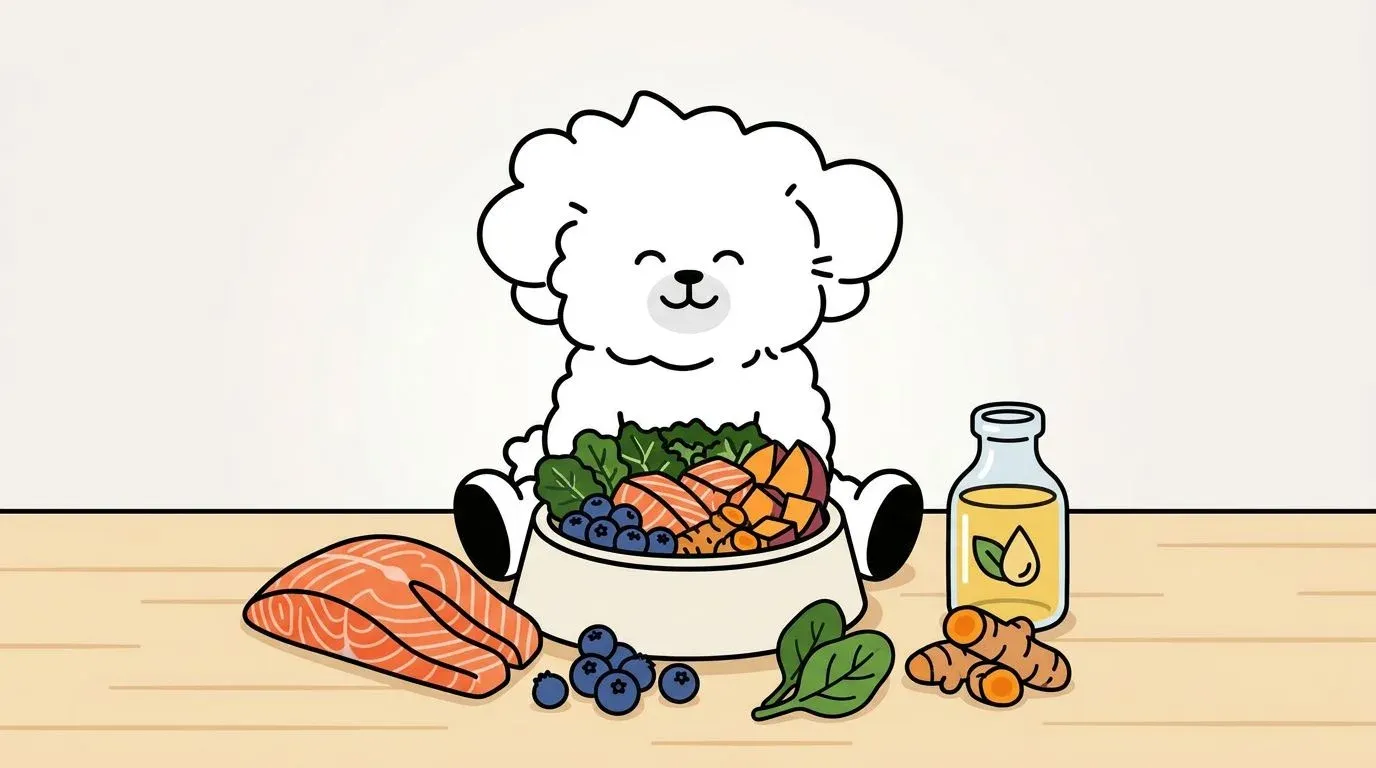
Your dog hesitates at the bottom of the stairs. He used to bound up without a thought; now he pauses, shifts his weight, and you can almost see him calculating the cost. If recognizing those early arthritis signs prompted you to look for something practical you could do at home, diet is one of the highest-leverage tools available.
Chronic joint inflammation in dogs is not just a structural problem — it’s partly a molecular one, and nutrition has direct biochemical access to the inflammatory pathways driving it. This guide covers the science, the specific foods, weight-appropriate quantities, and three complete homemade recipes you can start using this week.
How Chronic Inflammation Destroys Your Dog’s Joints
Joint problems in dogs are often described as “wear and tear,” but that framing understates the active destruction process at work. Osteoarthritis (OA) is not simply cartilage wearing down passively — it’s cartilage being degraded by the dog’s own inflammatory immune response.
The Osteoarthritis Inflammation Pathway — IL-1β, TNF-α, COX-2
When joint cartilage is damaged — through injury, genetics, or excess weight — the synovial membrane (the tissue lining the joint capsule) releases pro-inflammatory signaling proteins called cytokines. Two in particular drive cartilage destruction: interleukin-1 beta (IL-1β) and tumor necrosis factor alpha (TNF-α).
These cytokines activate an enzyme called cyclooxygenase-2, or COX-2. COX-2 converts arachidonic acid (a pro-inflammatory omega-6 fatty acid) into prostaglandins — lipid compounds that cause pain, swelling, and further cartilage breakdown. This is the same pathway that NSAIDs like carprofen target. The key insight for nutrition: the substrate that COX-2 works on — arachidonic acid — comes directly from the diet.
How Dietary Fatty Acids Influence Inflammatory Mediators
The omega-6 to omega-3 ratio in your dog’s diet determines the composition of fatty acids available to the COX-2 pathway. Diets high in omega-6 (from corn, soy, and most rendered animal fats) push more arachidonic acid into the pathway, generating more pro-inflammatory prostaglandins. Diets enriched with omega-3 EPA (eicosapentaenoic acid) and DHA (docosahexaenoic acid) do the opposite.
A landmark study by Roush and colleagues, published in the Journal of the American Veterinary Medical Association (JAVMA, 2010), found that dogs with osteoarthritis fed a diet supplemented with high-dose EPA/DHA showed significant improvement in ground force measurements — a validated, objective marker of lameness — compared to controls. The mechanism: EPA and DHA compete with arachidonic acid for COX-2 binding, producing resolvins and protectins instead of pro-inflammatory prostaglandins.
Systemic vs. Local Joint Inflammation — Why Both Need Management
Veterinary nutritionists distinguish two levels of inflammation relevant to joint disease:
Systemic (whole-body) inflammation is driven by gut health, adipose (fat) tissue cytokine production, and circulating oxidative stress markers. Overweight dogs have elevated systemic inflammation due to fat tissue acting as an active endocrine organ secreting IL-6 and TNF-α. Poor gut microbiome diversity also contributes through increased intestinal permeability (“leaky gut”), which allows bacterial endotoxins to enter the bloodstream.
Local joint inflammation is the direct synovial and cartilage-level process described above, driven by COX-2, prostaglandins, and matrix metalloproteinases (enzymes that degrade cartilage collagen).
An effective anti-inflammatory diet addresses both levels — which is why this guide includes not just oily fish, but also gut-supporting foods like sweet potato and pumpkin alongside direct COX-2 modulators like EPA/DHA and curcumin.
7 Anti-Inflammatory Foods Backed by Veterinary Research
The foods below each have specific, research-supported mechanisms. This is not a list of “healthy ingredients” — it’s a list of compounds with documented anti-inflammatory actions relevant to canine joint disease.
| Food | Key Compound | Primary Mechanism | Daily Amount (per 10 lbs body weight) |
|---|---|---|---|
| Oily fish (salmon, sardines) | EPA + DHA | COX-2 competition, resolvin synthesis | 30–40 mg EPA+DHA combined |
| Blueberries / raspberries | Anthocyanins | NF-κB pathway inhibition | 1–2 tsp fresh or frozen |
| Turmeric (with black pepper + fat) | Curcumin | COX-2 and NF-κB inhibition | 15–20 mg curcumin per kg BW |
| Broccoli / kale | Sulforaphane | Nrf2 pathway activation, antioxidant | 1 tsp finely chopped, lightly cooked |
| Chicken cartilage / bone broth | Glucosamine, collagen type II | Cartilage substrate supply | 1–2 inch cartilage piece or 2 oz broth |
| Sweet potato / pumpkin | Beta-carotene, dietary fiber | Gut microbiome support, antioxidant | 1–2 tbsp cooked, mashed |
| Coconut oil | MCTs (lauric acid) | Modulates inflammatory cytokines | ¼ tsp for small dogs, up to 1 tsp for large |
Oily Fish (Salmon, Sardines, Mackerel) — EPA/DHA and COX-2 Inhibition
Fatty fish are the single most evidence-backed anti-inflammatory food for dogs with joint disease. The active compounds are the omega-3 long-chain fatty acids EPA and DHA. Mechanistically, EPA directly competes with arachidonic acid for the COX-2 enzyme’s active site, and both EPA and DHA serve as precursors to specialized pro-resolving mediators (SPMs) — resolvins and protectins — that actively turn off the inflammatory cascade rather than simply blocking it.
A 2020 study published in Veterinary Immunology and Immunopathology (Hall et al.) demonstrated that dietary fish oil significantly reduced leukocyte adhesion to the endothelium following inflammatory challenge in dogs — a marker of systemic inflammation reduction.
For detailed guidance on selecting and dosing omega-3 supplements, see our complete guide on omega-3 EPA/DHA benefits for dogs.
Practical notes:
- Cooked salmon: most reliable EPA/DHA source; remove all bones
- Canned sardines in water (no salt added): convenient and affordable
- Never feed raw salmon — risk of salmon poisoning disease (Neorickettsia helminthoeca)
- Mackerel: high EPA/DHA but also high mercury; limit to 1–2x per week
Blueberries and Raspberries — Anthocyanins and the NF-κB Pathway
Blueberries are frequently mentioned as antioxidants for dogs, but the mechanism of interest for joint inflammation is more specific. Anthocyanins — the pigments giving blueberries their deep color — inhibit the nuclear factor kappa-B (NF-κB) signaling pathway, a master regulator of inflammatory gene expression that sits upstream of both COX-2 and cytokine production.
By partially blocking NF-κB activation, anthocyanins reduce the transcription of pro-inflammatory genes including IL-1β, TNF-α, and COX-2 itself. This is complementary to (not duplicate of) EPA/DHA’s direct COX-2 substrate competition.
Serve fresh or frozen; freezing preserves anthocyanin content well. Avoid blueberry products with added sugar or xylitol.
Turmeric (Curcumin) — Anti-Inflammatory Effects and Bioavailability Tips
Curcumin, the active compound in turmeric root, has been studied extensively in both human and veterinary contexts for its dual inhibition of COX-2 and NF-κB. A review published in Foods (Hewlings and Kalman, 2017) confirmed curcumin’s anti-inflammatory properties across multiple inflammatory pathways.
The critical limitation: curcumin’s oral bioavailability is extremely low when consumed alone, because it is poorly absorbed from the GI tract and rapidly metabolized. Two strategies dramatically improve absorption:
- Black pepper (piperine): A small pinch (1/8 tsp per meal) increases curcumin bioavailability by up to 2,000% by inhibiting intestinal glucuronidation
- Fat co-administration: Curcumin is fat-soluble; serving turmeric alongside a fat source (salmon, coconut oil) improves absorption further
Start with very small amounts (a pinch) and increase gradually. Discontinue if you observe loose stools.
Broccoli and Kale — Sulforaphane’s Antioxidant Mechanism
Cruciferous vegetables contain glucosinolates that convert, upon chewing or chopping, to sulforaphane. This compound activates the Nrf2 (nuclear factor erythroid 2-related factor 2) pathway — a cellular defense system that upregulates antioxidant enzymes including superoxide dismutase (SOD), catalase, and glutathione peroxidase.
In the context of joint inflammation, oxidative stress is both a cause and consequence of synovial inflammation. Sulforaphane’s Nrf2 activation helps neutralize reactive oxygen species generated during inflammatory processes, reducing cartilage oxidative damage.
Preparation note: Lightly steam broccoli and kale before feeding. Raw cruciferous vegetables contain goitrogens that may interfere with thyroid function in high quantities. Chopping before cooking also improves sulforaphane release. Serve no more than 10% of daily caloric intake from cruciferous vegetables to avoid GI upset.
Chicken Cartilage and Bone Broth — Natural Glucosamine and Collagen
Chicken cartilage is a naturally rich source of glucosamine (a building block of glycosaminoglycans) and type II collagen — the specific collagen present in articular cartilage. Unlike isolated glucosamine supplements, cartilage provides these compounds in a food matrix with naturally occurring hyaluronic acid and chondroitin sulfate.
Bone broth made by simmering chicken carcasses for 12–24 hours extracts collagen, gelatin, and trace minerals in a highly bioavailable liquid form. Look for or make broth with no onion or garlic (both toxic to dogs), no salt added, and ideally with apple cider vinegar in the simmering water (the acidity helps extract more minerals).
For a broader look at the evidence on joint-healthy ingredients, our guide to the best foods for dog joint health covers additional options not featured here.
Sweet Potatoes and Pumpkin — Beta-Carotene and the Gut-Joint Axis
The relationship between gut health and joint inflammation is increasingly recognized in veterinary medicine. A compromised gut barrier allows bacterial endotoxins (lipopolysaccharides, or LPS) to enter systemic circulation, triggering low-grade inflammatory responses that worsen joint inflammation. This connection is sometimes called the gut-joint axis.
Both sweet potato and pumpkin support gut barrier integrity through:
- Dietary fiber: Feeds beneficial gut bacteria (Lactobacillus, Bifidobacterium), producing short-chain fatty acids that strengthen intestinal tight junctions
- Beta-carotene: A precursor to vitamin A, which regulates gut epithelial cell turnover and mucosal immunity
Pumpkin (canned, plain — not pie filling) is also a well-established GI stabilizer for dogs. Serve cooked and mashed. Dogs readily accept both.
Coconut Oil — MCTs and Anti-Inflammatory Action
Coconut oil’s primary anti-inflammatory compounds are medium-chain triglycerides (MCTs), particularly lauric acid (C12), which has demonstrated immunomodulatory effects by inhibiting macrophage-mediated pro-inflammatory cytokine release in cell culture studies.
The evidence in dogs is less robust than for omega-3s, so coconut oil is best considered a secondary anti-inflammatory ingredient rather than a primary one. Its main practical value in an anti-inflammatory meal plan is as a fat carrier for fat-soluble compounds like curcumin and beta-carotene.
Dosing caution: Coconut oil is calorie-dense (120 calories per tablespoon). For dogs managing their weight — especially important given the role of excess weight in driving joint inflammation — quantities should be kept small. See our guide to weight management and joint health for context on why maintaining lean body mass is as important as any specific anti-inflammatory ingredient.
Foods and Ingredients That Worsen Joint Inflammation
Understanding what to remove from a dog’s diet is as important as knowing what to add. Several common ingredients in commercial dog food actively drive inflammatory pathways.
Omega-6 Heavy Diets and Pro-Inflammatory Pathways
The typical commercial kibble is formulated with rendered chicken fat, corn oil, or soybean oil — all high in linoleic acid (omega-6), which is the precursor to arachidonic acid. While some dietary omega-6 is essential, the ratio of omega-6 to omega-3 in most commercial kibble ranges from 10:1 to 25:1. Veterinary nutritionists generally recommend a ratio closer to 5:1 or lower for dogs with inflammatory joint disease.
When reading ingredient labels, watch for these high-omega-6 oils in the first five ingredients: corn oil, soybean oil, sunflower oil, safflower oil. Even if a food lists salmon as the first ingredient but includes corn oil as the second fat source, the beneficial omega-3 effect may be partially offset.
Ultra-Processed Kibble and Advanced Glycation End Products (AGEs)
Advanced glycation end products (AGEs) are toxic compounds that form when proteins and sugars react under high heat — the same reaction that browns bread and browns the surface of extruded kibble. Research in human medicine (Goldin et al., Circulation, 2006) has linked dietary AGEs to increased inflammatory markers, oxidative stress, and worsening of inflammatory conditions.
The processing temperatures used to manufacture dry kibble (typically 150–200°C or higher during extrusion) are sufficient to generate significant quantities of AGEs. While canine-specific data on dietary AGEs and joint disease is still emerging, the biological mechanism is the same, and veterinary nutritionists specializing in integrative medicine increasingly recommend partially replacing ultra-processed kibble with minimally processed whole foods for dogs with chronic inflammatory conditions.
Common Grain Fillers and Gut-Mediated Inflammation
Wheat, corn, and soy are the most common grain fillers in commercial dog food. For dogs without diagnosed food allergies, these ingredients are not inherently harmful. However, in dogs with underlying gut dysbiosis (imbalanced gut microbiome) or intestinal hyperpermeability, these high-glycemic carbohydrates can worsen gut-mediated systemic inflammation by:
- Feeding opportunistic bacteria over beneficial fiber-fermenting bacteria
- Causing blood glucose spikes that trigger inflammatory insulin-related signaling
- Acting as allergens in sensitized individuals, triggering localized gut inflammation
If you suspect your dog’s current diet is contributing to systemic inflammation, a supervised transition to a limited-ingredient diet and microbiome-friendly fiber sources (like pumpkin) is worth discussing with a veterinary nutritionist.
Weight-Based Anti-Inflammatory Diet Guide
The following meal plans are structured around daily anti-inflammatory food additions to a baseline diet. These are supplements to an appropriate maintenance diet, not complete nutritional blueprints. A board-certified veterinary nutritionist should design any complete home-cooked diet intended as a sole food source.
Small Dogs (Under 10 lbs) — Daily Anti-Inflammatory Meal Plan
| Ingredient | Daily Amount | Notes |
|---|---|---|
| Cooked salmon or sardines | 1 oz (30 g) | 3–4x per week minimum |
| Blueberries (fresh/frozen) | 1 tsp | Daily |
| Cooked sweet potato or pumpkin | 1 tsp, mashed | Daily |
| Turmeric paste (with pepper + fat) | Pinch (1/16 tsp) | Daily |
| Coconut oil | ¼ tsp | 3–4x per week |
| Bone broth | 1 tbsp over food | Daily |
Medium Dogs (10–35 lbs) — Daily Anti-Inflammatory Meal Plan
| Ingredient | Daily Amount | Notes |
|---|---|---|
| Cooked salmon or sardines | 2 oz (60 g) | 3–4x per week minimum |
| Blueberries (fresh/frozen) | 1 tbsp | Daily |
| Cooked sweet potato or pumpkin | 1–2 tbsp, mashed | Daily |
| Broccoli or kale (lightly steamed) | 1 tsp, chopped | 3x per week |
| Turmeric paste (with pepper + fat) | ⅛ tsp | Daily |
| Coconut oil | ½ tsp | 3–4x per week |
| Bone broth | 2 tbsp over food | Daily |
Large Dogs (Over 35 lbs) — Daily Anti-Inflammatory Meal Plan
For large breeds — Labrador Retrievers, German Shepherds, Golden Retrievers, and similar — the baseline dosing scales with body weight, but joint disease is often more pronounced due to greater mechanical load on cartilage. Large-breed dogs also have proportionally higher EPA/DHA requirements for meaningful anti-inflammatory effect.
| Ingredient | Daily Amount (per 35 lbs) | Notes |
|---|---|---|
| Cooked salmon or sardines | 3–4 oz (90–120 g) | 3–4x per week minimum |
| Blueberries (fresh/frozen) | 2 tbsp | Daily |
| Cooked sweet potato or pumpkin | 3–4 tbsp, mashed | Daily |
| Broccoli or kale (lightly steamed) | 1–2 tbsp, chopped | 3x per week |
| Turmeric paste (with pepper + fat) | ¼ tsp | Daily |
| Coconut oil | ¾–1 tsp | 3–4x per week |
| Bone broth | 4 oz (½ cup) | Daily |
EPA + DHA Dosage Calculator by Body Weight
The evidence-based therapeutic range for anti-inflammatory omega-3 dosing in dogs with osteoarthritis is approximately 75–100 mg EPA+DHA combined per kilogram of body weight per day, based on the formulation used in the Roush et al. JAVMA 2010 study. Lower maintenance doses (40–60 mg/kg/day) are appropriate for prevention.
| Dog Weight | Maintenance Dose (EPA+DHA/day) | Therapeutic Dose (EPA+DHA/day) |
|---|---|---|
| 5 lbs (2.3 kg) | 90–140 mg | 175–230 mg |
| 10 lbs (4.5 kg) | 180–270 mg | 340–450 mg |
| 20 lbs (9 kg) | 360–540 mg | 675–900 mg |
| 30 lbs (13.6 kg) | 545–815 mg | 1,020–1,360 mg |
| 50 lbs (22.7 kg) | 910–1,360 mg | 1,700–2,270 mg |
| 75 lbs (34 kg) | 1,360–2,040 mg | 2,550–3,400 mg |
| 100 lbs (45 kg) | 1,800–2,700 mg | 3,375–4,500 mg |
A 3-oz portion of canned sardines in water provides approximately 800–900 mg EPA+DHA. One 3-oz fillet of cooked Atlantic salmon provides approximately 1,200–1,500 mg EPA+DHA. Always check specific product labels, as EPA+DHA content varies.
For supplementation beyond whole food sources — particularly for dogs at therapeutic doses — our complete guide to joint supplements versus whole food approaches covers fish oil supplement selection in detail.
3 Homemade Anti-Inflammatory Recipes (Vet-Nutrition Based)
These recipes function as meal toppers or partial meal replacements, not complete diets. They are sized as a single serving for a medium-sized dog (approximately 25 lbs). Scale ingredients proportionally by body weight. Store leftovers in the refrigerator for up to 3 days, or freeze individual portions for up to 4 weeks.
Salmon + Sweet Potato + Broccoli Anti-Inflammatory Bowl
This recipe combines the three strongest anti-inflammatory mechanisms: EPA/DHA (salmon), sulforaphane (broccoli), and beta-carotene with gut fiber (sweet potato).
Ingredients (single serving, ~25 lb dog):
- 2 oz (60 g) cooked salmon fillet, flaked (no skin, no seasoning)
- 3 tbsp cooked sweet potato, mashed
- 2 tbsp broccoli florets, steamed 5 minutes then finely chopped
- 1 tbsp plain pumpkin puree
- ¼ tsp turmeric powder
- Pinch of black pepper (increases curcumin absorption)
- ½ tsp coconut oil (fat carrier for turmeric)
- 2 tbsp unsalted bone broth (for mixing)
Preparation:
- Steam broccoli florets for 5 minutes; finely chop after cooling. Steaming reduces goitrogen content while preserving sulforaphane.
- Cook sweet potato by boiling or baking until soft; mash without butter or salt.
- Cook salmon by baking or poaching at 165°F (74°C) internal temperature. Remove all bones. Flake into small pieces.
- Combine turmeric, black pepper, and coconut oil in a small dish to form a paste.
- Mix all ingredients with bone broth to create a moist topper.
Nutritional profile (approximate): ~145 calories, 16g protein, 6g fat, 8g carbohydrates, 900–1,100 mg EPA+DHA
Storage: Refrigerate up to 3 days; freeze individual portions up to 4 weeks.
Chicken Breast + Bone Broth + Kale Joint Support Recipe
A milder, lower-fat option that emphasizes collagen (bone broth), sulforaphane (kale), and gut-supporting fiber. Suitable for dogs sensitive to fatty fish or those needing a lower-calorie option.
Ingredients (single serving, ~25 lb dog):
- 2 oz (60 g) cooked chicken breast, shredded (no skin, no seasoning)
- 4 oz (½ cup) homemade or commercial unsalted bone broth
- 2 tbsp kale, stems removed, lightly steamed and finely chopped
- 2 tbsp cooked pumpkin puree (plain)
- 1 tsp blueberries, mashed
- ⅛ tsp turmeric powder
- Pinch of black pepper
- ½ tsp fish oil (to add EPA/DHA since chicken itself contains minimal omega-3)
Preparation:
- Poach or bake chicken breast at 165°F (74°C). Shred finely.
- Steam kale leaves 3–4 minutes; discard stems (higher goitrogen content). Chop finely.
- Warm bone broth slightly; do not boil, to preserve collagen peptides.
- Mix fish oil with turmeric and black pepper separately before combining.
- Combine all ingredients in bowl; bone broth should make the mixture soupy.
Nutritional profile (approximate): ~120 calories, 18g protein, 3g fat, 6g carbohydrates, 400–600 mg EPA+DHA (from fish oil)
Storage: Refrigerate up to 3 days. Bone broth dishes freeze well in ice cube trays for convenient portioning.
Sardine + Pumpkin + Turmeric Easy Topper Recipe
The simplest recipe with the highest EPA/DHA content per calorie. Particularly useful as a quick daily addition to existing kibble without full meal preparation. Takes under 5 minutes.
Ingredients (single serving, ~25 lb dog):
- 1 can (3.75 oz / 106 g) sardines in water, no salt added, drained
- 3 tbsp plain pumpkin puree (canned, not pie filling)
- ⅛ tsp turmeric powder
- Pinch of black pepper
- ¼ tsp coconut oil
Preparation:
- Drain sardines thoroughly. Mash with a fork.
- Mix turmeric, black pepper, and coconut oil to form a paste.
- Combine mashed sardines, pumpkin, and turmeric paste. Mix well.
- Spoon over regular food as a topper.
Nutritional profile (approximate): ~130 calories, 14g protein, 7g fat, 4g carbohydrates, 800–900 mg EPA+DHA
Storage: Use immediately or refrigerate up to 2 days (sardines degrade quickly once opened).
Scaling note for large breeds: Double or triple the sardine and pumpkin quantities. At therapeutic EPA/DHA doses for dogs over 75 lbs, the entire can of sardines may be used as a meal topper.
Why Diet Alone Isn’t Enough — A Multi-Layer Anti-Inflammatory Strategy
A well-structured anti-inflammatory diet addresses the systemic and dietary-pathway components of joint inflammation effectively. For many dogs, particularly those in early stages of OA, nutritional intervention combined with weight management and appropriate exercise creates a substantial anti-inflammatory foundation.
However, the inflammatory process in established osteoarthritis operates at multiple levels simultaneously — and diet reaches only some of them.
Dietary Anti-Inflammation Targets Systemic Pathways
The mechanisms described throughout this guide — EPA/DHA’s COX-2 competition, anthocyanins’ NF-κB inhibition, sulforaphane’s Nrf2 activation — operate primarily at the systemic level. They reduce the substrate available for inflammatory reactions, lower circulating inflammatory markers, and improve the body’s oxidative stress response. These are upstream interventions.
What diet cannot directly target is the local synovial inflammation and the associated nociceptive sensitization (pain signal amplification) within the joint itself. This is where the inflammatory process has already progressed to structural damage, nerve sensitization, and local tissue changes that systemic interventions alone cannot fully resolve.
NIR Therapy’s Anti-Inflammatory Mechanism and Diet Synergy
Near-infrared (NIR) photobiomodulation works at a different level from dietary intervention. When NIR wavelengths (typically 810–980 nm) penetrate joint tissue, they activate cytochrome c oxidase in mitochondria, increasing cellular ATP production. In inflamed tissues, this effect translates to reduced prostaglandin E2 synthesis at the local level, decreased inflammatory cytokine expression within the joint itself, and enhanced tissue repair through improved microcirculation.
Importantly, NIR therapy and anti-inflammatory diet address complementary (not redundant) pathways: diet reduces systemic inflammatory substrate, while NIR addresses local joint-level prostaglandin and cytokine activity. The synergy is real in mechanism, even if large-scale canine studies directly combining the two are still limited.
For a thorough look at the evidence base for photobiomodulation in dogs, our guide to the science of near-infrared therapy for dogs covers wavelength selection, session protocols, and safety considerations. If you’re considering a home-based approach, the NIR home therapy guide for dogs provides step-by-step protocol guidance.
Transitioning Your Dog to an Anti-Inflammatory Diet
Changing your dog’s diet abruptly — even to a healthier formulation — commonly causes GI distress. A structured transition prevents this while also allowing you to identify any food sensitivities to specific ingredients.
The 7–10 Day Transition Protocol
This protocol applies whether you are transitioning to a new commercial food, adding whole food toppers to existing kibble, or beginning a home-cooked diet.
Days 1–3: Add the new anti-inflammatory ingredients at 25% of the intended daily quantity while keeping existing food at 100%. This allows the gut microbiome to begin adapting.
Days 4–6: Increase anti-inflammatory additions to 50% of target. If transitioning to a new commercial food, replace 25% of old food with new food.
Days 7–9: Increase anti-inflammatory additions to 75% of target. For commercial food transitions, move to a 50/50 blend.
Day 10+: Full implementation of target anti-inflammatory diet.
With older dogs and those with sensitive GI systems, extending each phase by 2–3 additional days reduces the risk of loose stools and vomiting. Senior dogs may benefit from probiotic supplementation during the transition period to support microbiome adaptation. Our guide on dietary and care adjustments for senior dogs covers age-specific nutrition considerations in detail.
Monitoring for Allergic Reactions
Food sensitivities in dogs can present subtly. When adding new ingredients, introduce them one at a time (not all seven foods simultaneously) and wait 5–7 days before adding the next. This allows you to identify the responsible ingredient if a reaction occurs.
Signs to watch for:
- GI signs: vomiting, diarrhea, flatulence, loose stools persisting beyond 48 hours
- Skin signs: itching, redness, rash, ear inflammation, paw licking
- Behavioral: sudden food refusal, lethargy after eating
Salmon and sardines are generally very well tolerated by dogs. Turmeric at higher doses can cause yellow staining of fur around the mouth and loose stools. Broccoli in large quantities can cause gas. Coconut oil can cause loose stools if introduced too quickly.
When to Consult Your Veterinarian
Dietary management is a valuable component of a comprehensive joint health plan, but several situations warrant veterinary involvement before or during dietary changes:
- Your dog is on NSAIDs or other medication: High-dose omega-3s have mild blood-thinning effects. If your dog takes carprofen, meloxicam, or other NSAIDs, discuss fish oil dosing with your veterinarian before reaching therapeutic levels.
- Your dog has liver or kidney disease: Protein and fat requirements differ significantly from healthy dogs. Home-cooked diets require veterinary nutritionist oversight in these cases.
- No improvement after 8–12 weeks: This is the appropriate assessment window for dietary EPA/DHA to have measurable effect. If you see no change in mobility, energy, or willingness to exercise, a veterinary re-evaluation is warranted. It is possible that the degree of joint damage requires additional intervention beyond diet alone.
- Rapid weight loss or gain: Monitor body condition every 2–4 weeks during dietary transitions. Unexpected weight changes should prompt a veterinary check.
- Dog refuses multiple new foods: Sometimes food refusal signals underlying nausea or pain rather than preference. If a dog that previously ate well becomes a consistent refuser, this is a behavioral signal worth investigating — our guide on recognizing pain-related behavior changes in dogs may help you interpret what you’re observing.
The information in this article is provided for educational purposes and does not constitute veterinary medical advice. Dietary changes for dogs with chronic medical conditions, including osteoarthritis, should be discussed with a licensed veterinarian or board-certified veterinary nutritionist before implementation.
FAQ
How long does it take for an anti-inflammatory diet to show results in dogs?
Can I give my dog turmeric every day?
Is salmon safe for dogs to eat regularly?
What foods make inflammation worse in dogs?
Do I need to feed homemade food to give my dog an anti-inflammatory diet?
Can an anti-inflammatory diet replace NSAIDs for dogs with arthritis?
Related Articles
Dog Joint Supplements: Do They Actually Work? What the Research Says
An honest, evidence-based look at dog joint supplements — ingredient by ingredient. Learn what the research actually shows and how to make an informed decision.
7 Best Foods for Dog Joint Health (and 3 to Avoid)
The best foods for dog joint health, backed by veterinary research. Salmon, green-lipped mussels, turmeric — plus foods that worsen arthritis.
Omega-3 for Dogs Joints: EPA, DHA Benefits and Dosage Guide
Evidence-based guide to omega-3 for dogs joints: how EPA and DHA reduce inflammation, a weight-based dosing chart, and how to choose quality fish oil.
Dog Skin Supplements: Why Most Ingredients Don't Actually Work
A veterinary-grade breakdown of dog skin and coat supplement ingredients — what the research supports, how to read a label, and how to match nutrients to your dog's specific skin condition.