 Cirius Petpedia
 Red Light Therapy for Dogs at Home: A Science-Based Safety Guide
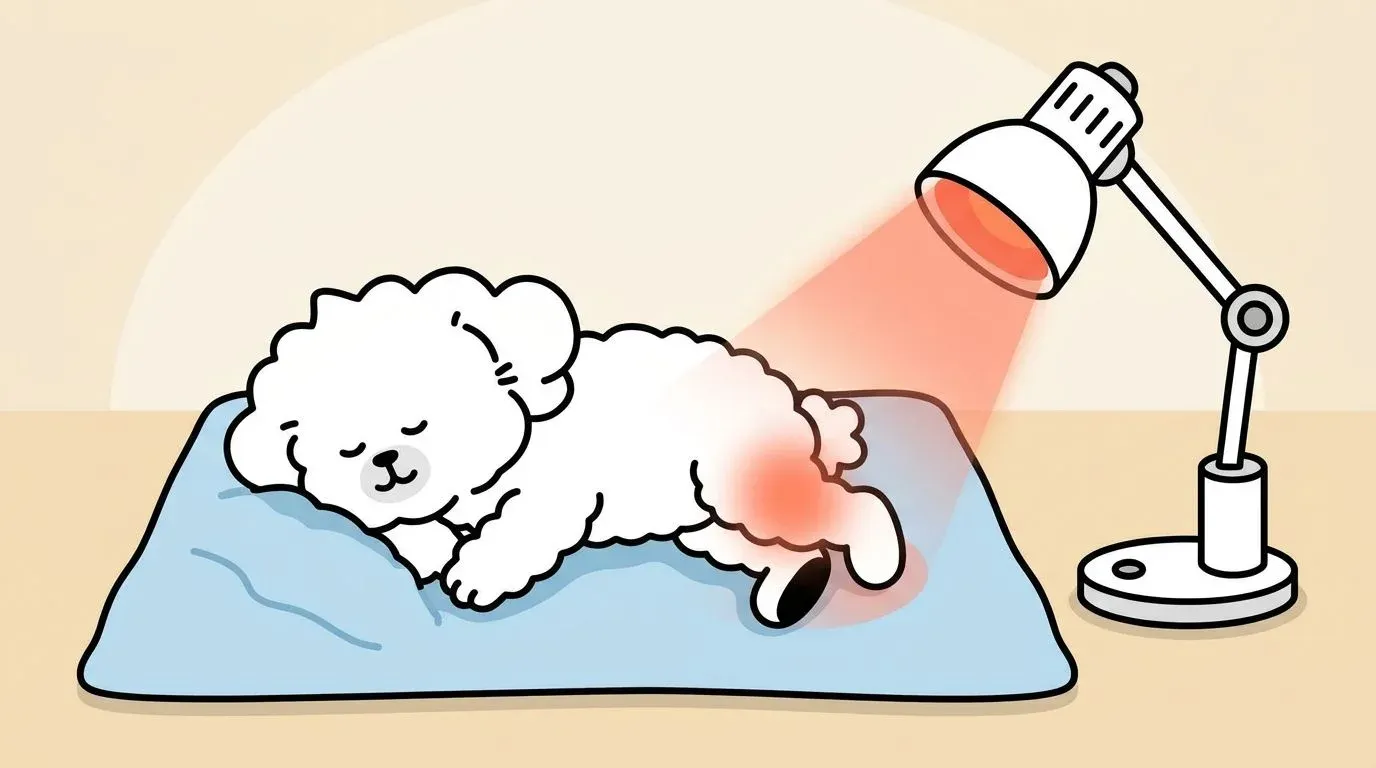
Three years ago, veterinary laser therapy was something that happened only in specialty clinics, at $50–$100 per session. Today, consumer-grade LED panels and handheld devices offer the same wavelengths for one-time purchases under $200. That accessibility is genuinely useful — and genuinely easy to misuse.
The core technology, photobiomodulation (PBM), has a growing evidence base in veterinary medicine. A 2022 randomized controlled trial published in Veterinary Sciences (Alves et al.) found that low-level laser therapy applied three times per week produced measurable reductions in pain scores and lameness in dogs with hip osteoarthritis, compared to a sham group. That kind of evidence matters. So does understanding which wavelengths, doses, and safety protocols actually translate from a clinical setting to your living room.
This guide covers the science, the practical protocol, and — equally important — when not to use light therapy at home.
What Is Near-Infrared (NIR) Light Therapy?
Red Light vs. Near-Infrared vs. Far-Infrared: The Wavelength Spectrum
“Red light therapy” has become a catch-all term that conflates several distinct wavelength categories. Understanding the difference is clinically relevant, not just academic.
Visible red light (630–700 nm): Penetrates skin and superficial tissue to roughly 5–10 mm. Most effective for surface-level conditions: wound healing, skin inflammation, superficial muscle soreness. This is what you see glowing red from the device.
Near-infrared light (700–1100 nm): Invisible to the naked eye. Penetrates to 2–5 cm depending on tissue type — deep enough to reach joint capsules, muscle belly, and periosteal bone surfaces. This is the clinically relevant range for arthritis, post-surgical recovery, and deep muscle conditions. The most studied therapeutic window within NIR is 800–850 nm and 900–1000 nm.
Far-infrared (above 3000 nm): This is heat therapy, not photobiomodulation. Far-infrared devices warm tissue the same way a heated pad does. They carry different indications and risks and should not be categorized with red/NIR therapy.
Most quality home devices marketed as “red light therapy” combine visible red (630–660 nm) and NIR (800–850 nm) diodes in a single panel. When evaluating a device, look for both wavelengths listed in the specifications — not just a general “850 nm NIR” or “red light” claim.
How Photobiomodulation Works at the Cellular Level
The mechanism behind PBM is better understood now than when the technology first appeared in the 1960s. The primary cellular target is cytochrome c oxidase (CCO), an enzyme in the mitochondrial electron transport chain — the part of the cell responsible for producing ATP (adenosine triphosphate), the cell’s energy currency.
When photons at therapeutic wavelengths are absorbed by CCO, the enzyme’s activity temporarily increases. This drives three downstream effects:
- Increased ATP production: Cells have more energy available for repair, protein synthesis, and normal function.
- Modulation of reactive oxygen species (ROS): At therapeutic doses, PBM shifts cells from a pro-inflammatory state toward repair mode.
- Release of nitric oxide (NO): Nitric oxide causes local vasodilation (widening of blood vessels), improving circulation to the treated area and supporting tissue oxygen delivery.
The result is a cascade of anti-inflammatory and pro-healing effects at the tissue level — reduced pro-inflammatory cytokines (like TNF-α and IL-6), increased growth factor activity, and accelerated tissue remodeling. This mechanism is why the same technology is used for arthritis pain, post-surgical recovery, wound healing, and nerve repair across veterinary and human medicine.
Why Wavelength and Power Density Matter
Two devices can both claim “850 nm NIR” and produce completely different biological effects based on power density. The key parameters are:
| Parameter | What it measures | Home device range |
|---|---|---|
| Wavelength (nm) | Which photons are emitted | 630–1000 nm (therapeutic) |
| Power density / Irradiance (mW/cm²) | Energy delivered per second per unit area | 20–200 mW/cm² |
| Dose / Fluence (J/cm²) | Total energy delivered (treatment dose) | 2–10 J/cm² typical |
| Treatment time | How long to apply | Calculated from above |
The minimum irradiance threshold for therapeutic effect in tissue is generally considered to be 30 mW/cm² at the target tissue surface. Below this, light is present but cellular response is not reliably triggered. Many inexpensive consumer devices fall short of this threshold at even short distances.
The therapeutic dose range for dogs is approximately 2–8 J/cm² per session, depending on the condition:
- Superficial wounds and skin conditions: 2–4 J/cm²
- Joint and muscle conditions: 4–8 J/cm²
Dose calculation: J/cm² = (mW/cm²) × seconds ÷ 1000
A device delivering 100 mW/cm² for 60 seconds delivers 6 J/cm² — within therapeutic range. The same device used for only 20 seconds delivers 2 J/cm², which may be adequate for superficial conditions but insufficient for deep joint tissue.
Evidence-Based Benefits for Dogs
Joint Inflammation and Arthritis Relief (Clinical Studies)
The strongest evidence for veterinary PBM comes from osteoarthritis research. The 2022 RCT by Alves and colleagues is among the most rigorously designed: 30 dogs with hip osteoarthritis were randomized to active laser therapy (3×/week for 4 weeks) or sham treatment. Dogs in the treatment group showed significant reductions in validated pain scales (Liverpool Osteoarthritis in Dogs, LOAD) and gait analysis improvements, compared to controls.
A 2017 systematic review in the Journal of the American Veterinary Medical Association identified consistent pain reduction and functional improvement across multiple canine arthritis studies, though it noted that variability in dosing protocols makes direct comparison difficult — which underscores why dosimetry guidance matters for home users.
The mechanism is consistent with the cellular effects described above: reduced prostaglandin synthesis, lower synovial TNF-α concentrations, and improved joint lubrication through stimulated synoviocyte activity.
For recognizing arthritis symptoms in dogs early, combination therapy — PBM alongside exercise modification and weight management — shows the strongest outcomes in the veterinary literature.
Pain Management Without Medication
PBM offers something NSAIDs and opioids do not: modulation of the pain signal at the peripheral level without systemic side effects. The mechanism involves reduced sensitization of nociceptors (pain-sensing nerve endings) through nitric oxide and opioid peptide release in treated tissue.
This makes light therapy particularly relevant for dogs who cannot tolerate long-term NSAID use — a common challenge in dogs with concurrent kidney disease, GI sensitivity, or those requiring lifelong pain management for chronic conditions.
The evidence here is more variable than for arthritis specifically. A 2016 meta-analysis in Pain found consistent analgesic effects across musculoskeletal pain conditions in humans, with effects strongest for chronic pain. Veterinary extrapolation is supported by shared nociceptive mechanisms, though direct canine pain-pathway studies remain fewer than human equivalents.
Tissue Repair and Post-Surgical Recovery
Post-operative applications represent some of the clearest clinical use cases for PBM in dogs. Studies examining incision healing, wound closure, and post-orthopedic surgery recovery consistently show faster tissue remodeling with PBM compared to control groups.
Mechanistically, PBM upregulates fibroblast proliferation and collagen synthesis — the cellular machinery that rebuilds damaged tissue. It also accelerates angiogenesis (new blood vessel formation) in healing wounds, supporting oxygen and nutrient delivery to recovering tissue.
This is why veterinary rehabilitation specialists increasingly incorporate laser or LED therapy in post-TPLO (tibial plateau leveling osteotomy) and IVDD (intervertebral disc disease) recovery protocols. The foundational guide to NIR therapy for dogs covers the clinical applications in more depth, including published veterinary rehabilitation protocols. For a detailed breakdown of IVDD grades and recovery expectations, the IVDD in dogs guide explains how photobiomodulation fits into spinal rehabilitation at each stage.
How to Use Red Light Therapy on Your Dog at Home
Choosing the Right Wavelength and Power Output
Before purchasing or using any device, verify these specifications:
Wavelengths: Look for devices with both 630–660 nm (red) and 800–850 nm (NIR) diodes. Single-wavelength devices are less versatile. Avoid devices that list only general categories without specific nm values.
Irradiance at distance: This is where many consumer devices underperform. A panel rated at 100 mW/cm² may deliver only 10–20 mW/cm² at 6 inches distance due to light scatter. Look for irradiance data measured at the treatment distance (typically 6 inches / 15 cm), not at the emitter surface.
Power density classes:
- Under 30 mW/cm² at tissue: Sub-therapeutic for most conditions
- 30–100 mW/cm² at tissue: Therapeutic range for most home applications
- Over 100 mW/cm² at tissue: Typically class III–IV lasers; professional supervision recommended
LED vs. Laser: Consumer home devices are almost universally LED-based. LEDs are effective and safe for home use. Class IV lasers (the most powerful clinical devices) require veterinary training and supervision due to burn risk. The distinction is important — see the comparison section below.
Treatment Areas: Where and How to Position the Device
Target areas depend on the condition being treated:
- Hip and knee osteoarthritis: Position over the joint space from multiple angles (lateral, medial, posterior). For hips, start lateral, then shift slightly posterior to reach the hip joint capsule.
- Spine and intervertebral discs: Apply along the dorsal (top) spine at the affected segment, moving slowly cranial to caudal.
- Post-surgical incisions: Apply parallel to the incision line at 2–3 cm distance. Never directly on open wounds in the acute phase.
- Muscle tension and trigger points: Apply directly over the muscle belly with contact or near-contact technique.
Position the device perpendicular (90°) to the treatment surface for maximum energy delivery. Angled application significantly reduces effective irradiance.
Session Duration and Frequency Guidelines
Calculate session time based on your device’s irradiance and target dose:
Time (seconds) = Target dose (J/cm²) × 1000 ÷ Irradiance (mW/cm²)
Example: Targeting 6 J/cm² with a device delivering 60 mW/cm² at the tissue: 6 × 1000 ÷ 60 = 100 seconds per treatment zone
For most home users without precise irradiance data, the following practical guidelines apply:
| Condition | Treatment time per zone | Frequency |
|---|---|---|
| Chronic arthritis | 60–120 sec | 3–5× per week |
| Post-surgery recovery | 60–90 sec | Daily initially, then 3× per week |
| Acute soft tissue | 45–60 sec | Daily for first week |
| Maintenance / prevention | 60 sec | 1–2× per week |
Start with the lower frequency and shorter durations for the first 2 weeks, especially with dogs who have not received light therapy before. Some dogs show a transient increase in soreness 12–24 hours after the first 1–2 sessions (“treatment reaction”) as inflammatory mediators temporarily increase before resolving.
Dealing with Fur: Contact vs. Distance Application
Fur is the main practical challenge for home users. Dark, dense fur absorbs and scatters light significantly — a double coat can reduce effective irradiance at the skin surface by 30–60%.
Contact application: Part the fur manually and place the device directly against the skin. This is the most effective technique for maximally coated breeds (Huskies, Chow Chows, Golden Retrievers). Use a clean device and monitor skin temperature — if the area feels warm after 60 seconds, reduce session time.
Distance application (2–4 cm): Appropriate for dogs with short or thin coats. Effective irradiance drops with distance, so either extend treatment time proportionally or reduce dose expectations.
Practical consideration: Contact application on moving or anxious dogs requires another person to hold the device while you manage the dog. For solo owners with wriggly patients, distance application is safer — it reduces burn risk and simplifies positioning.
Safety Precautions and Contraindications
When NOT to Use Light Therapy (Tumors, Eyes, Pregnancy)
These contraindications are not cautious disclaimers — they reflect real biological risk:
Active tumor sites: PBM stimulates cellular proliferation. Applying it over a known or suspected malignant tumor is contraindicated because the same cellular activation that promotes healing could accelerate tumor growth. This includes cutaneous masses of unknown origin. When in doubt, have a mass evaluated before using light therapy near it.
Eyes: Photoreceptors in the retina absorb NIR and red wavelengths with high efficiency. Even brief, low-power exposure to unprotected eyes can cause permanent retinal damage. Always use appropriate eye protection. For dogs, this means dedicated veterinary eye shields or simply keeping the treatment area far from the face and ensuring the dog cannot look directly at the device. Do not use home devices near the face or eyes under any circumstances without proper protective eyewear.
Pregnancy: The uterus is a contraindicated site. PBM effects on developing fetuses are not well-studied, and the precautionary principle applies. Do not apply light therapy over the abdomen of a pregnant dog.
Open growth plates: Puppies under 12 months with open growth plates (physes) should not receive PBM directly over growth plate areas. The stimulation of cellular activity in actively growing tissue carries theoretical risk of disrupting normal skeletal development.
Active hemorrhage: Vasodilatory effects of PBM can increase blood flow to treated areas. Do not apply over sites of active or recent internal bleeding.
Thyroid and endocrine glands: Avoid direct application over the thyroid and parathyroid region (neck/throat area).
Signs to Stop Treatment Immediately
Discontinue treatment and monitor if you observe:
- Increased pain behavior during or immediately after treatment (vocalizing, flinching, attempting to escape the device)
- Persistent increased lameness more than 24 hours after a session
- Skin redness, warmth, or irritation at the treatment site persisting beyond 2 hours
- Swelling of the treated area
- Any change in behavior suggesting distress
A transient increase in soreness is possible in the first 1–2 sessions. If it persists beyond 48 hours or occurs after session 3+, the treatment dose is likely too high — reduce session time and frequency, or consult your veterinarian.
When to Consult Your Veterinarian First
Home use is appropriate for ongoing management of diagnosed conditions. But before starting any light therapy regimen, discuss with your veterinarian if:
- The diagnosis is uncertain (pain of unknown origin, unexplained lameness, undiagnosed masses)
- Your dog is currently undergoing chemotherapy or radiation therapy
- Your dog has epilepsy (light stimulation can be a seizure trigger in sensitive dogs)
- Your dog takes medications that cause photosensitivity
- The condition has worsened or not responded to previous treatment
For senior dogs managing complex conditions, a comprehensive senior dog joint management approach — combining light therapy with appropriate exercise, weight management, and veterinary monitoring — typically produces better outcomes than any single modality.
Home Devices vs. Veterinary Laser: What to Expect
LED Panels vs. Class III/IV Lasers
The most common misunderstanding about home red light therapy for dogs is treating it as equivalent to clinical laser therapy. The differences are real and matter for expectation-setting.
| Feature | Home LED Devices | Class III Laser (Clinical) | Class IV Laser (Clinical) |
|---|---|---|---|
| Power output | 10–200 mW/cm² | Up to 500 mW | 1–25+ Watts |
| Wavelength control | Fixed LED arrays | Precise, single wavelength | Precise |
| Treatment time for 6 J/cm² | 3–10 minutes | 30–120 seconds | Under 30 seconds |
| Penetration depth | 2–4 cm | 3–6 cm | 5–10 cm |
| Cost | $50–$500 (one-time) | Per session fee | Per session fee |
| Safety requirements | Basic eye protection | Eye protection, training | Strict safety protocols |
| Supervision needed | Home use, no professional required | Technician or vet | Veterinarian only |
The core mechanism (photobiomodulation via CCO activation) is the same. The difference is delivery efficiency: a Class IV laser reaches deep tissue in seconds, while a home LED panel requires longer sessions and may not reach the same tissue depths in large or heavily muscled dogs.
For most small to medium dogs with joint conditions, home LED therapy at the correct dose and frequency produces clinically meaningful effects — the Alves 2022 RCT used a 100 mW Class IIIB laser at doses achievable by quality home devices.
Realistic Results Timeline for Home Use
Set expectations based on the evidence, not marketing:
Sessions 1–4 (week 1–2): Biological changes are occurring at the cellular level, but behavioral changes in your dog are unlikely to be visible yet. Some dogs show increased energy or appetite, suggesting reduced background pain. Others show no observable change.
Sessions 5–10 (week 2–4): Owners managing dogs with arthritis most commonly report changes during this window: improved willingness to move, less stiffness after rest, easier rising from lying position. Gait improvement in clinical studies typically becomes measurable at week 3–4.
Sessions 10+ (month 2+): Cumulative effects. For chronic conditions, this is the maintenance phase. Stopping treatment entirely at this point typically leads to gradual return of symptoms over 4–8 weeks. Most veterinary rehabilitation protocols transition to a maintenance frequency (1–2× per week) rather than full cessation.
Conditions with the strongest response: Osteoarthritis (hip, elbow, stifle), post-surgical wound healing, soft tissue strains, chronic neck or back pain from disc disease.
Conditions with more variable response: Severe advanced arthritis with significant joint destruction, deep nerve injuries, systemic inflammatory conditions.
If you observe no change after 8–10 sessions at appropriate doses, the device output may be insufficient, the treatment area may be incorrectly targeted, or the condition may require a different therapeutic approach — worth a follow-up veterinary discussion.
References
- 1. Photobiomodulation in Veterinary Medicine: A Review (Baxter et al., 2023)
- 2. Low-Level Laser Therapy in Canine Osteoarthritis: A Randomized Controlled Trial (Alves et al., 2022)
- 3. Photobiomodulation Therapy and the Brain: Far More Than Neurorehabilitation (Hamblin, 2016)
- 4. NAVC / Today's Veterinary Practice: Photobiomodulation Therapy in Veterinary Medicine
- 5. WSAVA Global Veterinary Community Guidelines on Pain Management
FAQ
How many sessions does red light therapy take before I see results in my dog?
Can I use a human red light therapy device on my dog?
Is it safe to use red light therapy near my dog's tumor?
Does my dog's coat block the light?
What wavelength is actually therapeutic for dogs?
Related Articles

6 Reasons Your Dog Smells Bad and How to Fix Each One
Wondering why does my dog smell bad? Learn the 6 most common causes of dog body odor—from ears to anal glands—and get a practical fix for each one.

Dog Poop Color Chart: What Each Color Means and When to See a Vet
Complete dog poop color chart covering brown, black, red, yellow, grey, and green stool—plus consistency, mucus, and smell to pinpoint what's wrong.

How to Clean Dog Eye Discharge: Color Guide and Care
Dog eye discharge explained by color—clear, yellow, green, brown. Step-by-step cleaning guide, breed-specific tips, and when to see the vet.