 Cirius Petpedia
 Dog Camping Safety Guide: Packing List and Emergency Tips
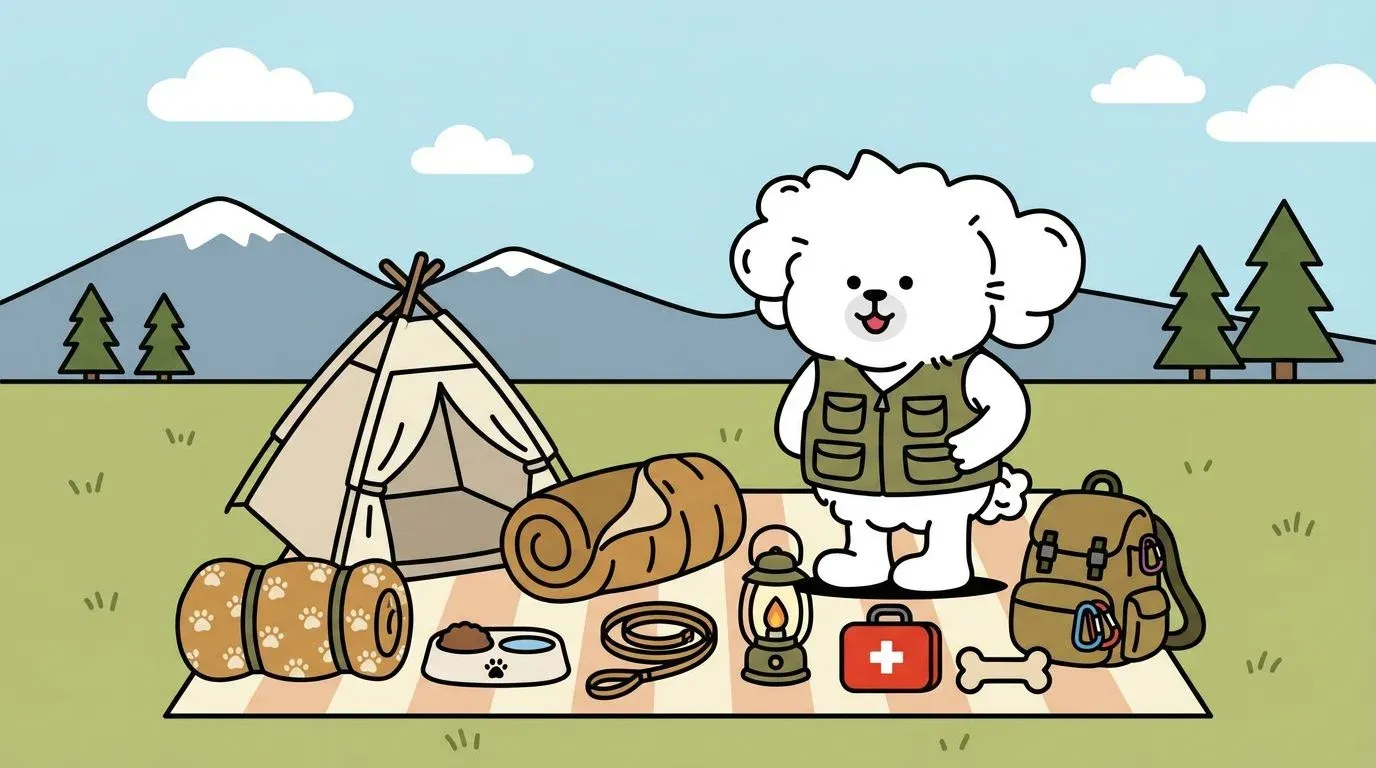
Taking your dog on a camping trip is one of the most rewarding outdoor experiences you can share. It is also one of the easiest to get wrong.
A campsite is not a controlled environment. Between wildlife encounters, toxic plants, open flames, natural water sources carrying pathogens, and sudden temperature swings, the outdoors presents a unique set of hazards that most dog owners underestimate on their first trip. The good news is that every one of these risks is manageable with the right preparation.
This guide covers dog camping safety from the week before you leave to the moment you get home — with actionable checklists, emergency response protocols, and specific guidance for dogs with joint conditions.
Before You Go: Pre-Trip Essentials
Preparation done in the week before departure removes the majority of avoidable camping emergencies. Rushing this phase is the most common mistake first-time camping dog owners make.
Vaccinations, Flea, and Tick Prevention Check
Schedule a vet visit 1-2 weeks before your trip. This gives enough time for any vaccines to reach full efficacy and for any adverse reactions to resolve before you are hours from the nearest clinic.
Confirm that your dog is current on:
- Rabies (legally required at most campgrounds)
- Distemper/Parvovirus (DA2PP)
- Bordetella (kennel cough — required by many campgrounds)
- Leptospirosis — often overlooked, but the AVMA recommends this vaccine for dogs with regular exposure to wildlife, rivers, or soil where wildlife urinate. Leptospira bacteria live in water and wet soil and can cause life-threatening kidney and liver failure.
For tick prevention, confirm that your dog’s topical or oral preventive is current. The CDC and AKC both recommend year-round tick prevention for dogs spending time in wooded or grassy areas. Products containing fluralaner, afoxolaner, or sarolaner (oral chewables) are preferred over topical sprays in camping scenarios because they do not wash off during water activities.
Before you leave on your outdoor adventures, reviewing tick prevention during outdoor activities will help you choose the right product and understand what protection level you actually need.
Campground Pet Policies and Reservation Tips
Not all “pet-friendly” campgrounds offer equal access. Before booking, confirm:
- Leash rules: most campgrounds require 6-foot maximum leash at all times
- Breed restrictions: some campgrounds and state parks restrict specific breeds
- Maximum dogs per site: typically 1-2 dogs per site
- Proof of vaccination requirements: rabies certificate often required at check-in
- Pet fees: $5-20 per night is common at KOA and state park campgrounds
For National Parks specifically, dogs are generally restricted to paved roads, parking areas, and designated campground loops. Most NPS backcountry areas prohibit dogs entirely. Always verify on the specific park’s page at nps.gov before finalizing your itinerary.
If you plan to drive to your camping destination, review safe dog car travel safety practices — particularly crate restraint and temperature safety in vehicles.
Locating the Nearest Emergency Vet Clinic
This step is non-negotiable. Before you leave, identify:
- The nearest 24-hour emergency veterinary clinic to your campsite
- A backup clinic within reasonable driving distance
- The phone number for the ASPCA Animal Poison Control Center: (888) 426-4435 (24/7, consultation fee applies)
Save these in your phone and write them on paper — cell service at campgrounds is unreliable. Your regular vet’s office being 2 hours away is not useful information at 11 PM when your dog has a swollen muzzle from a rattlesnake bite.
Dog Camping Packing Checklist
A forgotten item at camp cannot be borrowed from a neighbor. Organize your packing by category.
Safety Gear: Leash, Tie-Out Stake, ID Tags, LED Collar
| Item | Notes |
|---|---|
| Standard leash (6 ft) | For campground movement and controlled walks |
| Long line (20-30 ft) | For supervised exploration in open areas |
| Tie-out stake + cable | For hands-free camp setup; use cable, not rope (chewable) |
| ID tag with cell number | Engrave destination contact info if possible |
| Microchip info verified | Confirm registration is current before departure |
| LED collar or clip-on light | Critical for nighttime visibility at camp |
| Reflective vest | Useful for dusk walks in hunting areas |
| Recent photo of your dog | On your phone; invaluable if your dog goes missing |
Often forgotten: A second collar or harness backup. If yours snaps or is chewed through on day one of a 5-day trip, you have a problem.
Health and Hygiene: First Aid Kit, Tick Remover, Waste Bags
A basic pet first aid kit should include:
- Tick removal tool (fine-tipped tweezers or dedicated tick key)
- Styptic powder (for torn nails)
- Saline wound wash
- Non-stick gauze pads and self-adherent bandage wrap
- Diphenhydramine (Benadryl) — confirm dosing with your vet before the trip (typically 1 mg/lb body weight)
- Digital thermometer (rectal for dogs; normal is 101-102.5°F / 38.3-39.2°C)
- Activated charcoal (only use under vet direction — not appropriate for all toxin ingestions)
- Your dog’s prescription medications (minimum 150% of planned trip supply)
- Waste bags — bring triple what you think you need
Consider taking a canine first aid course through the American Red Cross before your first camping trip. The 4-hour certification covers bleeding control, CPR, choking, poisoning response, and fracture stabilization.
Comfort Items: Collapsible Bowls, Blanket, Portable Crate, Fresh Water
| Item | Notes |
|---|---|
| Collapsible food and water bowls | Pack two sets in case one is lost |
| Bottled or filtered water (1 oz per lb per day, minimum) | Do not rely on natural water sources |
| Portable water filter (e.g., Sawyer Squeeze) | Backup if you run low |
| Familiar blanket or sleeping pad | Reduces anxiety in new sleeping environment |
| Portable crate or exercise pen | Safe space at camp; critical for unsupervised moments |
| Dog’s regular food (plus 20% buffer) | Avoid switching foods mid-trip; GI upset is common with diet changes |
| Poop bags and small trowel | Leave No Trace principles apply to pet waste |
| Dog-specific sunscreen | For pink-nosed or thin-coated dogs; ears and nose are most vulnerable |
Campsite Safety Rules for Dogs
Once you are on-site, your dog’s safety depends on consistent management of the immediate environment. Run a hazard assessment of your campsite within the first 30 minutes of arrival.
Tick and Flea Prevention: Daily Full-Body Checks
Even with preventives, daily tick checks are standard practice. According to the CDC, the blacklegged tick (Ixodes scapularis) responsible for Lyme disease must be attached for 36-48 hours to transmit the bacteria — so daily removal prevents transmission even if a tick hitches a ride on your dog.
Perform your check after every off-trail outing and at bedtime. Use your fingers to part the fur and feel for small bumps. Priority areas:
- Around and inside the ears
- Between the toes and under the paw pads
- Groin and inner thighs
- Armpits
- Around the collar
- Around the tail base
Tick removal protocol: Use fine-tipped tweezers or a tick removal tool. Grasp the tick as close to the skin surface as possible. Pull upward with steady, even pressure — do not twist or jerk. Clean the bite area with rubbing alcohol or soap and water. Place the tick in a sealed bag in case your vet needs to identify the species.
For a detailed breakdown of tick-borne disease risk by region and prevention strategies, the tick prevention during outdoor activities guide covers species-specific risks across US geographic zones.
Toxic Plants and Wild Mushrooms: Poison Ivy, Foxglove, Death Cap
This is the area where most camping guides fall short. Dogs investigate with their mouths. The ASPCA Animal Poison Control Center handles thousands of calls annually related to plant ingestion during outdoor activities.
High-risk plants in US camping environments:
| Plant | Toxicity | Symptoms |
|---|---|---|
| Death Camas (Anticlea elegans) | Severe | Drooling, vomiting, low heart rate, seizures |
| Foxglove (Digitalis purpurea) | Severe | Cardiac arrhythmia, vomiting, seizures |
| Hemlock (Conium maculatum) | Severe | Paralysis, respiratory failure |
| Wild Mushrooms (multiple species) | Varies to fatal | Vomiting, liver failure (Amanita spp. especially dangerous) |
| Yew (Taxus spp.) | Severe | Sudden cardiac arrest |
| Rhododendron/Azalea | Moderate-severe | Vomiting, low heart rate, tremors |
| Lantana | Moderate | Vomiting, lethargy, photosensitivity |
| Poison Ivy/Oak | Skin irritant | Contact dermatitis, facial swelling |
Never let your dog eat any wild mushroom. There is no safe-to-eat assumption in the field. The death cap (Amanita phalloides) causes irreversible liver failure within 24-72 hours; early symptoms often resolve, giving a false impression of recovery before the organ damage becomes fatal.
If ingestion is suspected, call the ASPCA Poison Control Center immediately at (888) 426-4435. Do not wait for symptoms to develop.
Campfire Safety: Burns, Smoke Inhalation, and Hot Embers
Dogs are drawn to the warmth and smell of campfires and have no natural understanding of fire danger. Establish a safe perimeter of at least 6 feet between your dog and the fire ring edge, and enforce this consistently with the tie-out stake or crate.
Specific fire hazards:
- Direct burns: Paw pads are particularly vulnerable. A dog that steps on a hot ember or the fire ring border can sustain deep partial-thickness burns that are not immediately visible through fur.
- Smoke inhalation: Extended smoke exposure irritates a dog’s airway. Signs of smoke irritation include coughing, watery eyes, and reluctance to breathe deeply. Move your dog upwind if smoke is persistent.
- Dropped food: Cooked bones, corn cobs, and skewers around the fire area are ingestion hazards. Keep the cooking area clear and dispose of food waste immediately.
- Morning embers: The fire may appear out but retain heat for hours. Keep dogs away from fire rings until they are visually cold and you can hold your hand 2 inches above the surface.
Nighttime Safety: Visibility Gear and Wildlife Awareness
After dark, the campsite environment changes significantly. An LED collar or clip-on light makes your dog visible to you and to other campers moving through the area with flashlights. In areas with vehicle traffic, reflective gear is essential.
Wildlife encounters at night:
In most US camping regions, the nocturnal wildlife list includes coyotes, raccoons, skunks, opossums, and in some areas, bears and mountain lions. A dog that barks at or charges these animals — or that is left unattended outside — is at serious risk.
Specific protocols:
- Bear country (Pacific Northwest, Rockies, Appalachians, Great Smoky Mountains): Store all food, waste bags, and scented items in a bear canister or hang them. Dogs that eat from the ground near camp can attract bears to your site. Consult the campground’s specific bear protocol on arrival.
- Coyote threat: Never leave a small dog outside unattended, even briefly. Coyotes are opportunistic and operate in urban-adjacent campgrounds. Keep your dog inside the tent or in a locked vehicle overnight.
- Skunk encounters: If your dog is sprayed, the campground is not the place to resolve this fully. A temporary remedy is a solution of 1 quart 3% hydrogen peroxide, ¼ cup baking soda, and 1 teaspoon dish soap — apply before wetting the coat, leave for 5 minutes, then rinse.
Hydration and Temperature Management
Water and temperature are two of the most underestimated safety factors in camping with dogs, and they interact — a dehydrated dog overheats far faster.
Clean Water Sources: Avoiding Streams and Puddles
The general rule is simple: if you would not drink it unfiltered, your dog should not drink it either.
Natural water sources in US campgrounds carry multiple hazards:
- Giardia: A protozoan parasite that causes chronic diarrhea and weight loss. The CDC lists it as one of the most common waterborne illnesses in the US. Giardia cysts survive standard water filtration; a UV purifier or chemical treatment (iodine tablets) is needed for full inactivation.
- Leptospira: Bacteria shed by wildlife (deer, rodents, raccoons) into water and soil. Even dogs with the Leptospirosis vaccine are not 100% protected against all serovars, so avoiding natural water consumption remains the safest approach.
- Blue-green algae (cyanobacteria): Toxic blooms appear in warm, slow-moving water as a greenish or bluish film. Even small amounts ingested can cause acute liver failure and death within hours. If you see any algal bloom, keep your dog completely away from that water body.
Bring more water than you calculate you need. The general minimum is 1 ounce of water per pound of body weight per day, but this increases significantly with heat and physical activity. A 60-pound Labrador hiking in 80°F heat may need 3-4 times that baseline.
Spring and Fall Temperature Swings vs Summer Heat Risks
Seasonal temperature matrix for dog camping:
| Season | Primary Risk | Warning Signs | Mitigation |
|---|---|---|---|
| Summer | Overheating / heat stroke | Excessive panting, drooling, brick-red gums, stumbling | Early morning/evening hikes; shade; cooling vest; frequent water breaks |
| Spring/Fall | Hypothermia (especially at night) | Shivering, lethargy, curling inward, pale gums | Insulated sleeping pad; dog jacket; tent sleeping rather than car |
| Any | Paw pad burns from hot ground | Limping, licking paws, visible blistering | The “7-second pavement test” applies to campground roads too |
Heat stroke is particularly dangerous in summer camping. According to veterinary guidelines, a dog’s body temperature above 104°F (40°C) causes heat stress; above 106°F (41.1°C) is a life-threatening emergency. Brachycephalic breeds (Bulldogs, Pugs, French Bulldogs) and overweight dogs reach dangerous temperatures faster than other breeds.
For comprehensive guidance on recognizing and responding to heat emergencies, the dog heat stroke prevention guide covers the 4-tier temperature risk system and breed-specific vulnerabilities in detail.
Camping Tips for Dogs with Joint Issues
Dogs with arthritis, hip dysplasia, or a history of patellar luxation can absolutely enjoy camping — but they need a modified approach. The combination of uneven terrain, longer-than-usual activity, and sleeping on cold, hard ground without their regular ortho bed is a reliable recipe for a post-trip flare.
Managing Rough Terrain and Joint Stress
Gravel paths, root-covered forest floors, steep descents, and log crossings all place compressive and rotational stress on joints that is categorically different from flat sidewalk walking. For joint-sensitive dogs:
- Avoid steep descents and log scrambles — downhill and twisting movements are the highest-stress scenarios for hip and stifle joints
- Pack joint supplements (glucosamine, omega-3 fatty acids) and administer consistently throughout the trip — skipping doses during travel is common and counterproductive
- Bring an orthopedic or memory foam sleeping pad specifically for your dog; a thin yoga mat folds easily and provides meaningful insulation from cold ground
- Choose campgrounds with paved or smooth-gravel access rather than technical hiking approaches
Consider a canine joint support assessment before the trip. If your dog shows walk refusal, intermittent limping, or difficulty rising after rest at home, these symptoms will be amplified at camp.
Post-camping paw care after rough terrain is equally important — pad cracks, foreign body embedding, and bruising from trail surfaces require attention within 24 hours of returning from the trail.
Activity Pacing and Rest Routines
Joint-sensitive dogs need enforced rest periods that healthy dogs do not. Structure the day in segments:
- Active period: 45-60 minutes maximum before a rest break
- Rest period: 20-30 minutes of shade rest with water
- Night routine: Off the ground (sleeping pad or cot), warm (blanket), and sheltered from temperature drop
Watch for subtle signals that your dog has hit their limit: lagging behind, repeated pausing on the trail, increased vocalization on movement, or reluctance to get up from rest. These are not behaviors to push through.
Arthritic dogs often show dramatically increased stiffness the morning after a high-activity day. If your dog struggles to rise on day two of a multi-day trip, this is a signal to significantly reduce the day’s hiking distance or plan a rest day at camp.
After returning home, near-infrared therapy has shown benefits in managing post-exercise inflammation in dogs with joint conditions. The dog NIR home therapy guide explains the evidence base and safe home-use protocols for post-camping joint fatigue recovery.
Emergency Response at the Campsite
The difference between a frightening incident and a fatal one is often response time and correct immediate action. Know these protocols before you leave home — not at the campsite with a panicked dog in front of you.
Tick Bites: Removal and Post-Bite Monitoring
Immediate steps:
- Remove the tick using fine-tipped tweezers — grasp close to the skin, pull straight up without twisting
- Clean the site with rubbing alcohol
- Place the tick in a sealed bag or jar — your vet may want to test it
- Photograph the bite site for reference
- Note the date of removal
Post-removal monitoring (7-21 days):
Lyme disease (transmitted by blacklegged ticks) symptoms in dogs include lameness (often shifting from leg to leg), fever, lethargy, reduced appetite, and kidney complications. The ACVIM notes that only a minority of infected dogs show symptoms, but the consequences of untreated infection include permanent kidney damage.
Contact your vet if you observe any of these signs in the weeks following your trip. A C6 antibody test can detect Lyme exposure as early as 3-5 weeks post-bite.
Bee Stings and Snake Bites: Immediate Response and Transport
Bee/wasp sting:
Most bee stings cause local swelling and pain that resolves within hours. The dangerous scenario is anaphylaxis, which can occur in dogs with prior sensitization:
- Signs of anaphylaxis: Sudden facial or throat swelling, difficulty breathing, collapse, pale gums, vomiting within 10-15 minutes of sting
- Action: Administer Benadryl (diphenhydramine) at the vet-confirmed dose if your dog can swallow safely — this buys time but does not replace veterinary epinephrine for true anaphylaxis
- Transport immediately to the nearest emergency vet if any respiratory signs appear
Rattlesnake bite (primary risk in Western US, Southern states):
Rattlesnake envenomation is a veterinary emergency. According to the Merck Veterinary Manual, pit viper venom causes hemotoxic damage — tissue destruction, coagulopathy, and cardiovascular effects. Without treatment, mortality in dogs can be significant.
Do not:
- Apply a tourniquet
- Attempt to cut or suck out venom
- Apply ice
- Give aspirin or NSAIDs (worsens coagulopathy)
Do:
- Keep your dog calm and still — movement accelerates venom spread
- Carry your dog rather than allowing them to walk if possible
- Drive to the emergency vet immediately — call ahead so antivenin can be prepared
- Note the time of the bite and the location on the dog’s body
Antivenin is most effective when administered within 4-6 hours of the bite. Dogs bitten on the face or muzzle (most common — they stick their nose toward the snake) develop severe swelling that can compromise airway. Consider the Rattlesnake Vaccine (Crotalus atrox toxoid) if you camp frequently in the American Southwest — your vet can advise on its appropriateness.
GI Emergencies: Vomiting, Diarrhea, and Bloat Warning Signs
Routine GI upset vs emergency:
Mild vomiting (1-2 episodes) and soft stool are common at camp due to water changes, stress, or dietary indiscretion (dogs eat things off the campground ground). Withhold food for 6-8 hours, maintain hydration, and resume normal feeding in small portions.
Emergency GI signs requiring immediate transport:
- Repeated vomiting that does not resolve within 2 hours
- Blood in vomit or diarrhea
- Severe abdominal distension — the abdomen looks bloated and tightly distended
- Unproductive retching — your dog tries to vomit but produces nothing
- Pale, white, or bluish gums at any point
Gastric dilatation-volvulus (bloat/GDV) is a life-threatening condition in which the stomach fills with gas and rotates, cutting off blood supply. It progresses from onset to death in under 6 hours without surgical intervention. GDV disproportionately affects large, deep-chested breeds: Great Danes, German Shepherds, Standard Poodles, Weimaraners, and Labrador and Golden Retrievers.
If you observe unproductive retching and abdominal distension simultaneously, do not wait to see if it resolves. Drive immediately to the emergency vet. This is the one camping emergency where minutes genuinely determine survival.
For context on deworming before outdoor trips and the parasites dogs are most commonly exposed to in wilderness environments, reviewing your dog’s deworming schedule before a camping trip is worth the 10 minutes it takes.
A Note on Pre- and Post-Trip Health Checks
Before departure, run through this brief home assessment:
- Is your dog at a healthy weight? Overweight dogs overheat faster, experience greater joint stress, and tire more quickly on trails.
- Are your dog’s paws in good condition? Cracked or thin pads will not hold up to gravel paths and rocky terrain.
- Is your dog showing any subtle lameness or reduced activity at home? These signs will worsen at camp.
- Is your dog current on all preventives and due vaccines?
After the trip:
- Perform a full-body tick check before your dog enters the house
- Inspect paws for embedded debris, cuts, or pad abrasions
- Monitor for GI symptoms, lethargy, or limping for 7-14 days
- Schedule a vet follow-up if your dog had any incident at camp — a bite, potential toxin exposure, or significant injury — even if they appear recovered
The spring outdoor activity checklist covers the seasonal pre-trip preparation framework in detail if you are heading out early in the season.
Camping with your dog is one of the most consistently rewarding experiences in dog ownership. The gear list, the emergency protocols, the daily tick checks — none of it is meant to make the experience feel clinical or stressful. It is meant to keep you in the field longer, with a healthy dog, and without the kind of emergency that turns a great trip into a traumatic one.
Prepare well. Start simple. Build up the complexity of your trips as you and your dog develop a shared outdoor rhythm.
FAQ
Can dogs sleep in tents overnight?
How much should I feed my dog while camping?
Are small dogs suited for camping?
When should I give my dog a bath after camping?
What should I do if my dog drinks from a stream or puddle?
Can I take my dog to US National Parks?
How do I know if a campground allows dogs?
What is the safest way to keep my dog at camp while I cook?
Related Articles
7 Proven Ways to Relieve Your Cat's Stress at Home
Learn the signs of stress in cats, what triggers it, and 7 science-backed methods for cat stress relief you can start at home today.
Dog Jumping Off Furniture: Why Their Joints Are Paying the Price
Every couch jump sends 2–5x body weight through your dog's joints. Learn how repeated landings cause joint damage and what to do about it.
What Your Dog's Sleeping Position Reveals About Their Joint Health
Dog sleeping position joint pain connection explained — learn which postures signal discomfort, how to observe changes, and how to build a joint-friendly sleep setup.
If Your Dog Lives on Hardwood Floors, Here's How to Protect Their Joints
Slippery hardwood, laminate, and tile floors quietly damage your dog's joints over time. Learn the biomechanics, floor risk comparison, and proven solutions.
Dog Tick Prevention on Walks: How to Check, Remove, and Protect Against Tick-Borne Disease
A complete guide to dog tick prevention during walks. Learn how to check for ticks, safely remove them, and protect your dog from dangerous tick-borne diseases like Lyme, Ehrlichiosis, and Babesiosis.
Dog Heat Stroke Prevention: Critical Temperature Thresholds and Warning Signs Every Owner Must Know
Learn the 4-tier temperature risk system, breed-specific vulnerabilities, pavement heat dangers, and step-by-step emergency protocol to prevent and treat dog heat stroke this summer.
If Your Dog Is Prone to Skin Issues in Wet Weather: A Seasonal Care Guide
Learn how humid and wet weather triggers yeast infections, bacterial pyoderma, and hot spots in dogs — plus a complete post-walk routine, indoor humidity management, and nutrition tips.
Planning a Car Trip With Your Dog? Essential Safety Rules You Need to Know
Complete guide to dog car travel safety: crash-tested restraint options, desensitization training, motion sickness solutions, hot car laws, and emergency protocols.
Dog Spring Outing Checklist: Safety, Hazards, and Gear
Complete dog spring outing checklist: health checks, tick and Lyme prevention, toxic plants, lawn chemicals, gear by activity, and post-outing care.
Dog Spring Shedding Care: Brushing, Skin, and Joint Health
Science-backed dog spring shedding care: brushing routines, breed guides, skin nutrition, and the skin-to-joint inflammation link grooming guides miss.
Dog Hiking Safety Tips: Joint Care and Post-Hike Recovery
Dog hiking safety tips for joint protection, trail pacing, and post-hike recovery — backed by veterinary rehab principles.
Dog-Friendly Cabin Trip: 10-Point Checklist
Dog-friendly cabin trip checklist: booking, packing, road trip, arrival, checkout, and post-trip health. Vet-informed 6-stage guide for vacation rentals.
Dog Stroller Guide: Choose the Right One for Joint Health
Dog stroller guide: who benefits medically, how to choose by joint condition and size, stroller types compared, and how to train your dog.
7 Essential Things to Check Before Choosing a Dog Daycare
Learn how to choose dog daycare confidently with this 7-point checklist covering staff ratios, safety protocols, costs, red flags, and when daycare isn't the right fit.
Moving With a Cat? 5 Common Mistakes That Make Stress Worse
Cat moving stress can trigger serious illness — from feline cystitis to hepatic lipidosis. Avoid the 5 key mistakes with our D-21 to D+30 timeline guide.
Dog-Friendly Restaurant Etiquette: Complete Owner's Guide
Dog friendly restaurant etiquette from prep to table. Training plan, packing checklist, on-site rules, and troubleshooting for owners.
8 Indoor Games for Dogs That Actually Tire Them Out
8 indoor games for dogs that actually tire them out. Brain games, body play, and bonding activities with age-specific and joint-safe guidance included.
Dog Swimming Safety: 7 Essential Rules for Every Environment
Complete dog swimming safety guide covering breed swim ability, water introduction, environment-specific risks, water intoxication, and post-swim care.