 Cirius Petpedia
 Dog Dandruff: 7 Causes and Proven Home Remedies That Actually Work
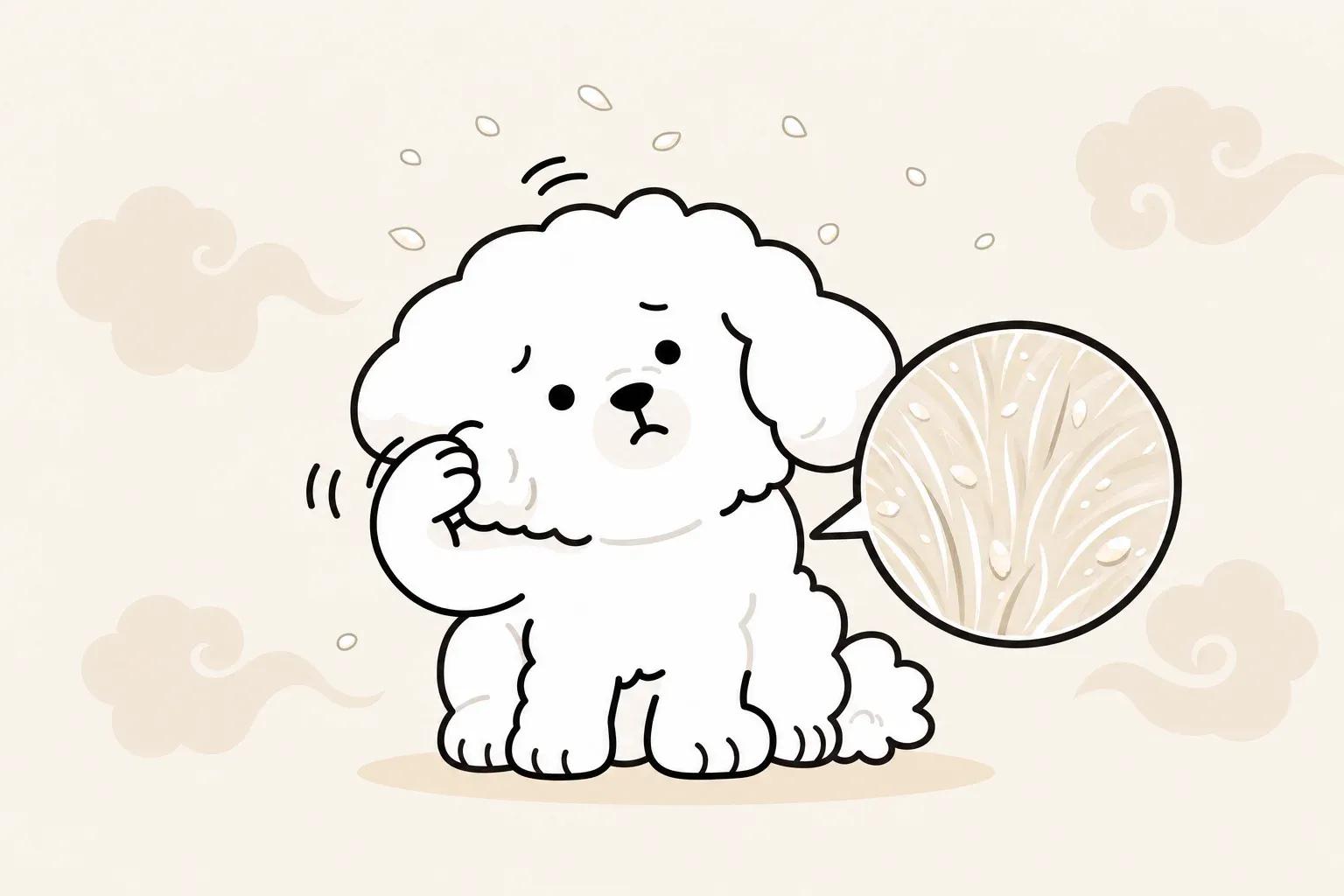
You notice white flakes on your dog’s dark fur — or maybe on the couch, or your sleeve. The coat looks dull. The dog scratches more than usual. You know it is dandruff, but you are not sure whether it is a minor nuisance or a sign of something more serious.
The honest answer is: it depends entirely on the cause. Dog dandruff ranges from a simple fix (a humidifier, a shampoo change) to a symptom of hormonal disease that requires lifelong medication. Knowing which type you are dealing with is the only way to choose a treatment that actually works.
This guide explains the seven most common causes of dog dandruff, how to tell them apart, what home remedies are backed by evidence, and when flaking is a reason to call your vet.
What Is Dog Dandruff and Why Does It Happen?
Normal Skin Cell Turnover vs. Abnormal Flaking
Dog skin turns over continuously. New cells form in the deepest skin layer (stratum basale), migrate upward over roughly 3 weeks, and are shed from the surface as microscopic flakes. Under normal circumstances, this shedding is invisible — the cells are too small and infrequent to form visible dandruff.
Visible flaking happens when the turnover cycle accelerates or when dead cells clump together rather than shedding individually. Both are driven by disruption to the skin barrier — the protective interface between your dog’s body and the external environment. Dog skin is approximately one-third the thickness of human skin and has a slightly alkaline pH of 6.2–7.4 (compared to human skin’s acidic 4.5–5.5). This makes it more vulnerable to dryness, irritation, and barrier breakdown than human skin.
When the barrier is compromised, water evaporates faster (a process called transepidermal water loss), surface bacteria and fungi have easier access to deeper tissue, and the inflammatory cascade that drives itching and further flaking accelerates.
Dry Seborrhea vs. Oily Seborrhea: Two Types of Dog Dandruff
Veterinary dermatology classifies dandruff primarily as one of two seborrhea subtypes, and the distinction matters for treatment:
| Feature | Dry Seborrhea (Seborrhea Sicca) | Oily Seborrhea (Seborrhea Oleosa) |
|---|---|---|
| Flake appearance | White or gray, dry, powdery | Yellow or gray, greasy, adherent |
| Coat feel | Dull, brittle, rough | Oily, tacky, clumped |
| Odor | Minimal | Often musty or rancid |
| Common causes | Low humidity, poor nutrition, dehydration | Hormonal disease, primary seborrhea, yeast overgrowth |
| Typical treatment | Moisturizing shampoos, omega-3 supplements, humidifier | Degreasing shampoos (coal tar, salicylic acid), address underlying cause |
Some dogs display mixed seborrhea, with both dry and oily characteristics in different body regions. The back of the neck and around the tail base tend to show oily characteristics even when the rest of the coat is dry.
7 Common Causes of Dog Dandruff
1. Dry Indoor Air and Central Heating
Low ambient humidity is the most common and most overlooked cause of winter dandruff in dogs. When central heating runs continuously, indoor relative humidity can drop below 25% — far below the 40–60% range that supports healthy skin hydration for both pets and people.
Distinguishing signs: Dandruff appears or worsens when heating season begins (October–November in most of the US), improves on humid summer days, affects the back and flanks more than the face, and is not accompanied by redness, itching, or hair loss.
This type of dandruff responds well to a humidifier and does not require veterinary intervention.
2. Over-Bathing or Using the Wrong Shampoo
Because dog skin is more alkaline and thinner than human skin, shampoos formulated for humans disrupt the skin’s natural microbiome and strip sebum — the oily barrier that holds moisture in. Even over-frequent bathing with a dog-safe shampoo can deplete the sebum layer if it is not given time to replenish.
Distinguishing signs: Dandruff begins or worsens within 1–3 days after bathing. Skin feels tight. Coat is dull. There is no itching between bath sessions.
Most healthy adult dogs with normal skin do not need bathing more than once every 4–6 weeks. Short-coated breeds can go longer. Active dogs that swim or roll in mud may need more frequent baths, but this should use a moisturizing formula and be followed by a leave-in conditioner. For bathing frequency, water temperature, and shampoo guidance specific to your dog’s coat type, the dog bathing guide covers the full protocol.
3. Nutritional Deficiencies: Omega-3, Zinc, and Vitamin E
Skin integrity depends on several specific nutrients. Three deficiencies are most directly linked to dandruff:
Omega-3 fatty acids (EPA and DHA): These regulate inflammatory signaling in the skin and support the lipid matrix of the skin barrier. Dogs fed diets low in marine omega-3s often develop dry, flaky coats even without any other disease. A randomized controlled trial published in Veterinary Dermatology found that fish oil supplementation significantly reduced pruritus and skin barrier dysfunction in dogs with atopic dermatitis.
Zinc: Zinc-responsive dermatosis is a recognized condition in northern breeds (Siberian Husky, Alaskan Malamute) where genetic factors impair zinc absorption. Affected dogs develop thick, crusted, scaly skin — particularly around the face, ears, and pressure points. Standard commercial diets contain adequate zinc for most dogs, but these breeds may need supplementation even when eating a complete and balanced diet.
Vitamin E: Functions as a fat-soluble antioxidant that protects skin cell membranes from oxidative damage. Deficiency is uncommon in dogs eating commercial diets but can occur with home-cooked diets that are not properly formulated.
Distinguishing signs of nutritional-cause dandruff: Whole-body distribution of flaking, dull and rough coat texture, slow hair growth, gradual onset over weeks to months. No redness, no odor, no itching beyond mild.
4. Allergies: Food, Environmental, and Contact
Allergic skin disease (atopic dermatitis) is the second most common skin disorder in dogs after flea allergy. It triggers an immune response in the skin that causes itching, redness, and secondary changes — including the accelerated skin cell turnover that produces visible dandruff.
- Environmental allergens (dust mites, grass pollens, mold) produce seasonal or year-round itching, often worst on the paws, face, groin, and armpits.
- Food allergens (chicken, beef, dairy, wheat are most common) cause non-seasonal symptoms that look identical to environmental allergy; the only reliable way to distinguish them is an 8–12 week dietary elimination trial.
- Contact allergies are less common and typically localized to the skin area in contact with the trigger (cleaning products, rubber, certain fabrics).
Allergic skin conditions in dogs are often more complex than the dandruff symptom suggests — the flaking is a visible marker of underlying immune dysregulation that usually requires veterinary diagnosis and long-term management.
Distinguishing signs: Dandruff co-occurs with significant itching, paw licking, face rubbing, or recurrent ear infections. Skin may be pink or red, especially in the groin and armpits. The dog’s belly and inner thighs may show redness even when the topcoat appears relatively normal.
5. Parasites: Including Walking Dandruff (Cheyletiella)
Cheyletiella mites cause a condition colloquially called walking dandruff — named because the large mites are visible to the naked eye moving through the scale. It is one of the more dramatic presentations in veterinary dermatology and is often missed by owners who assume they are seeing ordinary dandruff.
Cheyletiella mites live on the surface of the skin (not burrowing, unlike sarcoptic mange mites), feeding on keratin and tissue fluid. They spread through direct contact with infested dogs or contaminated bedding and can temporarily infest humans.
Distinguishing signs of Cheyletiella: Scale is primarily on the back (dorsum), from the neck to the tail base. If you look closely with a magnifying glass or phone camera, you may see movement within the scale. Moderate to severe itching is typical, though some dogs show surprisingly little discomfort. Other household pets (cats, rabbits) may also be affected. A veterinary skin scraping under a microscope confirms the diagnosis.
Sarcoptic mange (Sarcoptes scabiei) also produces scale and intense itching, but typically focuses on ear edges, elbows, and hocks rather than the back. Demodectic mange (Demodex canis) causes patchy hair loss more than visible dandruff. Distinguishing these conditions requires veterinary testing.
6. Bacterial and Fungal Skin Infections
Secondary skin infections can develop when any disruption to the skin barrier allows Staphylococcus pseudintermedius (the most common canine skin bacterium) or Malassezia pachydermatis (a yeast naturally present on dog skin) to proliferate beyond their normal populations.
Bacterial pyoderma produces a combination of flaking, pustules, crusting, and a moth-eaten hair-loss pattern called epidermal collarettes — ring-shaped peeling where the edge of an old pustule has dried. It is almost always secondary to something else: allergies, a hormonal problem, or trauma.
Malassezia dermatitis produces greasy, yellow-brown scale with a characteristic musty or cheesy odor. It favors warm, moist areas: the ears, lip folds, armpits, groin, and between the toes. Affected skin often becomes chronically thickened and hyperpigmented (darkened) over time.
When comparing dandruff to more obvious skin infections, the presence of a distinct smell, visible pustules or weeping, or localized hairless patches points toward infection rather than simple seborrhea. If the flaking also affects circular patches resembling ringworm, a fungal skin infection must be ruled out — ringworm is caused by a dermatophyte fungus (not a worm), produces scale with hair loss, and is contagious to people.
7. Hormonal Conditions: Hypothyroidism and Cushing’s Disease
Two endocrine diseases consistently produce skin changes as early or prominent signs: hypothyroidism and hyperadrenocorticism (Cushing’s disease). Both affect middle-aged to older dogs and produce a distinctive pattern of skin and coat changes.
Hypothyroidism (underactive thyroid) reduces the rate of skin cell renewal and sebum production. The result is a dry, dull, thickened coat with symmetrical hair loss — often on the trunk, sparing the head and legs. Affected dogs are often mentally dull, exercise-intolerant, and prone to weight gain without increased food intake. Hypothyroidism in dogs is diagnosed by blood testing and managed with daily thyroid hormone replacement.
Cushing’s disease (excess cortisol, either from a pituitary tumor or adrenal tumor) produces the opposite pattern: thin, fragile skin that bruises easily, with calcium deposits (calcinosis cutis) that appear as firm white plaques. The coat is thin and the belly skin often appears almost paper-like. Dogs with Cushing’s typically drink and urinate excessively and have a pot-bellied appearance. Cushing’s syndrome in dogs requires specialist investigation and specific medical management.
Distinguishing signs: Dandruff caused by hormonal disease is accompanied by additional systemic signs — weight change, increased thirst, behavioral changes, or symmetric hair loss. These conditions do not respond to shampoo changes or dietary supplements. Blood panel testing is the only way to diagnose them.
Is It Just Dandruff or Something More Serious?
5 Warning Signs You Should See a Vet
Most dandruff is benign and responds to home care within 2–4 weeks. These signs indicate the flaking is likely symptomatic of a condition requiring diagnosis:
- Dandruff alongside significant itching — constant scratching, paw licking, face rubbing, or carpet rolling that disrupts the dog’s daily life or sleep
- Visible skin lesions — redness, pustules, crusting, weeping, or hairless patches larger than a coin
- Movement within the scale — any visible motion in the dandruff strongly suggests Cheyletiella mites; do not wait
- Systemic changes — weight gain or loss, increased thirst and urination, lethargy, or behavioral changes coinciding with skin symptoms
- Failure to improve — dandruff that is unchanged or worsening after 3–4 weeks of appropriate home care (humidifier, correct shampoo, omega-3 supplementation)
Dandruff vs. Ringworm vs. Mange: How to Tell the Difference
Distinguishing dandruff from conditions that require specific medical treatment is practical and important. This table covers the most common diagnostic confusion:
| Feature | Dandruff (Seborrhea) | Ringworm (Dermatophytosis) | Sarcoptic Mange | Cheyletiella |
|---|---|---|---|---|
| Appearance | White/gray flakes, diffuse | Circular, scaly patches with hair loss | Crusty, thickened skin; intense scale | Large visible scale, back-dominant |
| Itch level | None to mild | Mild to moderate | Severe (often intense) | Moderate to severe |
| Hair loss | Generalized thinning (if hormonal) | Patchy, circular | Patches on ear edges, elbows, hocks | Mild, if any |
| Distribution | Back, flanks, whole body | Any location; often face, ears, paws | Ear edges, elbows, hocks, belly | Dorsal (back), neck to tail |
| Contagious to humans? | No | Yes (fungal) | Temporary itch only | Temporary itch only |
| Diagnosis | Clinical; skin scraping for mites | Fungal culture or Wood’s lamp | Skin scraping (mite identification) | Skin scraping or tape prep |
If you are unsure which condition you are looking at, a veterinary visit resolves the question in a single appointment — and ruling out ringworm is worth it given its contagious nature.
6 Proven Home Remedies for Dog Dandruff
The following approaches have either published evidence or strong clinical consensus supporting their use for appropriate cases. None replace veterinary diagnosis when the signs in the previous section are present.
1. Finding the Right Bathing Frequency and Water Temperature
Bathing frequency should match coat type and skin condition, not a fixed schedule. As a starting point:
- Short-coated breeds (Beagle, Labrador): every 4–8 weeks
- Medium-coated breeds: every 3–6 weeks
- Long-coated or double-coated breeds: every 4–6 weeks with thorough brushing between baths
Water temperature matters more than most owners realize. The optimal range for dog bathing is 95–99°F (35–37°C) — warm enough to be comfortable and open the hair cuticle slightly, but not hot enough to strip sebum or irritate sensitive skin. Hot water (above 104°F) is the most common bathing mistake contributing to post-bath dandruff.
Leave medicated or moisturizing shampoo in contact with the skin for 5–10 minutes before rinsing. Applying and immediately rinsing out an active-ingredient shampoo eliminates most of its therapeutic effect.
2. Choosing a Medicated or Moisturizing Shampoo
Shampoo selection should match the dandruff type:
| Shampoo Type | Active Ingredients | Best For |
|---|---|---|
| Moisturizing | Oatmeal, aloe vera, ceramides | Dry seborrhea, low-humidity dandruff, sensitive skin |
| Antifungal | Ketoconazole, miconazole | Malassezia (yeast) overgrowth; greasy, musty dandruff |
| Antibacterial | Chlorhexidine, benzoyl peroxide | Bacterial pyoderma; scale with pustules or crusting |
| Degreasing/keratolytic | Coal tar, salicylic acid, selenium sulfide | Oily seborrhea; thick, adherent scale |
| Antiparasitic | Pyrethrin, lime sulfur | Cheyletiella mites (requires veterinary confirmation first) |
Avoid shampoos that list alcohol, artificial fragrance, or parabens in the first five ingredients — these are common skin irritants in dogs with compromised barrier function. Never use human dandruff shampoos; their acidic pH and detergent concentrations are calibrated for human skin.
3. Using Leave-In Conditioners and Skin Sprays
A leave-in conditioner applied after rinsing and drying provides an additional moisture layer between baths. Look for products containing:
- Dimethicone or cyclomethicone — forms a protective film on the hair shaft
- Panthenol (vitamin B5) — penetrates the hair shaft and retains moisture
- Aloe vera — anti-inflammatory and humectant
Hydrating skin sprays with ceramides or hyaluronic acid can be applied between baths to areas of persistent dryness (typically the back and base of tail). These are safe for daily use on most dogs and carry no toxicity risk if licked in small amounts.
4. Maintaining Indoor Humidity (40–60%)
A cool-mist humidifier placed in rooms where your dog spends the most time is one of the most cost-effective interventions for environmentally-driven dandruff. Target relative humidity of 40–60%.
Practical tips:
- Place the humidifier on an elevated surface, not directly on the floor where your dog might knock it over or inhale mist at close range
- Clean the reservoir every 3–5 days to prevent mold and bacteria buildup
- Use a hygrometer (a $10–$15 digital device) to confirm actual humidity levels rather than estimating
- In dry climates or during harsh winters, a humidifier running in the sleeping area alone makes a measurable difference
5. Omega-3 Supplementation and Diet Adjustments
Omega-3 fatty acid supplementation is the dietary intervention with the strongest evidence base for canine skin health. EPA and DHA from marine sources (fish oil, krill oil) are preferred over plant-based ALA, which dogs convert to EPA and DHA inefficiently.
Typical therapeutic doses for skin support range from 20–75 mg of EPA+DHA per kilogram of body weight per day, depending on the severity of skin disease. This is substantially higher than the amounts found in standard commercial diets, meaning supplementation is often necessary.
Fish oil capsules, liquid salmon oil, or prescription veterinary diets with elevated omega-3 content are all effective delivery methods. Results take time — expect 6–8 weeks before visible coat improvement, and 3–4 months for maximum effect. The omega-3 guide for dogs covers sourcing, quality markers, and how to evaluate omega-3 content on a supplement label.
For dogs with suspected food allergies contributing to dandruff, a dietary elimination trial using a novel protein or hydrolyzed protein diet is the only reliable diagnostic approach. This requires 8–12 weeks of strict dietary compliance — even flavored toothpaste and chews count.
6. Daily Brushing: Benefits and Proper Technique
Regular brushing distributes sebum from the skin’s surface outward along the hair shaft, which is the coat’s natural moisturizing mechanism. It also removes loose dead skin cells before they accumulate into visible flakes, stimulates circulation in the skin, and allows you to monitor for new lesions or parasites.
Technique matters. Use a brush appropriate for coat type:
- Slicker brush: most medium to long-coated breeds, removes loose undercoat and surface tangles
- Rubber curry brush or grooming mitt: short-coated breeds, stimulates skin without risk of coat damage
- Deshedding tool (Furminator-style): double-coated breeds during shedding season; use at most once per week to avoid irritating the skin
Brush with the direction of hair growth, not against it. Apply light pressure — aggressive brushing on skin that is already dry or irritated can cause microabrasions that worsen the barrier dysfunction. For double-coated breeds, the relationship between coat care and skin health during active shedding periods is covered in detail in the dog spring shedding care guide.
Breeds Most Prone to Dandruff and Dry Skin
Breeds with Primary Seborrhea Predisposition
Primary seborrhea is an inherited disorder of keratinization — the process by which skin cells are made and shed. It is one of the few forms of dandruff that is genetic rather than secondary to another disease. Breeds with documented primary seborrhea predisposition include:
| Breed | Typical Presentation | Average Age of Onset |
|---|---|---|
| Basset Hound | Oily seborrhea; skin folds; strong odor | Under 2 years |
| Cocker Spaniel | Mixed oily/dry; ear involvement common | 1–3 years |
| West Highland White Terrier | Dry seborrhea; scaling around face and ears | 2–5 years |
| Doberman Pinscher | Dry scale; thin coat; dilution-related | 2–4 years |
| German Shepherd | Dry or mixed; can be allergy-driven | Any age |
| Labrador Retriever | Often secondary to allergy; may be oily | 1–5 years |
For breeds with primary seborrhea, the condition is lifelong and managed rather than cured. Veterinary dermatology consultation early in life establishes an effective maintenance regimen (appropriate shampoos, diet, supplementation) that reduces flare frequency and severity.
Double-Coat vs. Single-Coat Care Differences
Double-coated breeds (German Shepherd, Golden Retriever, Husky, Border Collie) have a dense undercoat that holds moisture against the skin, making them more prone to Malassezia overgrowth and moisture-related dandruff. Their skin is also less exposed to air and light, so topical treatments reach it less effectively.
Single-coated breeds (Poodle, Shih Tzu, Bichon Frise) have skin that is more directly exposed to environmental changes — low humidity affects them more quickly, and environmental allergens contact the skin more directly.
Regardless of coat type, the principle is the same: brush enough to prevent matting that traps moisture, bathe at the frequency appropriate for the individual dog’s skin, and address underlying causes before assuming topical management will be sufficient.
3 Common Myths About Dog Dandruff
Can You Use Human Lotion on Dogs?
This is one of the most common questions veterinary dermatologists field — and the answer is no. Human skin moisturizers are formulated for the acidic pH (4.5–5.5) of human skin and often contain:
- Propylene glycol — safe for humans but can cause neurological and metabolic effects in dogs, particularly small breeds
- Zinc oxide — toxic to dogs when ingested (common since dogs lick their skin)
- Xylitol — increasingly used in “natural” cosmetics; severely toxic to dogs
- Fragrances and essential oils — disrupts the canine skin microbiome and can cause contact irritation
Even products that appear benign — unscented, fragrance-free baby lotion — sit at the wrong pH for dog skin and can worsen barrier disruption over time. Species-appropriate products are worth the small additional cost.
Does Bathing More Often Reduce Dandruff?
Counterintuitively, increased bathing frequency is a common cause of worsening dandruff — not a solution to it. Each bath, unless followed by a leave-in conditioner, strips some sebum from the skin surface. The sebaceous glands compensate by producing more oil, which can then become patchy and irregular, contributing to uneven scale distribution.
The exception is when a therapeutic medicated shampoo is being used as part of a treatment protocol for Malassezia, pyoderma, or severe seborrhea — in those cases, twice-weekly bathing may be prescribed by a veterinarian for 2–4 weeks, before tapering to a maintenance frequency.
For dogs with ongoing dandruff, the instinct to “clean it off” by bathing more frequently usually prolongs the problem. Better results come from identifying the cause and treating it specifically.
Will Dog Dandruff Go Away on Its Own?
For some causes, yes. Low-humidity dandruff that develops in winter and resolves when humidity rises in spring is essentially self-limited. Dandruff from a temporary dietary change resolves once nutrition normalizes.
For most other causes — allergies, parasites, seborrhea, hormonal disease — dandruff does not resolve without addressing the underlying problem. Cheyletiella requires antiparasitic treatment; hypothyroidism requires thyroid hormone supplementation; primary seborrhea requires lifelong management. These conditions do not improve with patience alone.
The practical rule: if dandruff has persisted beyond 4 weeks without improvement, has worsened, or is accompanied by any other symptom, a veterinary visit is a better next step than waiting it out.
If your dog’s dandruff occurs alongside inflamed, irritated skin or moist, raised lesions, those may be a separate condition — acute moist dermatitis (hot spots) has a distinct cause and treatment approach from seborrhea, and both can occur simultaneously in dogs with compromised skin barriers.
References
- 1. Seborrhea in Dogs - Merck Veterinary Manual
- 2. Cheyletiellosis (Walking Dandruff) - VCA Animal Hospitals
- 3. Canine Hypothyroidism - American Kennel Club Canine Health Foundation
- 4. Omega-3 Fatty Acids for Pets - Veterinary Partner
- 5. Canine Atopic Dermatitis - Veterinary Dermatology (journal)
- 6. Zinc-Responsive Dermatosis in Dogs - PetMD
FAQ
Why did my dog suddenly get dandruff?
Can diet changes help with dog dandruff?
Is coconut oil safe for dog dandruff?
Can dog dandruff spread to humans?
Does a humidifier help with dog dandruff?
Related Articles
Dog Skin Allergies: Types, Symptoms, and Management Guide
Dog skin allergies: 3 types, symptom patterns by location, 8–12 week elimination diet protocol, and treatment options including JAK inhibitors.

Dog Ringworm: Warning Signs You Should Never Ignore and How to Treat It
Dog ringworm symptoms, diagnosis methods, and a week-by-week treatment timeline. Includes zoonotic risk guide and environmental decontamination checklist with bleach dilution ratios.
Dog Skin Supplements: Why Most Ingredients Don't Actually Work
A veterinary-grade breakdown of dog skin and coat supplement ingredients — what the research supports, how to read a label, and how to match nutrients to your dog's specific skin condition.