 Cirius Petpedia
 Is Your Dog Just Getting Old, or Could It Be Hypothyroidism? Warning Signs Every Owner Should Know
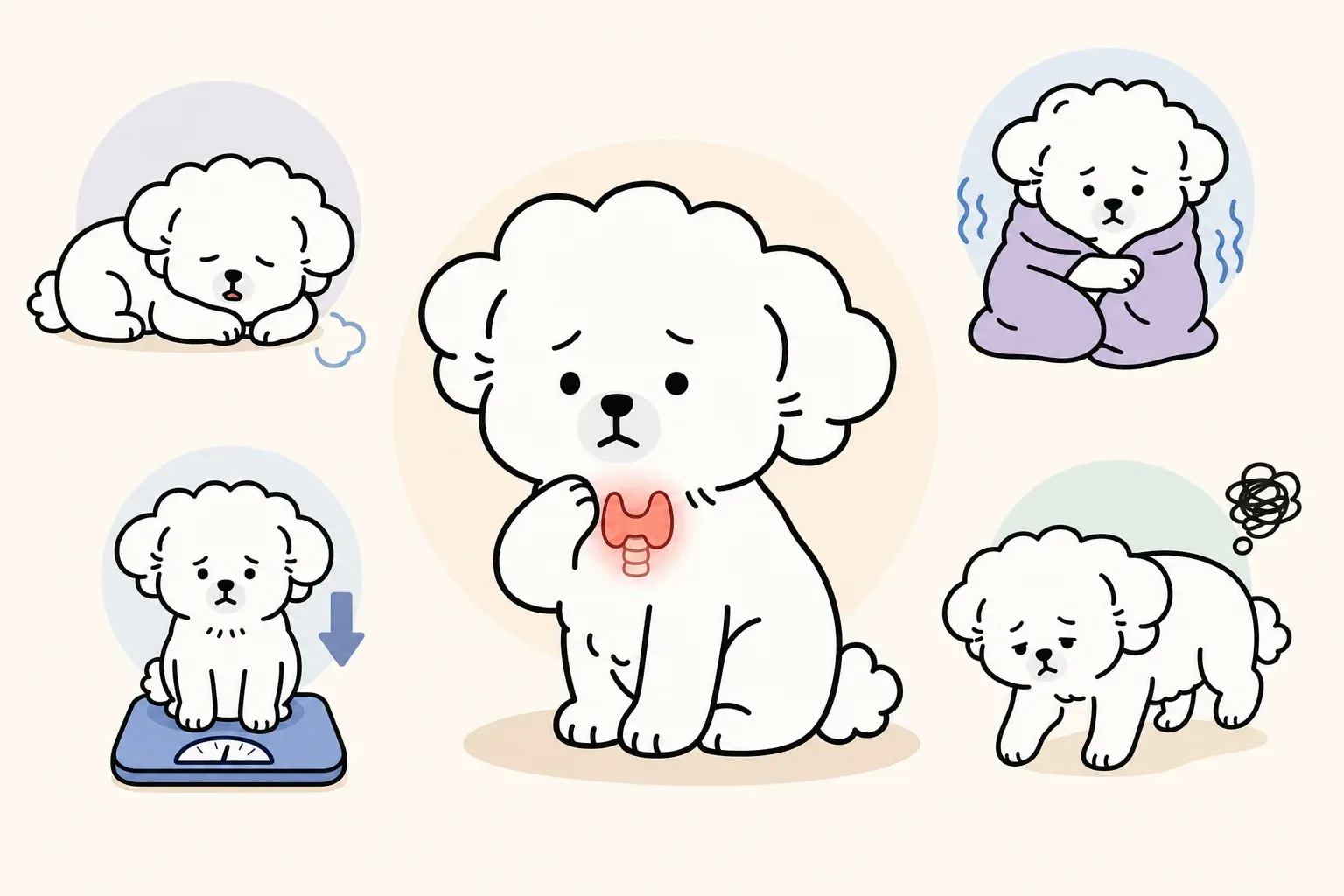
Your dog has gained weight despite no change in diet. The morning walks have shortened from thirty minutes to fifteen, not because you’re rushing, but because your dog simply stops and turns for home. The coat that was once thick and glossy is thinning at the flanks. You’ve started blaming the winter, the aging process, the slower metabolism that dogs develop around middle age.
Sometimes those explanations are correct. But when multiple signs converge in a middle-aged or older dog — weight gain, lethargy, hair loss, increased skin infections, a strange sadness in the facial expression — hypothyroidism belongs on the list of possibilities.
Hypothyroidism is among the most common endocrine (hormonal) disorders in dogs, affecting an estimated 0.2–0.8% of the canine population, with significantly higher rates in certain breeds. Because its symptoms overlap so heavily with normal aging, it is frequently diagnosed late or attributed to something else entirely. The good news: once correctly identified, it is one of the most straightforward hormonal conditions to manage — with a medication that costs less than most monthly heartworm preventives.
This guide answers the questions dog owners actually have: what the symptoms look like, how it’s diagnosed, what treatment involves, how much it costs, and what a well-managed dog’s life looks like long-term.
What Is Hypothyroidism in Dogs?
Hypothyroidism means the thyroid gland is producing insufficient quantities of thyroid hormone. The thyroid, a butterfly-shaped gland located in the neck on either side of the trachea (windpipe), produces two primary hormones: thyroxine (T4) and triiodothyronine (T3). These hormones act as a kind of metabolic accelerator for virtually every tissue in the body — regulating how quickly cells burn calories, how fast the heart beats, how efficiently the skin renews itself, and how well the brain functions.
When thyroid output drops, every system in the body slows down. The effects are gradual, insidious, and easy to miss individually — but when viewed together, they form a recognizable pattern.
How the Thyroid Gland Works
The thyroid does not operate independently. It’s controlled by a feedback loop involving the hypothalamus (in the brain) and the pituitary gland. When T4 and T3 levels fall, the pituitary releases thyroid-stimulating hormone (TSH), which signals the thyroid to produce more. In hypothyroidism, the thyroid gland fails to respond adequately to TSH — either because its tissue has been destroyed or because it has atrophied. Blood TSH levels become elevated as the pituitary tries harder to compensate, while T4 levels remain low.
This TSH-T4 relationship is central to laboratory diagnosis of the condition.
Why It Stops Producing Enough Hormones
Two mechanisms cause the vast majority of hypothyroidism cases in dogs:
Lymphocytic thyroiditis accounts for approximately 50% of cases. This is an immune-mediated condition in which the dog’s own immune system attacks and gradually destroys the thyroid gland. Antibodies against thyroglobulin (TgAA) are detectable in the blood during the early active phase, making TgAA testing a useful screening tool. There is a documented hereditary component in certain breeds, particularly Golden Retrievers, Doberman Pinschers, and Beagles.
Idiopathic thyroid atrophy is responsible for the other 50% of cases approximately. Here, the thyroid tissue degenerates and is replaced by fat without any detectable immune attack. The cause is not well understood, and there is no reliable early marker for this form.
Together, these two forms account for roughly 95% of canine hypothyroidism. The remaining 5% result from thyroid tumors (which more often cause hyperthyroidism or no hormone effect), rare congenital defects, or secondary hypothyroidism from pituitary disease.
Which Dogs Are Most at Risk?
Not all dogs have equal susceptibility to hypothyroidism. Age, breed, sex status, and body size all influence risk, and knowing where your dog falls on this spectrum helps set appropriate expectations for monitoring.
High-Risk Breeds
Large and medium breeds are disproportionately affected compared to small breeds — a contrast to many hormonal diseases where small dogs are more often implicated. The following breeds have documented higher prevalence rates in veterinary epidemiological studies:
| Breed | Notes |
|---|---|
| Golden Retriever | Among the highest prevalence; hereditary thyroiditis well-documented |
| Doberman Pinscher | High risk; OFA thyroid registry recommends screening |
| Irish Setter | Elevated prevalence in multiple studies |
| Miniature Schnauzer | One of the small breeds with notable risk |
| Dachshund | Elevated incidence documented in retrospective studies |
| Cocker Spaniel | Both American and English varieties show higher rates |
| Airedale Terrier | Consistently identified in breed-specific risk lists |
| Boxer | Emerging data suggests elevated prevalence |
| English Bulldog | Increasing recognition in clinical literature |
If your dog is one of these breeds, annual thyroid screening from middle age onward is a practical investment, not an overreaction.
Age, Size, and Spay/Neuter Considerations
Most dogs develop hypothyroidism between the ages of 4 and 10, with the peak incidence at 7–8 years. The condition is rarely seen in dogs under 2 years old (congenital hypothyroidism exists but is uncommon). Owners of dogs entering the 4–6 year range in a high-risk breed are entering the prime monitoring window.
Medium-to-large breeds are affected more commonly than toy breeds. However, small breeds are not immune — Miniature Schnauzers and Dachshunds appear on most high-risk lists despite their size.
Regarding sex: hypothyroidism affects males and females roughly equally in adulthood, unlike some hormonal conditions with strong sex skewing. Neutered dogs of both sexes show a modestly higher prevalence compared to intact dogs, though this relationship is not fully understood and should not be interpreted as a reason to avoid spaying or neutering.
Hypothyroidism vs. Normal Aging: How to Tell the Difference
This is the question that matters most for the average dog owner. Every aging dog slows down, gains a little weight, and develops a duller coat. The challenge is recognizing when these changes exceed what normal aging explains — and where the line between “getting older” and “thyroid disease” sits.
10-Point Hypothyroidism Symptoms Checklist
The following are the most commonly reported signs of hypothyroidism in dogs. No single sign is diagnostic — hypothyroidism is typically a multi-symptom pattern. A dog showing four or more of these signs, particularly in a middle-aged large breed, warrants a veterinary thyroid evaluation.
- Unexplained weight gain — gaining weight despite no increase in food intake, or inability to lose weight despite restriction
- Persistent lethargy — reduced energy and activity level that isn’t explained by age alone; reluctance to exercise
- Cold intolerance — seeking warm spots, reluctance to go outside in cool weather, preference for warm surfaces
- Bilateral alopecia — symmetric hair loss, particularly on the flanks, trunk, and tail base; the so-called “rat tail” pattern (hairless tail with a tuft only at the tip)
- Coat and skin changes — dry, brittle, or coarse coat; hyperpigmentation (skin darkening); thick or puffy-feeling skin; recurring superficial skin infections
- “Tragic face” expression — a drooping, sad appearance caused by myxedema (mucin accumulation) in the facial tissues, particularly around the eyes and forehead; one of the most characteristic but least recognized signs
- Slow heart rate (bradycardia) — detectable by a veterinarian; below 60 bpm in large breeds can indicate hypothyroidism
- Muscle weakness — difficulty rising from a lying position, stumbling, exercise intolerance disproportionate to what would be expected
- Mental dullness — reduced responsiveness, appearing “foggy,” slower to respond to commands; distinct from cognitive dysfunction syndrome in its association with other physical signs
- Recurrent skin and ear infections — bacterial and yeast infections that respond to treatment but keep returning; a hallmark of the immune and skin changes that hypothyroidism causes
If decreased activity and persistent lethargy in your dog have been gradual and progressive over months, thyroid evaluation is a reasonable early step — particularly if combined with weight gain.
Aging vs. Hypothyroidism vs. Cushing’s: Comparison Table
Three conditions are commonly confused with each other because they all produce overlapping signs in middle-aged to older dogs. This table helps distinguish them:
| Feature | Normal Aging | Hypothyroidism | Cushing’s Disease |
|---|---|---|---|
| Weight gain | Gradual, modest | Significant, diffuse | Abdominal pot-belly; muscle loss |
| Coat changes | Graying, mild thinning | Bilateral hair loss; dry, coarse | Thin skin, poor healing, hair loss |
| Energy level | Reduced gradually | Noticeably low; cold-seeking | Often normal energy; may be restless |
| Skin infections | Uncommon | Common, recurring | Thin skin prone to infection |
| Thirst/urination | Normal | Usually normal | Dramatically increased (PU/PD) |
| Facial appearance | Normal aging | ”Tragic face” myxedema | Pot-belly; normal face |
| Blood cholesterol | Normal | Elevated (hyperlipidemia) | Elevated |
| Key blood test | Annual wellness panel | Low T4, elevated TSH | High cortisol, ACTH stimulation test |
Cushing’s disease can actually suppress thyroid hormone levels on bloodwork — a phenomenon called euthyroid sick syndrome — which is one reason why thyroid testing should be interpreted in context and ideally by an internist or veterinary endocrinologist when results are ambiguous. For a detailed look at symptoms, diagnosis, and daily management of this condition, see the complete guide to Cushing’s disease in dogs.
Uncommon Symptoms Most Owners Miss
Beyond the classic signs, hypothyroidism can present with less expected manifestations that lead owners and sometimes clinicians down the wrong diagnostic path:
Reproductive abnormalities — irregular heat cycles, failure to cycle, or reduced litter size in intact females; reduced fertility and libido in intact males. These signs may appear before the classic metabolic signs.
Neurological signs — in severe or long-standing cases, peripheral neuropathy (weakness, stumbling), vestibular disease (head tilt, loss of balance), facial paralysis, or laryngeal paralysis. These are uncommon but under-recognized associations.
Corneal lipid deposits — cloudy patches in the cornea related to elevated blood lipids from hypothyroidism; often mistaken for cataracts or other primary eye disease.
Behavioral changes — increased aggression or anxiety has been reported in some hypothyroid dogs, though the evidence base is less robust than for the physical signs.
If your dog’s recurring skin or coat problems have not responded reliably to standard treatment, and particularly if other signs from the checklist above are present, thyroid function testing adds important diagnostic information.
How Is Hypothyroidism Diagnosed? Understanding Blood Tests
Diagnosis requires blood testing — clinical signs alone are suggestive but not conclusive. The testing hierarchy matters because not all thyroid tests are equally reliable, and false results are common when testing is incomplete.
T4, Free T4, TSH, and TgAA Explained
Total T4 (TT4) is the most basic thyroid screening test and is included in many routine wellness panels. It measures the total circulating thyroxine, both bound to proteins and free. A low TT4 is consistent with hypothyroidism but is not sufficient on its own for a definitive diagnosis. Stress, illness, and certain medications can suppress TT4 into the “hypothyroid” range in a dog with a perfectly healthy thyroid — this is euthyroid sick syndrome.
Free T4 (fT4) measures only the unbound, biologically active fraction of thyroxine. Free T4 is more specific for true hypothyroidism and is less affected by non-thyroidal illness. The recommended measurement method is equilibrium dialysis (fT4-ED), which is more reliable than some in-house analyzer methods. The combination of low fT4 by equilibrium dialysis + elevated TSH is considered the gold standard combination for diagnosing hypothyroidism.
TSH (thyroid-stimulating hormone) in dogs behaves similarly to humans — when thyroid output is low, the pituitary secretes more TSH to try to compensate. An elevated canine TSH alongside low T4 strongly supports a diagnosis. However, TSH is elevated in only 60–80% of confirmed hypothyroid dogs, meaning a normal TSH does not rule out the condition.
TgAA (thyroglobulin autoantibodies) — elevated TgAA indicates autoimmune destruction of the thyroid (lymphocytic thyroiditis). Positive TgAA in a young dog with mild or no symptoms is predictive of future hypothyroidism. The OFA thyroid registry uses TgAA to screen breeding candidates. TgAA can paradoxically cause a falsely elevated T4 result in some assays — another complexity in thyroid testing interpretation.
The most diagnostically reliable approach for a dog with clinical signs: measure TT4, fT4 by equilibrium dialysis, and TSH together as a panel, interpreted in the context of the clinical presentation.
Why Misdiagnosis Happens
Several factors make canine hypothyroidism harder to diagnose than it might seem:
Euthyroid sick syndrome is the most common pitfall. Dogs with serious non-thyroidal illnesses (infections, surgery, organ failure, diabetes) will often have suppressed T4 levels despite having a normal thyroid. Testing during any acute illness should be avoided or interpreted with extreme caution.
Drug interference is clinically significant. Phenobarbital (anti-seizure medication), glucocorticoids (prednisone, dexamethasone), sulfonamide antibiotics, and NSAIDs can all suppress T4 or TSH values. Dogs on long-term phenobarbital have up to a 40% incidence of biochemical hypothyroidism that may or may not be clinically significant.
Breed-specific reference ranges are an underappreciated issue. Sighthounds (Greyhounds, Whippets, Salukis) have naturally low T4 values that would be flagged as hypothyroid on standard laboratory reference ranges but are entirely normal for these breeds. Testing sighthounds with breed-standard reference ranges is essential.
If the clinical picture strongly suggests hypothyroidism but bloodwork is borderline, a therapeutic trial — giving levothyroxine for 8–12 weeks and monitoring for response — is sometimes diagnostically useful. Improvement in signs supports the diagnosis; no change suggests another cause.
Treatment: Medication, Dosing, and What to Expect
The treatment for hypothyroidism in dogs is synthetic levothyroxine (L-T4), administered orally. The concept is straightforward: replace what the thyroid is not producing. In practice, getting the dose right takes a few weeks of adjustment.
Levothyroxine Administration Guide
Levothyroxine is available in veterinary-formulated tablets specifically sized for dogs (common brands in the US include Soloxine and Thyro-Tabs). The key administration rules:
Give on an empty stomach. Canine levothyroxine absorption is significantly reduced when given with food — studies show absorption drops from a mean of roughly 20–30% fasting to less than 10% with food. Administer 30–60 minutes before a meal, or at least 3–4 hours after.
Twice daily dosing initially. Unlike human hypothyroidism (where once-daily dosing is standard), dogs have a shorter levothyroxine half-life and typically require twice-daily dosing for optimal control, especially during the first months of treatment. Some stable, well-controlled dogs can eventually transition to once daily — but this should be a veterinarian-guided decision based on monitoring results, not a convenience shortcut.
Consistency matters. Give at the same time(s) each day. Irregular dosing creates fluctuating hormone levels and unstable clinical control. If a dose is missed by a few hours, give it when remembered; if it’s almost time for the next dose, skip the missed one and resume normal schedule. Never double up.
Storage: Store at room temperature, away from moisture and direct light. Do not refrigerate unless directed on the label.
Dosage Adjustment Timeline
Levothyroxine dosing in dogs is weight-based (typically 0.01–0.02 mg/kg twice daily as a starting point) but must be individualized through monitoring. Dog absorption of oral levothyroxine is highly variable — some dogs absorb 10%, others 50% — which is why blood levels at a specific post-dose time are used to guide adjustment, not just clinical signs.
Initial recheck: 4–8 weeks. Blood is drawn 4–6 hours after the morning dose (at peak absorption time) to measure TT4 and fT4. The target is a TT4 in the upper half to slightly above the normal reference range at this 4–6 hour post-dose measurement. If the level is below target and signs haven’t improved, the dose increases. If above target and signs have resolved, the dose may be acceptable or can be reduced slightly.
Second recheck: 8–12 weeks. If the first adjustment was well-calibrated, most dogs are showing significant clinical improvement by this point — more energy, improving coat, weight stabilizing. A second panel confirms levels remain appropriate.
Ongoing monitoring: every 6 months. Once stable, twice-yearly blood monitoring is sufficient for most dogs. Senior dogs with concurrent conditions may benefit from quarterly monitoring.
Clinical improvement typically follows a predictable timeline: energy levels and cold intolerance improve first (often within 2–4 weeks), weight normalization occurs over 2–4 months, and coat regrowth is fully evident by 3–6 months.
Signs of Overmedication
Giving too much levothyroxine produces iatrogenic (treatment-caused) hyperthyroidism. Owners should recognize these warning signs between rechecks:
- Restlessness, hyperactivity, or anxiety
- Increased thirst and urination (mimicking diabetes)
- Rapid or irregular heartbeat (palpitations detectable when resting a hand on the chest)
- Increased appetite with weight loss
- Excessive panting, heat seeking reversed to heat avoidance
- Vomiting or diarrhea
If these signs appear, contact your veterinarian before the next scheduled recheck. Overmedication is managed by dose reduction and is not dangerous when caught early.
Is Hypothyroidism Treatment Lifelong?
Yes — in almost all cases, hypothyroidism in dogs requires lifelong daily medication. Because the underlying cause (immune destruction or atrophy of the thyroid gland) is not reversible, the gland does not recover function. The exception is secondary hypothyroidism caused by another hormonal disease — if the underlying condition is treated successfully, thyroid function may normalize. But for the vast majority of affected dogs, levothyroxine is a daily commitment for the remainder of the dog’s life.
This is worth framing honestly: a twice-daily tablet is a meaningful daily task. It requires routine, consistency, and attention. Owners who struggle with the regimen should discuss it with their veterinarian — techniques like pill pockets, compounded flavored chewables, and dose timing tricks can improve adherence significantly.
Long-Term Prognosis and Quality of Life
The prognosis for well-managed hypothyroid dogs is excellent. Dogs that receive appropriate dosing and regular monitoring have a completely normal life expectancy. The condition itself does not shorten a dog’s life when treated. The problems arise from undertreated or unmanaged hypothyroidism: secondary heart disease from elevated blood lipids, recurrent infections, muscle weakness that impairs mobility, and the cumulative toll of chronic metabolic slow-down.
With treatment, most owners describe a transformation: the dog they thought was “just aging” turns out to have been unwell. After a few months on levothyroxine, the return of energy, the restoration of coat quality, and the disappearance of the “tragic face” can be striking. If your senior dog’s nutritional needs and overall vitality have been a concern, addressing an underlying thyroid condition can be the single most impactful intervention.
Managing hypothyroidism is compatible with an active, full life for the dog — and for the owner.
Monitoring Schedule
| Timepoint | Tests | Purpose |
|---|---|---|
| 4–8 weeks after starting treatment | TT4 and fT4, drawn 4–6 hrs post-dose | Confirm dose adequacy |
| 8–12 weeks | TT4, fT4, full chemistry panel | Assess clinical response, check lipids |
| Every 6 months (ongoing) | TT4 and fT4 post-dose + chemistry panel | Catch dose drift; monitor for concurrent conditions |
| Any time signs change | TT4 and fT4 post-dose | Rule out overmedication or dose inadequacy |
How Much Does Treatment Cost?
One of the advantages of hypothyroidism compared to other chronic conditions is its relatively low ongoing management cost. The initial workup carries the highest expense; once the correct dose is established, monthly costs are modest.
Diagnostic Testing Costs
Initial diagnosis requires a combination of tests that are typically ordered as a panel:
| Test | Estimated US Cost |
|---|---|
| Comprehensive blood chemistry + CBC | $100–200 |
| Total T4 (TT4) | $30–60 |
| Free T4 by equilibrium dialysis | $75–150 |
| Canine TSH | $60–100 |
| TgAA (thyroglobulin autoantibodies) | $60–100 |
| Full thyroid panel (combined) | $150–350 |
| Initial veterinary consultation | $60–150 |
| Total initial workup | $250–500 |
Costs vary by geographic region, clinic type (general practice vs. specialty/university), and which tests the veterinarian selects. Some clinics bundle the thyroid panel with the annual wellness blood work, reducing the marginal cost.
Monthly Medication and Monitoring Costs
| Expense | Estimated US Cost |
|---|---|
| Levothyroxine (Soloxine / Thyro-Tabs, 30-day supply) | $20–50/month |
| Recheck bloodwork (twice yearly) | $80–200 per visit |
| Veterinary recheck consultation | $50–100 per visit |
| Monthly average (steady state) | $30–70/month |
Levothyroxine for dogs is considerably less expensive than insulin therapy for diabetes or the ongoing monitoring costs for Cushing’s disease. The main cost driver over time is the biannual blood monitoring, which is non-negotiable for safe long-term management.
Some owners of large dogs may find monthly medication costs at the higher end of the range due to higher doses required. Compounded preparations through a licensed veterinary compounding pharmacy can reduce costs in some cases.
Diet and Nutrition for Dogs with Hypothyroidism
Diet does not replace medication, and no dietary intervention can restore adequate thyroid hormone production. But nutrition plays an important supporting role in managing the metabolic consequences of hypothyroidism and optimizing the dog’s response to treatment.
Supporting Thyroid Health Through Nutrition
Several micronutrients are required for thyroid hormone synthesis and conversion:
Iodine is the essential element in thyroid hormone structure — T4 contains four iodine atoms, T3 contains three. Severe iodine deficiency causes hypothyroidism, but this is rare in dogs eating complete commercial diets. Iodine excess, paradoxically, can also impair thyroid function (Wolff-Chaikoff effect). Dogs with hypothyroidism should eat complete, balanced diets with appropriate iodine levels — not supplemented with kelp or high-iodine extras without veterinary guidance.
Selenium is required for the enzyme that converts T4 to the more active T3 in peripheral tissues. Selenium deficiency impairs this conversion. Most quality commercial dog foods provide adequate selenium.
Zinc deficiency impairs thyroid hormone metabolism and contributes to skin and coat problems independently. Breeds prone to zinc deficiency (Siberian Huskies, Alaskan Malamutes) may have compounding skin issues.
Regarding grain-free diets and other restricted formats: there is no current evidence that grain-free feeding worsens thyroid function or is beneficial. The priority is a complete and balanced diet from a reputable manufacturer.
Managing Weight on Thyroid Medication
Weight management in hypothyroid dogs requires patience. During the months before thyroid levels normalize, the metabolic rate remains low and weight reduction is difficult. Caloric restriction during this phase can be helpful but should not be extreme — the goal is preventing further weight gain while the medication takes effect.
Once T4 levels are properly controlled:
- Caloric intake can be gradually reduced toward maintenance levels. Use body condition scoring (BCS) at each recheck, aiming for a BCS of 4–5/9.
- Low-fat diet is recommended for dogs with documented hypercholesterolemia (elevated blood lipids) — a very common comorbidity. Reducing dietary fat reduces lipid levels more quickly and lowers the risk of pancreatitis. Your veterinarian may recommend a prescription low-fat therapeutic diet.
- Exercise supports weight management and metabolic health and helps restore muscle tone lost during the hypothyroid phase. Start gradually and increase as energy levels return.
- Feeding timing should be coordinated with medication dosing — since levothyroxine must be given on an empty stomach, establish a feeding schedule that keeps at least a 30-minute window between medication and meals.
Hypothyroidism can co-occur with canine diabetes in some dogs, in which case dietary management becomes more complex. Concurrent diagnosis should be evaluated and managed with veterinary endocrinology guidance.
Can Hypothyroidism Be Prevented?
There is no proven way to prevent hypothyroidism in genetically predisposed dogs. The immune-mediated form (lymphocytic thyroiditis) follows a pathway that is determined before clinical signs appear, and the atrophic form has no identified preventable trigger.
What is practical: catching it early and managing it before complications develop.
When to Start Screening
For dogs in high-risk breeds (see table above), the following screening protocol is reasonable and widely endorsed by veterinary internists:
Annual thyroid panel from age 4–5 onward. Including TT4 and ideally TgAA in annual blood work allows trending over time. A dog with gradually declining TT4 over several years, even if still within the normal range, is exhibiting a pattern worth monitoring. TgAA positivity in a young asymptomatic dog predicts future clinical hypothyroidism in a significant proportion of cases — allowing early preparation rather than reactive diagnosis.
For non-high-risk breeds, routine senior wellness panels (beginning around age 7) that include a thyroid screen are a practical standard of care.
Home Monitoring Tips
Between veterinary visits, owners can watch for early signs by tracking measurable changes at home:
- Monthly weight check. A consistent home scale (using the same scale, same time of day, same pre/post-meal status) catches gradual weight drift that annual vet visits can miss. A gain of more than 5% of body weight over 2–3 months without dietary change warrants a veterinary check.
- Coat condition scoring. Take photos of your dog’s coat from the same angle quarterly — flanks, tail base, and face. Visual progression of thinning or dullness is often easier to see in side-by-side comparison than in real time.
- Activity and willingness to exercise. A simple journal notation of walk duration and enthusiasm provides objective data that is far more useful to a veterinarian than “seems less active.” Dogs with unexplained activity decline deserve early evaluation.
- Skin and ear infections. Note each episode, the treatment used, and whether it fully resolved. A pattern of recurring infections on the skin or ears that fully respond to treatment but return within weeks is a clinical red flag for underlying hypothyroidism.
Tracking these parameters creates a baseline and documents trends — both of which help veterinarians recognize a developing condition earlier and with more confidence.
References
- 1. Hypothyroidism in Dogs — VCA Animal Hospitals
- 2. Hypothyroidism — Cornell University College of Veterinary Medicine
- 3. ACVIM Consensus Statement: Hypothyroidism in Dogs
- 4. WSAVA Guidelines for the Diagnosis and Management of Thyroid Disease in Dogs
- 5. Canine Hypothyroidism: Diagnosis and Treatment — Today's Veterinary Practice
- 6. Dixon RM, et al. Epidemiological, Clinical, Haematological and Biochemical Characteristics of Canine Hypothyroidism. Vet Rec. 1999.
- 7. Feldman EC, Nelson RW. Canine and Feline Endocrinology and Reproduction. 3rd ed. Saunders.
- 8. MSD Veterinary Manual — Hypothyroidism in Dogs
FAQ
Is hypothyroidism in dogs hereditary?
Can spaying or neutering cause hypothyroidism in dogs?
Can I use human levothyroxine for my dog?
Will my dog's hair grow back after starting treatment?
Can a dog have both hypothyroidism and another condition at the same time?
Related Articles
Dog Lethargy Causes: When Slowing Down Signals More Than Just Aging
Learn how to distinguish normal dog tiredness from true lethargy, identify dog lethargy causes by age, and know which signs need emergency vet care.
Dog Weight Loss Diet Plan: 5 Steps to Slim Down Safely
Dog weight loss diet plan: BCS scoring, RER calorie targets, high-protein meals, low-impact exercise, and weekly tracking for safe, steady weight loss.
Dog Skin Allergies: Types, Symptoms, and Management Guide
Dog skin allergies: 3 types, symptom patterns by location, 8–12 week elimination diet protocol, and treatment options including JAK inhibitors.