 Cirius Petpedia
 Dog Cushing's Disease: Vet Guide to Symptoms and Treatment
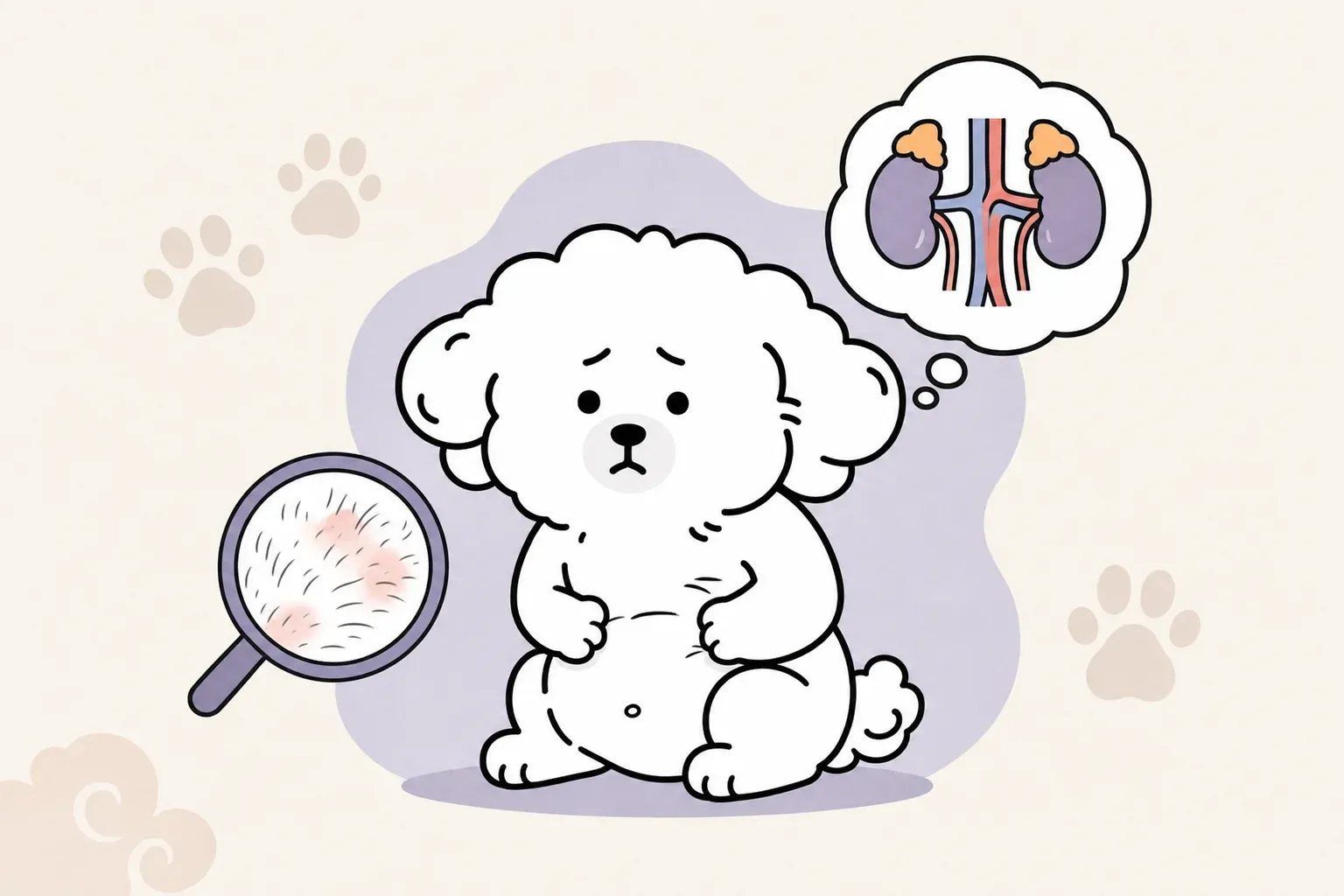
If your dog has been drinking water in large amounts, waking you up for late-night bathroom trips, or developing a noticeably rounder belly despite no change in diet, Cushing’s disease may be worth discussing with your veterinarian. Also called hyperadrenocorticism, dog Cushing’s disease is one of the most common endocrine disorders in middle-aged and senior dogs — and one of the most frequently misidentified as routine aging.
This guide covers the full owner journey: understanding what goes wrong hormonally, recognizing the symptoms, navigating diagnosis, managing treatment, and supporting your dog’s daily quality of life.
What Is Cushing’s Disease in Dogs?
Cushing’s disease (hyperadrenocorticism) is a condition in which the body produces chronically excessive amounts of cortisol, the primary glucocorticoid hormone manufactured by the adrenal glands. Cortisol plays essential roles in metabolism, immune function, and stress response — but sustained overproduction disrupts nearly every organ system.
The condition most commonly affects dogs between 6 and 12 years of age. Certain breeds appear predisposed, including Poodles, Dachshunds, Boxers, Boston Terriers, and Beagles, though any dog can develop it.
Pituitary-Dependent vs. Adrenal-Dependent Cushing’s
Understanding the source of excess cortisol matters for treatment planning.
Pituitary-dependent hyperadrenocorticism (PDH) accounts for roughly 80–85% of cases. A benign microadenoma (small tumor) in the pituitary gland secretes excessive adrenocorticotropic hormone (ACTH), which continuously stimulates both adrenal glands to overproduce cortisol. Because the pituitary tumor is usually tiny (under 10 mm), most dogs tolerate it well for years.
Adrenal-dependent hyperadrenocorticism (ADH) accounts for 15–20% of cases and involves a tumor — either benign adenoma or malignant carcinoma — directly on one adrenal gland. The tumor autonomously secretes cortisol regardless of pituitary signals. ADH tends to occur in larger breeds and carries a different prognosis than PDH.
Iatrogenic Cushing’s: The Steroid Connection
A third form — iatrogenic hyperadrenocorticism — is entirely caused by prolonged external steroid use (prednisone, prednisolone, dexamethasone). When a dog receives high-dose or long-term glucocorticoids for allergies, immune conditions, or inflammation, the body responds as though it is overexposed to cortisol, producing an identical clinical picture.
Iatrogenic Cushing’s resolves when steroids are tapered appropriately under veterinary guidance. It is critical that steroids are never stopped abruptly, as this can trigger a life-threatening adrenal crisis.
Recognizing the Signs: Cushing’s Disease Symptom Checklist
Because symptoms develop gradually over months or years, they are easy to attribute to normal aging. A systematic checklist approach helps owners recognize patterns that warrant veterinary attention.
| Symptom | What You May Observe |
|---|---|
| Polydipsia (excessive thirst) | Emptying the water bowl multiple times daily |
| Polyuria (excessive urination) | Frequent outdoor trips; indoor accidents in housetrained dogs |
| Polyphagia (excessive appetite) | Persistent hunger; counter-surfing; food-guarding behavior |
| Pot-bellied abdomen | Pendulous belly; muscle wasting despite weight gain |
| Symmetrical hair loss | Bilateral alopecia on trunk; hair does not grow back after clipping |
| Skin changes | Thin, fragile skin; comedones (blackheads); calcinosis cutis |
| Panting | Excessive panting unrelated to heat or exercise |
| Lethargy | Reluctance to exercise; sleeping more than usual |
| Recurrent infections | Skin infections, urinary tract infections, ear infections |
| Testicular atrophy / anestrus | Reproductive changes in intact animals |
Dogs with signs that could reflect pain or discomfort alongside the above list deserve prompt evaluation, as multiple conditions can coexist.
Excessive Thirst, Urination, and Appetite
Polydipsia-polyuria (PU/PD) is the most consistently reported early sign — documented in up to 85% of canine Cushing’s cases. Cortisol interferes with antidiuretic hormone (ADH) action in the renal collecting ducts, causing dilute, high-volume urine. Compensatory thirst follows. The polyphagia is similarly cortisol-driven: glucocorticoids stimulate appetite centers and accelerate gluconeogenesis, leaving dogs in a persistent hunger state.
Pot-Bellied Appearance and Muscle Wasting
Cortisol causes fat to redistribute centrally (hepatomegaly and abdominal fat accumulation) while simultaneously breaking down muscle protein (gluconeogenesis). The result is the classic pendulous abdomen seen in textbook photos — not from fat gain, but from weakened abdominal muscles and an enlarged liver pushing the belly outward. Dogs may actually lose lean body mass while appearing heavier.
Symmetrical Hair Loss and Skin Changes
The hair loss pattern in Cushing’s is distinctly bilateral and symmetrical, concentrated on the trunk and sparing the head and limbs. Hair follicles enter a telogen (resting) state under cortisol excess and fail to re-enter the growth phase. Simultaneously, cortisol thins the dermis and suppresses collagen synthesis, producing fragile skin prone to bruising and secondary infection. Calcinosis cutis — calcium deposits visible as firm, white plaques on the skin — occurs in a subset of dogs and is considered pathognomonic for the condition.
For targeted guidance on managing the skin consequences, the comprehensive dog allergy and skin care guide covers concurrent dermatological management strategies.
Panting, Lethargy, and Recurrent Infections
Chronic cortisol elevation suppresses the immune system (immunosuppressive doses are, after all, why steroids are prescribed therapeutically). Dogs with Cushing’s are predisposed to bacterial skin infections (pyoderma), urinary tract infections, and opportunistic fungal infections. The panting is multifactorial: muscle weakness in the respiratory muscles, hepatomegaly restricting diaphragm expansion, and central nervous system effects of cortisol all contribute.
How Cushing’s Disease Is Diagnosed
No single test definitively diagnoses Cushing’s in all circumstances. Diagnosis relies on a combination of clinical signs, routine lab abnormalities, and functional adrenal testing. False positives and false negatives occur with all available tests — which is why clinical judgment alongside lab results is essential.
Baseline Blood Work and Urinalysis
Routine screening typically reveals a characteristic pattern:
- Elevated ALP (alkaline phosphatase): Often markedly elevated — sometimes 5–10 times normal — due to a steroid-induced isoenzyme. Found in approximately 90% of dogs with Cushing’s.
- Mild elevation of ALT and cholesterol
- Stress leukogram: Mature neutrophilia, lymphopenia, eosinopenia
- Dilute urine (USG < 1.015): Reflecting cortisol-induced interference with ADH
- Proteinuria: Cortisol-induced glomerular hypertension
These findings alone are not diagnostic — they raise suspicion and prompt adrenal-specific testing. Dogs with concurrent kidney health concerns may show overlapping lab abnormalities, requiring careful interpretation.
ACTH Stimulation Test and LDDS Test
Two functional tests are the workhorses of Cushing’s diagnosis:
ACTH Stimulation Test: Measures the adrenal glands’ cortisol response to an injection of synthetic ACTH. In Cushing’s, the adrenal glands are hypertrophied and over-respond, producing an exaggerated post-stimulation cortisol level. This test is also used to monitor treatment response on trilostane. Sensitivity for PDH is approximately 80–85%.
Low-Dose Dexamethasone Suppression (LDDS) Test: A small dose of dexamethasone should suppress pituitary ACTH and cortisol production in healthy dogs. Dogs with PDH fail to suppress normally. The LDDS has slightly higher sensitivity (~90–95%) for PDH than the ACTH stimulation test, but takes 8 hours to complete.
Neither test reliably differentiates PDH from ADH on its own. The high-dose dexamethasone suppression (HDDS) test or urine cortisol:creatinine ratio may be used as adjuncts.
Imaging: Ultrasound and CT for Tumor Localization
Abdominal ultrasound helps distinguish PDH from ADH: PDH typically shows bilaterally enlarged adrenal glands, while ADH presents as a unilateral adrenal mass with possible atrophy of the contralateral gland.
CT or MRI of the brain is indicated when a large pituitary macroadenoma is suspected (neurological signs, very high ACTH levels). CT of the abdomen is often used pre-operatively when adrenalectomy is planned for ADH cases.
Treatment Options: Medication, Surgery, and Monitoring
Treatment selection depends on the form of Cushing’s, the dog’s overall health, the owner’s capacity for monitoring, and the size of any identified tumor.
Trilostane (Vetoryl): How It Works and What to Expect
Trilostane is the FDA-approved first-line medical treatment for both PDH and ADH in dogs. It works by blocking the enzyme 3β-hydroxysteroid dehydrogenase, an enzyme required for cortisol (and aldosterone) synthesis in the adrenal cortex. Unlike mitotane — which destroys adrenal tissue — trilostane is reversible and dose-adjustable.
Typical protocol:
- Starting dose: 1–3 mg/kg once daily with food (food increases absorption and consistency)
- ACTH stimulation test performed 10 days, 4 weeks, and 12 weeks after starting therapy
- Dose adjusted to achieve post-ACTH cortisol of 1.45–5.4 µg/dL (40–150 nmol/L) per ACVIM consensus guidelines
- Ongoing monitoring: ACTH stimulation test every 3–6 months once stable
Clinical improvement — reduced thirst, urination, appetite, and panting — typically becomes apparent within the first 4–6 weeks of effective therapy. Hair regrowth may take several months longer.
Ongoing trilostane therapy also has implications for liver metabolism and hepatic enzyme profiles, which your veterinarian will monitor through routine bloodwork.
Side Effects and Emergency Warning Signs
The most important risk of trilostane is adrenal insufficiency (hypoadrenocorticism) — an Addisonian crisis. This occurs when cortisol suppression overshoots the therapeutic target, either due to dose being too high or individual sensitivity.
Warning signs requiring same-day emergency care:
- Sudden profound weakness or collapse
- Vomiting and/or diarrhea
- Complete loss of appetite
- Shaking or muscle tremors
- Signs of abdominal pain
Other trilostane side effects include:
| Side Effect | Estimated Frequency | Action |
|---|---|---|
| Mild lethargy after dosing | Common (transient) | Monitor; usually self-limiting |
| Decreased appetite | Common | Recheck ACTH; may need dose reduction |
| Adrenal necrosis | Rare but serious | Permanent hypoadrenocorticism; requires lifelong steroid supplementation |
| Elevated potassium (hyperkalemia) | Uncommon | Monitor electrolytes |
| Skin lesions worsening initially | Occasional | Usually resolves with treatment; differentiate from calcinosis |
All dogs on trilostane should have an emergency cortisol injection (dexamethasone sodium phosphate) available at home — discuss this with your veterinarian at initiation of therapy.
When Surgery Is Considered: Adrenal Tumors
For adrenal-dependent Cushing’s caused by a localized adrenal adenoma, adrenalectomy (surgical removal) offers the possibility of cure. Surgical outcomes are best when:
- The tumor appears unilateral and well-defined on CT
- There is no evidence of vascular invasion or metastasis
- The dog is otherwise healthy enough for general anesthesia
- The procedure is performed at an institution experienced in adrenal surgery
Adrenalectomy carries significant perioperative risk, including adrenal crisis, hemorrhage, and thromboembolic events. The contralateral adrenal gland will have been suppressed by the tumor’s autonomous cortisol output and requires months to recover; perioperative steroid supplementation is mandatory.
Pituitary macroadenomas causing neurological signs may be considered for radiation therapy, which can reduce tumor size and improve neurological function in select cases.
Daily Management for Dogs with Cushing’s Disease
Medical treatment controls cortisol levels, but daily management at home determines quality of life between vet visits. This section is where most guides fall short — the details of living with a Cushing’s dog day to day.
Diet: Low-Fat, High-Protein, Low-Sodium Principles
Cushing’s disease creates a specific nutritional challenge: elevated cortisol promotes fat accumulation, muscle catabolism, hypertension, and pancreatitis risk simultaneously.
Core dietary principles:
- Low fat (under 10% dry matter for most dogs): Cortisol elevates blood triglycerides, and the combination of hyperlipidemia plus steroid effects dramatically increases pancreatitis risk. A low-fat diet is the single most important dietary modification.
- Moderate-to-high quality protein: Cortisol-driven muscle wasting requires dietary protein to offset, but protein quality matters more than quantity. Look for named meat sources (chicken, turkey, fish) as primary ingredients.
- Low sodium: Secondary hypertension is common in Cushing’s. Minimizing dietary sodium supports blood pressure management. Avoid high-sodium treats, processed meats, or sodium-rich table scraps.
- Low simple carbohydrates: Cortisol promotes insulin resistance. Diets high in refined carbohydrates can exacerbate glucose dysregulation.
For dogs who also need weight-specific support, the dog weight loss diet guide provides additional structure for calorie management. Older dogs may benefit from the dietary frameworks discussed in the senior dog nutrition guide.
Specific veterinary therapeutic diets formulated for metabolic or liver disease are often appropriate and worth discussing with your vet.
Exercise and Weight Management
Exercise is beneficial but must be tailored to the dog’s current muscle strength and energy level.
Practical approach:
- Short, consistent walks rather than infrequent long outings. Muscle atrophy from cortisol means fatigue comes quickly.
- Low-impact activity (walking, gentle swimming) to preserve joint health alongside muscle mass.
- Avoid heat and humidity: Cushing’s dogs pant excessively and thermoregulate poorly. Morning or evening walks are preferable.
- Track body weight monthly. Both unexplained weight loss (worsening catabolism) and weight gain (treatment failure) are clinically relevant signals.
Skin and Coat Care
Thin, fragile Cushing’s skin requires proactive protection:
- Gentle shampoos: Use pH-balanced, hypoallergenic formulas. Harsh products further compromise the already thinned skin barrier.
- Avoid trauma: Cushing’s skin bruises easily. Be cautious with collars, harnesses, and grooming tools. Padded harnesses distribute pressure better than neck collars.
- Infection monitoring: Examine the skin weekly for early signs of pyoderma (redness, pustules, crusting). Early detection means earlier treatment.
- Calcinosis cutis management: These calcium deposits are painful and infection-prone. Your vet may recommend topical DMSO gel or specific wound care for active lesions. Calcinosis typically regresses with effective cortisol control over months.
Stress Reduction and Environmental Comfort
Cortisol is itself a stress hormone. While Cushing’s dogs already have elevated cortisol regardless of psychological stress, minimizing additional physiological stressors supports overall wellbeing and immune function.
Practical adjustments:
- Maintain predictable daily routines (feeding, walking, sleep times).
- Provide easy access to the outdoors for frequent urination — the hallmark polyuria is not voluntary and punishing accidents is counterproductive.
- Orthopedic bedding supports the muscle-wasted dog’s joints; consider low-entry beds that don’t require jumping.
- Keep the environment cool. Excessive panting is physically exhausting and distressing.
- Minimize exposure to ill animals, as immune suppression makes Cushing’s dogs more susceptible to infectious disease.
Comorbidities to Watch For
Cushing’s disease does not exist in isolation. Cortisol’s wide-ranging effects make several concurrent and secondary conditions substantially more likely.
Diabetes, Urinary Tract Infections, and Hypertension
Diabetes mellitus: Cortisol is a glucocorticoid — it antagonizes insulin action and promotes gluconeogenesis, raising blood glucose. Approximately 10% of dogs with untreated Cushing’s develop concurrent diabetes mellitus. Management of both conditions simultaneously is complex, as effective Cushing’s treatment often reduces insulin requirements. Dogs showing both conditions need close coordination between cortisol control and insulin dosing. The dog diabetes management guide provides detailed context on monitoring and insulin adjustment.
Urinary tract infections (UTIs): Immune suppression, dilute urine (poor bacteriostatic environment), and possible glucosuria create ideal conditions for recurrent bacterial UTIs. Many Cushing’s dogs have subclinical UTIs detectable only by urine culture — a reason why routine urine cultures (not just dipstick urinalysis) are recommended every 3–6 months. Dogs with persistent UTIs may need long-term low-dose antibiotic prophylaxis under veterinary guidance.
Systemic hypertension: Cortisol increases vascular tone and sodium retention, elevating blood pressure. Studies report hypertension in 31–86% of dogs with untreated PDH. Uncontrolled hypertension causes target organ damage to the kidneys, eyes (hypertensive retinopathy), and brain. Blood pressure measurement should be part of every Cushing’s monitoring visit.
Calcinosis Cutis and Thromboembolism Risk
Calcinosis cutis results from cortisol-induced changes in calcium and phosphorus metabolism that cause abnormal calcium deposition in the skin. Lesions are firm, white-to-gray plaques found most commonly on the back, neck, groin, and axillae. They are painful, prone to ulceration and secondary infection, and slow to resolve even with good cortisol control. Topical treatments can help, but patience is required.
Pulmonary thromboembolism (PTE): Cortisol excess promotes a hypercoagulable state by increasing clotting factors and reducing anticoagulant proteins. PTE — blood clots in the lung vasculature — is a well-documented and potentially fatal complication of Cushing’s. Clinical signs include sudden onset of respiratory distress, exercise intolerance, or acute collapse. Dogs with Cushing’s undergoing surgery or prolonged immobility are at especially elevated risk. Some veterinarians prescribe low-dose aspirin or other anticoagulants in high-risk cases; evidence for routine prophylaxis is limited, but the risk should be discussed with your vet.
Prognosis and Life Expectancy
Cushing’s disease is not a death sentence — but it does require lifelong commitment to monitoring and management. Setting realistic, evidence-based expectations helps owners make informed decisions.
Survival Times with Treatment: What Studies Show
Published veterinary data on trilostane-treated PDH is encouraging:
- Helm et al. (2011, J Vet Intern Med) reported a median survival time of 662 days in dogs with PDH treated with trilostane.
- Pérez-Alenza et al. (2006, Vet Rec) reported a median survival of 930 days from diagnosis in a trilostane cohort.
- Dogs that achieved good cortisol control within the first 3 months had longer survival times than those who remained poorly controlled.
For adrenal-dependent disease, prognosis varies significantly:
- Dogs with benign adrenal adenomas successfully removed surgically can achieve long-term remission — sometimes years.
- Dogs with adrenal carcinoma have a guarded prognosis; median survival post-adrenalectomy is approximately 12–18 months, though some cases do much better.
Unmanaged Cushing’s — left untreated — is associated with progressive organ damage, increased infection risk, and significantly shortened lifespan. Treatment, even when imperfect, is generally associated with improved quality of life and extended survival.
For context on managing hypothyroid disease, another common canine endocrine disorder that occasionally coexists with Cushing’s, the principles of long-term hormonal monitoring are similar.
Home Monitoring Checklist and Vet Visit Schedule
Consistent home monitoring catches problems early and reduces emergency presentations.
Daily observations to track:
- Water intake (quantify if possible — normal is approximately 50–100 ml/kg/day)
- Number of urination events (and any accidents)
- Appetite and food consumption
- Energy level and willingness to exercise
- Panting frequency and duration
- Any vomiting or diarrhea
- Skin condition: new lesions, redness, discharge
Monthly:
- Body weight
- Muscle condition assessment (ribs easily felt vs. requiring pressure)
- Skin and coat review (hair regrowth progress, new lesions)
Recommended vet visit schedule (stable, well-controlled dog):
- ACTH stimulation test: Every 3–6 months
- Full bloodwork and urinalysis: Every 6 months
- Blood pressure: Every visit
- Urine culture (not just dipstick): Every 6 months
- Abdominal ultrasound: Annually (monitor adrenal size, liver, kidneys)
If your dog shows any emergency warning signs listed in the trilostane section above — sudden weakness, vomiting, or collapse — contact your veterinarian or an emergency clinic immediately without waiting for a scheduled appointment.
References
- 1. Pérez-Alenza MD, et al. Factors influencing the outcome of pituitary-dependent hyperadrenocorticism treated with trilostane. Vet Rec. 2006
- 2. Helm JR, et al. A prospective evaluation of trilostane versus mitotane for the treatment of pituitary-dependent hyperadrenocorticism in dogs. J Vet Intern Med. 2011
- 3. Feldman EC. Evaluation of twice-daily lower-dose trilostane treatment administered orally in dogs with naturally occurring hyperadrenocorticism. J Am Vet Med Assoc. 2011
- 4. ACVIM Consensus Statement: Treatment of Pituitary-Dependent Hyperadrenocorticism in Dogs. J Vet Intern Med. 2013
- 5. Merck Veterinary Manual: Hyperadrenocorticism in Animals
- 6. FDA Consumer Update: Treating Cushing's Disease in Dogs
- 7. PetMD: Cushing's Disease in Dogs: Symptoms, Diagnosis, and Treatment
FAQ
What are the earliest signs of Cushing's disease in dogs?
How is Cushing's disease in dogs diagnosed?
How long can a dog live with Cushing's disease?
What are the most dangerous side effects of trilostane in dogs?
Can diet help manage Cushing's disease in dogs?
Related Articles
Is Your Dog Just Getting Old, or Could It Be Hypothyroidism? Warning Signs Every Owner Should Know
Hypothyroidism in dogs symptoms, diagnosis, treatment costs, and medication guide — an owner-friendly FAQ backed by ACVIM and WSAVA veterinary guidelines.
Is Your Dog Drinking Too Much Water? Diabetes Signs and Blood Sugar Management Guide
Dog diabetes symptoms, insulin therapy, diet management, home blood sugar monitoring, and complication prevention — a vet-backed owner's guide.

Dog Kidney Disease Diet: Stage-by-Stage Feeding Guide and Best Foods
Complete IRIS stage-specific feeding guide for dogs with kidney disease — best foods, foods to avoid, prescription diet selection, homemade recipes, and supplements.