 Cirius Petpedia
 Dog Fever Symptoms: How to Check Temperature and What to Do
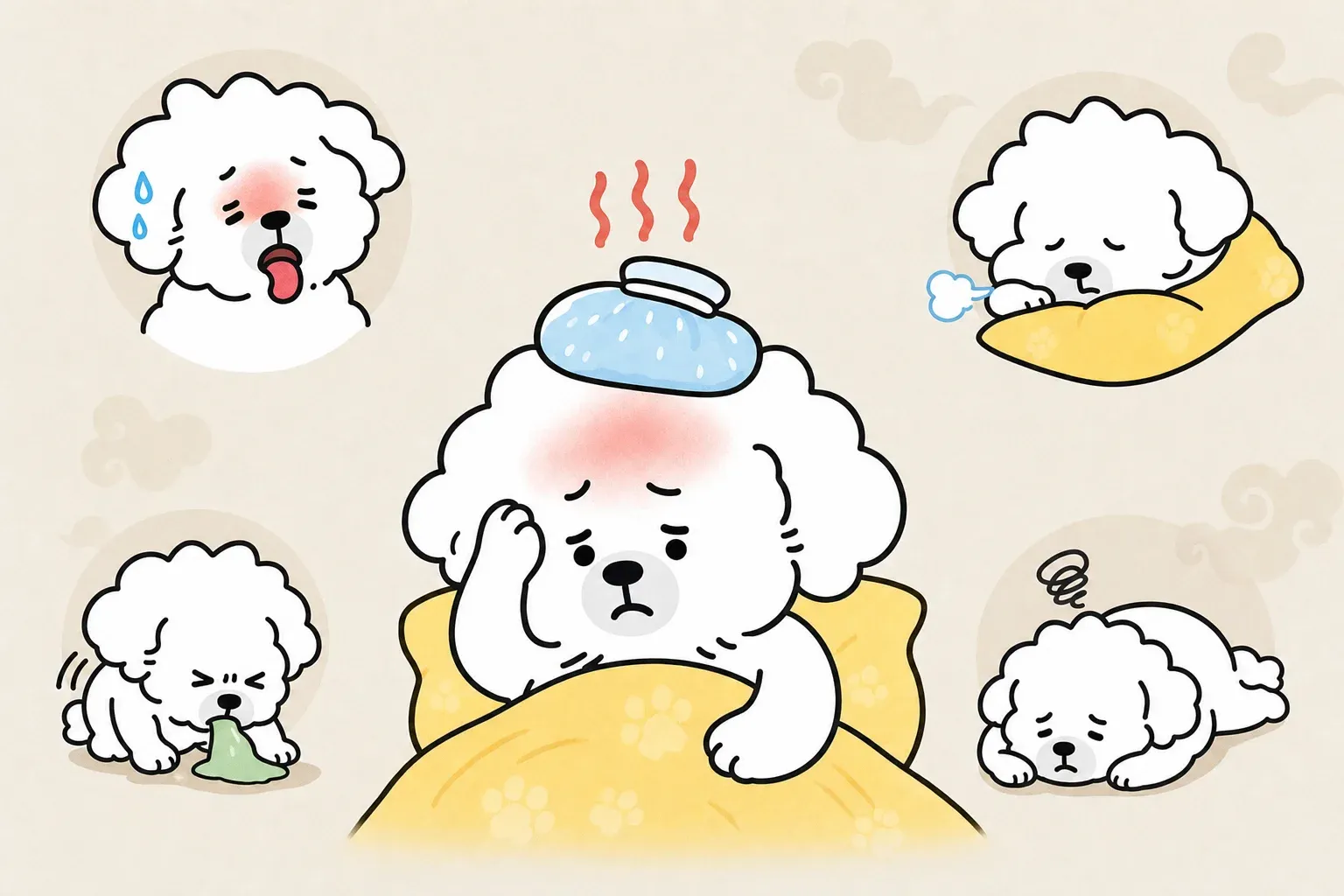
Your dog is quieter than usual, lying still when they’d normally follow you around the house. You reach down and notice their ears feel unusually warm. You wonder: do they have a fever?
Fever in dogs is one of those health situations where the right response depends entirely on what the thermometer says — and on understanding what the number actually means. A dog running 103°F needs monitoring and comfort care. A dog at 106°F needs emergency veterinary attention, full stop. The gap between those two outcomes is narrower than many owners realize.
This guide covers how to recognize dog fever symptoms, how to measure temperature correctly at home, what drives fever in dogs (including the often-missed conditions), and a clear protocol for what to do at each temperature threshold.
Normal Dog Temperature and Fever Threshold
Understanding what counts as a fever requires knowing what normal looks like first — and that baseline shifts slightly depending on age and size.
Normal Range for Adult Dogs (101–102.5°F / 38.3–39.2°C)
The Merck Veterinary Manual defines normal rectal temperature in adult dogs as 101.0°F to 102.5°F (38.3°C to 39.2°C). This is the established clinical reference point used in veterinary practice across North America.
Two factors create variability even within the normal range: time of day and activity level. A dog’s temperature naturally rises slightly in the late afternoon and after exercise. A reading of 102.8°F in a dog that just played fetch outdoors means something different from the same reading in a dog that has been resting quietly — context matters when interpreting borderline results.
Temperature Differences in Puppies and Senior Dogs
Puppies have a less mature thermoregulatory system and may run body temperatures at the upper edge of the adult normal range. Senior dogs, particularly those with reduced metabolic activity, sometimes trend toward the lower end. These differences are modest — typically within half a degree — but worth keeping in mind when evaluating borderline readings.
| Life Stage | Typical Normal Range | Notes |
|---|---|---|
| Puppy (under 1 year) | 101.0–102.5°F / 38.3–39.2°C | May trend toward upper range |
| Adult dog | 101.0–102.5°F / 38.3–39.2°C | Standard clinical reference |
| Senior dog (7+ years) | 100.5–102.5°F / 38.0–39.2°C | May trend slightly lower |
| Small breeds | 101.0–102.5°F / 38.3–39.2°C | No significant breed size difference in normal range |
| Large/giant breeds | 101.0–102.5°F / 38.3–39.2°C | Slightly more prone to overheating in exertion |
When Does It Become a Fever? Key Temperature Thresholds
Fever (pyrexia) is defined as a body temperature elevated above the normal range due to an internal mechanism — the immune system deliberately raising the set point, typically in response to infection or inflammation.
| Temperature | Category | Response |
|---|---|---|
| 101.0–102.5°F / 38.3–39.2°C | Normal | No action needed |
| 102.6–103.0°F / 39.2–39.4°C | High-normal / borderline | Monitor; recheck in 1 hour |
| 103.0–104.0°F / 39.4–40.0°C | Low-grade fever | Home monitoring; contact vet if persists >24 hours |
| 104.0–105.0°F / 40.0–40.6°C | Moderate fever | Vet visit recommended same day |
| 105.0–106.0°F / 40.6–41.1°C | High fever | Urgent vet care |
| 106°F+ / 41.1°C+ | Emergency | Immediate emergency clinic |
How to Tell If Your Dog Has a Fever
A thermometer gives you the number. But most owners first notice something is wrong through behavioral changes — before they’ve ever reached for a thermometer. Recognizing those behavioral dog fever symptoms is the starting point.
Behavioral Signs That May Indicate Fever
The behavioral presentation of fever in dogs is consistent across causes. Watch for combinations of these signs rather than single indicators in isolation:
- Reduced activity and lethargy — lying down more than usual, reluctance to engage with walks, toys, or greetings. If your dog is showing signs of unusual fatigue and low energy, fever is one of the conditions worth ruling in or out early.
- Loss of appetite — especially notable in food-motivated dogs; skipping meals or eating significantly less than normal
- Shivering or trembling — the body’s mechanism to generate heat during fever. Shivering can have multiple causes, but when accompanied by other fever signs, it warrants a temperature check.
- Rapid or labored breathing — at rest, without obvious exertion or heat exposure
- Warm or hot ears to the touch
- Seeking out cool surfaces — lying on tile, pressing against walls, avoiding their bed
- Watery eyes or mild nasal discharge
- Uncharacteristic quietness from a normally vocal dog
No single behavioral sign confirms fever. A dog can be lethargic without fever, and some dogs with low-grade fever show minimal behavioral change. The combination of multiple signs — especially lethargy plus appetite loss plus warmth to the touch — justifies taking a temperature reading.
How to Check Without a Thermometer
Physical examination methods can raise suspicion but cannot replace a thermometer. Here is what each check can and cannot tell you:
Ears: Healthy ears are warm; fever ears feel noticeably hotter — particularly the inner pinna. Useful as a rough indicator, but ear infections also cause localized warmth.
Nose: The “warm, dry nose = fever” belief is not medically reliable. A dog’s nose varies between moist and dry based on sleep, environment, and hydration. A dry nose alone means little.
Gums: Healthy gums are pink and moist. Tacky or dry gums suggest dehydration. Flushed, bright-red gums may indicate fever or heatstroke — but this sign requires immediate evaluation regardless of cause.
Belly and inner thighs: The hairless skin here is sensitive to temperature changes. Noticeably increased warmth across the belly, combined with behavioral signs, is worth acting on.
Paw pads: Less reliable than belly or ear checks, but a dog with markedly warm pads at rest (not after exercise) is worth monitoring.
The critical limitation: you cannot distinguish a temperature of 103.5°F from 106°F through touch. When behavioral signs and physical checks suggest fever, use a thermometer.
How to Take Your Dog’s Temperature Accurately
Accurate temperature measurement at home is achievable with the right equipment and technique. It is worth having a dedicated pet thermometer before you need it.
Using a Rectal Thermometer (Most Accurate)
Rectal measurement remains the clinical gold standard for dogs. Digital rectal thermometers designed for pets or human use both work effectively; the key is using one exclusively for your dog.
What you need: digital thermometer, petroleum jelly (Vaseline) or water-based lubricant, a helper if your dog is squirmy
Step-by-step:
- Have a helper gently hold your dog still, ideally with the dog standing or lying on their side
- Apply a small amount of lubricant to the tip of the thermometer
- Gently lift your dog’s tail and insert the thermometer approximately 1 inch (2.5 cm) into the rectum — not forcefully, just past the anal sphincter
- Hold in place until the thermometer beeps (typically 10–60 seconds for digital models)
- Remove, read the display, and clean the thermometer with alcohol before storing
If your dog resists strongly or becomes distressed, do not force the measurement. An ear or axillary (armpit) reading with documented limitations is better than a struggle that could harm you or your dog.
Ear Thermometers vs Non-Contact Infrared Options
Alternative thermometer types are available and sometimes easier to use, but all carry accuracy trade-offs:
| Thermometer Type | Accuracy | Ease of Use | Notes |
|---|---|---|---|
| Digital rectal | Highest (±0.1°F) | Moderate | Gold standard; requires restraint and lubrication |
| Ear (tympanic) | Moderate (±0.5–1°F) | Easy | Must be positioned correctly in the ear canal; less reliable in dogs with ear infections or heavy ear hair |
| Non-contact infrared | Lowest (±1–2°F) | Easiest | Only measures skin surface temperature; not reliable for fever detection in dogs |
| Axillary (armpit) | Low (±1–2°F) | Easy | Adds approximately 1°F to result to estimate core temperature; too imprecise for clinical decisions |
For any borderline reading from an ear thermometer, confirm with a rectal measurement before making care decisions.
Common Causes of Fever in Dogs
Fever is a symptom, not a diagnosis. The immune system raises body temperature as a deliberate response to a perceived threat — usually infection or inflammation. Identifying the underlying cause determines whether fever resolves on its own or requires specific treatment.
Infections and Inflammatory Conditions
Infection is the most common driver of fever in dogs. Relevant categories include:
Bacterial infections: Urinary tract infections, skin infections (pyoderma), dental abscesses, and tick-borne diseases (Lyme disease, anaplasmosis, ehrlichiosis, Rocky Mountain spotted fever) all commonly cause fever. Tick-borne diseases deserve specific attention because early symptoms — lethargy, fever, reduced appetite — can look like a generic viral illness, and effective antibiotic treatment exists once the cause is identified.
Viral infections: Canine distemper and parvovirus can cause high fever in unvaccinated dogs. In vaccinated populations, less severe viral respiratory illnesses — including kennel cough (infectious tracheobronchitis) — can produce mild fever alongside coughing and nasal discharge.
Fungal infections: Less common but important in certain geographic regions. Valley fever (Coccidioidomycosis) in the southwestern U.S. and histoplasmosis in the Mississippi and Ohio River valleys can cause persistent fever, weight loss, and respiratory signs.
Inflammatory conditions: Immune-mediated diseases (immune-mediated hemolytic anemia, polyarthritis, systemic lupus) trigger fever through inflammatory pathways rather than direct infection. These require specific immunosuppressive treatment and can be challenging to diagnose.
Post-Vaccination Fever and Immune Responses
Post-vaccination fever is one of the most common causes of transient fever in otherwise healthy dogs, particularly in young puppies receiving their core vaccine series.
The mechanism is straightforward: the immune system responds to vaccine antigens by mounting a controlled inflammatory response — the same process that builds lasting immunity. A mild fever (typically 103–104°F / 39.4–40°C) appearing within 24 to 48 hours of vaccination and resolving within one to two days is within the expected range of normal immune response, according to AVMA vaccination guidelines.
For context on what’s typical by vaccine type and how to monitor for abnormal reactions, the dog vaccination schedule guide provides a complete overview of core and non-core vaccines, timing, and what to watch for post-vaccination.
When post-vaccination fever requires veterinary contact:
- Temperature exceeds 104°F (40°C)
- Fever persists beyond 48 hours
- Vomiting, hives, facial swelling, or difficulty breathing accompanies the fever
- Dog is unwilling to eat or drink for more than 24 hours
Fever of Unknown Origin (FUO)
Fever of Unknown Origin (FUO) is a defined clinical entity in veterinary medicine — fever that persists for three or more weeks despite initial diagnostic workup, where no clear cause is found despite thorough investigation. Research published in Veterinary Clinics of North America: Small Animal Practice identifies the primary categories in dogs as: immune-mediated disease, occult infection, and neoplasia (cancer).
FUO is not a diagnosis of exclusion to pursue at home — it is a clinical classification that emerges after initial tests (bloodwork, urinalysis, imaging) have been completed and returned without a clear answer. If your dog has had recurring or persistent fever over weeks, the workup for FUO involves consultation with an internal medicine specialist and often more advanced diagnostics including bone marrow evaluation, joint fluid analysis, and tick-panel serology.
The practical takeaway: fever that does not resolve within a few days, or that recurs after appearing to resolve, warrants thorough veterinary investigation rather than prolonged home monitoring.
Fever vs Heatstroke: Understanding the Difference
These two conditions both cause dangerously elevated body temperature but develop through completely different mechanisms — and critically, require different responses. Treating heatstroke with approaches designed for fever (or vice versa) wastes time and can worsen outcomes.
How Each Condition Develops
Fever (pyrexia) is an internal, regulated process. The hypothalamus — the brain’s temperature-control center — raises the body’s set point in response to pyrogens (substances signaling infection or inflammation). The body generates and retains heat to reach the new set point. Cooling measures work against this mechanism and may not be effective while the underlying cause is active.
Heatstroke (hyperthermia) is an external failure of thermoregulation. The body absorbs more heat from the environment than it can dissipate, overwhelming cooling mechanisms. The hypothalamic set point is not elevated — the body simply cannot keep up. This is why the treatment difference is so significant: cooling is the immediate priority in heatstroke.
For a complete guide to recognizing high-risk situations, cooling protocols, and prevention strategies for heatstroke, see the dog summer heatstroke prevention guide.
Why Treatment Approaches Differ
| Feature | Fever | Heatstroke |
|---|---|---|
| Mechanism | Immune system raises set point | Environmental heat overwhelms thermoregulation |
| Typical onset | Gradual (hours to days) | Rapid (minutes to 1 hour) |
| Environment | Any environment, any weather | Hot environment, direct sun, enclosed spaces |
| Preceding signs | Illness signs (lethargy, appetite loss) | Normal activity then rapid collapse |
| Temperature range | 103–106°F (39.4–41.1°C) | Often 106°F+ (41.1°C+) |
| Neurological signs | Rare at lower fever | Common (disorientation, seizure, collapse) |
| Immediate home response | Cool cloths, water, rest; monitor | Immediate active cooling + emergency transport |
| Recovery trajectory | Gradual; resolves with treatment of cause | Medical emergency; organ damage risk is high |
A dog that has been in a hot car for 20 minutes with a temperature of 107°F has heatstroke. A dog that has been quietly at home for two days with a temperature of 103.5°F and reduced appetite has fever. The correct response to each differs completely. When in doubt — especially with rapid onset or extreme temperatures — treat as heatstroke and get to a veterinarian immediately.
How to Reduce Your Dog’s Fever at Home
Home care for a febrile dog is appropriate within a defined temperature range and time window. Outside that range — or when other serious symptoms are present — home management is not sufficient.
Temperature-Based Response Guide
103°F–104°F (39.4°C–40.0°C): Monitoring and comfort care
At this level, the immune system is doing its work. The fever itself is not yet dangerous. Focus on:
- Keep your dog in a cool, calm environment
- Offer fresh, cool water frequently — fever increases fluid loss, and adequate hydration during illness is critical to recovery
- Apply cool (not cold or icy) wet towels to the paw pads and inner thighs — areas with less fur where heat exchange is more effective
- Allow rest without forcing exercise
- Monitor temperature every 1–2 hours
- If fever persists beyond 24 hours without improvement or the dog refuses water, contact your veterinarian
104°F–105°F (40.0°C–40.6°C): Active cooling + same-day vet contact
At this range, the fever is significant and warrants same-day veterinary evaluation unless the cause is known and already being treated under vet guidance.
- Begin active cooling: cool wet towels on paw pads, groin, and armpits
- Encourage water intake; offer small amounts frequently if the dog refuses to drink independently
- Use a fan to improve air circulation
- Do not use ice baths — rapid cooling can cause shivering (which generates heat) and peripheral vasoconstriction (which traps heat in core organs)
- Call your veterinarian; same-day evaluation is appropriate
105°F+ (40.6°C+): Urgent care required
Temperatures above 105°F are approaching organ-damage territory. Begin cooling measures immediately and transport to a veterinary clinic without delay. Call ahead so the clinic can prepare.
106°F+ (41.1°C+): Emergency — do not wait
This is a veterinary emergency. Begin cooling en route (wet towels, air conditioning), but get to an emergency clinic immediately. Do not attempt to manage this at home.
Never Give Human Medications: Tylenol, Ibuprofen, and Aspirin Risks
This point warrants clear emphasis: no human pain or fever medication is safe for dogs as a fever reducer.
Acetaminophen (Tylenol, Paracetamol): Toxic to dogs at doses that would be routine for humans. Causes liver damage and methemoglobinemia — a condition where red blood cells cannot carry oxygen — leading to weakness, breathing difficulty, and brown-colored gums. According to the Merck Veterinary Manual, even one regular-strength tablet can cause toxicity in a small dog. There is no safe dose of acetaminophen to give a dog at home.
Ibuprofen (Advil, Motrin): NSAIDs designed for humans inhibit prostaglandins differently in dogs than in humans, producing severe gastrointestinal ulceration (including perforation), kidney damage, and neurological effects. Toxicity can develop with a single dose.
Aspirin: While aspirin has some historical veterinary use, it is no longer recommended for home use in dogs due to GI risks, its interference with platelet function, and the availability of safer veterinary alternatives. It does not provide a safe margin for owners to dose at home.
If your dog needs antipyretic or anti-inflammatory medication, your veterinarian has options designed for canine physiology — including meloxicam and carprofen — that are safe when prescribed at appropriate doses.
When to See the Vet
Fever requires veterinary attention more often than owners initially expect. The decision of when to call depends on the temperature reading, the duration, and what other symptoms are present alongside the fever.
Signs That Require Immediate Emergency Care
These presentations require immediate contact with an emergency veterinary clinic — do not wait for a regular appointment:
- Temperature at or above 106°F (41.1°C)
- Fever combined with difficulty breathing or labored respiration at rest
- Fever combined with collapse or inability to stand
- Pale, white, blue, or yellow-tinged gums at any temperature
- Fever combined with severe vomiting or bloody diarrhea
- Fever combined with seizures or sudden disorientation
- Fever combined with a visibly distended, hard, or painful abdomen
- Fever in a puppy under 6 months that reaches 104°F or higher
A structured emergency first aid guide for dogs provides the step-by-step protocol for stabilizing your dog before and during transport to an emergency clinic.
When a Vet Visit Within 24 Hours Is Recommended
These presentations are not emergencies, but prompt evaluation is appropriate rather than prolonged home monitoring:
- Temperature of 103°F–105°F (39.4°C–40.6°C) persisting more than 12–24 hours without obvious cause
- Any fever in a senior dog (8+ years) or a dog with known chronic illness
- Fever accompanied by lameness or joint swelling — may indicate infectious polyarthritis or immune-mediated disease
- Fever in an unvaccinated dog or a dog with uncertain vaccination history
- Fever following potential toxin exposure (suspected ingestion of plants, medications, or household chemicals)
- Recurring fever — fever that resolves for a day or two and then returns
- Fever combined with significant lethargy and appetite loss lasting more than 24 hours
When excessive panting accompanies fever, it is the dog’s primary cooling mechanism working under strain — another sign that the condition needs evaluation rather than watchful waiting.
Fever in dogs is the immune system doing exactly what it is designed to do — but it does not always resolve without help, and the line between manageable and dangerous is a matter of degrees. Knowing your dog’s normal temperature range, having a reliable thermometer available, and understanding the response at each threshold gives you the tools to make confident, informed decisions when it matters.
When in doubt, call your veterinarian. A phone triage call takes minutes and provides guidance tailored to your dog’s specific situation — which is always more valuable than generalizing from any written guide, including this one.
This article is for informational purposes only and does not constitute veterinary medical advice. If your dog is showing signs of fever — particularly fever above 104°F, any emergency symptoms described above, or fever lasting more than 24 hours — consult a licensed veterinarian promptly. All home care recommendations here are supportive measures only and do not replace professional veterinary assessment and treatment.
References
- 1. Fever in Dogs — Merck Veterinary Manual
- 2. Fever in Dogs: Causes, Symptoms & Treatment — American Kennel Club (AKC)
- 3. Acetaminophen Toxicosis in Animals — Merck Veterinary Manual
- 4. Fever of Unknown Origin in Dogs — Veterinary Clinics of North America: Small Animal Practice
- 5. Post-Vaccination Reactions in Dogs — AVMA Principles of Vaccination
- 6. Heat Stroke in Dogs — Merck Veterinary Manual
FAQ
What is a normal temperature for a dog?
How can I tell if my dog has a fever without a thermometer?
Can I give my dog Tylenol or ibuprofen for fever?
What causes fever in dogs after vaccination?
When does a dog fever become an emergency?
Related Articles

Dog Heat Stroke Prevention: Critical Temperature Thresholds and Warning Signs Every Owner Must Know
Learn the 4-tier temperature risk system, breed-specific vulnerabilities, pavement heat dangers, and step-by-step emergency protocol to prevent and treat dog heat stroke this summer.

Dog First Aid: 7 Emergencies Every Owner Must Handle
Dog first aid for 7 emergencies: CPR, choking, bleeding, fractures, poisoning, heatstroke, and seizures. Size-specific steps and first aid kit checklist.

Dog Shivering Causes: Normal Trembling vs. Warning Signs
Learn 8 common dog shivering causes — cold to toxins. 3-tier urgency checklist, seizure vs. trembling comparison, and age-specific guidance included.