 Cirius Petpedia
 Dog Moving Stress: How to Help Your Dog Adjust to a New Home
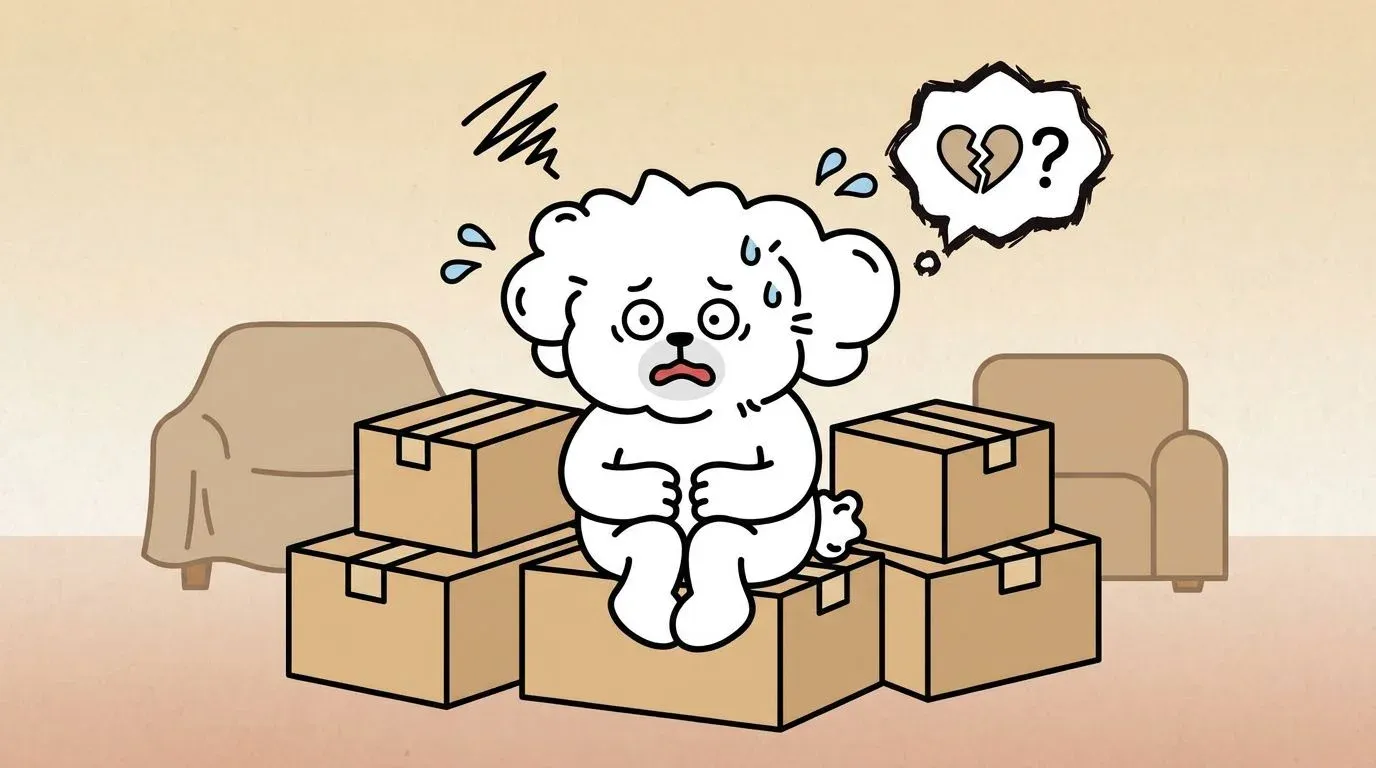
Moving ranks among the most disruptive events in a dog’s life. Where humans process change through language and planning, dogs navigate the world through scent, spatial memory, and routine — all three of which get erased the moment they cross the threshold of a new home.
Understanding what is actually happening in your dog’s brain and body during this transition — and having a concrete plan for each stage — makes the difference between a dog that settles comfortably within a few weeks and one that develops lasting anxiety problems.
This guide covers the full picture: the behavioral science of moving stress, what to do before and during the move, a phase-by-phase adaptation framework, how to address common post-move behavior changes, breed and age-specific considerations, and an evidence-based comparison of calming tools.
Why Moving Is So Stressful for Dogs
The Science Behind Moving Stress: Cortisol and Scent Disruption
A dog’s ability to feel safe in an environment depends on two overlapping systems: a stored scent map and a predictable routine. When both are disrupted simultaneously, the hypothalamic-pituitary-adrenal (HPA) axis activates a sustained stress response, releasing cortisol throughout the day rather than in the normal brief spikes associated with acute threats.
Research published in Frontiers in Veterinary Science confirms that salivary and urinary cortisol levels remain measurably elevated in dogs placed in novel environments for 3 to 7 days, with some individuals showing elevation beyond 2 weeks. Chronic elevated cortisol suppresses appetite, disrupts sleep architecture, impairs immune function, and — critically — makes the nervous system more reactive to additional stressors.
The scent component is often underestimated by owners. Dogs process olfactory information in a brain region proportionally 40 times larger than the equivalent human structure. They navigate space through detailed chemical maps built over months. A new home smells of strangers, foreign animals, cleaning products, and construction materials — all potential threat signals. Your dog is not being dramatic; their threat-detection system is responding to genuinely unfamiliar chemical data.
Signs Your Dog Is Stressed After Moving
Stress responses in dogs present across three categories: behavioral, physiological, and social. Being able to recognize each helps you distinguish normal adjustment from signals that need intervention.
Behavioral signs:
- House training accidents despite months or years of reliability
- Pacing, circling, or inability to settle
- Destructive chewing or digging, especially near exits
- Excessive vocalization — howling or barking, especially at night
- Marking on furniture, walls, or vertical surfaces in the new home
- Escape attempts or hypervigilance near doors and windows
Physiological signs:
- Reduced appetite or complete refusal of food
- Panting without physical exertion
- Increased shedding within the first week
- Loose stools or intermittent digestive upset
- Yawning and lip-licking as displacement behaviors
Social signs:
- Increased clinginess and shadow-following
- Alternatively, unusual withdrawal and hiding
- Reduced interest in play, toys, or affection
- Startling easily at sounds that would not previously have caused concern
Mild versions of any of these signs are expected within the first week. The concerning threshold is persistence: signs that do not begin improving by day 10 to 14, or that worsen over time, warrant veterinary evaluation to rule out underlying medical factors.
Preparing Your Dog Before the Move
Crate Training and Travel Preparation
If your dog is not already crate trained, the weeks before a move are the right time to start — not moving day itself. A crate-trained dog has a portable safe space that carries familiar scent into the new environment from the first moment.
Follow a gradual introduction: begin with the crate door open and meals placed progressively further inside, advance to brief closed-door sessions while you remain visible, then build duration over 10 to 14 days. For a detailed step-by-step protocol, see our crate training guide — the same principles apply whether you are starting from scratch or refreshing a lapsed habit.
For long-distance moves, practice car rides with the crate secured in the vehicle. Dogs that are anxious travelers need repeated short, positive exposures before a 4-hour move-day drive. On car travel safety, including appropriate restraint systems, never transport a dog unrestrained in an open truck bed or loose in the back seat.
Familiarizing Your Dog With the New Environment
If geography allows, visit the new home with your dog before the official move date. Even a single 30-minute visit during which your dog can sniff freely without pressure begins building a scent map. Bring a worn t-shirt and leave it in a corner — your scent anchors the space as safe.
If a preview visit is not possible, bring familiar objects: the dog’s bed, a recently used blanket, and toys. Unwashed bedding carries concentrated scent information and should be transported intact, not laundered before the move.
Keep pre-move routines as stable as possible. Packing activity can itself trigger anxiety in perceptive dogs. Maintain regular walk times, mealtimes, and play sessions even as boxes accumulate.
Updating ID, Microchip, and Vet Records
This step is often delayed until after the move but should be completed proactively. A stressed dog in an unfamiliar environment is at elevated escape risk.
Before you move:
- Update your address with your microchip registry. The two largest US databases are HomeAgain (homeagain.com) and AKC Reunite (akcreunite.org). If you are unsure which registry holds your chip, use the AAHA Universal Pet Microchip Lookup at lookup.aaha.org.
- Ensure your dog’s tags include a current cell phone number, not a landline at your old address.
- Transfer veterinary records to a practice near the new location, or confirm your current vet can send records electronically on short notice.
After you arrive:
- Update your dog license. Most US cities and counties require license update within 30 days of an address change. License requirements vary by state — check local regulations, as some jurisdictions require new licensing even within the same state.
- Register with a local veterinarian within the first month.
Moving Day: Keeping Your Dog Safe and Calm
Setting Up a Safe Room or Boarding
The single most effective thing you can do for your dog on moving day is remove them from the chaos entirely. Professional movers entering and exiting, open front doors, shifting furniture, and unfamiliar people create a sensory environment almost designed to induce stress.
Option 1 — Boarding or daycare: A familiar boarding facility provides professional supervision, a stress-free environment, and eliminates escape risk entirely. Book in advance; moving-day bookings in spring and summer (peak moving season) fill quickly.
Option 2 — Safe room: Designate one room in the current home (bathroom, bedroom) that movers will not need to access. Set up your dog there with familiar bedding, food, water, and background white noise or calming music. Post a visible sign on the door: “Dog inside — do not open.” Check on your dog every 1 to 2 hours.
Option 3 — Dog sitter: A trusted friend or family member who can take your dog for the day is an excellent solution, particularly for dogs that find boarding itself stressful.
Travel Safety Tips for Moving Day
Whether the drive is 20 minutes or 20 hours, safe transport is non-negotiable:
- Crate-secured dogs have significantly better outcomes in vehicle accidents than unrestrained dogs.
- Do not feed a full meal within 3 hours of travel for dogs prone to motion sickness.
- Build in bathroom breaks every 2 to 3 hours for long drives, always on a secure leash before opening the car door.
- Keep the car temperature between 65 and 70°F; never leave a dog unattended in a vehicle.
- Bring enough of the dog’s current food and water from the old home — abrupt food changes compound digestive stress.
For anxious travelers, talk to your veterinarian about short-term anti-nausea or mild sedative medication before a long haul. Benadryl (diphenhydramine) is sometimes suggested informally but is not a veterinary-recommended anxiolytic and has inconsistent efficacy in dogs.
Helping Your Dog Settle Into the New Home
The 3-3-3 Rule: Understanding the Adjustment Timeline
The 3-3-3 Rule originated in the dog rescue community as a framework for helping adopters set realistic expectations. It has since been widely adopted by professional trainers and veterinary behaviorists because it accurately maps onto what we understand about canine environmental adaptation — specifically, the time required for cortisol to normalize and new scent-cognitive maps to stabilize.
The framework describes three phases:
| Phase | Timeline | Dog’s Internal State |
|---|---|---|
| Overwhelmed | Days 1–3 | Shut down, hypervigilant, or erratic; instincts dominate |
| Adjusting | Weeks 1–3 | Learning routines, beginning to read environment as safe |
| Settled | Months 1–3 | Genuine confidence, behavioral patterns normalized |
This is a guideline, not a schedule. Anxious breeds, senior dogs, and dogs with prior trauma may take longer in each phase. The goal is not to rush your dog through the timeline but to understand where they are and what kind of support is most helpful at each stage.
Days 1–3: Creating a Safe Base
The first 72 hours are the highest-stress period. Your primary goal is to prevent overwhelm, not to facilitate exploration.
What to do:
- Confine access to one or two rooms initially. Giving a stressed dog full access to a large unfamiliar home increases, not decreases, anxiety.
- Set up the “anchor zone” — crate or bed in a quiet area with minimal foot traffic. Place the dog’s unwashed bedding here.
- Maintain the same mealtimes. If appetite is reduced, offer a slightly smaller portion of familiar food. Do not switch foods.
- Take short, calm on-leash walks in the immediate vicinity to begin scent-mapping the neighborhood.
- Avoid immediately introducing the dog to new people, other pets, or social events.
What to avoid:
- Forcing exploration of rooms that cause visible distress
- Inviting guests or hosting moving-in gatherings
- Changing food, routines, or sleep location simultaneously
- Interpreting your dog’s shutdown as indifference — withdrawal is often how dogs self-regulate under acute stress
Weeks 1–3: Gradual Exploration and Routine Building
After the first 3 to 5 days, most dogs will show early signs of curiosity: sniffing more purposefully, initiating play, or beginning to settle for longer periods. This signals the start of the adjustment phase.
Expanding access: Add one room at a time. Allow your dog to thoroughly sniff and investigate each new space before moving to the next. Watch body language — a tail held low, pinned ears, or persistent floor-sniffing without relaxation indicates the dog needs more time in the current area.
Rebuilding routine: Routine is one of the most powerful tools for reducing canine anxiety. Walk times, meal times, and training sessions should be as consistent as possible, ideally at the exact same hours as in the old home. Predictability signals safety to a dog’s nervous system in a way that no calming product can replicate.
Neighborhood exploration: Gradually extend walks. Let your dog sniff at every stop sign, fire hydrant, and fence post — olfactory exploration is how dogs build their new spatial map. Resist the urge to move quickly. A 20-minute walk that covers a block but includes 50 sniff stops is more therapeutically valuable than a brisk 30-minute circuit.
Re-establishing training: Light, familiar obedience exercises (sit, down, stay, recall) are useful not because they teach discipline but because they activate the prefrontal cortex and provide positive reinforcement — both of which are calming for stressed dogs. Keep sessions short (5 minutes) and highly rewarding.
Months 1–3: Full Adjustment and Confidence
By 6 to 8 weeks, most dogs are behaviorally close to their baseline. Full adjustment — where the dog demonstrates genuine confidence in all areas of the home and routinely relaxed in the new neighborhood — typically lands between 8 weeks and 3 months.
Signs your dog has fully adjusted include: resuming normal play behavior, voluntarily exploring all areas of the home, sleeping soundly through the night without restlessness, and maintaining consistent house training with no accidents for 2 or more weeks.
If your dog is still showing significant anxiety symptoms at 6 to 8 weeks, schedule a veterinary behavioral consultation. This is particularly important if separation-related distress is worsening rather than improving.
Common Problem Behaviors After Moving and How to Address Them
House Training Regression
Regression in an otherwise reliably house-trained dog is among the most common and understandably frustrating post-move challenges. From the dog’s perspective, the new home does not smell like a home yet — the scent cues that trigger appropriate bathroom behavior are absent, while the novelty of unfamiliar furniture may actually cue marking behavior.
What’s normal: Occasional accidents during the first 1 to 2 weeks, especially in corners or near unfamiliar furniture.
When to worry: Frequent daily accidents beyond 3 weeks, or a sudden return to accidents after a stable period, may indicate a urinary tract infection or stress-related gastrointestinal issue — both warrant veterinary attention.
How to address it: Essentially re-approach the house training process as if the dog is new to the home. Take the dog outside on a fixed schedule (every 2 to 3 hours for medium to large breeds, more frequently for small breeds). Reward outdoor eliminations generously. Supervise indoors constantly; if supervision is not possible, confine. Clean indoor accidents immediately with an enzymatic cleaner — standard household cleaners do not fully break down the odor compounds that dogs (and cats) use as bathroom cues. For a complete retraining protocol, see our potty training guide.
Separation Anxiety Flare-Ups
Moving is a well-documented trigger for new-onset separation anxiety or significant worsening of pre-existing anxiety. The mechanism is straightforward: in an unfamiliar environment where the owner is the primary safe anchor, time alone feels genuinely threatening.
Signs of separation anxiety specifically include: distress behaviors (howling, barking, destructive behavior, house training accidents) that occur primarily or exclusively when the dog is left alone, and that begin within minutes of the owner’s departure.
The temptation after a difficult move is to compensate by staying home more. While some extra presence is genuinely helpful in the first week, establishing a pattern of never leaving your dog alone will make the inevitable return to normal schedules much harder. Begin practicing short absences (5 to 10 minutes) from the first week, building duration gradually. For a full desensitization protocol, see our separation anxiety guide.
Excessive Barking and Marking
Both behaviors reflect the same underlying state: a dog that has not yet established the new environment as its territory. Unfamiliar sounds, the presence of other animals’ scent left behind by previous residents, and the general novelty of a new building trigger territorial communication.
For barking: Do not inadvertently reinforce attention-seeking night barking by providing immediate social contact. A brief, calm reassurance followed by return to sleep position is appropriate; lengthy comforting reinforces the anxiety. If specific sounds are triggers (neighbors, traffic, wildlife), identify them and consider a white noise machine positioned near the dog’s sleeping area.
For marking: As outlined in the house training section, thorough enzymatic cleaning of any previous marking site is essential. Manage access to rooms where marking has occurred until the dog’s scent (via bedding and furniture) has had time to establish ownership. Intact males are considerably more prone to marking behavior in new environments; if you have not already discussed neutering with your veterinarian, it is worth revisiting.
Appetite Loss and Lethargy
Both are direct physiological consequences of elevated cortisol and should be expected in the first 3 to 7 days. Cortisol suppresses digestion and reduces the palatability cues that normally motivate eating. Lethargy in a stressed dog is often protective — conserving energy while the nervous system processes the new environment.
What’s normal: Partial appetite reduction or skipped meals for 2 to 5 days; reduced play interest and energy for up to 2 weeks.
When to worry: Complete food refusal for more than 48 hours, significant weight loss, visible dehydration, or lethargy that does not begin improving within 5 to 7 days. These signs overlap with gastrointestinal illness, dental pain, and other medical conditions that should be ruled out before attributing everything to moving stress.
Practical approach: Maintain regular meal schedules. Avoid trying to entice eating with table food or high-value additions for more than 2 to 3 days — this establishes a precedent of holding out for better options. Slightly warming dry kibble (adds aroma) and offering meals in a calm, quiet area rather than in the middle of move-in activity can help.
Age and Breed Differences in Moving Adaptation
Puppies: Socialization Period Considerations
Puppies under approximately 16 weeks are in the primary socialization window — a developmental phase during which the nervous system is particularly plastic and new experiences are most readily incorporated into the dog’s permanent worldview.
This cuts both ways. A puppy moved during this period who receives positive, calm, well-managed new-home experiences can adapt quickly and may form a very positive association with varied environments. However, a chaotic, frightening, or isolating move during this window can have lasting negative effects on confidence and environmental generalization.
For puppies, the priority is positive first impressions: calm first entry to the new home, immediate exploration with owner present and encouraging, and no isolation during the initial days. Continue socialization actively in the new neighborhood from week one — postponing socialization due to moving logistics is a meaningful missed opportunity.
Adult Dogs: Routine Sensitivity
Adult dogs between approximately 2 and 7 years represent the most predictable moving population. Their behavioral patterns are established, making regression visible and measurable, but their neuroplasticity remains sufficient for relatively efficient adaptation with good management.
AKC breed group tendencies relevant to moving stress:
- Herding breeds (Border Collies, Australian Shepherds, German Shepherds): Highly routine-sensitive, often hypervigilant in new environments. Benefit from establishing a clear, consistent daily schedule from day one.
- Hound breeds (Beagles, Bloodhounds): Scent-driven; their olfactory mapping of a new environment may take longer but is thorough. Allow extensive sniff time both indoors and on walks.
- Toy breeds (Chihuahuas, Yorkshire Terriers, Pomeranians): Tend toward anxiety-prone temperament; may show prolonged distress signs. Benefit significantly from pheromone diffusers and consistent human presence.
- Working breeds (Boxers, Dobermans, Rottweilers): Generally adaptable with adequate exercise; may externalize stress through increased activity and mouthing.
- Terrier breeds: Confident and reactive; may show marking and vocalization but typically adapt efficiently with structure.
Breeds commonly identified in US behavioral research as having above-average separation anxiety prevalence include Labrador Retrievers, Golden Retrievers, Vizslas, Cocker Spaniels, and Bichon Frises — all warrant extra attention to the separation piece of moving adjustment.
Senior Dogs: Cognitive Decline and Mobility Challenges
Senior dogs (generally considered 7 and older, though this varies by size) face unique challenges when moving, and owners of older dogs should plan for a longer adjustment timeline.
Neuroplasticity reduction: Learning new spatial layouts and routines becomes measurably harder as dogs age. What takes a young adult dog 3 weeks may take a senior dog 8 to 12 weeks, and some behavioral changes (such as altered sleep patterns) may persist.
Canine cognitive dysfunction (CCD): Approximately 28% of dogs aged 11 to 12 and 68% of dogs aged 15 to 16 show signs of CCD. For dogs with even mild cognitive changes, a move can cause significant disorientation — they may become confused about layout even in a familiar-seeming space, show increased nighttime restlessness, or appear to forget recently established routines. For more on recognizing and managing cognitive changes, see our canine cognitive dysfunction guide.
Mobility considerations: Senior dogs with arthritis or joint pain face the additional challenge of navigating unfamiliar floor surfaces, stair configurations, and outdoor terrain. Provide non-slip mats on hard floors, ramps where needed, and be aware that exercise tolerance may be temporarily reduced while pain signals are amplified by stress.
For senior dogs, maintain pre-move veterinary check-in to establish a health baseline, and schedule a follow-up 4 to 6 weeks post-move to assess adaptation and discuss support options.
Calming Aids and Stress Relief Methods
Calming aids are most effective when used as part of a comprehensive plan that also includes routine-building and environmental management. No product eliminates moving stress — the best evidence-supported options reduce physiological anxiety response enough to make adaptation faster and easier.
Pheromone Diffusers and Sprays
Dog Appeasing Pheromone (DAP), sold under the brand name Adaptil (CEVA Animal Health), is the best-studied calming intervention for canine environmental stress. DAP is a synthetic analog of the natural pheromone secreted by lactating female dogs — a chemical signal associated with safety and security.
Multiple peer-reviewed trials have demonstrated significant reductions in anxiety-related behaviors in dogs exposed to DAP in novel environments. The diffuser format is most useful for home use (plug it in to the anchor room before your dog first enters the new home). The spray format is effective for travel carriers and car interiors on moving day.
How to use: Plug in the diffuser in your dog’s anchor zone at least 30 minutes before arrival. Replace the vial every 30 days. Use the spray on bedding and the interior of the crate 15 minutes before your dog enters — not directly on the dog.
Pressure Wraps and Supplements
ThunderShirt (ThunderWorks) is the most widely used pressure wrap — a snug garment that applies gentle, constant pressure along the dog’s torso, similar in concept to deep pressure therapy in humans. Peer-reviewed studies and a large volume of owner-reported data show meaningful benefit in approximately 80% of dogs for mild to moderate anxiety. It is most useful for acute stress events (moving day itself, thunderstorms in the new neighborhood) rather than as a continuous-wear solution.
Zylkene (Vetoquinol), containing alpha-casozepine derived from milk protein, has multiple clinical trials supporting its use for situational anxiety in dogs. It has an excellent safety profile, no sedation, and does not require a prescription in the US. Published studies show benefit beginning after 1 to 2 weeks of continuous use, making it appropriate to start 1 to 2 weeks before the planned move date. It is particularly well-supported for use alongside behavioral interventions rather than as a standalone solution.
Other supplements with some supporting evidence include l-theanine (found in products like Anxitane) and certain gut microbiome formulations — the gut-brain axis plays a documented role in canine anxiety regulation, though this research area is still developing.
Near-Infrared (NIR) Therapy for Recovery Support
Near-infrared therapy has an established evidence base for pain management and tissue recovery, and emerging research supports its role in stress recovery through autonomic nervous system modulation. At wavelengths of 800 to 1000 nm, near-infrared light penetrates tissue to stimulate mitochondrial activity, reduce inflammatory cytokine levels, and promote parasympathetic nervous system tone.
For dogs experiencing moving stress compounded by physical fatigue — particularly senior dogs, dogs with pre-existing joint pain, or dogs whose anxiety manifests as muscular tension — at-home NIR therapy may support faster physiological recovery by reducing the inflammatory baseline that amplifies stress sensitivity. Sessions of 10 to 20 minutes in the anchor zone can be integrated into the evening routine, reinforcing both the calming ritual and the physical benefits.
When to Consider Prescription Medication
Prescription behavioral medications are appropriate when dog moving stress is severe, escalating, or not responding to behavioral and over-the-counter interventions within 3 to 4 weeks.
A veterinarian may consider:
- Trazodone: A serotonin antagonist and reuptake inhibitor used frequently for situational anxiety and as a daily adjunct during behavioral modification. Well-tolerated with a manageable side effect profile.
- Fluoxetine (Prozac): FDA-approved for canine separation anxiety (as Reconcile); takes 4 to 6 weeks to reach full effect; appropriate for dogs with pre-existing or emerging separation anxiety.
- Short-acting anxiolytics (trazodone, alprazolam, gabapentin): Used for specific high-stress events such as moving day, long-distance travel, or the first nights in the new home.
Medication discussion requires a veterinary relationship and physical examination — no online resource can substitute for that assessment.
Moving With Your Dog Checklist
A timeline-based checklist helps ensure no critical step is missed. Print or save this for your move.
4 Weeks Before the Move
- Begin or refresh crate training if needed
- Confirm microchip registration and update contact information
- Start Zylkene or other pre-move supplement (allows 2 weeks to reach effect)
- Research and contact veterinary practices near the new location
- Book boarding or arrange dog care for moving day
- Obtain a copy of all veterinary records for transfer
- Order calming aids (Adaptil diffuser, ThunderShirt) in advance
- Practice car rides if moving involves long-distance travel
2 Weeks Before the Move
- Confirm dog care arrangements for moving day
- Begin packing while maintaining normal walk and meal routines
- Visit the new home with your dog if geography allows
- Ensure dog tags include a current mobile phone number
- Stock up on enough of the current dog food to cover 3 to 4 weeks post-move
- Prepare the “moving day bag”: leash, collar, ID tags, water, bowl, food, waste bags, medications, and first aid kit
Moving Day
- Drop dog at boarding/sitter or set up designated safe room before movers arrive
- Post “Dog inside” sign on any door the dog is behind
- Transport crate and unwashed bedding in the owner’s vehicle, not the moving truck
- Plug in Adaptil diffuser in the anchor room 30 minutes before dog arrives
- Set up anchor zone (crate, bed, familiar items) before bringing dog into the home
- Introduce dog on leash for the first walkthrough of the new space
Week 1 After the Move
- Maintain exact mealtimes and walk times from the old home schedule
- Limit access to 1 to 2 rooms; expand gradually over the following week
- Begin short, positive neighborhood walks immediately (Day 1 if possible)
- Update dog license with new address (check local deadline requirements)
- Register with a local veterinarian
- Monitor for stress signs; note anything concerning
- Practice short (5 to 10 minute) alone-time sessions to prevent separation anxiety development
Month 1 After the Move
- Gradually expand home access room by room
- Extend neighborhood walking radius progressively
- Schedule veterinary check-in if adjustment is slower than expected
- Re-introduce play dates and social activities once the dog shows settled behavior
- Confirm all microchip registries and licenses are updated
- Assess calming aid use — taper if dog is adjusting well
A Note on Noise Phobia and New Environments
Moving often introduces new ambient sounds: different traffic patterns, HVAC systems, neighbor activity, or proximity to rail or flight paths. For dogs with pre-existing noise phobia or heightened sound sensitivity, a new acoustic environment can compound moving stress significantly.
If your dog shows signs of noise-triggered anxiety — trembling, drooling, hiding, or attempting to escape at specific sounds — address this proactively rather than waiting for the behavior to escalate. Sound desensitization programs, combined with the calming measures outlined in this guide, are most effective when started early.
FAQ
How long does it take for a dog to adjust to a new home?
What is the 3-3-3 Rule for dogs?
How do I know if my dog is stressed after moving?
Why won't my dog eat after moving?
Can moving cause separation anxiety in dogs?
Are senior dogs more affected by moving than younger dogs?
Should I board my dog on moving day?
How do I stop my dog from marking in the new house?
How do I update my dog's microchip after moving?
When should I see a vet for my dog's stress after moving?
What calming products actually work for moving stress?
Do puppies adjust faster than adult dogs?
How do I help my dog sleep in a new house?
How do I move with a dog and a cat?
How do I introduce my dog to the new neighborhood?
Related Articles
7 Proven Ways to Relieve Your Cat's Stress at Home
Learn the signs of stress in cats, what triggers it, and 7 science-backed methods for cat stress relief you can start at home today.
Dog Jumping Off Furniture: Why Their Joints Are Paying the Price
Every couch jump sends 2–5x body weight through your dog's joints. Learn how repeated landings cause joint damage and what to do about it.
What Your Dog's Sleeping Position Reveals About Their Joint Health
Dog sleeping position joint pain connection explained — learn which postures signal discomfort, how to observe changes, and how to build a joint-friendly sleep setup.
If Your Dog Lives on Hardwood Floors, Here's How to Protect Their Joints
Slippery hardwood, laminate, and tile floors quietly damage your dog's joints over time. Learn the biomechanics, floor risk comparison, and proven solutions.
Dog Tick Prevention on Walks: How to Check, Remove, and Protect Against Tick-Borne Disease
A complete guide to dog tick prevention during walks. Learn how to check for ticks, safely remove them, and protect your dog from dangerous tick-borne diseases like Lyme, Ehrlichiosis, and Babesiosis.
Dog Heat Stroke Prevention: Critical Temperature Thresholds and Warning Signs Every Owner Must Know
Learn the 4-tier temperature risk system, breed-specific vulnerabilities, pavement heat dangers, and step-by-step emergency protocol to prevent and treat dog heat stroke this summer.
If Your Dog Is Prone to Skin Issues in Wet Weather: A Seasonal Care Guide
Learn how humid and wet weather triggers yeast infections, bacterial pyoderma, and hot spots in dogs — plus a complete post-walk routine, indoor humidity management, and nutrition tips.
Planning a Car Trip With Your Dog? Essential Safety Rules You Need to Know
Complete guide to dog car travel safety: crash-tested restraint options, desensitization training, motion sickness solutions, hot car laws, and emergency protocols.
Dog Spring Outing Checklist: Safety, Hazards, and Gear
Complete dog spring outing checklist: health checks, tick and Lyme prevention, toxic plants, lawn chemicals, gear by activity, and post-outing care.
Dog Spring Shedding Care: Brushing, Skin, and Joint Health
Science-backed dog spring shedding care: brushing routines, breed guides, skin nutrition, and the skin-to-joint inflammation link grooming guides miss.
Dog Hiking Safety Tips: Joint Care and Post-Hike Recovery
Dog hiking safety tips for joint protection, trail pacing, and post-hike recovery — backed by veterinary rehab principles.
Dog-Friendly Cabin Trip: 10-Point Checklist
Dog-friendly cabin trip checklist: booking, packing, road trip, arrival, checkout, and post-trip health. Vet-informed 6-stage guide for vacation rentals.
Dog Stroller Guide: Choose the Right One for Joint Health
Dog stroller guide: who benefits medically, how to choose by joint condition and size, stroller types compared, and how to train your dog.
7 Essential Things to Check Before Choosing a Dog Daycare
Learn how to choose dog daycare confidently with this 7-point checklist covering staff ratios, safety protocols, costs, red flags, and when daycare isn't the right fit.
Moving With a Cat? 5 Common Mistakes That Make Stress Worse
Cat moving stress can trigger serious illness — from feline cystitis to hepatic lipidosis. Avoid the 5 key mistakes with our D-21 to D+30 timeline guide.
Dog-Friendly Restaurant Etiquette: Complete Owner's Guide
Dog friendly restaurant etiquette from prep to table. Training plan, packing checklist, on-site rules, and troubleshooting for owners.
8 Indoor Games for Dogs That Actually Tire Them Out
8 indoor games for dogs that actually tire them out. Brain games, body play, and bonding activities with age-specific and joint-safe guidance included.
Dog Swimming Safety: 7 Essential Rules for Every Environment
Complete dog swimming safety guide covering breed swim ability, water introduction, environment-specific risks, water intoxication, and post-swim care.
Dog Camping Safety Guide: Packing List and Emergency Tips
Dog camping safety guide: packing checklist, toxic plant ID, wildlife protocols, heat management, and emergency response. Vet-sourced, comprehensive.
10 Dog Walking Etiquette Rules Every Responsible Owner Should Know
Master dog walking etiquette with 10 essential rules covering leash laws, waste disposal, dog greetings, location-specific manners, and emergency handling.