 Cirius Petpedia
 Is Your Dog in Pain? 7 Subtle Signs Most Owners Miss
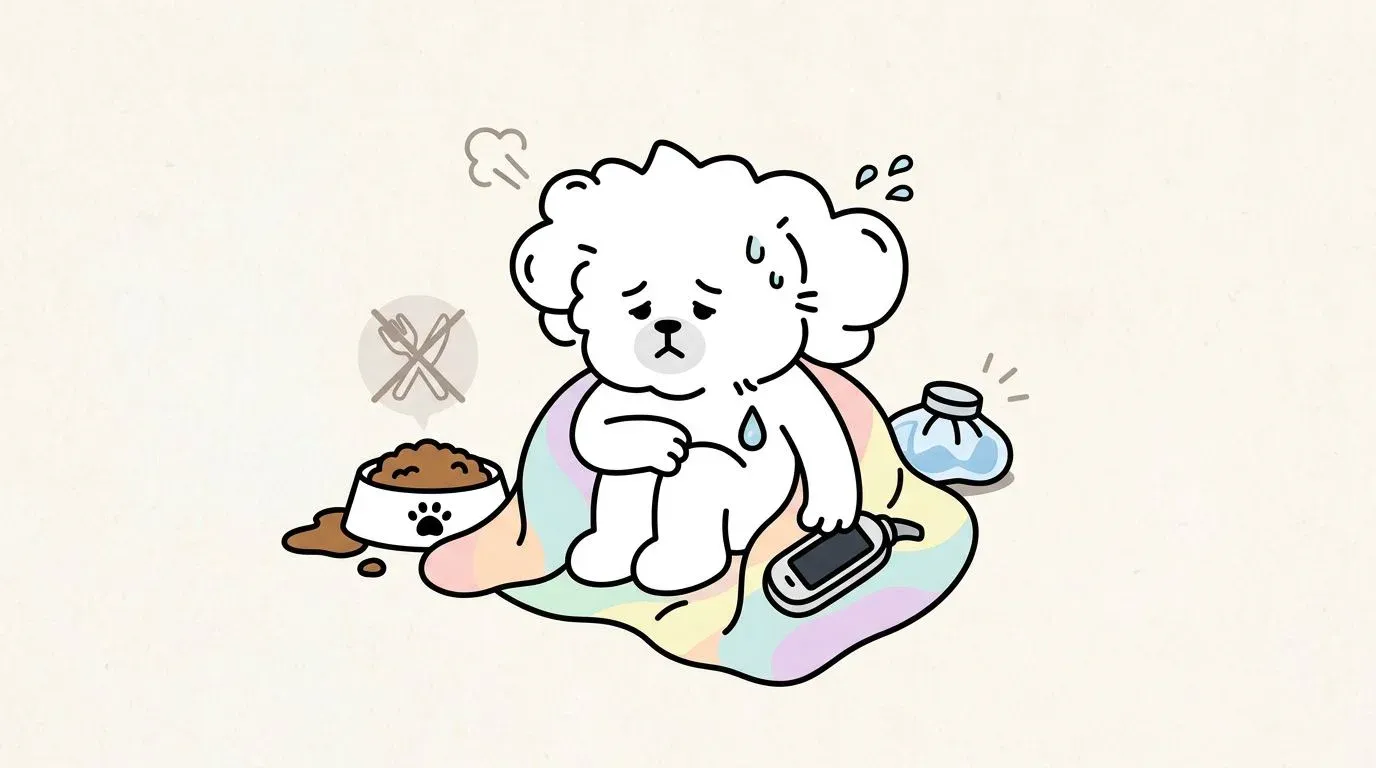
Why Dogs Hide Their Pain
A dog that is limping and whimpering is easy to recognize as a dog in pain. What is far harder — and far more common — is the dog whose pain goes unnoticed for weeks or months because the signs are behavioral, gradual, and easy to explain away.
Understanding why dogs conceal pain is the first step toward seeing it.
The Evolutionary Instinct Behind Pain Masking
Dogs are descended from pack-living predators. In that context, displaying weakness — moving slowly, hesitating, vocalizing — signals vulnerability to rivals and potential threats. The behavioral response to pain that evolved over thousands of generations was suppression: keep moving, maintain social rank, and show as few signs of impairment as possible.
That instinct persists in domestic dogs. A dog experiencing significant joint pain may continue greeting you at the door, accepting walks, and eating normally — not because the pain is tolerable, but because masking it is the default program. Pain suppression is not stoicism. It is biology.
The WSAVA Global Pain Council guidelines note that pain in animals is “frequently underestimated and undertreated” precisely because the behavioral signals are easy to overlook or misattribute. Veterinary pain specialists specifically train to detect signs that owners and even general practitioners may miss.
Why Even Attentive Owners Miss the Signs
Pain-related behavioral changes tend to develop gradually and mirror other common conditions. A dog that sleeps more could be aging normally. A dog that skips a morning walk could simply be tired. A dog that snaps when picked up could be reacting to rough handling.
Each individual change, evaluated in isolation, may seem minor. But taken together — especially when multiple changes appear over the same period — they form a recognizable pattern. The problem is that owners tend to assess each behavior in isolation rather than tracking patterns over time.
Age is another masking factor. Many owners attribute pain behavior to “just getting old,” accepting reduced activity or morning stiffness as an inevitable feature of aging rather than a treatable symptom. While aging itself does involve physical changes, pain is not a normal or acceptable part of it.
What Happens When Pain Goes Unnoticed
Missing the early signs of pain is not merely a matter of delayed treatment. Unrecognized pain triggers a chain of physical and behavioral consequences that accelerate the original problem.
The Vicious Cycle: Pain, Inactivity, Muscle Loss, and Worsening
When a joint or structure hurts, a dog instinctively uses it less. This protective response reduces immediate pain stimulus, but it comes at a cost. Muscles surrounding the affected joint atrophy from disuse. Atrophied muscles provide less stabilization, which increases the mechanical load placed directly on the joint. That increased load worsens the underlying pathology — whether arthritis, disc disease, or ligament injury — which in turn causes more pain, which reinforces inactivity.
This cycle, if left uninterrupted, can take a manageable early-stage joint condition and convert it into significant structural damage within months. The Glasgow Composite Measure Pain Scale (CMPS-SF), one of the most validated pain assessment tools in veterinary medicine, was developed in part to capture this progressive deterioration before it becomes clinically severe.
Weight gain compounds the problem. An inactive dog in pain typically gains body weight, and excess weight places disproportionately greater force on already-compromised joints. Every additional kilogram adds roughly 4–5 kg of force to the hip and knee joints during normal walking.
Early Detection vs Late Discovery: How Outcomes Differ
The difference in trajectory between a dog whose pain is caught early and one whose pain goes unrecognized for six to twelve months is substantial.
Dogs identified early — before significant muscle atrophy, before secondary arthritis has set in, before behavioral pain responses become entrenched — respond better to conservative management, require lower medication doses for pain control, and maintain mobility longer. Dogs identified late typically require more aggressive pharmaceutical intervention, often have more advanced structural damage, and may have developed secondary conditions from compensatory movement patterns.
For chronic joint conditions like osteoarthritis or progressive disc disease, early detection fundamentally changes the long-term prognosis. This is not an argument for anxiety. It is a case for systematic observation.
7 Behavioral Signs Your Dog Is in Pain
The following signs are organized from the most commonly noticed to the most frequently overlooked. Most are behavioral rather than purely physical — which is why a dog can appear superficially normal on a brief visual assessment while experiencing real discomfort.
1. Movement Changes: Limping, Refusing Jumps, Avoiding Stairs
Gait changes are the most obvious pain signal, but they exist on a spectrum. Frank limping — the dog is clearly favoring one limb — is hard to miss. Subtler movement changes are far easier to overlook: a brief skip in the stride, a reluctance to jump onto furniture that the dog previously used freely, slowing on stairs, or choosing a longer flat route over a shorter route that involves steps.
These changes may appear only after exercise and resolve with rest, making them seem inconsequential. But post-exercise lameness that resolves with rest is a hallmark of early joint disease — it represents a joint that can compensate during rest but loses that capacity under load.
Pay attention to frequency and pattern. A dog that hesitates at stairs once may have stumbled. A dog that consistently avoids stairs over two weeks is demonstrating a behavioral adaptation to pain.
2. Posture Shifts: Hunching, Leaning, Inability to Settle
Pain changes how a dog holds its body. Spinal or abdominal pain often produces a hunched posture — the back arched, the abdomen tucked, the head held lower than usual. Joint pain in the hips or knees can cause a dog to shift weight forward onto the forelimbs, which may appear as a stance where the front feet are placed unusually far forward.
Inability to settle is a less recognized but important sign. A dog in chronic pain frequently repositions — lying down, rising, moving to a different spot, lying down again — because no single position provides relief. This restlessness is often interpreted as anxiety or boredom when it is, in fact, the dog searching for a pain-reduced posture. If your dog has recently developed a pattern of frequent repositioning at rest, pain is high on the differential.
For dogs with suspected spinal involvement, posture and movement changes specific to intervertebral disc disease are covered in the dog disc disease guide.
3. Vocalization: Whimpering, Yelping, Growling When Touched
Unprompted vocalization — whimpering during rest, yelping when rising — is a clear pain signal and one owners rarely miss when it occurs. What is missed more often is context-specific vocalization: a dog that growls or snaps only when touched in a particular area, or yelps only when ascending stairs.
Sudden aggression or defensive behavior when handling a previously tolerant dog is a pain response, not a personality change. If a dog that allowed handling of its back, hips, or legs now resists or reacts when those areas are touched, that localized sensitivity warrants investigation.
Silence, however, is the norm. Most dogs in significant chronic pain do not vocalize. The absence of vocalization should never be interpreted as the absence of pain.
4. Activity Level: Sudden Lethargy, Walk Refusal
Reduced activity has many causes — heat, illness, aging — but pain is among the most common and most overlooked. A dog that previously pulled on the leash now lags behind. A dog that played fetch for thirty minutes now disengages after ten. A dog that greeted you at the door now stays on its bed.
Gradual reduction in activity tolerance is easier to miss than a sudden change because it blends into the baseline. Keeping a rough mental note of how long your dog typically engages in play or walks allows you to catch a meaningful downward trend.
Walk refusal — planting feet and refusing to continue — is more obvious but also more often attributed to stubbornness or training issues. In a dog with no history of walk-refusal behavior, sudden reluctance to walk is a pain signal until proven otherwise.
5. Temperament Shifts: Increased Aggression, Hiding, Restlessness
Chronic pain reliably changes temperament. A dog that was patient with children may become irritable with handling. A social dog may begin spending time away from the family, choosing isolated resting spots. A dog that slept at the foot of your bed may start sleeping alone in another room.
These temperament changes are often attributed to “mood” or described as the dog becoming “grumpy in old age.” In most cases, they represent a dog that is attempting to protect itself from additional pain stimulus by reducing contact and interaction.
Increased anxiety and restlessness can also reflect pain — specifically, the activation of the sympathetic nervous system that chronic pain triggers. A dog that becomes more clingy, more reactive to sounds, or less able to settle may be experiencing pain-related stress rather than a primary behavioral disorder.
6. Routine Disruptions: Appetite Loss, House Soiling, Sleep Changes
Pain disrupts normal biological rhythms. Appetite loss is a consistent finding in dogs with acute pain and occurs in a meaningful proportion of dogs with chronic pain as well. A dog that leaves food in the bowl — especially if this is new behavior — should prompt a pain evaluation alongside other differentials.
House soiling in a previously house-trained dog is frequently pain-related. If reaching the designated outdoor elimination spot requires navigating stairs or jumping, a dog in hip or joint pain may eliminate indoors rather than face that movement. Similarly, if squatting to urinate or defecate causes spinal or hip pain, the dog may delay elimination until it can no longer do so — leading to accidents.
Sleep changes — waking more frequently at night, difficulty finding a comfortable position, increasing vocalization at night — are reliable signs of pain in senior dogs, particularly those with joint disease. If your dog has recently begun waking at night, arthritis or another joint condition is among the most common causes. See dog arthritis symptoms for a detailed breakdown of osteoarthritis progression.
7. Physical Cues: Excessive Licking, Guarding a Body Part, Trembling
Dogs direct grooming behavior at painful sites. A dog that repeatedly licks one wrist, one knee, or one hip area — even when there is no visible wound — is often responding to pain or discomfort in that location. Over time, this focused licking can cause fur loss and skin irritation, creating secondary problems that distract from the underlying pain.
Guarding — actively protecting a body part from contact by moving away, tucking, or snapping — is a pain behavior that is easy to observe if you look for it. A dog that consistently pulls a leg away when you pick it up, or braces when you reach toward its abdomen, is guarding.
Trembling or shivering when the ambient temperature does not explain it is a pain response in some dogs. It may accompany acute pain events or present during rest in dogs with severe chronic pain. Trembling localized to a specific limb is particularly significant.
Acute Pain vs Chronic Pain: Different Behaviors, Different Urgency
Not all pain looks the same, and distinguishing acute from chronic pain matters for both urgency and response.
Sudden-Onset Acute Pain Patterns
Acute pain appears quickly — over hours or days — and is usually associated with a specific event: trauma, sudden disc herniation, ligament rupture, or an acute inflammatory episode. Behavioral signs tend to be dramatic relative to the dog’s baseline: abrupt refusal to bear weight, sudden extreme sensitivity to touch, pronounced vocalization, and marked behavioral change within a short window.
Acute pain typically has a clear timeline that owners can identify. The dog was normal on Monday; by Wednesday it was limping badly. Sudden-onset non-weight-bearing lameness — especially after known trauma or unusual exertion — is among the presentations that should not wait for a routine appointment. A sudden cranial cruciate ligament rupture, for example, produces an acute non-weight-bearing lameness that requires prompt evaluation; the full injury spectrum is covered in the dog cruciate ligament tear guide.
Gradual Chronic Pain Patterns
Chronic pain builds incrementally. The dog has not suddenly changed — it has slowly accumulated behavioral adaptations over months. This is the pain that owners most often miss, not because they are inattentive, but because each small change is individually unremarkable.
Chronic pain signs are consistent rather than dramatic. The dog does not cry out — it just moves a little more carefully. It does not refuse all activity — it just disengages a little earlier. The cumulative weight of these small changes, recognized as a pattern, is the signal.
The behavioral profile of chronic joint pain in particular — stiffness upon rising, post-exercise lameness, activity reduction, sleep disruption — is increasingly well characterized in the veterinary literature. Dogs with osteoarthritis demonstrate reliably measurable behavioral differences from pain-free dogs on validated scoring systems.
When It’s an Emergency
Seek same-day or emergency veterinary evaluation if your dog:
- Cannot bear any weight on a limb after an acute event
- Is unable to rise from a lying position
- Is breathing rapidly at rest, has abdominal distension, or appears to be in severe distress
- Has collapsed or lost coordination
- Is vocalizing continuously and cannot be calmed
- Shows sudden loss of bladder or bowel control alongside other neurological signs
These presentations require immediate assessment regardless of time of day.
Joint Pain Behaviors to Watch For
Joint pain produces consistent behavioral patterns that owners can learn to recognize. The following patterns are organized by breed size and age category because the underlying conditions — and therefore the behavioral expression — differ meaningfully across these groups.
Small Breed Signals (Patellar Luxation)
Small breeds — Toy Poodles, Chihuahuas, Pomeranians, Shih Tzus, and similar — are disproportionately affected by patellar luxation, a condition in which the kneecap periodically or permanently dislocates from the femoral groove. The characteristic behavioral sign is intermittent skipping: the dog takes several normal steps, then lifts one hind leg and hops for a stride or two before the patella resets and normal gait resumes.
This skipping is often dismissed as a quirk or attributed to the dog stepping on something. In small breeds, it should prompt evaluation. Secondary arthritis from recurrent luxation accumulates silently over time, and dogs that skip intermittently at age two may be walking with chronic joint pain by age five or six.
Additional small-breed signals include reluctance to jump from low furniture heights, crying out unexpectedly when taking a step, and intermittent hind limb lameness that varies day to day. The patellar luxation guide covers grade-specific progression and the behavioral signs that accompany each stage.
Large Breed Signals (Hip Dysplasia)
Large and giant breeds — German Shepherds, Labrador Retrievers, Golden Retrievers, Rottweilers — carry disproportionate risk for hip dysplasia, an abnormal hip joint geometry that leads to early arthritis. Behavioral signs typically appear during the growth phase (6–18 months) and may recede temporarily as the dog compensates, then re-emerge as secondary arthritis develops in middle age.
Signs include a “bunny hop” gait at faster speeds (both hind limbs advance together rather than alternating), difficulty rising from the floor, reduced tolerance for exercise, and reluctance to jump or climb stairs. Standing posture may show a narrow hind stance or a slightly crouched hip position as the dog attempts to unload the hip joints.
Muscle asymmetry between the two hind limbs — one side noticeably smaller than the other — is a reliable sign that the dog has been consistently favoring that side for long enough for disuse atrophy to develop.
Senior Dog Arthritis: Early Behavioral Clues
In senior dogs (generally 7 years and older, or 5–6 years for large breeds), osteoarthritis is the most common cause of chronic pain. The early behavioral pattern is distinct from acute injury:
- Morning stiffness that improves with 10–15 minutes of gentle movement
- Slower to rise from rest throughout the day, not just in the morning
- Reluctance to navigate stairs that were previously used without hesitation
- Reduced play engagement and shorter preferred walk distance
- Increased time sleeping, especially in cool or damp weather
- Behavioral withdrawal and reduced interaction with family members
Many owners describe this constellation as “slowing down with age” — and to some degree that is accurate. But the pain component is modifiable. A dog showing these signs is a candidate for pain assessment, not just acceptance. The senior dog joint care guide provides a comprehensive framework for managing joint health in aging dogs.
What to Do When You Spot Pain Signs
Observing pain signs creates an immediate question: what do you do next? The following framework is designed to help owners respond appropriately rather than either panicking or underreacting.
Immediate Dos and Don’ts
Do:
- Restrict activity to short, flat, leash-controlled walks until assessed
- Provide warm, supportive bedding at floor level (no jumping required)
- Note when you first observed each sign and what specific activities precede worsening
- Contact your veterinarian and describe the signs you have observed
Do not:
- Give human pain medications. Ibuprofen, naproxen, and acetaminophen are all toxic to dogs at doses that would be therapeutic in humans. Even a single tablet of ibuprofen can cause gastric ulceration or acute kidney injury in a medium-sized dog.
- Apply heat or cold without veterinary guidance — each is appropriate for specific conditions and contraindicated for others.
- Attempt to manipulate the painful area to assess range of motion.
- Wait weeks for signs to resolve on their own without notifying a veterinarian.
Observation Checklist Before the Vet Visit
Veterinarians rely heavily on owner-reported history because pain behavior in the clinic — under adrenaline and the stress of a novel environment — often looks dramatically different from pain behavior at home. Your observations before the appointment are clinically valuable.
Document the following:
- Timeline: When did you first notice something? Has it changed since?
- Affected area(s): Which limb, which side, which region of the body?
- Pattern: Constant or intermittent? Worse in the morning, after exercise, in cold weather?
- Severity: On a scale of 1 to 10, how significantly is it affecting normal behavior?
- Triggers: Does it worsen with specific activities (stairs, jumping, rising from rest)?
- Relieving factors: Does rest help? Does warmth seem to help?
- Associated changes: Appetite, sleep, temperament, elimination habits.
If possible, take a short video of your dog walking and rising from rest. Gait abnormalities that are subtle at home may not reproduce under clinic conditions, and video provides objective evidence the veterinarian can evaluate.
Home Pain Management Fundamentals
While awaiting veterinary assessment — or as part of a long-term management plan prescribed by your veterinarian — several environmental and lifestyle adjustments can meaningfully reduce pain load.
Movement modification. Replace high-impact activities with controlled, low-impact alternatives. Short, frequent leash walks on soft, flat ground are preferable to long outings. Swimming and underwater treadmill work, where available, allow full movement with minimal joint impact.
Environmental adaptation. Non-slip rugs over hard flooring prevent painful slipping. Ramps or low steps to furniture eliminate jumping. Elevated food and water bowls reduce neck and shoulder flexion.
Warmth. Chronic joint pain typically worsens in cold and damp conditions. A warm, draft-free sleeping area and a dog coat for cold-weather walks can reduce daily pain burden. This is particularly relevant for senior dogs with arthritis.
Photobiomodulation (red and near-infrared light therapy). At-home photobiomodulation devices using red and near-infrared wavelengths have been evaluated in veterinary contexts for chronic musculoskeletal pain. NIR light penetrates tissue to stimulate mitochondrial energy production and reduce local inflammatory mediators. For dogs with chronic joint pain who cannot tolerate long-term NSAID use, or as a complement to pharmaceutical management, home NIR therapy offers a non-invasive, drug-free option for daily pain support. A detailed explanation of the mechanism and practical use protocol is available in the near-infrared therapy for dogs guide.
Home management supports but does not replace veterinary care. A diagnosis drives treatment. Supportive care applied without a diagnosis may reduce observable signs while allowing underlying pathology to progress.