 Cirius Petpedia
 Dog Toy Selection Guide: Safe Picks for Every Age and Size
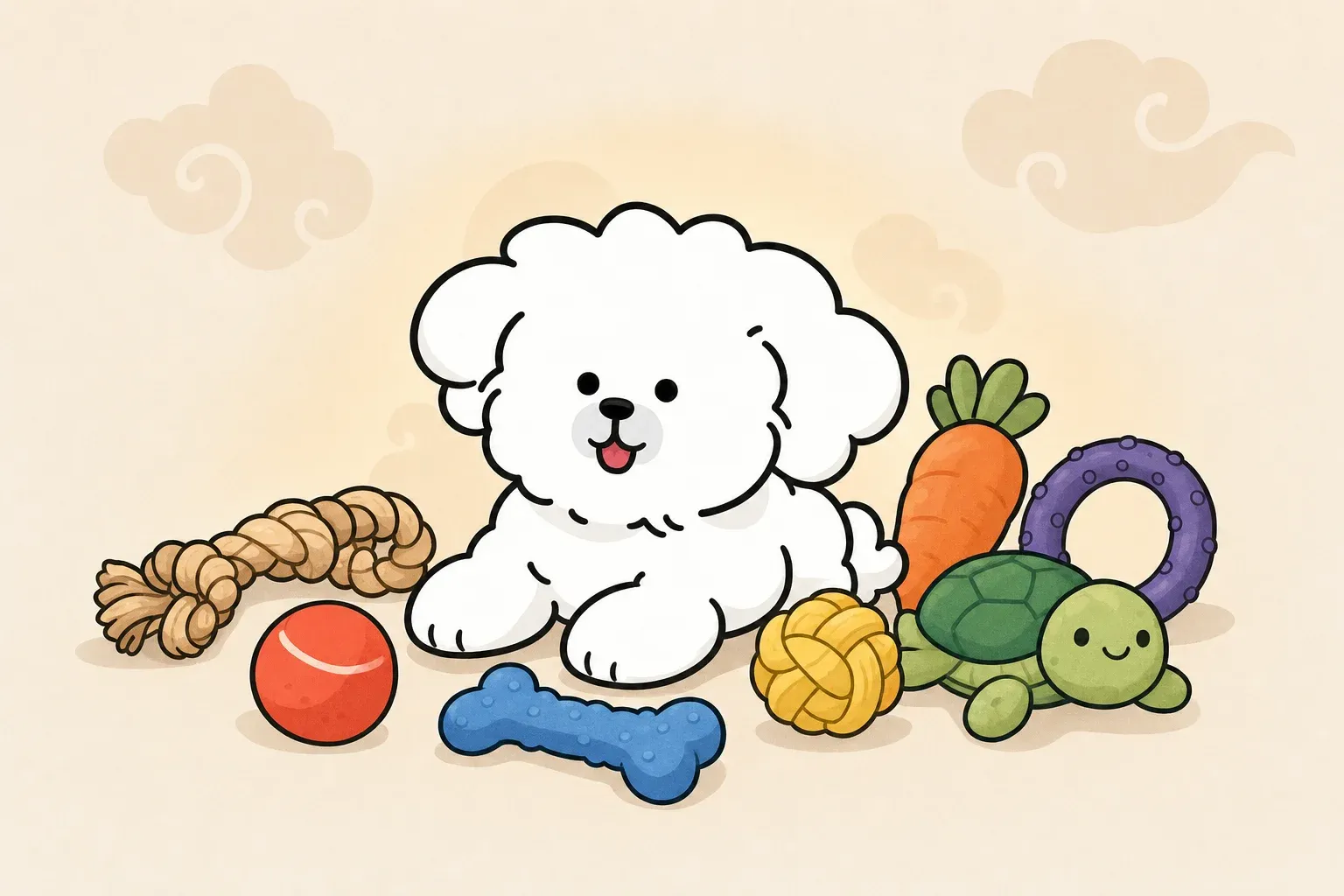
Picking up a random toy off the shelf and hoping for the best is how most dog owners start. It works — until it doesn’t. A toy that is too small becomes a choking hazard. One that is too hard fractures a molar. A poorly dyed plush toy ends up disemboweled in minutes, with stuffing scattered across the floor and a squeaker in your dog’s stomach.
The truth is that dog toy selection is not just about keeping your dog entertained. It directly affects their physical safety, dental health, and psychological wellbeing. This guide walks through the decision-making framework that veterinarians and certified animal behaviorists use — so you can match the right toy to the right dog, every time.
Why the Right Toy Matters for Your Dog
Before diving into types and safety criteria, it helps to understand what play actually does for dogs. According to the American Veterinary Society of Animal Behavior (AVSAB), environmental enrichment — including play with appropriate objects — is considered a core component of a dog’s behavioral welfare, not an optional add-on.
Physical Exercise and Energy Management
Dogs are built to move. Most domestic dogs, regardless of breed, need significantly more physical activity than the average household walk provides. Toys that encourage running, chasing, and tugging serve as structured outlets for that energy.
The practical benefit is straightforward: a dog that gets adequate physical exercise through structured play is less likely to find its own outlets in the form of furniture destruction, excessive barking, or hyperactivity indoors. Fetch toys and tug toys are the primary tools for delivering this kind of aerobic stimulation.
Mental Stimulation and Stress Relief
Physical exercise alone is not enough. A 2019 study published in Applied Animal Behaviour Science found that dogs who received regular cognitive enrichment showed lower cortisol (stress hormone) levels compared to dogs who received only physical exercise. Mental fatigue from problem-solving or scent-based play can tire a dog out as effectively as a long walk.
Dog puzzle toys and enrichment feeders directly target this need. For dogs who spend long hours alone, the mental engagement these toys provide is one of the most practical interventions available to owners.
Preventing Destructive Behaviors
Most destructive chewing — the kind that costs dog owners couches and baseboards — is not malicious. It is a symptom of unmet needs: too much energy, too much stress, or too much boredom. Providing appropriate chew toys and outlets for destructive energy redirects the behavior before it becomes a habit.
The key word is “appropriate.” A chew toy that does not meet the dog’s jaw strength will be destroyed in minutes and replaced by something more satisfying — like a table leg. Matching the toy to the dog’s actual chewing intensity is where most owners go wrong.
Types of Dog Toys and When to Use Each
Not all toys serve the same purpose. Understanding the function of each category helps you build a balanced toy rotation rather than ending up with a pile of identical plush squeakers.
Chew Toys: Dental Health and Stress Relief
Chew toys serve two distinct purposes that are easily conflated. The first is dental hygiene — the mechanical abrasion of chewing on a textured surface helps reduce tartar buildup, which is why many chew toys have ridged or knobbed surfaces designed to scrape along the gum line. The second purpose is stress regulation: chewing triggers the release of endorphins and is one of the most effective self-soothing behaviors available to dogs.
When choosing chew toys, the material density is the most important variable. A toy that is appropriate for a Beagle will be inadequate for a Rottweiler and potentially too hard for a senior dog. Dense rubber is generally the most versatile material across different jaw strengths.
Tug Toys: Bonding and Physical Exercise
Tug is a full-body activity for dogs. It engages the neck, shoulders, and core, and provides a structured outlet for prey-drive behaviors. Contrary to outdated advice, playing tug with your dog does not cause aggression — research on human-dog play consistently shows that tug games with clear rules (start and stop on cue) actually reinforce obedience and strengthen the bond between owner and dog.
Good tug toys are long enough to keep your hands away from your dog’s teeth, made from materials that flex without snapping, and wide enough to give your dog a solid grip. Rope toys fit this description for moderate chewers, but should not be left unsupervised — ingested rope fibers can cause intestinal blockages.
Puzzle and Enrichment Toys: Brain Games
Puzzle toys range from simple snuffle mats that require a dog to nose through fleece to find kibble, to multi-step interactive feeders that require pushing, sliding, or flipping components to release food. The appropriate complexity level depends on your dog’s problem-solving experience.
Start with easier puzzles and increase difficulty gradually. A dog who has never used an enrichment toy and is immediately confronted with a Level 3 puzzle will typically give up within a minute, then ignore the toy permanently. The goal is to create a success pattern — short, rewarding problem-solving experiences — before increasing the challenge.
Puzzle feeders are particularly useful for dogs who eat too quickly, as they slow the feeding process and reduce the risk of bloat (gastric dilatation-volvulus). Indoor enrichment activities built around these toys are also one of the most practical tools for keeping dogs mentally active on rainy days or during restricted exercise periods.
Fetch Toys: Outdoor Activity and Recall Training
Fetch toys — balls, flying discs, bumpers — are the primary tool for delivering high-intensity aerobic exercise in a controlled format. They also double as training tools: the retrieve sequence (chase, pick up, return, release) reinforces recall behavior more naturally than many formal training exercises.
Size and material matter here. A ball small enough to lodge in a dog’s throat is a medical emergency. Tennis balls are a common culprit — the felt exterior also acts as a mild abrasive that wears down tooth enamel with heavy chewing, so they should be used for fetch but not left as chew toys.
Squeaky and Plush Toys: Comfort and Play Instinct
Squeaky and plush toys satisfy the prey-sequence instinct in many dogs — the squeak mimics the sound of a small animal, which is why so many dogs are intensely motivated to “kill” the squeaker as quickly as possible. For dogs who engage gently with soft toys, plush toys can also serve as comfort objects, especially for puppies who are adjusting to a new home.
The safety limitation is clear: plush toys are not designed to withstand aggressive chewing. They should only be used under supervision. Once the toy is torn enough that the stuffing, squeaker, or eyes/buttons are accessible, the toy needs to be removed.
How to Choose Safe Dog Toys
Safety is the non-negotiable baseline before anything else. Engaging design, novel features, and durable construction mean nothing if the toy poses a choking, toxicity, or dental fracture risk.
Material Safety: Non-Toxic and BPA-Free
In the United States, dog toys are not regulated by the same federal standards that apply to children’s toys under the Consumer Product Safety Improvement Act (CPSIA). This means the burden of verification falls on the consumer.
When evaluating materials:
- Rubber toys: Look for natural rubber or toys explicitly labeled as non-toxic and free from phthalates, BPA, and heavy metals. Cheap synthetic rubber may off-gas chemicals with prolonged chewing.
- Nylon and plastic toys: These are often marketed as “indestructible,” but veterinary dentists have noted that rigid nylon chews can cause slab fractures of the carnassial teeth (the large upper premolars). The general rule is that if you cannot dent the surface with your thumbnail, it is too hard for your dog’s teeth.
- Rope toys: Check for natural cotton content. Synthetic rope fibers are more likely to tangle in the intestines if swallowed.
- Plush toys: Avoid stuffing that contains polystyrene beads. Look for non-toxic dyes, especially in brightly colored toys.
Size Matching: Preventing Choking Hazards
The ASPCA’s toy safety guidelines are clear on this point: a toy should never be small enough to fit entirely inside a dog’s mouth. The practical test is to compare the toy’s diameter to the dog’s open jaw width — the toy should be wider.
Size recommendations by dog weight are a starting point, but individual variation in jaw size and chewing style means you should observe your dog with any new toy during the first play session. A toy labeled “medium dogs up to 50 lbs” may still be dangerous for a 45-pound dog with a wide, powerful jaw.
Durability: Too Soft vs Too Hard
The Goldilocks principle applies directly to chew toy hardness. A toy that is too soft will be destroyed rapidly, creating chunk-sized pieces that can be swallowed. A toy that is too hard will chip teeth.
The fingernail test is the most-cited rule of thumb among veterinary dentists: press your thumbnail firmly into the toy surface. If the surface does not give at all, the toy is likely too hard for safe chewing. Appropriate chew toys should have some flex and should not produce splinters, chips, or sharp edges under chewing pressure.
For dogs described as aggressive chewers, the answer is not a harder toy — it is a denser rubber toy that resists gouging without being rock-solid.
Avoiding Dangerous Decorations and Small Parts
Decorative elements — button eyes, sewn-on accessories, ribbon, glued-on components — are the most common source of toy-related ingestion incidents. Dogs who are motivated to disassemble toys will remove these elements quickly. Any toy with attachments that could detach and be swallowed should be treated as a supervised-only toy or avoided entirely.
This applies particularly to holiday and novelty toys, which often prioritize visual appeal over safety engineering.
Choosing Toys by Age and Size
The same toy that is perfect for a healthy adult dog may be harmful for a puppy whose jaw is still developing, or for a senior dog whose teeth have become more brittle with age. Age and size are the two primary filters to apply before any other selection criteria.
Puppies (3–6 Months): Teething-Safe Options
Between 3 and 6 months, puppies are actively losing their deciduous (baby) teeth and cutting their permanent teeth. This period involves significant gum discomfort that drives intense chewing behavior. The goal of a puppy teething toy during this period is to provide relief — not to withstand aggressive chewing.
Soft rubber toys and rubber rings that can be briefly frozen are ideal. The cold temperature reduces gum inflammation. Avoid any toy with hard plastic components, rope fibers, or detachable parts. The jaw strength of a teething puppy is low, but their motivation to chew is high, which means soft toys may be destroyed quickly — this is expected and not a reason to escalate to harder materials.
Adult Small Breeds: Jaw Strength Considerations
Small breeds (under 25 lbs) have proportionally smaller jaws and teeth than their larger counterparts, but jaw strength relative to body size varies considerably. A Jack Russell Terrier has a stronger bite for its size than a Cavalier King Charles Spaniel.
The primary adjustment for small breeds is toy size — everything needs to scale down accordingly to maintain the appropriate size-to-jaw ratio. Small breeds are also more likely to accidentally swallow a piece that would simply pass through a larger dog’s digestive system, so fragmentation risk matters more.
Adult Medium to Large Breeds: Durability First
Medium and large breeds (25–90+ lbs) place the most structural stress on toys. For dogs above 50 lbs who are enthusiastic chewers, most retail toys described as “durable” will not survive extended chewing sessions. Focus on toys explicitly rated for large or giant breeds, made from dense natural rubber.
For large breeds with high prey drive — Labs, Retrievers, Huskies, working breeds — a toy rotation that includes high-energy fetch options alongside chew toys helps distribute the wear across multiple toy types and prevents any single toy from being destroyed in one session.
Senior Dogs: Gentle and Joint-Friendly Picks
Senior dogs typically experience some combination of dental wear, reduced jaw strength, cognitive changes, and joint stiffness. These factors shift toy priorities considerably.
Hard chew toys become inappropriate as teeth become more brittle. Puzzle toys and enrichment feeders become more valuable — cognitive enrichment is particularly important for senior dogs showing early signs of canine cognitive dysfunction, and low-impact mental stimulation carries none of the physical risks of vigorous play.
For senior dogs also dealing with separation anxiety, toys that encourage movement should be chosen carefully. Fetch across a long distance or vigorous tug games may aggravate joint conditions. Gentle enrichment play, snuffle mats, and low-movement puzzle feeders are safer choices that still deliver meaningful stimulation.
Toy Maintenance and Rotation Tips
Buying the right toys is only the first step. How you manage the toy collection over time determines whether your dog stays engaged and whether the toys remain safe.
Toy Rotation Strategy to Keep Interest
Dogs habituate to familiar objects. A toy that was exciting on day one becomes part of the furniture by week three. A rotation strategy exploits this by cycling toys in and out of availability, so each toy retains a degree of novelty.
A practical approach: divide your dog’s toys into three or four groups. Only one group is available at a time. Rotate every four to seven days. When a group of toys comes back into rotation after a break, dogs often interact with them with noticeably higher engagement than they showed before the break.
This also protects toys from excessive wear — a toy that is only available a quarter of the time will last four times as long as one that is out constantly.
Cleaning and Hygiene
Toys accumulate saliva, soil, and bacteria with regular use. Hard rubber and nylon toys can typically be cleaned with hot water and a mild soap, then rinsed thoroughly and air-dried. Some rubber toys are dishwasher-safe on the top rack — check manufacturer instructions. Rope toys can harbor bacteria in the fibers and are best machine-washed and dried completely before reuse. Plush toys should be washed in a gentle cycle and inspected for damage before returning them to rotation.
The frequency of cleaning depends on how the toy is used. A toy used daily for outdoor fetch will need cleaning more often than an indoor puzzle feeder used once a week.
When to Replace a Worn-Out Toy
The replacement threshold is when the toy’s structural integrity has degraded enough to create a new hazard. Specific indicators:
- Rubber or latex toys: Replace when there are missing chunks, visible tears deeper than a few millimeters, or the surface has become rough with sharp edges.
- Plush toys: Replace when stuffing, squeakers, or decorative elements are accessible from any tear.
- Rope toys: Replace when individual strands are long enough to be swallowed or when the end knots have begun to unravel.
- Fetch balls: Replace when the outer surface has torn or when the ball has been compressed enough to fit too deeply into the mouth.
When in doubt, err toward replacement. The cost of a new toy is a fraction of an emergency veterinary visit for an intestinal obstruction.
| Toy Type | Replace When… | Average Lifespan (heavy chewer) |
|---|---|---|
| Dense rubber chew | Chunks missing, sharp edges | 3–12 months |
| Rope toy | Strands loosening, can be swallowed | 1–4 weeks |
| Plush squeaker | Stuffing/squeaker accessible | 1–7 days |
| Fetch ball | Surface torn, fits too deep in mouth | 2–8 weeks |
| Puzzle feeder | Components cracked or broken | 6–24 months |
The goal of this guide has been to shift the decision-making process from impulse to methodology. When you know what function a toy serves, how to evaluate its safety for your specific dog, and how to maintain and rotate your collection, you stop buying toys randomly and start building a system that actually serves your dog’s physical and behavioral needs — safely and sustainably.
References
- 1. Environmental Enrichment for Dogs - American Veterinary Society of Animal Behavior (AVSAB)
- 2. Dog Toy Safety - American Society for the Prevention of Cruelty to Animals (ASPCA)
- 3. Consumer Product Safety Commission (CPSC) - Toy Safety Standards
- 4. The Role of Play in Animal Welfare - Applied Animal Behaviour Science, Bradshaw et al.
- 5. Canine Enrichment: Meeting the Behavioural Needs of Pet Dogs - International Association of Animal Behavior Consultants (IAABC)
FAQ
How do I know if a dog toy is safe?
What size toy should I choose for my dog?
How often should I replace dog toys?
Are squeaky toys safe for dogs?
What toys are best for aggressive chewers?
Related Articles
How to Take Your Dog to the Beach Safely: A Complete Trip Guide
Everything dog owners need for a safe beach day: preparation checklist, essential gear, beach hazards like saltwater toxicity and sand ingestion, and post-trip care.

When Temperatures Drop Below Freezing: The Complete Guide to Safe Winter Dog Walks
Learn exactly how cold is too cold for dog winter walks, with a breed-by-breed temperature safety chart, hypothermia warning signs, and a post-walk care routine.
Dog Exercise Guide: How Much Exercise Does Your Dog Need? 7 Essential Rules by Breed & Age
Find out exactly how much exercise your dog needs by breed and age. Includes over- and under-exercise warning signs, seasonal tips, and low-impact alternatives for joint-sensitive dogs.