 Cirius Petpedia
 Puppy Teething Guide: Timeline, Symptoms, and How to Help
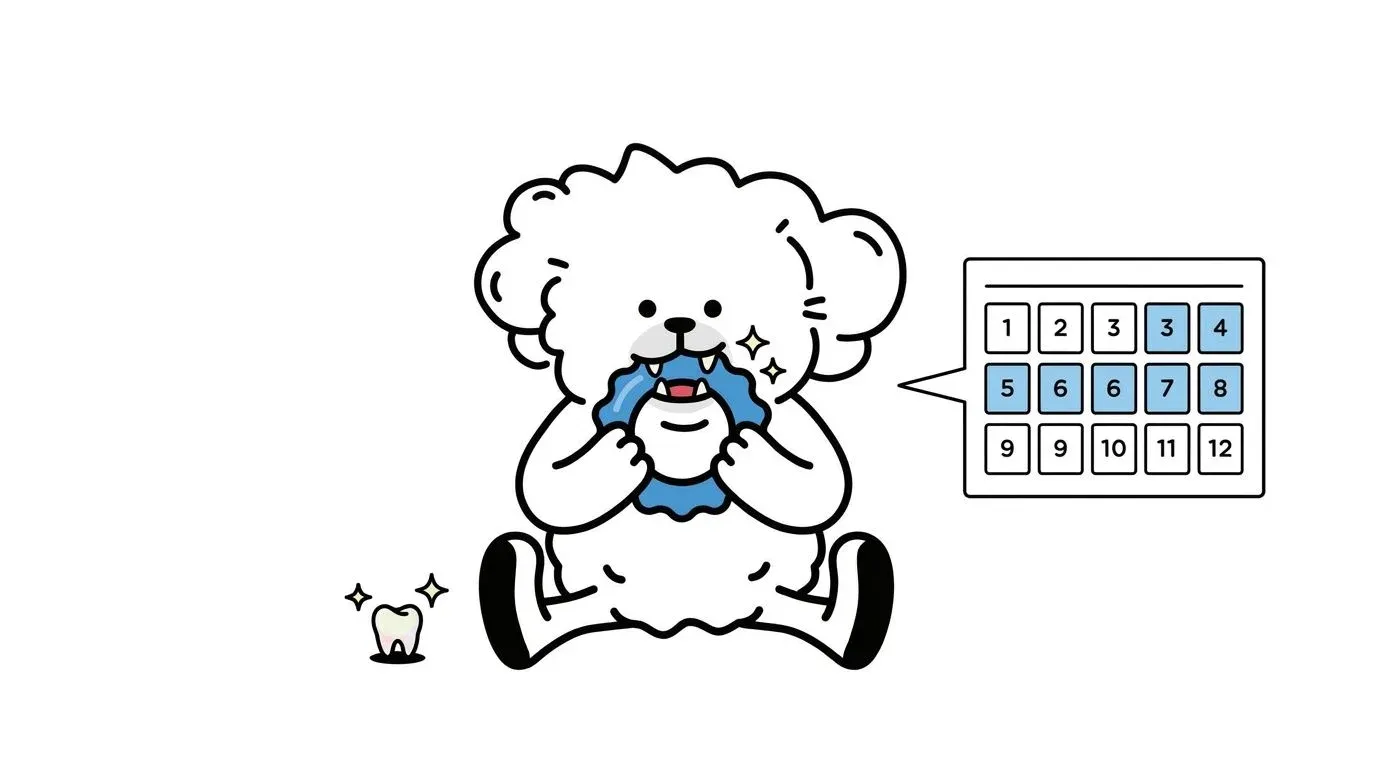
Your puppy is chewing everything in sight — shoes, furniture corners, your hands — and you are not sure whether this is a training issue or something else entirely. In most cases, the answer is simpler than you think: your puppy is teething.
Puppy teething is one of the most universally experienced challenges of early dog ownership, yet many new owners are caught off guard by how intense the process can be. Understanding what is happening inside your puppy’s mouth — and why it drives certain behaviors — makes the experience far less stressful for both of you.
This guide covers the complete puppy teething timeline, what symptoms are normal, how to safely soothe your puppy’s discomfort, and a critical issue many owners miss entirely: retained baby teeth.
What Is Puppy Teething? (And Why It Happens)
Puppy teething is the developmental process through which your dog loses its first set of teeth and grows a permanent adult set. It is not an illness or a behavioral problem — it is an unavoidable biological milestone that every dog goes through.
The Science Behind Eruption Pain
When an adult tooth pushes upward through the jaw, it presses against the root of the overlying baby tooth, causing the root to resorb (dissolve). As the baby tooth loosens and the adult tooth breaks through the gum tissue, the surrounding gingiva (gum) becomes inflamed.
This eruption-induced gingival inflammation is the primary source of teething discomfort. Blood flow to the area increases, the tissue swells, and the gum becomes tender to touch. The discomfort is real and similar in mechanism to what human infants experience — your puppy is not just “being mouthy” without reason.
Some puppies also experience mild systemic effects: brief spells of fussiness, lower appetite, or restlessness. These are short-lived and linked directly to active eruption phases rather than the entire teething period.
How Many Teeth Will Your Puppy Have?
Dogs have two full sets of teeth across their lifetime:
- Deciduous (baby) teeth: 28 teeth total — 12 incisors, 4 canines, 12 premolars. No molars at this stage.
- Permanent (adult) teeth: 42 teeth total — 12 incisors, 4 canines, 16 premolars, 10 molars.
The jump from 28 to 42 teeth means your puppy’s jaw is doing significant structural work during the teething period. The added molars require room in the back of the mouth, which is part of why jaw shape and bite alignment are closely monitored during this window.
Puppy Teething Timeline: Stage by Stage
The puppy teething timeline unfolds across several months, and knowing where your puppy is in the process helps you anticipate what comes next. The stages below reflect average timing — individual variation is normal, and breed size can shift the pace (more on that below).
Stage 1: No Teeth (Birth – 2 Weeks)
Newborn puppies are born without visible teeth. This is by design: neonates nurse exclusively, and erupted teeth would injure the mother during feeding. The deciduous tooth buds are already forming beneath the gum tissue, but they remain fully submerged.
Nothing to monitor at this stage — puppies are with the breeder or mother.
Stage 2: Baby Teeth Emerge (3–6 Weeks)
Around 3 to 4 weeks, the first deciduous incisors push through. By 6 weeks, most puppies have a full set of 28 baby teeth. These teeth are small, very sharp, and fragile — they are not designed for hard chewing. This is the stage when breeders typically begin introducing soft puppy food alongside nursing.
If you are bringing home a puppy around 8 weeks of age, all baby teeth should already be present.
Stage 3: Teething Begins — Baby Teeth Fall Out (3–6 Months)
This is the phase most owners mean when they say their puppy is “teething.” Between 3 and 6 months, adult teeth begin erupting and baby teeth start loosening and falling out. The order of eruption generally follows this sequence:
| Tooth Type | Baby Teeth Fall Out | Adult Teeth Emerge |
|---|---|---|
| Incisors (front teeth) | 3–4 months | 3–5 months |
| Canines (fang teeth) | 5–6 months | 4–6 months |
| Premolars | 4–6 months | 4–6 months |
| Molars (new; no baby equivalent) | — | 5–7 months |
You will probably notice baby teeth falling out most around the 4 to 5 month mark. You may find tiny teeth on the floor, in food bowls, or in chew toys — or you may find none at all because your puppy swallowed them (which is harmless).
Stage 4: Adult Teeth Complete (6–7 Months)
By 6 to 7 months of age, a healthy puppy should have all 42 permanent adult teeth fully erupted. The teething process is essentially over, and chewing behavior should begin to settle — provided the behavior was discomfort-driven rather than a separate training issue.
Breed Size Callout
Small and toy breeds (Chihuahuas, Yorkies, Pomeranians, Maltese) tend to complete teething on the earlier end of the timeline, but they face a disproportionately higher risk of retained baby teeth and dental crowding due to their compact jaw structure. Monitor closely from 5 months onward.
Large and giant breeds (German Shepherds, Labrador Retrievers, Golden Retrievers) generally follow a slightly extended timeline and apply more chewing force during teething due to jaw size. Durable, size-appropriate chew toys matter more for these puppies.
7 Signs Your Puppy Is Teething
Recognizing puppy teething symptoms helps you respond appropriately rather than misreading the behavior. Here are the seven most common signs.
Increased Chewing and Mouthing
The most obvious symptom. Chewing applies counter-pressure to sore gums, which temporarily reduces discomfort — your puppy is self-soothing. You will notice an increase in mouthing of hands, chewing on furniture edges, and general interest in anything that can be held in the mouth.
What to do: Redirect immediately to appropriate chew toys. Consistency matters here; every successful redirection reinforces the habit.
Drooling More Than Usual
Increased salivation is a normal response to gum inflammation. Some puppies drool noticeably during peak teething, others barely at all.
What to monitor: Excessive drooling combined with refusal to eat, pawing at the mouth, or visible oral swelling warrants a vet check.
Swollen, Red, or Bleeding Gums
Mild redness and puffiness along the gum line is normal — it is the visible sign of that eruption-induced inflammation described earlier. A tiny spot of blood on a chew toy or food bowl is common when a baby tooth loosens.
What to monitor: Significant swelling of the gum tissue, persistent bleeding, or visible pus are not normal teething symptoms and should be evaluated by a vet.
Loose or Missing Teeth
You may notice a baby tooth that looks slightly tilted or wiggly. Sometimes you will find a small tooth on the floor. This is healthy progress — it means the adult tooth below is doing its job.
What to monitor: If you see an adult tooth erupting directly alongside a baby tooth that shows no sign of loosening, this is a retained tooth situation (covered in detail below).
Changes in Eating Habits
Sore, inflamed gums make eating uncomfortable, especially with hard kibble. Some puppies eat more slowly, chew differently, or skip a meal. Brief appetite dips are normal.
What to do: Briefly moistening dry kibble with warm water can soften it enough to reduce discomfort. If your puppy refuses food entirely for more than 24 hours, contact your vet.
Whining or Restlessness
Some puppies vocalize discomfort, particularly during peak eruption periods. Nighttime restlessness is common — the discomfort does not pause for sleep. This is one of the more exhausting aspects for both puppy and owner.
What to do: A frozen chew toy offered before bedtime can provide enough relief for the puppy to settle. Cold therapy is most effective as part of a consistent bedtime routine.
Rubbing Face Against Furniture or Carpet
When gums itch or ache, puppies sometimes rub their muzzle along carpet, sofa cushions, or floor surfaces in an attempt to apply pressure or friction. This is a less commonly discussed but recognizable teething sign.
What to monitor: Excessive face rubbing combined with eye discharge, nasal discharge, or skin irritation points to something other than teething.
Puppy Teething vs. Problem Behavior: How to Tell the Difference
Not all puppy biting is teething-related. Many owners continue managing what they believe is a teething problem long after teething has ended, when the real issue has become habitual or behavioral.
Here is how to distinguish the two:
| Teething Biting | Behavioral Biting / Nipping | |
|---|---|---|
| Age range | 3 to 6 months, peaks around 4–5 months | Can begin at any age, persists post-6 months |
| Trigger | Discomfort-driven; puppy seeks relief | Excitement, play, attention-seeking, resource guarding |
| Target | Tends toward hard objects, furniture, hands for pressure | Often directed at people, other pets, moving targets |
| Response to redirection | Readily accepts appropriate chew toy | May ignore toy and return to biting |
| Resolution | Naturally decreases as adult teeth complete | Does not self-resolve; requires training |
If your puppy is 7 months or older and still biting or mouthing persistently, teething is no longer the explanation. Addressing puppy biting through structured training becomes the appropriate next step.
How to Soothe a Teething Puppy: Safe Relief Methods
Managing teething discomfort is about reducing gum inflammation and giving your puppy appropriate outlets for chewing pressure. The good news: you do not need to purchase expensive products to do this effectively.
Puppy-Safe Chew Toys (What to Look For)
A good teething chew toy should:
- Flex slightly when you press it — if you cannot make a dent with your thumbnail, it is likely too hard for a teething puppy’s fragile deciduous and emerging adult teeth
- Be appropriately sized for your puppy’s breed — too small risks swallowing; too large is ineffective
- Have no small detachable parts that could be chewed off and swallowed
- Be made from non-toxic materials — look for compliance with ASTM safety standards on the packaging
Avoid rawhide entirely during the teething phase. Rawhide softens and breaks into irregular pieces that can block the digestive tract, and the sharp edges of a softened piece can irritate already inflamed gum tissue.
Cold Therapy: Frozen Washcloths, Carrots, and Ice Cubes (Safety Guide)
Cold is one of the most effective tools for teething relief. The mechanism: cold causes vasoconstriction (narrowing of blood vessels), which temporarily reduces the blood flow driving gum inflammation. This is why cold provides more relief than room-temperature chewing alone.
Safe cold therapy options:
- Frozen washcloth: Wet a small washcloth, twist it into a rope shape, and freeze. The texture provides chewing resistance; the cold delivers relief. This is among the safest and most accessible methods.
- Frozen rubber chew toy: Purpose-made rubber teething toys can be filled or dampened and frozen. The give of the rubber is gentler on teeth than solid ice.
- Baby carrots (frozen or chilled): A carrot that is cold — not frozen solid — gives appropriate chewing resistance and is digestible. Completely frozen carrots become very hard; monitor for splintering with large-breed puppies.
- Small ice cubes or crushed ice: Safe for brief supervised sessions. Crushed ice is preferable to whole cubes for small-breed puppies. Do not leave a puppy unsupervised with a large ice block.
What NOT to use for cold therapy:
- Frozen corn on the cob (can cause intestinal obstruction)
- Frozen cooked bones (splinter into sharp shards)
- Frozen whole vegetables that are too large (choking hazard)
Gentle Gum Massage
Using a clean finger or a finger brush (a soft silicone sleeve that fits over your fingertip), gently rub along the gum line with light pressure. Many puppies initially resist this but warm to it quickly. The counter-pressure temporarily interrupts the pain signal — the same principle as rubbing a sore spot on your own body.
This technique has a dual benefit: it soothes teething discomfort now and begins desensitizing your puppy to oral handling, making future tooth brushing much easier to introduce.
Puppy-Proofing Your Home
A teething puppy will chew whatever is accessible. The simplest, most effective intervention is removing opportunities before they arise:
- Keep electrical cords out of reach or encased in cord protectors
- Move shoes, bags, and low-lying personal items out of puppy zones
- Use baby gates to limit access to rooms with furniture at floor level
- Provide clear chew zones where appropriate toys are always available
Puppy-proofing is not about punishing the puppy for chewing — it is about reducing the environmental load that makes chewing inappropriate targets so tempting.
What NOT to Give a Teething Puppy
The following should be avoided regardless of how distressed your puppy appears:
- Rawhide chews: Choking risk, gastrointestinal risk, sharp edges on softened pieces
- Hard nylon bones or antlers: Too rigid — can fracture baby teeth and stress erupting adult teeth
- Cooked bones of any kind: Cooked bones splinter; bone fragments can puncture the digestive tract
- Human pain medications (Tylenol, ibuprofen, aspirin): All of these are toxic to dogs. Acetaminophen (Tylenol) causes liver failure; ibuprofen and aspirin cause gastrointestinal bleeding. Never administer human OTC pain relief to a puppy.
- Teething gels formulated for human infants: Many contain benzocaine, which is unsafe for dogs and can cause methemoglobinemia (a dangerous blood oxygen condition).
Retained Baby Teeth: A Common Problem New Owners Miss
Retained baby teeth — formally called persistent deciduous teeth — are one of the most underrecognized issues in puppy dental development. They occur when a baby tooth fails to fall out after the adult tooth has erupted, leaving two teeth occupying the space designed for one.
What Are Retained (Persistent Deciduous) Teeth?
Under normal circumstances, the erupting adult tooth presses against the root of the baby tooth, causing the root to resorb. Once the root dissolves sufficiently, the tooth loosens and falls out. When this process does not complete — the baby tooth root fails to resorb — both teeth stand side by side.
The consequences of retained teeth include:
- Dental crowding: Two teeth in the space of one alters bite alignment and creates pockets where food and plaque accumulate
- Accelerated periodontal disease: Debris trapped between the retained and adult tooth creates a chronic inflammatory environment — the same process discussed in canine periodontal disease
- Abnormal jaw development: In growing puppies, a retained baby tooth can deflect the adult tooth into a position that causes malocclusion (bite misalignment), which may be painful and permanent if not addressed early
The canine teeth (the prominent “fang” teeth) are most frequently retained, followed by incisors and premolars.
Which Breeds Are Most Affected?
Small and toy breeds carry significantly higher retained tooth risk. The working theory is that selective breeding for compact head and jaw structure has created crowded dental arches where resorption is less reliable. Breeds with particularly elevated prevalence include:
- Yorkshire Terriers
- Chihuahuas
- Pomeranians
- Maltese
- Shih Tzus
- Miniature Poodles
- Dachshunds
Larger breeds are not immune — retained teeth occur across all sizes — but the frequency and severity are meaningfully higher in small breeds.
When to See the Vet
The window for intervention is narrow. A retained tooth should be extracted by a veterinarian before it causes alignment damage — generally by the time your puppy is 6 months old.
Schedule a vet appointment if:
- You can see an adult tooth erupting alongside a baby tooth that has not loosened by 5 months of age
- Your puppy’s adult canine teeth appear to be growing inward (toward the palate) rather than straight — this is often caused by a retained deciduous canine
- You notice dental crowding in the front teeth at the 6-month mark
- Your puppy shows oral discomfort disproportionate to expected teething levels
A veterinarian will typically extract retained teeth during the same anesthetic procedure as spay or neuter surgery if the timing aligns, but waiting for that appointment is not always appropriate if alignment issues are actively developing. Do not attempt to pull a retained tooth yourself — the roots are fragile and can fracture, leaving root fragments in the jaw.
Transitioning from Teething to Dental Health Habits
The end of the teething period — around 6 to 7 months — is one of the best times to establish the dental hygiene habits that protect your dog’s teeth for the rest of their life. By starting early, you take advantage of the oral desensitization that occurred naturally during teething.
When to Start Brushing Your Puppy’s Teeth
The American Animal Hospital Association (AAHA) dental care guidelines recommend introducing toothbrushing as early as possible in a dog’s life. With puppies, “as early as possible” realistically means beginning the desensitization process at 8 to 10 weeks — touching the muzzle, lifting the lips, touching the gums — and transitioning to an actual toothbrush around 8 to 16 weeks.
If you did not start that early, the end of teething (around 6 to 7 months, once adult teeth are in) is a natural and still highly effective point to begin. Adult teeth are what matter for long-term oral health, and building a brushing habit before 12 months significantly increases the likelihood of your dog accepting it as a lifelong routine.
Good dental care starting in puppyhood is one of the most meaningful investments in your dog’s long-term health. Research consistently links poor oral hygiene with systemic inflammation, and the bacteria associated with periodontal disease can affect multiple organ systems over time. As your dog matures, professional dental cleaning will become a regular part of oral care — the dog dental cleaning guide explains when to start, what the procedure involves, and what anesthesia risk actually looks like for healthy dogs.
Choosing the First Toothbrush and Paste
For a puppy’s first brushing experiences, a finger brush (soft silicone sleeve) is often easier to control and less intimidating than a full toothbrush. As your puppy becomes comfortable, transitioning to an appropriately sized soft-bristled toothbrush gives better mechanical plaque removal.
Key requirements for toothpaste:
- Must be formulated specifically for dogs — human toothpaste contains fluoride and xylitol, both of which are toxic to dogs
- Enzymatic toothpaste is preferred — enzymes help break down plaque even if brushing is imperfect
- Flavors your puppy enjoys (poultry, beef, malt) make the experience more positive
The goal at this stage is not perfect plaque removal — it is building a cooperative behavior. Short, positive sessions (15 to 30 seconds) every day outperform infrequent thorough sessions. Detailed technique guidance is available in the complete dog teeth brushing guide.
Nutrition also plays a role in this transition. Dental-health-specific foods — which use kibble shape, size, and certain fiber structures to mechanically reduce plaque — are a useful complement to brushing. For an overview of how diet supports oral health, the dog dental health food guide covers the key evidence and practical options.
Calcium and phosphorus in appropriate ratios are foundational to enamel hardness and root density during the developmental window. If you have questions about your puppy’s mineral intake, the dog calcium and bone health guide provides a solid overview for this life stage. For the broader context of how skeletal development and growth plate health intersect with nutrition and activity during the puppy months, the puppy growth plate and joint care guide covers the full picture.
Puppy teething is temporary — typically resolved by 7 months — but the habits and dental foundation established during this period are permanent. The uncomfortable weeks of loose teeth and frantic chewing are also a natural opportunity to build oral handling tolerance, start brushing routines, and catch any developing issues like retained teeth before they become expensive dental procedures.
If your puppy’s teething symptoms seem more severe than described here, if you suspect a retained tooth, or if chewing behavior continues well past 7 months of age without improvement, a veterinary consultation is the right next step.
References
FAQ
How long does puppy teething last?
Do puppies swallow their baby teeth?
Is it normal for puppy gums to bleed?
Can teething cause a fever or diarrhea?
Are ice cubes safe for teething puppies?
When should I see the vet about my puppy's teeth?
Related Articles
How to Brush Your Dog's Teeth: A Step-by-Step Desensitization Guide
Learn how to brush dog teeth with a 5-step desensitization program, stubborn dog troubleshooting, VOHC-approved alternatives, and age-specific tips.
How to Stop Puppy Biting: Age-by-Age Training Guide
Learn how to stop puppy biting with science-backed methods, age-specific protocols from 8 weeks to adulthood, and a step-by-step training system.

Foods That Clean Dog Teeth Naturally: A Science-Based Guide
Which foods clean dog teeth naturally? Portion guides by weight, breed-specific advice, and a VOHC comparison table.