 Cirius Petpedia
 Cat Vomiting: 7 Common Causes, Color Guide, and When to See a Vet
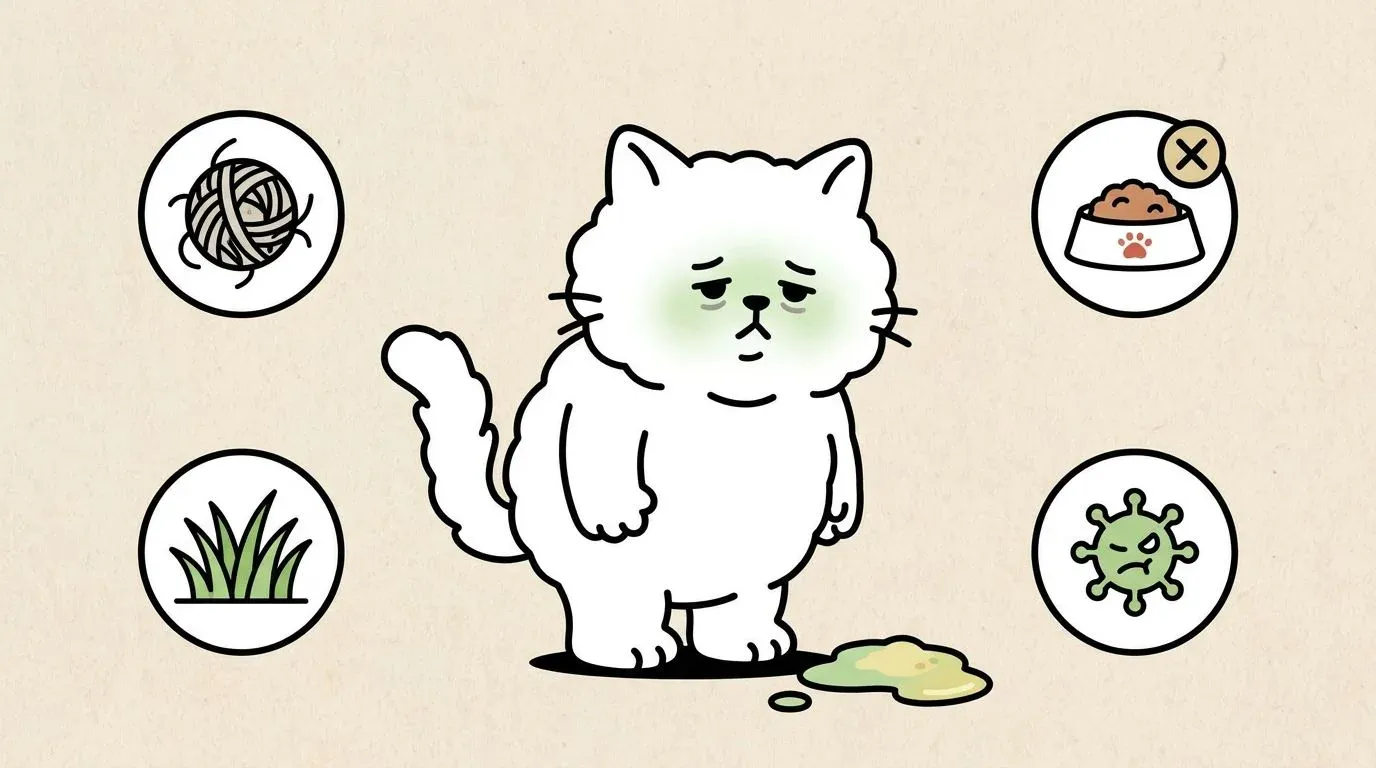
Your cat vomits, and you immediately wonder: is this serious, or just a hairball? The instinct to assess fast is correct — because while some vomiting in cats is genuinely minor, other episodes signal conditions that deteriorate quickly without treatment.
This guide addresses the full picture: the difference between vomiting and regurgitation, the seven most common causes, a color-by-color chart with urgency ratings, clear criteria for when to call the vet, and a step-by-step home care protocol. Whether your cat is vomiting once or repeatedly, you will leave with enough information to make a confident decision.
Vomiting vs. Regurgitation: Know the Difference First
These two events look similar but have different causes, different diagnostic paths, and different urgency levels. Confusing them can lead owners and even some clinicians toward the wrong workup.
What Vomiting Looks Like
Vomiting is an active, forceful process driven by coordinated contractions of the diaphragm and abdominal muscles. Before vomiting, most cats show a warning phase: anxious behavior, excessive lip-licking or drooling, and repeated swallowing. The act itself involves visible heaving — the whole body contracts rhythmically — and the expelled material has typically been in the stomach long enough to be partially digested, appearing bile-stained, foamy, or mixed with liquid.
Key characteristics:
- Preceded by nausea signs (drooling, lip-licking, restlessness)
- Involves visible abdominal heaving
- Material is often partially digested, discolored, or contains bile
- Can occur minutes to hours after eating
What Regurgitation Looks Like
Regurgitation is a passive process — there is no heaving, no warning phase, and no abdominal effort. Food or fluid simply flows back up from the esophagus before it reaches the stomach. The expelled material is typically undigested: tube-shaped, covered in mucus, and often resembling the food that was just eaten. Many cats will immediately attempt to re-eat the material (unpleasant to watch, but diagnostically informative).
Key characteristics:
- No warning signs; the cat may appear surprised
- No abdominal contractions
- Material is undigested, often tubular in shape
- Usually occurs within minutes of eating
Why the Distinction Matters for Diagnosis
Vomiting points toward gastric or systemic causes — stomach inflammation, intestinal disease, toxin ingestion, kidney or liver dysfunction. Regurgitation points toward esophageal causes: megaesophagus, esophageal stricture, or a physical obstruction.
If your cat is “throwing up undigested food,” the most likely explanation is regurgitation rather than true vomiting. This distinction should be the first question your veterinarian asks — and it is one you can help answer by observing whether heaving occurred.
7 Common Reasons Cats Vomit
1. Hairballs
Hairballs (trichobezoars) are the most frequently cited cause of vomiting in domestic cats. During grooming, backward-facing keratin spines on the tongue funnel ingested fur into the esophagus. Most hair passes through the digestive tract normally, but accumulations in the stomach trigger vomiting when they cannot be cleared by normal motility.
Hairball vomiting has a recognizable pattern: repeated retching, often at night or early morning, producing a cylindrical, dark brown or gray mass. For detailed prevention strategies including grooming routines and dietary fiber approaches, see our guide to cat hairball prevention.
Frequency above one to two episodes per month — even if only hairballs are produced — warrants a digestive health discussion with your vet.
2. Eating Too Fast or Too Much
When a cat consumes food faster than its stomach can accommodate, the stretch receptors in the gastric wall trigger an ejection reflex. The vomit in these cases typically appears shortly after eating, contains undigested or barely digested food, and has a relatively neutral smell.
Cats that compete for resources in multi-cat households, cats fed once daily in large portions, and cats with high food motivation are the most common candidates. This is one of the most benign causes, but chronic overeating is a risk factor for obesity — a condition with its own downstream health implications.
3. Empty Stomach (Bile Vomiting)
Some cats vomit yellow or green bile when their stomach has been empty for an extended period — typically in the early morning hours before breakfast. This is sometimes called bilious vomiting syndrome and occurs when bile refluxes from the small intestine into the stomach, irritating the gastric lining.
The vomit is characteristically yellow-green, foamy, and produced on an empty stomach. Many cats are otherwise completely normal. Feeding a small portion of food before bed often resolves the pattern by keeping the stomach partially occupied overnight.
4. Foreign Object Ingestion
Cats are attracted to string, ribbon, rubber bands, small toys, and foil, all of which can cause partial or complete gastrointestinal obstruction if swallowed. Linear foreign bodies (string threaded under the tongue or wrapped around the base of the tongue) are particularly dangerous: as the intestine attempts to contract around the string, it can bunch up and perforate.
Signs suggesting a foreign body include repeated, unproductive vomiting, significant lethargy, pain on abdominal palpation, and refusal to eat. This is a surgical emergency. If you see string under your cat’s tongue or protruding from the rectum, do not pull it — contact a veterinarian immediately.
5. Food Sensitivity or Allergy
Dietary protein sensitivities in cats most commonly involve chicken, beef, fish, and dairy. The gastrointestinal response can include chronic vomiting (typically several times per week), intermittent diarrhea, and in some cases, skin changes such as facial pruritus.
Unlike acute vomiting, food sensitivity vomiting tends to be chronic and low-grade — easy to dismiss as “just how this cat is.” An elimination diet trial using a novel protein or hydrolyzed protein diet, conducted under veterinary supervision for eight to twelve weeks, is the standard diagnostic approach.
6. Stress and Environmental Changes
The gut-brain axis is well-established in feline medicine. Cats experiencing stress — from a move, a new household member, construction noise, or disrupted routines — can develop acute or chronic vomiting. Stress activates the hypothalamic-pituitary-adrenal axis, increasing cortisol levels that directly affect gastrointestinal motility and mucosal integrity.
Stress-related vomiting often coincides with identifiable life events and resolves when the stressor is addressed. Environmental enrichment, predictable feeding schedules, and safe retreat spaces are the primary management tools. For a comprehensive approach, see our guide to cat stress relief and home care.
7. Underlying Health Conditions
Chronic or progressive vomiting frequently points to an underlying systemic condition. The most common in adult and senior cats include:
- Chronic kidney disease (CKD): Accumulation of uremic toxins causes nausea and vomiting. CKD is one of the leading causes of vomiting in cats over seven years old. If your cat also shows increased thirst or urination, weight loss, or a dull coat alongside vomiting, a kidney panel is a priority. See our guide to cat kidney disease and diet for nutritional management context.
- Hyperthyroidism: Excess thyroid hormone accelerates gastrointestinal transit and can cause vomiting, weight loss despite increased appetite, and hyperactivity. Common in cats over ten years.
- Inflammatory bowel disease (IBD): Chronic immune-mediated inflammation of the gastrointestinal mucosa leads to recurrent vomiting and diarrhea, often associated with weight loss.
- Pancreatitis: Inflammation of the pancreas produces acute vomiting, often with lethargy and abdominal pain.
- Diabetes mellitus: Poorly regulated blood glucose can cause intermittent vomiting, along with classic signs of increased thirst, urination, and weight loss despite a good appetite.
If your cat is vomiting more than twice a week without a clear benign cause, bloodwork and urinalysis are the appropriate next step.
Cat Vomit Color Chart: What Each Color Means
The color and consistency of vomit provide important diagnostic information. Use this table as a triage reference — not a replacement for veterinary assessment.
| Color | Appearance | Most Likely Cause | Urgency |
|---|---|---|---|
| Yellow or green | Foamy or liquid | Bile (empty stomach) | Low — monitor |
| White foam | Frothy, bubbly | Gastric acid / empty stomach | Low — monitor |
| Clear liquid | Watery, possibly with mucus | Water, saliva, esophageal fluid | Low — monitor |
| Undigested food | Tubular, food-colored | Regurgitation (esophageal) | Low-moderate — note frequency |
| Pink or red | Streaks or uniform | Fresh blood — gastric or esophageal bleeding | Urgent — vet same day |
| Brown granular | ”Coffee grounds” texture | Digested blood — bleeding in stomach/small intestine | Urgent — vet same day |
| Dark brown, foul-smelling | Brown-black liquid | Late obstruction, intestinal contents | Emergency — vet immediately |
| Green with grass or plant material | Green, chunky | Grass ingestion | Low — typically self-limiting |
Yellow or Green — Bile
Yellow or yellow-green vomit almost always contains bile, a digestive fluid produced by the liver and stored in the gallbladder. Bile enters the small intestine during digestion; when the stomach is empty for several hours, it can reflux backward and irritate the gastric lining, triggering vomiting.
A single episode in an otherwise healthy, eating cat is usually not alarming. If it recurs consistently — especially in the morning before breakfast — ask your vet about adjusting the feeding schedule or ruling out bilious vomiting syndrome.
White Foam — Gastric Acid
White or off-white foamy vomit is produced when gastric acid mixes with swallowed air and mucus. It is commonly associated with an empty stomach, mild gastritis, or hairball-related retching where no hairball is produced.
Occasional white foam vomiting (a few times per month) in a cat that otherwise eats and behaves normally is generally low concern. Repeated episodes, or white foam accompanied by lethargy or anorexia, warrant veterinary evaluation.
Pink or Red — Possible Bleeding
Any pink or red coloration in vomit suggests the presence of fresh blood. Sources can range from minor esophageal irritation from repeated retching (low concern) to active gastric ulceration or a bleeding tumor (high concern). A single faint pink streak after repeated vomiting is less alarming than bright red or clotted blood in the first vomiting episode.
Do not wait to see if this resolves on its own. Contact your veterinarian the same day blood is observed in vomit.
Brown — Digested Blood or Food
Brown vomit has two distinct presentations. Brown granular material with a “coffee grounds” appearance indicates blood that has been partially digested by stomach acid — a sign of active bleeding upstream in the gastrointestinal tract. This requires same-day veterinary attention.
Uniformly brown, non-granular vomit may simply contain recently eaten food or bile mixed with food material. Context matters: if your cat just ate a brown-colored meal and vomited shortly after, this is less concerning. If the vomit appears on an empty stomach with a foul odor, treat it as urgent.
Clear Liquid — Water and Mucus
Clear vomit is typically composed of gastric fluid, water, or esophageal secretions. It often indicates an empty stomach or mild esophageal irritation. Cats that drink water quickly and then vomit clear liquid are often doing so because they drank too fast.
Repeated clear liquid vomiting — especially without any food intake — can indicate an obstruction preventing anything from passing into the intestine and should be assessed by a vet.
My Cat Keeps Throwing Up but Seems Fine — Should I Worry?
This is one of the most common concerns veterinarians hear, and it deserves a direct answer: a cat that vomits occasionally but eats well, maintains normal energy, and shows no other symptoms may have a benign pattern — but “seems fine” does not eliminate the possibility of chronic disease.
Occasional vomiting (1–2 times per month): Most commonly benign. Likely causes include hairballs, eating too fast, or mild dietary sensitivity. Monitor and keep a log.
Frequent vomiting (more than twice per month) with normal behavior: Requires investigation even without obvious illness. Chronic kidney disease, hyperthyroidism, and IBD can all present in cats that appear relatively well between episodes. Bloodwork is the appropriate next step.
Progressive increase in vomiting frequency: If your cat vomited twice a month six months ago and is now vomiting twice a week, the trend is more important than any single episode. This pattern demands a veterinary workup regardless of how the cat seems in between episodes.
The distinction between acute vomiting (sudden onset, short duration) and chronic vomiting (persisting more than two to three weeks) matters clinically. Acute vomiting more often reflects dietary indiscretion or infectious causes; chronic vomiting more often reflects structural or metabolic disease.
What to Do When Your Cat Vomits: Step-by-Step
Unless vomiting is frequent, severe, or accompanied by red-flag symptoms (see the next section), the following protocol covers most acute single-episode scenarios at home.
Step 1: Observe and Document
Before doing anything, observe your cat’s behavior and note:
- Number of vomiting episodes in the past 24 hours
- Color, consistency, and approximate volume of vomit
- Whether retching or heaving was involved (true vomiting vs. regurgitation)
- What and when the cat last ate
- Any recent environmental changes, new foods, or access to plants or household objects
- Current behavior: alert and interested, or lethargic and withdrawn?
This information is valuable for any subsequent vet consultation and helps you assess severity accurately rather than reacting to the event emotionally.
Step 2: Withhold Food Temporarily
For an adult cat that vomited once, withhold food for two to four hours to allow the stomach to settle. This brief fast reduces the likelihood of additional vomiting triggered by gastric contents. Do not fast for longer than four to six hours without veterinary guidance — extended fasting in cats risks hepatic lipidosis (fatty liver disease), particularly in overweight cats.
Kittens under six months should not be fasted at all without a veterinarian’s instruction.
Step 3: Offer Small Amounts of Water
After the brief fasting period, offer fresh water in small amounts. Watch whether the cat drinks comfortably without vomiting again. Cats that vomit water immediately, or that are showing signs of dehydration (skin tenting, tacky gums, sunken eyes), need veterinary care rather than continued home management.
Step 4: Reintroduce Food Gradually
After two to four hours of no further vomiting, offer a small meal — roughly one-quarter of a normal portion. A bland option (plain cooked chicken or a gastrointestinal-formulation veterinary food) is preferable to the cat’s usual diet if the vomiting cause is unknown. If this stays down, return to normal feeding over the next 12 to 24 hours.
If vomiting resumes with food introduction, do not attempt a second fast — contact your veterinarian.
When to Take Your Cat to the Vet
The following symptoms indicate a situation that is beyond safe home management. Use this as a checklist: if any item applies, contact your veterinarian today or proceed to an emergency clinic.
Go to the vet same day if your cat:
- Has vomited three or more times in 24 hours
- Has blood in the vomit (any pink, red, or coffee-ground material)
- Has been vomiting for more than 24 to 48 hours, even if mild
- Is lethargic, hiding, or significantly less responsive than usual
- Has not eaten for more than 24 hours
- Shows signs of dehydration: dry or sticky gums, loss of skin elasticity, sunken eyes
- Is also having diarrhea alongside vomiting — fluid loss from both ends increases dehydration risk rapidly
- Has lost noticeable weight over the past weeks or months
- Appears to be in abdominal pain (hunched posture, reluctance to be touched on the belly)
- Has potentially swallowed a foreign object, string, or toxic plant
Go to an emergency clinic immediately if:
- Vomiting is violent and continuous with no relief
- The abdomen appears swollen or distended
- The cat is unable to stand or is collapsing
- Vomit smells strongly of feces — possible intestinal obstruction
A useful rule of thumb from feline internal medicine: when in doubt, call your vet and describe the symptoms. Most clinics can help you triage over the phone and determine whether same-day care is needed.
How to Prevent Cat Vomiting
Not all vomiting is preventable, but addressing the most common causes reduces episode frequency significantly.
Feeding Schedule and Portion Control
Irregular feeding schedules and large single portions are among the most correctable risk factors. Cats that consume their entire daily caloric intake in one meal are more likely to eat rapidly, distend the stomach, and vomit. Dividing daily food into two or three smaller meals stabilizes gastric volume and reduces the bile accumulation that leads to morning vomiting.
Overweight cats face a compounding risk: obesity impairs gastrointestinal motility and increases the likelihood of regurgitation. Our guide to managing cat obesity and diet covers safe caloric reduction strategies.
Slow Feeder Options
For cats that eat too quickly, a puzzle feeder, lick mat, or divided slow-feeder bowl physically limits intake rate without requiring dietary restriction. These tools extend mealtime from under a minute to several minutes, reducing gastric distension and the likelihood of rapid re-vomiting.
Hairball Management
Regular brushing reduces the volume of ingested fur. For cats that produce frequent hairballs despite brushing, a dietary fiber increase (through a hairball-formula food or added pumpkin) can improve gut motility. Petroleum-based hairball remedies can provide short-term relief but should not substitute for addressing the underlying cause.
Reducing Environmental Stress
Cats experiencing chronic stress often develop gastrointestinal symptoms including vomiting. Maintaining consistent daily routines, providing vertical space and hiding areas, and introducing household changes gradually all reduce the physiological stress load on the digestive system. The relationship between stress and vomiting in cats is documented in veterinary behavioral medicine literature and is often underestimated by owners.
Regular Vet Check-ups
For adult cats over seven years, annual bloodwork and urinalysis allow early detection of kidney disease, hyperthyroidism, and diabetes — all of which cause chronic vomiting that progresses gradually. Catching these conditions early dramatically improves management outcomes. Many cats with CKD, for instance, can maintain quality of life for years with appropriate dietary adjustment when the disease is identified before advanced stages.
FAQ
Why do indoor cats vomit if they don't eat grass or hairballs?
How many days of vomiting before going to the vet?
What does unhealthy cat vomit look like?
Is it normal for a cat to vomit and then act completely normal?
Can I give my cat anything at home for vomiting?
Related Articles
7 Silent Signs of Cat Arthritis Most Owners Miss
Cat arthritis symptoms are easy to miss because cats hide pain instinctively. Learn the 7 behavioral signs, how vets diagnose feline joint disease, and what you can do at home.
Dog Skin Allergies: Types, Symptoms, and Management Guide
Dog skin allergies: 3 types, symptom patterns by location, 8–12 week elimination diet protocol, and treatment options including JAK inhibitors.
Dog Arthritis: Symptoms and Management
Recognize early signs of arthritis in dogs and learn effective management strategies for pain relief and improved mobility.
Dog Cruciate Ligament Tear: 7 Things Every Owner Must Know
Dog cruciate ligament tear guide: recognize symptoms, compare TPLO vs TTA surgery, follow a phased recovery timeline, and protect the opposite knee.
Dog Ear Infections: Causes, Symptoms, Treatment & Prevention
Dog ear infection causes, symptoms, and treatment: bacterial vs yeast differences, high-risk breeds, step-by-step ear cleaning, and when to see a vet.
Is Your Dog Showing Signs of IVDD? Symptoms, Stages, and What to Do
Learn to recognize IVDD in dogs symptoms by grade and spinal region, understand treatment options from conservative care to surgery, and manage recovery at home.
Dog Hip Dysplasia: 6 Essential Facts Every Owner Should Know
Learn the key facts about dog hip dysplasia — from at-risk breeds and early symptoms to PennHIP vs OFA diagnosis and home care exercises.
Why Is My Dog Limping? A Cause-by-Cause Diagnosis Guide
Dog limping on front or back leg? Learn the most common causes by leg and age, a home observation checklist, and when the limp needs emergency care.
If Your Dog's Hind Legs Are Getting Thinner, It Could Be Sarcopenia
Dog muscle atrophy in hind legs is an early warning sign of sarcopenia. Learn the stages, causes, BCS/MCS self-assessment, and evidence-based recovery strategies.
The Hidden Link Between Your Dog's Weight and Joint Health
Extra weight does far more than strain your dog's joints — it actively inflames them. Learn the dual-pathway science and a practical roadmap to protect joint health.
Dog Periodontal Disease: Symptoms, Stages, and What Every Owner Should Know
Learn the 4 stages of dog periodontal disease symptoms, warning signs, treatment options, and daily home care steps to protect your dog's teeth and overall health.
Puppy Growth Plate Care: Safe Exercise and Breed Timelines
Learn how to protect puppy growth plates with breed-specific closure timelines, age-based exercise limits, and nutrition guidelines. Evidence-based guide.
Complete Guide to Patellar Luxation in Dogs
Learn about the causes, symptoms, grades, treatment options, and prevention of patellar luxation in dogs.
A Veterinary Guide to Cat Dental Health: From Home Care to Professional Treatment
Protect your cat's dental health with vet-backed guidance on periodontal disease, FORL, stomatitis, a 4-week toothbrushing protocol, and cleaning criteria.
Kennel Cough in Dogs: Symptoms, Treatment, and Prevention Explained
Recognize kennel cough symptoms, distinguish it from tracheal collapse and heart disease, and learn which vaccines offer the best protection for your dog.
Why Is My Dog Reverse Sneezing? Causes, Remedies, and When to See a Vet
Learn what causes reverse sneezing in dogs, how to distinguish it from tracheal collapse or kennel cough, and when the symptom warrants a vet visit.