 Cirius Petpedia
 Dog Stroller Guide: Choose the Right One for Joint Health
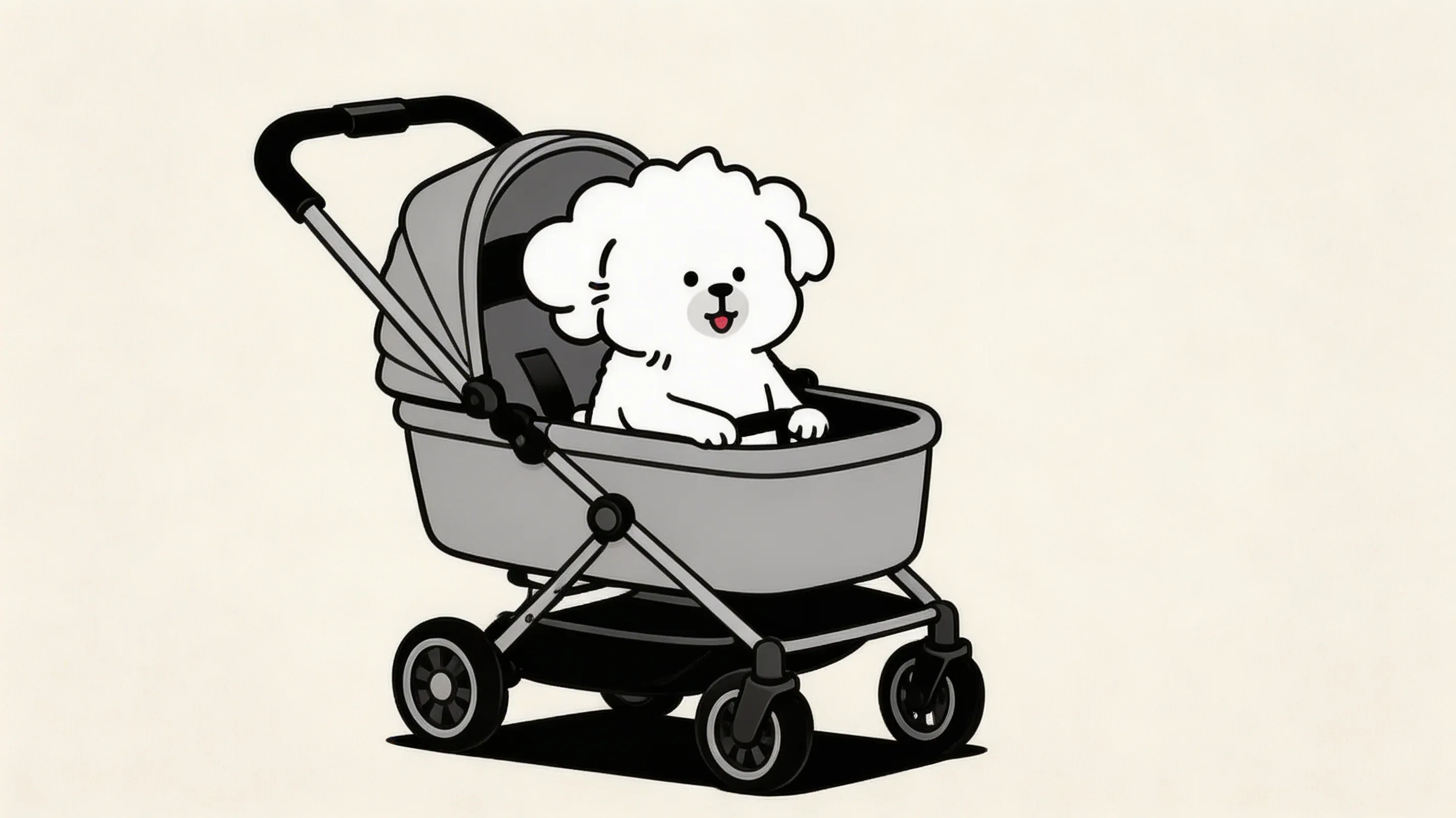
If your first reaction to dog strollers is skepticism, you’re not alone. In many circles, the image of a dog in a stroller reads as overindulgence. But spend time with a veterinary rehabilitation specialist, and that perception shifts quickly. For dogs with arthritis, hip dysplasia, post-surgical restrictions, or the cumulative wear of senior joints, a stroller isn’t a luxury item — it’s a mobility aid that can meaningfully extend the quality and duration of outdoor life.
This guide approaches the topic from a joint health perspective: who actually benefits, what the mechanical reasoning is, how to choose based on your dog’s specific condition and size, and how to train a dog to accept the stroller comfortably.
Do Dogs Really Need Strollers?
The short answer is: some dogs genuinely do, and many more would benefit from one than currently use one.
More Than a Luxury: A Mobility Aid
The cultural framing of dog strollers as an excess tends to overlook the physical reality of dogs living with chronic musculoskeletal conditions. A dog with moderate-to-severe osteoarthritis still wants to go outside. The sights, sounds, and social interactions of outdoor time matter to a dog’s mental wellbeing — but a long walk on pavement may cause inflammation that takes days to settle.
A stroller solves this specific problem. The dog gets outdoor time and stimulation. The joints get rest during the portions of the outing that would otherwise cause excessive loading. This isn’t pampering — it’s a practical workaround for a real limitation.
The same logic applies to post-surgical recovery. After orthopedic procedures such as tibial plateau leveling osteotomy (TPLO) for cruciate ligament repair, veterinary surgeons routinely restrict weight-bearing activity for several weeks. A stroller allows the dog to accompany the family outdoors without violating those restrictions.
When Veterinarians Recommend Dog Strollers
Veterinary rehabilitation practitioners and general practice vets commonly suggest strollers in the following situations:
- Chronic arthritis (osteoarthritis): When joint degeneration has progressed to the point where extended pavement walking causes consistent post-activity pain or stiffness
- Hip dysplasia: Particularly in large breeds (German Shepherd, Labrador Retriever, Golden Retriever) where abnormal hip socket development increases loading stress on every step
- Patellar luxation: Small-to-medium breeds with patellar luxation at Grade 3 or 4 often struggle with sustained walking — strollers reduce the frequency of luxation events during outings
- Post-orthopedic surgery: Controlled mobilization following TPLO, femoral head ostectomy, or other joint surgeries
- Neurological conditions: Degenerative myelopathy or intervertebral disc disease (IVDD) affecting rear limb function
- Extreme weather tolerance issues: Very small breeds, brachycephalic dogs, or senior dogs vulnerable to heat or cold who still benefit from outdoor stimulation
The AKC notes that strollers are appropriate for dogs “with medical conditions that make it painful or difficult to walk,” including post-surgery patients and senior dogs with mobility limitations.
How Dog Strollers Protect Joint Health
Understanding the biomechanical argument behind stroller use makes selection decisions clearer.
Reducing Impact on Arthritic Joints
Every step a dog takes on a hard surface transmits ground reaction force up through the paw, wrist, elbow, shoulder, and spine (front limbs) or paw, hock, stifle, hip, and lumbar spine (rear limbs). In a healthy joint with intact cartilage, synovial fluid absorbs and distributes this force effectively.
In an arthritic joint, cartilage has degraded. Bone-on-bone contact increases, inflammation becomes chronic, and the surrounding soft tissue — tendons, ligaments, joint capsule — compensates by tensioning abnormally. On a 30-minute pavement walk, a medium-sized dog takes roughly 2,400–3,000 steps. That’s thousands of impact loading events on joints that have lost their shock-absorption capacity.
Stroller use during longer portions of an outing can cut those loading events dramatically — allowing the dog to walk shorter, more comfortable distances while still experiencing the outing in full.
Supporting Senior Dogs’ Quality of Life
Dogs over 8–10 years old (depending on breed and size) commonly show what geriatric veterinary medicine describes as reduced activity tolerance: shorter distances before fatigue, longer recovery time after exercise, reluctance to begin movement after rest periods. This is not purely behavioral — it reflects the compounding effects of sarcopenia (age-related muscle loss), joint stiffness, and cardiovascular changes.
For senior dogs with joint conditions, the choice isn’t always between “full walk” and “no walk.” A stroller allows a calibrated middle ground: walk the easy flat sections, ride the longer stretches, and return home without the post-activity stiffness that discourages outdoor time over subsequent days.
Post-Surgery Recovery and Mobility
Veterinary rehabilitation guidelines for orthopedic surgery recovery emphasize graduated return-to-activity protocols. Strollers fit naturally into the early phases of recovery, when a dog is cleared for controlled outdoor stimulation but not for sustained weight-bearing.
According to the American College of Veterinary Sports Medicine and Rehabilitation, structured rehabilitation after orthopedic surgery includes passive and active range-of-motion exercises, hydrotherapy, and controlled land activity — all of which benefit from the ability to regulate exactly how much physical exertion occurs during an outing.
Types of Dog Strollers Compared
Strollers for dogs fall into three main categories. Each has a distinct set of trade-offs depending on use case.
3-Wheel vs 4-Wheel: Maneuverability and Stability
| Feature | 3-Wheel | 4-Wheel |
|---|---|---|
| Turning radius | Tighter, better for trails | Wider, better for open paths |
| Stability on uneven terrain | Moderate | Higher |
| Typical weight capacity | Up to 30–40 lbs | Up to 80–100 lbs |
| Best for | Active outdoor use, trails, grass | Pavement, parks, urban use |
| Suspension quality | Often better (all-terrain focus) | Varies widely |
Three-wheel strollers typically feature a single front wheel that pivots freely, enabling tighter turns and better trail performance. They tend to have more robust suspension, making them the stronger choice for park trails, grass, or light gravel. Four-wheel designs distribute weight more evenly across a stable rectangular base, which is important for heavier dogs and better suited for smooth pavement or shopping-center environments.
For dogs with vestibular issues or balance problems, the added stability of a 4-wheel design is worth prioritizing regardless of terrain.
Detachable Carrier vs All-in-One
Detachable carrier strollers allow the carrier portion to separate from the wheeled frame and function as a standalone bag (with shoulder strap or top handle). This is useful if you’re combining a stroller outing with a car trip or entering a store — the carrier portion can be used independently while the frame stays in the car.
All-in-one designs are typically lighter, simpler, and less expensive. For owners who use the stroller primarily for neighborhood walks or park outings without carrier-only use cases, all-in-one models are sufficient.
Lightweight and Foldable Options
Weight matters when you’re loading a stroller in and out of a vehicle. Most quality strollers fold to a compact width and stand upright when folded. Look for:
- Fold mechanism that can be operated one-handed
- Folded dimensions that fit your vehicle cargo area
- Frame weight under 15 lbs for easy handling
- Self-standing when folded (avoids needing to lean it against something in a parking lot)
Lightweight strollers (under 12 lbs) typically sacrifice some carrying capacity and suspension quality. If your dog is over 25 lbs or you plan off-pavement use, a slightly heavier but more durable frame is usually worth it.
How to Choose the Right Dog Stroller
This is where breed, condition, and typical use pattern converge into actual selection criteria.
Size and Weight Capacity
Measure two things before you look at any product:
- Dog length: nose to tail base (not tail tip)
- Dog height: floor to the top of the shoulder (withers height)
The cabin interior should exceed your dog’s length by at least 4 inches, allowing a natural standing posture without the snout pressing the front mesh. For resting, the dog needs to be able to turn around and lie down fully — width matters as much as length for this.
Weight capacity should be rated at least 20% above your dog’s actual weight. A 40-lb dog should be in a stroller rated for at least 48 lbs. Strollers loaded near their stated maximum tend to handle poorly and wear out faster.
Quick size reference:
| Dog Size | Typical Weight | Minimum Cabin Length | Recommended Stroller Capacity |
|---|---|---|---|
| Small (Chihuahua, Pomeranian) | Under 12 lbs | 16 inches | 15–20 lbs |
| Medium (Beagle, Corgi) | 12–30 lbs | 22 inches | 35–40 lbs |
| Large (Labrador, Husky) | 30–60 lbs | 30 inches | 70–80 lbs |
| Extra-large (German Shepherd, Golden) | 60–90 lbs | 36 inches | 100+ lbs |
Wheels and Suspension for Joint Protection
This is the most clinically relevant feature for dogs using a stroller as a mobility aid. Suspension quality directly determines how much vibration and impact is transmitted from the ground surface into the cabin where the dog rests.
- Air-filled (pneumatic) tires: Best suspension, smooth ride on varied terrain, require occasional inflation
- Foam-filled tires: No inflation needed, good shock absorption, slightly heavier
- Plastic wheels: Lightweight, low maintenance, transmit more vibration — not ideal for dogs with joint pain
For dogs with arthritis symptoms or hip dysplasia, pneumatic or foam-filled tires are worth the additional cost and maintenance. The vibration absorbed by the tire never reaches the joint.
Front-wheel suspension (a coil spring or elastomer system at the front fork) makes a meaningful difference on sidewalk cracks and curb transitions. This is often a distinguishing feature between entry-level and mid-tier strollers.
Ventilation and Visibility
Adequate airflow prevents heat buildup, which is especially important on warm days and for brachycephalic breeds (Bulldogs, Pugs, French Bulldogs) that are already compromised in their cooling efficiency.
Look for mesh panels on at least two sides (front and top, or front and both sides). The mesh should be fine enough to prevent paw entanglement but not so tight that it blocks airflow. A zippered top opening allows the dog to extend their head out in good weather, which many dogs prefer.
Retractable rain covers should store neatly and attach securely without gaps. A cover that flaps or gaps in mild wind creates noise stress for the dog and provides incomplete weather protection.
Portability and Storage
Consider the full journey: from home to car, car to park, park back to car. Every transition point is where a cumbersome stroller becomes frustrating to use. Evaluate:
- Folded dimensions relative to your vehicle trunk or back seat
- Whether the stroller stands on its own when folded (useful in parking lots)
- Storage basket under the cabin (useful for leash, water bowl, dog jacket)
- Whether brake engagement is intuitive and reliable on mild inclines
- Handlebar height adjustability for owners of varying heights
For older owners or anyone with limited upper body strength, a lightweight frame with an ergonomic single-hand fold mechanism reduces the physical barrier to consistent use.
Training Your Dog to Ride in a Stroller
Most dogs aren’t immediately comfortable in a stroller — and that’s expected. The process is gradual conditioning, not a one-session exercise.
Step 1: Familiarization
Set up the stroller indoors in a space your dog uses regularly. Open the cabin fully and let the stroller sit there passively for one to two days. Allow your dog to approach at their own pace. Don’t push interaction.
Once your dog is voluntarily sniffing the stroller without visible stress, place a treat or a piece of their regular food inside the cabin and allow them to retrieve it without closing anything. Repeat this several times across two to three days. The goal is a clear association: stroller = something good happens.
Step 2: Stationary Loading Practice
Begin asking your dog to get into the cabin voluntarily (use a “load up” or “in” cue, paired with a treat). Once inside, let them eat the treat and get out immediately. Do not close the stroller on the first several sessions.
Gradually extend the time the dog spends inside before rewarding — from a few seconds to a minute. Then begin gently zipping the mesh closed for short intervals. Stay calm and present throughout. Dogs that show stress signals (panting, yawning excessively, attempting to exit repeatedly) are telling you to slow down the progression.
For anxious dogs, a familiar blanket or worn T-shirt placed in the cabin provides olfactory comfort during early sessions.
Step 3: Short-Distance Rides
Once your dog is relaxed inside a stationary, closed stroller, begin moving — indoors first, then on a short flat outdoor surface. Keep the first outdoor ride under five minutes. Watch for stress signals during movement: pawing at the mesh, sustained panting, vocalizing.
If the dog seems calm, gradually extend duration. Within two to three weeks of consistent practice, most dogs reach a comfort level where they settle and rest during the ride rather than standing and shifting.
For dogs being introduced to a stroller during post-surgical recovery — who may already be mildly sedated or pain-managed — the process often moves faster, as their energy for resistance is reduced.
Important Tips for Safe Stroller Use
A stroller used well extends a dog’s outdoor life. Used carelessly, it can create dependence or physical risk.
Balancing Walking and Stroller Time
The stroller should not become a substitute for all walking. Muscle mass requires regular use to maintain — even in dogs with arthritis, the muscles around the joint provide critical stabilization. Veterinary rehabilitation specialists emphasize that controlled, low-impact walking is therapeutic for arthritic dogs, not harmful, when done at appropriate duration and surface type.
A practical approach: walk your dog on the most comfortable terrain available (grass or dirt is preferable to pavement) for as long as they show normal gait and comfort, then transition to the stroller for the remaining portion of the outing. This preserves the therapeutic benefit of walking while preventing the overexertion that causes post-activity flare-ups.
If you’re unsure how much walking your dog can handle safely, your veterinarian or a certified canine rehabilitation practitioner can provide a structured activity protocol. For dogs whose arthritis or hip dysplasia is actively managed, that protocol may change seasonally or following flare-up periods.
Weather and Temperature Considerations
Stroller cabins can accumulate heat quickly in direct sunlight. In summer, avoid leaving a dog in a stationary stroller in the sun — even briefly. Move through shaded routes, use mesh panels for maximum airflow, and carry water for your dog.
In cold or wet weather, retractable rain covers and fleece-lined cabin bases protect from wind and rain without full confinement. Avoid fully sealing a cabin with a rain cover for extended periods in freezing temperatures — condensation can build and the dog loses the ability to thermoregulate through panting effectively.
For road trips and car travel that include stroller use at the destination, consider the transition from an air-conditioned car interior to summer heat — allow your dog a few minutes to acclimate before outdoor use. A stroller also proves practical for cabin or vacation rental trips where unfamiliar terrain or long walking distances may exceed a senior or mobility-limited dog’s comfortable range.
Public Space Etiquette
Dog strollers are increasingly common in parks, on trails, and in pet-friendly retail environments, but social friction still arises occasionally. A few practical notes:
- Keep a leash clipped to your dog’s collar even while in the stroller — you may need to exit quickly if another dog approaches aggressively
- When passing other dogs, slow the stroller or stop to allow the greeting dynamic to proceed calmly; a moving stroller can trigger chase instincts in some dogs
- In off-leash areas, be prepared for other dogs to approach the stroller with intense curiosity — a calm response from you signals safety to your own dog
- On hiking trails, yield to hikers on narrow sections; strollers on trails need wider passage than a dog on a leash
The practical goal is making stroller use unremarkable for everyone around you — which happens quickly when your dog is visibly calm and comfortable.
A dog stroller, chosen well and introduced thoughtfully, is a straightforward piece of equipment that solves a real problem. The dogs who benefit most are those whose enthusiasm for outdoor life exceeds what their joints can currently sustain. For those dogs, the stroller closes that gap — letting them participate in the walks, park visits, and outings that keep them mentally and socially engaged, even as their physical capacity shifts.
If your dog shows persistent stiffness after walks, reluctance to start moving in the morning, or gait changes that suggest discomfort, those are signs worth addressing with your veterinarian before deciding whether a stroller fits your situation. The stroller answers the mobility question — but an accurate diagnosis of what’s limiting your dog’s mobility comes first.
FAQ
Do dogs actually need strollers, or is it just a trend?
What size stroller do I need for my dog?
Can I use a stroller for a large dog with arthritis?
Will my dog be afraid of the stroller at first?
Should I use a stroller instead of walking my dog?
Related Articles
7 Proven Ways to Relieve Your Cat's Stress at Home
Learn the signs of stress in cats, what triggers it, and 7 science-backed methods for cat stress relief you can start at home today.
Dog Jumping Off Furniture: Why Their Joints Are Paying the Price
Every couch jump sends 2–5x body weight through your dog's joints. Learn how repeated landings cause joint damage and what to do about it.
What Your Dog's Sleeping Position Reveals About Their Joint Health
Dog sleeping position joint pain connection explained — learn which postures signal discomfort, how to observe changes, and how to build a joint-friendly sleep setup.
If Your Dog Lives on Hardwood Floors, Here's How to Protect Their Joints
Slippery hardwood, laminate, and tile floors quietly damage your dog's joints over time. Learn the biomechanics, floor risk comparison, and proven solutions.
Dog Tick Prevention on Walks: How to Check, Remove, and Protect Against Tick-Borne Disease
A complete guide to dog tick prevention during walks. Learn how to check for ticks, safely remove them, and protect your dog from dangerous tick-borne diseases like Lyme, Ehrlichiosis, and Babesiosis.
Dog Heat Stroke Prevention: Critical Temperature Thresholds and Warning Signs Every Owner Must Know
Learn the 4-tier temperature risk system, breed-specific vulnerabilities, pavement heat dangers, and step-by-step emergency protocol to prevent and treat dog heat stroke this summer.
If Your Dog Is Prone to Skin Issues in Wet Weather: A Seasonal Care Guide
Learn how humid and wet weather triggers yeast infections, bacterial pyoderma, and hot spots in dogs — plus a complete post-walk routine, indoor humidity management, and nutrition tips.
Planning a Car Trip With Your Dog? Essential Safety Rules You Need to Know
Complete guide to dog car travel safety: crash-tested restraint options, desensitization training, motion sickness solutions, hot car laws, and emergency protocols.
Dog Spring Outing Checklist: Safety, Hazards, and Gear
Complete dog spring outing checklist: health checks, tick and Lyme prevention, toxic plants, lawn chemicals, gear by activity, and post-outing care.
Dog Spring Shedding Care: Brushing, Skin, and Joint Health
Science-backed dog spring shedding care: brushing routines, breed guides, skin nutrition, and the skin-to-joint inflammation link grooming guides miss.
Dog Hiking Safety Tips: Joint Care and Post-Hike Recovery
Dog hiking safety tips for joint protection, trail pacing, and post-hike recovery — backed by veterinary rehab principles.
Dog-Friendly Cabin Trip: 10-Point Checklist
Dog-friendly cabin trip checklist: booking, packing, road trip, arrival, checkout, and post-trip health. Vet-informed 6-stage guide for vacation rentals.