 Cirius Petpedia
 Tracheal Collapse in Dogs: Symptoms, Grades, and Treatment
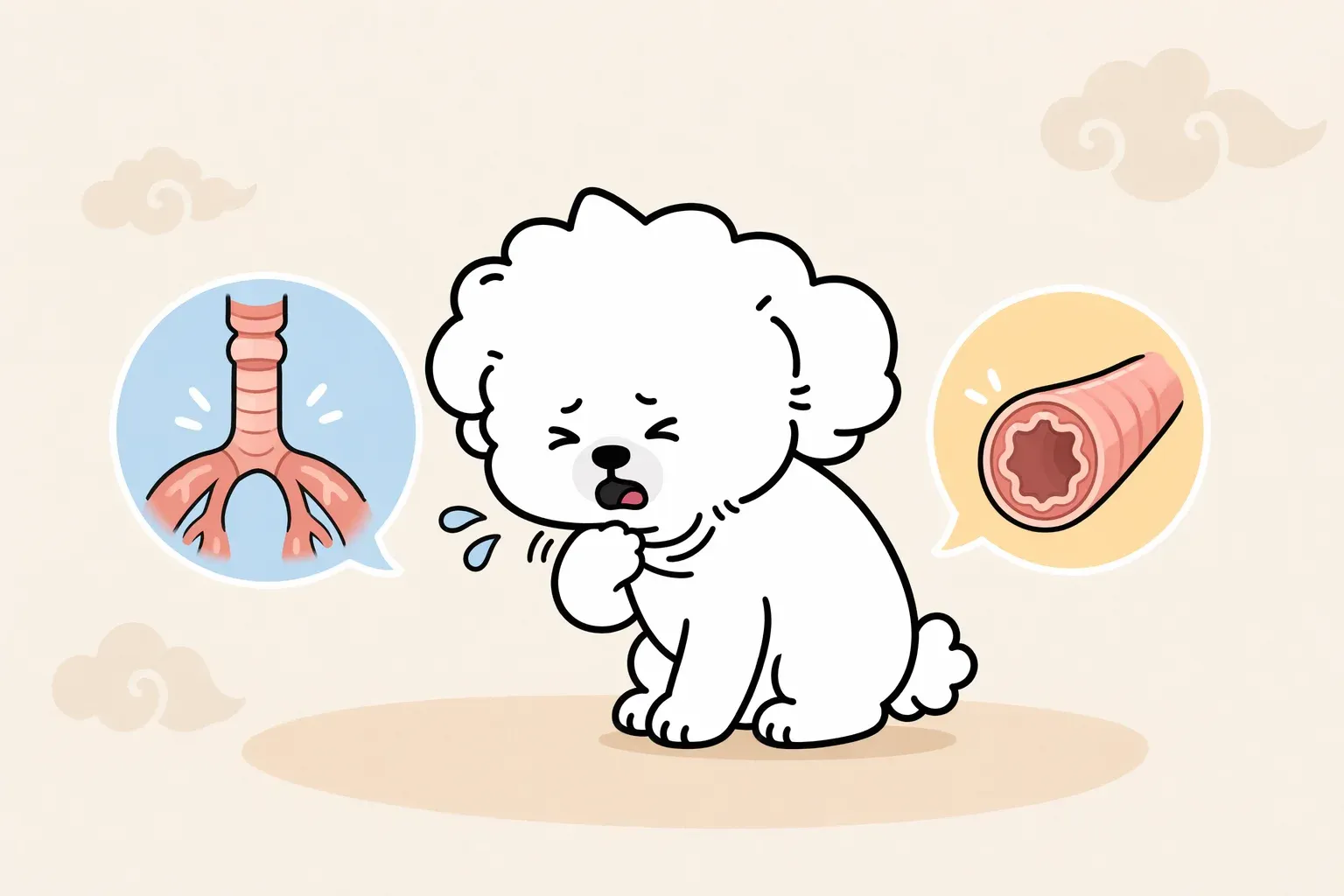
That distinctive, almost comic sound — a sudden honking noise coming from your small dog, like a goose in miniature — is one of the most alarming things a pet owner can experience. One moment your dog is trotting happily beside you, and the next they are bent forward, neck extended, producing a sound that seems to belong to a much larger and stranger animal.
For many small-breed dogs, this is the first recognizable sign of tracheal collapse, a progressive respiratory condition affecting the cartilage rings that give the windpipe its circular shape. It is more common than many owners realize — veterinary studies suggest that tracheal collapse affects a significant proportion of small-breed dogs, with some estimates placing it among the top five respiratory diagnoses in toy and miniature breeds.
This guide covers everything clinically relevant: what happens anatomically, how severity is graded, how vets confirm the diagnosis, what treatment options look like at each stage, and — critically — what to do if your dog stops breathing well at home before you can reach a clinic.
What Is Tracheal Collapse? Anatomy and How It Happens
Normal Trachea vs. Collapsed Trachea
The trachea (windpipe) is a hollow tube made up of roughly 35 C-shaped cartilage rings stacked in sequence, connected at the back by a thin membrane called the trachealis muscle. In a healthy dog, these rings keep the airway open like a flexible hose, maintaining a round cross-section that allows air to flow freely in both directions.
In tracheal collapse, the cartilage rings lose their structural rigidity — they flatten and cave inward, narrowing or obstructing the lumen (the open space through which air passes). The degree of flattening determines the clinical grade. According to the grading system established in veterinary practice and detailed in Today’s Veterinary Practice (2022), the lumen can be reduced by 25% at Grade 1 and by 75% or more at Grade 4.
The collapse can occur in the cervical (neck) segment of the trachea, the thoracic (chest) segment, or both. Cervical collapse tends to worsen during inhalation; thoracic collapse tends to worsen during exhalation. Many dogs have both, complicating both symptoms and treatment.
Tracheal Collapse vs. Reverse Sneezing vs. Kennel Cough: How to Tell Them Apart
The honking cough of tracheal collapse is distinctive, but it overlaps symptomatically with several other conditions. Misidentification can delay appropriate treatment.
| Feature | Tracheal Collapse | Reverse Sneezing | Kennel Cough |
|---|---|---|---|
| Sound | Dry, harsh honking cough | Rapid, snorting inhalations | Hacking, gagging cough |
| Duration | Seconds to minutes, recurrent | Usually under 60 seconds per episode | Persistent, days to weeks |
| Trigger | Excitement, collar pressure, exercise, heat | Eating, drinking, smells, post-sleep | Exposure to other dogs |
| Gum color during episode | May turn blue in severe cases | Normal | Normal |
| Improves with rest | Often yes | Yes (resolves spontaneously) | No — worsens over days |
| Fever | No | No | Possible |
| Contagious | No | No | Yes |
Reverse sneezing is generally benign, but it can be difficult to distinguish from tracheal collapse during a first episode. Kennel cough is caused by infectious agents and requires different management entirely. Heart disease can also produce a cough in small dogs — your vet may order an echocardiogram to rule out concurrent cardiac issues before settling on a tracheal collapse diagnosis.
Causes and Risk Factors
Genetic Predisposition and At-Risk Breeds
Tracheal collapse is primarily a genetic disease of small and toy breeds. The cartilage rings in affected dogs are structurally abnormal from birth — the matrix of the cartilage contains less glycosaminoglycan and chondroitin sulfate than normal, making the rings softer and more prone to deformation over time.
Breeds with the highest documented prevalence include:
- Yorkshire Terriers — the most commonly affected breed in most clinical studies
- Pomeranians — high prevalence, often presenting at middle age
- Chihuahuas — frequently diagnosed, even in dogs without visible obesity
- Toy Poodles and Miniature Poodles
- Shih Tzus — particularly notable in English-language veterinary literature
- Lhasa Apsos
- Pugs — already prone to respiratory issues due to brachycephalic anatomy
- Maltese — commonly cited across both Asian and Western veterinary reports
Being diagnosed in one of these breeds does not mean your dog will definitely develop the condition, but it does warrant heightened awareness and regular veterinary screening.
Obesity, Aging, and Environmental Triggers
Even dogs with a genetic predisposition may not develop clinically significant tracheal collapse until mid-life or older — the average age at first diagnosis is 6 to 7 years, according to data from multiple veterinary centers. Several factors accelerate progression or worsen existing disease:
Obesity: Excess body weight increases pressure on the thoracic cavity and forces the respiratory system to work harder. Overweight dogs with tracheal collapse have consistently worse outcomes and more frequent acute episodes than dogs maintained at an appropriate body condition score. Weight management is not optional for these dogs — it is a core part of medical treatment.
Neck collar use: Any pressure applied directly to the trachea aggravates mechanical collapse. Even brief tugging on a standard neck collar during a walk can trigger an acute episode.
Environmental irritants: Cigarette smoke, strong household cleaning products, heavily perfumed air fresheners, and poor air circulation all irritate already-inflamed airways. Seasonal allergens (pollen, mold spores) can similarly provoke episodes.
Heat and humidity: Dogs with compromised airways are less efficient at thermoregulation. Hot, humid weather dramatically increases the risk of respiratory distress.
Concurrent respiratory or cardiac disease: Tracheal collapse frequently coexists with chronic bronchitis, laryngeal paralysis, or early-stage heart disease. VCA Animal Hospitals also notes that liver disease occurs at higher rates in dogs with tracheal collapse, though the causal mechanism is not fully established. Comprehensive bloodwork is warranted at initial diagnosis.
Symptoms by Grade: The 4-Stage Classification
Veterinary severity grading for tracheal collapse is based on the percentage of tracheal lumen remaining open and the shape of the cartilage rings. The following table summarizes the classification system used in clinical practice:
| Grade | Lumen Remaining | Cartilage Shape | Typical Symptoms |
|---|---|---|---|
| Grade 1 | ~75% open (25% reduction) | Slightly flattened, dorsal membrane slightly pendulous | Occasional dry honking cough; may resolve with rest; no distress at rest |
| Grade 2 | ~50% open | Moderately flattened, membrane touching dorsal surface | Intermittent cough, exercise intolerance, mild respiratory noise; episodes triggered by excitement or exertion |
| Grade 3 | ~25% open | Severely flattened, nearly circular lumen | Frequent or continuous coughing, audible breathing at rest, significant exercise intolerance, gagging |
| Grade 4 | <25% open (often complete collapse) | Completely flattened; dorsal and ventral walls touch | Severe respiratory distress, open-mouth breathing, cyanosis (blue-tinged gums), fainting possible |
Grade 1-2: Intermittent Cough, Goose Honk Sound, Exercise Intolerance
Most dogs are first diagnosed at Grade 1 or Grade 2 because the symptoms are noticeable but not yet life-threatening. The classic goose honk sound is most characteristic at these grades — a sudden, harsh, dry cough that seems disproportionate to the dog’s size.
Owners often notice episodes clustered around specific activities: walking on a leash (especially if the collar pulls), drinking water rapidly, or being excited by visitors. After a short rest, the dog usually recovers completely and appears normal. This cyclical pattern — episodes followed by apparent normality — is one reason owners sometimes delay seeking veterinary attention, assuming the dog has simply “choked on something.”
At Grade 1-2, most dogs respond well to medical management, and the prognosis for a good quality of life is strong. This is the stage at which lifestyle changes (harness use, weight control, environmental management) have the greatest protective impact.
Grade 3-4: Persistent Respiratory Distress, Cyanosis, Fainting
As the condition progresses, episodes become longer, more frequent, and triggered by less exertion. Dogs at Grade 3 may cough continuously for minutes at a time and have audible breathing even when sitting still. Owners describe the sound as a continuous wheeze or rattle.
Grade 4 represents a medical emergency. The nearly or completely obstructed airway produces extreme respiratory effort — you may see the chest and abdomen heaving dramatically with each breath, nostrils flaring, the neck extended forward as the dog tries to maximize airway diameter. Gum color shifting from pink to pale grey or blue (cyanosis) indicates oxygen deprivation and requires immediate veterinary intervention.
At Grades 3-4, medical management alone is typically insufficient, and surgical options must be seriously considered.
How Vets Diagnose Tracheal Collapse
Physical Exam and X-Rays
A veterinarian will begin with auscultation (listening with a stethoscope) and palpation of the trachea — a slight inward deformation of the tracheal rings is sometimes palpable in the neck region, and many affected dogs will produce the characteristic cough when gentle pressure is applied to the trachea.
Standard radiographs (X-rays) taken from the side view can show tracheal narrowing. However, static radiographs are unreliable for definitive diagnosis because the collapse may only be visible during specific phases of breathing — the trachea may look normal on a radiograph taken at peak inhalation and severely narrowed on one taken during peak exhalation. For this reason, vets often take a series of radiographs across the respiratory cycle, and even then, mild to moderate collapse can be missed.
An echocardiogram is frequently recommended alongside chest X-rays to evaluate the heart. Heart enlargement pressing on the trachea or concurrent heart disease can both worsen respiratory symptoms and complicate treatment decisions.
Fluoroscopy and Bronchoscopy: The Gold Standard
Fluoroscopy is real-time moving X-ray imaging, and it is the most reliable non-invasive method for diagnosing tracheal collapse. By visualizing the airway in motion across multiple breathing cycles, fluoroscopy can definitively document when and where the collapse occurs — cervical, thoracic, or both — and assess its severity dynamically.
Bronchoscopy involves passing a thin, flexible camera down the airway under light anesthesia and visually inspecting the tracheal lumen directly. It provides the clearest possible image of cartilage deformation and membrane prolapse, and it can also reveal concurrent conditions such as chronic bronchitis or airway infections. Its limitation is the need for anesthesia in a dog that already has a compromised airway — this requires an experienced team with oxygen supplementation and reversal drugs immediately available.
Most community veterinary practices offer radiographs and can provide a provisional diagnosis. Fluoroscopy and bronchoscopy are typically performed at specialty referral centers or veterinary teaching hospitals.
Treatment Options: Medication to Surgery
Medical Management: Cough Suppressants, Bronchodilators, Steroids, and Cerenia
The majority of dogs with tracheal collapse (approximately 70%, per data cited by WebMD and VCA) are initially managed medically rather than surgically, and many remain on medical management long-term with good results. Treatment is combination-based:
Cough suppressants (antitussives): Hydrocodone is the most commonly prescribed cough suppressant for tracheal collapse in dogs in the United States. Butorphanol and tramadol are alternatives, particularly where regulations limit opioid prescriptions. The goal is not to eliminate coughing entirely but to reduce the cycle of coughing-inflammation-more coughing.
Bronchodilators: Theophylline or terbutaline relax the smooth muscle in the airway walls and may improve trachealis muscle tone, which can slightly reduce the degree of dorsal membrane prolapse. Benefit varies by individual dog.
Corticosteroids: Short-course prednisone or prednisolone reduces airway inflammation significantly. Because of the side effects associated with long-term steroid use (immunosuppression, weight gain, liver stress), vets aim to use steroids at the lowest effective dose and for the shortest necessary duration.
Maropitant (Cerenia): Originally developed as an anti-nausea medication, maropitant has documented anti-inflammatory effects in the airways and appears in multiple English-language clinical protocols for tracheal collapse. Some veterinarians include it as an adjunct to the above medications, particularly in dogs with significant coughing-induced nausea.
Sedatives (situational): Low-dose acepromazine or butorphanol can be used during acute, severe episodes to reduce anxiety and the oxygen demand that comes with respiratory distress. This is a clinic or emergency setting intervention.
Liver monitoring: Given VCA’s documented association between tracheal collapse and concurrent liver disease, baseline liver enzyme panels and periodic bloodwork monitoring are appropriate for dogs on long-term medication regimens, particularly those on repeated steroid courses.
Tracheal Stent Surgery: Procedure, Cost, and Recovery
For dogs with Grade 3 or Grade 4 tracheal collapse, or Grade 1-2 dogs who have failed adequate medical management, intraluminal tracheal stenting offers a surgical option that can dramatically restore airway diameter.
The procedure: A self-expanding nitinol (nickel-titanium alloy) stent is inserted into the tracheal lumen via bronchoscopy — no external incisions are required. The stent is deployed to hold the lumen open from the inside. The procedure typically takes 30-60 minutes under general anesthesia and requires fluoroscopic guidance to position the stent correctly.
Clinical outcomes: Studies published in the Journal of Veterinary Internal Medicine and elsewhere report that 80-90% of dogs show clinically meaningful improvement in respiratory symptoms following stent placement. The improvement is often immediate — dogs may breathe noticeably better within hours of recovery.
Cost: In the United States, tracheal stent surgery typically costs between $3,000 and $6,000 USD, including pre-surgical diagnostics, anesthesia, the stent itself, hospitalization, and initial post-operative monitoring. This does not include follow-up care, which is significant.
Recovery timeline:
- Days 1-3: Rest, anti-inflammatory medications, close monitoring for acute complications
- Weeks 1-4: Restricted activity, ongoing medication
- Months 1-3: Gradual return to normal activity; repeat imaging to confirm stent position
- Ongoing: Periodic chest X-rays to monitor for stent migration or fracture; some dogs develop secondary bacterial infections around the stent requiring antibiotic treatment
Risks and limitations: Tracheal stents do not reverse the underlying cartilage disease. Over time (typically years), the stent may fracture, migrate, or become occluded with granulation tissue. For this reason, stenting is generally considered the option of last resort in dogs that are too young (because they may outlive the stent’s functional lifespan) or when medical management remains partially effective.
Supportive Care: Nebulizers and Oxygen Therapy
For dogs with moderate to severe tracheal collapse, supplemental supportive care beyond pills can meaningfully improve quality of life between acute episodes.
Nebulization: A pet nebulizer delivers a fine mist of saline or medicated solution directly into the airways. Saline nebulization (sometimes with bronchodilator medication added) helps loosen and mobilize mucus secretions that accumulate in narrowed airways, reduces airway dryness, and can soothe irritated mucous membranes. Sessions of 10-15 minutes once or twice daily are typical. Your vet can advise on the appropriate solution and frequency for your dog’s grade.
Home oxygen therapy: For Grade 3-4 dogs or those living in locations remote from emergency veterinary care, a home oxygen concentrator provides supplemental oxygen during acute episodes. This is not a substitute for veterinary care but can stabilize a dog during transport. Oxygen concentrators for pets are available for purchase or rental; discuss this option with your vet if you live in a rural area or if your dog has had previous severe acute episodes.
What to Do in a Breathing Emergency
5-Step Home Emergency Response
None of the top search results for tracheal collapse in dogs provide a clear home emergency protocol — this is one of the most critical gaps in available information for dog owners. If your dog enters a severe acute episode of respiratory distress, follow these steps:
Step 1: Stay calm. Your anxiety transmits directly to your dog and increases their respiratory effort. Speak in a low, slow, reassuring voice. Do not restrain the dog physically unless necessary for safety.
Step 2: Move to a cool, quiet environment. Heat and stimulation worsen respiratory distress. Turn on air conditioning if available. Dim lights. Remove other pets or people from the room.
Step 3: Remove all collar pressure. If your dog is wearing a neck collar, remove it immediately or loosen it completely. Do not pull on a leash attached to a collar.
Step 4: Encourage nasal breathing. Gently hold a cupped hand briefly over the dog’s muzzle (do not cover completely) if they are panting with mouth open — this can sometimes prompt a brief switch to nasal breathing. Do not force this and do not restrict airflow.
Step 5: Contact your vet or an emergency clinic immediately. If the episode does not resolve within 2-3 minutes, gum color is deteriorating, or the dog is fainting, this is an emergency. Begin transport to the nearest emergency veterinary clinic immediately while having someone else call ahead.
If you have home oxygen and your vet has given specific guidance on its use, this is the appropriate time to use it according to those instructions.
When to Rush to the ER: Warning Signs
Do not wait. Go directly to an emergency veterinary clinic if you observe any of the following:
- Blue, grey, or white gums (cyanosis — indicates oxygen deprivation)
- Fainting or loss of consciousness
- Open-mouth breathing with extreme abdominal effort (the abdomen heaving dramatically with each breath)
- Episode lasting more than 5 minutes without improvement
- Dog cannot stand or hold their head up
- Pale or white gums (may indicate shock)
These are Grade 4-level emergencies. A dog in this state needs supplemental oxygen, injectable sedation, and potentially emergency airway management — none of which can be provided at home.
Daily Management: Slowing the Progression
Tracheal collapse cannot be reversed, but its progression can be meaningfully slowed with consistent daily management. Think of this as the long game.
Weight Management and Anti-Inflammatory Diet
If your dog is overweight, weight reduction is the single most impactful lifestyle change you can make. Every extra pound of body weight increases the mechanical load on the thoracic cavity and forces the compromised airway to work harder. Clinical observations consistently show that dogs who lose weight have fewer acute episodes and better medication responsiveness.
For guidance on achieving and maintaining a healthy weight through diet, a structured weight loss approach with veterinary oversight is advisable rather than simply reducing current food quantity. A formal dietary plan prevents nutrient deficiencies during calorie restriction.
An anti-inflammatory dietary pattern — emphasizing omega-3 fatty acids (from fish oil or marine sources), lean protein, and antioxidant-rich ingredients — may help reduce systemic and airway inflammation, though specific dietary trials for tracheal collapse are limited. Avoid high-sodium foods that can worsen concurrent cardiac conditions. For dogs with concurrent heart disease, consult your vet about a heart-appropriate diet.
Harness Guide: Why Y-Harnesses Beat Collars
This is non-negotiable: any dog diagnosed with tracheal collapse should never be walked on a neck collar again. For a full comparison of collar and harness types by breed size and health condition, see the dog collar vs harness guide.
The mechanics are straightforward — a neck collar transmits the entire force of any tension or sudden movement directly to the trachea. Even a brief lunge to sniff something can generate enough pressure to trigger an episode.
A Y-harness (also called a front-clip or step-in Y-harness) distributes all pressure across the chest, shoulders, and sternum, completely bypassing the trachea. This design is specifically recommended by veterinary surgeons for dogs with any tracheal or laryngeal condition.
What to look for in a harness for a tracheal collapse dog:
- Y-shape at the front chest (rather than an H-shape that sits across the lower neck)
- No strap crossing the throat
- Soft, padded contact points — avoid rigid plastic chest pieces
- Secure fit that cannot slip forward toward the neck during walking
What to avoid:
- Standard H-harnesses with a horizontal strap across the chest — these can still put pressure on the lower throat in small dogs
- Retractable leashes that encourage pulling and sudden jerks
- Choke chains or prong collars (obviously contraindicated)
Identification tags should be attached to the harness rather than to any collar left on for ID purposes. If a collar is kept for tag purposes, ensure it fits loosely enough that it can never be pulled tight.
Indoor Environment: Humidity, Air Quality, and Seasonal Precautions
Your dog’s indoor environment is as therapeutically important as their medications for long-term management.
Humidity: Maintain indoor relative humidity between 40-60%. Air that is too dry irritates and dries out already-inflamed airway membranes. Air that is too humid promotes mold growth, which introduces respiratory irritants. A basic hygrometer (humidity meter) placed where your dog spends most time is a useful investment.
Air quality:
- No smoking indoors, ever — cigarette smoke is one of the most documented airway irritants in canine respiratory disease
- Avoid aerosol sprays (air fresheners, hairspray, insecticides) near the dog
- Use fragrance-free cleaning products where possible
- Consider a HEPA air purifier in the room where your dog sleeps
Temperature: Keep indoor temperature consistently cool. Heat dramatically increases respiratory effort in dogs with compromised airways. During summer, limit outdoor exercise to early morning or late evening when temperatures are lowest. Never leave your dog in a parked car or in a sun-facing room.
Seasonal triggers: Pollen season (spring and fall) can worsen respiratory symptoms in dogs with existing airway disease. Keep windows closed during high-pollen days and wipe down your dog’s coat after outdoor time to reduce pollen tracked inside.
Daily management checklist:
- Walks with Y-harness only — no neck collar tension
- Limit walks to cool parts of the day; avoid humid or hot weather
- Maintain healthy weight; no table scraps
- No smoking or aerosol sprays indoors
- HEPA air purifier running in sleeping area
- Monitor indoor humidity (target 40-60%)
- Administer prescribed medications consistently — do not skip doses
- Scheduled vet rechecks every 3-6 months
- Have emergency clinic number saved in your phone
Life Expectancy and Long-Term Prognosis
This is the question most owners ask first, and the honest answer is: most dogs with tracheal collapse live for years, and many reach a normal lifespan for their breed with appropriate management.
The frequently cited veterinary statistic is that approximately 70% of dogs with tracheal collapse respond adequately to medical management alone, meaning they remain comfortable and stable without surgery. For these dogs, the goal is managing symptoms and preventing progression through the lifestyle measures described above.
For dogs who do require surgical intervention, stent placement outcomes are generally positive: 80-90% of dogs show meaningful improvement in breathing, with many dog owners reporting a dramatic quality-of-life change within weeks of the procedure. Long-term survival following stent surgery varies, but multiple studies document median survival times of 2-4 years post-stent, with some dogs living much longer.
Life expectancy is most significantly affected by:
Grade at diagnosis: Dogs diagnosed at Grade 1-2 and managed well from the outset typically have the best long-term outcomes. Dogs first diagnosed at Grade 3-4 after years of undetected progression have more limited airway reserve.
Concurrent conditions: The presence of concurrent heart disease, chronic bronchitis, or significant obesity substantially shortens functional lifespan compared to dogs with isolated tracheal collapse. This is why comprehensive workups at initial diagnosis matter — identifying and treating concurrent conditions early extends both lifespan and quality of life.
Consistency of management: Dogs whose owners are consistent with medication schedules, weight control, harness use, and environmental management have demonstrably better long-term outcomes than those receiving only occasional or incomplete care.
The condition is progressive — it does not spontaneously resolve, and the cartilage does not repair itself. The realistic goal is not a cure but sustained quality of life: fewer acute episodes, comfortable breathing at rest, and the ability to enjoy daily activities appropriate to the dog’s grade. With the right approach, this is achievable for a significant majority of affected dogs.
If your dog has just been diagnosed, it is worth taking a breath — figuratively — and recognizing that this diagnosis is manageable. Work closely with your veterinarian on a treatment plan, make the lifestyle changes outlined here consistently, and maintain regular follow-up visits to catch progression early. Many small dogs with tracheal collapse continue to live full, happy lives beside their owners for years.
References
- 1. Tracheal Collapse in Dogs - Cornell University College of Veterinary Medicine
- 2. Tracheal Collapse in Dogs - VCA Animal Hospitals
- 3. Tracheal Collapse in Dogs - WebMD Pets
- 4. Tracheal Collapse - Today's Veterinary Practice (Feb 2022)
- 5. AVMA - Canine Tracheal Collapse Overview
- 6. Intraluminal Tracheal Stents for Tracheal Collapse in Dogs - Journal of Veterinary Internal Medicine
FAQ
Can a dog live a normal life with tracheal collapse?
Can tracheal collapse cause sudden death in dogs?
Is tracheal collapse worse at night?
What medication is most commonly used for tracheal collapse?
Is tracheal stent surgery worth it?
Can tracheal collapse be reversed?
Does honey help dogs with tracheal collapse?
How should you carry a dog with tracheal collapse?
Does pet insurance cover tracheal collapse treatment?
What about CBD or natural supplements for tracheal collapse?
Related Articles

Why Is My Dog Reverse Sneezing? Causes, Remedies, and When to See a Vet
Learn what causes reverse sneezing in dogs, how to distinguish it from tracheal collapse or kennel cough, and when the symptom warrants a vet visit.
Kennel Cough in Dogs: Symptoms, Treatment, and Prevention Explained
Recognize kennel cough symptoms, distinguish it from tracheal collapse and heart disease, and learn which vaccines offer the best protection for your dog.

The Hidden Link Between Your Dog's Weight and Joint Health
Extra weight does far more than strain your dog's joints — it actively inflames them. Learn the dual-pathway science and a practical roadmap to protect joint health.